

Key Takeaways
High-functioning codependency hides inside competence, not helplessness
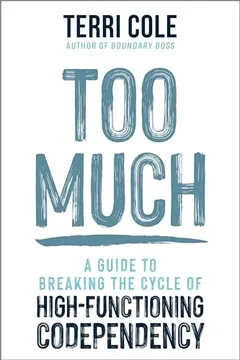
Capability can conceal the cost. Terri Cole calls high-functioning codependency, or HFC, a pattern of becoming excessively invested in other people’s feelings, choices, and outcomes while sacrificing one’s own well-being. It is not a clinical diagnosis, and it can appear in work, family, friendships, and romance. The highly capable person may look successful while privately feeling depleted, tense, or resentful.
Cole recalls taking a stranded young stranger home without pausing to consider her roommate’s comfort or whether the intervention was necessary. Her client Andrea, a successful lawyer who managed work, family, and friends, experienced a panic attack after years of doing too much. Both stories reveal the same reflex: responsibility for others can feel automatic, even when it is costly.
The useful distinction is not between caring and uncaring people, but between care that remains chosen and care that overrides the caregiver’s limits. Competence can make overreach hard to detect because tasks get completed and others may benefit in the short term. Yet an individual’s efficiency does not establish that every task is theirs to own. The framework is most helpful as a behavioral lens, not an identity label: someone can over-function in one relationship and act with healthy reciprocity in another.
Help only when it supports choice, not your need to control outcomes
Good intentions are not enough. Cole distinguishes caring from codependent helping by asking whether assistance is freely chosen, wanted, and sustainable, or driven by fear, guilt, or a need to feel indispensable. Unasked-for solutions can unintentionally weaken another person’s confidence and ability to manage their own life. Helping an adult child repeatedly cover rent, for instance, may relieve immediate pressure while postponing the need to address poor money habits.
Cole recognizes this in her effort to rescue her sister Jenna from an abusive relationship. She sent resources, proposed escape plans, and stayed absorbed in the crisis. Her therapist helped her see that she could not choose her sister’s timing or decisions. Cole could offer support while also limiting conversations that were damaging her own emotional health.
This distinction aligns with a central principle in autonomy-supportive care: useful support strengthens another person’s capacity to act rather than replacing it. The difficult question is not simply whether help was requested, since emergencies and unequal resources sometimes require initiative. It is whether the intervention is proportionate, respects the recipient’s agency, and leaves the helper able to continue without resentment. In abuse situations, stepping back should never mean withdrawing a concrete offer of safety or imposing a rigid rule on someone whose options may be constrained.
Trace today’s reflexes to the childhood rules that once kept you safe
Old adaptations can outlive danger. Cole’s HFC blueprint is the set of learned beliefs and behaviors shaped by childhood, family, culture, and community. A child in a chaotic home might monitor a caregiver’s mood, keep the peace, or take on adult responsibilities to reduce danger. Those strategies can be intelligent adaptations then, but costly habits in adult relationships.
Cole’s client Ada grew up with an abusive mother and became a caretaker in the family. Later, she found herself working hard to stabilize a volatile partner and financially supporting relatives. Looking at her blueprint helped her connect current over-giving with old experiences of fear, shame, and feeling unworthy. The point is not to assign blame to parents, but to recognize which inherited rules still govern present choices.
The adaptation lens offers a more compassionate alternative to treating people-pleasing as a character flaw. It also resembles learning theory: behavior reinforced by relief or safety can persist long after the original threat has passed. Reflection alone, however, does not resolve trauma, and memory is not a perfect historical record. The aim is not to force a single childhood explanation for every current difficulty, but to notice patterns, test new responses in safe settings, and seek trauma-informed professional support when old experiences remain overwhelming.
Stop doing so much that capable people learn to do less
Over-functioning changes the relationship. When one person consistently handles planning, chores, emotional support, and problem-solving, others may become accustomed to relying on that labor. The result can be resentment on one side and reduced participation on the other. Cole’s client Dina had carried most household duties for years. When her husband asked her to make eggs before a night shift, she began to say no, then took over again as he struggled to find the pan.
Their pattern was not solved by silently doing more efficiently. Dina and Ed discussed how their roles had changed, then divided practical tasks more evenly. Cole’s broader goal is interdependence: each person can ask for help, contribute, and maintain a separate sense of self, rather than one partner becoming the household manager.
The story highlights a feedback loop familiar in organizational systems: taking over can make a team faster today while preventing others from developing skill and ownership tomorrow. But unequal labor is not always caused by one person’s over-functioning. Disability, work schedules, money, and gendered expectations can shape what is feasible. A fair reset therefore needs more than withdrawal. It requires explicit negotiation about the work, realistic capacity, and shared accountability, rather than assuming that everyone can contribute in identical ways.
Treat recurring attraction as a pattern to examine, not proof of blame
Familiarity can distort judgment. Cole describes a Repeating Relationship Reality as a present relationship that echoes important dynamics from the past. Her client Leia felt unusually understood by Andy, then overlooked warning signs as he became controlling, criticized her, and interfered in her business. After she shared the truth with trusted friends, she recognized the relationship as emotionally unsafe and left.
The book argues that old experiences can make familiar behavior feel compelling, even when it is harmful. It also distinguishes overt narcissistic behavior, which may be openly grandiose, from covert or vulnerable presentations that can be harder to recognize. These descriptions are warning lenses, not a basis for diagnosing someone from a distance. Persistent control, isolation, manipulation, and boundary violations deserve serious attention regardless of the label.
Pattern recognition can reduce self-blame: a person’s vulnerability to manipulation does not make the manipulator’s behavior their fault. It can also help explain why charm or intense early attention may be mistaken for trustworthiness. At the same time, the term narcissist is often used loosely in popular culture, while a personality disorder requires clinical assessment. Observable behavior, its impact, and the person’s response to boundaries are more reliable guides for decisions than amateur diagnosis. In unsafe relationships, practical support and safety planning take priority over interpreting motives.
Pause long enough to feel your own emotion before managing someone else’s
A pause restores choice. Cole describes emotional self-regulation as noticing feelings and responding thoughtfully, rather than suppressing them or acting immediately. Anxiety may sometimes cover a more vulnerable feeling, such as grief, fear, or hurt. Naming the underlying emotion can clarify what is actually happening and what response fits.
Cole’s therapist asked her to stop rushing through her commute and deliberately board the train last. The exercise showed her that urgency was not always required. For a relationship trigger, the book’s 3Qs for Clarity ask who the person reminds you of, where the feeling has appeared before, and why the dynamic feels familiar. Breathing, meditation, and a brief delay before replying can create room to listen, reflect, or choose not to intervene.
The practical strength here is the separation of feeling from action. Emotion-regulation approaches often use the same sequence: notice a cue, name the state, and choose a response rather than treating the first impulse as a command. This does not mean every strong reaction is merely a projection from childhood. Present-day disrespect or danger can be real. The pause is meant to improve discernment, not talk someone out of accurate perception or require calmness before they are allowed to set a limit.
Use resentment as a signal to state limits clearly and calmly
Resentment points to an unmet limit. Cole defines boundaries as clear communication about what behavior is acceptable, what a person needs, and what they will or will not do. She suggests noticing resentment and bodily tension as clues that a limit may be needed. A boundary can concern time, emotional involvement, possessions, physical space, or sex.
Her client Cecilia made weekly pasta sauce and handled laundry for her adult son, though the arrangement had become tiring and unspoken. She prepared what she wanted to say, explained that the weekly routine had to change, and proposed making sauce together once a month. Cole also recommends waiting twenty-four hours before retracting a new boundary, allowing initial guilt or anxiety to settle. Boundaries state one’s own limits; they do not dictate another person’s choices.
Resentment can be useful data, but it is not a complete verdict: it may signal an unspoken expectation, a mismatch in effort, or a broader injustice. A boundary becomes clearer when paired with a specific action within the speaker’s control, such as declining a task or leaving a conversation. The twenty-four-hour pause may help prevent guilt from undoing a considered limit, but it should not become a rule that overrides judgment. Safety, context, and the possibility of negotiation still matter.
Schedule self-consideration before exhaustion makes the decision for you
Self-care is not decoration. Cole uses self-consideration to mean regularly attending to personal needs, limits, and preferences, rather than waiting until illness or burnout forces a change. That can include rest, movement, emotional reflection, and protecting time for meaningful activities. It is broader than occasional treats.
During her mother’s cancer treatment, Cole abandoned routines that helped her stay grounded and tried to control every detail of care, despite having capable family members involved. Her sister pointed out that the caregiving was already in skilled hands. Cole then delegated tasks and asked for support. The episode illustrates how crises can revive old habits. A small scheduled practice, such as a walk or a few minutes of quiet, can help preserve attention for both caregiving and one’s own life.
Preventive care is easier to sustain when it is built into ordinary routines instead of reserved for emergencies. In that sense, self-consideration functions like maintenance: small, repeated actions can make people more aware of declining capacity before a crisis. Still, self-care language can become hollow if structural pressures leave someone without time, money, or backup. Personal routines cannot replace adequate caregiving support, fair workplace conditions, or medical care. The practical test is whether a routine creates real capacity, not whether it looks impressive.
Find what avoidance pays you, then replace numbing with soothing
Unwanted habits can serve a purpose. Cole calls Secondary Gain the hidden benefit a person receives from a behavior they say they want to stop. Working late, for example, might also help someone avoid a painful relationship or feeling. Her client Erika stayed busy solving other people’s problems partly to avoid old feelings of being unseen and inadequate.
Cole also uses shadow addictions for socially acceptable habits that numb discomfort or distract from difficult emotions, including workaholism, doom-scrolling, or nightly drinking. The question is: what do I avoid feeling or facing through this pattern? Erika began replacing nightly wine and overwork with creative activities she enjoyed as a child, including singing and drawing. The goal is not simply to remove a coping habit, but to find a healthier way to meet the need beneath it.
This approach borrows the useful insight that behavior persists when it serves a function, even when its costs are high. Asking what a habit provides can reveal whether it offers relief, belonging, distraction, or a sense of competence. The phrase shadow addiction is a broad label, not a diagnostic category, and everyday habits differ greatly in risk. A relaxing activity should not be treated as pathological merely because it is pleasurable. When substance use or compulsive behavior causes harm, professional assessment may be more useful than self-analysis alone.
Surrender others’ choices and practice mutuality without abandoning your own
Recovery is a change in relationship, not withdrawal from care. Cole defines surrender as accepting what cannot be controlled, including another adult’s decisions, while taking responsibility for one’s own choices. Her desired alternative to managing others is interdependence, where people can give and receive support, state preferences, and remain responsible for themselves.
In practice, this can mean listening before offering advice, asking what kind of support is wanted, accepting help, or allowing another person to handle a task differently. Cole emphasizes that old habits can return under stress. A lapse is information, not proof that change has failed. In her own family crisis, she noticed herself taking charge again, then delegated and asked her husband to listen. The point is not to care less, but to care without taking over.
Surrender is strongest when understood as a boundary around responsibility, not as passivity or resignation. It can reduce futile efforts to control another person and make room for reciprocal relationships. A generous interpretation of someone’s behavior can also prevent needless escalation, provided it does not excuse repeated harm. The same principle has limits when a person is responsible for a child, a dependent adult, or an urgent safety issue. Healthy mutuality requires both compassion and clear-eyed judgment about who has power, who bears the consequences, and what support is actually needed.
Analysis
Too Much reframes codependency for people who do not identify with helplessness. Its central figure is not a passive dependent but the capable fixer: the colleague who absorbs extra work, the sibling who manages a crisis, or the parent who keeps providing services long after they are needed. That shift in emphasis makes the pattern easier to recognize, especially when competence and generosity are socially praised.
The book’s strongest organizing idea is the move from automatic responsibility to chosen care. It links present behavior to learned family rules, then offers a practical sequence: notice the reflex, identify the feeling or fear beneath it, communicate a limit, and tolerate another person’s independent response. The case stories make the cost visible in time, energy, intimacy, and mutual agency. The advice to ask before helping and to pause before agreeing is concrete enough to use in ordinary interactions.
The framework also benefits from restraint in how it is applied. HFC is a useful descriptive label, not a diagnosis, and not every act of sacrifice is dysfunctional. Caregiving can be necessary, and unequal labor can reflect disability, economic pressure, or unfair social expectations rather than one person’s desire for control. Similarly, the book’s discussion of narcissism is most responsible when anchored in observable behavior and safety, not armchair diagnosis. A boundary cannot solve coercion, abuse, or a lack of practical support by itself.
The deeper contribution is its insistence that self-care is relational. When one person stops taking over, others may regain competence, while the helper becomes more knowable and available for genuine intimacy. Recovery is not indifference. It is a more accurate allocation of responsibility, paired with the humility to let other adults make choices that cannot be made for them. The test is not whether a person helps less in every situation, but whether help is freely chosen, proportionate, and compatible with the helper’s own life.
Review Summary
Too Much receives an overall rating of 4.27/5, with readers praising its accessible writing style, relatable anecdotes, and actionable exercises for overcoming high-functioning codependency. Many felt deeply seen and found the journaling prompts particularly valuable. Critics noted the book's overly broad definitions, excessive affirmations, and female-centric language as weaknesses. Some therapist-reviewers flagged insufficient clinical distinctions around narcissism and codependency. Despite mixed opinions on tone, most reviewers agreed the book offers meaningful tools for people-pleasers and overachievers seeking healthier boundaries and relationships.
Glossary
High-functioning codependency
Over-investing in othersTerri Cole’s term for a pattern of excessive investment in other people’s feelings, decisions, circumstances, and outcomes, to the detriment of one’s own peace or well-being. It may appear in highly capable people who over-give, over-function, or take responsibility for others without being asked. The book presents it as a behavioral pattern, not a clinical diagnosis.
HFC blueprint
Learned relationship rulesThe combination of beliefs, values, and behaviors learned through childhood and wider influences such as family, culture, religion, and community. The blueprint can shape how someone handles boundaries, conflict, care, and responsibility in adulthood. Cole encourages examining these learned rules to distinguish useful adaptations from habits that no longer serve present relationships.
Repeating Relationship Reality
A familiar relational replayCole’s term for a present relationship dynamic that resembles significant patterns from earlier life. Familiarity may make an old emotional pattern feel compelling, even when it is painful. Recognizing the resemblance can help a person investigate what they are repeating and respond to current behavior more consciously, rather than treating the dynamic as inevitable.
Auto-accommodating
Reflexive problem preventionA habitual state of scanning the surrounding environment for ways to reduce other people’s burdens, avoid conflict, or correct problems, even when no one has asked for help. The response may be so automatic that the person barely notices it. Cole frames it as a draining HFC behavior because it assigns responsibility where it may not belong.
Auto-advice giving
Unasked-for fixing adviceThe reflex to offer solutions, referrals, opinions, or plans as soon as someone mentions a difficulty. Cole suggests that this can be a way to manage the helper’s discomfort with another person’s pain, even when the person mainly wants to be heard. Asking what kind of support is wanted can preserve the other person’s agency.
Secondary Gain
Hidden benefit of a patternThe less obvious psychological payoff that helps maintain a behavior or situation someone consciously dislikes. For example, overworking may offer a way to avoid difficult feelings or a strained relationship. Identifying this benefit can clarify why change feels hard and point toward a healthier way to meet the underlying need.
Shadow addictions
Acceptable habits that numbCole’s term for socially acceptable or normalized behaviors that can distract from painful emotions and keep a person in familiar patterns. Examples in the book include workaholism, doom-scrolling, shopping, overeating, and regular substance use. The term is descriptive rather than diagnostic; the relevant question is whether a behavior numbs distress or harms well-being.
3Qs for Clarity
Questions for tracing triggersA reflection tool for exploring why a present interaction provokes a strong emotional response. It asks who the person or situation recalls, where the same feeling has appeared before, and why the dynamic seems familiar. The questions help connect current reactions with prior experiences, while leaving room to assess what is actually happening now.
Four Steps for Boundary Setting
A boundary preparation sequenceCole’s four-part process for stating a limit: identify where a boundary is needed, plan the time and setting, prepare clear language that describes one’s own experience, and mentally rehearse and carry out the conversation. The purpose is honest communication, not perfect wording or control over how the other person responds.
Download PDF
Download EPUB
.epub digital book format is ideal for reading ebooks on phones, tablets, and e-readers.








