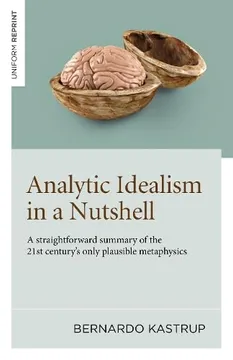


Key Takeaways
Treat scientific success as evidence of prediction, not metaphysical truth
Science tracks behavior. Experiments show how nature behaves under particular conditions. They do not, by themselves, settle what reality is made of. Kastrup distinguishes scientific theories, which predict observable behavior, from metaphysics, which proposes what exists. He argues that a theory of reality must also be judged for consistency, simplicity, explanatory power, and fit with evidence.
Useful models can be fictions. Engineers use mathematical approximations because they work, not because they reveal ultimate reality. Apollo calculations could rely on Newtonian mechanics even after Einstein offered a different account of gravity. The book’s point is not that science is useless, but that technological success does not establish physicalism. A model can guide action while leaving the nature of what it models unsettled.
This distinction helps prevent a common category error: treating a successful map as proof that its symbols are the territory. Scientific realism has a stronger case than mere usefulness, since reliable predictions across different contexts suggest models capture real structure. Yet that still leaves room for more than one metaphysical interpretation of the structure. The useful question is therefore not whether science reveals anything, but how far its methods warrant claims about what reality fundamentally is.
Treat perception as a survival interface, not a transparent view of reality
Perception filters and encodes. The book compares experience to an airplane dashboard: instruments display selected information about the sky without resembling the sky itself. Human senses may work similarly, presenting useful signals rather than the world exactly as it is. A computer icon conveys that a file is available without showing the electronic switches that encode it.
Fitness is not full disclosure. Kastrup draws on evolutionary arguments associated with Donald Hoffman, and on work concerning cognitive limits, to suggest that perception favors actionable information. Seeing every detail of reality could overwhelm rather than help an organism. In this account, perceived colors, shapes, and objects are representations, not necessarily the form of the things represented. The external world remains real, but its intrinsic nature cannot simply be read off perception.
The interface analogy is powerful because it separates reliable guidance from literal resemblance. A map can get a traveler to a destination without sharing the landscape’s texture or scale. Still, the fact that perception is selective does not establish that its hidden basis is mental. It supports humility about what appearances reveal, not one unique metaphysics. Perception also has to preserve enough structure for successful action, so the interface is constrained by the world even if it does not copy it.
Do not mistake measurable descriptions for an explanation of experience
Quantities describe, but do not obviously feel. Physical quantities such as mass, distance, and frequency help describe patterns in experience and predict what happens next. Kastrup argues that they do not explain how a quantitative description could become a felt quality, such as the taste of fruit or the sting of grief. This explanatory gap is known as the hard problem of consciousness.
Correlation is not a bridge. Brain scans can correlate patterns of neural activity with reported experiences, and those correlations can be useful. But, in the book’s argument, observing that one pattern accompanies an experience does not explain why that pattern should feel like that experience. The map and territory analogy captures the concern: if a theory defines reality only through a map of quantities, it cannot simply assume that the map generates the qualities it was built to describe.
The hard problem identifies a genuine pressure point: third-person measurements and first-person experience are not interchangeable descriptions. The distinction matters in neuroscience, where prediction and explanation are sometimes treated as the same achievement. Yet critics argue that the gap may reflect current limits in concepts rather than an impossibility in principle. Kastrup’s case is strongest when it demands a clear account of experience, and less conclusive when it treats the absence of such an account as proof that physicalism cannot succeed.
Inspect scientific claims for assumptions that the evidence never tested
A theory can shape its own evidence. Kastrup argues that physicalism persists partly because it is culturally familiar, treated as the default, and often left vague enough to evade decisive tests. He recounts media reports that described psychedelic brain scans as showing increased activity, although the studies discussed in the book reported reduced activity alongside changes in connectivity or variability. Confusing those measures can turn an unexpected result into apparent confirmation.
Interpretation needs auditing. The book also describes competing physicalist explanations for psychedelic experience, memory, and consciousness. It argues that replacing one account whenever evidence challenges it can make a position difficult to falsify. These examples are offered as cases of confirmation bias, not as proof that all neuroscience or journalism is unreliable. The practical lesson is to check what a study measured, what it found, and what its headlines claim.
This is a valuable lesson in scientific literacy: measures with similar-sounding names can answer different questions, and a press summary can erase that distinction. The same risk appears across fields whenever researchers face incentives to announce clear breakthroughs from ambiguous results. However, documented reporting errors do not establish that the underlying metaphysics is false. The strongest response is procedural: inspect methods and interpretations before using a study to support a worldview, including one that challenges the mainstream.
Panpsychism inherits the particle picture and struggles to explain unified minds
Tiny minds do not automatically add up. Panpsychism, as described here, assigns experience to fundamental particles or treats experience as their inner nature. It tries to avoid explaining how experience arises from non-experience by making experience basic at the smallest level. But it then faces the combination problem: how could many supposedly separate micro-subjects combine into the single perspective each person experiences?
Physics complicates the picture. Kastrup argues that modern quantum field theory describes particles as localized excitations of fields, rather than independent little marbles. In his view, this makes particle-based panpsychism a poor fit with contemporary physics. His objection is not simply that experience cannot be fundamental. It is that panpsychism retains a multitude of basic entities and leaves their unity unexplained, while idealism aims to reduce them to one subject.
The combination problem remains a serious challenge for theories that build consciousness from many independent centers of experience. The field analogy also usefully corrects the old image of matter as tiny solid beads. But field-based versions of panpsychism are possible, so the physics point does not automatically dispose of every panpsychist view. The deeper comparison is explanatory: does a single universal subject genuinely clarify individual minds, or does it relocate the problem of unity to the relation between the universal and its apparent parts?
Make experience fundamental, then treat matter as its outward appearance
Analytic Idealism starts with experience. This is Kastrup’s central metaphysical proposal: reality is fundamentally experiential, and the world outside any individual mind consists of transpersonal experience. It is not the claim that the universe sits inside a human head, or that nature follows personal wishes. The external world remains independent of individual observers and behaves according to regular patterns.
Matter is a representation. On this view, what people call matter is how mental processes appear when observed from an outside perspective. A body and brain are not containers that produce a mind; they are the observable appearance of mental activity. The argument’s appeal is parsimony: experience is already directly known, while a wholly non-experiential substrate is an inference. Idealism proposes one basic kind of reality instead of trying to derive felt qualities from quantities.
This proposal reverses the usual explanatory direction without denying the external world or the usefulness of science. Its strength is that it takes experience as a starting point rather than treating it as a late-arriving mystery. Its central burden is to explain how the proposed transpersonal experience yields stable laws, individual organisms, and the shared world that observers encounter. Calling matter appearance is not yet a mechanism, so parsimony has to be weighed against the details the theory can actually account for.
Use dissociation to understand how one mind could appear as many
Dissociation creates private perspectives. In psychology, dissociation describes divisions in mental life that can make some memories, feelings, or processes inaccessible to a person’s ordinary awareness. Kastrup uses this as an analogy for nature: individual living beings are like alters within a wider mind, each with a private point of view. They remain part of the whole while lacking direct access to its other perspectives.
The body marks a boundary. In this model, biological life is the outward appearance of a dissociative process. Sense organs register influences from beyond that boundary and present them as perception. The book also distinguishes having an experience from being able to notice or report it. Metacognition, the ability to reflect on one’s own experience, is limited, so many bodily and mental processes may occur without the reporting self being aware of them.
Dissociation gives idealism a more concrete account of individuality than simply declaring that everything is one mind. It draws on recognizable psychological phenomena, including compartmentalized memories and limited introspective access. The analogy nevertheless has a large inferential gap: dissociation in human minds does not demonstrate dissociation at the scale of the universe. The proposal is best treated as a model that organizes the problem of separate perspectives, not as clinical evidence that nature itself has a personality disorder.
Treat space and time as representations, not necessarily reality's foundation
Structure may not require extension. Kastrup argues that space and time could belong to the perceptual representation of the world rather than to reality’s ultimate basis. He proposes that reality might instead have structure through semantic associations: relations of meaning among mental states. A database offers a simple analogy. Its meaningful links among records do not depend on the particular boxes or screens used to display them.
Causality may reflect partial access. If reality is a complete pattern of relations, ordinary experience may reveal only an ordered slice of it. Events that appear sequential from within time could belong to a wider structure that is not itself spatially or temporally extended. The book connects this idea to debates in physics about whether spacetime is fundamental, while acknowledging that its account of a mental structure beneath spacetime is a metaphysical proposal.
Modern physics gives good reason to question whether everyday space and time are fundamental; their role in deeper theories remains an active conceptual issue. Kastrup’s move is to say that relations of meaning can provide structure without extension, making mind a candidate for the underlying basis. That is an interesting bridge, but meaning ordinarily depends on interpreters and contexts. The account therefore needs to explain how nature’s supposed semantic relations are definite and lawlike without importing the very spacetime structure it aims to explain.
Let idealism reshape death's meaning without confusing possibility with proof
The individual self does not simply continue. Kastrup’s account does not promise that a person’s familiar identity survives death intact. He argues that the individual is a dissociated perspective, so death ends that perspective as the body’s metabolism ceases. The experiences and memories of the individual are then understood as returning to nature’s broader field of subjectivity.
Death becomes a change of perspective. The book compares waking from a dream: the dream character disappears, but the dreamer does not vanish. This frames life as a temporary vantage point through which nature can observe itself. It offers a striking alternative to the view that consciousness is a by-product extinguished at death. But the claim about what happens after death follows from the metaphysical framework; it is not established by the analogy or by the scientific evidence presented.
This conclusion can offer meaning without promising personal immortality: the familiar ego may end, while experience remains part of a larger reality. That distinction is emotionally and philosophically important. It also marks where argument becomes most speculative. A dream analogy illustrates how identity can be reinterpreted, but cannot verify what death is like. The idea is most responsibly held as a consequence of idealism, not as independent evidence for survival after death.
Analysis
The book’s strongest contribution is its insistence that explaining observable behavior and explaining the nature of reality are different intellectual tasks. That distinction opens legitimate room for metaphysical debate without dismissing science. Its most compelling pressure point is consciousness: correlations between neural activity and experience are not, by themselves, an account of why experience exists. Kastrup is right to ask what a complete explanation would require.
The argument becomes less secure when it treats contested interpretations of quantum experiments and psychedelic neuroscience as direct support for idealism. Bell-test results constrain families of realist theories, but they do not establish that consciousness creates physical reality. Reduced brain activity during some psychedelic states is important, yet activity, connectivity, complexity, and experience are different measures; interpreting their relationship requires more than a single metaphysical reading. Likewise, psychological dissociation offers an analogy for divided perspectives, not evidence that the cosmos is one mind.
Analytic Idealism has a genuine parsimony advantage if experience is accepted as the sole basic reality. But parsimony is comparative, not automatic: a theory must also explain stable public regularities, individual boundaries, and the relationship between universal subjectivity and private minds. The book sometimes treats unresolved physicalist explanations as evidence against physicalism while treating unresolved idealist mechanisms as secondary. That asymmetry deserves scrutiny.
The lasting value of the work is therefore not that it conclusively proves its title’s claim. It is that it makes familiar assumptions visible: that perception resembles reality, that useful quantities are the substance of things, and that science has already settled metaphysics. Readers can take those challenges seriously while remaining undecided about the proposed answer. The best outcome is a more disciplined argument about what evidence shows, what it leaves open, and which worldview explains the open questions with the fewest unsupported commitments.
Review Summary
Reviews of Analytic Idealism in a Nutshell are broadly positive, averaging 4.35/5. Many readers praise Kastrup's clear articulation of idealism, his compelling critiques of physicalism and panpsychism, and his thought-provoking metaphors. Several highlight the later chapters on analytic idealism, circumambulation, and spacetime as particularly insightful. However, recurring criticisms include Kastrup's condescending, combative tone toward physicalists, strawmanning of opposing views, overconfident claims, and weak supporting arguments in areas like psychedelics research and quantum mechanics. Multiple reviewers suggest skipping early chapters and beginning with the analytic idealism sections.
Glossary
Analytic Idealism
Reality is fundamentally experientialA metaphysical view that treats experience or subjectivity as the basic nature of reality. It holds that the external world exists independently of individual minds, but is experiential in essence. Matter, bodies, and brains are understood as the outward appearance of mental processes, rather than as non-mental substances that generate consciousness.
dashboard
Perception's encoded displayKastrup’s analogy for perception. Just as an airplane’s instruments represent selected information about the sky without resembling the sky, perception presents encoded information about the world without necessarily showing reality as it is in itself. The analogy distinguishes the experienced world from the external reality that experience is said to represent.
dissociation
A boundary within mental lifeA division within a mind that limits access to some of its own contents or processes. In ordinary psychology, dissociation can involve compartmentalized memories, feelings, or identities. Analytic Idealism extends the idea by proposing that individual living beings are dissociated perspectives within a wider field of subjectivity.
impingement
Influence across a mental boundaryIn Kastrup’s account, the causal influence of mental states outside a dissociative boundary on the mental states within it. The influence is proposed to be experienced indirectly, through perception. On this view, sensory organs help amplify and organize such influences into the clearer representations that support action.
circumambulation
Revisiting an idea from many anglesA Jungian term for approaching a complex idea repeatedly from different perspectives rather than presenting it only in a straight line. Kastrup uses this method to help readers reconsider assumptions that initially make Analytic Idealism seem implausible, returning to core concepts in new contexts.
cognitive cut and tie
Seamless removal of remembered timeKastrup’s term for a reported alteration of temporal experience in which access to a span of events is lost, while the experiences before and after it seem continuous. He describes experiencing this during general anesthesia. He uses the episode to illustrate how subjective time and memory can be altered, not as proof that space and time are unreal.
hard problem of consciousness
Why physical processes feel like somethingThe philosophical problem of explaining why physical processes are accompanied by subjective experience. Kastrup argues that measurable brain states can correlate with experiences without explaining why a particular state feels like a particular color, pain, or emotion. The problem concerns experience itself, not merely the detection or prediction of conscious reports.
Entropic Brain Hypothesis
Brain entropy linked to psychedelic experienceA hypothesis discussed in the book that relates psychedelic experience to increased entropy or variability in brain activity. Kastrup criticizes it for conflating Shannon information, a technical measure of signal unpredictability, with semantic information, or meaningful content. He also questions whether the measured changes are large enough to explain the reported richness of psychedelic experience.
Download PDF
Download EPUB
.epub digital book format is ideal for reading ebooks on phones, tablets, and e-readers.








