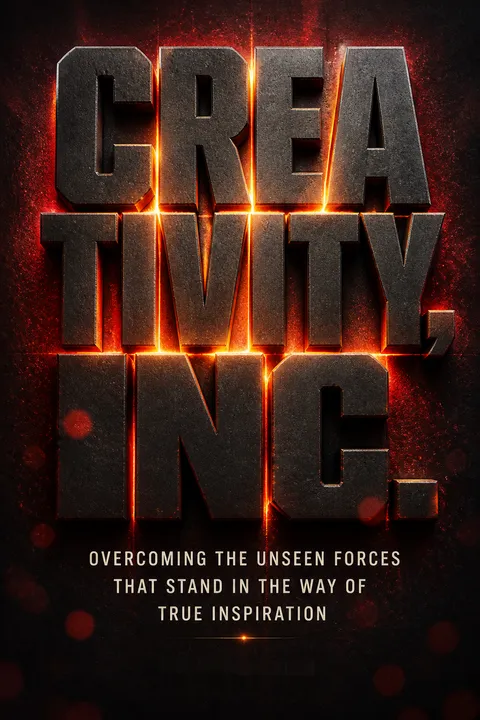


Key Takeaways
Treat success as a reason to search harder for hidden problems
Winning can conceal damage. Toy Story opened in 1995 as the first feature film animated entirely on computers. After two decades pursuing that goal, Ed Catmull found himself without a new purpose. He found one when Pixar’s production managers revealed that they had felt sidelined and controlled during the film’s making. Catmull had believed his open-door approach meant he knew what was wrong. He had missed a conflict that was obvious to the people experiencing it.
Make blind spots part of the job. The book’s central claim is that good intentions and a successful product do not prove a workplace is healthy. Leaders must actively look for obstacles that their own position, habits, or success make hard to see. At Pixar, building a culture of problem-finding became an ongoing management responsibility, not a celebration of one hit film.
What's striking is the reversal: the company’s celebrated success does not validate its culture; it makes a hidden cost easier to overlook. This resembles safety engineering, where near-misses matter because a system can appear reliable until a small weakness compounds. The lesson is not to distrust every victory, but to ask who paid for it and whose experience was absent from the story. Success can also generate useful confidence and resources, so suspicion alone is not a method. The practical discipline is to keep gathering evidence from people who do not share the leader’s vantage point.
Make criticism about the work, not the person who made it
Build a protected forum. Pixar’s Braintrust is a group of experienced storytellers who meet to diagnose problems in films in progress. It developed from the candid working relationship among the people who made Toy Story, then became a formal source of feedback during the troubled production of Toy Story 2. Members identify what is confusing, weak, or missing, but they do not have authority to order a fix. The director remains responsible for deciding what to change.
Give useful notes. A good note is specific, timely, and aimed at the project rather than its creator. The group may recognize that a scene fails without knowing why; the filmmaker must investigate the cause. This arrangement makes disagreement less like a verdict from superiors and more like peer review by people who understand the craft and want the work to improve.
The design separates expertise from command. That distinction matters: feedback is more likely to be explored when it does not arrive as an order, while the director still has to own the consequences of the final choice. The method also resembles psychological safety, the shared sense that interpersonal risk, such as admitting confusion, will not bring punishment. Safety does not mean comfort or automatic agreement. A candid room can still privilege confident speakers or converge too quickly, so strong facilitation and varied perspectives remain essential.
Choose teams that improve ideas over the first idea
Ideas need makers. Toy Story 2 began as a direct-to-video sequel, then became a theatrical release after Pixar’s crew objected to making a lesser film. Yet the first version of its story was weak. The original directors were replaced, and the experienced creative group rebuilt the plot around a real emotional dilemma for Woody: return to a child who will eventually outgrow him, or accept a protected life without love. The film became a hit because the team could reshape the material, not because the premise was flawless.
Hire for collective strength. Catmull argues that creative products are made from many linked decisions, not one isolated flash of inspiration. A capable, complementary group can improve a rough idea or discard it. At NYIT, he hired Alvy Ray Smith despite feeling threatened by Smith’s stronger credentials, learning that a leader’s insecurity is a poor reason to avoid excellent colleagues.
This shifts attention from the romance of the brilliant concept to the less glamorous conditions that let people revise it. Research on team cognition similarly distinguishes individual talent from the group’s ability to combine information, challenge assumptions, and coordinate. Yet team quality is not simply a headcount of stars. Too much agreement can hide weak reasoning, while constant debate can stall execution. The useful question is whether members bring different strengths and can convert disagreement into better choices, rather than whether the group looks impressive on paper.
Make early mistakes cheap, visible, and safe to discuss
Treat error as information. Pixar’s filmmakers repeatedly revise rough storyboards and temporary film reels before expensive production begins. Andrew Stanton’s advice to move quickly toward a test reflects a simple logic: action reveals facts that prolonged speculation cannot. A failed story attempt can still show which characters, rules, or emotional stakes do not work. The company also learned the hard way that pushing for excellence without limits can injure people: during Toy Story 2’s emergency overhaul, a worker accidentally left an infant in a hot car, and about a third of the crew developed repetitive stress injuries.
Know when to intervene. Failure is not a license to continue blindly. Pixar’s leaders watched for stagnation, especially when feedback produced no meaningful change and a crew lost confidence in its director. The goal is to reduce the cost of learning, not to romanticize crises or excuse preventable harm.
The strongest version of this argument distinguishes experimentation from negligence. A rough draft can be safely wrong; a preventable safety failure demands safeguards, not merely a learning story. This distinction is familiar in medicine and engineering, where low-risk simulations support exploration while high-consequence tasks require verification. Creative work benefits from quick trials because preferences and audience response are difficult to predict in advance. But leaders control schedules and staffing, so they cannot transfer all risk to enthusiastic employees and call the resulting exhaustion a necessary price of originality.
Protect unfinished ideas from production's appetite for constant output
Give fragile ideas room. Catmull calls an early, awkward creative concept an Ugly Baby: promising, but incomplete and vulnerable to premature judgment. He calls the demand to keep a large organization supplied with work the Beast. When the Beast dominates, schedules and staffing needs can push teams toward familiar, quickly repeatable products instead of allowing uncertain ideas to mature.
Keep protection temporary. Pixar tried to lock Finding Nemo’s story before production to reduce cost and complexity. The effort failed because the story only revealed its weaknesses once the team made and watched early versions. The film required substantial changes and still became a major success. Protection, then, does not mean isolating an idea or defending it forever. It means giving it time to develop, then testing it against the needs of the audience and the organization.
The tension is not art versus commerce, but short-term throughput versus the slower discovery that can produce distinctive work. Innovation research often describes this as balancing exploration, trying uncertain possibilities, with exploitation, improving what already works. A company needs both: without production discipline, promising projects can consume resources indefinitely; without protected exploration, the pipeline fills with imitations. The metaphor is useful because it gives teams names for competing pressures, but it should not turn finance or production staff into villains. Their constraints are real, and creative leaders must make the trade-offs visible.
Let information and authority travel beyond the org chart
Remove communication bottlenecks. Pixar’s long conference table and place cards quietly sorted meeting participants into tiers. A smaller square table made it easier for everyone to see and address one another, revealing how physical design can reinforce rank without anyone intending it. A larger communication problem surfaced after Toy Story: production managers had required employees to send questions through their direct supervisors. Pixar changed the rule so colleagues could speak directly across roles.
Let workers solve what they see. Catmull drew on W. Edwards Deming’s account of Japanese manufacturing, where employees could stop production to address a defect. Pixar’s version was the belief that problem-solving belongs to everyone. When a command erased most of Toy Story 2’s files and the formal backup failed, technical director Galyn Susman’s home copy helped restore the film. Her improvised solution mattered because someone closest to the work had acted.
Organizations often treat hierarchy as a reporting structure and then mistake it for an information structure. That creates delays precisely where local knowledge is richest. The Deming connection points toward continuous improvement: people doing the work can detect defects earlier than distant supervisors. Still, decentralization needs boundaries. A production stop is valuable when workers can raise an issue without retaliation and when teams have clear ways to escalate high-risk decisions. Empowerment is not the absence of coordination; it is the ability to act within a system that learns from action.
Use routines that widen perception, not rules that merely reassure
Make seeing a shared practice. Pixar’s daily animation reviews put unfinished scenes before colleagues for specific feedback. Research trips served a different purpose: Ratatouille’s team visited French restaurants and kitchens, while artists working on Up traveled to see the South American landscape that inspired the setting. These experiences challenged assumptions that could not be corrected by brainstorming inside the studio.
Use tools with intent. Pixar University offered classes from drawing to programming, bringing employees from different roles together as beginners. Drawing exercises taught people to notice shapes instead of relying on familiar mental templates. Postmortems helped teams consolidate lessons after a film, while visible resource limits helped prevent artists from spending weeks on details audiences would never see. None of these routines guarantees good work; each creates another angle from which to spot an assumption or waste.
These practices share a deeper function: they interrupt automatic perception. Field observation, peer review, and learning an unfamiliar skill each expose gaps between what people assume and what is actually present. In cognitive science, this resembles deliberate efforts to counter top-down processing, the brain’s tendency to interpret new evidence through existing expectations. Tools can also become rituals without substance, however. A research trip is useful only if observation changes a decision, and a postmortem is useful only if its findings affect future work. The test is whether a routine improves seeing, not whether it looks distinctive.
Treat plans as provisional because change and luck distort every story
Expect discovery, not a straight line. Up began with a floating castle and rival princes; only a few elements survived into the story of an elderly widower, a child, and a house lifted by balloons. Pete Docter held onto an emotional aim while repeatedly changing the plot. The finished film was not waiting fully formed to be uncovered; it emerged through choices, tests, and revisions.
Stay modest about causes. Pixar’s history also depended on events no plan could guarantee: Steve Jobs bought the struggling computer graphics group, and a personal backup rescued much of Toy Story 2 after a data loss. Catmull warns that success can make leaders mistake good fortune for proof of a reliable formula. A model helps people act, but it is not reality, and past outcomes cannot reveal every alternative that might have occurred.
The account brings together two sources of uncertainty: creative work changes as people learn, and organizations operate amid events outside their control. This is a useful corrective to hindsight, which makes outcomes seem more predictable than they were. Decision science calls attention to survivorship bias: visible winners are easier to study than comparable efforts that disappeared. Acknowledging luck should not erase skill; it should lower confidence in simple recipes and encourage resilience. Plans still matter, especially for coordination, but they should be treated as revisable instruments rather than promises that the future will obey.
Make learning a company-wide habit, not a leadership speech
Turn values into mechanisms. After Disney acquired Pixar in 2006, Catmull and John Lasseter tried to protect Pixar’s autonomy while helping Disney Animation recover. They changed the physical workplace, ended mandatory executive notes, and helped Disney’s filmmakers develop their own candid Story Trust. They did not simply copy Pixar’s production model; the studios remained separate so each had to solve its own problems.
Give people ownership. In 2013, Notes Day brought nearly the entire Pixar staff together to address rising costs and a growing reluctance to speak up. More than 1,000 employees joined sessions on 106 topics, and the company implemented four proposals, committed to five, and pursued a dozen more. The day’s larger result was renewed permission to disagree and take responsibility. Its value depended on follow-through, not the event alone.
The merger and Notes Day show that culture is neither a slogan nor a set of perks; it is the repeated pattern of who can speak, who decides, and what happens to inconvenient information. Organizational change research emphasizes that symbolic gestures matter when they are backed by altered incentives and routines. The scale of Notes Day created broad participation, but participation alone can become theater if proposals vanish afterward. Pixar’s follow-up process is therefore central to the example. Copying a successful company’s rituals without its local trust and leadership commitment would reproduce the appearance, not the function.
Analysis
Creativity, Inc. is a management memoir organized around a practical paradox: creative work needs freedom, yet freedom alone does not make a company creative. It needs constraints that enable action, feedback that exposes flaws, and leadership willing to revise its own assumptions. Catmull’s strongest contribution is not a single technique but a system of counterweights. The Braintrust challenges a director without taking away the director’s authority. Limits control cost without dictating every move. Failure is welcomed as information, while leaders still intervene when a project stops learning or a crew loses confidence.
The Pixar stories give these ideas memorable form. A table can encode status; an improvised backup can save a film; an attractive slogan can make a team passive. Such examples help readers see that culture lives in ordinary arrangements, not just mission statements. The narrative also supplies a useful account of leadership as sustained attention to conditions that make talent usable.
The evidence has limits. Pixar is a celebrated survivor, and a retrospective account cannot isolate how much its practices caused its success from the effects of extraordinary talent, Steve Jobs’s financial support, distribution partnerships, or favorable timing. Some practices may also be difficult to transfer to organizations without Pixar’s resources. The Toy Story 2 production makes a further point: commitment to quality can become exploitation when management does not set humane limits. Catmull recognizes this, but the tension deserves to remain central, not incidental.
The book is most persuasive when treated as an invitation to test mechanisms rather than copy rituals. A feedback group, an open-door policy, or a company-wide forum is only useful if people can speak without penalty and if their information changes decisions. The deeper principle is adaptive capacity: build an organization that can notice error, respond locally, learn collectively, and change course without confusing uncertainty with incompetence.
Review Summary
Creativity, Inc. is highly praised for offering insights into Pixar's creative process and management philosophy. Readers appreciate Catmull's honest approach to leadership, fostering creativity, and problem-solving. The book blends Pixar's history with practical business advice, making it valuable for managers and creatives alike. Many found the anecdotes about Pixar's films and Steve Jobs particularly engaging. While some felt certain parts were repetitive or obvious, most reviewers considered it an inspiring and thought-provoking read about nurturing creativity in the workplace.
People Also Read






Glossary
Braintrust
Peer feedback for filmsPixar’s evolving group of experienced filmmakers who review works in progress and identify storytelling problems. Members are expected to speak candidly, but the group has no authority to impose fixes. The director remains responsible for interpreting the feedback and deciding what to change. Its usefulness depends on trust, expertise, and continued attention to group dynamics.
Ugly Baby
An unfinished creative ideaCatmull’s term for a new creative idea or early project that is awkward, incomplete, and vulnerable to premature judgment. Its roughness is not evidence that it lacks potential. It needs time and support to develop, but protection is not permanent: the idea must eventually be tested against practical needs and the wider organization.
Beast
Demand for continuous outputCatmull’s metaphor for a large organization, or group within it, that needs a steady supply of work and resources to keep operating. The Beast can create useful urgency, but its demand for output may overpower the slower development of original ideas. Creative organizations must balance production needs with room for experimentation.
Notes Day
A company-wide problem-solving dayA 2013 Pixar event in which employees set aside regular work to discuss how the company could reduce costs and improve its culture. Staff members proposed discussion topics, chose sessions across departments, and turned ideas into proposals and next steps. Its purpose was both practical and cultural: to find improvements and make it safer for employees to speak up.
Pixar University
Cross-disciplinary workplace classesPixar’s internal program offering employees classes in subjects such as drawing, programming, acting, and sculpting. It was not designed primarily to train workers for different jobs. By learning together across departments and levels, employees practiced being beginners, developed respect for colleagues’ work, and created informal connections that supported communication.
Unmade Future
A future created through choicesCatmull’s term for the fact that a creative project does not exist in finished form before its creators begin. People make successive decisions under uncertainty, and the work takes shape through testing and revision. The concept encourages leaders to build conditions for discovery rather than pretend they can fully predict the result.
person-weeks
A measure of labor timePixar’s budgeting unit for estimating work, expressed as the amount one person can accomplish in a week. The measure helps teams compare planned and actual production effort and discuss staffing or scheduling. Catmull treats it as useful data, not a complete picture of a film’s quality, complexity, or the human cost of making it.
FAQ
What's Creativity, Inc. about?
- Creative Culture Focus: Creativity, Inc. by Ed Catmull explores building and sustaining a creative culture within organizations, using Pixar Animation Studios as a primary example.
- Pixar's Journey: The book shares insights from Catmull's experiences at Pixar, detailing how the company overcame obstacles and maintained its innovative spirit.
- Management Philosophy: It delves into management philosophies that support creativity, such as embracing failure, encouraging candor, and protecting new ideas.
Why should I read Creativity, Inc.?
- Invaluable Insights: The book offers insights into the creative process and effective management, making it essential for anyone in a creative field.
- Leadership Inspiration: Leaders and managers can find inspiration in Catmull’s approach to fostering a culture of creativity and innovation.
- Understanding Creativity: It deepens understanding of cultivating creativity in teams, emphasizing trust, collaboration, and open communication.
What are the key takeaways of Creativity, Inc.?
- Embrace Failure: Failure is an essential part of the creative process and should be seen as an opportunity for growth.
- Foster Candor: Honest feedback is crucial for improving creative work, as highlighted by Pixar's Braintrust meetings.
- Protect New Ideas: New ideas need protection, especially in their early stages, to ensure they can develop and flourish.
What is the Braintrust method in Creativity, Inc.?
- Feedback Mechanism: The Braintrust is a group of experienced filmmakers at Pixar who provide candid feedback on films in progress.
- Open Dialogue: It encourages open dialogue, allowing for honest discussions about what is working and what isn’t.
- Problem-Solving Focus: The goal is to identify and solve storytelling problems, minimizing defensiveness and promoting collaboration.
How does Creativity, Inc. define the relationship between creativity and management?
- Creativity Needs Structure: Creativity thrives within a structured environment that allows for freedom and exploration.
- Balance Control and Freedom: Managers should balance control and freedom, avoiding micromanagement while keeping projects on track.
- Trust and Empowerment: Trust is central; empowering employees and trusting them to make decisions fosters innovation and productivity.
What role does failure play in the creative process according to Creativity, Inc.?
- Essential for Growth: Failure is essential for growth and innovation, providing valuable lessons for future efforts.
- Cultural Acceptance: Creating a culture that accepts failure allows teams to take risks without fear of repercussions.
- Learning Opportunity: Each failure should be viewed as a learning opportunity, encouraging analysis and improvement.
How does Creativity, Inc. address the concept of randomness?
- Embrace Randomness: Randomness is an inherent part of the creative process and should be embraced rather than feared.
- Learning from Surprises: Being open to surprises can lead to unexpected discoveries and innovations.
- Creativity and Exploration: Encouraging exploration allows randomness to lead to new ideas and directions.
What are the best quotes from Creativity, Inc. and what do they mean?
- “The best managers acknowledge...”: This quote emphasizes humility in leadership, recognizing limitations fosters a culture of learning.
- “Quality is the best business plan.”: Prioritizing quality in creative work leads to long-term success, reflecting Pixar’s commitment to excellence.
- “The new needs friends.”: Supporting new ideas is crucial for fostering creativity and preventing them from being stifled.
How does Ed Catmull suggest leaders should handle criticism in Creativity, Inc.?
- Embrace Feedback: Feedback should be embraced as a tool for improvement, addressing the root causes of fear in an organization.
- Create Safe Spaces: Safe spaces for expressing thoughts and concerns without fear of retribution are essential.
- Lead by Example: Leaders should model openness to criticism and a willingness to learn from mistakes.
What challenges did Pixar face during its growth, as discussed in Creativity, Inc.?
- Cultural Shifts: Growth led to cultural shifts that threatened Pixar’s core values, such as reluctance to voice differing opinions.
- Maintaining Innovation: Maintaining innovation and creativity amidst success and growth was a recurring challenge.
- Balancing Autonomy and Collaboration: Balancing autonomy with collaboration, especially after merging with Disney, was crucial.
What is the significance of Pixar University in Creativity, Inc.?
- Fostering Learning: Pixar University fosters continuous learning and skill development, encouraging exploration and creativity.
- Breaking Down Barriers: It allows employees from different departments to interact, breaking down silos and fostering community.
- Encouraging Openness: By promoting learning and growth, it supports an open culture where experimentation is valued.
How does Creativity, Inc. address the concept of change within organizations?
- Inevitability of Change: Change is a natural part of organizational growth and evolution, and embracing it is essential for success.
- Managing Fear of Change: Fear of change can hinder creativity; leaders must create a culture where change is seen as an opportunity.
- Balancing Stability and Innovation: Organizations should maintain core values while adapting to new challenges and opportunities.
Download PDF
Download EPUB
.epub digital book format is ideal for reading ebooks on phones, tablets, and e-readers.








