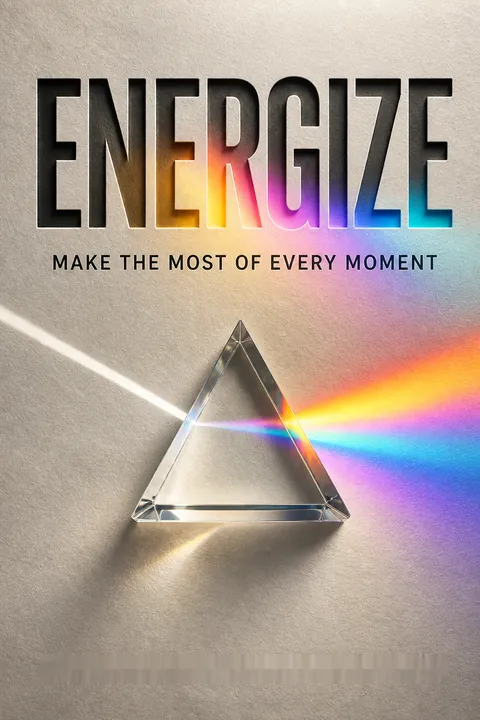


Key Takeaways
Manage energy as the capacity that makes every ambition executable
Energy is usable capacity. Ong argues that time management alone cannot deliver results if a person is too depleted to focus, decide, or follow through. Energy here means the felt capacity to act, across physical, mental, emotional, and spiritual life. It affects how work feels, what opportunities seem possible, and how a person shows up with others.
The book opens with Ong’s own warning sign: collapsing in a bath after a night of drinking while trapped in an exhausting finance job. He eventually left that career and rebuilt his health and work around what mattered to him. His larger point is practical: notice where energy is being gained or lost, then direct it toward a life that fits your values.
The energy metaphor gives a sprawling self-help subject a useful organizing principle: capacity is the link between intention and action. It also connects to cognitive science, where attention, motivation, and emotion shape how much effort a task demands. The metaphor should not be confused with a literal force that attracts events or guarantees success. Energy levels are influenced by health, circumstances, and material resources, not mindset alone. Its strongest use is diagnostic: when progress stalls, ask whether the problem is time, skill, support, or depleted capacity.
Treat sleep, movement, and food as your daily energy infrastructure
Start with the body. Ong treats sleep, exercise, and diet as the foundation beneath the rest of his personal energy plan. A client named Michael began sleeping more consistently, kept his phone out of the bedroom, and planned the next day before bed. The change helped him focus and set off related shifts, including cycling again and eating better.
The chapter also cites a 2008 study in which inactive adults reporting fatigue experienced an energy increase of up to 20 percent and a fatigue reduction of up to 65 percent after regular low-intensity exercise. Ong recommends making movement enjoyable and meals easier to plan, rather than relying on extreme routines. His proposed 3-2-1 bedtime routine means stopping work three hours before bed, eating two hours before, and removing devices one hour before.
These basics have unusually high leverage because they influence mood, attention, and the effort required for ordinary tasks. The Michael story also illustrates a behavioral cascade: one change can make another feel more achievable. Still, sleep needs and exercise capacity vary, and a routine that helps one person may not fit another’s health or caregiving demands. The useful test is not whether a plan looks impressive, but whether it is safe, sustainable, and improves daily functioning. For persistent fatigue, lifestyle advice is not a substitute for medical assessment.
Put your thoughts on paper before they become invisible instructions
Make thinking observable. Ong presents journalling as a way to notice emotions, beliefs, priorities, and energy drains that can otherwise operate in the background. Writing a letter to a younger version of himself helped him recognize both how far he had come and what he needed to hear in the present. He also tells the story of Diana Chao, who used writing to process painful experiences and began Letters to Strangers, a youth mental-health network built around anonymous letters of support.
A useful journal entry can be simple: describe where life feels stuck, what is draining energy, what is working, and what resources are already available. Ong prefers handwriting because it encourages a slower pace, but the essential practice is to pause long enough to examine experience rather than merely react to it.
Writing can turn vague distress into something a person can inspect, name, and reconsider. That resembles methods used in cognitive behavioral therapy, where noticing automatic thoughts creates room to test them rather than obey them. It is not a replacement for therapy, particularly when trauma or serious mental-health symptoms are involved. Nor does reflection automatically produce change. Its value depends on linking insight to a decision, conversation, or next step. The practice is most powerful when it makes self-awareness more accurate, not merely more elaborate.
Practice specific gratitude before life forces you to notice what matters
Turn appreciation into action. In a SoulPancake experiment described by Ong, volunteers wrote about someone they valued. Those who called and read their message aloud reported a larger immediate happiness increase, between 4 and 19 percent, than those who only wrote. The exercise illustrates Ong’s central distinction: appreciation can deepen relationships when it is expressed clearly, not left as a private feeling.
A client named Peter wrote a letter to a former mentor who had helped launch his career. He could not deliver it directly, but the letter eventually reached her and moved her. Ong also recommends reflecting on how life would change if something precious were lost, then returning attention to its presence now. This kind of perspective can make ordinary relationships and routines easier to value.
Gratitude is more than positive thinking when it is specific and relational. Expressing thanks can strengthen social bonds by telling another person which actions mattered, a mechanism relevant to both friendship and workplace recognition. The practice should not be used to silence grief, anger, or justified dissatisfaction. A person can value what is good and still need to change what is harmful. Its best function is to broaden attention, so that difficulty does not become the only evidence available about a life.
Choose your own definition of success, then plan backward from it
Give ambition a direction. After a period of unemployment, Ong questioned the inherited idea that success meant a prestigious job and a high salary. He asks readers to define fulfillment, desired impact, and what they would pursue if money were not the deciding factor. A clear picture of the future can then guide choices in the present.
Bruce Lee wrote a detailed statement of his professional ambitions and reviewed it regularly. Ong also describes Lockheed engineer Kelly Johnson, whose team built a US military jet prototype in 143 days, ahead of a 180-day deadline, with a shared mission helping focus the work. The practical lesson is to translate a vision into questions and scheduled steps. Ong’s questionstorming technique generates questions to answer, rather than brainstorming solutions too early.
A personally chosen definition of success protects against spending years optimizing for someone else’s scoreboard. Specific future images can also direct attention toward relevant opportunities, while planning turns aspiration into behavior. But visualization is not a causal spell: Lee’s success cannot prove that imagining a goal makes it happen. Resources, skill, timing, and social conditions matter. A strong vision is therefore best treated as a compass and a filter, not a prediction. It should guide experiments and revision as reality provides new information.
Challenge the beliefs and self-talk that quietly shrink your options
Examine the inner script. Ong calls mental obstructions that restrict action energetic blocks. After failing three university exams, he interpreted the result as proof that he had ruined his future. That belief damaged his confidence more than the result itself. He later asks readers to identify a limiting belief, consider what it has cost, and look for evidence that a more useful belief could be true.
A coaching client, Oliver, feared that leaving a secure marketing job for social-impact work would waste his experience. Recalling that he had once moved countries for a new opportunity helped him see the career change as another possible step, rather than an irrational leap. Ong also describes changing vague self-instructions into decisive commitments. The goal is not to deny fear, but to stop treating every fearful thought as fact.
This approach has a close cousin in cognitive restructuring: identify a thought, examine its evidence, and develop a more balanced alternative. The emphasis on self-compassion matters because self-criticism can turn a setback into a verdict on identity. However, positive affirmations are not equally persuasive to everyone, and insisting on certainty can create shame when circumstances remain difficult. A believable reframe is usually more useful than an exaggerated one. For instance, replacing “I cannot do this” with “I can test one part of this safely” preserves agency without pretending risk has disappeared.
Turn setbacks into feedback, then act on what remains controllable
Separate event from response. Ong uses a Taoist farmer’s story to caution against labeling events as wholly good or bad before their consequences are known. The farmer’s horse runs away, returns with other horses, injures his son, and then the injury exempts the son from military conscription. Each apparent reversal changes the meaning of the last.
For practical use, Ong offers RISE, a response to failure: reframe the setback, seek inspiration, practise self-compassion, and switch from unproductive rumination to constructive action. When client Maria lost her teaching job during the pandemic, she listed what she could and could not control. She then created online courses and enrolled her first 250 students. The point is not that every hardship hides a blessing, but that action is more available when attention returns to what can be influenced.
The controllable-versus-uncontrollable distinction echoes Stoic practice and modern problem-solving: conserve effort for choices that can change an outcome. The farmer story is memorable precisely because it resists premature certainty. Its limit is that adversity is not always beneficial, and people facing injustice should not be asked to reinterpret harm as a gift. The more defensible claim is that meaning and response remain partly open, even when the event itself is unfair. Resilience can include seeking help, challenging conditions, or grieving, not only finding an optimistic angle.
Begin before you feel ready, and let repetition earn your confidence
Action creates evidence. Ong describes his first paid speaking event: he forgot his notes, developed a nosebleed, and still delivered the presentation. The audience responded well, and the experience gave him confidence to continue. He argues that waiting for certainty often keeps people from collecting the experience that would make them more capable.
Consistency matters more than one burst of intensity. A client, James, dreaded prospecting because rejection triggered rumination. Ong reframed the task as collecting 100 rejections in 90 days. James did not reach the target, but he landed 12 clients. The challenge shifted attention from controlling every outcome to creating enough attempts for a favorable one. The useful pattern is to start with a manageable action, learn from it, and repeat it long enough to build skill and momentum.
Confidence often follows action because successful attempts provide evidence that a person can cope with uncertainty. The James example also resembles exposure and behavioral activation: approach the feared activity and make practice measurable. Yet “begin before ready” should not mean ignoring safety, preparation, or expertise when errors could harm others. The right threshold depends on the stakes. For low-risk experiments, action is an efficient teacher; for high-risk decisions, preparation and consultation are part of responsible action, not excuses.
Schedule around your energy, and defend recovery as real work
Match task to capacity. Ong recommends tracking energy at several points in the day for two weeks, noting what raises or drains it. He suggests reserving high-energy periods for demanding work and lower-energy periods for routine tasks, rather than spending a fresh morning on email by default. Bill Gates reportedly learned from Warren Buffett’s often-open calendar that an unscheduled day can be a deliberate choice, not a failure of productivity.
Ong also urges readers to protect recovery, reflection, and time away from screens. His examples include meditation and purposeful breaks, as well as setting limits on requests and low-value tasks. The question behind a boundary is simple: if this commitment gets a yes, what important thing receives a no? A schedule should protect both focused effort and the conditions that make focused effort possible.
This is a useful corrective to productivity systems that treat every hour as interchangeable. Human attention fluctuates, and recovery supports learning and sustained performance. Still, many people cannot freely rearrange shifts, caregiving, or deadlines, so energy tracking should help them make choices where they have room, not blame them for structural constraints. Rest is also not a luxury reserved for high performers. Its value includes health and quality of life, even when it produces no measurable work output.
Build a circle and setting where ambitious behavior feels normal
Let surroundings teach. Ong’s first business mastermind met at London’s Ritz and included entrepreneurs whose routines and ambitions stretched his sense of what was possible. The group made practices such as taking on challenges and prioritizing important work seem ordinary. He also tells of Serena Williams working with coach Patrick Mouratoglou, whose candid feedback helped her recognize that she could aim beyond her existing achievements.
Environment includes more than friends. Ong names the spaces people work in, media they consume, organizational culture, and clutter. He recommends seeking mentors and peers with diverse experience, and making small, real-world encounters with a desired future. Supportive relationships matter here: encouragement can make it easier to attempt difficult opportunities. The aim is not to copy another person’s life, but to spend more time where growth, curiosity, and constructive challenge are reinforced.
Behavior is socially patterned: people often learn what is normal by observing the people around them. A supportive network can supply information, accountability, and emotional backing that solitary motivation cannot. Diversity matters because a circle of identical perspectives can reinforce blind spots as efficiently as it reinforces good habits. The mastermind story also raises an access question: not everyone can enter elite spaces. The broader principle travels better than the venue. A peer group, community class, or generous mentor can provide the same kind of useful friction.
Give every dollar a purpose before status spending consumes it
Make money serve choices. Ong’s client Dean earned a high salary but spent heavily to sustain an image, leaving little freedom to change careers. Tracking expenses exposed subscriptions and purchases that did not add meaningful value. He then set a budget, addressed debts, and automated saving and investing. Ong encourages readers to calculate net worth, understand monthly spending, and decide in advance how income will be divided.
He distinguishes an energy spender, who mainly trades personal time for money, from an energy investor, who also directs money and effort toward assets or additional income sources. The distinction is about building options, not rejecting paid work. Financial awareness can reduce anxiety and make it easier to choose work aligned with personal priorities. Ong’s central test is whether money is being used intentionally or merely disappearing into habits and appearances.
The strongest part of this advice is behavioral rather than aspirational: tracking, budgeting, and automation reduce the gap between good intentions and actual spending. Financial security can expand a person’s choices, but investing carries risk and access to capital is unequal. The book’s language about money as energy can motivate stewardship, yet it should not imply that wealth follows from the right attitude alone. Income, family obligations, health, and economic conditions all shape financial outcomes. A workable plan begins with a clear view of those realities.
Keep learning by applying, reflecting, and sharing what you discover
Make learning active. During the Great Depression, Joseph Campbell left graduate school and pursued five years of self-directed study in mythology. His knowledge later supported a long teaching career and influenced filmmaker George Lucas. Ong uses this story to argue that education continues beyond formal schooling and that curiosity can open paths that credentials alone may not reveal.
His LARS process turns learning into practice: learn a skill, apply it, reflect on the result, and share what you understand. A filmmaker in Ong’s account taught herself production and editing online, then built a career by putting those abilities to work. Listening is also part of learning: the Zen story of an overflowing teacup warns that certainty can leave no room for new information. Knowledge matters most when it changes what someone can do or offer others.
LARS is valuable because it closes the familiar gap between consuming information and developing competence. Application produces feedback, reflection extracts lessons, and teaching tests whether understanding is clear. This resembles experiential learning cycles used in education and professional training. The caution is that access to information is not the same as access to opportunity: time, equipment, money, and mentorship affect who can turn learning into a livelihood. Curiosity is a resource, but it works best when paired with deliberate practice and realistic support.
Analysis
Energize is a practical self-development book organized around a single claim: goals depend on the condition and direction of the person pursuing them. Its four-part progression moves from physical and personal foundations, to mental reframing, to protection of attention and resources, and finally to learning and contribution. This sequence gives the book coherence, while Ong’s own career change and client stories make its advice feel lived rather than abstract.
Its most useful contribution is the shift from managing hours alone to managing capacity. That reframing connects habits that are often treated separately: sleep affects attention, beliefs shape willingness to act, boundaries protect focus, and relationships influence how much risk feels possible. The book repeatedly translates reflection into an exercise, which is important because insight without a next step can become another form of procrastination. Its examples also make action feel less dependent on a dramatic personality change. A written plan, a boundary, or a small experiment can begin the process.
The book is less convincing when it treats energy as a universal force or implies that belief and visualization reliably draw desired outcomes into a person’s life. Those ideas work best as metaphors for attention, expectation, and motivation, not as scientific explanations. Similarly, personal success stories demonstrate possibility, but they cannot establish that the same approach will work for everyone. The book gives less attention to structural limits such as poverty, discrimination, disability, or inflexible work.
Read with those distinctions in mind, its durable message is neither relentless positivity nor endless hustle. It is deliberate stewardship: strengthen the body, observe the mind, choose a direction, protect attention, use resources consciously, and keep learning from results. The central question is not simply how to do more, but what deserves the finite energy available, and what conditions make meaningful action sustainable.
Review Summary
Energize receives mostly positive reviews, with readers praising its accessible advice on improving energy levels and life quality. Many find the author's personal experiences relatable and the concepts actionable. Readers appreciate the focus on energy management rather than time management. Some highlight specific techniques like writing letters to your younger self. Critical reviews mention that some advice is generic and that the book may not suit everyone. Overall, readers find it inspiring and helpful for those seeking to take control of their lives and energy.
People Also Read







Glossary
Energetic blocks
Beliefs that obstruct actionOng’s term for mental obstructions that interrupt a person’s sense of possibility and capacity to act. They include fixed beliefs, self-doubt, and patterns of thought that make a meaningful goal feel impossible. The book’s exercises ask readers to identify these beliefs, examine their costs, and consider a more useful alternative supported by evidence.
RISE
A response to failureOng’s four-part approach to responding to setbacks: reframe the event as feedback, seek inspiration, practise self-compassion, and switch from unproductive rumination to constructive action. It is intended to help people learn from failure without treating a disappointing outcome as proof of personal inadequacy.
LARS
A cycle for learningOng’s sequence for turning new knowledge into practical ability: Learn, Apply, Reflect, and Share. A person identifies a skill to develop, uses it in a real situation, reviews what worked and what could improve, then explains the learning to others. The process emphasizes practice and feedback over information gathering alone.
Energetic shields
Boundaries that protect capacityOng’s phrase for limits that preserve a person’s time and energy for important priorities. They can include declining requests, setting work hours, or refusing to engage with low-value distractions. The concept frames boundaries as a practical form of self-care, rather than as hostility toward other people.
questionstorming
Generating useful questionsA planning technique Ong uses in which a person generates questions to investigate before trying to settle on answers. The questions can reveal skills to learn, risks to prepare for, people to consult, and milestones to track. It is designed to turn a broad ambition into a sequence of practical inquiries and decisions.
Mental Board of Advisers
Imagined advisers for decisionsOng’s practice of choosing a small group of real or historical figures whose qualities or experience offer useful perspectives. When facing a decision, a person imagines what each adviser might notice or ask. Their viewpoints are treated as prompts for independent judgment, not as literal advice or substitutes for expert counsel.
Gratitude Photo Album
A visual record of appreciationA practice Ong names in which people use a smartphone to save images of moments they appreciate, such as time with a friend, a meal, or meaningful feedback. Organizing these images by month or year creates a record that can be revisited when perspective or encouragement is needed.
energy spender
Trades time directly for moneyOng’s label for a person whose income mainly depends on exchanging personal effort and time for pay. He contrasts this with an energy investor, who also directs money or effort toward assets or additional income sources. The distinction describes different financial patterns, not the worth of one kind of work over another.
FAQ
What's "Energize: Make the Most of Every Moment" about?
- Focus on Energy: The book by Simon Alexander Ong emphasizes the importance of managing personal energy to transform one's life. It explores how energy impacts productivity, relationships, and overall well-being.
- Four-Part Structure: The book is divided into four parts: awakening your power, rewiring your energetic state, protecting your personal energy, and supercharging your impact.
- Practical Advice: It provides practical steps and exercises to help readers manage their energy more effectively, such as through health investments, mindset shifts, and environmental changes.
- Personal Development: Ong shares personal stories and client experiences to illustrate how mastering energy can lead to personal and professional growth.
Why should I read "Energize: Make the Most of Every Moment"?
- Transformative Potential: The book offers insights into how managing energy can lead to significant life changes, making it a valuable read for anyone looking to improve their personal and professional life.
- Actionable Steps: It provides clear, actionable steps and exercises that readers can implement immediately to start seeing changes in their energy levels and overall life satisfaction.
- Inspiring Stories: Ong includes inspiring stories from his own life and those of his clients, which can motivate readers to take control of their energy and life direction.
- Holistic Approach: The book covers various aspects of life, including health, mindset, environment, and relationships, offering a comprehensive approach to personal development.
What are the key takeaways of "Energize: Make the Most of Every Moment"?
- Energy Management: Focus on managing energy rather than time to increase productivity and life satisfaction.
- Health Investment: Prioritize health through sleep, exercise, and diet as foundational elements of energy management.
- Mindset Shifts: Rewire your mindset to overcome energetic blocks and embrace a more positive, growth-oriented outlook.
- Environmental Influence: Create an environment that supports your energy goals, including the people you surround yourself with and the spaces you inhabit.
How does Simon Alexander Ong suggest we manage our energy?
- Identify Energy Peaks: Track your energy levels throughout the day to identify when you are most productive and schedule important tasks during these times.
- Set Energetic Shields: Establish boundaries to protect your energy from being drained by unnecessary commitments or toxic relationships.
- Practice Gratitude: Cultivate an attitude of gratitude to shift focus from what you lack to what you have, thereby increasing positive energy.
- Embrace Rest and Reflection: Schedule regular breaks and time for reflection to recharge and gain clarity on your goals and priorities.
What is the "Chief Energy Officer" concept in "Energize"?
- Personal Responsibility: The concept encourages individuals to take responsibility for their energy management, much like a CEO would for a company.
- Energy Awareness: It involves being aware of your energy levels and making conscious decisions to optimize them for better productivity and well-being.
- Strategic Planning: Plan your day around your energy peaks and troughs to maximize efficiency and effectiveness in both personal and professional tasks.
- Proactive Measures: Implement proactive measures to protect and enhance your energy, such as setting boundaries and prioritizing self-care.
How does "Energize" address overcoming energetic blocks?
- Identify Limiting Beliefs: The book encourages identifying and challenging limiting beliefs that block energy flow and hinder progress.
- Reframe Negative Thoughts: It suggests reframing negative thoughts into positive affirmations to change your mindset and energy state.
- Visualization Techniques: Use visualization to imagine and feel the energy of achieving your goals, which can help overcome mental barriers.
- Embrace Failure as Feedback: View failures as opportunities for growth and learning rather than setbacks, using them as fuel for future success.
What role does environment play in energy management according to "Energize"?
- Influence on Behavior: The environment significantly influences behavior and energy levels, making it crucial to create a supportive setting.
- Surround with Energizers: Surround yourself with people who uplift and energize you, rather than those who drain your energy.
- Declutter and Organize: A clutter-free and organized space can enhance focus and reduce stress, contributing to better energy management.
- Nature's Impact: Spending time in nature or environments rich in negative ions can boost energy and improve mental clarity.
What are some of the best quotes from "Energize" and what do they mean?
- "Energy is contagious." This quote highlights how the energy you project can influence those around you, emphasizing the importance of maintaining positive energy.
- "Manage your energy, not your time." It suggests that focusing on energy management rather than time management can lead to greater productivity and fulfillment.
- "You are the greatest project you will ever get to work on." This encourages readers to invest in their personal development and energy management as a lifelong journey.
- "Life is meant to be lived, felt, and experienced." It serves as a reminder to be present and fully engage with life, using energy as a tool to enhance experiences.
How does Simon Alexander Ong suggest using visualization in "Energize"?
- Create a Clear Vision: Develop a clear and compelling vision of your desired future to guide your actions and decisions.
- Emotional Connection: Connect emotionally with your vision to increase motivation and energy towards achieving it.
- Daily Practice: Incorporate visualization into your daily routine to reinforce your goals and maintain focus on what matters most.
- Overcome Barriers: Use visualization to mentally rehearse overcoming obstacles, building confidence and resilience.
What is the significance of gratitude in "Energize"?
- Shift in Focus: Practicing gratitude shifts focus from what you lack to what you have, increasing positive energy and life satisfaction.
- Improved Relationships: Expressing gratitude can strengthen relationships and create a more supportive and energizing environment.
- Mental Health Benefits: Gratitude has been linked to improved mental health, reducing stress and increasing overall well-being.
- Daily Practice: Incorporate gratitude into your daily routine, such as through journaling or expressing thanks to others, to maintain a positive energy flow.
How does "Energize" suggest dealing with failure?
- Reframe as Feedback: View failure as feedback and an opportunity for growth rather than a negative outcome.
- Learn and Adapt: Use failures to learn and adapt, building resilience and improving future performance.
- Maintain Perspective: Keep a balanced perspective on failure, understanding that it is a natural part of the journey towards success.
- Fuel for Growth: Use the energy from failure to fuel your determination and drive towards achieving your goals.
What is the role of self-education in maintaining creative energy according to "Energize"?
- Continuous Learning: Embrace lifelong learning to keep your mind sharp and your creative energy alive.
- Diverse Knowledge: Seek knowledge from diverse sources to gain new perspectives and inspire innovative thinking.
- Practical Application: Apply what you learn to real-world situations to reinforce knowledge and stimulate creativity.
- Curiosity-Driven: Let curiosity guide your learning journey, exploring topics that genuinely interest and energize you.
Download PDF
Download EPUB
.epub digital book format is ideal for reading ebooks on phones, tablets, and e-readers.








