


Plot Summary
Prologue
At eighteen, Hudson Hale is ready to marry Amy, his wealthy high-school girlfriend, and give up a baseball scholarship to stay near her. His mother persuades him to finish college first, arguing that love should not require him to abandon his future.
Hudson agrees, though the choice feels like a betrayal. His younger sister, Rylie, remains at home with their parents, already struggling with mental health problems that demand more care than the family can easily afford.
The opening establishes Hudson as someone who mistakes responsibility for a complete map of adulthood. His choice is practical, but it is also shaped by class: he hopes education will let him offer Amy a life his working-class parents cannot afford. Rylie appears in this decision as a family obligation rather than a person he knows how to reach. That imbalance matters later. Hudson has learned to meet expectations, yet not to recognize the emotional costs of leaving someone else to carry the family's pain.
Death Arrives at Practice
Three years after leaving Missouri, Hudson is a college baseball player studying finance when Coach Brass summons him from the locker room. Hudson expects trouble with his game, but Coach tells him that his parents have died in a head-on collision. Hudson first refuses to believe him, calling his mother and father before Rylie, his seventeen-year-old sister, confirms the news through tears.
He drives through the night to his aunt and uncle's home, where Rylie is staying. Their parents' deaths strip away the familiar irritation between the siblings. Hudson holds Rylie as they grieve, and the only family either can count on now is the one standing in that room.
The news arrives through a coach, a figure associated with Hudson's performance and future, so the call abruptly replaces ambition with family duty. His initial disbelief shows how far college has carried him from the household whose sacrifices made his scholarship possible. Rylie, meanwhile, is no longer the troublesome younger sister he can dismiss. Her grief makes their dependence visible, but it does not yet teach Hudson how to support her. The scene begins the novel's central reversal: the capable son must return home, while the sister he left behind becomes the measure of what his success has failed to notice.
Funeral Without Shelter
At the funeral, Rylie reacts to her parents' makeup and stiff expressions with laughter that turns into sobbing. Hudson pulls her away when she tries to wipe the cosmetics from their father's face, then holds her as she collapses against him. Rylie fears Hudson will leave once the service ends, and she is right: he has college, baseball, and Amy waiting.
Aunt Becky and Uncle Randy take Rylie into their home, but the polished house offers little comfort. Hudson returns to Arkansas, where he pours grief into drinking and distance. Rylie lashes out at her aunt, smashes a mirror, and feels watched rather than understood. Their separation leaves both mourning, but Rylie is left without the brother she most wants beside her.
Rylie's laughter is not indifference; it is a failed defense against an unbearable scene, and its quick collapse into tears exposes how little control she has over grief. Hudson's embrace offers momentary safety, but his departure repeats the wound she fears. Aunt Becky can provide a stable home and still misunderstand what Rylie needs, especially when care becomes surveillance. The contrast between the aunt's wealth and the siblings' former home also complicates rescue: material comfort cannot restore belonging. The funeral therefore marks a second loss, not because Hudson stops loving Rylie, but because he leaves her to interpret his love through absence.
Pills and Missed Calls
At college, Hudson drinks with his teammate Nick and lets bartender Jada flirt with him. He accepts her sexual attention, then wakes ashamed and finds that Amy and Rylie both tried to reach him. Rylie had been pleading for help with life at Aunt Becky's, while Amy reports a missed period. At a drugstore, Rylie confronts Amy over a pregnancy test and accuses her of trapping Hudson.
Later, overwhelmed by grief and convinced that medication cannot repair her life, Rylie swallows her lithium prescription and becomes violently ill. Hudson learns that she is in the hospital. The pregnancy scare proves false, but his own betrayal and neglect remain, and Rylie's attempt to die forces him to see the cost of treating her distress as drama.
The missed calls make neglect concrete: Hudson's choices are not merely private lapses, because they leave Rylie alone at the moment she is asking for help. His encounter with Jada offers temporary relief from grief, but the next morning places his self-indulgence beside Rylie's crisis and makes the imbalance impossible to ignore. Rylie's anger at Amy redirects her fear of abandonment toward a rival she can confront. The medication overdose is a serious expression of despair, not evidence that treatment has failed or that love alone can cure illness. The narrative instead uses the emergency to force Hudson into responsibility.
Learning to Stay
Hudson picks Rylie up after the hospital and recognizes that she needs more than a promise made in a moment of panic. He stays with her at Aunt Becky's, helps her take medication, listens to her memories of their parents, and postpones baseball obligations to keep her company.
Old recollections of calming her during a storm and defending her at school sharpen his regret: he once knew how to protect her, then stopped trying to understand her. Rylie begins eating when he encourages her and accepts his presence without having to perform cheerfulness. Hudson's attention steadies her, and the siblings grow closer in the dark and quiet of the house. That closeness also begins to blur boundaries he has never examined.
Hudson's growth begins with a behavioral change, not a revelation about the perfect words to say. He shows up, stays, and notices practical signs such as Rylie's eating and medication. The childhood memories matter because they complicate his self-image: care was once instinctive, so his later distance was not inevitable. Yet their new dependence remains fragile. Hudson is trying to compensate for years of absence, and Rylie is treating his attention as proof that she is no longer alone. The same gestures that help them regulate grief also make it harder for either to distinguish comfort from exclusive emotional reliance.
Riverbank Mistaken Lovers
For spring break, Hudson takes Rylie rafting and camping, deliberately leaving Amy out so the siblings can spend time together. They talk about their parents, share food, and warm each other beside a riverside fire. Danny and Joya, an older couple at the campsite, assume Hudson and Rylie are dating. Neither corrects them.
Inside their cramped tent, Hudson kisses Rylie, and the moment gives shape to feelings they had both kept hidden. The next week, a downtown block party brings Rylie near Travis, a schoolmate who offers to help her get a fake ID. Hudson reacts jealously. At the playground, he admits that she is distracting him and kisses her again, making their private attachment impossible to dismiss as grief alone.
The campsite's mistaken assumption works like social permission: strangers see a couple, and the siblings briefly inhabit that fiction rather than challenge it. The setting gives them privacy, but it does not resolve what their closeness means or what it could cost. The playground shifts the dynamic from comfort to jealousy, as Hudson reacts to Travis not simply as a threat to Rylie but as a possible alternative to himself. The novel frames these moments as recognition, while their circumstances suggest another reading: two grieving people are narrowing their world until the person who soothes them becomes the person they cannot imagine losing.
The Playground Boundary
After the block party, Hudson tells Amy that he cheated with Jada and admits that his attention has shifted. Amy is hurt but does not end the relationship outright. Instead, she gives him room to date other people and decide what he wants, while keeping open the possibility of a future together.
That arrangement leaves Hudson without a clear commitment and Rylie without a safe way to name what is growing between them. At Aunt Becky's house, Hudson shaves Rylie's legs because her aunt has restricted her access to razors after the overdose.
The private task turns intimate; Aunt Becky finds them together and recognizes more than ordinary sibling comfort. Hudson denies her suspicion, then leaves the house, while he and Rylie continue speaking in secret.
Amy's response is compassionate, but it cannot repair a relationship whose central problem is no longer a single act of infidelity. By offering Hudson freedom, she refuses to coerce his choice, even as her hope for reconciliation prolongs uncertainty. The shaving scene gives caretaking a charged double meaning: a measure intended to keep Rylie safe becomes an occasion for intimacy. Aunt Becky's alarm is therefore not merely an obstacle; she sees a boundary the siblings are actively obscuring. Their denial keeps the relationship private, but secrecy also prevents them from testing their beliefs against anyone else's perspective.
Rings Before Vows
On Rylie's eighteenth birthday, Hudson leaves college to spend the day with her. He gives her a necklace bearing two simple rings, then gets her the Hale name tattooed on his ribs while she has his handwriting tattooed on hers. That night, they stop treating their attraction as something they can contain and begin a sexual relationship.
Hudson's baseball future is already faltering, but Rylie has become the person around whom he measures every choice. He insists they must keep their relationship hidden because incest is illegal, and she accepts secrecy as the price of being with him. The gifts turn their private bond into a pledge, even as they know the world around them would reject what the rings represent.
The birthday makes Rylie's adulthood a threshold in the plot, but the emotional boundary has been crossed well before it. The matching tattoos and paired rings convert a private feeling into durable symbols, offering permanence where public recognition is unavailable. Hudson frames secrecy as protection, and Rylie accepts it because losing him seems more frightening than concealment. Their choice is presented as mutual, yet it also tightens their dependence: the promise of being each other's whole world leaves little room for other relationships or sources of support. The scene makes commitment feel tender and dangerous at once.
Logan in the Water
Hudson's grief and preoccupation with Rylie damage his baseball performance, and Coach Brass benches him for the rest of the season and ends his work at his wife's accounting firm. When Rylie visits, Nick notices their closeness and begins to suspect the truth. At a lake party, Logan ignores Rylie's discomfort and grabs her underwater.
Hudson pulls Logan away and beats him until Nick and another teammate intervene. Hudson and Rylie leave together, but the violence draws more attention to their secret. The next morning, Nick accuses Hudson of sleeping with Rylie. She denies it and invents a boyfriend, Travis, to protect them. Their cover holds for the moment, but their circle of people who could expose them has widened.
Hudson's declining performance translates private fixation into public consequence: baseball and his job, once the structure of his future, are no longer secure. Logan's assault makes Hudson's possessiveness look protective, but his violence also heightens the risk surrounding Rylie. Nick's suspicion is significant because it comes from intimacy with Hudson, not from a stranger's moral judgment. Rylie's lie shields them while requiring her to recruit another person as cover. Secrecy now functions as a social system they must constantly maintain, and each attempt to defend the relationship creates another possible witness.
Accusation at Home
After Rylie's graduation, Aunt Becky finds Hudson and Rylie alone together in the basement and accuses them of incest. Hudson argues with her, then fights Uncle Randy when he pushes him; police arrest Hudson for the assault.
Believing she has lost him for good, Rylie spirals and injures herself with her mother's expensive haircutting scissors. While Hudson remains in custody, she imagines him beside her. Amy's father helps secure Hudson's release, and Uncle Randy decides not to press charges.
Hudson goes to the hospital, where Rylie is recovering, and she promises not to hurt herself again. Her injuries leave lasting damage to her arms and end her hope of following their mother's path into hairdressing. The siblings decide they must leave Missouri.
The aunt's accusation turns a hidden relationship into a legal and familial crisis, while the fight makes Hudson's arrest an immediate fact rather than a threatened consequence. Rylie's self-harm follows her belief that separation is permanent; it is not a romantic proof of devotion, but a life-threatening emergency. Her imagined encounter with Hudson shows how grief and desperation distort perception at the moment she is least able to bear reality. The aftermath does not erase the danger: she faces lasting physical consequences, and Hudson's return cannot substitute for medical care. The decision to leave is both an escape from scrutiny and an attempt to preserve their bond.
Heather Miller's Vows
After weeks of physical therapy, Rylie is well enough to travel. She uses her graduation money to obtain false identity documents from Travis, then directs Hudson to Eureka Springs, where their parents married.
There, Rylie takes the name Heather Miller and marries Hudson, giving their relationship a legal form under the assumed identity. They leave Missouri and settle in Jasper, Arkansas, where Hudson finds work with resort owner Boyd Williams and Rylie helps with marketing rather than pursuing hairdressing.
They keep the truth from Aunt Becky and Uncle Randy, who remain part of their lives without openly challenging the couple. In the new town, the siblings try to build an ordinary household around a relationship they still believe must remain hidden.
The false identity solves an immediate practical problem by converting forbidden kinship into a marriage the authorities will recognize, but it does so through deception rather than reconciliation with the law or family. Eureka Springs gives the couple a link to their parents' history, turning a place of family origin into the site of a new, secret beginning. Rylie's career change makes the cost of her injuries tangible, while Hudson's work offers the stability he once expected baseball to provide. Their new life is not an escape from dependence; it is an attempt to make that dependence sustainable beyond the people who knew them before.
Epilogue
Six and a half years later, Hudson and Rylie live in Jasper with their children, JJ and Lo, while Rylie is pregnant with a third. Hudson works in the resort's accounts and Rylie handles marketing, adapting to the lasting effects of her arm injuries. They visit Lake of the Ozarks with Aunt Becky and Uncle Randy, who have grown closer to them and are expecting another child of their own.
The couple still protects their secret with the story that Travis fathered Rylie's children. Their family life is affectionate and settled, but it depends on a carefully maintained fiction that lets them stay close to the relatives they did not leave behind.
The epilogue supplies the domestic future the main story longs for, then shows the price of obtaining it. Work, children, and recurring family trips make Hudson and Rylie's life look stable, while their invented account of Travis's paternity keeps that stability dependent on concealment. Aunt Becky and Randy's continued presence complicates any simple victory over judgment: they remain family, but the truth is still withheld. Rylie's changed work and visible scars prevent the ending from erasing what the crisis cost her. The final happiness is therefore real within the story's terms, yet structurally conditional on secrecy and on the couple's ability to keep their world tightly bounded.
Analysis
Hale builds its romance from a crisis of care. Hudson returns to his sister after their parents die, and his daily attention helps Rylie feel less abandoned. The novel then treats the intensity of that bond as evidence of romantic destiny. That movement is emotionally legible: both siblings have lost their parents, Rylie fears being left behind, and Hudson has spent years avoiding emotional responsibility. But the same conditions that make their closeness understandable also make it precarious. Neither has much space to grieve independently, and Hudson's guilt encourages him to become indispensable rather than to build a wider network of support.
The book repeatedly turns care into a boundary test. Helping Rylie with medication, food, and basic safety begins as ordinary support; intimacy grows in the privacy of shared rooms, campsites, and nighttime conversations. Aunt Becky notices the danger before the siblings can admit it, while Nick's suspicion and Logan's assault expose how their secrecy is entangled with other people's lives. The resulting conflict is not only between private desire and public rules. It is also between the couple's wish to control their story and the practical consequences of hiding it.
Rylie's mental illness is central, but the narrative's emotional resolution risks collapsing treatment into romance. Medication, therapy, physical recovery, and family care remain present, yet Hudson's love is repeatedly described as the answer to her suffering. That framing is powerful as fantasy, especially for a character terrified of abandonment, but it is not a sound model of mental health care. The ending acknowledges costs through Rylie's lasting arm injury and the false identity required for their household. Their happiness is sincere within the novel's moral universe, but it is sustained by isolation and concealment as much as by devotion.
Review Summary
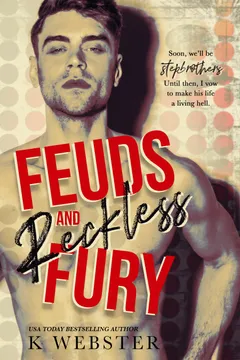
Hale is a highly controversial taboo romance between biological siblings Hudson and Rylie, earning a 3.77 average rating. Readers are divided: many praise K. Webster's emotional, compelling writing that challenges moral boundaries, while others criticize underdeveloped characters, mishandled mental illness representation, and a rushed romance. Rylie's bipolar disorder and depression feature prominently, though some feel it's poorly addressed. Banned from Amazon, the book is available only through the author's website. Most reviewers acknowledge it's not for everyone, requiring an open mind toward its explicit, unapologetic taboo content.
People Also Read

Characters
Hudson Hale
The dutiful golden boyHudson is a talented baseball player and finance student whose ambitions are shaped by his parents' financial sacrifices. He is proud, capable, and accustomed to measuring himself through achievement, which makes emotional uncertainty especially difficult for him. His first instinct is often to solve a problem or push it aside rather than listen to what another person is asking. He loves his younger sister, Rylie, but has not always understood how to support her. His relationship with longtime girlfriend Amy also reflects his desire to make a sensible future. Hudson's central tension is between the life he believes he owes other people and the wants he has not yet admitted to himself.
Rylie Hale
The restless younger sisterRylie is observant, sharp-tongued, and often funny in ways that unsettle people who expect grief to look solemn. She has a bipolar diagnosis and struggles with depression, emotional volatility, and the feeling that others see her as the family's problem. Her parents' attention and her brother's presence give her a sense of safety, but she is sensitive to being controlled or dismissed. She wants to be understood without being treated as fragile or defective. Rylie is imaginative and intensely attentive to memory, especially the small rituals that make a place or person feel like home. Her vulnerability and humor coexist; neither cancels the other.
Amy Kent
Hudson's longtime girlfriendAmy is Hudson's girlfriend from high school and comes from a wealthier family than his. She is affectionate, patient, and invested in the future she imagines with him. Her generosity can make it difficult for her to insist on her own needs, particularly when Hudson is struggling. Amy's role is more than that of a romantic obstacle: she represents the familiar, socially accepted future Hudson once believed he should choose. Her willingness to accommodate him reveals both genuine care and the vulnerability of loving someone whose attention is drifting elsewhere.
Aunt Becky
The protective guardianBecky is the younger sister of Hudson and Rylie's mother and becomes responsible for the siblings when their home life is abruptly altered. She is wealthy, organized, and accustomed to solving problems through oversight. Her concern for Rylie is real, but fear can make her controlling, especially around medication and self-harm risks. She wants to offer the kind of protection their parents would have provided, yet she has no experience parenting a grieving teenager. Her resemblance to her sister makes her both a source of comfort and a reminder of what the children have lost.
Uncle Randy
The practical uncleRandy is Aunt Becky's husband, a successful and quieter presence in the household. He is practical, steady, and less verbally forceful than Becky, though he can respond physically when a conflict erupts. He and Becky have wanted a family of their own, which informs their willingness to take responsibility for Rylie and Hudson. Randy often lets Becky lead, but his choices carry weight when the siblings' safety and future are at stake.
Amy Kent's father
The family attorneyAmy's father is a family lawyer whose professional knowledge becomes useful when Hudson faces legal trouble. He is brisk and careful about what Hudson says before receiving counsel. His role is functional but important: in a moment when panic could worsen the situation, he insists on handling the legal process properly.
Coach Brass
The baseball mentorCoach Brass oversees Hudson's college baseball career and employs him through his wife's accounting firm. He respects Hudson's talent but expects reliability from a player whose scholarship depends on performance. His sympathy for Hudson's bereavement is genuine, though it cannot erase the demands of the team. Brass represents the institutional future Hudson has worked toward, a future that remains conditional on his ability to recover his focus.
Nick
The irreverent teammateNick is Hudson's college teammate and close friend, known for joking, social confidence, and blunt opinions. He encourages Hudson to go out and notices when his friend is behaving differently. Nick's loyalty is complicated by his discomfort with what he suspects, making him both a confidant and a potential source of exposure. He tends to speak before considering the emotional consequences of his judgments.
Jada
The college bartenderJada is a bartender who flirts with Hudson and offers him attention during a period when grief and distance have weakened his relationship with Amy. She is direct and socially perceptive, and she can listen without demanding that Hudson present himself as composed. Her presence reveals his loneliness and his willingness to seek relief rather than confront it. Jada is not simply a temptation; she is a brief, imperfect source of ease in a life Hudson no longer knows how to manage.
Travis
Rylie's rule-bending classmateTravis is a boy from Rylie's school whose older brother's criminal history has given him access to fake identification and other illicit favors. He is sociable, opportunistic, and useful to Rylie in ways that make him a convenient cover as well as a source of risk. His easy familiarity with rule-breaking contrasts with the secrecy Hudson and Rylie try to control.
Dr. Livingston
Rylie's therapistDr. Livingston treats Rylie and monitors her mental health alongside her family. He asks direct questions, tracks her medication, and notices changes in her mood and functioning. His professional care gives Rylie a place to discuss her distress, though she does not disclose everything she is feeling.
Plot Devices
The shared family loss
Grief draws them closeThe sudden deaths of Hudson and Rylie's parents remove the people who once mediated the siblings' relationship. Grief brings Hudson back from college and gives him a reason to become more attentive to Rylie. It also leaves both of them vulnerable to treating one another as their only source of comfort. The loss drives the main plot while shaping its emotional logic: their intimacy begins in a real need for care, then expands beyond the boundaries that need once required.
Music and shared memory
Songs carry the family pastRylie sends Hudson songs connected to their parents and family memories. He listens to them while trying to understand what she is experiencing, and music gives the siblings a way to share grief when direct conversation feels difficult. The songs also mark the distance between them: Hudson initially ignores messages that contain both ordinary requests and emotional appeals. As he becomes more present, the shared playlist becomes a small, repeatable form of contact.
Medication and therapy
Care outside the romanceRylie's bipolar diagnosis, lithium prescription, and work with Dr. Livingston ground her struggles in ongoing mental health care. Aunt Becky monitors the medication after Rylie's overdose, and Hudson later encourages her to keep taking it. These details complicate the siblings' belief that their attachment can resolve her suffering: treatment remains part of her life even as the romance is framed as a source of relief. The device matters because it places the story's emotional claims beside concrete clinical support.
The incest law
Secrecy becomes a threatHudson and Rylie understand that their relationship is prohibited and could bring imprisonment. The law gives their fear a practical shape: they hide their intimacy, invent a boyfriend for Rylie, and worry that friends or relatives may expose them. It also becomes the obstacle the couple believes they must outmaneuver rather than reconsider. The threat escalates from private anxiety to a family confrontation and arrest, keeping their romantic commitment in tension with the world around them.
Heather Miller's identity
A false name opens a doorRylie obtains false identity papers and uses the name Heather Miller to marry Hudson. The assumed identity lets them claim a legal marriage and begin a new life outside the Missouri community that knows their family history. It is a practical solution within the plot, but it also makes their future depend on an elaborate lie. In the epilogue, their continued use of cover stories shows that the new identity changes their circumstances without ending the need for secrecy.
About the Author






Download PDF
Download EPUB
.epub digital book format is ideal for reading ebooks on phones, tablets, and e-readers.








