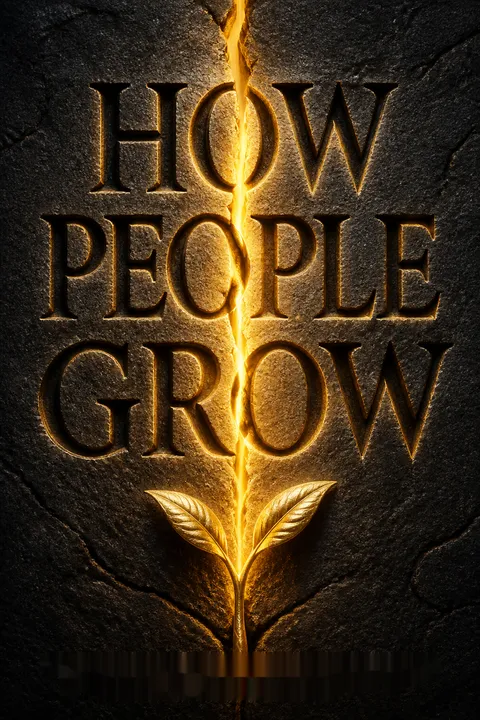


Key Takeaways
Treat emotional and relational change as spiritual growth, not a separate project
The false divide. As a young counselor, Henry Cloud expected spiritual instruction to resolve people’s problems. Yet patients who prayed and knew Scripture still struggled with depression, addiction, and troubled relationships. He had encountered four partial approaches: confronting sin, teaching truth, exploring painful experiences, and expecting supernatural change. Each could help, but none alone explained how people became deeply different. The authors’ central claim is that faith, emotional health, relationships, work, and behavior belong to one growth process. Counseling and practical help need not compete with spiritual life; they can be ways of living it.
Look beneath the symptom. Instead of asking only how to reduce a problem, ask what is missing or damaged in the person’s life, and what kind of growth could address it.
What's compelling is the refusal to quarantine ordinary life from spiritual formation. The framework gives emotional and relational work a place inside a coherent account of human development, rather than treating it as a secular add-on. That integration can also guard against spiritual bypassing, the use of religious language to avoid grief, conflict, or professional help. The broader claim that every form of growth is spiritual depends on Christian theology, however; it should not be mistaken for evidence that prayer or counseling alone treats every clinical condition.
Restore the roles the Fall reversed: depend on God, govern yourself
A map of what broke. The book organizes growth through Creation, the Fall, and Redemption. In its account of Creation, God is the source and authority; people depend on him, relate to one another, manage their own conduct, and live within a given design. The Fall reverses those roles: people try to be self-sufficient, control others, judge themselves and each other, and invent their own rules. Redemption is the return to relationship and rightly ordered responsibility, not an attempt to become God.
Apply the map. When life feels stuck, ask where the reversal is happening. Are you trying to control another person instead of governing yourself? Are you hiding a need instead of seeking help? These questions shift attention from surface behavior to the structure beneath it.
This theological map is memorable because it links everyday struggles to a common pattern: taking responsibility for what cannot be controlled while neglecting what can. That resembles a useful distinction in psychological work between influencing one’s own actions and trying to manage another person’s reactions. The framework is strongest when it encourages humility and agency together. Dependence on God should not become an excuse for passivity, and submission to authority needs discernment, especially where power is being misused.
Grace supplies what willpower cannot; arrange help instead of merely recommitting
Favor means provision. The authors define grace as unearned favor, not just forgiveness. It means God is for people and can provide resources they cannot supply alone. Their example is Dirk, who repeatedly promised to lose a large amount of weight, failed, and responded with guilt and stronger promises. The authors argue that trying harder repeats the same plan. A more complete response would include support, structure, help with the pain driving compulsive eating, and people to contact when temptation hits.
Use standards wisely. The law, or a standard of right and wrong, can expose failure and show the need for help. But condemnation and pressure are poor engines of change. Standards can guide action; they cannot provide the emotional, relational, or practical resources a person lacks.
The distinction between standards and support is valuable well beyond religious settings. Behavior change often depends on scaffolding: routines, accountability, coaching, and help with the conditions that sustain a behavior. Grace, in this account, is not indulgence but provision that makes responsibility possible. One nuance matters: pressure can sometimes prompt action, and consequences can protect people from harm. The useful test is whether accountability is connected to a workable path of repair, rather than being treated as the repair itself.
Make trusted people part of God's care, not an optional supplement
People deliver help. Cloud once thought God’s direct intervention was the primary route to healing and human support a lesser backup. He came to see relationships as central to the authors’ biblical model: people can convey comfort, truth, correction, structure, and forgiveness. Their story of Rich and Stephanie, ministry leaders whose marriage was deteriorating, illustrates the cost of confusing public service with personal growth. They needed honest support, individual counseling, and addiction recovery, not another round of religious activity performed alone.
Give and receive. The authors describe the church as a body whose members help one another grow. That includes serving others, but also admitting need and receiving care. Accountability can reveal a problem, but it cannot by itself heal it; support and deeper work are also required.
The book’s emphasis on community makes growth more concrete: people learn trust, honesty, and repair through actual relationships, not only through ideas about them. This connects with relational approaches to development, where repeated experiences of reliable care can reshape expectations. Yet community is not automatically safe. Groups can shame, coerce, or mishandle serious needs. The model works best when support is trustworthy, boundaries are respected, and peer care complements rather than replaces qualified clinical or medical help.
Use acceptance to make honest confession possible, not to excuse harm
Safety makes truth possible. Acceptance means receiving someone into relationship without condemning the person for having imperfect or painful parts. It does not require approval of harmful behavior. The chapter’s example is Gary, who confessed to his small group that he had been having an affair. He expected rejection. Instead, members expressed care and asked how they could help. Their response made it possible for him to keep addressing the choices and deeper issues involved, rather than hiding in shame.
Bring the hidden parts into the light. Acceptance can make it safer to admit needs, failures, anger, and fear. The authors argue that people grow when they can be known and loved at the same time, and then receive honest feedback. Comfort without truth can enable avoidance; truth without care can drive people back into hiding.
This account anticipates the importance of psychological safety: people are more likely to disclose mistakes when disclosure does not automatically threaten belonging. In teams and families, that can make correction more accurate and repair more possible. Acceptance is not the same as immunity from consequences, however. A group can welcome a person while insisting on accountability and protecting anyone harmed. The distinction keeps compassion from becoming either permissiveness or a polished form of judgment.
Grieve real losses instead of medicating pain or calling every hurt growth
Not all pain teaches. The authors distinguish suffering caused by harm from painful work that can expose and change destructive patterns. Job’s losses, for example, were not presented as punishment for wrongdoing. Dan’s story is different: business trouble and his wife’s departure exposed a life built on achievement, control, and emotional distance. Facing those patterns was painful, but it helped him change how he related at home and work. The distinction matters: abuse or misfortune should not be relabeled as a lesson someone deserved.
Grief releases what is gone. The book describes grief as facing reality, protesting the loss, recognizing that bargaining cannot undo it, mourning, and becoming available for new life. Support matters because people often cannot let go while isolated or unsupported.
The separation between injury and growth is ethically essential. Pain is not inherently ennobling; it can overwhelm, damage, or require protection and treatment. The book’s account of grief offers a useful alternative to forced positivity: sorrow can be part of adapting to irreversible change. Its growth language is most responsible when it does not promise that every loss produces wisdom. A person may find meaning after suffering, but meaning should not be imposed as the price of being believed or helped.
Face sin as both your responsibility and beyond solo repair
Two realities at once. The authors argue that people are accountable for their harmful choices, yet often cannot change entrenched patterns through willpower alone. Their account calls this being both responsible and powerless. Simply condemning someone or urging a fresh commitment can intensify a cycle of failure and shame. Change requires confession, repentance, help, and a fuller life of support and spiritual practice. At the same time, the example of Joe’s anger shows that not every failure is inability: sometimes a person knowingly chooses to hurt someone and needs to own that choice.
Address roots and actions. Pain or unmet needs can help explain why a behavior is tempting, but they do not excuse it. The authors advise seeking help, avoiding predictable temptations, and repairing harm where possible.
Holding responsibility and limited control together avoids two common errors: reducing behavior to bad character, or treating a person as having no agency. That balance can support compassionate accountability. It also calls for careful diagnosis. Compulsion, deliberate retaliation, trauma responses, and illness are not interchangeable, even when they produce similar outward behavior. The book’s spiritual account offers a moral framework; in practice, useful help also asks what kind of problem is present and which forms of treatment or protection fit it.
Integrate faith practices with emotional work and everyday obedience
Faith must reach daily life. Three wives in the book respond differently to troubled marriages. Jackie intensifies prayer and Bible study but does little personal work. Kim pursues emotional growth yet loses touch with her faith. Alison combines spiritual practices with support, honest feedback, work on her own patterns, and clearer boundaries. The contrast captures the authors’ view: devotion and practical change are not competing routes. Both belong in a life directed by God.
Righteousness is lived. The book uses righteousness to mean more than being declared acceptable before God. It also means becoming a person who practices honesty, responsibility, love, and self-control. Obedience therefore covers relationships and work as well as prayer and moral choices. It is meant to support a good life, not merely satisfy a rule.
The three approaches clarify why either religious intensity or self-exploration can become incomplete when cut off from the other. A whole-life model asks whether beliefs actually shape conduct and whether emotional insight leads to responsible action. Alison’s commitment should not be read as a command to preserve every marriage regardless of safety. The book’s emphasis on boundaries points toward a more careful principle: faithfulness includes truth and protection, not simply enduring harm.
Let loving discipline build the self-control you cannot summon
Structure can be learned. Kara, a mother who struggled to stay organized, had tried prayer and personal resolutions without lasting change. The authors suggested that she enlist friends to check in and help her follow through. They call this kind of external support other-discipline: structure and correction received from others until it can be internalized as self-control. Discipline, in their account, is training, not punishment. It works best with care, clear expectations, and consequences suited to the problem.
Accountability is a gauge. A group that asks whether someone has slipped can identify a problem, but monitoring alone does not resolve it. The person may also need counseling, a recovery group, practical structure, or help with the needs driving the behavior.
The idea that self-regulation develops with support challenges the fantasy that maturity means needing nobody. Coaching, reminders, and external routines can help people practice skills until they become more reliable. That does not mean every adult needs supervision, or that control should be disguised as care. The decisive questions are whether the person consents to the structure, whether it builds autonomy, and whether it can be adjusted as capacity grows.
Seek truth, act with the Spirit, and give growth time to ripen
Growth is active and gradual. The authors describe spiritual poverty as recognizing one’s real incompleteness and need for help. From there, growth involves relationships, truthful feedback, owning personal patterns, practicing new responses, grieving losses, and repairing harm. The Bible serves as a guide that teaches, corrects, and trains; Jesus models dependence, suffering, and love; the Holy Spirit is presented as the companion who guides and empowers. None makes action unnecessary. The person still has to take the next step.
Time is part of the work. Robin, a driven professional, expected to resolve deep patterns almost immediately. The authors compare growth to gardening: people can prepare the conditions and tend the process, but inner change takes repeated experience and time. Waiting alone does not produce a harvest; participation matters.
The book’s ending is a model of supported practice rather than a quick-fix formula. Its sequence, from need through ownership and repeated action toward changed patterns, resembles how learning becomes durable through rehearsal and feedback. Spiritual poverty is useful when it creates openness, not self-contempt. Likewise, patience should not excuse a stagnant or unsafe situation. Time helps when paired with truth, appropriate support, and concrete work; without those, waiting can simply preserve the problem.
Analysis
How People Grow is both a Christian theology of personal change and a practical account of counseling, community, and character. Its central move is to treat depression, intimacy, work, addiction, grief, and faith not as separate territories, but as dimensions of one life before God. The Creation, Fall, and Redemption narrative supplies the organizing logic: people flourish in dependence and relationship, become distorted when they try to be self-sufficient and controlling, and grow through restored connection, responsibility, and practice.
The book’s strongest practical contribution is its account of change as relationally supported. Grace becomes more than pardon: it includes the people and structures that make change possible. Acceptance permits disclosure, truth corrects denial, discipline builds capacity, and grief helps people face what cannot be reversed. This is a coherent model of how ideas become lived experience. It also explains why information, prayer, or accountability alone may fail when the surrounding conditions for change are absent.
The framework has affinities with contemporary approaches that emphasize social support, emotional learning, behavioral rehearsal, and the therapeutic relationship. Its distinctive claim is theological: these processes are not merely helpful techniques but part of God’s intended design. That claim will be compelling to Christian readers, while readers outside that tradition may value the practices without accepting the metaphysical account.
The authors also recognize a serious danger: helpers can mistake injury for deserved suffering, or confuse loving discipline with control. Their distinctions between harm and growth pain, acceptance and approval, and accountability and treatment are important safeguards. Still, claims that all growth is spiritual, or that moral disconnection explains a problem, should not replace clinical assessment. The book is most persuasive when it is read as an integrative pastoral framework, not a universal clinical diagnosis. Its enduring message is that durable change rarely comes from exhortation alone. It requires truth, relationship, responsibility, and time, with room for both human effort and help beyond the self.
Review Summary
How People Grow receives high praise from readers for its comprehensive approach to spiritual and personal growth. Many find it insightful, practical, and life-changing, appreciating its integration of biblical principles with psychology. Readers value its emphasis on community, relationships, and the process of growth. Some note its density and length, requiring slow, thoughtful reading. While a few criticize its theology or writing style, most reviewers highly recommend it for those seeking deeper spiritual understanding and personal development.
People Also Read








Glossary
Plan A
God's care through peopleThe authors’ term for God’s intended use of people to help one another grow. Through relationships, members of the Christian community can offer support, truth, correction, practical structure, and comfort. Human help is not presented as a lesser substitute for God’s care, but as one way that care is delivered.
Spiritual poverty
Recognizing deep needAn awareness of one’s incompleteness, weakness, hurt, or sin, together with the recognition that these cannot be repaired by self-sufficiency alone. The authors connect this condition with humility and dependence on God and other people. It is not self-hatred; it is an honest starting point for receiving help and growing.
Other-discipline
Structure received from othersThe support, limits, reminders, and correction supplied by other people when someone does not yet have reliable self-discipline in an area of life. Through repeated experience of that external structure, a person may internalize greater self-control. The authors distinguish this supportive training from punishment or mere monitoring.
Good pain
Discomfort that supports growthThe authors’ label for painful experiences that expose destructive patterns and help a person change them. It differs from suffering caused by abuse, injustice, illness, or other harm, which calls first for care and protection. Good pain is not pain for its own sake; its value depends on whether it is connected to growth.
Life in the Spirit
Depending on the SpiritA continuing relationship in which a Christian asks the Holy Spirit for guidance, truth, strength, and help, then acts on what is shown. The authors reject both self-reliance and passivity: God empowers and guides, while the person remains responsible for taking steps such as confessing, reaching out, resisting temptation, and obeying.
Sanctification
Ongoing spiritual formationThe continuing process of becoming more aligned with God’s character and ways. In this book, sanctification includes emotional, relational, behavioral, and spiritual development, not simply religious knowledge or moral rule-following. It unfolds over time and involves divine help, personal responsibility, and the support of other people.
The law
Standards that expose needThe authors use this theological term for standards that identify what is right and reveal where people fail. Such standards can guide conduct and show the need for grace, but the authors argue they cannot by themselves transform entrenched behavior. When treated as a demand to earn acceptance, the law produces condemnation and repeated efforts to try harder.
FAQ
What's How People Grow about?
- Spiritual and Personal Growth: The book explores the intersection of spiritual and personal growth, emphasizing that true growth involves understanding and applying biblical principles to real-life situations.
- Biblical Foundation: Authors Henry Cloud and John Townsend use scripture to illustrate how God's teachings guide individuals toward maturity and fulfillment.
- Integration of Psychology: It combines psychological insights with biblical truths, arguing that personal growth is fundamentally a spiritual journey requiring both internal and external support.
Why should I read How People Grow?
- Holistic Approach: The book offers a comprehensive view of growth, addressing emotional, relational, and spiritual dimensions, making it relevant for anyone seeking improvement.
- Practical Guidance: Readers will find actionable advice and strategies for overcoming personal challenges, such as dealing with sin, temptation, and emotional struggles.
- Encouragement for Change: The authors provide hope and encouragement, showing that growth is possible through God's grace and the support of others.
What are the key takeaways of How People Grow?
- Interconnected Growth: Emotional, relational, and spiritual growth are interconnected, and understanding this connection is crucial for effective personal development.
- God as the Source: God is the ultimate source of growth and healing, and seeking His guidance is essential in the growth journey.
- Community Importance: Being part of a supportive community is vital, as spiritual growth often occurs in relational contexts where individuals can share struggles and receive feedback.
What are the best quotes from How People Grow and what do they mean?
- “All growth is spiritual growth.”: This quote emphasizes that emotional and relational growth is deeply tied to one's spiritual journey, suggesting that understanding God is fundamental to personal development.
- “God is for us and not against us.”: It reassures readers of God’s unconditional love and support, encouraging individuals to approach God without fear of condemnation.
- “Blessed are the poor in spirit, for theirs is the kingdom of heaven.”: Highlights the importance of recognizing our neediness and dependence on God as a prerequisite for spiritual growth.
How does How People Grow define personal growth?
- Integration of Aspects: Personal growth is defined as the integration of spiritual, emotional, and relational dimensions of life, involving understanding and nurturing all these aspects.
- Biblical Foundation: The book asserts that the Bible provides foundational principles for personal growth, encouraging readers to explore biblical teachings as a guide.
- Community Involvement: Growth is seen as a communal process, where individuals support each other in their journeys, emphasizing that isolation hinders growth.
What role does the Bible play in the growth process according to How People Grow?
- Source of Truth: The Bible is presented as the ultimate source of truth and guidance for personal growth, teaching essential principles for navigating spiritual and emotional lives.
- Active Participation: Engaging with the Bible actively—through study, prayer, and application—is crucial for growth, leading to transformation.
- Healing and Restoration: The Bible is described as a tool for healing and restoration, providing comfort and direction, encouraging readers to seek God’s wisdom through Scripture.
How can I apply the concepts from How People Grow in my life?
- Seek God’s Guidance: Actively seek God in daily life through prayer and Scripture, establishing a foundation for growth and understanding His will.
- Engage in Community: Join a small group or community to share struggles and receive support, as building relationships is essential for personal growth.
- Practice Vulnerability: Be open about challenges and feelings with trusted individuals, fostering deeper connections and allowing for healing through acceptance and grace.
What are the four models of how people grow discussed in How People Grow?
- Sin Model: Suggests that all problems stem from sin, emphasizing confession and repentance as pathways to healing.
- Truth Model: Focuses on the idea that knowing the truth will set you free, encouraging individuals to learn and internalize biblical truths.
- Experiential Model: Emphasizes addressing past pain and trauma, advocating for healing through emotional exploration and connection with Jesus.
- Supernatural Model: Highlights the role of the Holy Spirit in personal transformation, emphasizing reliance on God’s power for change.
How does How People Grow address the issue of guilt?
- Guilt as a Symptom: Guilt is often a symptom of separation from love and God, with true guilt leading to godly sorrow focused on the impact of actions on others.
- No Condemnation for Believers: Asserts that there is no condemnation for those in Christ, helping individuals move past guilt and focus on healing.
- Importance of Community: Encourages confession and vulnerability within a supportive community, allowing individuals to process guilt and receive grace.
What is the significance of acceptance in the growth process according to How People Grow?
- Foundation for Growth: Acceptance is crucial for personal growth, creating a safe environment for vulnerability and honesty about struggles.
- Breaks Bondage to Law: Frees individuals from the impossible demands of the law, allowing focus on love and growth instead of performance.
- Encourages Vulnerability: When acceptance is present, individuals feel safe to express their true selves, fostering deeper connections and facilitating healing.
How does How People Grow suggest dealing with suffering and pain?
- Normalize Suffering: Encourages viewing suffering as a natural part of life and growth, helping individuals cope better by understanding its commonality.
- Seek Support: Emphasizes the importance of seeking support from others during difficult times, as community can provide comfort and strength.
- Embrace God’s Presence: Teaches that God is present in suffering, offering comfort, and encourages turning to Him for healing and hope.
What role does discipline play in personal growth according to How People Grow?
- Structure for Growth: Discipline provides the necessary framework for love to flourish, helping individuals develop self-control and responsibility.
- Painful Yet Necessary: Acknowledges that discipline often involves discomfort but is essential for achieving long-term growth and maturity.
- External and Internal: Discipline comes from both external sources (like community and accountability) and internal changes, emphasizing the need for both to foster true growth.
About the Author
Other books by Henry Cloud









Download PDF
Download EPUB
.epub digital book format is ideal for reading ebooks on phones, tablets, and e-readers.








