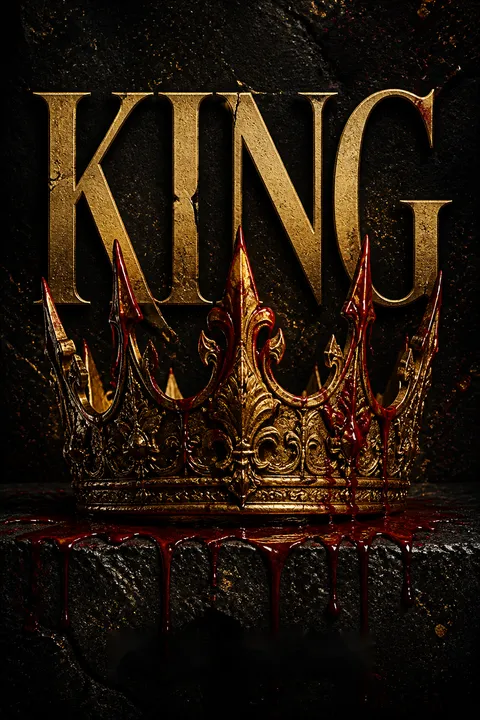


Plot Summary
Lasagna at the Wrong Door
Savannah Oates1 brings a homemade lasagna to visit her recovering friend Mandi,7 with her new date, Leland,5 reluctantly in tow. She has already begun to doubt his polished manners when Mandi7 opens the door and reveals another guest: Aspen,4 Leland's wife,4 accompanied by her imposing brother, King Vass.2 Aspen4 recognizes Leland5 and exposes his marriage in front of everyone.
When Leland5 tries to excuse his infidelity by blaming Aspen,4 King2 stands between them, silencing him with the threat in his presence. Savannah1 tries to explain that she did not know Leland5 was married, but nobody listens. Aspen's4 angry movement knocks the lasagna from Savannah's1 hands, and King2 leaves her beside the broken dish and the wreckage of her brief hope in Leland.5
The first rupture is social before it becomes criminal. Savannah arrives expecting the ordinary embarrassment of a disappointing date, only to become collateral in a family conflict whose rules she cannot read. Her instinct to smooth things over, even as the lasagna breaks at her feet, shows how readily she assumes blame for other people's conduct. King enters as both a threat and a shield: he stops Leland from humiliating Aspen further, but his power makes Savannah's small explanations irrelevant. The scene establishes the book's central imbalance. Savannah wants recognition and gentleness; King has the force to decide what happens before she can be heard.
The Key Comes Back Bloody
That night, Savannah1 realizes her keys are missing and returns to Leland's5 apartment to retrieve them. Outside his door, she hears a confrontation, a sharp report, and then a heavy fall. When the door opens, she sees Leland's5 body and King2 standing over it. She runs, but King2 catches her in the hallway and carries her to his SUV, threatening to kill anyone who interferes.
Savannah1 begs to be released and tries to enlist help through King's2 phone, only to hear Nero3 laugh at her predicament. King2 drives her away from Minneapolis and takes her to his guarded estate, insisting that she cannot go free because she witnessed the killing. The keys she wanted become the reason she is trapped with the man who killed Leland.5
The transition from awkward encounter to captivity is abrupt by design, collapsing Savannah's ordinary problem into a life-threatening one. Her visit is motivated by practical necessity, not curiosity or reckless pursuit, so the consequences expose how little control she has over danger once she enters King's world. The kidnapping also gives King a revealing contradiction: he threatens lethal force yet soothes Savannah when panic overwhelms her. His tenderness does not undo coercion; it makes coercion harder to interpret. Nero's laughter extends the Alliance's power beyond King's body, showing Savannah that even an appeal for help may be absorbed by the system holding her.
Vows Behind Locked Doors
At the estate, King2 confines Savannah1 in his bedroom, where she tests the locked door and discovers the windows are reinforced. He announces that they will marry, then searches her family and personal records while she sleeps.
The next day he uses photographs, private information, and evidence of the Alliance's violence to make clear that her loved ones could be reached if she resists. Savannah1 agrees because she cannot bear responsibility for anyone else being hurt. King2 has his best friend, Nero,3 perform a hurried ceremony while he physically restrains Savannah1 on a couch.
She gives the required answer, and King2 seals the arrangement with a kiss that briefly confuses her fear with desire. The marriage gives King2 the legal shield he wants, while stripping Savannah1 of meaningful choice.
The wedding is not a romantic turning point in the conventional sense; it is a conversion of coercive power into legal form. King believes marriage can protect Savannah from testimony and enemies, but his method makes protection indistinguishable from ownership. Savannah's agreement is morally legible, not freely chosen: she calculates that surrendering herself is safer than risking harm to people she loves. The ceremony therefore dramatizes constrained agency, the capacity to choose within a situation another person has engineered. The kiss complicates her response without changing the facts. Her body may react to closeness, but the narrative keeps the distinction between involuntary attraction and consent visible.
A Studio Inside the Fortress
King2 tells Savannah1 that he and Nero3 founded the Alliance, a criminal organization that controls territory and commits violence, while claiming a strict opposition to human trafficking. He argues that marriage will protect her from both police questioning and his enemies.
Savannah1 remains wary, but asks whether she can keep painting. King2 studies her online work and builds her a sunlit studio stocked with canvases, easels, and the paints she uses. He also begins moving her belongings from her small house into the mansion.
Savannah1 recognizes the generosity but also the control behind it: she has no phone, no independent home, and guards around the property. Her art becomes the first part of herself King2 supports without being asked, giving her a reason to imagine a life inside the estate.
The studio is the first meaningful alternative King offers to threat, but it is still situated within a fortress he controls. That double function matters. He recognizes Savannah's artistic practice as labor and identity rather than decorative hobby, while deciding unilaterally where and under what conditions it can continue. The gift reaches her because it meets a need her family has dismissed, so his attention feels unusually intimate. At the same time, its emotional force risks making confinement seem benevolent. The scene asks the reader to hold both truths together: King genuinely values her work, and his generosity does not restore her freedom.
David Burns in the Garden
King2 brings Savannah1 to a dinner at Aspen's4 home, where wealthy guests admire a painting on the wall. Savannah1 recognizes it as her white-on-white portrait of Michelangelo's David, the piece Leland5 bought from her and gave Aspen4 for their anniversary.
Aspen4 learns that the artist she is angry with is the woman who painted it, while Savannah1 has to watch strangers praise work now tangled with Leland's5 betrayal. King2 takes the painting from the house and brings it back to the estate.
Later, Savannah1 carries it into the grounds, finds a fire with help from Duke9 and King's2 staff,16 and feeds the canvas to the flames. The staff16 offer her warmth rather than judgment. Destroying the work lets Savannah1 reclaim a painful object, though not the memory attached to it.
The painting turns an aesthetic object into a knot of relationships: Savannah's pride in her work, Leland's deceit, Aspen's marriage, and King's possessiveness all converge on one canvas. Its public admiration intensifies the injury because Savannah hears her work celebrated while its history remains hidden. Burning it is not simple liberation. She destroys a meaningful piece of herself to sever its connection to Leland, and the loss registers alongside relief. The staff's quiet company offers a different kind of belonging from King's control, one based on shared presence rather than leverage. Duke's changing role also begins here, shifting from security threat to companion.
The Word Shipment
Still uncertain what King's2 criminal business entails, Savannah1 overhears him discussing an incoming shipment of girls and men being prepared for a handoff. She concludes that he is trafficking women, the one line she cannot accept, and plans an escape.
Using cash and a spare key hidden among her clothes, she leaves the estate in her minivan and buys a cheap used car on the way toward Chicago. King2 and Nero3 are in fact preparing to interrupt a trafficking sale, but Savannah1 does not know this when she flees.
At the warehouse, the Alliance works with an FBI contact17 to raid the deal; one driver escapes and King2 shoots him. The parallel action clarifies the danger without yet reaching Savannah,1 who arrives alone at a motel and believes she has escaped one kind of threat.
This escape turns a morally serious misunderstanding into the plot's most consequential test of trust. Savannah does not flee because she has forgotten King's protection or is playing games; she acts on the evidence available to her and on a boundary she considers nonnegotiable. The reader sees the tragic gap between her interpretation and King's actual operation, but her decision remains psychologically credible. In parallel, the warehouse raid shows that the Alliance's opposition to trafficking is real, though delivered through the same violence that makes Savannah fear it. The sequence resists an easy moral correction: King's good intention does not make his secrecy harmless.
The Motel Was Watched
At the motel, a tattooed Chicago crime boss named Dominic, or Dom,10 approaches Savannah1 and says King2 sent him to keep her safe. She reluctantly goes with him, not knowing that a dangerous man called Hans had just left a room near her car. Dom10 alerts King,2 who arrives with Nero3 while their men investigate the motel.
King2 tells Savannah1 he does not traffic people and explains that the girls he discussed were the victims they were trying to rescue. Savannah1 believes him and returns to the estate with him. Their reunion becomes their first sexual encounter, driven by desire, relief, and the intense imbalance between them. The danger at the motel remains unresolved, but Savannah1 now knows her escape placed her close to a threat beyond King.2
Dom's intervention reverses Savannah's assumption that distance from King equals safety. She has escaped the visible cage only to enter a landscape where an unknown predator can find her, and the Alliance's surveillance becomes, at least in this moment, protective. King's explanation restores some factual trust, but not the freedom his earlier actions removed. Their sex intensifies the novel's deliberate tension between desire and coercion: Savannah chooses physical closeness after choosing to return, yet that choice occurs within a marriage imposed on her. The book presents attraction as real without pretending it retroactively legitimizes the kidnapping.
A Ring and a Rival
At the estate, King's2 younger half-sister Val6 visits Savannah1 with margaritas, listens to the story, and becomes her first easy connection in the Vass2 family. Savannah1 admits she never slept with Leland,5 and Val6 later tells King,2 correcting the assumption that had fed his jealousy.
King2 gives Savannah1 an enormous diamond ring, a new phone, and access to her art business, while refusing to loosen his protective grip. When a former lover named Andrea arrives unexpectedly, King2 rejects her and identifies Savannah1 as his wife.
Savannah1 watches him choose her publicly, even as she recognizes how quickly intimacy and control have become entangled. Val's6 friendship gives Savannah1 someone to confide in outside the marriage, while the ring makes King's2 claim visible to everyone around them.
This section replaces isolation with relationships, but each new bond carries a different degree of agency. Val offers companionship without demanding submission, and her disclosure corrects King's false belief about Leland, revealing how jealousy has been built partly on assumption. The ring and phone suggest practical inclusion, yet King still determines the terms of access and protection. Andrea's visit lets Savannah witness a clear rejection of infidelity, but also exposes the possessive logic by which King distinguishes his wife from other women. Emotional progress is genuine, though uneven: Savannah gains allies and tools while remaining inside a structure she did not choose.
The Mayor's Brother Learns
King2 takes Savannah1 to a charity event hosted by Aspen,4 where Aspen's4 earlier hostility gives way to strained civility. Savannah1 is still uncomfortable among King's2 wealthy associates, and the mayor's younger brother, Christopher,12 deliberately touches her chest while pretending it was accidental.
She leaves the crowd shaken and goes to King2 for comfort. King2 apologizes, then follows Christopher12 into a restroom with Nero3 and breaks both of his arms, warning him to leave the state.
Aspen4 and Nero's wife, Payton,8 support Savannah1 afterward, and the women share a toast to having dangerous men on their side. King2 does not kill Christopher,12 but he makes the threat unmistakable. The incident deepens Savannah's1 reliance on King's2 protection while making the cost of that protection harder to ignore.
The assault exposes how public respectability can shelter private entitlement. Christopher relies on the familiar social script that lets a man recast a deliberate violation as an accident, leaving Savannah to decide whether she will be believed. King's response breaks that script through force, offering immediate vindication but also revealing the frightening instrumentality of his care. The women’s shared toast does not erase the violence; it registers their recognition that ordinary institutions have often failed them. Savannah's movement toward King is emotionally understandable, but the scene leaves an ethical question active: protection that restores dignity can also make vengeance the only available form of justice.
The Gallery Fills With Witnesses
Savannah1 prepares a new exhibition of bold lion paintings, unsure whether King2 will attend or understand what the work means to her. He arrives with Val,6 Nero,3 Payton,8 and members of the household staff,16 making the gallery feel less like a professional obligation and more like a community gathered for her. Buyers quickly claim the paintings, including a large golden lion.
When Savannah's1 nerves threaten to overwhelm her, King2 tells her he is proud of her and that her art matters to him. She returns to his side and introduces him as her husband for the rest of the evening. The show becomes a public success, but its deeper consequence is private: Savannah1 chooses to stand beside King,2 no longer merely enduring his presence.
The exhibition is a counterpoint to the earlier dinner, where Savannah's art was trapped in Leland and Aspen's story. Here she controls the work's presentation, receives recognition on its own terms, and watches people from King's world respond to it. King's pride matters because it names as work what her parents treated as an indulgence, but the gallery's community prevents his approval from becoming her sole source of worth. Her decision to return to his side is a small but consequential act of authorship. The marriage remains coercive in origin, yet Savannah begins to make choices within it that are genuinely hers.
A Fire Rekindles the Past
As Savannah1 and King2 grow more intimate, King2 continues the Alliance's campaign against traffickers. He takes Savannah1 to a hidden room where a captured predator is restrained, has sex with her in front of the prisoner, then kills the man.
The episode reveals how fully their desire has become entangled with King's2 violence and Savannah's1 fascination with it. Soon afterward, King2 learns that the gallery where Savannah's show was held has burned. Firefighters identify arson, and the method reminds King2 of Donnie O'Reilly,11 a former Irish mafia enforcer he believed imprisoned for life.
A call to Nero3 confirms that Donnie11 has been released on a legal technicality. King2 sends Savannah1 home under guard and goes to inspect the damage, recognizing that the attack is likely aimed at his family.
The scene with the captive is a stark test of the couple's shared erotic language, but it also exposes its moral risk: a man's imminent death becomes part of their intimacy. Savannah's participation signals desire, not a simple endorsement of every act King commits. The gallery fire then collapses the private world they have built into the old violence of organized crime. Donnie's release supplies a concrete antagonist whose past links King's present power to the Irish organization he helped destroy. The sequence shifts the story from managing the consequences of Leland's death to confronting a retaliatory threat that can reach Savannah at home.
The Stairs Become a Battleground
Donnie11 enters the Vass home while the property is isolated by a device that blocks cell service. Mistaking him for King,2 Savannah1 wakes when a gloved hand grabs her, then realizes the intruder intends to kill her. He strikes and chokes her, but she twists them both off the bed and escapes into the dark hall.
As she races down the stairs, Donnie11 knocks her down, breaking her wrist and leaving her unconscious. King2 arrives in time to see her fall. Duke9 attacks Donnie11 on the steps, and King2 beats the former enforcer to death before the paramedics take Savannah1 to hospital. She survives with a concussion, bruising, and a broken wrist. When she flinches from King's2 hand, he decides she is afraid of him.
The climax brings the external danger into the domestic space that King has insisted is secure. Savannah's survival depends on quick physical improvisation, not simply on being protected; she fights for breath, uses the bed's edge, and runs despite the risk. King reaches her in time to stop Donnie, but the rescue is not emotionally clean. He kills the attacker with his bare hands, then reads Savannah's pain response as rejection. The misreading turns the climax inward: violence saves her body while convincing King that his presence is another source of harm. The broken wrist will become both injury and mistaken evidence.
Carpet Over the Wound
After the hospital releases her, Savannah1 returns to the mansion in King's2 clothes, but King2 keeps his distance and sleeps elsewhere. He brings Duke9 to her room each night, replaces the bare staircase with thick carpet, and installs backup landlines after the attacker blocked the household's phones.
Savannah1 hears that he has also strengthened the estate's security, yet his absence hurts more than his practical care comforts her. She moves a mattress into her studio and paints while she heals, filling canvases with crowns drawn from moments in their relationship.
When she tries to speak to King,2 he tells her he will leave her free to choose her life because he believes her flinch meant fear. Savannah1 turns to Nero3 for help, determined to correct the mistake neither of them has been able to say aloud.
King's withdrawal is an attempt at moral repair that repeats his oldest mistake: deciding what Savannah needs without asking her. The security changes are concrete acts of care, but the empty bed makes his guilt into another form of abandonment. Savannah's studio becomes a recovery space where she can turn memory into images she controls. The crowns do not erase coercion; they arrange the relationship into a visual language that holds both danger and affection. Her decision to involve Nero marks a shift from waiting for King to understand her to actively changing the conditions of their silence.
Crowns Across the Canvas
Savannah1 finds King2 alone and explains that she flinched because her broken wrist hurt when he reached for it, not because she feared him. She leads him to her studio, where a new series of crown paintings records their shared history, including one framed with charred wood from the David painting she burned.
The images make plain what she has struggled to say: despite the way their marriage began, she has fallen in love with him. King2 admits that he loves her too and apologizes for withdrawing when she needed him.
They return to physical closeness on Savannah's1 terms, and he promises to stop withholding affection as punishment for his own guilt. The reconciliation does not rewrite their beginning, but it lets them choose what their marriage will mean next.
The resolution depends on correcting an interpretation, not on discovering a hidden fact about the attack. Savannah's body had communicated pain, while King treated it as a verdict on his character. Her explanation restores the distinction between accountability and self-punishment: King must acknowledge the harm he caused, but disappearing from her life does not repair it. The crown series gives their relationship a form Savannah authored herself, incorporating the burned painting rather than pretending it never mattered. Her love is not framed as proof that the kidnapping was justified. Instead, it becomes a present choice made after she names the injury and asks King to remain emotionally available.
Epilogue
On their delayed honeymoon, Savannah1 and King2 renew their vows on a beach at sunrise, replacing the coerced ceremony with the wedding Savannah1 once imagined. Later, King2 encounters Christopher,12 the mayor's brother who had groped Savannah12 and ignored his warning to leave town. King2 tracks him to a Wisconsin rest stop and kills him, carrying out the threat he made at the charity event.
The two scenes place tenderness and vengeance side by side: Savannah1 receives the ceremony she wanted, while King2 continues to enforce safety through lethal violence. Their marriage is now chosen by Savannah,1 but King's2 world remains dangerous and his idea of justice remains his own.
The beach renewal gives Savannah a ceremony shaped by her own long-held desire, transforming the wedding's earlier image without erasing its coercive origin. That repair is emotionally meaningful because King has learned to attend to what she wants, not only to what he thinks will protect her. The later killing of Christopher complicates the romantic closure. King treats the assault as an injury the social world failed to punish, then answers it with private execution. The ending refuses a clean conversion of the crime lord into a conventional hero. Savannah gains love and public recognition, while King's protection remains inseparable from violence and control.
Analysis
King builds its romance around a conflict between protection and autonomy. King2 is not merely a dangerous man who happens to love Savannah;1 his first response to vulnerability is to control the conditions around it. He kidnaps her, surveils her family, forces a marriage, and then offers real forms of care: an art studio, security, social recognition, and fierce defense against harassment. The novel makes those gestures emotionally persuasive without making them morally equivalent to consent. Savannah's1 attraction, and later love, do not retroactively justify the coercion. Her growth is measured less by escape than by the increasing clarity with which she names what she needs, corrects King's2 assumptions, and chooses when to remain beside him.
Art provides the story's most coherent account of agency. Savannah's paintings turn experience into a form she can arrange, sell, destroy, or remake. The David canvas becomes painful because its meaning has been taken over by Leland's5 betrayal and Aspen's4 marriage. Burning it is a costly attempt to reclaim that meaning. The later crown series does something different: it includes the relationship's history, even its damage, without giving King2 sole authority over its interpretation. At the exhibition, public recognition also repairs an older wound left by Savannah's1 family, who never treated her work as a serious vocation.
The Alliance complicates the romance's moral landscape. King2 and Nero3 oppose trafficking, yet they enforce their own law through intimidation, torture, and killing. This selective code can protect people whom official institutions fail, as Christopher's12 assault demonstrates, but it also narrows justice to the will of powerful men. The ending preserves that contradiction. Savannah1 receives a chosen ceremony and a partner who finally says what she needs to hear, while King2 continues to answer threats with violence. The book's emotional resolution is intimate, not political: the marriage becomes more mutual, but the world that made coercion and vengeance seem useful remains intact.
Review Summary
King receives mostly positive reviews, with readers praising the possessive, obsessive hero and steamy romance. Many enjoy the forced marriage plot and the hero's devotion to the heroine. Some find the book funny and entertaining, while others criticize the writing or find it underwhelming. Readers appreciate the plus-size representation and the hero's support for the heroine's art. Common themes include red flags, mafia elements, and intense jealousy. Overall, opinions are mixed, but fans of dark romance seem to enjoy the book.
Characters
Savannah Oates
Artist seeking belongingSavannah is a thirty-two-year-old painter whose vivid, tactile work has built her a real audience, even though her family has treated her career as a phase. She is warm, observant, and often self-deprecating, with a habit of smoothing over discomfort rather than demanding that others take her seriously. That reflex makes her vulnerable to people who mistake kindness for passivity, but it also gives her a clear moral center: she can tolerate danger and complication, but not the exploitation of women. Her attention to art, food, and small comforts anchors her in the present when fear overwhelms her. Savannah's central psychological need is not rescue alone, but recognition without having to surrender her identity.
King Vass
Possessive crime lordKing is a wealthy businessman and co-leader of the Alliance, a man whose polished public image conceals a practiced capacity for violence. He is loyal to his family and fiercely protective of people he considers his own, but he often confuses protection with control and assumes force can solve emotional uncertainty. His attraction to Savannah1 is immediate, yet his interest grows beyond possession as he recognizes her art and notices how little support she has received. King is most revealing when his confidence falters: guilt makes him withdraw, while fear of losing someone makes him more controlling. His character is built around the tension between a selective moral code and the damage caused by enforcing it through violence.
Nero
King's criminal partnerNero is King's2 closest friend and the other central leader of the Alliance. He is blunt, amused by danger, and willing to use cruelty when it suits the organization's aims. His humor can make him appear casually indifferent, especially when Savannah1 first asks for help, but he is also a strategic partner who understands King's2 blind spots. Nero's marriage to Payton8 gives him a domestic counterpoint to his criminal life and makes him more capable of advising King2 about intimacy. He is one of the few people who can challenge King2 without fear, though his own moral world remains far from ordinary.
Aspen Vass
King's sharp-tongued sisterAspen is King's2 sister, a confident charity organizer with a quick temper and a polished public manner. She has strong loyalties and expects her family to defend her, which helps explain why betrayal cuts so sharply for her. Her anger initially makes Savannah1 an easy target, despite Savannah's1 ignorance of the situation. Aspen's social fluency contrasts with King's2 blunt force, but both siblings are protective and accustomed to exercising power. She is not simply an antagonist to Savannah1; she is a wounded person whose distrust has to be understood alongside the harm her words cause.
Leland Reed
Savannah's polished dateLeland is the sophisticated man Savannah1 has recently begun dating, presenting himself through expensive clothes, a luxury car, and easy charm. His careful image appeals to Savannah1 because she wants to be seen as desirable and taken seriously. His manner also makes his behavior difficult for her to interpret until the truth of his marriage comes to light. Leland matters less as a fully known person than as the breach that pulls Savannah1 into the Vass2 family's orbit and exposes how easily surface refinement can conceal selfishness.
Val
King's candid half-sisterVal is King's2 younger half-sister, raised apart from him and Aspen4 after their father had another relationship. She is relaxed, funny, and more approachable than her older siblings, making her one of the first members of King's2 family with whom Savannah1 can speak freely. Val's willingness to listen matters because she offers connection without intimidation. She is perceptive enough to see where King2 has made assumptions, and direct enough to tell him when Savannah1 deserves to be heard.
Mandi
Savannah's gallery-owning friendMandi is Savannah's1 friend, an art-world professional who manages galleries and gives Savannah1 a social connection outside her family. Recovering from back surgery when the story begins, she becomes the host of the disastrous dinner where Savannah1 meets King2 and Aspen4. Her friendship represents the life Savannah1 has built through art rather than through her parents' expectations, even as the crisis quickly pulls that ordinary world out of reach.
Payton
Nero's warm-hearted wifePayton is Nero's wife8, an open and earnest woman who can acknowledge the frightening parts of her marriage without pretending they are ordinary. She approaches Savannah1 with empathy and offers a model of partnership within the Alliance's dark world. Payton's gentleness does not make her naïve; she can confront Nero3 and King2 when their behavior crosses a line. Her presence helps Savannah1 imagine that attachment to a dangerous man need not mean surrendering every judgment of her own.
Duke
Savannah's giant guard dogDuke is King's2 large, trained Cane Corso, initially presented as a threat meant to discourage Savannah1 from running. In private, he proves affectionate, intelligent, and eager for attention. His bond with Savannah1 grows through simple acts of play and companionship, offering comfort that does not depend on explanation. Duke also embodies the estate's dual nature: he is both a security tool and a beloved family dog.
Dominic
Chicago crime bossDominic, usually called Dom, is a powerful Chicago underworld figure who works with the Alliance when interests align. Large, tattooed, and imposing, he is careful with Savannah1 despite the unsettling circumstances of their first meeting. His presence makes clear that King's2 reach extends beyond his estate, while his practical intervention demonstrates that criminal alliances can sometimes offer protection as well as danger.
Donnie O'Reilly
Former Irish enforcerDonnie is a brutal former member of the Irish mafia, notorious for strangulation and arson. His history belongs to the old criminal order King2 and Nero3 helped dismantle, and his return threatens the fragile boundary between that past and the Alliance's present. Donnie represents revenge as a force that can survive imprisonment, legal procedure, and the passage of time.
Christopher Denton
Entitled mayor's brotherChristopher is the younger brother of Minneapolis's mayor, accustomed to moving through elite social settings with confidence. His entitlement allows him to treat other people's boundaries as negotiable, especially when he assumes public manners will protect him from consequences.
Orlando
Gallery partner and curatorOrlando works with Mandi's7 galleries and helps prepare Savannah's1 exhibitions. He understands how to arrange and present art, and treats Savannah1 as a working artist rather than a hobbyist. His professional support helps her success remain grounded in her own skill.
Cici
The estate's skilled cookCici is King's2 cook and a member of the household staff. She is quiet around unfamiliar people but shows kindness through meals, practical help, and concern for Savannah1. Her loyalty to King2 does not prevent her from recognizing Savannah's1 difficult position.
Ginger
Outspoken housekeeperGinger is the household's housekeeper and Jamie's wife15. Blunt, humorous, and loyal to the people who work beside her, she gives Savannah1 companionship and information when King's2 silence leaves her guessing.
Jamie
The estate's practical gardenerJamie is the gardener and handyman at King's2 estate, as well as Ginger's husband16. His easy humor makes the staff house feel less formal than the mansion, and he welcomes Savannah1 into their circle without demanding that she pretend her circumstances are normal.
Tye
Alliance's FBI contactTye is an FBI agent connected to Nero3, willing to cooperate when the Alliance disrupts trafficking operations. His presence shows the uneasy overlap between law enforcement and the criminal organization, without making their relationship simple or fully transparent.
Plot Devices
The forced marriage
A legal and emotional cageKing2 imposes marriage on Savannah1 because she witnessed Leland's5 killing and might be questioned or targeted by the Alliance's enemies. He uses family surveillance and threats to secure her agreement, then treats the marriage as protection and possession at once. The device moves the romance into forced proximity while making every later expression of affection ethically complicated. Savannah's1 eventual emotional commitment does not erase the coercive origin. The story's central question is how much choice can be rebuilt after one person has taken it away.
Savannah's paintings
Memory made visibleSavannah's1 paintings are both her livelihood and the clearest expression of a self her family has undervalued. The David portrait links her art to Leland5 and Aspen4, leading Savannah1 to burn a work she once loved. Later, her lion exhibition gives her public recognition, and her crown paintings transform shared memories into images she controls. Art tracks changing relationships without replacing the concrete events that shaped them. It also gives King2 a way to recognize Savannah's1 value beyond his own need to protect or possess her.
The fortified estate
Safety with locked doorsKing's2 mansion is protected by guards, reinforced glass, fingerprint locks, alarms, and Duke9. At first, these features make Savannah's1 confinement inescapable. Later, the same security becomes necessary when a dangerous enemy reaches the property and blocks its phone service. After the attack, King2 adds backup landlines and strengthens the estate's defenses. The house therefore carries two meanings at once: it is a prison designed around King's2 authority and a refuge built to protect Savannah1 from real external danger.
The Alliance
Violence with chosen rulesThe Alliance is the criminal organization King2 and Nero3 formed after dismantling the Irish and Russian mafia families in Minneapolis. It gives King2 wealth, soldiers, enemies, and the power to act outside ordinary institutions. Its members commit crimes, but King2 and Nero3 also target human trafficking operations in their territory. This contradiction shapes Savannah's1 uncertainty: the Alliance can do genuine protective work while remaining a source of danger. Its networks make it possible for King2 to find Savannah1, investigate threats, and reach into the city, but they also make his world impossible for her to leave cleanly.
The trafficking investigations
A threat misread, then exposedKing2 and Nero's3 covert efforts to interrupt trafficking deals produce the overheard conversation that sends Savannah1 fleeing. Because she hears only that girls are being moved and a transaction is expected, she reasonably believes King2 is involved in selling them. The raid at the warehouse reveals the truth to the reader, while the motel encounter with Hans shows that Savannah's1 escape has placed her near a separate threat. Later, the gallery arson and Donnie's11 return connect the Alliance's criminal past to the danger at King's2 home. The device links misunderstanding, external threat, and the couple's struggle over trust.
Alliance Series


About the Author
Other books by S.J. Tilly








Download PDF
Download EPUB
.epub digital book format is ideal for reading ebooks on phones, tablets, and e-readers.








