Plot Summary
Titanic Night: Innocence Shattered
Fifteen-year-old Ned Halloran's journey to America with his family is filled with excitement and hope, but it is violently interrupted when the Titanic strikes an iceberg. The chaos and terror of the sinking ship shatter Ned's innocence, as he is separated from his parents and forced to survive on his own. The trauma of loss and the randomness of survival haunt him, leaving a void that will shape his coming years. The Titanic's sinking is not just a personal tragedy for Ned, but a symbol of the end of an era—where certainty and security are swept away, and the world is revealed as unpredictable and perilous.
Orphaned in America
Ned arrives in America, traumatized and alone, to be met by his sister Kathleen and her fiancé, Alexander Campbell. The loss of his parents weighs heavily, compounded by survivor's guilt and the alienation of a foreign land. Kathleen, herself an immigrant, tries to comfort him, but Ned's longing for home and the familiar is overwhelming. America, with its promise and energy, feels cold and indifferent. Ned's grief is compounded by the realization that life must go on, and he is forced to choose between staying in America or returning to Ireland, a decision that will define his path.
Return to Clare
Ned's return to rural Clare is bittersweet. The family farm, now under the care of his brother Frank and Aunt Norah, is shadowed by mourning. Ned is welcomed, but the absence of his parents is a constant ache. The rhythms of farm life and the familiar landscape offer some comfort, but Ned is changed—haunted by memories and the sense that the world is larger and more dangerous than he once believed. The offer of further education, thanks to the local lord's generosity, presents Ned with a new opportunity, but also a dilemma: to remain rooted in the past or to seek a future shaped by new ideas.
Saint Enda's Awakening
At Saint Enda's, a progressive school near Dublin, Ned finds a new home and a mentor in headmaster Pádraic Pearse. The school's ethos—rooted in Irish language, history, and pride—awakens in Ned a sense of purpose and belonging. Pearse's vision of a free Ireland, and his nurturing of the boys' individuality and honor, inspire Ned to see himself as part of something greater. Friendships, intellectual curiosity, and the arts flourish, but beneath the surface, the seeds of rebellion are being sown. The school becomes a microcosm of Ireland's struggle for identity and self-determination.
Dublin's Divided Heart
Dublin is a city of contrasts: grandeur and squalor, privilege and deprivation. Ned, now a young man, navigates its streets, encountering both the slums and the salons, the labor movement and the nationalist societies. He befriends Henry Mooney, a journalist, and Síle Duffy, a country girl turned city survivor. The city's tensions—between British rule and Irish aspiration, between rich and poor—mirror Ned's own internal conflicts. The labor strikes, the rise of the Volunteers, and the ferment of ideas all swirl around him, drawing him deeper into the currents of history.
Seeds of Rebellion
Ned's relationships deepen: with Síle, whose resilience and honesty challenge his assumptions; with Mary Cosgrave, whose conventionality offers comfort but not fulfillment; and with the revolutionary leaders who frequent Saint Enda's. The lines between personal and political blur as Ned is drawn into the world of the Irish Volunteers and the Fianna. The city's unrest, the Great Lockout, and the growing militancy of both labor and nationalist movements radicalize Ned and his peers. The dream of Irish freedom becomes not just an abstract ideal, but a cause worth risking everything for.
Love and Loss in the City
As Ned matures, he is torn between two women and two visions of life. Síle, marked by hardship and survival, becomes his lover and confidante, while Mary represents the safe, respectable path. The outbreak of World War I and the split in the Volunteers force Ned to confront the realities of loyalty, sacrifice, and the price of commitment. Personal happiness is always shadowed by the larger struggle, and every choice carries consequences. The city's violence and the looming rebellion test Ned's courage and his capacity for love and forgiveness.
The Gathering Storm
The leaders of the nationalist movement—Pearse, Clarke, Plunkett, MacDonagh, Connolly—move from rhetoric to action, forming secret councils and planning an armed uprising. Ned, now a trusted courier and Volunteer, witnesses the tensions, betrayals, and last-minute crises that threaten to derail the Rising. The failed arms landing, the confusion of orders, and the wavering of key figures like Eoin MacNeill create an atmosphere of uncertainty and dread. Yet, amid the chaos, the vision of a free Ireland burns brighter than ever, and Ned finds himself at the heart of history.
Volunteers and Visionaries
On Easter Monday, 1916, the long-awaited Rising begins. Ned marches with Pearse and the others to seize the General Post Office, headquarters of the new republic. The Proclamation is read, flags are raised, and the city is transformed into a battlefield. The Volunteers, outnumbered and outgunned, hold their positions with courage and discipline. The city's response is mixed—apathy, hostility, admiration. As the fighting intensifies, Ned witnesses both heroism and horror, and the lines between friend and foe, right and wrong, blur in the smoke and fire.
The Rising Ignites
The British response is swift and brutal: artillery, machine guns, and overwhelming force. The city burns, and the rebels are driven back, building by building. Inside the G.P.O., Ned sees the leaders' resolve tested, their humanity revealed. Connolly is gravely wounded; Plunkett is dying; Pearse is haunted by doubt but refuses to yield. The women—nurses, couriers, fighters—share the dangers and the glory. As the situation becomes desperate, Ned is sent on a perilous mission, witnessing the carnage at Mount Street Bridge and the collapse of the rebel positions. The dream of victory fades, but the spirit of resistance endures.
Fire and Surrender
With the G.P.O. in flames and the city in ruins, Pearse orders a surrender to save civilian lives. The leaders are arrested, and the rank-and-file Volunteers are jeered and spat upon as they are marched to prison. Ned, concussed and feverish, is mistaken for a leader and narrowly escapes execution thanks to the intervention of friends. The courts-martial are swift and secret; Pearse, Clarke, MacDonagh, Plunkett, Connolly, and others are executed. Their deaths, intended as a warning, become a rallying cry. The cost of the Rising is terrible, but its meaning is only beginning to be understood.
Aftermath and Reckoning
Ireland reels from the violence and the executions. Families mourn, the city rebuilds, and the British government's harshness begins to backfire. Public opinion shifts as the stories of the rebels' courage and dignity spread. Ned, recovering in hiding, searches for Síle and Precious, haunted by loss but sustained by hope. The survivors—men and women—struggle to make sense of what has happened, to honor the dead, and to imagine a future shaped by sacrifice. The Rising, once condemned, becomes the seed of a new national consciousness.
The Dream Endures
In the aftermath, Ned returns to Saint Enda's, where the memory of Pearse and the others lingers in every stone and tree. Reunited with Síle and Precious, he finds solace in love and the promise of new beginnings. The vision of a free Ireland, born in blood and fire, is not extinguished. The story ends not with victory or defeat, but with the enduring power of dreams, the resilience of the human spirit, and the conviction that the struggle for dignity and self-determination is never in vain. The legacy of 1916 is left to future generations—to remember, to honor, and to continue the quest for freedom.
Characters
Ned Halloran
Ned is the emotional heart of the novel—a boy whose life is shattered by the Titanic disaster, leaving him orphaned and adrift. His journey from traumatized youth to committed Volunteer mirrors Ireland's own passage from subjugation to self-assertion. Ned's relationships—with his family, with Síle and Mary, with mentors like Pearse—reveal his longing for connection and meaning. He is introspective, sensitive, and often torn between duty and desire, tradition and change. Through loss, love, and the crucible of rebellion, Ned matures into a man who understands both the cost and the necessity of sacrifice. His story is one of resilience, growth, and the search for a home—both literal and spiritual.
Pádraic Pearse
Pearse is both a father figure to Ned and the intellectual architect of the Rising. His passion for Irish language, culture, and independence is matched by his gentleness and idealism. As headmaster of Saint Enda's, he nurtures individuality and honor in his students, believing that education is the key to national renewal. Pearse's commitment to the cause is absolute, yet he is deeply human—capable of doubt, sorrow, and tenderness. His willingness to die for Ireland is both inspiring and tragic, embodying the paradox of the poet-warrior. Pearse's legacy is not just political, but spiritual—a call to dream, to act, and to believe in the possibility of transformation.
Síle Duffy
Síle's journey from rural poverty to the brothels of Dublin is one of hardship, adaptation, and fierce independence. She is both a victim and an agent of her own destiny, refusing to be defined by shame or circumstance. Her relationship with Ned is passionate, honest, and redemptive—offering both of them a chance at healing and hope. Síle's courage, wit, and refusal to lie make her a powerful counterpoint to the more conventional women in Ned's life. She represents the marginalized, the wounded, and the possibility of renewal. Her care for Precious and her role in the Rising's aftermath highlight her capacity for love and sacrifice.
Kathleen Halloran Campbell
Kathleen's emigration to America is both an escape and a loss. She is torn between the promise of the New World and the pull of home, between the expectations of marriage and the stirrings of independence. Her involvement in Irish causes, her troubled marriage to Alexander, and her forbidden love for Father Paul reveal her complexity and longing. Kathleen's letters and actions bridge the Atlantic, connecting the struggles in Ireland to the hopes of the diaspora. She embodies the pain of displacement, the hunger for meaning, and the enduring ties of family and nation.
Henry Mooney
Henry is Ned's guide to the realities of Dublin—its politics, poverty, and possibilities. As a reporter, he is both observer and participant, using his pen to shape history and expose injustice. His wit, skepticism, and compassion make him a grounding presence in Ned's life. Henry's own struggles—with family, faith, and the limits of journalism—mirror the larger dilemmas of the era. He is a bridge between the old and the new, the personal and the political, and his friendship with Ned is a testament to the power of loyalty and truth.
Tom Clarke
Clarke is the elder statesman of the rebellion—a man hardened by years of imprisonment and unwavering in his commitment to Irish freedom. His pragmatism, discipline, and quiet humor balance the idealism of Pearse and the passion of Connolly. Clarke's relationship with his wife Katty and his mentorship of younger revolutionaries reveal his humanity and depth. He is both a symbol of continuity with past struggles and a catalyst for the new generation. Clarke's execution is a profound loss, but his example endures as a standard of integrity and resolve.
Joseph Mary Plunkett
Plunkett's brilliance is shadowed by illness and a sense of impending doom. His love for Grace Gifford, culminating in their marriage hours before his execution, is one of the novel's most poignant threads. Plunkett's strategic acumen, literary gifts, and spiritual yearning make him a complex and sympathetic figure. He is both a dreamer and a doer, embodying the fusion of art and action that defines the Rising. His death is both a personal tragedy and a symbol of the sacrifices demanded by history.
James Connolly
Connolly brings the perspective of the working class and the international left to the rebellion. His organizing of the Citizen Army, his advocacy for social justice, and his tactical brilliance are matched by his warmth and humor. Connolly's injury and execution are among the most harrowing moments of the story, highlighting both the brutality of the conflict and the dignity of its participants. He is a voice for the voiceless, a champion of equality, and a reminder that the struggle for freedom is also a struggle for justice.
Mary Cosgrave
Mary represents the path of safety, respectability, and conformity. Her beauty and charm attract Ned, but her inability to understand his deeper yearnings and her allegiance to British authority create an unbridgeable gulf. Mary's choices and attitudes reflect the broader ambivalence of Irish society—torn between loyalty to the empire and the lure of independence. Her role in Ned's life is both a temptation and a warning, illustrating the cost of choosing comfort over conviction.
Precious (Ursula Jervis)
Precious is the child rescued by Ned during the Rising, a figure of vulnerability and promise. Her presence in the story is a reminder of what is at stake—the next generation, the possibility of healing, the need for compassion. Precious's journey from abandonment to belonging mirrors Ireland's own search for identity and security. She is a living testament to the endurance of love and the necessity of protecting the most vulnerable.
Plot Devices
Historical Fiction as Living Memory
The novel's structure weaves together the personal and the political, using Ned's coming-of-age as a lens through which to experience the seismic events of 1916. Fictional characters like Ned and Síle are placed alongside historical figures—Pearse, Connolly, Plunkett, Clarke—whose actions and words are drawn from the record but given new life through intimate scenes and dialogue. This device allows readers to feel the impact of history not as distant fact, but as lived experience, full of uncertainty, passion, and consequence.
Foreshadowing and Symbolism
The sinking of the Titanic at the novel's outset is both a literal and symbolic foreshadowing of the collapse of old certainties and the coming storm. Fire recurs as a motif—destructive, purifying, and illuminating—culminating in the burning of Dublin during the Rising. Children, especially Precious, symbolize both vulnerability and hope, reminding characters and readers alike of the stakes of the struggle. The recurring use of poetry, dreams, and visions underscores the tension between aspiration and reality.
Multiple Perspectives and Interwoven Narratives
The novel shifts between Ned's perspective and those of other key characters—Kathleen in America, Síle in the city, Pearse and the leaders in council—creating a tapestry of voices and experiences. Letters, speeches, and inner monologues provide insight into motivations and doubts. The interweaving of love stories, political intrigue, and social commentary reflects the complexity of the era and the interconnectedness of private and public life.
The Rising as Tragedy and Birth
The narrative arc of the Rising is shaped by dramatic irony and foreshadowing: the leaders know they are likely doomed, yet act in the faith that their sacrifice will inspire future generations. The structure of the novel mirrors this paradox, with the climactic violence followed by a quieter reckoning and the suggestion that the dream endures. The use of real proclamations, poems, and historical documents grounds the story in fact while heightening its emotional resonance.
Analysis
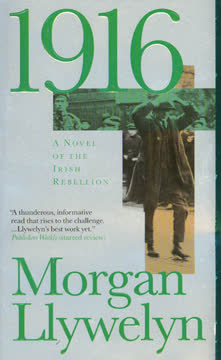
1916: A Novel of the Irish Rebellion is both a sweeping historical epic and an intimate portrait of individuals caught in the tides of change. Morgan Llywelyn's adaptation, as distilled here, captures the essence of a nation's struggle for self-definition—where personal loss and collective aspiration are inseparable. The novel's greatest strength lies in its ability to humanize history: the Rising is not just a political event, but a crucible in which ordinary people are tested, transformed, and sometimes destroyed. Through Ned Halloran's journey—from the trauma of the Titanic to the fires of Dublin—readers experience the costs and contradictions of revolution: the allure of heroism, the pain of betrayal, the necessity of hope. The story does not flinch from the ambiguities of its characters or the failures of their cause, yet it insists on the enduring power of dreams. The lessons of 1916 are as relevant today as ever: freedom is never given, only won; the past is both burden and inspiration; and the future belongs to those who dare to imagine it. The novel's emotional arc—grief, awakening, love, sacrifice, and renewal—invites readers to see themselves in the story of Ireland, and to ask what dreams are worth living, and dying, for.
Last updated:
Review Summary
1916 by Morgan Llywelyn receives mixed reviews averaging 4.08 stars. Readers praise the meticulous historical research, footnotes, and vivid portrayal of the Easter Rising through protagonist Ned Halloran, who survives the Titanic and becomes involved in Irish independence. Many appreciate learning Irish history through engaging fiction. However, critics find the writing clunky, characters underdeveloped, and pacing slow, with excessive historical detail making it read like a textbook. Some dislike the Titanic opening and romantic subplots. Overall, history enthusiasts enjoy the accurate blend of fact and fiction, while others prefer pure historical accounts.





