

Key Takeaways
Treat 1971 as three people’s histories, not simply an Indo-Pak war
One year, three stories. In Pakistan, 1971 is commonly remembered as the loss of East Pakistan. In Bangladesh, it marks liberation after years of unequal treatment and a devastating war. In India, it is often recalled as a military victory over Pakistan. Each version centers a different nation and can push Bengali experience to the margins.
People restore the missing frame. Anam Zakaria, a Pakistani researcher, travels to Bangladesh and interviews survivors, families, officials, and students across the three countries. Their accounts reveal that 1971 was not only a war between states. It was a struggle over language, power, identity, safety, and who would be allowed to shape the future.
What’s striking is how the same event changes meaning when the narrator changes. This resembles a basic problem in political history: states are visible actors, but people experience policy through jobs, homes, schools, and bodily danger. A three-country lens helps recover those experiences without pretending that all national accounts are equally complete. It also requires care: broadening the frame should not flatten differences in power or responsibility. The book’s people-centered method is most valuable when it makes those distinctions harder to ignore.
Language became a test of whether East Pakistan counted equally
A majority without a voice. Bengali was spoken by most Pakistanis, yet the early state promoted Urdu as the sole national language. In 1948, Dhirendranath Datta, a Hindu member of the Constituent Assembly who had chosen to live in Pakistan, argued that Bengali should share official status with Urdu. His appeal was rejected and portrayed as a threat to national unity.
More than words. Bengali speakers faced practical barriers when public forms and administration did not use their language. The protest grew into a wider demand for political and economic equality. In 1952, police killed students demonstrating for Bengali language rights. Bengali was recognized as a state language in 1956, but the struggle had already become a powerful source of Bengali political identity.
Language policy often looks administrative from the center and existential from the periphery. It determines who can approach a public office, succeed in education, or be heard without translation. Datta’s intervention exposed a contradiction: a state claiming to unite a majority while making its language secondary. Yet language alone does not explain the rupture. Its force came from connecting cultural recognition to representation and resources, which made a seemingly narrow dispute legible as a broader claim to equal membership.
Denying an election majority made national unity harder to defend
Votes met resistance. In the 1970 elections, Sheikh Mujibur Rahman’s Awami League won a clear majority. The party’s six-point program called for substantial autonomy for East Pakistan. Instead of transferring power, President Yahya Khan postponed the National Assembly session, while Zulfikar Ali Bhutto opposed Mujib’s leadership of a national government.
A turning point becomes personal. Some East Pakistanis had wanted autonomy within Pakistan, not immediate separation. The refusal to honor the election result weakened that possibility. The Pakistan Army launched Operation Searchlight on 25 March 1971, beginning a brutal crackdown. For many interviewees, that night transformed a political crisis into an intimate loss and made continued unity feel untenable.
Democratic legitimacy is not just a question of counting votes. It depends on whether political institutions can translate a majority’s choice into actual authority. When they cannot, appeals to national unity lose credibility, especially where regional inequalities already exist. The election does not make separation inevitable by itself, and the book captures different paths into disillusionment. Still, the sequence matters: refusing political negotiation narrows the space in which shared citizenship can survive, while coercion can turn grievance into revolt.
Read textbooks for absences as carefully as claims
Curricula build national memory. Pakistani textbooks commonly emphasize India’s role and violence against non-Bengalis, while giving little attention to the army’s actions against Bengalis. Some present Bengali language demands as a source of division. In Bangladesh, textbooks foreground liberation, Pakistani violence, and the role of collaborators, while often omitting attacks on Biharis. Indian classrooms, the book finds, may give little attention to Bangladesh’s creation unless students choose to study history.
The story changes with power. Bangladesh’s accounts have also shifted between governments, with textbooks revised to elevate or diminish Sheikh Mujib, military leaders, and India’s role. The material students encounter is not a neutral record. What is included, minimized, or left out shows which version of the nation its leaders want to establish.
A textbook is both a source of information and a civic script. Its omissions can teach students which victims deserve recognition and which questions are unsafe to ask. Comparing national curricula makes this process visible, but textbooks should not be treated as a complete measure of what young people believe. Families, teachers, media, and personal contact also shape memory. The useful question is not simply whether a textbook is biased, but what kinds of evidence and inquiry it permits students to bring against its preferred account.
A war’s victims do not fit state-approved categories
Suffering crossed communities. Bengali civilians endured mass violence, displacement, and sexual assault. Bihari and other Urdu-speaking families were also attacked, and many lost relatives or homes. West Pakistanis in East Pakistan, including civilians and soldiers, were killed or taken prisoner. Survivors’ accounts include women whose rape was publicly recognized in Bangladesh as part of the effort to protect them from social rejection.
Recognition is uneven. Bangladesh’s public memory often centers Bengali victims, while Pakistan has used Bihari suffering to defend military action. Estimates of deaths and sexual violence remain sharply disputed. The book does not treat every kind of violence as equivalent: state-backed military action and other killings differed in scale and power. It argues that neglected suffering still belongs in the history.
Including neglected victims can make history more complete, but it can also be misused to suggest that every side held equal power or responsibility. Those are separate questions. A careful account can recognize Bihari victims without using their suffering to excuse the Pakistan Army’s actions, just as it can recognize Bengali victims without erasing crimes committed against non-Bengalis. This distinction is central to credible public memory: wider recognition should increase precision about agency, scale, and accountability, not dissolve them into a vague story of universal tragedy.
Keep human choices visible beside community labels
The same neighbor could save or harm. In one account, a Bihari family sheltered the Bengali historian Muntassir Mamoon. Elsewhere, a Bengali neighbor warned the young Bihari Ansar that his family was about to be attacked. At Chuknagar, Ershad found an infant, Shundari, beside her murdered mother and arranged for a Hindu family to raise her, respecting her religious identity.
Labels simplify survival. During conflict, people are often reduced to Bengali, Bihari, Pakistani, Hindu, or Muslim. Those categories shaped danger, but they do not tell the whole story of how individuals acted. Zakaria’s interviews preserve accounts of rescue alongside accounts of violence, showing how fear, loyalty, chance, and personal relationships could cross the lines promoted by states and armed groups.
These stories complicate the familiar division between a virtuous community and a guilty one. They also show why oral history matters: a single life can carry evidence that a clean national narrative cannot comfortably absorb. Still, rescue stories should not become a comforting claim that humanity cancels political responsibility. Their value is more exacting. They show that people retained agency under pressure, while reminding readers that individual kindness did not dismantle the structures that made neighbors vulnerable.
India enabled liberation, but its victory story displaced Bengali agency
Support had two dimensions. India aided the Bengali resistance with training and supplies, and eventually fought Pakistan in December. The arrival of roughly ten million refugees from East Pakistan also created a humanitarian and political crisis for India. The book notes that Indian policy had strategic aims as well, including weakening Pakistan and managing security concerns near its eastern border.
The ending carried its own wound. Pakistan’s surrender document was signed by Pakistani and Indian generals, with no official Bangladeshi representative present at the ceremony. For many Bangladeshis, this made a people-led liberation appear to be another India-Pakistan contest. India’s contribution was real, but so was the Bengali struggle that preceded and accompanied it.
International intervention can be both morally compelling and strategically useful. Treating those motives as mutually exclusive produces either a saintly rescue story or a cynical conspiracy story. The book’s account resists both. Its focus on the surrender ceremony also shows how symbolic representation matters: who signs, who is seen, and who speaks can shape how a victory is remembered. The challenge is to recognize external assistance without allowing it to absorb the agency of the people whose political future was at stake.
Pursue justice without making historical doubt equivalent to treason
Accountability remains necessary. Bangladesh’s International Crimes Tribunal was created to prosecute people accused of war crimes. Many survivors and families had seen alleged collaborators return to political influence after years of military rule. Their demand for justice is rooted in the violence they endured and in the state’s earlier failure to address it.
Procedure matters too. The tribunal has faced criticism over fair-trial protections, political influence, and the use of the death penalty. Disputed casualty estimates and questions about terminology have also become politically charged. Zakaria argues that criticism should not automatically be dismissed as anti-liberation, nor should it be used to deny the violence. Justice gains credibility when it can hear evidence rigorously and apply standards consistently.
Transitional justice has two linked obligations: to recognize victims and to establish credible procedures. A process perceived as politically selective can weaken trust even when the underlying crimes are grave. Conversely, procedural criticism can be weaponized to avoid accountability altogether. The distinction between questioning a court’s methods and denying victims’ experiences is therefore essential. The book’s tension here is productive: remembrance needs public recognition, while historical inquiry and legal judgment need room for evidence, disagreement, and correction.
Teach trauma without assigning inherited guilt to children
Young people inherit narratives. In Bangladeshi classrooms, students described Pakistan through accounts of cruelty and backwardness. Pakistani students often reduced Bangladesh’s creation to India’s interference or Bengali disloyalty. Many Indian students knew little about the war beyond its connection to Pakistan. These ideas came from textbooks, families, and public culture, not personal experience.
Contact can unsettle stereotypes. When Zakaria met Bangladeshi students, some were astonished that a Pakistani visitor did not match the image they had learned. Students asked questions, talked about ordinary interests, and reconsidered their assumptions. Such encounters do not repair historical harm by themselves. They can, however, separate responsibility for past actions from the inherited identity of a child born decades afterward.
Education about atrocity should neither sanitize violence nor recruit children into permanent hostility. That requires holding two truths together: descendants deserve to know what happened, and they are not personally guilty for actions taken before their birth. Direct contact can make that distinction emotionally real, but it cannot replace honest teaching or institutional accountability. The strongest educational approach would invite students to compare evidence and ask who is missing from a narrative, rather than simply trading one national story for its opposite.
Citizenship remains a consequence of war, not paperwork alone
The conflict outlived the border. Many Urdu-speaking Biharis remained in Bangladesh after 1971, often living in crowded camps and waiting for Pakistan to accept them. Some later generations received Bangladeshi citizenship, while older residents continued to identify with Pakistan. In Karachi, Bengali families who had lived in Pakistan for decades reported trouble obtaining or renewing identity cards, limiting access to schooling, work, and basic services.
Belonging is still contested. These communities are judged through inherited assumptions about loyalty: Biharis as collaborators, Bengalis as outsiders or potential allies of India. Children born after the war can face the consequences of those labels. The book ends with people caught between national histories, showing that the consequences of 1971 are not only remembered in museums. They are also enforced through documents, borders, and exclusion.
Citizenship is often described as a legal status, but in practice it is also access to institutions and a recognized place in public life. The cases here show how unresolved conflict can be reproduced through ordinary administrative decisions. A missing identity card can shape a child’s education as surely as a textbook shapes historical memory. This does not mean all documentation disputes have the same cause. It does mean that states should examine whether security and loyalty tests are perpetuating inherited punishment for communities whose members have lived there for generations.
Analysis
The book’s strongest method is to place personal testimony beside the institutions that authorize public memory. Zakaria moves from her own incomplete Pakistani education about 1971 to encounters with survivors, textbooks, museums, and students. That structure turns the researcher’s learning into part of the argument: history is not simply hidden in an archive, but also made present or absent in classrooms, public monuments, and everyday assumptions about who counts as a loyal citizen.
Oral history is especially powerful here because it captures contradiction. A person may remember a community member as both rescuer and threat; a family may retain affection for a country whose army harmed them; a Bengali may remain attached to Pakistan while choosing Bangladesh. Such accounts resist the clean moral categories that national narratives need. They also demand caution. Zakaria openly acknowledges the limits of her interviews, including selective participation and difficult access to Bangladesh. The testimony therefore offers situated perspectives, not a statistical portrait of every group or a definitive adjudication of contested totals.
The book’s central ethical tension is how to widen remembrance without creating false equivalence. The suffering of Biharis and West Pakistanis deserves recognition, but recognition must not erase the scale, organization, and state power behind the military campaign against Bengalis. Likewise, criticism of Bangladesh’s tribunals should not become a pretext for denying the crimes that made accountability necessary. The most persuasive standard is not that every national account be balanced equally, but that every claim be tested against evidence and that power be named precisely.
The result is a history of 1971 that does not promise easy reconciliation. It shows instead how selective memory sustains present-day mistrust, and how citizenship, political legitimacy, and belonging remain entangled with the war. Its call is demanding: remember more people, examine the institutions that teach the past, and refuse both inherited guilt and convenient forgetting.
Review Summary
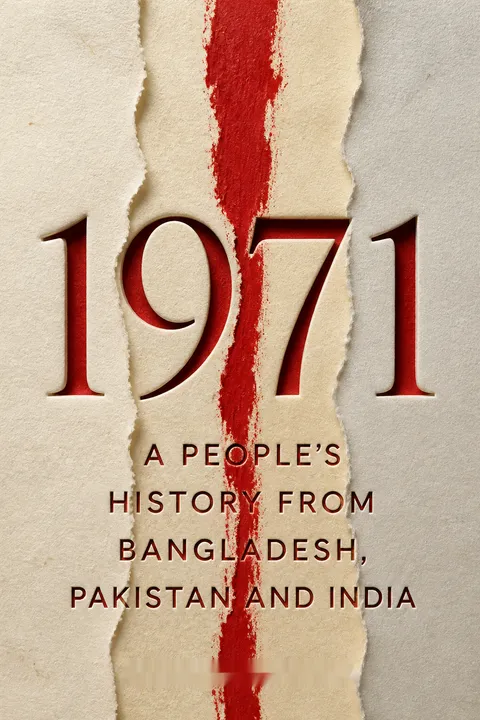
1971: A People's History from Bangladesh, Pakistan and India is praised for its balanced, nuanced approach to the complex events of 1971. Readers appreciate Zakaria's use of personal narratives and oral histories to present multiple perspectives from all three countries involved. The book is commended for challenging state-sponsored narratives and highlighting overlooked experiences. While some found it repetitive, most reviewers consider it essential reading for understanding South Asian history, praising its objectivity and empathetic storytelling. Many recommend it as an eye-opening, thought-provoking work that bridges divides between nations.
Glossary
Mukti Bahini
Bangladeshi liberation forcesThe name for the Bengali forces that fought for Bangladesh’s independence in 1971. The movement included armed resistance fighters and people who supported the liberation struggle in other ways. In Pakistani narratives, the Mukti Bahini is often described as an Indian-backed enemy; in Bangladesh, it is remembered as a force of national liberation.
Bihari
Urdu-speaking non-Bengali communityA broad label used in East Pakistan and Bangladesh for many Urdu-speaking people who migrated from Bihar and other parts of India around Partition. Not all were born in Bihar, and their experiences in 1971 varied. Some supported Pakistan, some were accused of collaborating with its army, and many civilians were also attacked, displaced, or left stateless.
birangona
Recognized war heroineA title meaning war heroine, given by the Bangladesh government to women who were raped during the 1971 war. The public recognition aimed to counter the stigma attached to sexual violence and acknowledge women’s suffering. It did not guarantee acceptance: some women faced further shame or exclusion when their experiences became publicly known.
Razakar
Pro-Pakistan auxiliary force memberA term used in Bangladesh for members of auxiliary forces and local collaborators who supported the Pakistan Army during the 1971 war. Some people joined willingly, while others faced pressure or coercion. The word remains politically charged and is often used more broadly as a label for someone seen as opposing Bangladesh’s liberation.
Bengali nationalism
Identity centered on Bengali cultureA political identity emphasizing Bengali language, culture, and shared history. In Bangladesh, it is often associated with the liberation struggle and the Awami League’s secular national vision. Its emphasis on Bengali identity can also leave non-Bengali communities feeling excluded from the nation’s story.
Bangladeshi nationalism
National identity beyond Bengali ethnicityA political identity framed around citizenship in Bangladesh rather than Bengali ethnicity alone. The book describes its promotion by the Bangladesh Nationalist Party as a claimed way to include non-Bengali communities, while critics argue that it was also used to advance a more religious national identity and challenge the Awami League’s account of liberation.
FAQ
1. What is 1971: A People's History from Bangladesh, Pakistan and India by Anam Zakaria about?
- Multi-perspective historical account: The book provides a comprehensive narrative of the 1971 war that led to Bangladesh’s independence, drawing on voices from Bangladesh, Pakistan, and India.
- Focus on memory and identity: It explores how the war is remembered, forgotten, or contested in each country, and how these memories shape national identities and inter-state relations.
- Oral histories and personal stories: Zakaria uses interviews and personal testimonies to highlight the human experiences behind official state narratives, revealing silences and complexities often omitted from textbooks.
2. Why should I read 1971: A People's History from Bangladesh, Pakistan and India by Anam Zakaria?
- Nuanced, multi-sided perspective: The book challenges one-sided histories by presenting diverse viewpoints, including marginalized voices like Biharis, women survivors, and dissenting Pakistanis.
- Relevance to current issues: It connects the legacy of 1971 to ongoing political tensions, identity politics, and communalism in South Asia, making it vital for understanding the region today.
- Humanizes historical conflict: Through personal stories, the book fosters empathy and a deeper understanding of the war’s complexities and its lasting impact on individuals and societies.
3. What are the key themes and takeaways from 1971: A People's History from Bangladesh, Pakistan and India by Anam Zakaria?
- Selective memory and silences: Each country’s official history selectively remembers or omits aspects of 1971, shaping public perceptions and reinforcing national ideologies.
- Complex identities and loyalties: The book highlights the fluid and contested identities of communities like Biharis in Bangladesh and Bengalis in Pakistan, who remain marginalized.
- Lasting trauma and contested memory: The violence and upheaval of 1971 left deep wounds, with unresolved issues like statelessness and the politics of genocide recognition still affecting the region.
4. How does Anam Zakaria use oral history in 1971: A People's History from Bangladesh, Pakistan and India?
- Personal interviews as foundation: Zakaria conducted interviews with survivors, soldiers, activists, and academics from all three countries, providing intimate insights into lived experiences.
- Balancing ethics and representation: She navigated political sensitivities and ethical challenges, relying on willing participants and existing archives to avoid retraumatizing interviewees.
- Juxtaposing personal and state narratives: The book contrasts individual memories with official histories, showing how personal stories can challenge or complicate dominant public truths.
5. What were the main causes of the 1971 conflict in East Pakistan, according to Anam Zakaria?
- Economic exploitation: East Pakistan’s resources, especially jute, were used to benefit West Pakistan, leading to feelings of economic injustice among Bengalis.
- Cultural and linguistic discrimination: The imposition of Urdu and the suppression of Bengali culture and language fueled resentment and a sense of alienation.
- Political marginalization: Despite being the majority, Bengalis were denied political power and faced systematic exclusion from decision-making and national institutions.
6. How does 1971: A People's History from Bangladesh, Pakistan and India by Anam Zakaria describe the role and experiences of the Bihari community during and after the war?
- Complex identity and migration: Biharis, Urdu-speaking migrants from Bihar, were often favored by the Pakistani state but resented by Bengalis, leading to tensions.
- Victims and collaborators: Some Biharis collaborated with the Pakistan Army, while many suffered violence and persecution during and after the war.
- Post-war marginalization: After independence, Biharis were largely ostracized, confined to camps, and rendered stateless, with their narratives often erased in Bangladesh but used in Pakistan to justify military actions.
7. How does Anam Zakaria portray the experiences of women and minorities in 1971: A People's History from Bangladesh, Pakistan and India?
- Gendered violence: The book highlights the experiences of women like Ferdousi Priyabhashini, who survived rape and torture, emphasizing the scale of sexual violence during the war.
- Marginalized minorities: Hindu communities faced targeted violence, forced migration, and property confiscation, while their stories are often sidelined in national narratives.
- Challenges of inclusion: Zakaria notes the institutional silences and personal reluctance to discuss these experiences, reflecting the contested nature of memory and identity in post-war South Asia.
8. How does 1971: A People's History from Bangladesh, Pakistan and India by Anam Zakaria describe the role of India in the 1971 war and its aftermath?
- Humanitarian and strategic motives: India’s intervention was driven by the refugee crisis and strategic interests, including weakening Pakistan and managing internal security threats.
- Support for Mukti Bahini: India provided crucial support to the Bangladeshi resistance, which was decisive in the outcome of the war.
- Divergent legacies: The war is celebrated as a military triumph in India and as liberation in Bangladesh, but is portrayed negatively in Pakistan, with contemporary Bangladeshi ambivalence towards India due to ongoing political and economic concerns.
9. How are the events and memory of 1971 institutionalized in Bangladesh, Pakistan, and India according to Anam Zakaria?
- Museums and monuments: Bangladesh commemorates the liberation struggle and genocide through museums and memorials, reinforcing a narrative of heroism and victimhood.
- Textbook politics: Both Bangladesh and Pakistan use education to promote selective histories, often omitting inconvenient truths and reinforcing national ideologies.
- Impact on youth and identity: These institutional narratives shape how new generations perceive the war, often perpetuating misunderstandings and hostilities between countries.
10. What does Anam Zakaria say about the contested death toll and the question of genocide in 1971: A People's History from Bangladesh, Pakistan and India?
- Disputed figures: Bangladesh claims 3 million deaths, a number central to its national narrative, while Pakistan disputes this figure and estimates far fewer casualties.
- Debate over genocide: The book discusses whether the events meet the UN definition of genocide, considering the targeting of political and ethnic groups.
- Political implications: The recognition or denial of genocide remains a contentious issue, tied to national identity, justice, and international relations.
11. How does 1971: A People's History from Bangladesh, Pakistan and India by Anam Zakaria address the impact of the 1947 Partition on the events of 1971?
- Partition’s complex legacy: The book shows that 1947 was remembered differently in each country, shaping national identities and inter-state relations.
- Economic and political roots: Partition’s aftermath led to economic and political marginalization of East Pakistan, fueling grievances that contributed to the 1971 conflict.
- Continuing communal tensions: The communal violence and population movements of Partition set the stage for ongoing religious and ethnic tensions, culminating in the rise of Bengali nationalism.
12. What are the most powerful quotes from 1971: A People's History from Bangladesh, Pakistan and India by Anam Zakaria, and what do they signify?
- On trauma and resentment: “No matter what you do, you can never understand what we have been through. There’s no one in this room who hasn’t suffered during the liberation war.” — Highlights the enduring pain and collective trauma in Bangladesh.
- On selective history: “East Pakistan had a very big Hindu population... which virtually turned into nurseries for breeding anti-Pakistan and secessionist intelligentsia.” — Reflects how education can ‘otherize’ and delegitimize entire communities.
- On collective guilt: “In the army, you wear no separate uniform. We all share the guilt. We may not have killed, but we connived and were part of the same force. History does not forgive.” — Illustrates the moral complexity and shared responsibility felt by some soldiers.
- On identity and exclusion: “The events of 1971 belong to them, the Bengalis, who can remember and tell their version of the story and thus make it ‘their history’.” — Points to the exclusion of Bihari experiences from Bangladeshi collective memory.
Download PDF
Download EPUB
.epub digital book format is ideal for reading ebooks on phones, tablets, and e-readers.








