

Key Takeaways
Treat Christianity as a claim about reality, not a comfort product
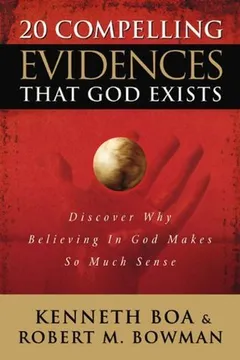
Truth comes first. Boa and Bowman argue that Christianity matters only if its claims are true, not merely because belief might comfort people or improve their behavior. Its claims concern events in the physical world, including creation, Jesus' death, and his reported resurrection. That makes them open to investigation, disagreement, and correction. The authors present evidence as a set of pointers, not a proof that forces every reader to agree.
Use the right test. A science-fiction story such as The Matrix can make reality feel uncertain, but an illusion still depends on some reality it misrepresents. The authors apply the same point to religion: sincerity and tradition cannot substitute for checking whether a belief fits the world. Their opening challenge is to consider the case rather than accept or dismiss it on usefulness alone.
What's valuable here is the distinction between a belief's usefulness and its truth. Psychology can explain why comforting beliefs appeal to people, but that explanation neither verifies nor refutes their content. The same discipline applies in reverse: emotional power is not evidence of falsehood. The authors' invitation to inspect claims is strongest when it includes openness to inconvenient findings, not just evidence that supports a preferred conclusion. A practical reader can ask two separate questions: Does this belief help people live, and is it actually true? Neither answer settles the other.
Use doubt to test explanations, not to declare knowledge impossible
Perspective is not omniscience. The authors describe postmodernism as emphasizing how power and cultural standpoint shape what people count as knowledge. They grant that institutions and communities influence belief, but reject the leap from influence to impossibility of truth. Their mnemonic, POST, summarizes four tendencies they associate with postmodernism, including skepticism about objectivity and treating tolerance as more important than truth.
Claims can be examined. The authors argue that blanket relativism undermines itself: if no claim can be true for everyone, that statement cannot claim universal truth either. They also point to ordinary facts, such as arithmetic and the danger of a speeding truck, that people rely on regardless of philosophy. Their alternative is not perfect neutrality, but fallible people using evidence and reasoning to learn what is true.
The useful middle ground is between naïve objectivism and total relativism. Researchers do bring assumptions to their work, and institutions can privilege some questions over others. Yet shared measurement, replication, and public criticism can expose errors across communities. The authors are right that disagreement does not erase truth, but their sketch of postmodern thought risks flattening a diverse philosophical tradition into a single opponent. A stronger use of their argument is methodological: acknowledge standpoint, then ask which claims survive scrutiny from more than one standpoint.
Explain why the universe exists, not only how it changes
Existence invites explanation. The book asks why there is anything at all, then contrasts three broad answers: the universe simply exists without further explanation, everything is ultimately divine, or a distinct God created the universe. The authors favor the third, theism, in which God is eternal and the universe depends on God but is not part of God.
Cosmology adds a clue. The book traces how evidence for expansion, including observations associated with Edwin Hubble, challenged the once-popular idea of an eternally static universe. The cosmic background radiation discovered by Arno Penzias and Robert Wilson strengthened the case for a hot, dense early universe. The authors see a beginning as fitting theism. They also note that a universe with finite energy and a changing sun would not be a hospitable place if it had existed forever.
This is a version of the cosmological argument: contingent things seem to call for an explanation beyond themselves. Modern cosmology can support the claim that the observable universe has a finite history, but a beginning in time does not by itself establish a personal creator, much less identify that creator with the biblical God. Nor does every account of a cosmic beginning describe an absolute beginning from nothing. The argument is most persuasive as a challenge to casual assumptions that the universe explains itself, not as a stand-alone demonstration of Christian theology.
Read cosmic fine-tuning as suggestive evidence, not a probability proof
Life needs a narrow fit. The authors point to the strengths of the fundamental forces, the expansion of the universe, and conditions in our solar system and on Earth. They argue that small changes to some physical parameters would prevent stars, planets, or familiar forms of life from developing. On Earth, they highlight its distance from the Sun, the stabilizing role of the Moon, and Jupiter's effect on incoming debris.
The numbers are estimates. The book gives very small probability estimates for a life-supporting universe, including an estimate of one in a billion trillion for a particular combination of conditions. It presents these as conservative calculations, while also acknowledging that the odds cannot yet be computed exactly. The authors judge design a better explanation than luck or an enormous collection of other universes.
Fine-tuning is a serious question because physical constants and initial conditions do appear to matter for the emergence of complex structures. Still, a probability estimate depends on defining which values could have varied and how likely each value would be. Those assumptions are not directly measured. The anthropic selection effect also matters: observers can only find themselves in conditions that permit observers. Multiverse proposals offer one possible response, though they bring their own unresolved questions. The evidence can make design a live explanation, but it does not function like a measured lottery with agreed odds.
Ask whether life's information is explained, not merely how complex it looks
A habitable planet is not life. The authors argue that explaining life's origin is a separate challenge from explaining conditions suitable for life. They question older primordial-soup accounts by citing evidence they interpret as showing that life appeared early and that Earth's ancient atmosphere contained oxygen that would disrupt some proposed chemical pathways. They also discuss panspermia, the idea that life arrived from space, noting that it relocates rather than solves the origin question.
Information sharpens the design claim. DNA, RNA, and proteins perform interdependent roles, while DNA carries ordered instructions. The authors use William Dembski's explanatory filter, a method that asks whether an event is physically necessary, merely complex, or complex in a meaningful, specific pattern. They also cite Michael Behe's term irreducible complexity for systems said to need several coordinated parts to function.
The distinction between life's origin and evolution after life exists is essential. Uncertainty about how the first living systems arose does not by itself disprove evolutionary explanations of biological diversity. The book's cases about ancient atmospheric conditions and molecular dependencies reflect arguments available to its authors, not a settled scientific verdict that natural origin is impossible. Information can be a powerful clue to agency, but biological function and genetic information also require careful definitions. The strongest version of the design question is not whether science has finished explaining life, but which mechanisms can account for the evidence and where genuine gaps remain.
Let moral outrage raise a question about objective good, without pretending it solves evil
Humans are morally mixed. The authors describe people as capable of extraordinary thought and astonishing folly, compassion and cruelty. They point to terrorism and war alongside rescue efforts, and stress that no simple division separates the good from the bad. In their view, people experience some actions as genuinely wrong, not merely inconvenient.
Theism offers a story. The authors argue that atheism can describe moral judgments as human conventions but struggles, in their view, to explain why some acts deserve condemnation. They also reject pantheistic accounts that treat evil as illusion. Christianity, they say, explains goodness as part of creation and evil as corruption caused by human choices. They explicitly do not claim this explains why every particular tragedy happens.
Moral experience raises a real philosophical question: are judgments about cruelty merely preferences, or do they answer to standards beyond individual approval? The book's appeal to moral realism gives its argument force, but moral instincts alone do not identify their source. Evolutionary accounts explain how cooperation and fairness can support social life, while philosophers continue to debate whether such accounts explain moral truth itself. More importantly, a moral framework that explains human wrongdoing does not automatically explain natural suffering or why an all-good God permits it. The authors' restraint about individual tragedies is important, but the problem of evil remains a substantial challenge.
Distinguish reliable transmission from proof of every biblical claim
The text has substantial support. The authors cite thousands of Hebrew Old Testament manuscripts, the Dead Sea Scrolls, and more than five thousand Greek New Testament manuscripts. They argue that comparisons among copies show strong preservation, with many variations involving spelling or wording rather than major Christian teachings. They also note that some New Testament copies are relatively close in time to the works they transmit.
History is a separate question. The book points to archaeology and non-biblical sources that align with parts of the biblical setting. It highlights Luke's knowledge of Roman officials and legal procedure, and Paul's letters, written within decades of Jesus' death, as early sources for the Christian movement. The authors also value the Bible's challenge to superstition and its insistence on human dignity across sex, ethnicity, and social rank.
Textual criticism studies how manuscripts differ and uses evidence to estimate earlier readings. Strong manuscript support can increase confidence that a text has been transmitted with care, but it cannot independently show that every event described in that text happened. Historical claims, miracle claims, and theological interpretations require distinct arguments. The book's ethical emphasis also deserves this separation: a tradition can contain powerful resources for dignity while its followers sometimes violate them. That tension makes the Bible's moral vision more than a slogan. It invites readers to compare the stated ideal with the actions of the communities that claim it.
Require independently dated predictions before calling prophecy evidence
Prophecy is a historical claim. The authors frame biblical prophecy as a long story, not a collection of cryptic forecasts. They discuss the promise that Abraham's descendants would affect peoples beyond Israel, and predictions of judgment and restoration for the Jewish people. They also connect Daniel's vision of a future ruler and a destroyed Temple to the Roman destruction of Jerusalem in AD 70, and Jesus' reported prediction of that destruction.
Dating carries the argument. The book's detailed reading of Daniel treats its seventy weeks as periods of seven years. It links a Persian decree around 445 or 444 BC to a period ending near Jesus' execution, dated by the authors to AD 30 or 33. The case depends on how the passage is interpreted, when it was written, and which calendar assumptions are used.
A prediction supports foreknowledge only if the prediction can be shown to predate the event and the event is independently established. Ambiguous language, flexible timelines, and texts composed after the fact can make a fulfillment look stronger in retrospect. The book is right to make dating central rather than rely on vague resemblance, but Daniel's chronology and the interpretation of modern events such as Israel's restoration remain debated. Readers can use a simple test: identify the exact prediction, establish its earliest secure date, and specify what would count as failure as well as success.
Judge Jesus by the early claims about him, not by a safe image
Jesus is firmly historical. The authors note that Paul wrote within a few decades of Jesus' death, knew Peter and James, and referred to Jesus as a real person who was crucified. The Gospels and other ancient references add to the basic historical picture: a Jewish teacher associated with John the Baptist, active in Galilee, executed under Pontius Pilate.
His identity is the dispute. The Gospels portray Jesus forgiving sins, speaking of God as his Father, and claiming an authority that went beyond that of an ordinary teacher. The authors argue that these claims cannot be reduced to a harmless moral program. They also describe Jesus challenging political traps and treating women with unusual respect for his time. Their conclusion is that readers must confront the claims themselves, not simply admire his ethics.
The distinction between a historical Jesus and the theological meaning assigned to him is crucial. Many historians accept the basic facts of Jesus' existence and execution while disagreeing about how to interpret particular sayings or actions. The familiar choice between divine Lord, fraud, or delusion is rhetorically forceful but not exhaustive: a reader may question the accuracy of a saying, its context, or its later interpretation. Even so, the early Christian focus on Jesus' identity is historically significant. A careful assessment asks what the earliest sources say, how early those claims are, and what explanations best account for their emergence.
Assess the empty tomb alongside early claims of encounters, not in isolation
Two lines of evidence converge. The authors argue that Jesus died by crucifixion, was buried in a tomb, and that the tomb was later reported empty. They emphasize that the burial appears in all four Gospels and that Paul preserves an early statement that Jesus was buried and raised. The Gospels name women, including Mary Magdalene, among the first to report the empty tomb and encounters with Jesus.
The reports spread quickly. Paul lists appearances to Peter, James, groups of followers, and himself. The authors stress that Paul had opposed Christians before becoming one, and that his testimony is early. They consider theft, a mistaken tomb, hallucination, and survival after crucifixion, arguing that these accounts do not explain both the empty tomb and the reports of encounters as well as resurrection does.
The cumulative structure is stronger than treating an empty grave or a reported vision as decisive by itself. Early testimony can establish that people believed they encountered Jesus; it cannot, without further argument, settle what caused those experiences. Historical reasoning compares explanations, but a miracle conclusion also depends on judgments about what causes are possible. The authors are right to resist casual dismissal of early testimony, while alternative explanations should be tested by evidence rather than labeled impossible in advance. The case is best assessed by separating relatively secure claims, such as early resurrection belief, from more contested claims about the tomb and the nature of the appearances.
Treat Christian love as witness, but martyrdom as evidence of sincerity
Belief takes social form. The authors point to care for the sick, poor, and vulnerable as evidence that Christians have tried to embody Jesus' teaching. They cite the early growth of the church and later charitable institutions, while acknowledging that Christians have often failed their own standards. The story of five missionaries killed in Ecuador in 1956 illustrates the cost of that commitment: Elisabeth Elliot, one missionary's widow, returned to live among the people who had killed her husband, and some members of the community embraced Christianity.
Cost does not prove truth. The book also surveys Christian martyrs across centuries, arguing that their willingness to die reflects confidence in Jesus' resurrection. It admits that other religions have martyrs too. The authors therefore rely not simply on death, but on the duration, scale, and reported character of Christian witness.
Sacrificial care can make a worldview visible in ways abstract argument cannot. Social historians also help explain how mutual aid, nursing, and community support contributed to early Christian growth. Yet generous action supports the moral seriousness of a community more directly than the factual truth of every doctrine it holds. Martyrdom is even clearer evidence of commitment than of correctness: people in conflicting movements have died for incompatible beliefs. The Ecuador story is most compelling as an account of costly forgiveness and changed relationships, not as a shortcut from sacrifice to certainty.
Other religions illuminate human needs, but Christianity stands or falls with Jesus
Respect difference without erasing it. The authors identify insights in other traditions: Hinduism's attention to life's transience, Buddhism's analysis of suffering, Taoism's concern with humanity's relation to nature, and Islam's emphasis on one creator and divine law. They reject the idea that all religions are simply interchangeable routes, because their claims about God and human destiny often conflict.
Christianity centers on a person. In the book's comparison, the Buddha is chiefly a guide to a teaching, Muhammad a messenger of divine law, and Moses a prophet of Israel's God. Christianity, by contrast, depends on the claim that Jesus is God's Son, died for human wrongdoing, and rose again. If Jesus did not rise, the authors argue, Christianity loses its central promise. Readers are invited to investigate and decide, not merely inherit a label.
This conclusion gives the book a clear criterion: Christianity is not validated by the general human hunger for transcendence, but by claims about a particular person and events in history. The comparison is useful when it makes real doctrinal differences visible, though brief portraits cannot represent the full diversity within Hindu, Buddhist, Muslim, or Jewish traditions. Religious pluralism need not mean that all claims are equally true; it can mean that traditions deserve accurate description and fair examination. The strongest form of the authors' case therefore combines respect for shared moral and existential questions with rigorous scrutiny of Christianity's distinctive historical claims.
Analysis
The book builds a cumulative case, moving from broad questions about reality and existence to the specifically Christian claim that God is revealed in Jesus. Its architecture matters: cosmology, life, morality, Scripture, and resurrection are presented as mutually reinforcing clues, not as twenty independent proofs. The central reasoning is abductive. The authors ask which worldview best explains a collection of features, then argue that biblical theism offers the most coherent account.
That cumulative approach is the book's strength and its main vulnerability. Evidence from different fields can illuminate the same worldview, but the items are not automatically independent. Fine-tuning, the origin of life, and human moral experience each involve contested assumptions; counting them as separate confirmations can overstate their combined force. Likewise, the reliability of manuscript transmission is distinct from the historical accuracy of a narrative, and both are distinct from the truth of a miracle claim. The book sometimes moves quickly across these levels, making an inference feel more conclusive than the premises warrant.
Its treatment of science is strongest as a challenge to materialism's claim to explain everything, not as a demonstration that science has reached an explanatory dead end. Uncertainty about abiogenesis is not proof of design, and a universe with a beginning does not by itself identify a personal creator. On the historical side, the early existence of resurrection belief is easier to establish than the cause of that belief. The book's best contribution is to insist that Christian claims are not merely private comforts: they concern the world and can be assessed. Its most important invitation is therefore methodological. Separate what is well supported from what is inferred, consider rival explanations fairly, and notice where philosophical commitments shape judgments about evidence. A reader can respect the seriousness of the Christian case without treating every step as equally settled.
Review Summary
Reviews for 20 Compelling Evidences That God Exists are generally positive, averaging 3.91 out of 5. Many readers appreciate the book's accessible writing style and logical presentation of scientific, historical, and biblical arguments for God's existence. Some reviewers find it most valuable for Christians seeking to articulate their faith, while skeptics tend to find the arguments unconvincing. Critics note cherry-picking of evidence and misrepresentation of alternative viewpoints. Several readers recommend it as an introductory apologetics text, particularly for new believers or discussion groups.
Glossary
POST
Authors' postmodernism mnemonicA mnemonic the authors use to summarize four tendencies they associate with postmodernism: the influence of power on knowledge, distrust of objectivity, a view of science as producing models rather than final descriptions, and a priority for tolerance over shared truth. It is the authors' compact framing, not a neutral or exhaustive definition of postmodern philosophy.
worldview
A view of reality as a wholeA comprehensive way of understanding the world, including what exists, how it can be known, and what gives human life meaning. The book compares atheism, pantheism, and theism as broad worldviews. Its key test is whether a worldview can make sense of major features of experience, including the universe, life, knowledge, and moral judgment.
fine-tuning
Life-permitting physical conditionsThe observation that certain physical constants, cosmic conditions, and features of planetary systems appear to fall within ranges compatible with life. The authors interpret this apparent narrow fit as evidence for intentional design. Probability estimates for such conditions depend on assumptions about what values could vary and how likely those values would be.
Intelligent Design
Inference to purposeful agencyAn approach that asks whether some features of nature are better explained by intelligent agency than by unguided processes alone. In the book, its proponents apply reasoning used in fields such as forensics and archaeology to biological structures and information. The authors present it as an inference from patterns, not merely as a claim that science has not yet explained something.
explanatory filter
A test for design inferenceWilliam Dembski's proposed procedure for assessing whether an event indicates intelligent design. It asks whether the event is physically necessary or contingent, whether a contingent event is complex, and whether its complex pattern is meaningfully specific rather than arbitrary. The book applies the method to information-bearing structures such as DNA.
irreducible complexity
Interdependent parts needed for functionMichael Behe's term for a system that requires several coordinated components to perform its function, such that removing one component stops the system from working. The book illustrates the idea with a mousetrap, bacterial flagella, and blood clotting. The term names an argument about the difficulty of explaining how such systems arose, not a consensus conclusion about their evolutionary history.
panspermia
Life arriving from spaceA family of proposals that life, or its precursors, reached Earth from elsewhere in space through objects such as comets or meteors. The book presents it as an alternative to life originating on Earth, while arguing that it shifts the question of life's ultimate origin to another location. Panspermia addresses where life may have arrived from, not necessarily how life first began.
panentheism
God present within the worldA view in which the world exists within God or is sustained by God, while God and the world are not simply identical. The book distinguishes panentheism from pantheism, which identifies everything with God. It questions whether a God understood as dependent on the world, as a soul depends on a body, can be fully self-sufficient.
Download PDF
Download EPUB
.epub digital book format is ideal for reading ebooks on phones, tablets, and e-readers.








