

Key Takeaways
Read Iran's oil story as a struggle over sovereignty, not merely revenue.
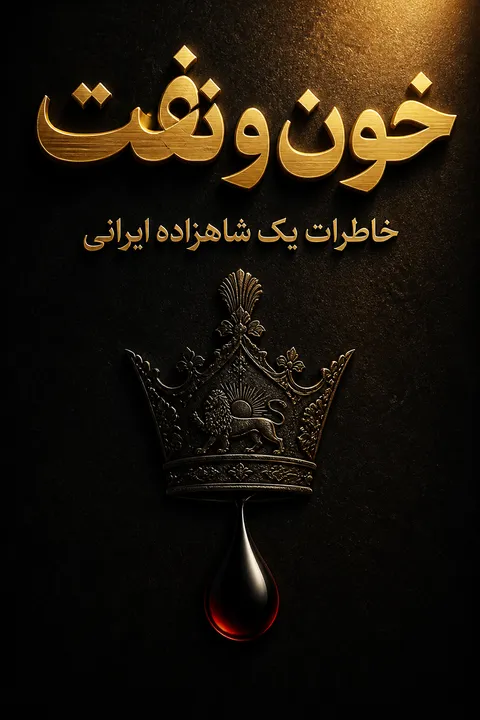
A life inside history. Manucher Farmanfarmaian writes as both participant and witness: a Qajar prince who studied petroleum engineering, worked in Iran's oil administration, helped create OPEC, and served as an ambassador. His account follows Iran through coups, occupation, nationalization, monarchy, and revolution, showing how decisions about oil shaped everyday lives as well as international power. Exile makes the stakes personal. In 1979 he watches his brothers face arrest and revolutionary confiscation. He eventually escapes across the Kurdish frontier with a false identity, leaving behind his home, gardens, and work in Iran's oil industry.
The memoir's central conflict is not simply who receives oil money. It is who gets to decide Iran's future, and whether Iranians can exercise that authority without foreign pressure or domestic coercion.
What's striking is how an industrial resource becomes a test of political membership. Oil revenue can finance roads, schools, and public institutions, but control over it also signals who has the authority to set national priorities. This connects the memoir to the broader political-economy problem of sovereignty: formal independence means little if essential decisions remain externally constrained. The insider perspective makes that tension vivid, though it is not a neutral national history. Farmanfarmaian's family and career place him close to power, so readers should distinguish his firsthand observations from his judgments about what Iran's leaders should have done.
Treat foreign oil contracts as political constitutions in disguise.
The contract shaped the country. The 1901 D'Arcy Concession granted a British investor rights to develop Persian oil and promised Persia 16 percent of company profits. After the British government bought a controlling share of the Anglo-Persian Oil Company, Iran faced not just a private firm but a company backed by a major power. Disputes over accounting, taxes, subsidiaries, and the Admiralty's discounted oil deliveries made the contract a political issue as much as a commercial one.
The 1933 agreement set a royalty, extended the concession to 1993, and reduced the territory covered. Farmanfarmaian describes how Iran later found its share dwarfed by taxes and profits flowing to Britain, while the company kept its accounts closed. In his view, legal wording mattered less than the unequal power behind its enforcement.
The analogy to a constitution is useful because contracts can allocate governing power without ever being called political. Control of accounts, production, and investment decisions can limit a state's choices as effectively as a formal legal rule. This is also a principal-agent problem: the company controls information that the government needs to verify whether it is being paid fairly. Yet contracts are not automatically illegitimate because they are unequal or old. The deeper failure here is the lack of credible transparency and a workable process for renegotiation as markets and political expectations changed.
Modernize with local knowledge, or reforms can dismantle what sustains people.
Reform changed more than appearances. Reza Shah built roads, railways, schools, and state institutions, while also imposing sweeping changes from above. His government forced women to go unveiled in public, even though many experienced the ban on the chador as coercive rather than liberating. The later White Revolution transferred land to peasants, but many received plots too small to support a family and lacked the tools, credit, and training to manage them.
Farmanfarma describes how village water systems fell into disrepair, fields went uncultivated, and farmers moved to cities. He also recalls foreign advisers recommending tractors and grain silos without attending to local conditions. In Iran, grain had long been stored in underground pits suited to the dry climate. A reform designed in an office could discard a solution that already worked.
The book's examples illuminate a basic lesson in development: a reform is not just a new law or technology, it is a change to a whole system of skills, incentives, and maintenance. Research on agricultural change often finds that technologies work differently depending on land size, water access, credit, and local knowledge. The memoir captures that institutional context well. Its account of landlords, however, should not romanticize the old rural order. Personal mediation could solve disputes, but it also rested on hierarchy and unequal power. Better reform would preserve useful capacity while giving people greater agency and dependable public support.
Nationalize only with a plan for markets, expertise, and transition.
Sovereignty did not guarantee sales. Iran nationalized its oil industry in 1951 after years of conflict with the Anglo-Iranian Oil Company. The public celebrated the end of foreign control, and the National Iranian Oil Company, or NIOC, was formed to run the industry. But Britain organized an embargo, international companies refused to buy Iranian oil, and Iran lacked the shipping, markets, and technical support needed to keep exports flowing.
Production fell from about 666,000 barrels a day before the embargo to roughly 20,000 in 1952. Farmanfarma supported national control but warned that Iran might lose claims to the company's overseas subsidiaries and struggle to sell its oil. His later assessment is severe: Mossadeq won an important argument about sovereignty but failed to turn that victory into a sustainable commercial settlement.
Nationalization is a change in ownership, not an operating plan. The case shows why state capacity, market access, skilled staff, and transition arrangements matter alongside the moral or legal case for public control. A government can possess a resource yet lack the infrastructure to convert it into revenue. The memoir is particularly valuable because Farmanfarma was both a nationalist and a critic of Mossadeq's tactics. Still, the counterfactual remains uncertain. The embargo was an external act, not simply a consequence of poor planning, and a more cautious strategy could also have faced fierce domestic opposition.
Make oil-sharing fair enough that producers see the industry as theirs.
Venezuela offered another model. In the 1940s, Venezuelan negotiator Juan Pérez Alfonzo helped secure the 50/50 arrangement, under which the government and oil companies shared profits more equally. The deal included better wages and worker benefits, and Venezuela received a much larger return from its oil than before. Farmanfarma reports that the government's oil income was six times its 1942 level by the time the new arrangement took effect.
In 1949, Venezuelan officials visited Iran and shared laws and negotiation details with Farmanfarma and other Iranian oil officials. They argued that producing countries should exchange information rather than negotiate in isolation. The example showed how a better revenue split could reduce labor conflict and give citizens a reason to regard the oil industry as a national asset, not a foreign enclave.
The 50/50 model matters not because equal division is always optimal, but because its visibility can change the politics of production. Workers who receive better conditions and governments that can finance public needs have stronger reasons to cooperate with an industry that once seemed designed for outsiders. This resembles the social contract logic in public finance: people are more likely to accept institutions when benefits and burdens appear reciprocal. Still, a fair split cannot by itself guarantee diversification, sound spending, or lasting stability. It improves the bargain, not every institution surrounding it.
Build producer alliances through information-sharing before trying to control prices.
OPEC began as cooperation, not a cartel. At a 1959 oil conference in Cairo, officials from Iran, Venezuela, Iraq, Saudi Arabia, and Kuwait privately agreed to consult one another about oil administration, contracts, labor, and government revenues. Their voluntary agreement did not set prices or declare a united front against the companies. It established a channel for countries that had been negotiating separately to compare experience.
In 1960, the group formalized its work in Baghdad and adopted the name Organization of Petroleum Exporting Countries, or OPEC. Iran's participation was hesitant: Tehran initially disapproved of cooperation with Arab producers, then later sent delegates. The early organization had little immediate power, but sharing information helped expose how oil companies used different terms in different countries.
The sequence is instructive: collective capacity begins with shared knowledge, not necessarily with confrontation. When each government sees only its own contract, companies can exploit differences in information and bargaining strength. A forum for comparison makes those differences visible and gives members a basis for coordinated action. That logic appears in labor unions, trade associations, and international standard-setting bodies. Yet alliances can weaken when members face different domestic needs or political loyalties. OPEC's early struggles show that a common interest in fairer terms does not automatically produce agreement about prices, production, or foreign policy.
Oil wealth buys projects faster than it builds institutions.
Money accelerated the mismatch. After the oil-price increases of 1973, Iran's income surged and the Shah pursued what he called the Great Civilization, a promised leap into prosperity. The state expanded industry, military spending, infrastructure, and social programs, but its administrative capacity did not grow at the same pace. Imported equipment piled up, ports and roads clogged, and projects were delayed by shortages of trained workers and effective coordination.
Farmanfarma describes a government ordering ambitious development while struggling to provide housing, food, water, and transport for a rapidly urbanizing population. The Shah's lavish Persepolis celebration, with imported food and furnishings, became a vivid symbol of the distance between grand plans and local needs. Oil supplied purchasing power, but it could not instantly supply expertise, organization, or public trust.
This is a classic resource-wealth dilemma: revenue arrives faster than the institutions that can spend it effectively. Large budgets can intensify competition for labor and materials, while visible prestige projects may crowd out less glamorous services. The memoir's strongest insight is that implementation capacity is not a minor technical detail; it determines whether a policy becomes a school, a working pipeline, or unused equipment in a port. However, the problems cannot be reduced to one ruler's vanity. Rapid urbanization, foreign dependence, and the scale of Iran's development needs all constrained what any government could accomplish.
When rulers silence representation, religious networks can become political infrastructure.
The mosque remained a point of connection. Reza Shah curtailed the clergy's role in law and public life, while his son later controlled political parties, Parliament, and much of the press. Farmanfarma argues that modernization weakened other local institutions without replacing their everyday functions. Mosques and religious leaders continued to provide community ties, assistance, and communication, especially for people excluded from the state's new economy.
Khomeini's opposition drew force from that network. His sermons and recorded messages spread through religious channels and were amplified by broadcasts from the BBC's Persian service. In 1978, as demonstrations multiplied, the government's narrow political channels left few trusted ways for grievances to be negotiated. The revolution was not only a contest of ideas; it was also a contest over who could reach people and organize them.
Political movements need more than persuasive leaders. They need trusted spaces, communication routes, and people able to mobilize across neighborhoods. Religious institutions can supply all three, particularly when parties, unions, or independent media are restricted. The memoir makes that organizational advantage visible. Its account also invites nuance: religious networks are not inherently democratic or uniformly representative, and the state did not simply remove all alternative institutions. The crucial imbalance was that one network could coordinate at scale while legal opposition and public debate had been weakened.
A revolution can unite opponents before exposing their incompatible destinations.
Opposition was a coalition, not a consensus. Many Iranians opposed the Shah for different reasons: nationalists resented foreign intervention, students demanded political freedoms, leftists opposed capitalism, and religious groups condemned social change and the monarchy. Khomeini's anti-imperialist message gave these groups a shared language of resistance, helping them act together against the Shah.
After the monarchy fell, their common target disappeared. Revolutionary committees and the Revolutionary Guards acquired power, and the new government moved against former allies as well as supporters of the Shah. Tudeh members, secular politicians, other clerics, and people from the old elite faced repression. Farmanfarma's family experienced this directly, with three relatives imprisoned and properties confiscated. Victory did not settle what the revolution was for; it revealed that its coalition had never agreed on that question.
Coalition politics often works through negative unity: groups coordinate around what they oppose before they negotiate what should replace it. That can make a movement powerful while leaving its post-victory institutions undefined. The Iranian case shows how an organization with clearer leadership and communication can dominate a broader but fragmented coalition. Yet the memoir's account of repression also reflects the author's position among the displaced elite. Its portrayal should be read alongside the very real grievances that drew millions into the revolution, not as proof that the pre-revolutionary order was broadly legitimate.
The Shah's reforms severed local ties he needed when the state began to fail.
A ruler needs more than orders. Near the end of his reign, the Shah asked former landowners to return to their villages and rally support. Farmanfarma and his cousin could not do so: land reform had separated them from their properties and the people who once depended on their local mediation. Their authority was already gone, and years of political exclusion had left the Shah with few trusted intermediaries.
The memoir does not present the old landlord system as fair or democratic. It describes hierarchy, poverty, and the power of local elites. But it also shows that those relationships connected the capital to villages, settled disputes, and conveyed local needs. Once the monarchy faced a mass uprising, the Shah discovered that formal command could not recreate the networks his own reforms had dismantled.
This is a sharp account of institutional substitution. Removing an old intermediary may be justified, but the state must build a credible replacement before the old channel disappears. Otherwise the result is not direct citizenship but a gap in representation. The Shah's appeal to former landlords reveals how political capacity can depend on relationships that official charts overlook. At the same time, local mediation is not a substitute for equal rights or accountable public services. The durable task is to build institutions that retain local knowledge without restoring inherited privilege.
Analysis
Blood and Oil is a memoir of state-making told by someone who helped operate the machinery he later watched collapse. Its unusual strength lies in the overlap between intimate memory and institutional detail. A childhood in a Qajar household gives the reader a view of hierarchy and social obligation; engineering and government service reveal how oil contracts, accounting practices, and production systems worked; exile gives the ending physical urgency. The result is less a detached history than an argument about the costs of losing political autonomy and the dangers of pursuing modernization without local capacity.
The book's deepest pattern is a recurring gap between formal authority and practical power. Iran could nationalize oil but not immediately sell it. The Shah could issue reforms but not secure their implementation or preserve channels of trust. Khomeini could promise religious justice, then govern through committees that competed with the state. In each case, control on paper exceeded the institutions capable of making that control legitimate and effective. The story therefore resists a simple resource-curse explanation: oil mattered, but so did foreign pressure, domestic coalitions, administrative weakness, and the destruction of mediating institutions.
The memoir's vantage point is also its limit. Farmanfarmaian was a prominent member of the landlord and governing elite, a participant in oil policy, and a critic of leaders who rejected compromise. His first-hand experience is unusually rich, but his judgments about Mossadeq, the Shah, foreign motives, and the clergy remain interpretations shaped by that position. His daughter Roxane's introduction adds a useful counterweight by describing how the same street, Shah, and national past looked different to a younger, American-educated observer. Read together, the accounts show that political memory is not a single archive. It is a negotiation among witnesses whose interests, loyalties, and losses differ. That tension makes the book valuable not as the final verdict on Iran, but as an unusually revealing record of how power looked from inside one consequential family.
Review Summary
Blood & Oil is a highly regarded memoir by Manucher Farmanfarmaian, offering an insider's perspective on Iran's 20th-century history, particularly focusing on oil politics. Readers praise its engaging narrative, detailed account of the Pahlavi era, and insights into the formation of OPEC. The book provides a nuanced view of Iran's relationship with Britain and the U.S., shedding light on the events leading to the Islamic Revolution. While some note potential bias, most consider it an essential read for understanding Iran's modern history and oil industry.
People Also Read




Glossary
D'Arcy Concession
Early Persian oil agreementThe 1901 agreement between the Persian government and British investor William Knox D'Arcy granted rights to explore and develop oil over a large area. It promised Persia 16 percent of company profits. The concession became the basis for decades of disputes about accounting, royalties, company subsidiaries, and the role of the British government in the oil business.
50/50
Shared oil profitsA profit-sharing arrangement under which an oil-producing government and the operating companies received roughly equal shares of profits. The memoir describes Venezuela's adoption of the model in the 1940s and its influence on later agreements in the Middle East. It offered producers a larger, more visible share of oil income, though the arrangement did not itself give governments complete control over production or marketing.
National Iranian Oil Company
Iran's state oil companyThe National Iranian Oil Company, commonly shortened to NIOC, was established after Iran nationalized its oil industry in 1951. It represented the state's claim to manage Iranian petroleum, but initially faced an export embargo, shortages of technical expertise, and limited access to international markets. After the 1954 Consortium agreement, NIOC handled some domestic responsibilities while foreign companies controlled much of the export business.
OPEC
Oil-exporting nations' organizationThe Organization of Petroleum Exporting Countries was formed by Iran, Venezuela, Iraq, Saudi Arabia, and Kuwait after discussions that began in Cairo in 1959 and were formalized in Baghdad in 1960. Its early purpose included consultation and information-sharing among producers. Over time it became a forum for coordinating positions on oil prices, production, and the terms offered by international companies.
White Revolution
Shah's reform programThe Shah's White Revolution was a national reform program announced in 1963. Its measures included land redistribution, literacy initiatives, nationalization of forests and water resources, and voting rights for women and religious minorities. The memoir argues that weak planning and inadequate support left many peasants unable to manage their new land, while the reforms alienated landlords, clergy, and other groups.
Great Civilization
Promised national transformationThe Shah's Great Civilization was his vision of transforming Iran into a prosperous, modern industrial power. It was promoted during the period of rapidly rising oil income and included ambitious expectations for education, housing, agriculture, and public welfare. Farmanfarmaian presents the phrase as a promise that outran the state's ability to coordinate development, train workers, and deliver basic services.
SAVAK
Monarchy's security serviceSAVAK was Iran's national intelligence and security organization under the Pahlavi monarchy. Established with foreign assistance, it monitored political activity and became associated with surveillance and repression. In the memoir, its presence illustrates how the Shah's government restricted opposition and relied on security agencies rather than open political institutions to manage dissent.
Majles
Iran's national parliamentThe Majles is Iran's parliament, established during the Constitutional Revolution of 1906. In the memoir, it appears as a possible forum for constitutional limits, oil policy, and national debate, but its independence varied sharply across governments. Under the Shah, elections and parliamentary activity became increasingly controlled, weakening the Majles as a channel for public representation.
Download PDF
Download EPUB
.epub digital book format is ideal for reading ebooks on phones, tablets, and e-readers.








