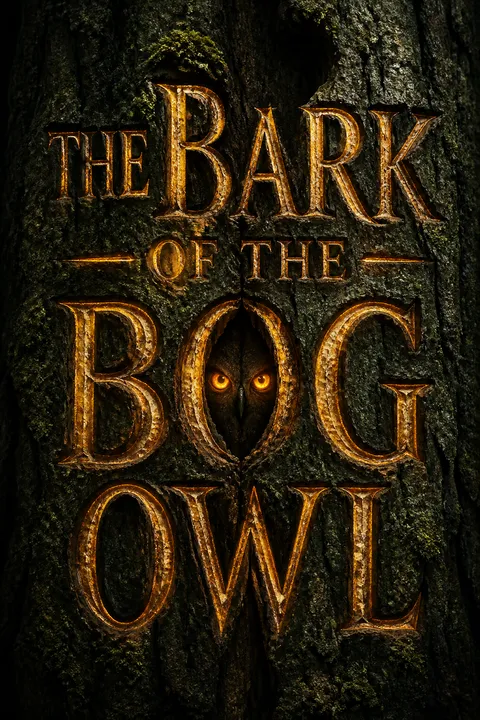


Plot Summary
The Bog Owl's Bark
Twelve-year-old Aidan Errolson1 spends his days tending sheep at Longleaf Manor and imagining himself a knight in King Darrow's5 service. When a wild call echoes from the trees, he answers it by staging battles with his sling and staff. His imaginary bravery ends in a muddy fall, followed by stones mysteriously bouncing back from a tree.
A scaly creature drops from the branches, but it proves to be Dobro Turtlebane,3 a feechie boy disguised in animal hides and a snapping-turtle helmet. Dobro3 challenges Aidan1 to fight, then admits he came down because he has no friends. Aidan's1 jokes accidentally count as the ritual insults before a feechie fight, but he chooses to offer Dobro3 a wrestling match instead of turning him away.
Aidan's fantasy begins as a private remedy for an uneventful life, but the bog owl turns that fantasy outward: the wilderness answers him with a person rather than an adventure he can control. Dobro's strange approach also overturns Aidan's assumptions about courage and friendship. The feechie boy appears threatening, yet his challenge masks loneliness. Aidan's willingness to meet him on unfamiliar terms marks the first small move from performance toward genuine responsibility. His imagined identity as a warrior is no longer merely self-authored; other lives will soon test what that identity means.
Stone Against Panther
Their wrestling match carries the boys across the pasture and into a muddy creek. A real panther then emerges near Aidan's1 sheep, and Dobro3 charges it with the shepherd's staff, eager for a fight. He draws the cat away from the flock, but its speed leaves Aidan1 with no safe shot until Dobro3 drops and rolls aside.
Aidan's1 sling stone strikes the panther in the head, killing it before it can reach his friend. Dobro3 treats the rescue as proof that they make a good team, then disappears when Aidan's1 father's4 servant arrives. Aidan1 reaches the house scratched, bruised, and carrying a story nobody believes. The missing panther leaves him wondering whether the whole encounter happened as he remembers it.
Aidan's first consequential act of bravery is not a clean display of fearlessness. He is frightened, and Dobro is the one who rushes toward danger; Aidan's courage lies in waiting for a shot that will save his friend without killing him. That distinction becomes essential to the story's moral logic. Aidan also discovers that a good deed does not automatically produce recognition: the panther vanishes, and his family doubts him. His uncertainty keeps the event from becoming an easy heroic origin story. He must decide what he did before anyone else can confirm it.
The Missing Errolson
While Aidan1 is still in the pasture, Bayard the Truthspeaker2 arrives at Longleaf and tells the Errolson family he has come seeking a king. The old prophet2 examines Aidan's1 four older brothers, recognizing their ambitions and gifts but ruling each out.
When Aidan1 returns, muddy and battered, he explains that he killed a panther with his sling and met a feechie boy. His brothers laugh, but Bayard2 believes him and identifies Aidan1 as the Wilderking foretold in Corenwald's ancient chant.
Aidan1 fears that the prophecy makes him a traitor to Darrow,5 the king his father4 serves. Bayard2 instead points to Aidan's1 choice to protect Dobro3 and the sheep while afraid. Still unsure whether Bayard2 is a prophet or a madman, Aidan1 watches him depart with more questions than certainty.
Bayard's choice of Aidan unsettles a family hierarchy built around age, polish, and visible competence. The eldest brother looks like a ruler, the scholar knows the prophecies, and the youngest has only a muddy account others dismiss. The prophecy therefore does not reward the most obvious candidate. It asks Aidan to understand courage as action taken despite fear, not as a personality he must pretend to possess. Yet naming him also creates a political and emotional burden: his loyalty to Darrow seems to conflict with the future Bayard foresees. The uncertainty matters. Aidan must live ethically before he can know what the prophecy will demand.
Samson on the Rope
Weeks pass without Dobro3 or any sign of the panther, and Aidan1 begins to doubt his own memory. Hoping to prove his loyalty to King Darrow,5 he attempts to capture a huge bull alligator that his father4 would like to add to the royal moat. Aidan1 loops a rope around the animal, but its sudden charge pulls him from a tree and onto its back.
He clings through a violent struggle until the tether checks the alligator's dive and gives him a chance to escape. His brothers help restrain the beast and haul it to Longleaf, where Errol4 names it Samson.17 Because they caught it, Errol4 invites his sons to deliver Samson17 to Tambluff Castle for a treaty feast. He also warns them that Corenwald's new alliance with Pyrth may conceal danger.
Aidan's attempt to catch Samson grows from a need to resolve his private doubt through public service. He wants an unmistakable deed that will prove his loyalty to Darrow, but the alligator's suffering complicates the idea of a gift. Capturing the animal lets Aidan demonstrate resourcefulness, yet it also forces him to consider whether possession and usefulness are the same as care. Errol's unease about Pyrth expands the story from a boy's uncertain calling into a national crisis. The alligator, an emblem of Corenwald's wild landscape, is already being treated as a political offering before the feast reveals what that politics costs.
A Golden Annexation
At Tambluff, the Errolsons find Corenwald's nobles dressed in costly styles that imitate Pyrthen fashion. King Darrow5 celebrates the alliance, then unveils Samson17 as a gilded spectacle meant to impress Pyrth's emperor.
Aidan1 watches the drugged alligator reduced to an inert ornament and feels ashamed of helping bring him there. The Pyrthen delegation then announces that its senate has annexed Corenwald and will station troops on the island. Errol4 denounces the threat and reminds the nobles that Corenwald's freedom was won by people who refused imperial rule.
Darrow5 finally orders the kingdom to resist, but the shock and strain overwhelm Errol,4 who collapses from a stroke. Aidan1 stays home to care for him while his four older brothers march to the battle camp.
The feast makes political surrender visible through manners and spectacle before the Pyrthens announce it outright. Corenwald's nobles imitate their former enemies, while Darrow displays a living animal as a symbol of a domesticated wilderness. Aidan's discomfort with Samson's gilding parallels Errol's fear that the kingdom is polishing away the values that made it independent. Errol's speech briefly recalls those values, but his stroke leaves Aidan in the vulnerable position of a child separated from both family and battlefield. The crisis is not merely military. Corenwald has already begun to accept the language and habits of the power threatening to absorb it.
The Swamp's Verdict
After Errol4 regains some strength, he lets Aidan1 carry food and news to his brothers at the front. Aidan1 leaves the road to follow Bayberry Creek through the forest, hoping the shortcut will save time.
Near a magnolia tree, he hears the bog owl's call and answers with the feechie battle cry, but two feechies knock him unconscious and carry him to their Meeting Hummock. Their chief, Gergo Snagroot,12 explains that feechie law forbids a civilizer who has seen them from living.
Dobro3 recognizes Aidan1 and tells the tribe that Aidan1 saved him from a panther. Dobro's3 mother,11 Luku,11 cuts Aidan1 free, and Gergo12 rules that the law protecting someone who saves a feechie's life takes precedence. The tribe spares Aidan,1 though many of its members still fear civilizers.
The encounter turns Aidan's friendship with Dobro into a test of collective memory and law. The feechies' secrecy protects them from a society they fear will erase their way of life, so their hostility is not simple prejudice. Yet their code contains an opposing obligation: a life saved must not be repaid with death. Dobro's testimony gives Aidan standing, while Luku's response shows how maternal fear can yield to gratitude without disappearing. The tribe's decision remains conditional and uneasy. Aidan has crossed from private acquaintance into a contested relationship between peoples, where trust must be earned rather than declared.
A Mark Among Feechies
At the feechie feast, Aidan1 earns the tribe's respect by grabbing a huge catfish with his bare hand and removing a vine loop from an alligator's neck. Gergo12 names him Pantherbane and burns the feechie mark into his arm, making him a recognized friend of the tribe.
The next morning, Dobro3 guides him through the treetops toward the Western Road. Before they part, Dobro3 explains that feechie lore speaks of a ruler who will unite feechies and civilizers as one people.
He has been watching for that ruler and believes the fight against Pyrth may concern the feechies too. Aidan1 reaches the road, leaves his panther cape in his sack, and continues toward his brothers, newly aware that Corenwald includes people his family has never counted as countrymen.
The feast gives Aidan a place in the feechie community through actions that matter to them, not through his inherited status as a landholder's son. The burned mark makes belonging legible, but its significance is relational: it obligates feechies to treat him as a friend and binds his conflicts to theirs. Dobro's account of a shared future then widens Aidan's understanding of Corenwald. The kingdom cannot simply mean the settled farms and noble estates he knows. His decision to continue toward the war without Dobro preserves their difference of judgment, while the conversation plants the possibility that a national struggle may require a larger definition of its people.
Greidawl's Daily Challenge
At the Corenwalder camp, sentries mock Aidan's1 delivery of bread and cheese, and the soldiers seem listless rather than ready for battle. His brothers react coldly to his arrival, ashamed that he has come to witness their helplessness. Across the valley, Greidawl,10 a towering Pyrthen champion, repeatedly challenges Corenwald to send one fighter against him; otherwise the armies will meet in battle.
The soldiers cannot find anyone willing to answer. That night Aidan1 dreams of Pyrthen rule, burned homes, and chained feechies. The next morning, messenger boy15 Herschel15 tells him that Darrow5 has tried to surrender, but Pyrth will accept surrender only after a defeat. Corenwald has three days to name a champion before the Pyrthen army attacks.
Greidawl's challenge works before a weapon is raised because the Corenwalders have accepted his account of their weakness. Aidan's brothers, once his models of martial life, now embody the shame he sees throughout the camp. Their rejection hurts, but it also strips away his childhood assumption that courage belongs naturally to older, stronger men. Herschel's news converts humiliation into a deadline: Darrow has considered surrender, and a battle is unavoidable. Aidan's dream links imperial victory to consequences beyond the battlefield, including the destruction of Longleaf and the subjugation of the feechies. His next choice will therefore concern which people he believes he is defending.
A Shepherd Volunteers
Aidan1 writes to King Darrow5 offering to face Greidawl.10 The king5 and his advisers doubt that a twelve-year-old can survive, but they have no plausible champion and no confidence in winning a full battle. Darrow5 accepts the offer.
He brings Aidan1 to the armory and offers him heavy armor and an array of weapons. The oversized suit restricts Aidan's1 movement, and his first attempt with a spiked flail wrecks part of the armory. Aidan1 removes the armor and chooses the sling he knows from guarding sheep, insisting that no equipment can make the contest safe.
Before the fight, Bayard2 visits and reminds him that fear does not excuse abandoning what is right. Aidan1 still does not know whether Bayard2 is a prophet, but he walks toward the contest in his own clothes.
Aidan's offer is not a confident bid for glory. It follows his recognition that the kingdom has no other answer and his refusal to let fear determine what he will defend. The armory scene exposes the gap between heroic appearance and usable skill: borrowed armor makes him less capable, while his familiar sling carries the knowledge earned in ordinary work. Darrow's acceptance is pragmatic as well as morally fraught, since the king permits a child to face a lethal opponent because the alternatives seem worse. Bayard does not promise safety. His counsel leaves Aidan responsible for acting without certainty, the same condition that has shaped every step since the bog owl sounded.
The Giant's Blind Spot
Before the armies, Aidan1 gathers five smooth stones from the valley floor and faces Greidawl10 without armor. The giant hurls a spear that misses by inches, then charges with his battle-ax raised. Aidan1 holds his ground and strikes Greidawl10 in the forehead with a sling stone. When the armored champion falls, Aidan1 drags the heavy ax to him and uses it to finish the fight before Greidawl10 can rise.
The Pyrthens stare in disbelief while the Corenwalders regain their courage and remember why they had resisted invasion before. Aidan1 lifts Greidawl's10 helmet to them, but Pyrthen archers immediately fire into the valley. The armies engage, and Brennus,6 Maynard,7 Jasper,8 and Percy9 find Aidan1 behind Greidawl's10 body and shield him from the fighting.
The duel reverses the hierarchy of visible power: Greidawl's armor, size, and reputation cannot protect him from a small, practiced stone. Yet the victory is not an uncomplicated miracle. Aidan must act after the first blow, dragging and wielding a weapon far beyond his strength because a merely unconscious enemy could still kill him. The Corenwalders' recovered confidence depends on seeing their supposed invincibility shattered, but Pyrthen archers reveal that one contest cannot end the invasion. The brothers' return to Aidan marks a change in their relationship. They stop treating him as an embarrassment and take responsibility for protecting him amid the battle he helped begin.
Thunder Across Bonifay
After a surgeon treats the arrow graze on his arm, Aidan1 takes a small sword and rejoins the fighting. Corenwald's soldiers push the Pyrthens back, but black iron cannons begin hurling explosive balls across the valley.
The blasts drive the Corenwalders into confusion and threaten to undo their renewed confidence. At the command yard, King Darrow5 hears farmer-soldier Harlan16 describe two caves that may connect beneath the battlefield. The route could let a small force reach the Pyrthen camp, although the tunnels may be flooded, narrow, and impossible to navigate.
Aidan1 suggests recruiting miners rather than ordinary scouts, since the miners understand underground passages. Darrow5 orders a team from Greasy Cave to explore, and agrees that Aidan's1 small size may help them through tight openings.
The cannon changes the scale of the conflict. Aidan's victory has restored morale, but courage alone cannot neutralize weapons that strike from beyond ordinary reach. The story answers that technological advantage with a different kind of expertise: the local knowledge of people accustomed to working underground. Harlan's slow account initially seems inadequate to the urgency, yet his remembered landscape offers the army its only practical alternative. Aidan contributes not by commanding adults but by noticing that the task calls for miners rather than soldiers. Darrow's decision shows a king beginning to listen to forms of knowledge and service that courtly rank would overlook.
Miners Beneath the Enemy
Gustus14 leads four miners, including Arliss,13 whose unusual sense of direction underground makes him essential; Aidan1 joins because he can fit through narrow gaps. They find the cave entrance, descend into a vast limestone chamber, and follow an underground lake. Arliss13 turns them away from a promising passage when he senses it is a dead end, and the team later has to swim through darkness after losing two torches and rescuing a cramping Ernest.
They find a dry passage beneath the Pyrthen camp just as their torch supply reaches its limit. Gustus14 orders the scouts to turn back with the route, but Aidan1 and Arliss13 continue toward the enemy side. They believe the cannons may destroy Corenwald before a larger force can return.
The miners' expedition replaces battlefield spectacle with a test of discipline, navigation, and trust. Arliss's skill is difficult for the others to verify, so Gustus must choose whether to trust a younger worker's perception over a passage that appears to point toward their destination. The lost torches make the expedition's limits brutally concrete: exploration is useful only if the team can return with its knowledge. Aidan and Arliss break Gustus's order for a different reason. They judge that delay may make the information worthless. Their choice risks the mission's success, but it grows from urgency rather than a desire to prove themselves.
Powder Under Pyrth
At the far end of the cave, Aidan1 and Arliss13 find barrels of the powder used in Pyrth's cannons. A stray spark causes a small explosion, revealing how easily the store could ignite. Rather than set it off at once, the boys spread a trail of powder toward the entrance and plan to light it from a safer distance. Pyrthen guards discover the trail just as the boys finish laying it.
Aidan1 and Arliss13 strike flint, ignite the fuse, and shelter in a pool as the arsenal explodes, burying their route beneath rubble. They dig their way out into the morning and find the Pyrthen camp destroyed. Darrow's5 army has driven the invaders west; feechies then attack them from the forest and river, forcing the fleeing soldiers to surrender.
The final reversal depends on combining the boys' distinct forms of knowledge. Aidan understands how a controlled burn travels across a field, while Arliss recognizes the danger of treating a powder store as a simple target. Their plan transforms the enemy's technological advantage into a vulnerability, but the explosion nearly kills them and seals the route behind them. The Corenwalder charge succeeds in the confusion; the feechies then make the forest itself a defense against the retreating army. Their intervention fulfills Dobro's claim that the conflict could become their fight too. Victory emerges from cooperation among people who had previously been separated by custom, fear, and political blindness.
Epilogue
Back at Longleaf, Aidan1 frees a lamb from blackberry thorns and complains that everyone still expects him to tend sheep. King Darrow5 and Errol4 arrive with Samson,17 returning the alligator17 from Tambluff. Aidan1 watches Samson17 slip into the river and welcomes the sight of him restored to the wild.
Darrow5 then asks Aidan1 to live at court and study government beside Prince Steren,18 so he can serve Corenwald with more than courage. Errol4 gives his blessing. Aidan1 accepts, leaving the pasture not as the knight he once imagined, but as a boy with a new education ahead.
The ending brings Aidan back to the ordinary work he once resented, but neither home nor work means quite what it did before. Samson's return repairs, in small physical terms, the damage done when Corenwald tried to turn its wilderness into a royal ornament. Darrow's offer gives Aidan a path from instinctive service to deliberate political understanding. Errol's consent makes the departure an act of trust rather than abandonment. The final movement is deliberately unfinished: Aidan has not become a fully formed ruler, and his growth will require study, judgment, and continued service. The pasture remains his origin, not his limit.
Analysis
The novel makes political freedom a question of habits as much as armies. Corenwald's leaders begin losing their independence before the Pyrthen invasion is fully underway: they imitate Pyrthen finery, accept the language of partnership, and let a living alligator17 become a gilded emblem of their own submission. Errol4 recognizes that a people can keep its estates and still surrender the purposes that made those estates meaningful. His fear is not simply that Pyrth will conquer the island, but that Corenwald will consent to becoming a lesser version of its enemy.
Aidan's1 education counters that drift through practical encounters rather than abstract instruction. He learns to distinguish courage from fearlessness when he saves Dobro,3 and to recognize obligation beyond his own household when Dobro3 describes the feechies as fellow Corenwalders. The feechie mark makes that broadened belonging tangible, while their eventual intervention turns it into military consequence. Aidan's1 leadership begins not with command but with attention: he sees that miners, a young navigator,13 and swamp dwellers possess knowledge the court and army lack.
The story also distrusts heroic appearance. Greidawl's10 armor and reputation dominate the soldiers until a shepherd's1 trained skill exposes their limits. Yet the sling does not settle the war by itself; cannons force the Corenwalders to adapt, and the final plan requires cooperation, judgment, and risk. Aidan's1 journey therefore joins spiritual conviction to material competence. Trust in providence does not replace action. It gives him a reason to act without controlling the outcome. By returning him to Longleaf before sending him to court, the ending keeps service grounded in ordinary life while preparing him to acquire the knowledge his next role will require.
Review Summary
Characters
Aidan Errolson
Restless shepherd boyAidan is the twelve-year-old youngest son of Errol4, a frontier landholder, and a boy whose imagination outruns his experience. He longs to serve King Darrow5 and envies the adventurous lives of earlier generations, yet he is not naturally free of fear or doubt. His poetic streak and habit of turning daily work into heroic play make him inventive, while his loyalty to family and country gives those fantasies moral weight. Aidan wants recognition, but he is also quick to notice when a living creature or a frightened person is being treated as a prop. His central tension is between the heroic identity he imagines and the unglamorous choices that actually reveal his character.
Bayard the Truthspeaker
Prophet in the wildernessBayard is Corenwald's revered prophet, a former counselor to King Darrow5 who has spent years wandering with two goats. His distracted manner makes him easy to dismiss, but his insight into people remains sharp. He does not offer Aidan1 a practical blueprint or promise that the boy will feel confident; instead, he directs him toward the next right action and asks him to live faithfully with uncertainty. Bayard is both a spiritual guide and a test of interpretation: characters must decide whether to trust what he sees when his appearance and behavior seem eccentric. His calm conviction contrasts with the political leaders' anxious calculations.
Dobro Turtlebane
Wild river companionDobro is a young feechie raised among Corenwald's swamps and rivers. He is wiry, energetic, fond of wrestling, and so direct that he initially mistakes a fight for a reasonable way to make a friend. Beneath the bluster is a boy who feels isolated and wants someone who shares his appetite for adventure. Dobro understands the dangers civilizers pose to his people, yet he is curious enough to cross that boundary himself. His friendship with Aidan1 grows from a rescue neither boy could manage alone. Dobro's knowledge of feechie customs and beliefs gives Aidan1 access to a community his settled world has barely acknowledged.
Errol
Veteran father and lordErrol is Aidan's1 father, a wounded veteran, a landholder, and one of King Darrow's5 trusted nobles. His past gives his warnings about Pyrth weight: he has lost his wife and fought through repeated invasions. He values peace, but not at the price of surrendering Corenwald's independence or its obligations to ordinary people. Errol's love for his sons is expressed through instruction and trust rather than indulgence. He wants Aidan1 to distinguish service from a love of battle, and his own loyalty to Darrow5 complicates how readily he can accept Bayard's2 prophecy. He represents the generation that built a free country and fears that comfort may weaken it.
King Darrow
A king under pressureDarrow is Corenwald's aging king, a respected leader whose confidence has been shaken by years of peace and the prospect of another Pyrthen invasion. He wants his kingdom to prosper among powerful nations, and that hope makes him vulnerable to the promise of partnership. His ceremonial gestures reveal a growing distance from the values that once defined Corenwald. Even so, he can hear criticism and reconsider his choices when events expose their consequences. Darrow's relationship with Errol4 is built on long service, while Aidan's1 courage forces him to confront the gap between the king he has been and the king his people need.
Brennus
Ambitious eldest brotherBrennus is Errol's4 eldest son, a handsome and capable young man who carries himself like a natural commander. He wants a life larger than the inheritance awaiting him at Longleaf, and Bayard's2 reading of that ambition makes him uneasy. Brennus initially treats Aidan's1 presence at the front as an unwelcome complication, reflecting the family's assumptions about age and martial ability. His authority among his brothers is real, but the pressure of war exposes the limits of simply looking like a leader.
Maynard
Cunning second sonMaynard is Errol's4 second son, perceptive and strategic, with a habit of competing indirectly with the more imposing Brennus6. He is alert to questions of status and advantage, which makes him sharper in political reading than he first appears. His caution at the battle camp reflects how fear can harden into self-protection, especially when no clear path to victory is visible. Maynard's relationship with Aidan1 is shaped by the gap between his younger brother's age and the scale of the responsibility Aidan1 claims.
Jasper
Scholar of CorenwaldJasper, one of the Errolson twins, is a scholar with an unusually deep knowledge of Corenwald's history and prophecies. He prefers interpretation and evidence to impulsive action, and he is proud of the learning that distinguishes him from his brothers. Jasper's tendency to explain prophecy symbolically makes the literal events in Aidan's1 life difficult for him to accept. He is loyal to his family, but his confidence in books and classifications is tested by a crisis that demands action before certainty.
Percy
Joking twin brotherPercy is Jasper's8 twin and the most openly playful of the Errolson brothers. His teasing often defuses tension, though it can also hurt when he joins in dismissing Aidan's1 strange experiences. Bayard2 sees a generosity of heart beneath Percy's reputation as the family's underachiever. Percy is less invested than his brothers in proving himself through rank or expertise, which gives him a more relaxed way of meeting other people.
Greidawl
Pyrthen iron championGreidawl is Pyrth's enormous, armored champion, sent to turn military intimidation into a public spectacle. He uses his size, reputation, and repeated taunts to make Corenwald's soldiers feel defeated before fighting begins. Greidawl believes strength is self-evident and treats the opposing army's silence as proof that his power is absolute. His role is not only to threaten bodies but to dominate the imagination of the people watching him.
Luku Turtlebane
Protective feechie motherLuku is Dobro's3 fierce, protective mother. She distrusts civilizers because she fears what their settlements and customs could do to the feechie way of life. Her first response to Aidan1 is governed by the danger she sees around her son, not by abstract hostility. Luku's fierce affection gives her a strong presence among the tribe, while her capacity to recognize a debt of gratitude complicates her initial distrust.
Gergo Snagroot
Feechie lawkeeperGergo is the elderly chief of the feechie band that brings Aidan1 to its Meeting Hummock. He is cautious, observant, and accustomed to balancing the tribe's security against its own laws. Gergo knows that civilizers pose a genuine threat to feechie survival, yet he refuses to let fear erase the rule protecting someone who has saved a feechie's life. His authority comes from keeping competing obligations in view.
Arliss
Young miner navigatorArliss is a lanky teenager from Greasy Cave who lacks the miners' physical strength but possesses an uncanny sense of direction underground. His family calls this ability a miner's head. Arliss is thoughtful about risk and often recognizes when a route feels wrong, even when he cannot prove it by ordinary measurements. He is younger than the foreman14 and initially respects the miners' chain of command, but the mission forces him to weigh obedience against urgency.
Gustus
Steady mining foremanGustus leads the miners of Greasy Cave and is responsible for keeping them alive as they explore unfamiliar tunnels. Strong, practical, and protective, he makes rules about torch supplies and insists that the team return before darkness traps them. His caution is not timidity; it is the discipline of someone who knows how quickly underground danger becomes irreversible. Gustus must balance trust in Arliss's13 instincts with responsibility for the whole crew.
Herschel
Battle camp messengerHerschel is a young messenger in the Corenwalder camp. Unlike the soldiers who ignore or mock Aidan1, he offers practical help and speaks candidly about the army's predicament. His access to messages lets him explain Darrow's5 attempted surrender and the deadline imposed by Pyrth. Herschel's usefulness comes from attention and honesty rather than rank or combat skill.
Harlan Ebbetson
Farmer with local knowledgeHarlan is an older soldier who once farmed the Bonifay Plain. His memories of the land preserve knowledge that the army's officers lack, including the location of caves beneath the battlefield. His unhurried manner frustrates the nobles, but his practical recollections open a possible route against the cannons.
Samson
Wild alligatorSamson is the enormous bull alligator Aidan1 tries to capture as a gift for King Darrow5. His strength makes him a danger to the Errolsons, but his captivity also prompts Aidan1 to consider what the animal might want. Samson embodies the untamed landscape that Corenwald both celebrates and tries to control.
Prince Steren
Heir to the throneSteren is King Darrow's5 son and heir to Corenwald's throne. He is part of the courtly future that Aidan1 is invited to enter, where the study of government will complement the courage and loyalty he has already shown.
Plot Devices
The Wilderking prophecy
A contested royal callingBayard's2 ancient prophecy gives Aidan1 a possible identity that conflicts with his understanding of loyalty to King Darrow5. Its signs include a ruler emerging from the wild, caring for lambs, and defeating a panther with a stone. The prophecy does not provide a step-by-step plan, and Aidan1 initially doubts both its meaning and Bayard's2 sanity. Its function is to place ordinary acts of care inside a larger political and spiritual frame, while leaving Aidan1 responsible for choosing what to do next.
The sling and stones
Skill over apparent strengthAidan's1 sling is a shepherd's tool he has practiced with while protecting his flocks. It first becomes important when he saves Dobro3 from a panther, an event Bayard2 connects to the prophecy. Later, Aidan1 carries smooth stones into a contest against Greidawl10, whose armor and size seem to make conventional weapons useless. The sling makes Aidan's1 everyday experience consequential and places the outcome on practiced accuracy rather than expensive equipment or physical scale.
The feechie code and mark
Belonging made bindingFeechie law protects the tribe from civilizers who might expose or erase them, but it also forbids killing someone who has saved a feechie's life. That second obligation gives Aidan1 a chance to survive his capture. The tribe later marks his arm and recognizes him as a friend, turning Dobro's3 personal gratitude into a public bond. The mark makes alliance visible and establishes that Aidan's1 obligations can extend beyond the settled households of Corenwald.
Pyrthen flame powder
Enemy weapon turned weaknessPyrth uses explosive powder to fire iron balls from cannons across the battlefield, making Corenwald's renewed courage seem inadequate against superior technology. The powder is stored in barrels inside a cave beneath the Pyrthen camp. When Aidan1 and Arliss13 discover it, they use Aidan's1 experience with controlled field burns and Arliss's13 practical thinking to create a fuse. The powder shifts the conflict from a contest of conventional military strength to a dangerous act of sabotage.
The bog owl's call
Signal from the wildThe bog owl's strange call first interrupts Aidan's1 make-believe in the bottom pasture. It draws him toward the beech tree where he meets Dobro3, and later Aidan1 hears it again while searching for his friend in the swamp. The sound links Aidan's1 settled life to the untamed places beyond Longleaf and becomes a marker of the relationships and obligations waiting there. Rather than delivering an explanation, the call signals that the wild world has entered Aidan's1 life.
Download PDF
Download EPUB
.epub digital book format is ideal for reading ebooks on phones, tablets, and e-readers.








