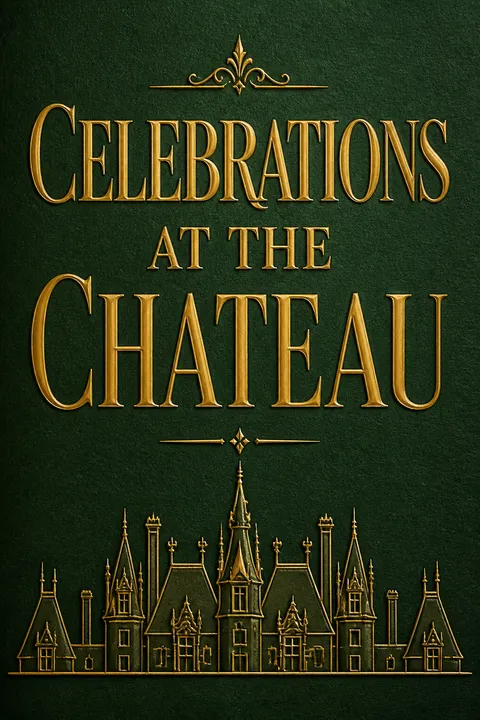


Plot Summary
The Inheritance at the Gate
After their grandfather's11 funeral, Felicity Hope, called Fliss,1 drives to Normandy with her estranged sisters, Nellie5 and Lizzie,6 expecting a modest holiday cottage. The key they inherited opens the gates of Château des Arbres, a vast, neglected estate with flickering lights and a silent caretaker who leaves them uneasy.
Inside, Fliss1 sees faded elegance where her sisters see repair bills and a valuable property to sell. They agree she will stay temporarily while they return to work and family. For Fliss,1 the château offers a reason to delay going home: she has just lost her seasonal café job and, after asking longtime companion Ty7 about a possible family, suspects he does not want the future she does.
The inheritance arrives as both windfall and rupture. The sisters initially read the château through the needs each has learned to manage: Lizzie calculates its value, Nellie imagines a safer home for her sons, and Fliss responds to its traces of past life. Their different reactions expose a family that has not been close, but still shares a capacity for care. Fliss's willingness to stay is not simply romantic curiosity. Grief has unsettled her familiar arrangement with Ty, and the house gives her a concrete place to test whether her life can become more than waiting for his seasonal returns.
A Home With a Deadline
Exploring the house alone, Fliss1 encounters Madame Charlotte Cadieux,3 its elderly chatelaine, who recognizes her resemblance to her grandfather,11 Dafydd.11 Charlotte3 says she knew him, but grief closes the conversation before Fliss1 can learn why.
The estate agent supplies a harsher explanation of the inheritance: the château was bought under a viager agreement, so Charlotte3 has the right to live there for life and the owners must keep paying her an allowance. If they default, the property returns to the Cadieux family.3 A land tax bill is also due in January. Selling is no simple escape, and the sisters have little money to spare. Fliss1 now has to find a way to make the house earn enough to survive.
The viager contract turns inheritance into an obligation rather than a prize. Its rules embody the book's tension between legal ownership and lived belonging: the sisters hold the deed, but Charlotte's right to remain and the Cadieux family's history limit what that ownership means. Fliss becomes the sibling who must convert an abstract asset into practical care, despite lacking confidence in business. The pressure is deliberately immediate, with recurring payments and a tax deadline, so her choice to stay gains material weight. Curiosity alone cannot keep the château; she must learn how its people and place might sustain one another.
A Bed for Strangers
When a storm strands Tom and Niamh with their two young children, Fliss1 gives them rooms, hot water and a meal assembled from garden vegetables. Charlotte,3 who has been pretending the château is haunted to frighten away curious visitors, welcomes the family's laughter after years of silence. Jacques,2 the farmer next door, supplies bread, cheese and cider, though he remains guarded with Fliss.1
The grateful guests praise her hospitality and suggest she could run a bed-and-breakfast. Fliss1 decides to try, despite the work and the town's suspicion. The mayor2 rejects her application, revealing himself as Jacques2 and objecting that the village already has an auberge. Fliss1 asks Nellie5 to send her troubled teenage son Jason4 to help her instead.
The stranded family's arrival lets Fliss discover a competence that her sisters' neat career paths have obscured. She is good at noticing what tired people need, improvising with food, warmth and space. Charlotte's delight in hearing children again shows that the château's decline is social as well as physical. The hospitality idea emerges from an actual exchange, not a fantasy of French life: Fliss offers shelter, guests recognize its value, and she sees a way to meet the contract's costs. Jacques's refusal immediately complicates that hope, tying the commercial problem to local memory and family claims.
The Orchard Behind the Wall
After Jason4 arrives, he helps Fliss1 open a bramble-hidden door into a walled orchard full of apple trees and abandoned work buildings. Charlotte3 reacts with distress and insists that the place has been closed for years. Soon a cow staggers among the fallen fruit, intoxicated by apples fermenting on the ground.
Fliss1 fetches Jacques2 and his daughter8 Clémentine,8 and the three guide the animal safely back to the barn. Over lunch, Fliss1 learns that apples from this orchard give Jacques's2 cheese its distinctive flavor. He agrees to let her open the château as a bed-and-breakfast and to graze his cows there, provided she leaves the apples to him. The arrangement offers a fragile start for both businesses.
The orchard makes the conflict tangible: its broken boundary allows a cow to enter, but also exposes the old exchange between château and farm. Fliss's practical response earns a place at Jacques's table, where food supplies knowledge that official negotiations could not. The apples are at once a resource, a source of local livelihood and a subject Charlotte cannot yet discuss. Jason's help opening the door also begins his re-entry into ordinary work and trust. This section establishes that Fliss's business cannot succeed through individual effort alone; even its first workable agreement depends on recognizing what the neighboring farm needs.
Guests Against the Current
Fliss's1 first booking goes well, but the town refuses to sell her food and flowers once shopkeepers learn her surname. Charlotte3 lends her an old 2CV, allowing Fliss1 to shop in the next town and prepare for a classic-car rally. When the guests arrive, a broken boiler and blocked drain threaten the weekend; one visitor, a plumber, fixes the drain, while the local plumber later returns to help with the boiler.
Fliss1 persuades the crêperie owner, Alphonse,10 to feed the rally group, despite his partner9 Rachelle's9 objections. The guests enjoy their stay, spend money locally and promise a review. Jacques's2 help and the townspeople's cautious cooperation give Fliss1 her first evidence that the château might bring business back to the village.
The rally tests whether Fliss can make the château function beyond one generous act of hospitality. Mechanical failures expose how little control she has over an old building, while her knack for recruiting help turns crises into proof of usefulness. The town's refusal to serve her is not arbitrary dislike: residents associate her family with a history they have not yet explained. By directing guests to Alphonse's restaurant, Fliss demonstrates that her enterprise can support rather than simply compete with existing businesses. The first success is therefore economic and relational, though it remains precarious and depends on local people choosing to help.
Mason's Unwelcome Advance
Ty7 sends Mason Grey,12 a popular travel blogger, hoping his attention will bring customers to the château. Fliss1 gives Mason12 a tour and joins him surfing, rediscovering a confidence she lost after a frightening accident at home. During a stormy evening, Mason12 tries to kiss her and claims Ty7 described their relationship as nonexclusive.
Fliss1 refuses him and orders him to leave, sacrificing the publicity she hoped his visit would provide. The disclosure forces her to face a truth she had avoided: she considered herself committed to Ty,7 while he did not share that understanding. After Mason12 departs, Fliss1 blocks Ty's7 number. The château's future is still uncertain, but she no longer plans it around the hope that Ty7 will come back.
Mason's visit makes Fliss's romantic uncertainty concrete through a violation of her boundaries. His assumption that hospitality and a day surfing imply sexual availability exposes the danger of confusing warmth with consent. More painfully, his account of Ty's view dismantles the story Fliss used to make their long separations feel secure. Her decision to send Mason away costs her a potentially valuable endorsement, but it marks a shift from seeking approval to exercising judgment. Returning to the surf also matters: the water, once associated with injury and dependence on Ty's rescue, becomes a space where Fliss can act on her own.
The Orchard's First Story
After a storm damages the orchard door, Fliss1 reopens it and persuades Charlotte3 to step outside for the first time in years. Among the trees, Charlotte3 remembers the annual apple festival, when villagers gathered to pick fruit, press cider and celebrate together.
Fliss1 also finds old notes and drawings in the gardener's cottage, including declarations between Charlotte3 and Dafydd,11 her own grandfather.11 Before Charlotte3 can explain their history, a former guest calls with a request: she and her partner want a New Year's Eve wedding celebration at the château.
The booking could cover urgent expenses, but the date is only weeks away. Fliss1 agrees to consider it, understanding that the house's future may depend on recreating the communal life the orchard once held.
Charlotte's walk outside is a bodily return to a world she has kept at a distance. The orchard draws memory out of her through place and ritual, while the notes give Fliss material evidence that her grandfather's connection to the château ran deeper than she knew. The wedding request converts that recovered past into a present demand. It is not merely a lucrative event: to host it, Fliss needs the cooperation of a village whose earlier gatherings were interrupted. The plot links memory to labor. Remembering the festival matters because Fliss must decide whether she can make a community form again, rather than simply advertise a beautiful building.
The Festival Reopens
Fliss1 proposes reopening the orchard for an apple festival, offering villagers access to the fruit in exchange for their help with the wedding. Jacques2 backs her, and residents arrive with containers, families and old memories of the place.
They pick apples, use the traditional press and fill the grounds with cider, food and music. Charlotte3 is visibly restored by the gathering. As the evening ends, Fliss1 and Jacques2 kiss, each drawn to the warmth they have found in working together.
Rachelle,9 Jacques's estranged wife9 and Clémentine's mother,9 watches their success with resentment. She tells Fliss1 she expects the wedding venture to fail and intends to reclaim her place at the château. The festival has repaired some trust, but it has also sharpened the personal stakes.
The festival reverses the town's exclusion from the orchard by making participation the means of economic recovery. Villagers do not simply become customers; they contribute labor, equipment, food and memory. This reciprocity makes the château's revival credible in a way a blogger's endorsement could not. Fliss and Jacques's kiss grows out of shared work, but Rachelle's response reminds Fliss that affection and property remain entangled. The gathering also restores Charlotte to public life without erasing the loss behind her withdrawal. The orchard's communal meaning becomes active again, giving Fliss both allies and a more complicated reason to stay.
A Secret in the Gardener's Cottage
As wedding preparations gather pace, Jason4 admits that classmates pressured him into selling drugs by threatening to frame him and harm his family. He had hoped the money would help Nellie,5 and being sent to France has given him room to escape the group.
Fliss1 reassures him that he can rebuild his life. Soon afterward, she and Jacques2 find Jason4 and Clémentine8 together in the old gardener's cottage, cleaning it up. Jacques2 reacts sharply, seeing the scene through the painful history of Charlotte3 and Dafydd,11 and orders Clémentine8 home.
Fliss1 defends the teenagers, but Jacques2 rejects her intervention. The argument wounds both young people and adults, and leaves Fliss1 fearing that the revived orchard has reopened old damage along with old affection.
Jason's confession reframes his exclusion from school as coercion and desperate loyalty, not simple delinquency. His concern for Nellie and the twins mirrors Fliss's impulse to rescue her family, while his willingness to disclose the truth suggests that the château has become safer than silence. Jacques's anger at the cottage scene, by contrast, shows how inherited narratives can distort present behavior. He sees a repetition of the past before he sees two teenagers cleaning a neglected home. Fliss understands the danger of that projection, but her own emotional investment makes the conflict harder to navigate.
Christmas Finds the Sisters
Jacques2 later recognizes that he overreacted and arrives with a Christmas tree, asking Fliss1 and Jason4 to remain part of the family's future. Jason4 reveals that he and Clémentine8 were preparing the gardener's cottage, which can house extra guests and give him a place of his own. On Christmas Eve, Nellie5 and Lizzie6 surprise Fliss1 with the twins and a meal, restoring the sisters' closeness around the château table.
Jason4 says he would like to stay and study in France. The warmth falters when Rachelle9 announces she is returning to Jacques2 and intends to help run the château. Clémentine8 is unhappy, and Jacques2 does not clarify his feelings in front of everyone, leaving Fliss1 unsure whether their kiss has any future.
The restored cottage turns adolescent initiative into practical hospitality and offers Jason a possible home beyond the crisis that brought him there. The sisters' Christmas reunion similarly converts an inheritance that initially divided their attention into a shared undertaking. Yet Rachelle's announcement destabilizes the fragile family circle just as it appears to settle. Her return is framed as a claim not only on Jacques but on the role of chatelaine, making Fliss's professional and romantic uncertainties collide. The unresolved silence around Jacques is important: Fliss has learned not to mistake an attractive possibility for a dependable commitment.
Ty Arrives at Midnight
Ty7 turns up unexpectedly on Christmas Eve, carrying his surfboard and talking about the coast before offering to build a life with Fliss1 at the château. He now says he is willing to marry and have children, but Fliss1 asks why he wants those things and hears an answer shaped around what she wants. She tells him that she needed his commitment when they were together, not a late offer made after she had learned to live without him.
Ty7 leaves. When Jacques2 returns from church, Fliss1 learns he had encouraged Rachelle's9 visit only because he wanted Clémentine8 to reconnect with her mother,9 not because he had resumed their marriage. Rachellle then announces her return anyway, leaving Jacques's2 intentions unresolved as the wedding approaches.
Ty's return offers Fliss the future she once imagined, but his timing exposes the difference between agreeing to a life and wanting it for oneself. She no longer treats marriage or children as prizes that can compensate for unequal loyalty. Her refusal is a decisive break from the habit of accepting ambiguity because the relationship feels familiar. Jacques's situation remains deliberately less clear: his concern for Clémentine has allowed Rachelle to misrepresent his intentions, and Fliss does not yet know that. The contrast tests her growth. She can reject a compromised promise even while longing for a more reciprocal love.
A Wedding Without Caterers
On the wedding weekend, heavy rain floods the roads and strands the professional caterer. Nellie5 takes over the kitchen, using pasta, preserved vegetables and cheese to feed the arriving families, while Lizzie6 organizes the work and Jason4 serves drinks.
The next day, facial wipes block a bathroom drain; Jacques2 brings the local plumber to the château by tractor. A power cut darkens the ceremony space, so Fliss1 and Jacques2 light candles in the orangery. The officiating vicar drinks too much and falls asleep before the blessing.
Fliss1 struggles to read his prepared text, then sets it aside and invites the couple's guests to speak about their marriage. Jacques2 steps forward, shares a reflection on love and, as mayor,2 formally declares the couple married.
The wedding strips away the fantasy of seamless château hospitality: roads, plumbing, electricity and the officiant all fail in turn. Fliss succeeds not by controlling every variable but by assigning work to people whose particular skills meet the need. Nellie's cooking and Lizzie's organizing finally become central assets rather than family contrasts. Fliss's difficulty reading the vicar's page recreates her school humiliation, yet she abandons the script and makes room for other voices. Jacques's contribution resolves the formal problem, but the ceremony belongs to the guests who speak. Competence here means adapting without pretending the breakdowns did not happen.
Smoke Over the Blessing
After the blessing, a candle left burning in Charlotte's3 apartment ignites the curtains while the groom's mother naps inside. Fliss1 unlocks the room, wakes the woman and leads her through the smoke; Jacques2 arrives with a fire extinguisher, and the firefighters check the building.
Jason4 has already moved the guests to the orchard, where the bonfire and lanterns provide a safe gathering place. The caterer's food cannot arrive, so Nellie5 serves beef stew and baked potatoes, while villagers bring cider, bread and other dishes.
A plumber plays accordion, local musicians join him, and Pegasus carries the newlyweds into the celebration. The bride thanks Fliss1 for the wedding, which has become a communal feast instead of the polished reception she had planned.
The fire is the final literal test of whether the château can hold people safely, and it makes Fliss's care more important than the building's appearance. She enters danger to protect a guest; Jacques supplies the equipment and help she cannot provide alone. Jason's decision to use the orchard shows how far he has moved from passivity toward responsibility. The villagers' arrival completes the recovery begun at the festival: they bring food and music without being asked to prove their loyalty. The wedding's imperfection becomes its strength because everyone adapts together. The community is no longer an audience for the château's revival, but its working structure.
The Keys Change Hands
After the guests celebrate in the orchard, Fliss's sisters5 decide to stay and help run the château, with Nellie5 cooking and Lizzie6 managing the books. Charlotte3 reveals that she and Dafydd11 loved each other when he worked as the château gardener, and that they had a daughter who died. Years later, she asked him to buy the property when her family faced losing it; he paid the deposit and her lifetime allowance to protect her home.
Charlotte3 moves into the gardener's cottage and gives Fliss1 the keys, recognizing her as the house's new custodian. Fliss1 chooses to stay. Jacques2 explains he and Rachelle9 are not reconciling, and their shared concern for the château becomes a mutual commitment. They kiss beneath New Year's fireworks.
The final revelation recasts Dafydd's secret ownership as an act of protection, not an attempt to possess or punish the Cadieux family. Charlotte's account also gives Fliss a clearer inheritance: not only a building, but a model of care that endured without public recognition. The keys mark a transfer of responsibility rather than simple triumph, since the château still needs repair and work. Fliss's sisters choosing to join her makes the new venture collective, while Jacques's separation from Rachelle removes the ambiguity that has shadowed their attraction. The ending rewards not escape from obligation, but a freely chosen commitment to people and place.
Epilogue
By the time of her wedding to Jacques,2 Fliss1 is getting ready in the château's renovated bridal suite. A leak in the roof interrupts her preparations, so she fetches a bucket and contains it until the ceremony is over. Charlotte3 gives her a new notebook for the lists that come with running the house.
Fliss1 adds the roof repair to its first page, then returns to the wedding below the apple blossom. The château is no longer a temporary refuge or a debt to escape, but a home whose unfinished work belongs to the life she and Jacques2 have chosen.
The leak gives the epilogue a deliberately modest counterpoint to the romance. Marriage does not make the château flawless, and Fliss does not confuse a happy ending with the end of labor. She hears the problem, finds a bucket and records the repair for later, using the practical resourcefulness that first made her useful in the house. Charlotte's notebook connects the new chatelaine to the previous keeper while giving that inheritance a fresh beginning. The wedding under apple blossom completes the emotional arc, but the open task list keeps the future active, shared and grounded in ordinary care.
Analysis
Celebrations at the Château makes renovation inseparable from relationship. The house cannot be saved by money alone: its survival depends on restoring the exchanges that once connected the Cadieux family,3 the village and the orchard. Fliss1 learns this through specific failures. The town withholds food when it sees her as an outsider, a blogger12 proves that publicity cannot substitute for respect, and a flooded road cancels the professional catering she thought the wedding required. Each setback exposes the limits of her original plan, then makes room for a more collaborative one.
The novel also distinguishes commitment from familiarity. Fliss1 has mistaken the long habit of returning to Ty7 for evidence that they share a future. His late willingness to marry does not undo her realization that she needed mutual commitment before the château gave her a new life. Jacques2 offers a contrasting possibility, but the story does not treat attraction as sufficient: he must acknowledge his own fear and make his situation clear. Their bond grows through shared responsibilities, from caring for a sick cow to supporting a village event.
The orchard gives these themes physical form. It has been shut behind a wall because of an old love affair, yet the closure harmed the whole town. Reopening it does not erase the past; it lets people work with what remains. Dafydd's11 concealed role in saving Charlotte's3 home further complicates inheritance. His love was expressed not by claiming a life with her, but by protecting the place where she could continue living. Fliss1 inherits this pattern of care and reshapes it: unlike Dafydd,11 she builds a life in the house openly, with family, neighbors and work beside her. The book's resolution therefore rests less on possession than on stewardship, practical cooperation and the courage to stop accepting a relationship merely because it has lasted.
Review Summary
Celebrations at the Chateau receives generally positive reviews, averaging 4.14/5. Readers consistently praise the charming French setting, loveable characters—particularly Charlotte and teenage nephew Jason—and the feel-good, cosy atmosphere. Fliss is widely appreciated as a relatable protagonist whose confidence grows throughout the story. Common criticisms include predictability, repetitive phrasing, and underdeveloped romance between Fliss and Jacques. Many reviewers highlight the vivid food descriptions and multi-generational relationships as standout elements, recommending it as perfect escapist autumn or festive reading.
Characters
Fliss Hope
Restless practical custodianFliss, short for Felicity, is the youngest Hope sister and the story's observant, hands-on center. She has spent her life taking seasonal jobs in cafés, hotels and car parks, preferring practical work to the reading and paperwork that have made school difficult. Her dyslexia has taught her to build personal systems and trust her memory, though she often mistakes a patchwork of skills for a lack of talent. She is affectionate, impulsive and unusually alert to what makes people feel welcome. Her long relationship with Ty7 has allowed her to postpone decisions about her own future. She is drawn to the château because its neglected rooms seem to ask for the very kind of resourcefulness she has never known how to value.
Jacques Cadieux
Guarded village mayorJacques is a dairy farmer, cheese-maker and mayor, as well as Charlotte's3 grandson. He is serious about preserving his family's history and wary of turning the château into a tourist attraction, especially while the inheritance appears to have passed outside his family. His reserve can look like arrogance, but it is also a form of protection: he guards a home and a daughter he fears could be hurt. He is attentive to the practical needs of the village, supports local food producers and takes pride in his cheese. His bond with Clémentine8 is built less on formal labels than on years of dependable care, and his disciplined nature gives way to humor when he trusts the people around him.
Charlotte Cadieux
Watchful château keeperCharlotte is the elderly chatelaine of Château des Arbres and Jacques's2 grandmother. Frail in appearance but exacting in manner, she carries herself with the formal pride of someone raised to see a household as a responsibility. She has spent years largely inside the château, using flickering lights and piano music to discourage strangers from entering. Beneath that guarded performance is a mischievous intelligence and a longing for the sound of people in rooms that were once full. Charlotte notices the emotional habits others try to hide and offers advice through food, ritual and small practical acts. Her connection to the orchard and its traditions makes her a living bridge between the château's history and its uncertain present.
Jason
Troubled teenage nephewJason is Nellie's5 eldest son, a quiet teenager who arrives at the château after a serious problem at school. He is withdrawn, spends much of his time on his phone and initially struggles with ordinary tasks, leaving Fliss1 unsure how best to reach him. His silence masks fierce concern for his mother5 and younger twin brothers, and he is more observant than he first appears. He can use technology to promote the château, notices practical rules that Fliss1 overlooks and responds to trust more readily than interrogation. His connection with Clémentine8 gives him another peer relationship, while the orchard and its work offer room to contribute without having to explain himself before he is ready.
Nellie Hope
Resourceful eldest sisterNellie is Fliss's1 eldest sister and a single mother raising Jason4 and his twin brothers. She works hard and worries constantly about giving her children stability, especially in a neighborhood where she fears the boys may be drawn into danger. Practical and warm, she can turn inexpensive ingredients into a generous meal and knows how to help without making a performance of it. She sometimes regrets the choices that left her financially stretched, but her love for her sons is never in doubt. Nellie's relationship with Fliss1 is shaped by their years apart and by her protective habit of treating her younger sister1 as if she still needs looking after.
Lizzie Hope
Ambitious middle sisterLizzie, the middle Hope sister, is an accountant who prefers plans, facts and decisions that can be put into orderly columns. She is ambitious, self-controlled and keen to build her own business, though her confidence in organization can make her impatient with Fliss's1 less linear way of working. Her bluntness is usually rooted in concern, particularly when she sees her sisters facing financial risk. Lizzie is also willing to take concrete action, including using her own credit to buy time for the château. Beneath her professional composure is a desire for a life that includes pleasure as well as achievement, and she is learning to see her sisters' strengths as assets rather than complications.
Ty
Restless first loveTy is Fliss's1 longtime companion, a surfer and snowboard instructor whose work follows the seasons and the waves. Their relationship began when they were young and has remained familiar through summers together and long absences. He is charming, physically confident and drawn to a life of movement, with a career identity tied to surfing competitions and travel. Fliss1 has valued his freedom and the easy intimacy they share, but his reluctance to discuss the future leaves her questioning whether their assumptions about partnership match. He is an important measure of what Fliss1 has accepted for years, rather than simply a romantic alternative to the life she is building.
Clémentine
Perceptive farmer's daughterClémentine is Jacques's2 teenage stepdaughter and Rachelle's9 daughter. She is observant, direct and more emotionally perceptive than the adults often give her credit for. Her fluency in the rhythms of the farm makes her a helpful guide to Fliss1, while her warmth helps soften the first awkward meetings between their families. She takes pride in Jacques's2 cooking and knowledge of the cows, and is sensitive to the strain between her parents. Clémentine is interested in English and eager to make choices for herself, even when the adults around her are acting from old fears. Her developing friendship with Jason4 gives her a peer relationship beyond the complicated family history.
Rachelle
Estranged salon ownerRachelle is Clémentine's mother8, Jacques's estranged wife2 and the owner of a local hair and beauty salon. She is polished, socially confident and attentive to appearances, with a sharp understanding of status and opportunity. Her connection to the château is complicated by her hopes for what the property might mean for her family and by her separation from Jacques2. She often expresses contempt through a smile or a pointed remark rather than open vulnerability. Her relationship with Clémentine8 is strained by inconsistent attention, though the daughter still wants a meaningful connection. Rachelle's ambitions make her an important source of pressure on Fliss's1 plans.
Alphonse
The crêperie proprietorAlphonse runs the village crêperie and is Rachelle's9 partner. A large, moustached restaurateur, he is proud of his food and wary of being treated as a mere stop on someone else's itinerary. His restaurant is a local gathering place where newcomers are observed and discussed. He can be hospitable, but he also has to balance business interests with Rachelle's9 strong opinions. His willingness to cater for Fliss's1 guests shows that local cooperation is possible when he can see a practical benefit for the village.
Dafydd Hope
Beloved absent grandfatherDafydd is Fliss's1 grandfather, whose death brings his three granddaughters together and leaves them the château. He raised Fliss's1 sense of home through everyday companionship, gardening and practical knowledge, and she came to see him as a father figure after her own father died. He lived modestly in Wales, so the hidden French property seems at odds with everything his family thought they knew about him. His love of food, gardens and hands-on work is echoed in Fliss's1 instincts. Though absent from the present action, the questions surrounding his choices shape the sisters' understanding of both their inheritance and their family.
Mason Grey
Influential travel bloggerMason is an American travel blogger and a surfing acquaintance of Ty's7, whose online following could bring attention to the château. He is polished, confident and accustomed to being welcomed as a guest. His visit tests whether Fliss1 can distinguish useful publicity from personal boundaries, and whether the promise of exposure is worth compromising her judgment.
Plot Devices
Viager agreement
Inheritance with obligationsThe château passes to the Hope sisters under a French life-occupancy arrangement. Charlotte3 retains the right to live there, while the owners must make regular payments and cover property taxes. If they fail, the house returns to the Cadieux family3. This legal structure prevents an easy sale and makes the sisters' inheritance a continuing financial risk. It supplies the practical reason Fliss1 must find income quickly and ties the house's future to the needs of the person living inside it.
The walled apple orchard
A hidden communal pastThe overgrown orchard is concealed behind a bramble-covered entrance and holds apple trees, work buildings and the remains of the village's cider-making tradition. Its fruit also contributes to the distinctive flavor of Jacques's2 cheese. Reopening it gives Fliss1 a resource for her business and a way to invite the townspeople back into a place from which they were excluded. The orchard turns old family history into shared public work, and its seasonal harvest helps structure the novel's movement toward renewal.
Charlotte's old notebook
A trace of hidden historyFliss1 finds a notebook in the château and uses its blank pages for the lists required to repair and run the house. Charlotte3 reacts to the notebook because its missing pages and surviving contents preserve thoughts from an earlier period. Pages and related markings in the gardener's cottage connect the object to a past relationship that Fliss1 has not yet understood. The notebook links ordinary present-day planning with the emotional history of the château, allowing a practical tool to become a material clue.
The chambre d'hôte
A home turned livelihoodFliss's1 plan to take guests into the château begins after she shelters a family whose car breaks down. Their gratitude helps her see how the house's rooms, food and hospitality might generate income. The bed-and-breakfast brings practical problems, from heating and plumbing to hostile shopkeepers, and forces Fliss1 to learn through doing. It also creates a reason for visitors to enter a building that had been closed off from both the town and ordinary life. Later event bookings build on this first experiment in hospitality.
The apple festival
A community brought backThe festival recalls the village's former harvest gathering, when people picked apples, pressed cider and shared food. Fliss1 revives it to rebuild trust and secure the local help she will need for a wedding. Its success depends on collective participation rather than a single business owner: residents bring families, equipment, food and music. The festival changes the orchard from a sealed reminder of conflict into a working communal space, and demonstrates how local custom can support the château's present-day survival.
Download PDF
Download EPUB
.epub digital book format is ideal for reading ebooks on phones, tablets, and e-readers.








