

Key Takeaways
Use Japan's contradictions as a warning against confident cultural verdicts
A guide to uncertainty. Pico Iyer has lived in western Japan for more than three decades, yet says the longer he stays, the less certain he feels. He writes as a foreigner with limited Japanese and presents his essays as provocations, not a definitive portrait. Kyoto Station, with its many signs, levels, and languages, offers an opening lesson: abundance does not guarantee that a place will be easy to understand.
Hold opposing truths. In these essays, order can comfort and constrain, restraint can deepen intimacy and conceal pain, and modern imports can coexist with ancient customs. Iyer asks readers to wonder before they label. His central method is to accept that apparently opposite accounts of Japan may each contain something true.
The book's humility is more than a disclaimer. It is a practical method for cross-cultural understanding: distinguish what has been observed from what has been inferred, and leave room for evidence that complicates the first interpretation. This is especially useful in a collection built from vivid encounters, because vividness can make a local scene feel universal. The method has limits, too. A willingness to contradict oneself does not make every claim equally well supported. The strongest reading treats Iyer's claims as lenses to test, rather than rules for explaining every Japanese person.
Treat social roles as context-sensitive expressions, not proof of falsehood
A self with many parts. Iyer describes clothing, speech, and manners as signs of the role someone is playing. A person may speak differently to a colleague, a family member, or a stranger without becoming a fraud. In his account, adapting to a setting can be a way of showing consideration and keeping a group in balance.
Acting can be sincere. Iyer recalls meeting Meryl Streep in Japan after seeing her in a very different public image at the Academy Awards. At dinner, she was warm and unguarded, yet still hard to reduce to a single identity. Her sense of belonging through work helps Iyer consider how a role can be more than a disguise: repeated, practiced action can become part of a person.
This account resists a common assumption that authenticity means behaving identically in every setting. Social life depends on role-taking: a teacher, host, or caregiver acts partly for others, and that performance can express genuine commitment. The distinction is between adaptation and deception, not between performance and truth. Still, flexible roles can be liberating only when people have some power to choose them. When convention assigns a role and punishes departure, performance becomes discipline. The book's examples are most illuminating when they prompt that question rather than settling it.
Learn to read the pauses, not just the Japanese words
Meaning beyond sentences. Iyer argues that conversation in Japan often relies on pauses, shared context, and careful listening as much as on explicit statements. He notes that Japanese sentences frequently omit their subject, and that even familiar expressions may not mean exactly what a foreign listener expects. In his account, using language well requires noticing what a speaker leaves open, not merely translating each word.
Silence has several uses. A couple may watch a film together and avoid discussing it afterward; audiences may listen attentively without reacting aloud. Iyer also describes silence around painful events, including a family that mentioned the Nagasaki bombing once and then stopped speaking of it. Quiet can create intimacy, but it can also keep difficult matters unexamined.
Listening is not passive when a conversation carries meaning through timing, omission, and shared situation. This idea is useful well beyond Japan: literal words rarely contain the whole message. Yet silence is radically ambiguous. It can signal trust, uncertainty, politeness, fear, or disagreement that a person does not feel safe expressing. Treating quiet as wisdom in every case risks mistaking exclusion for harmony. Iyer's account works best as an invitation to attend more carefully, while still asking whether everyone present has a genuine opportunity to speak.
Let designed emptiness train your attention back onto the world
A place that teaches seeing. On Naoshima, an island transformed by an art project, Iyer visits the underground Chichu Museum. A room of Monet water lilies and a James Turrell installation that frames the sky change with the natural light. The spaces do not simply display objects. They guide visitors to notice light, weather, and the act of looking.
Almost nothing can be enough. At the nearby Teshima Art Museum, the main space is a large, spare interior with openings in its roof. Visitors watch light and rain shift while tiny droplets appear on the floor. Iyer finds the experience moving because it asks for attention rather than interpretation. The broader project also restores neglected villages, joining contemporary art with the island's landscape and older traditions of simplicity.
These spaces make attention feel less like a private act of will and more like a relationship between a person and an environment. Architecture can remove competing demands, establish a pace, and make subtle changes perceptible. That is a powerful form of hospitality: the visitor receives not only art, but conditions for seeing it. The limitation is that quiet is carefully curated and cannot be detached from its setting. A museum visit does not automatically make ordinary life more attentive. The useful question is what features of the experience, such as slowness or fewer distractions, can travel home.
Accept useful limits, but notice who gets to choose them
Fewer options can free attention. Iyer contrasts an American culture of possibility with what he calls Japan's Land of Must. A restaurant may offer only a handful of set menus, and everyone at a table may need to choose the same one. The constraint simplifies the decision and makes a shared meal easier to organize.
A limit can also be imposed. Iyer describes learning that choosing where to eat for his wife could spare her the burden of deciding, just as she made choices for him at home. But the same logic can become restrictive when family or social expectations narrow a person's future. The value of a constraint depends on whether it offers relief, shared purpose, or a way to deny someone meaningful agency.
Decision-making consumes attention, so defaults and shared rules can reduce friction. The book's sharper insight is that freedom is not simply the number of options available; it also includes the ability to accept, refuse, or revise a rule. That distinction prevents a romantic reading of constraint. A fixed menu is not equivalent to a fixed gender role, and relief from choosing can become dependence if one person always decides. A good test is whether the arrangement is mutually understood and reversible, especially when its costs fall unevenly.
Trust Japan's service rituals, but test the system at its exceptions
Routine can feel miraculous. Iyer describes attentive service in shops, restaurants, and transport, alongside millions of vending machines and convenience stores designed to anticipate everyday needs. The care can extend to elaborate packaging or a birthday dessert made special for a small celebration.
Then the unusual case arrives. When a key on his computer breaks, a service center quickly sends a replacement keyboard. But the delivery worker is not authorized to install it or take it back once opened. The customer, worker, and call center become trapped in rules that neither can flex. They apologize repeatedly until a supervisor allows the transaction to be canceled. The episode shows the system's strength at predictable tasks and its awkwardness when the situation falls outside its script.
A reliable service system is a form of coordination: people can trust that many small tasks will happen without renegotiation. The keyboard episode shows the tradeoff. Rules protect consistency, but they can also separate responsibility from authority, leaving frontline workers unable to solve a simple problem. This pattern appears wherever processes are optimized for standard cases. The revealing measure of service is not only how smoothly routine transactions proceed, but whether staff can exercise judgment when a customer or worker encounters an exception.
Treat collective responsibility as both care and pressure
Belonging carries obligations. Iyer sees care in shared responsibility: a bank manager drives to a customer's home to apologize for a brief wait, and people in a neighborhood may treat one person's actions as a concern for the whole community. Clear rules and mutual attention can make crowded public life orderly and considerate.
The same pressure can punish. Iyer recounts the suicides of two athletes who did not achieve the medals they expected, and notes that families in Japan may feel responsible for costs caused by a railway accident or suicide. He also cites a conviction rate of 99.85 percent and asks whether it reflects efficient investigation, pressure to confess, or a system reluctant to admit error. Responsibility can bind people together, but it can also make deviation dangerous.
Collective responsibility has a double edge: it encourages people to notice how their actions affect others, yet it can make individual failure feel like a public debt. The book is strongest when it refuses to equate courtesy with justice. A community can be extraordinarily attentive in daily life and still sustain institutions that discourage challenge. The cited conviction figure is a prompt for scrutiny, not a self-explanatory verdict; without context, a high rate cannot reveal whether cases are carefully selected or defendants are disadvantaged. Care deserves praise, but accountability requires the freedom to question the group.
Look past private influence to measure women's public power
Influence is not equality. Iyer describes a society in which women may manage household money and exercise considerable influence in private life, even while men dominate formal authority. He reports that, as of 2019, fewer than 1 percent of management positions in Japan were held by women. By 2016, most employed women were in nonregular work, including temporary and part-time jobs.
Private leverage has limits. In two out of three households, according to the book, women handle the earnings and give their husbands a portion as pocket money. Iyer also reports that nine in ten young women surveyed in 2014 preferred remaining single to the marriage they expected. These details complicate a simple portrait of women as powerless, but domestic influence does not erase unequal access to careers, security, or public decision-making.
The distinction between formal authority and informal influence is essential. Power can operate through money management, family decisions, and social relationships, even when institutions exclude women from leadership. But counting private leverage as compensation for public inequality risks making exclusion seem acceptable. The figures in the book also describe a particular moment and should not be mistaken for a complete account of every woman's circumstances. The most useful takeaway is methodological: measure power in more than one arena, while asking whether influence comes with security, recognition, and freedom to refuse responsibility.
A culture can welcome guests while keeping its doors structurally closed
Hospitality is not inclusion. Iyer describes Japan as exceptionally gracious to visitors, yet difficult for outsiders to enter as full participants. He reports that in 2017 the country accepted 20 asylum seekers from nearly 20,000 considered, and that foreign-born residents made up about 2 percent of the population in 2016. He also notes that Japan does not permit dual nationality.
Foreign things become local. At his Nara station, international chains offer menus adapted to local tastes, and familiar American brands appear in Japanese settings. This ease of borrowing does not mean that the society becomes culturally interchangeable with the places those brands came from. Iyer's paradox is that Japan can make the foreign feel familiar while still preserving strong boundaries around belonging.
The distinction between welcoming a visitor and sharing power with a newcomer is politically important. Polite service can make an encounter pleasant without changing who is recognized as an insider. The book's examples also show that cultural exchange is not simple imitation: imported goods acquire local meanings through menus, design, and use. Still, a sharp contrast between Japan and the wider world can flatten differences among Japanese communities and among outsiders. The strongest reading asks both what a culture preserves through boundaries and who bears the cost of those boundaries.
Keep tradition alive by changing its form, not freezing it
Continuity takes work. At Ise, Japan's holiest shrine is rebuilt every twenty years, with its ceremonial objects recreated as part of the process. The ritual preserves a tradition not by keeping one structure untouched, but by renewing it according to inherited practice.
New forms can carry old values. The owner of Kyoto's Tawaraya inn describes adapting its style while maintaining its underlying spirit, including the careful introduction of modern conveniences into a traditional setting. On Naoshima, contemporary art and architecture bring attention back to older ideas of simplicity and landscape. Iyer's examples suggest that a tradition remains alive through choices about what to preserve and what to alter, rather than through refusal to change.
Tradition is often imagined as a stable object, but these examples present it as a repeated activity. Rebuilding, maintaining, and adapting require judgment about which features carry meaning and which are incidental. That view avoids both nostalgia and the assumption that modernization must erase the past. It also raises a practical question: who has authority to decide what counts as the tradition's core? Renewal can sustain a shared inheritance, but it can also become a curated story that leaves out inconvenient histories or people.
Treat sorrow as part of happiness, not evidence it has failed
Loss is not an exception. Iyer describes how people in Japan remained orderly after the 2011 earthquake, tsunami, and nuclear disaster, which killed more than 18,000 people. He relates this response to a Buddhist sensibility in which suffering is expected and pleasure is temporary, rather than a promise that life will stay comfortable. He also cites a reported puzzle: incomes rose substantially after the 1950s, while people described themselves as less happy.
Grief can outlast speech. In the closing letter, a Japanese painter recounts visiting Nagasaki decades after his family fled the city. Standing alone in the rain, he began to cry and felt that the grief belonged to his dead father as well as to himself. The moment suggests how inherited pain can persist even when a family has long remained silent.
Accepting impermanence can loosen the demand that every painful experience be quickly repaired, and it can make ordinary pleasures more vivid. The painter's story gives that idea emotional weight: silence does not necessarily mean that grief has disappeared. Yet composure should not be mistaken for contentment, and a culture's ability to endure suffering is not proof that suffering is harmless. The book's most humane implication is not that pain should be celebrated, but that happiness can include mourning, memory, and an honest recognition of what cannot be restored.
Analysis
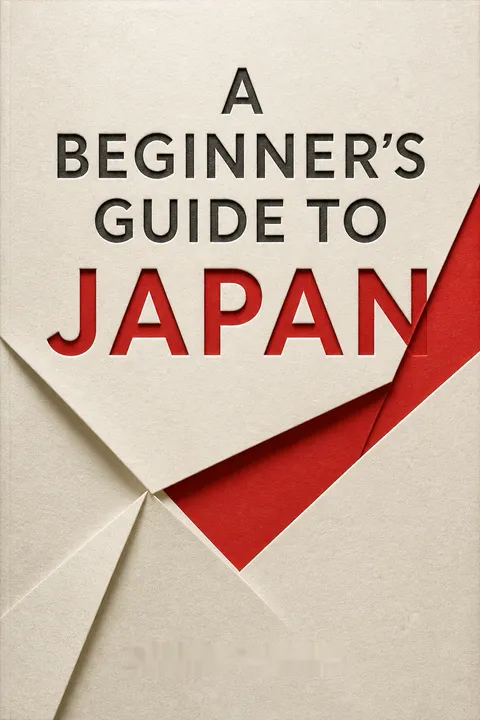
A Beginner's Guide to Japan is essayistic travel writing rather than a systematic account of Japanese society. Its central device is the reversal of expectation: a smile may express obligation rather than intimacy, an elaborate service may coexist with inflexible rules, and a modern art museum may lead a visitor toward older ideas of attention and emptiness. The book's structure mirrors that method. Short observations accumulate into a portrait that is deliberately unstable, while recurring topics such as performance, silence, responsibility, and change give the collection coherence.
The instability is both the book's strength and its main risk. Iyer makes clear that his views are personal, shaped by decades of residence, family life, and continued foreignness. That position lets him notice details unavailable to a brief tourist, while also preventing easy claims to representativeness. His anecdotes often illuminate an interpretive possibility rather than establish a population-wide fact. Readers should therefore separate reported numbers from metaphorical claims and ask what each scene can actually support.
The most valuable insight is not that Japan has one defining character. It is that social forms can produce mixed effects. Shared manners can make public life considerate while inhibiting dissent; role-playing can make a person more responsive while narrowing the space for self-expression; tradition can persist through disciplined renewal. That double vision keeps the essays from becoming either exotic praise or simple condemnation.
The book also deserves scrutiny around gender and belonging. Its evidence shows that public polish and private influence do not cancel structural inequality, and that hospitality to visitors is distinct from equal membership. At times, broad contrasts between Japan and the West risk turning varied societies into two opposing personalities. Read with that caution, the book becomes an unusually engaging exercise in comparative attention: it teaches readers to notice how their own assumptions shape what they call authentic, free, polite, or modern, and to remain curious when a place refuses to fit those categories.
Review Summary
A Beginner's Guide to Japan offers unique insights into Japanese culture through brief observations and anecdotes. Readers appreciate Iyer's thoughtful reflections on Japan's contradictions and complexities, praising his writing style and cultural understanding. However, some find the fragmented format challenging and question its value for true beginners. The book's unconventional approach polarizes readers, with some finding it profound and others frustrated by its lack of cohesive narrative. Overall, it's seen as a meditation on Japanese society rather than a practical guide.
People Also Read
Glossary
2.5-dimensional character
A figure between human and cartoonIyer uses this term for the overlap between animated figures that seem alive and people who present themselves with the stylized quality of cartoon characters. The idea reflects a world in which ordinary objects and natural features may be understood as possessing spirit. It helps explain the prominence of mascots, anime, and affection for inanimate things in his account.
Land of Must
A culture shaped by constraintsIyer's contrast for Japan's social expectations and prescribed choices, set against his description of America as a Land of Can. The phrase does not mean that every Japanese person lacks freedom. It draws attention to how roles, shared rules, and limited options can reduce decision-making burdens while also restricting individual choice.
Happiness Paradox
Rising income, lower reported happinessThe book uses this term for the observation that happiness tends to rise with income only up to a point, after which added income matters less. Japan appears as a striking complication: Iyer reports that incomes increased greatly after the 1950s while people described themselves as less happy. He raises possible interpretations but does not settle the cause.
mu
A Zen term resisting yes or noIyer presents mu as a word encountered in Zen practice that resists a simple binary answer. In his account, it is not merely a refusal or a statement that nothing exists. It suggests a position that does not fit neatly into yes, no, one, or many, and serves as an emblem of the book's resistance to rigid oppositions.
water world
A hidden entertainment districtIyer uses this phrase for Japan's entertainment quarters, where people can inhabit temporary roles and private fantasies apart from the expectations of home and public life. Love hotels and nightlife are examples. The term emphasizes the separation between ordinary social conduct and spaces where different forms of play or desire are permitted.
the transpersonal
Care not centered on the recipientIyer uses this term to describe service that feels deeply personal without being organized around a private relationship between giver and recipient. A shopkeeper's meticulous packaging or a restaurant's elaborate birthday gesture may express a general ethic of care. The attention is directed through the role and the task, rather than through personal intimacy.
FAQ
What's "A Beginner's Guide to Japan: Observations and Provocations" about?
- Author's Perspective: The book is a collection of observations and provocations by Pico Iyer, who has lived in Japan for over thirty-two years. It offers insights into Japanese culture from the perspective of a long-term foreign resident.
- Cultural Exploration: It explores the complexities and contradictions of Japanese society, from its public rituals to private lives, and how these elements coexist.
- Structure and Themes: The book is divided into sections that cover various aspects of Japanese life, such as "On the Streets," "In the Temple," and "Behind Closed Doors," each offering a unique lens on the culture.
- Personal Reflections: Iyer shares personal anecdotes and reflections, providing a nuanced view of Japan that challenges stereotypes and encourages readers to form their own interpretations.
Why should I read "A Beginner's Guide to Japan"?
- Unique Insights: The book provides a unique perspective on Japan, blending personal experience with cultural analysis, making it valuable for anyone interested in understanding Japanese society.
- Thought-Provoking: Iyer's provocations challenge readers to think critically about cultural assumptions and the nature of identity and belonging.
- Cultural Appreciation: It offers a deep appreciation of Japanese aesthetics, rituals, and the subtle art of living, which can enrich one's understanding of different cultural practices.
- Engaging Style: The author's engaging and accessible writing style makes complex cultural concepts easy to grasp, appealing to both beginners and those familiar with Japan.
What are the key takeaways of "A Beginner's Guide to Japan"?
- Cultural Contradictions: Japan is a land of contradictions, where modernity and tradition coexist, and where public and private personas often differ significantly.
- Role of Rituals: Rituals and formalities play a crucial role in Japanese society, serving as a means of maintaining harmony and social order.
- Perception of Identity: The book highlights the fluidity of identity in Japan, where roles and appearances can change depending on context and social expectations.
- Value of Silence: Silence and non-verbal communication are highly valued in Japan, often conveying more than words can express.
What are the best quotes from "A Beginner's Guide to Japan" and what do they mean?
- "Attention, taken to its highest degree, is the same thing as prayer." This quote emphasizes the importance of mindfulness and presence in Japanese culture, where attention to detail is a form of respect and reverence.
- "The opposite of a great truth is also true." This reflects the Zen-like acceptance of contradictions in Japanese thought, where multiple truths can coexist.
- "In Japan, a crowd is less a threat to public order than a reaffirmation of it." This highlights the collective nature of Japanese society, where crowds are seen as a harmonious gathering rather than a chaotic mass.
- "What you have is all you need." This quote from a stone basin at Ryoanji Temple encapsulates the Zen philosophy of contentment and simplicity.
How does Pico Iyer describe his experience living in Japan?
- Long-Term Resident: Iyer has lived in Japan for over thirty-two years, primarily in Nara, with his Kyoto-born wife and their children, providing him with deep insights into the culture.
- Language and Communication: He speaks Japanese at a basic level, which he learned from his wife, and emphasizes the importance of non-verbal communication in Japan.
- Cultural Observations: Iyer shares his experiences of navigating the complexities of Japanese society, from its rituals to its contradictions, often finding himself both an insider and an outsider.
- Personal Growth: Living in Japan has taught him to embrace uncertainty and to appreciate the beauty in not fully understanding everything, fostering a sense of wonder and curiosity.
What are some cultural contradictions highlighted in "A Beginner's Guide to Japan"?
- Modernity vs. Tradition: Japan is a country where cutting-edge technology coexists with ancient traditions, creating a unique blend of the old and new.
- Public vs. Private Personas: Japanese people often present different faces in public and private settings, adapting their behavior to fit social expectations.
- Silence vs. Expression: While silence is valued and often more expressive than words, Japanese society also embraces vibrant and colorful expressions in art and media.
- Uniformity vs. Individuality: Although Japan is known for its collective culture, individual passions and hobbies are pursued with great intensity and creativity.
How does "A Beginner's Guide to Japan" explore the concept of identity?
- Fluid Identity: The book illustrates how identity in Japan is fluid, with individuals adopting different roles and personas depending on the context.
- Cultural Masks: Iyer discusses the use of cultural masks, where people present different faces to different audiences, reflecting the complexity of social interactions.
- Role of Language: The Japanese language itself, with its multiple forms of "I" and "you," reflects the nuanced understanding of identity and relationships.
- Personal vs. Collective: The book explores the tension between personal desires and collective responsibilities, highlighting the balance individuals must maintain in Japanese society.
What role do rituals play in Japanese society according to "A Beginner's Guide to Japan"?
- Maintaining Harmony: Rituals are essential for maintaining social harmony and order, providing a framework for interactions and relationships.
- Cultural Continuity: They serve as a link between the past and present, preserving cultural traditions while adapting to modern life.
- Expression of Respect: Rituals often express respect and reverence, whether in formal ceremonies or everyday interactions, emphasizing the importance of mindfulness.
- Adaptation and Change: While rituals are rooted in tradition, they are also adaptable, reflecting the dynamic nature of Japanese culture.
How does Pico Iyer address the theme of silence in "A Beginner's Guide to Japan"?
- Value of Silence: Silence is highly valued in Japan, often conveying more meaning than words and serving as a form of communication.
- Non-Verbal Cues: Iyer emphasizes the importance of non-verbal cues and pauses, which are integral to understanding and navigating Japanese interactions.
- Cultural Reflection: Silence reflects the cultural emphasis on harmony and respect, allowing space for contemplation and connection.
- Contrast with the West: The book contrasts the Japanese appreciation for silence with Western cultures, where verbal expression is often prioritized.
What insights does "A Beginner's Guide to Japan" offer about Japanese aesthetics?
- Simplicity and Subtraction: Japanese aesthetics often focus on simplicity and subtraction, where less is more, and what remains is everything.
- Harmony with Nature: Aesthetics are deeply connected to nature, with gardens and landscapes designed to reflect natural beauty and tranquility.
- Attention to Detail: There is a meticulous attention to detail in Japanese art and design, reflecting a deep appreciation for craftsmanship and precision.
- Cultural Expression: Aesthetics are a form of cultural expression, conveying values and philosophies through visual and sensory experiences.
How does "A Beginner's Guide to Japan" depict the role of women in Japanese society?
- Traditional Roles: The book highlights the traditional roles of women in Japan, where they are often expected to prioritize family and domestic responsibilities.
- Professional Challenges: Women face significant challenges in the professional sphere, with limited opportunities for advancement and leadership positions.
- Cultural Expectations: Cultural expectations often dictate women's behavior and choices, influencing their roles in both public and private life.
- Changing Dynamics: Despite traditional constraints, the book acknowledges the changing dynamics and increasing visibility of women in various sectors.
What does "A Beginner's Guide to Japan" reveal about Japan's relationship with the outside world?
- Insular Nature: Japan has historically been insular, with a strong sense of cultural identity and resistance to outside influences.
- Global Influence: Despite its insularity, Japan has had a significant global influence, particularly in areas like technology, art, and pop culture.
- Cultural Exchange: The book explores the complexities of cultural exchange, where Japan adopts foreign elements while maintaining its unique identity.
- Tourism and Perception: Japan's relationship with the outside world is evolving, with tourism and international interest in its culture growing, challenging traditional perceptions.
About the Author
Other books by Pico Iyer


Download PDF
Download EPUB
.epub digital book format is ideal for reading ebooks on phones, tablets, and e-readers.








