

Plot Summary
A Bounty at the Door
Robin Vale, twenty-four and raised in the village of Grove, wakes to a dagger at his throat. James Campbell and an accomplice have tied him up to collect a bounty, but Robin bites James, breaks free, and fights them through the cramped house. He is trying to reach the door when a black-clad stranger blocks his way.
The man calls Robin fey scum, strikes him unconscious, and leaves the two villagers behind to collect their payment. Robin wakes bound in a moving cage, far from Grove. His father and dog are missing, his mother's iron bracelet is gone, and the Hunters refuse to explain why they wanted him.
The abduction begins with a betrayal that is intimate before it becomes political: Robin is taken by neighbors who know his name, while the father he depends on is absent at work. Robin's quick violence shows he has learned to protect himself, but his escape attempt also exposes the limit of individual courage against an organized force. The missing bracelet is a small, concrete loss whose meaning Robin cannot yet understand. It makes the first break from home feel doubly cruel: he is taken from his family and stripped of his sole keepsake from a mother he barely remembers.
The Executioner's Axe
The cage cart delivers Robin to a Hunters' camp filled with imprisoned fey. Kayia, a captured mother, explains that the Hunters test their prisoners for magic and kill those they consider useless. Robin watches them behead a woman, then holds Kayia's young daughter, Lia, as she counts to ten through the horror.
When guards seize Lia during a revolt led by the captured princess Althea Cedarfall, Robin tries to save her and is dragged to the executioner's stump instead. As the axe rises, cold bursts from Robin's hands and spreads across the ground, freezing the executioner. Brass-armoured fey warriors then overrun the camp. Erix, one of their soldiers, offers Robin a hand and says Robin helped defeat the Hunters.
Robin's first use of power arrives not as a triumphant discovery but at the edge of another execution. Lia's counting provides a moment of human contact amid mass violence, while Robin's effort to save her makes his response to danger relational rather than purely self-preserving. His magic follows that impulse, erupting when he is about to die. The Hunters' test has misclassified him, but the scene makes clear that their categories are also instruments of control. Robin's power is not simply hidden strength; it is a force that becomes visible when helplessness can no longer be endured.
The Heir in the Cage
After the camp is secured, Robin insists that he must return to his father in Grove. Erix instead leads him deeper into Wychwood, the fey realm beyond the forest boundary, and explains that Robin's uncontrolled ice marks him as the last heir of the Icethorn Court. Althea, bruised but recovered from the Hunters' attack, confirms that Robin's mother belonged to the winter court and that the iron bracelet had suppressed his magic.
She promises to petition for his father's invitation into Wychwood, but says Robin cannot simply cross back into human territory. Erix rides with him toward Aurelia, Cedarfall's golden city, while Robin struggles between anger at being taken again and the first fragile hope that he may learn who his mother was.
This revelation reframes Robin's lifelong sense of being an outsider without instantly giving him a secure identity. The bracelet becomes both an heirloom and a mechanism of suppression, so affection and concealment are entangled in the same object. Erix's insistence that Robin cannot go home may be protective, but it repeats the coercion Robin has just escaped. Althea's promise to bring his father across offers a compromise, yet the future remains controlled by people with more knowledge and power. Robin's resistance is therefore not ingratitude; it is a defense of choice after others have repeatedly made decisions for him.
Winter Breaks the Manor
At Lady Kelsey's manor, Robin sees a fey city alive with lanterns, markets, and homes built into enormous golden trees. The wonder lasts only hours. Gryvern, winged demons with ruined human faces, smash through the manor and force Althea to fight them while Erix shelters Robin.
After the attack, Althea reveals that Robin's mother, Julianne, was killed with her husband and children years earlier, and that Robin may be the surviving Icethorn heir.
Grief overwhelms him; ice and storm tear through the room until Althea uses fire and steady breathing to bring him back under control. His father arrives safely, but the reunion brings no easy answers: he admits he knew Julianne was dead and had hidden Robin's heritage to spare him responsibility and pain.
Aurelia offers Robin the first spectacle of belonging, then the Gryvern make that welcome inseparable from danger. The attack proves that his return has consequences beyond courtly curiosity, while Julianne's death destroys the hope that Robin's new identity will lead to a living reunion. His magic gives grief a physical scale, turning a private loss into damage that others must help contain. His father admits that concealment came from love and fear, but the confession also shows how protection can deny a child the ability to prepare for his own life.
A Court Divided
Althea brings Robin to a Cedarfall feast, where the royal family studies him as the possible means to stop a planned invasion of the human realm. Queen Lyra argues that the unclaimed Icethorn power may destroy the border and that a war against humans could follow; Althea and her younger sister Eleanora favor peace.
Orion, Althea's brother, insists the court should continue its military preparations. Lyra asks Robin to claim Icethorn, but he is too overwhelmed to decide. During supper, Robin's designated taster, Briar, samples his food and collapses in convulsions from poison. Erix removes Robin from the room while Althea tries to save Briar. The attack confirms that someone inside the court wants Robin dead.
The court's debate turns Robin into a political instrument before he has time to understand his inheritance. His refusal to endorse either side is not neutrality born of indifference; it reflects a conflict between the human community that raised him and the fey people who now claim him. Poison makes that abstraction bodily and immediate. Briar is assigned to absorb risk on Robin's behalf, exposing the way royal security depends on other people's vulnerability. Robin's distress at this arrangement challenges the court's assumption that protection is automatically virtuous when it treats some lives as expendable.
Lessons in Ice
While Althea stays beside the gravely ill Briar, Lady Kelsey begins training Robin to summon and restrain his winter magic. She explains that court magic strengthens or weakens with the size of its ruling family, leaving Robin's solitary bloodline unusually powerful and difficult to control. She also warns that Oakstorm has long supported war against humans, making Robin a threat to its plans.
Briar remains near death, and Althea rejects the healers' guesses about the poison. Erix reports that Prince Tarron Oakstorm may be coming, but Althea expects little help from him. Robin suggests human medicine might offer a cure. Althea resists the idea, yet Robin's proposal becomes a possible path when fey remedies fail.
Kelsey's teaching gives Robin a useful model for magic: not a tool he can simply order about, but a capacity requiring familiarity and self-trust. That lesson matters because his power is unusually strong precisely where the court's usual systems of training and inheritance provide the least guidance. The illness also reveals a political asymmetry. The fey who distrust humans may still need knowledge from them, while their pride narrows the options available to Briar. Robin's suggestion is practical rather than conciliatory, showing how his upbringing can become a resource rather than a defect.
The Sleeping Depths
Althea takes Robin, Erix, Orion, and Gyah toward the Sleeping Depths, a lake whose still black surface makes it dangerous to approach. Gyah reveals her hidden Eldrae form, a vast winged creature, and carries the party across the water. At a small Hunters' camp, Althea kills most of the men and keeps one alive for questioning. The prisoner says his group was invited and promised Robin's blood.
Before they can learn who sent the message, Gryvern descend on them. Robin unleashes the court's winter power, killing the swarm and saving the others, but the surviving Hunter then slashes Orion's throat. Althea knocks the killer unconscious rather than killing him, so the party can carry him back as evidence against whoever arranged the ambush.
The mission shifts the threat from a distant political possibility to a coordinated plot: the Hunters know Robin's blood matters, and the Gryvern arrive at the exact place the party has been lured. Robin's power saves the group, but its uncontrolled scale foreshadows the danger of treating strength as a complete solution. Orion's death interrupts victory with irreversible cost. Althea's decision to preserve the Hunter for questioning is an attempt to turn grief into evidence rather than retaliation, though it cannot undo her failure to protect her brother. The violence also leaves Robin implicated in a conflict whose rules he barely knows.
Berrow's Frozen Rooms
With Althea carrying Orion's body and Gyah burdened by the prisoner, Robin and Erix spend the night in the ruined village of Berrow. Erix explains that the town was devastated when Julianne's court fell and its winter magic lost its ruler. The frozen houses make clear what the unclaimed power could do to Durmain.
Robin's fear of darkness and the night's Gryvern attack leave him unwilling to sleep alone, so he asks Erix to stay. When a nightmare wakes him, Erix comforts him, and the two begin a physical relationship that Robin first accepts as a respite from grief. By morning, Robin sees the Icethorn capital, Imeria, and the wild storm above it. He understands that claiming the court may require his own blood.
Berrow gives the political stakes a human scale: abandoned homes are not a map's warning but the remains of lives interrupted by uncontrolled magic. Robin's intimacy with Erix grows out of vulnerability, yet the scene does not reduce desire to romance alone. Robin openly wants relief from the images of death, while Erix offers presence without demanding that he explain himself. The sight of Imeria then converts their private night into a sharper decision. The court is not simply a title awaiting Robin; its power has already become an active catastrophe, and the cost of accepting it may be physical.
Tarron Enters the Story
Back in Aurelia, Robin meets Tarron, the Oakstorm heir, who has healed Briar after the poisoning. Tarron offers to escort Robin to his father, but Erix distrusts him because of their shared history. In the guarded room, an attacker lunges at Robin's father. Robin raises ice, while Tarron kills the intruder with a blade of light and heals the wounded man.
As they clean the blood, Robin discovers the Hunters' hand symbol tattooed on his father's ribs. Tarron agrees to keep the discovery quiet and arrange for the father to recover under Oakstorm protection. Robin accepts the plan, though the brand turns his father's past into an urgent secret that could make him a target in the fey court.
Tarron's entrance complicates the story's moral geography. His healing power makes him useful and apparently generous, while Erix's warning makes the same generosity difficult to trust. The attack briefly forces Robin to depend on both men, but the mark on his father's body changes the terms of that dependence. Robin now holds information that could condemn someone he loves, and the choice to hide it is neither simple loyalty nor approval. The tattoo turns political identity into something physically inscribed, echoing Robin's own bracelet: both objects make the body carry a history its wearer may not have chosen.
The Hunter's Former Life
Before leaving Aurelia, Robin confronts his father about the Hunter mark. His father admits that he once joined the Hunters, drawn by their promise of money and power in a poor village. While transporting captured fey toward the capital, he met Julianne, then a prisoner in another Hunter party. They escaped together, lived off the land, and had Robin.
After Julianne left, his father returned to Grove under a glamour that changed his appearance and hid his past. He admits he withheld the truth about the Hunters, Robin's siblings, and Julianne's death because he feared losing his son. Robin is hurt but accepts his father's account. Tarron then takes the injured man toward Oakstorm, while Robin travels with the Cedarfall party to Farrador.
The confession refuses an easy division between human victim and fey oppressor. Robin's father participated in the system that endangered the fey, then escaped it through love, but his later silence repeats the same paternal logic of control he hoped to leave behind. Robin's anger is sharpened by learning that protection has repeatedly meant withholding the truth until events make it unavoidable. His willingness to hear his father does not erase the harm; it signals that forgiveness and trust are separate processes. Sending the father away preserves his safety while also separating Robin from the person who anchored his former life.
An Army at Farrador
Farrador is not the bustling city Robin expected but a fortified military encampment, crowded with soldiers from Cedarfall, Elmdew, Oakstorm, and the surviving Icethorn people. Their presence makes the planned invasion tangible.
Robin, Althea, Briar, and Erix search old records for instructions to claim Icethorn, but the books offer only conflicting myths. Briar proposes gathering intelligence through the serving staff, while Althea plans to question the visiting courts.
Tarron later teaches Robin to treat magic as part of himself rather than a separate force. He also confirms that claiming a court may require a blood exchange. Robin understands the risk, but decides he must try before the Passing, when the border and the invasion plans may both become irreversible.
The army transforms a debate into a visible threat, making Robin's decision less about abstract allegiance than about the people who would be placed in its path. The failed library search exposes another weakness of inherited authority: the court's histories preserve symbols and stories, but not reliable instructions for the person expected to act on them. Robin's turn toward the blood rite is therefore a choice made under uncertainty, not certainty of success. Tarron's insight about identifying magic with the self offers psychological grounding, even as it comes from someone whose political motives remain opaque.
Briar's Hidden Contract
As Robin waits for the journey to Icethorn, Briar arrives wounded and tells him Althea has disappeared in the Gryvern attack. Robin comforts her, unaware that she is using his concern to fasten an iron bracelet around his wrist. The metal suppresses his magic.
Briar then paralyzes him with a poisoned blade and reveals that she is a trainee assassin of the Children of the Asp, hired to kill him. Her earlier poisoning was staged to remove suspicion, and she had been one of several assassins competing for the contract.
Rather than kill him immediately, she breaks a window and lets a Gryvern carry him away, planning to make the attack look like a rescue failure. Robin wakes imprisoned in darkness, with no magic, no clear sense of time, and no way to call for help.
Briar's betrayal hurts because she has been positioned as both a person Robin tried to protect and a person Althea loves. Her performance of vulnerability turns care into a tactical opening, revealing how easily intimacy can be exploited when power is unequal. The iron bracelet repeats the function of the lost heirloom, but now Robin understands exactly what it takes from him. The dark cell strips away his senses and agency in stages, making captivity a psychological ordeal rather than merely a locked door. His isolation tests the trust he has begun to build with Erix and Althea.
Tarron's Winter Plan
Tarron enters Robin's prison and says he will keep him alive because his power can help Oakstorm control the storm during the Passing. He reveals that his father ordered the destruction of Julianne's court and that the Oakstorms command the Gryvern; the attack was blamed on humans to justify war.
Tarron also threatens Robin through his captive father. Robin initially pretends to submit, then cuts through the iron bracelet and attacks. When Tarron opens a portal to the prison, Robin uses his restored magic to stop him and force his way into Farrador.
The Passing ceremony is underway. Tarron catches Robin and holds a blade of light to his throat, demanding that the courts let him proceed with the war. Robin is stabbed through the torso, but Erix reaches him and beats Tarron to death.
Tarron's confession collapses the apparent opposition between fey and human into a deliberately engineered story: the Oakstorm court has used real human crimes to conceal its own violence and recruit support for revenge. Robin's escape begins when he stops performing compliance and acts on his own judgment, even though the act costs him blood. At the ceremony, the political argument becomes bodily coercion, with Tarron trying to make Robin's death serve as proof that peace is impossible. Erix's intervention saves Robin from further harm but also creates a new crisis, since killing a prince invites retaliation from the surviving Oakstorm power.
The Court Accepts Its Heir
Queen Lyra and Althea burn Robin's wounds closed, but the damage inside him continues. Tarron's father, King Doran, refuses to heal him, enraged by his son's death, so Erix asks Robin to keep fighting and carries him toward Icethorn with the shapeshifter Gyah.
As the storm's magic grows stronger, Robin falls from Gyah's back toward the power below. He enters a vast white landscape where Julianne's spirit appears. She explains that she left him with his father to keep him away from the plot against Icethorn, and says her soul and the court's power have been waiting for him.
Robin accepts them. The storm recognizes him, the wild winter settles, and the Wychwood border is restored. He survives and returns with the power to claim his mother's court.
Robin's near-death encounter brings his central losses together without pretending they can be undone. Julianne answers the question that has shaped his life, but her explanation cannot restore the years they missed. The decisive change is that Robin accepts inheritance as a relationship to the dead and the living, not as a reward for blood purity. His mother gives him the power, but his choice to claim it follows his own wish to prevent harm to others. The restored border is a material consequence of that choice, while the grief remains part of the person who returns.
A Crown of Ice
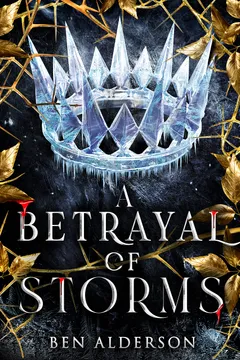
After returning from Icethorn, Robin prepares to face the courts as their new king. Erix helps him dress, and Althea places the mountain-spiked crown on his head. The Passing feast remains tense: some fey welcome him, while others still fear what his survival means for the military plans.
King Doran's grief and hostility also threaten the fragile peace. Then guards bring a chained human messenger into the hall. The man says the Hand wants to meet the courts, and demonstrates control over fey guards by lifting them from the floor and dropping them hard enough to break bones.
Gyah shoots him dead, but the display changes everything. Robin and the assembled rulers realize the Hand has magic, overturning the assumption that humans have none and revealing that the conflict is far from settled.
The crown gives Robin public legitimacy, but it does not make the court politically unified or emotionally safe. His private acceptance of Icethorn has repaired the border, yet the feast shows how little one successful act can settle inherited grievance. The messenger's display is especially destabilizing because it overturns a basic rule that has organized both sides' understanding of power. The novel ends by replacing the simple conflict of fey against humans with a more uncertain question: who has been controlling magic, and for what purpose? Robin's kingship begins not with security, but with a new threat that cannot be explained by the old stories.
Analysis
A Betrayal of Storms makes belonging a problem of action rather than ancestry alone. Robin is first treated as a disposable body by villagers, then as a political solution by the fey, and only gradually learns to claim an identity without surrendering his judgment to either community. His human upbringing is not a flaw to be corrected: it gives him practical habits and a resistance to the idea that vengeance is the only answer to loss.
The book's repeated acts of concealment complicate the difference between protection and control. Robin's father hides his past because he fears losing his son; the iron bracelet preserves a mother's connection while suppressing her child's power; political leaders withhold knowledge because they believe time is short. These choices may arise from love or strategy, but they leave Robin less able to consent to the risks others assign him. His anger is therefore a demand for participation, not merely defiance.
Grief drives much of the violence, but the novel distinguishes grief from revenge. Robin mourns a mother and siblings he never knew, while Tarron turns remembered family loss into a reason to punish an entire population. The difference is not that Robin feels less intensely. Rather, he refuses to make innocent people carry the cost of a wound they did not cause. His decision to claim Icethorn gives that refusal material force, restoring the border and delaying war without pretending that the history behind it has been repaired.
The romance with Erix develops alongside this struggle over agency. Erix's protection is meaningful because Robin can challenge it, refuse it, and still choose his closeness. That intimacy contrasts with the court's tendency to speak about Robin as a resource. The ending then unsettles the apparent resolution: the border is restored and Robin is crowned, but a human with magic demonstrates that the political map was incomplete. Peace cannot be secured by correcting one court's imbalance alone. The novel closes with Robin newly empowered, yet facing a conflict whose hidden structure has only begun to show itself.
Review Summary
Reviews for A Betrayal of Storms are mixed, averaging 3.59/5. Praise highlights the immersive fae world-building, authentic MM romance between Robin and his guard Erix, engaging plot twists, and the bodyguard trope. Critics frequently cite poor prose quality, excessive ellipses, repetitive descriptions, stilted dialogue, and underdeveloped characters. Many readers DNF'd around 50%, frustrated by clunky world-building and flat characterization. The book's comparison to ACOTAR divided readers, with some finding it a worthy queer alternative and others feeling the marketing set unrealistic expectations.
Characters
Robin Vale
Human-raised outsiderRobin is a sharp-witted young man raised by his father in Grove, where his pointed ears made him conspicuous among humans. He uses sarcasm and physical courage to meet danger, but beneath his bravado is a deep hunger to understand his absent mother and the parts of his history his father will not discuss. An iron bracelet is his most cherished keepsake. Robin's instincts are strongly relational: he risks himself for a frightened child and resents any system that treats other people as expendable. His growing awareness of his abilities forces him to separate inherited identity from personal choice, while his loyalty to both human and fey communities makes easy political answers impossible.
Erix
Warrior and steadfast guardErix is a formidable fey warrior assigned to protect Robin. Tall, disciplined, and capable in battle, he uses dry humor to soften an otherwise guarded manner. His instinct is to place himself between Robin and danger, but that protectiveness can slide into control when fear overtakes him. Erix's history with Tarron gives his distrust a personal foundation, and his connection to Robin grows through practical care, physical closeness, and a willingness to admit vulnerability. He is not simply a loyal soldier: his own choices, loyalties, and painful memories complicate the duty he has accepted.
Althea Cedarfall
Rebel princessAlthea is the fierce daughter of Cedarfall's ruling family and a princess who repeatedly risks herself to rescue captured fey. She is a skilled fighter, a decisive organizer, and an advocate for peace, though her sharp tongue and impatience can make care sound like command. Her attachment to her family and to Briar exposes a more tender side beneath her warrior's discipline. Althea treats Robin as both a person in need of protection and a possible answer to a crisis, a tension that leads her to push him toward responsibilities he barely understands. She is motivated by the belief that action matters more than comfortable outrage.
Tarron Oakstorm
Charismatic Oakstorm heirTarron is the prince of Oakstorm, known for his confidence, political fluency, and unusual command of light. His family history gives him a deep grievance against humans, and he frames his actions through duty and revenge. Tarron is observant and persuasive, often making his attention feel like a form of intimacy. He can also be generous with his abilities, healing those whom others cannot help, which makes his motives difficult to read. His relationship with Erix is burdened by old conflict, while his interest in Robin reflects both political calculation and a capacity for change that remains uncertain.
Robin's father
Grove tavern workerRobin's father raised him in Grove, worked long nights at the local tavern, and taught him to defend himself and take pride in what little the family possessed. He is loving and protective, but his fear of losing Robin makes him conceal painful truths about Robin's mother and heritage. His reluctance to speak is not indifference; it comes from grief and the belief that ignorance might keep his son safe. Their relationship is affectionate, marked by familiar teasing and fierce loyalty, yet his silence leaves Robin to discover the past through strangers and crisis.
Briar
Althea's trusted attendantBriar serves Althea and is closely connected to the princess, whose affection for her is evident in their private tenderness. Gentle in manner and often optimistic, Briar brings warmth into rooms crowded with military plans and royal pressure. She is attentive to the people around her and understands how information moves through a court's household. Her position places her near Robin's daily life and near the vulnerable seam between personal trust and political danger. Briar's quietness should not be mistaken for passivity; she knows how to advocate for herself and asks to be treated as an adult with agency.
Julianne Icethorn
Robin's absent motherJulianne is Robin's fey mother, remembered by him only through fragments: dark hair, a soft voice, and the iron bracelet she left behind. Her absence shapes Robin's longing and his father's grief, making her a presence in the story before Robin learns her name. Julianne is associated with the winter court and with a history her son has been denied. The surviving memories of her are incomplete, so Robin's image of her is partly maternal attachment and partly an imagined answer to his own sense of difference.
Queen Lyra Cedarfall
Cedarfall's wary queenQueen Lyra rules Cedarfall beside King Thallan and is Althea's mother. She is politically astute, forceful, and cautious about committing her court to peace or war without considering the consequences. Her authority is accompanied by visible grief and a powerful command of fire. Lyra expects Robin to matter to the future of Wychwood, but she does not immediately trust him or fully explain the burdens attached to his inheritance.
King Thallan Cedarfall
Cedarfall's measured kingThallan is Lyra's husband and Althea's father. More measured than his wife and eldest son, he attempts to slow decisions when grief and political urgency threaten to overwhelm the court. His bond with Lyra is evident in their small gestures of support, especially when the family faces loss. Thallan sees the danger of war but must balance it against his court's security and the wishes of its people.
Gyah
Shapeshifting guardGyah is a composed Cedarfall guard whose quiet manner conceals a rare ability to take the form of a powerful winged Eldrae. She is trusted by Althea and remains steady during missions that frighten even experienced warriors. Gyah's strength comes with physical cost, particularly after extended flight or battle. Her reserve makes her difficult to read, but her actions show a dependable commitment to the people she protects.
Orion Cedarfall
War-minded royal brotherOrion is Althea's older brother and a prince of Cedarfall. He argues for military action against humans, partly from a belief that the court must answer years of abductions and attacks. Proud and quick to anger, he often treats disagreement as weakness, especially when Althea challenges his plans. His fire magic and confidence make him a formidable presence, though his certainty leaves little room for the moral ambiguity Robin brings to the debate.
Lady Kelsey
Cedarfall's generous auntLady Kelsey is Lyra's sister and the host of Robin's first stay in Aurelia. Dramatic, sociable, and fond of spectacle, she also takes Robin's safety and magical education seriously. Kelsey explains the structure of court magic and pushes him to practice rather than fear his abilities. Her warmth does not make her naïve about court politics; she understands that Robin's return creates danger as well as possibility.
King Doran Oakstorm
Grieving Oakstorm rulerDoran is Tarron's father and the ruler of Oakstorm. He carries a longstanding anger toward humans and approaches political conflict through loss, grievance, and the defense of his court. His power is formidable, and grief can make his judgment volatile. Doran's presence embodies the danger of a ruler whose personal pain has become inseparable from the policies he demands of others.
Kayia
Captured fey motherKayia is a fey woman captured by the Hunters alongside her young daughter. She tries to protect the child from the camp's violence and is initially wary of Robin's proposal to resist. Her caution comes from having a vulnerable person in her care, not from a lack of courage. The brief trust she offers Robin helps him understand that fear can be a form of responsibility.
Lia
Kayia's young daughterLia is Kayia's small daughter, frightened by the Hunters' camp but still capable of offering Robin comfort. She helps him endure an execution by counting with him, turning a simple childhood ritual into an anchor against panic. Her vulnerability makes Robin's decision to intervene feel immediate and personal.
Eroan
Court tailor and storytellerEroan is a flamboyant tailor who once dressed Julianne and is commissioned to prepare Robin for his introduction to court. He treats clothing as a means of making identity visible, using the colors and motifs of winter to help Robin appear as someone who belongs. Beneath his theatrical manner, he carries genuine affection for Julianne's memory and offers Robin a rare, personal connection to her.
James Campbell
Bounty-seeking neighborJames is a drunken villager who helps abduct Robin for promised payment. He knows Robin's family and treats the young man as an opportunity for coin, making his betrayal more personal than that of a stranger. James's actions expose how poverty and greed can turn a familiar community into a source of danger.
Eleanora Cedarfall
Peace-minded young princessEleanora is Althea's younger sister and one of the few Cedarfall royals to speak clearly against war. Her youth contrasts with the enormous consequences of the council's decisions, but she argues that unchecked power could threaten fey as well as humans. Her position gives Robin an early sign that Althea is not alone in seeking another path.
The Hand
Hidden Hunter leaderThe Hand is the unseen authority behind the Hunters, a figure whose commands connect scattered abductions and killings. For much of the story, the Hand is known only through the branded palm symbol carried by Hunters and through the fear that the organization inspires. Its secrecy allows different courts and communities to blame one another while its purpose remains hidden.
King Peta Elmdew
Elmdew's peace-seeking kingPeta is an Elmdew ruler who argues against killing Robin and favors balance over an immediate military response. His position does not erase his awareness of the harm humans have caused, but he resists treating one death as an acceptable price for political convenience. He represents a courtly voice that can oppose war without pretending the conflict is harmless.
Plot Devices
The Iron Bracelet
Suppresses Robin's magicRobin wears an iron bracelet left by his mother, believing it to be his last personal link to her. Iron can suppress fey abilities, so the bracelet has unknowingly concealed his power and helped explain why the Hunters misjudged him during their test. Later, an assassin uses another iron band to deprive Robin of magic during captivity. The repeated use gives the object two meanings: a keepsake that carries affection and a restraint that makes power inaccessible. It also turns Robin's eventual choice to remove it into a physical act of reclaiming agency.
The Wychwood Border
Separates fey and human realmsThe Wychwood boundary and its protective mists have kept the human realm of Durmain apart from the fey courts for generations. The barrier is weakening, allowing Hunters to enter fey lands and making the unclaimed winter power an increasing threat to human settlements. The border is not merely a map line: it represents a fragile political settlement whose protection depends on the balance among the courts. Robin's relationship to the Icethorn Court makes him central to whether that boundary can endure.
Unclaimed Winter
Turns grief into realm-wide dangerWhen the Icethorn ruling line was destroyed, its winter magic lost a living ruler and began to spread through the court as a destructive storm. Robin can call on fragments of this power before he understands how to control it. His first bursts save him and others, but the ruined village of Berrow shows what happens when the magic is left unchecked. The storm's presence gives the political question a physical deadline: unless someone claims the court, the winter may break beyond Wychwood and devastate Durmain.
The Gryvern
Enforce fear through aerial attacksGryvern are grotesque winged creatures sent to hunt Robin and attack those around him. Their bodies resemble distorted humans, which makes each encounter more disturbing than an ordinary monster attack. They appear at the manor, during the mission near the Sleeping Depths, and at Farrador, raising the danger whenever Robin's identity or plans become known. Their apparent connection to human violence helps sustain the courts' hatred, but the truth of who commands them changes the meaning of that fear.
The Passing
Sets a deadline for RobinThe Passing is the seasonal transition when the courts gather and recognize the next turn of the year. With it approaching, Robin has only days to understand how to claim Icethorn before the winter power threatens the border and the assembled armies may move against Durmain. The ceremony also concentrates the rulers and their competing plans in one place, making it a natural stage for both political decisions and violence. Its deadline drives Robin toward the dangerous blood rite even though the surviving records offer no trustworthy instructions.
Download PDF
Download EPUB
.epub digital book format is ideal for reading ebooks on phones, tablets, and e-readers.








