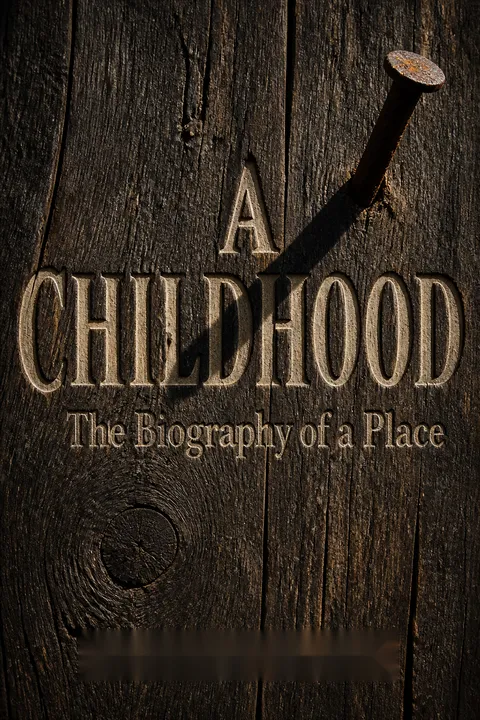


Key Takeaways
A childhood can belong to a whole county, not one house.
Place becomes identity. Crews grows up moving between farms, so he has no single childhood home to return to. He calls the whole of Bacon County his home place: its roads, customs, landscapes, and people. The memoir begins with his father Ray, who died when Harry was a toddler. Harry reconstructs Ray from photographs and stories told by relatives and neighbors, even imagining scenes he could not have witnessed. He questions whether such memories are literally accurate, then shows how they preserve a community’s understanding of itself.
The past travels by voice. A shoebox of photographs and a day spent listening to his uncle and local men give Harry more than facts about his father. They give him a place in a shared history. That history includes tenderness, violence, and hardship, not a polished family legend.
What's striking is that place here is not scenery behind a life. It is the social structure through which a life becomes legible: names, stories, labor, and shared reference points. The uncertainty around remembered scenes strengthens the memoir's honesty. It distinguishes factual proof from the emotional truth a community transmits. That distinction matters, especially when the people who could correct a story are gone. The book also resists turning nostalgia into a claim that the past was better. Its home is loving and brutal at once, and memory carries both.
With no margin for error, one emergency can cost both child and livelihood.
Bad luck multiplies. The Crews family farms land they do not own outright, relies on weather-sensitive crops, and often has little cash after paying for seed, fertilizer, and supplies. Tobacco draws labor away from food crops, making families more dependent on cash from a harvest that can fail. A poor crop can leave a farmer in debt rather than provide a way out.
One crisis compounds another. When Harry is a toddler, his mother sees two yearling cows heading for a barrel of pesticide. She runs to stop them, leaving him briefly alone. He swallows raw lye from a floor-cleaning job and burns his mouth and hands. His parents rush him to a doctor, but the cows die from the poison. The incident captures a world in which saving one thing can mean losing another.
The memoir makes precarity concrete by showing how harms cascade rather than arrive one at a time. The family faces risks without savings, reliable medical access, or much control over prices and weather. In that context, a household emergency can also become an economic shock. This is a useful corrective to explanations that treat hardship as a series of private mistakes. Still, the book's power comes from a particular family's experience, not a statistical portrait of every rural tenant farmer. Its account is most persuasive when read as testimony to how thin the margin could be.
In Scuffletown, law was personal, and insults could become fatal.
Disputes became dangerous. In the part of Bacon County known as Scuffletown, people often settled serious conflicts themselves rather than ask the sheriff for help. Calling on official authority could mark someone as defenseless, inviting further abuse. The result was a local order built around reputation, kinship, threats, and force.
A fence line could turn deadly. After Jay Scott taunts Junior Carter, known as Bad Eye, he approaches the Carter property. Bad Eye swings an ax into Jay's wrist, and the fight over the severed hand leaves two of Bad Eye's relatives dead. Bad Eye is later found drowned, with weights tied to his ankles. Crews recounts such stories without pretending the violence was noble. In a place where people had few trusted protections, retaliation could become its own brutal system.
The stories reveal a tension between self-reliance and public safety. Where formal authority is distrusted or ineffective, personal enforcement can feel like the only available defense. But the same system turns small provocations into feuds and makes violence hard to contain. Crews's vivid local details help explain the logic without making it admirable. That distinction is important: understanding why a community relies on its own rules does not require treating those rules as fair or harmless. The book also stays close to its own county and memories, rather than claiming that every Southern community worked this way.
Let imagination shelter you, but notice what it reproduces.
Stories made a world. Harry and his friend Willalee Bookatee use the Sears catalog as a prompt, inventing tangled lives for the polished people pictured in its pages. They imagine hidden wounds, rivalries, theft, and violence beneath the perfect clothes. Their stories help them interpret a life where injury and hardship are ordinary, and where the catalog's bright, untouched people seem almost unreal.
Fantasy has blind spots. Willalee is Harry's close friend and partner in storytelling, yet Harry and his brother also exploit his fear of bulls to make him carry a heavy citron across a field. Harry remembers learning the racial hierarchy of the adults around him and repeating it. The memoir presents childhood imagination as both creative refuge and a place where cruelty and prejudice can be absorbed and replayed.
The catalog becomes a miniature theater for children who have few other routes into a larger world. By inventing troubles for the flawless models, the boys make those images human and make their own surroundings narratable. Yet imagination does not automatically liberate its users from the culture around them. The prank on Willalee and the racial rules Harry learns show that children can reproduce power even inside an intimate friendship. The memoir's strength is its refusal to use innocence as an alibi. It lets creativity and complicity occupy the same childhood.
Care means staying present when cure is impossible.
Help often came without certainty. At five, Harry develops a severe illness that leaves his legs drawn up. Local doctors cannot identify the cause and fear he may never walk again. A faith healer offers certainty but does not straighten his legs. Harry's family and neighbors continue to visit, while Auntie, Willalee's grandmother, stays with him, tending to his pain and filling the nights with stories.
Presence still matters. Years later, Harry is badly scalded in a hog-killing accident. Dr. Sharp treats him at home, despite the family's inability to pay much, and Hollis Toomey arrives to perform his local practice of speaking to the fire. The burns are severe, but Harry survives. The memoir does not claim that every remedy works. It shows how practical help, attention, and staying beside someone can matter even when no one can promise a cure.
These episodes distinguish care from mastery. The adults around Harry cannot reliably explain or prevent illness, and the book does not smooth their uncertainty into a triumph of folk knowledge or medicine. Instead, it records a network of people doing what they can: providing treatment, watching over a child, easing pain, or simply returning. That is a more demanding picture of care than a rescue story, because it includes limits and fear. The memoir also invites caution: comfort and tradition may help someone endure, but they are not the same as a medical explanation.
Respect the limits of animals asked to carry human survival.
Work required accommodation. Farm animals were partners in labor, not decorative companions. A mule's pace, strength, and habits could determine whether a field was plowed straight or whether a farmer got through the day. When the Crews family returns to farming, their old mule Pete stops every seventy yards to rest, a habit learned while working for an elderly farmer.
Patience can be practical. Mr. Willis refuses to beat Pete into moving faster. He sees the mule as an old worker who has already given years to the plow. When Pete overeats and becomes dangerously swollen, Willis leads him into cool water and treats his feet to encourage bleeding. The measures are rough, but they reflect the same hard calculation the people apply to themselves: sometimes an unpleasant intervention is the only alternative to death.
The book's attention to animals widens its account of labor. Survival depends on relationships with creatures whose bodies have limits, preferences, and histories. Pete's learned pauses matter because they challenge the idea that efficiency means demanding constant output. Willis's patience is not sentimental; it is informed by experience and a recognition of shared wear. At the same time, the farm's methods can be violent, and affection does not erase that fact. The memoir holds care and coercion together, showing the difficult ethics of work when human and animal survival are tightly linked.
A child can love a dangerous parent without excusing the danger.
Love did not make home safe. Harry adores Pascal, the man he believes is his father, even as Pascal's drinking leads to shouting, broken objects, and threats with a shotgun. When Pascal fires at the mantel, Harry's mother takes her sons and leaves for Jacksonville. Harry remains frightened, confused, and attached to the man who has hurt the family.
Identity breaks open. In Jacksonville, Pascal tells Harry that he is not his biological father but his uncle. Harry's biological father, Ray, died before Harry could know him; Pascal is Ray's brother and had tried to fill the role. The revelation does not produce a neat resolution. Pascal disappears from Harry's daily life, and when Harry finds him years later, they barely speak. The memoir lets affection, danger, grief, and estrangement remain unresolved.
This relationship resists the tidy moral categories adults often impose on children. A child can experience a parent's tenderness as real while also living with fear of that parent's behavior. Recognizing the attachment does not excuse violence, and naming the violence does not erase the affection. The late disclosure of Harry's biological parentage adds another layer: identity is shaped not only by blood, but by the person who occupies a family role and the stories that sustain it. The memoir offers no simple reconciliation, which makes its account of family loyalty more credible.
Leaving home can save you while making home impossible to replace.
The city offered relief and loss. After Pascal's threat, Harry's mother moves the family from rural Georgia to Jacksonville, where she finds work in a cigar factory. The children encounter indoor plumbing and a refrigerator, but also crowded houses, traffic fumes, and neighbors separated by thin walls. The familiar fields, animals, and network of kin are gone. Modern conveniences do not cancel the ache of displacement.
Return is not restoration. The family moves back to the county after about five months, but their farm and circumstances differ from what they left. Harry eventually departs for the Marines at seventeen and does not return to live there. His account suggests that home can remain essential even when no single house can hold it. It survives in memory, in habits, and in the people who recognize one another's stories.
The move is more than a change of address. It exposes the trade between material convenience and social belonging: a toilet indoors is a genuine improvement, while the city can still feel alien to people accustomed to land and kin nearby. The book refuses to romanticize either setting. Rural life is harsh and precarious; urban life brings opportunity and estrangement. That balance makes the idea of home more interesting than simple nostalgia. Home is not necessarily the safest place or the most comfortable one. It can be the place whose textures and relationships remain hardest to replace.
After three years away, one curse exposed how much Georgia remained.
Belonging has its rules. In 1956, after three years in the Marine Corps, Harry stands in a tobacco field with his cousins. They tease him about tiring in the heat. He looks at the sun and curses it. The others fall silent: in their shared understanding, the sun, rain, land, and God belong to a sacred order that should not be cursed.
Distance has limits. Harry realizes that military service and time away have changed his instincts, but have not severed his connection to the people and place that formed him. The moment is small, almost comic, yet it holds the book's final tension. He can leave Bacon County and still carry its codes; he can feel at home there and know he has become different from the people who stayed.
The closing scene makes belonging visible through a mistake. Harry does not announce that he has changed; the cousins' reaction reveals the distance between his current reflex and their shared code. The moment also shows how values are embedded in ordinary language and conduct, not only in explicit beliefs. Yet the scene is not proof that a person can never leave a culture behind. It shows something subtler: departure changes what feels natural, while memory keeps older meanings available. The book ends with connection and estrangement occupying the same field.
Analysis
A Childhood is a memoir organized less around achievement than around inheritance: the inheritance of a place, its stories, its injuries, and its rules. Crews moves from his dead biological father to the rural community that makes that father imaginable, then into the boyhood body and mind through which the community is experienced. The result is a biography of a childhood that is also an account of how memory works when direct recollection is incomplete. Family anecdotes, photographs, local speech, and remembered sensations become evidence, though not always evidence that can be independently verified.
The book's most important tension is between refuge and harm. Bacon County provides kinship, practical cooperation, humor, and a deep sense of belonging. It also contains hunger, racism, violence, dangerous labor, and limited access to medicine. Jacksonville brings wages and conveniences while separating the family from the land and relationships that have anchored them. Neither setting is a clean escape. That complexity keeps the memoir from becoming a simple lament for a lost rural world.
Crews's childhood imagination is similarly double-edged. The Sears catalog becomes a stage where children can turn flawless commercial images into flawed, dramatic people. Folklore gives fear a shape. But imaginative play also absorbs the racial hierarchy and casual cruelty around the boys. The memoir's candor lies in allowing a child to be both vulnerable and capable of harm.
Its perspective remains deliberately local. The book does not offer a complete social history of southern tenant farming, nor can one family's remembered experience stand for every family. Its contribution is different: it makes a particular way of life legible through vivid material detail, from crop debts and mule habits to the odor of city exhaust. By showing how such details shape identity, Crews turns memoir into an argument about belonging without reducing that belonging to either nostalgia or bloodline.
Review Summary
A Childhood: The Biography of a Place is a highly acclaimed memoir by Harry Crews, praised for its vivid portrayal of rural Georgia during the Great Depression. Readers appreciate Crews' raw, unflinching depiction of poverty, family dynamics, and coming-of-age experiences. The book's powerful prose and storytelling captivate many, though some find the graphic content challenging. Critics laud Crews' ability to evoke a sense of place and time, with many considering it a masterpiece of Southern literature. The memoir's honest exploration of hardship, resilience, and childhood innocence resonates deeply with readers.
People Also Read
Glossary
home place
Childhood place of belongingCrews uses home place for the house and land where someone is born, grows up, and remains connected to kin and local memory. Because his family moved repeatedly, he cannot identify one childhood house as his own. He instead treats all of Bacon County, with its people, customs, and landscape, as his home place.
Wish Book
Catalog for dreaming and storiesThe Wish Book is the Sears, Roebuck catalog as children in Crews's community used it. They could browse products they were unlikely to buy, imagining lives beyond the farm. Harry, Willalee, and Lottie Mae also used the catalog's polished models as characters, inventing relationships, secrets, and conflicts for them.
cooning
Catching fish by handCooning is a way of catching fish in shallow river channels by feeling with one's hands among submerged roots and trapping fish in their hiding places. Crews describes being frightened on his first trip with Uncle Alton, but eager to follow because Alton makes him feel trusted and included.
walking out
Young people courting outdoorsWalking out is a social custom in which boys and girls leave a gathering together and walk into the dark, often holding hands, then return and go out again. Adults, especially mothers, keep watch over how long young women are away. Crews describes the custom as part of rural social life and childhood curiosity about courtship.
commodity
Free school foodIn Harry's childhood vocabulary, commodity means the food distributed to schoolchildren by a government truck for their families to take home. He remembers the word less as an economic category than as the promise of free food, sometimes including an unfamiliar item such as a grapefruit.
that way
Local euphemism for unusual behaviorIn the community Crews describes, that way is a euphemistic label for someone regarded as mentally unusual or not behaving as expected. It is not a medical diagnosis. Harry fears being described this way when illness and paralysis make him an object of attention, while the phrase is also used about Auntie.
FAQ
What's "A Childhood: The Biography of a Place" about?
- Memoir of Harry Crews: The book is a memoir by Harry Crews, detailing his early life in rural Georgia during the 1930s and 1940s.
- Life in Bacon County: It explores Crews's experiences growing up in Bacon County, Georgia, a place marked by poverty, violence, and a strong sense of community.
- Family and Hardship: Crews recounts his family's struggles, including the death of his father, his mother's remarriage, and their eventual move to Jacksonville, Florida.
- Cultural and Personal Insights: The memoir provides insights into Southern culture and the personal challenges Crews faced, shaping his desire to write.
Why should I read "A Childhood: The Biography of a Place"?
- Authentic Southern Experience: The book offers an authentic portrayal of life in the rural South, capturing the essence of a bygone era.
- Literary Significance: Harry Crews is a significant figure in Southern literature, and this memoir provides context for his later works.
- Emotional Depth: Crews's storytelling is rich with emotion, providing a deep understanding of his formative years and the impact of his environment.
- Cultural Reflection: It reflects on themes of poverty, resilience, and the human spirit, making it a compelling read for those interested in American history and culture.
What are the key takeaways of "A Childhood: The Biography of a Place"?
- Resilience in Adversity: Crews's life story is a testament to resilience in the face of poverty and hardship.
- Impact of Environment: The memoir highlights how one's environment and upbringing can profoundly shape their identity and future.
- Storytelling as Survival: Crews emphasizes the power of storytelling as a means of understanding and coping with life's challenges.
- Cultural and Historical Context: The book provides a vivid depiction of Southern life during the Great Depression, offering valuable historical insights.
What are the best quotes from "A Childhood: The Biography of a Place" and what do they mean?
- "Survival is triumph enough." This quote encapsulates the theme of resilience and the idea that enduring life's hardships is a significant achievement.
- "The world that circumscribed the people I come from had so little margin for error." It reflects the precariousness of life in rural Georgia, where small misfortunes could have devastating consequences.
- "Nothing is allowed to die in a society of storytelling people." This highlights the importance of oral tradition and storytelling in preserving history and identity.
- "I have always slipped into and out of identities as easily as other people slip into and out of their clothes." It speaks to Crews's struggle with identity and the influence of his upbringing on his sense of self.
How does Harry Crews describe his family in "A Childhood: The Biography of a Place"?
- Complex Family Dynamics: Crews describes a family marked by loss, with his father's early death and his mother's turbulent second marriage.
- Strong Maternal Figure: His mother is portrayed as a resilient woman who navigates the challenges of raising her children in difficult circumstances.
- Extended Family Influence: The memoir includes various relatives who play significant roles in Crews's upbringing, reflecting the importance of family ties.
- Struggles and Sacrifices: Crews's family is depicted as enduring numerous hardships, highlighting themes of sacrifice and survival.
What role does the setting play in "A Childhood: The Biography of a Place"?
- Rural Georgia: The setting of Bacon County, Georgia, is central to the memoir, shaping the experiences and worldview of Crews.
- Cultural Landscape: The book vividly depicts the cultural and social dynamics of the rural South during the Great Depression.
- Environmental Challenges: The harsh realities of farming and rural life are integral to the narrative, influencing the characters' lives.
- Symbol of Identity: The setting serves as a symbol of Crews's identity, deeply influencing his writing and personal development.
How does Harry Crews's childhood influence his writing career?
- Foundation for Storytelling: Crews's childhood experiences provided a rich foundation for his storytelling, influencing the themes and characters in his work.
- Desire to Escape: The hardships he faced fueled his desire to imagine and write, offering an escape from his reality.
- Southern Gothic Influence: His upbringing in the South contributed to his distinctive style, often categorized as Southern Gothic or Grit Lit.
- Memoir as Inspiration: "A Childhood" itself is a reflection of how his early life inspired his literary career, providing context for his later novels.
What challenges did Harry Crews face during his childhood?
- Poverty and Hardship: Crews grew up in a poor, rural environment, facing economic challenges and limited opportunities.
- Family Turmoil: The death of his father and his mother's difficult second marriage added to the instability of his early life.
- Health Issues: Crews experienced a mysterious childhood paralysis and a severe scalding accident, impacting his physical and emotional well-being.
- Cultural Isolation: Living in a remote area, Crews faced cultural isolation, which influenced his perspective and aspirations.
How does "A Childhood: The Biography of a Place" reflect Southern culture?
- Oral Tradition: The memoir emphasizes the importance of storytelling in Southern culture, preserving history and identity.
- Community and Family: It highlights the strong sense of community and family ties that are central to Southern life.
- Racial and Social Dynamics: The book touches on the racial and social dynamics of the South, providing a nuanced portrayal of the era.
- Religious Influence: The influence of religion and its role in shaping values and behaviors is a recurring theme in the memoir.
What is the significance of the title "A Childhood: The Biography of a Place"?
- Dual Focus: The title suggests a dual focus on Crews's personal childhood and the broader cultural and geographical setting of Bacon County.
- Place as Character: The memoir treats the setting as a character in its own right, integral to the narrative and Crews's development.
- Interconnectedness: It underscores the interconnectedness of personal identity and environment, reflecting how place shapes one's life.
- Memoir and Biography: The title blurs the lines between memoir and biography, offering a comprehensive view of both Crews's life and his community.
How does Harry Crews portray his relationship with his stepfather in the memoir?
- Complex Relationship: Crews's relationship with his stepfather, Pascal, is complex, marked by both affection and tension.
- Father Figure: Despite not being his biological father, Pascal plays a significant role in Crews's upbringing, influencing his development.
- Conflict and Resolution: The memoir explores moments of conflict, particularly related to Pascal's drinking and behavior, and their eventual resolution.
- Emotional Impact: Crews reflects on the emotional impact of his stepfather's presence and absence, shaping his understanding of family dynamics.
What themes are explored in "A Childhood: The Biography of a Place"?
- Resilience and Survival: The memoir explores themes of resilience and survival in the face of adversity and hardship.
- Identity and Belonging: Crews grapples with questions of identity and belonging, influenced by his upbringing and environment.
- Storytelling and Memory: The power of storytelling and memory as tools for understanding and coping with life's challenges is a central theme.
- Cultural and Social Commentary: The book offers cultural and social commentary on the rural South, examining issues of poverty, race, and community.
About the Author

Download PDF
Download EPUB
.epub digital book format is ideal for reading ebooks on phones, tablets, and e-readers.








