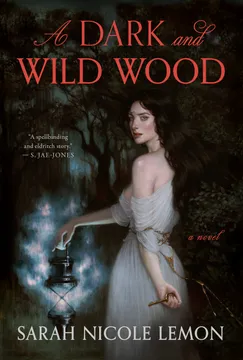


Plot Summary
Prologue
The narrator warns that Salomé’s1 story should not be mistaken for a romance or a lesson in virtue. She imagines the familiar tale of a maiden joining an underworld ruler, then rejects it: she was neither a saint nor a willing queen.
Her account begins with her own death and follows the terrifying, sometimes wondrous life that came after. The framing promises horror, while hinting that Salomé’s1 feelings for Death4 will complicate the story without making it a love story.
The prologue establishes a deliberate gap between the shape of a romance and the experience Salomé will recount. Its allusion to a maiden entering an underworld makes Death’s later attention seem, at first, legible as courtship. The narrator immediately resists that simplification, asking the reader to treat desire and danger as simultaneous rather than mutually exclusive. Her blunt refusal of a moral also prepares us for a protagonist whose survival will not follow a clean path from suffering to virtue. The frame makes the reader question, alongside Salomé, who benefits when a frightening relationship is given the comforting name of romance.
Ashes at the Convent
Salomé’s1 father throws her and her mother into the icy Ills at birth. Midwife Valerie5 saves the infant, but Salomé’s1 mother dies, and Valerie5 raises Salomé1 beside her older sister,2 Rochelle.2 Years later, villagers burn Valerie5 as a witch. Salomé1 sees a dark figure gather the healer’s spirit, then discovers that the nuns in the convent cannot see the spirits she has always noticed.
Rochelle2 makes her promise to hide her visions so the same accusation will not destroy her. The convent educates Salomé,1 but its discipline makes her feel both indebted and imprisoned. A lesson on the visionary Hildegard gives her hope that obedience might make her sight holy, while Rochelle2 quietly questions why a god would demand so much suffering.
Salomé’s first ideas about power arrive through other people’s judgments. Her father’s violence, the villagers’ execution of Valerie, and the convent’s suspicion teach her to treat her own perceptions as evidence against herself. Rochelle’s promise offers protection, but it also teaches concealment as the price of belonging. The convent’s education complicates that lesson: literacy gives Salomé a language for spiritual experience, yet the Abbess’s model of holiness requires the surrender of selfhood. Salomé is not simply rebelling against religion. She is trying to locate a form of authority that can recognize her without demanding that she disappear.
The Empty Field
At sixteen, Salomé1 is sexually assaulted by a visiting priest in the Abbess’s11 office. When she asks the Abbess11 for protection, the older woman punishes her and blames her for tempting him. Salomé’s1 rage then bursts through the chapel: pillars shatter and the Communion wine spills, though she denies causing it. She tries to crush every strong feeling through prayer.
Three years later, while she and Rochelle2 harvest grain, an antlered creature slips from the forest and carries Rochelle2 away before Salomé1 can reach her. Salomé1 runs from the convent with a loaf of bread and no plan beyond finding her sister.2 The familiar spirits remain, but now she has seen a creature that can seize a living person and vanish with her.
These events collapse the safety Salomé has tried to build through silence. The Abbess’s response to the assault reproduces the same logic as the villagers’ accusation against Valerie: a woman’s danger is treated as proof of her guilt. Salomé’s uncontrolled destruction makes that judgment feel frighteningly plausible to her, even though her power first erupts in response to abuse. Rochelle’s abduction then turns a private fear into an urgent mission. Salomé does not flee because she has chosen freedom in the abstract; she leaves because the one person who made survival bearable has been taken beyond the convent’s walls.
A Sister at the Blue Moon
Outside the convent, Salomé1 learns how little her education has prepared her to survive. An old traveler exploits her trust, then delivers her to Josef’s12 brothel, the Blue Moon. Dacia,3 a year older and experienced in its routines, bathes and clothes Salomé1 and helps her endure the work. Salomé1 falls in love with Dacia,3 but accepts the boundary Dacia3 sets between them and hides her longing beneath friendship.
For five years she becomes skilled at ignoring spirits and keeping her power buried. Then girls begin disappearing from Riquewihr, and villagers blame a folkloric Lord Death.4 Dacia3 considers escaping into a convent, while Salomé1 gives her the Mary Magdalene medallion Dacia3 made for her and refuses to believe the rumors can touch them.
The brothel does not simply replace one institution with another. Both the convent and Josef’s business regulate Salomé’s body, time, and access to safety, but Dacia gives her a kind of care absent from the convent’s formal piety. Salomé’s desire remains constrained by the same survival calculation: she accepts the relationship Dacia can offer rather than risk losing it altogether. Her growing ability to ignore the supernatural is therefore double-edged. It helps her function, but it also narrows her life until Rochelle’s rescue feels almost impossible. The missing girls disturb that numbness and make the village’s stories newly dangerous.
The Grave Opens
Captain Maxime,10 a violent officer serving the Baron,7 refuses to pay Salomé1 after using her. When he threatens to strike her, she reaches through his bloodlust and accidentally kills him with her magic. Josef12 and the village bury her before she can explain what happened. Salomé1 breaks through the coffin and claws her way out of the frozen earth, choosing the forest over the people who have already condemned her.
Lost in the snow, she encounters a mounted figure the villagers call Lord Death.4 He heals her from the cold and offers shelter, freedom, and instruction in exchange for her life. Salomé1 accepts because she wants to live, find Rochelle,2 and understand the power she has spent years trying to suppress.
The grave is both the literal consequence of Salomé’s violence and the endpoint of the social identities imposed on her: witch, sinner, whore. Her escape does not erase those labels, but it changes the decisive action from something done to her into something she does for herself. Death’s offer reaches her at exactly that vulnerable threshold. He presents power as an alternative to helplessness, and Salomé accepts because she has no safer option. The scene therefore begins their relationship with a real asymmetry. Her gratitude and hope are genuine, but so is her dependence on the figure who controls access to the world she wants to enter.
A Violet from Nothing
Death4 brings Salomé1 to his ancient château, which she first sees as a desolate ruin. He tells her that her expectations limit what she can perceive, then locks her in a bare chamber with an hourglass and a demand to create something from nothing.
Salomé1 first scratches blood onto the floor and cracks a stone, but neither attempt satisfies the test. As the sand runs out, she reaches into the darkness of her grief and draws out a violet, a memory of Valerie5 and their walks in the woods made tangible.
Death4 confirms that she has passed and accepts her as his apprentice. When he leads her into the hall, the wreckage has become the sumptuous palace she had expected to see. Salomé1 enters training believing that mastery may lead her back to Rochelle.2
The test makes Salomé’s power inseparable from perception. Her first attempts repeat familiar forms of harm: blood, fracture, force. The violet appears only when she risks contact with grief rather than trying to outmuscle the empty room. Its smallness matters. Creation is not a grand display but a recovered memory that Salomé can hold. Yet the palace’s transformation also establishes Death’s authority over the terms of reality. He teaches her to question what she sees while remaining the person who controls the test, the house, and its revelations. Her new hope is real, but it begins inside his carefully managed world.
Rochelle in the Chapel
During a lesson in Death’s4 chapel, Salomé1 sees Rochelle2 appear, first in the clothes she wore before her abduction, then as a regal, older woman. Salomé1 reaches toward her and follows her into a shifting space, but a great creature coils around Salomé1 before she can hold on. Death4 rescues her and insists that the sister she saw2 was an illusion made from memory, not Rochelle2 herself.
He says the living cannot reach the places where she was taken. Salomé1 remains with him, desperate to learn, and surrenders to a lesson that opens her perception of the void. Death4 then gives her keys and a series of rooms to study while he is away, warning her not to wander after nightfall.
The chapel lesson turns Salomé’s deepest motive into both a source of magic and a vulnerability. Her longing makes an image vivid enough to feel like reunion, but she has not yet learned how to distinguish desire from contact. Death’s explanation may be correct about the apparition, yet his certainty leaves Salomé with no independent means of knowing. The lesson in surrender deepens that dependence by pairing frightening loss of control with the promise of understanding. The keys offer a counterweight: they make her responsible for her own work. But they also bind her training to rules she does not yet know how to interpret.
The Forest’s Other Teacher
Salomé’s1 first room recreates the village church and turns a service into a nightmare of public shame and attempted sacrifice. She loses the keys, then wakes ill from the cost of magic. Seeking willow bark for her injured ribs, she meets an old forest healer named Perchta,6 who teaches her to make a poultice by focusing on its purpose and drawing her power back within her own boundaries.
Salomé1 returns to Death’s house and resumes her assigned work, but Perchta’s6 practical instruction changes how she understands magic: it can heal, and it can drain the person who uses it. Her education now has two sources, the immortal tutor’s books and the healer’s attention to plants, bodies, and limits.
Perchta offers a different model of knowledge from Death’s. Where he stresses perception and power, she attends to material processes: what a plant does, how a wound behaves, and how to stop a working without tearing oneself apart. Salomé’s sickness makes the lesson bodily rather than theoretical. The lost keys and the nightmare room show that obedience alone cannot protect her, while the poultice shows that competence can grow through patient attention. This is the first serious alternative to Salomé’s old belief that strength means self-denial. Perchta asks her to recognize herself as a bounded being, not an inexhaustible vessel.
A Sister Behind Silver
Under Death’s4 instruction, Salomé1 studies magic, attempts to turn water into wine, and succeeds only after sacrificing a mouse. A later attempt to summon an old god seems to fail, but the being answers in Death’s4 voice and identifies itself as a demon prince.15 Salomé1 begins to understand why her teachers have warned against summoning.
At midsummer, while Death4 is away, she uses his notes and memories of Rochelle2 to cast a second spell. Rochelle2 appears inside Salomé’s1 mirror, crowned and unable to cross through. She forms a warning that Salomé1 should flee, then vanishes. Salomé1 decides that the apparition is proof Death4 was wrong about her sister2 being unreachable, and keeps the encounter secret.
The spells test more than Salomé’s technical skill. The wine requires an animal’s life, making the cost of high magic concrete, while the demon’s response exposes the danger of confusing a failed-looking ritual with a harmless one. Rochelle’s appearance offers the evidence Salomé craves, but the mirror’s barrier preserves uncertainty: she can reach her sister’s image without knowing what the contact means. Salomé’s decision to distrust Death may be a first act of independent judgment, but secrecy also isolates her. Her longing remains so powerful that it can make a warning feel less urgent than the hope that produced it.
The Lesson Turns Violent
Death4 takes Salomé1 to a mountain meadow and pushes her to control her magic through an intensely intimate exercise. He cuts symbols into the backs of her thighs, then later gives her a drugged drink and performs a ritual over her body in the chapel. Salomé1 slips out of herself and sees him working from a book, trying to make her body serve a purpose he has not explained.
She forces herself back and runs from the château. Still injured and disoriented, she careens through the forest on a branch lifted by her uncontrolled power, then crashes onto the Roman road near Riquewihr. Her flight ends her belief that Death’s4 gentleness and his demands can always be trusted as the same thing.
This rupture makes the distinction between chosen surrender and coerced submission central. Salomé has interpreted Death’s discipline through the survival patterns she learned in the brothel, where pleasing a powerful man could feel safer than refusing him. The unannounced ritual breaks that interpretation: she cannot consent to a purpose she has not been allowed to understand. Her out-of-body perception gives her a brief view of the power imbalance from outside her own longing. The flight is not a settled escape, since she remains injured and confused, but it is a consequential refusal. For the first time, she acts on fear rather than explaining it away as a test.
Dacia at the Spring
On the road, Salomé1 finds Dacia3 and the Blue Moon women traveling to a woodland shrine for protection. Bandits seize Salomé1 and Dacia3 after Salomé1 warns the others and helps them escape. At a healing spring, Dacia3 tends Salomé’s1 wounds, and they finally share the desire each had kept unspoken.
Their captors, led by green-eyed Tobin8 and the giant Jon,9 still refuse to release them. Salomé1 reveals her luminous form and persuades Tobin8 to let her and Dacia3 go. Dacia3 recoils from Salomé’s1 witchcraft, so Salomé1 returns alone to the château. Death4 welcomes her and nurses her through her injuries. Salomé1 reads his care as proof that she can still belong beside him.
The reunion gives Salomé what she has wanted from Dacia, but it cannot restore the past. Their intimacy is real, and so is Dacia’s fear when Salomé reveals her magic. Salomé’s decision to return to Death follows that rejection as much as it follows her need for shelter. It shows how easily care can become a substitute for freedom when a person has few places to go. Tobin and Jon also introduce a second kind of power: their banditry opposes the Baron, but they still treat captives as people they can retain. Salomé must learn that kindness and possession can coexist.
The House Has Eyes
Death4 tends Salomé1 until her wounds heal, but his marks remain on her thighs. When she returns to Perchta,6 the healer warns that Salomé1 is losing her boundaries and cannot become powerful by emptying herself for another person. Perchta6 also reveals her connection to the goddess Hecate,14 giving Salomé1 a glimpse of a larger lineage of witches.
Back at the château, Salomé1 explores with the keys Death4 has returned to her. A book draws a monster into the library, and a plant in the glasshouse nearly poisons her. Following what seems to be Dacia’s3 scream, Salomé1 enters a room of mirrors and realizes they are the house’s watching eyes. She decides the château’s magic is entangled with her own and must be broken.
The house’s surveillance makes the setting an active part of Salomé’s coercive environment. It does not merely contain danger; it anticipates her needs, watches her movements, and builds illusions from her fears. Perchta gives Salomé a vocabulary for resisting that entanglement by distinguishing her own shape from the magic around her. Hecate’s appearance places her private struggle within a tradition larger than Death’s instruction. Yet Salomé is not suddenly free of his influence. She still returns to the house and uses its keys. Her growing discernment is real, but it develops inside the very structure she now suspects is exploiting her.
Tobin’s Empty Search
Salomé1 creates a rosemary charm for Dacia3 and seeks Tobin’s8 help after he reports that the missing women may be held at the Baron’s7 estate. She hides the charm in her clothing, then uses a crude map and her developing magic to cloak Tobin’s8 bandits as they search the grounds. They find no prisoners, and Tobin8 returns Salomé1 to the village so he can deliver the charm.
Dacia3 has disappeared before he arrives. Salomé1 rejects the brothel owner’s12 claim that Dacia3 fled her debts and takes back the un delivered ring. Back at the château, Death4 insists the Baron7 has received a warning. Salomé’s1 fear sharpens into a decision to act herself, though she still lacks proof of where Dacia3 has been taken.
The failed search forces Salomé to confront the limits of symbolic action. Her charm expresses care, and the cloaking spell demonstrates growing skill, but neither can protect Dacia once she is already missing. Tobin’s willingness to investigate is useful but conditional; when the estate appears empty, he treats the search as complete. Salomé’s refusal to accept the story of Dacia’s escape is grounded in intimate knowledge rather than proof, a form of testimony the men around her repeatedly discount. Death’s warning to the Baron appears to answer the crisis, but it also delays Salomé’s direct questioning of his role.
The Heart Behind Iron
After Death4 gives Salomé1 a final test, he drugs her and works over her body in the chapel. She leaves her body and sees him trying to complete a spell from the dangerous book she found in the library. When she wakes, Salomé1 hides from the château’s magic, gathers vervain, and enters Death’s4 locked inner room with the keys.
There she finds the bodies of missing women and the spirits attached to them, with Dacia3 barely alive among them. Salomé1 frees her and leads the spirits out. The returning Death4 meets them in the corridor, and his lack of surprise exposes the truth: he is the Baron,7 not the protector Salomé1 believed him to be. His false tenderness has concealed a man using her power to feed his own spell.
The revelation reorganizes the novel’s earlier scenes without making Salomé’s attachment foolish or unreal. The care she received happened, but it functioned alongside surveillance, secrecy, and bodily exploitation. The hidden chamber gives physical form to the disappearances that the village dismissed as rumor, and Dacia’s living body makes the danger immediate rather than historical. Salomé’s act of opening the door is a reversal of the house’s logic: she uses its keys not to prove obedience but to expose what it has concealed. Recognition now depends on seeing the gap between a person’s performed gentleness and the consequences of his actions.
The Blue House Burns
The Baron7 drags Salomé1 and Dacia3 to the chapel and ties Salomé1 to the altar, demanding the power he could never command for himself. Salomé1 enters the void by choice, finds her own boundaries, and slips free. She knocks the Baron7 down and burns his spellbook with the giant’s lantern’s unquenchable flame.
As the château catches fire, she carries Dacia3 to safety and guides the captive women’s spirits to Hecate,14 who releases them. The burning house draws Rochelle2 back long enough for the sisters to recognize the lives each has lived apart. Salomé1 then carries Dacia3 to Perchta’s6 hut, where Dacia3 recovers and gives Salomé1 back the medallion meant to protect her. Salomé1 accepts that being a witch is not the same as being a curse.
Salomé’s decisive change is not that she stops caring for others, but that she stops treating self-erasure as the admission price for care. She enters the void without Death directing her, separates her own power from the Baron’s spell, and acts from that distinction. Burning the château destroys a storehouse of magical knowledge as well as the machinery of abuse, so victory carries genuine loss rather than simple triumph. The spirits’ release and Rochelle’s brief return widen the ending beyond revenge. Dacia’s survival offers an intimate future, while the final acceptance of witchhood replaces imposed shame with a difficult, chosen identity.
Analysis
The novel builds its horror from the way intimate harm can disguise itself as salvation. Salomé1 has learned from the convent and the brothel that survival often requires pleasing whoever controls food, shelter, or reputation. Death’s4 attention therefore feels different from ordinary exploitation: he recognizes her intelligence, teaches her, and offers a world where she might become powerful. Those gifts are real, which makes her dependence on him more difficult to judge. The later revelation does not invalidate her feelings; it shows how affection can be cultivated inside an unequal arrangement and then used to make violations seem deserved.
Magic provides a concrete language for that imbalance. Salomé1 first experiences power as an eruption she must fear, then as a resource others try to draw through her. Perchta’s6 teaching changes the question from how much power Salomé1 can surrender to whether she can recognize the edge of herself. The distinction between the forest’s living currents and the château’s extracting threads gives that psychological lesson a physical form. Salomé’s1 eventual strength comes not from becoming invulnerable, but from discerning what is hers and acting without an authority figure interpreting her experience for her.
The book also connects supernatural horror to ordinary structures of gendered control. Valerie5 is burned, Salomé1 is blamed after assault, the brothel’s women are taxed and dismissed, and the missing girls become rumors before they become evidence. The Baron’s7 hidden chamber literalizes a world in which women are treated as consumable bodies and their absence is made convenient for everyone else. Salomé’s1 victory cannot restore the dead or recover the years she lost with Rochelle.2 It can expose the violence, free the spirits, and preserve Dacia.3 The ending’s hard-won acceptance of witchhood rejects both the village’s condemnation and the fantasy that love requires self-erasure.
Characters
Salomé
Grave-born witchA sharp-minded, questions-first young woman raised between a healer’s cottage and an austere convent, Salomé has always perceived spirits that others cannot see. She is fiercely attached to her sister Rochelle2 and drawn to Dacia3, whose warmth offers a rare sense of home. Repeatedly labeled sinful, dangerous, or disposable, Salomé learns to hide her anger and distrust her own instincts. Her literacy, memory, and capacity for close observation give her tools beyond raw magical force. She is not naturally serene or obedient; she is proud, easily provoked, and capable of tenderness. What drives her is the wish to protect the people she loves without surrendering the right to define herself.
Rochelle
Protective elder sisterSalomé’s1 older sister is affectionate, observant, and more inwardly rebellious than her convent manners suggest. She protects Salomé1 by teaching her when silence is necessary, yet she also questions the religious discipline that both sisters have been forced to endure. Rochelle’s gentleness is not passivity: she understands the danger around them and tries to prepare her sister to survive it. Her closeness with Salomé1 gives the younger woman a model of love that is neither transactional nor earned through obedience. Beneath her apparent composure is a strong appetite for freedom, desire, and a life larger than the convent’s rules.
Dacia
Brothel’s bright-hearted guideA fellow worker at the Blue Moon, Dacia is practical, generous, and quick to help younger women navigate a dangerous workplace. She cares for Salomé1 without treating her as a project, offering comfort through small, concrete acts such as clothing, advice, and companionship. Her Christian faith matters to her, though it exists beside humor, sensuality, and a clear-eyed understanding of the world. Dacia’s kindness should not be mistaken for naivety. She observes the women around her, takes their fears seriously, and searches for ways to keep the group safe. Her bond with Salomé1 carries tenderness and complicated boundaries.
Death, whom Salomé calls Renaud
Immortal sorcery tutorThe imposing ruler of the House of Blue Sleep, Death meets Salomé1 in the forest and offers to teach her the power she cannot control. He is elegant, composed, and difficult to read, with an attention that can feel like both recognition and scrutiny. As a teacher, he challenges Salomé1 to question appearances and reach beyond the small world she knows. He shares stories and rare moments of vulnerability, but also insists on obedience and control. His mysterious authority attracts Salomé1 because he seems able to see past the identities others impose on her. The relationship tests her ability to distinguish instruction, intimacy, and power.
Valerie
Healer and first motherA village midwife and healer, Valerie rescues Salomé1 from the river and raises her with care alongside Rochelle2. She teaches the girls to recognize herbs and treat injuries, making knowledge something practiced with the hands rather than merely recited. Her warmth gives Salomé1 her earliest experience of safety, while her death leaves a lasting fear of being condemned as a witch. Valerie remains important to Salomé1 not as a saintly ideal but as a remembered example of patient, capable care.
Perchta
Forest-wise teacherAn elderly woman living in a hidden forest grove, Perchta knows plants, healing, and the hazards of magic from long experience. Her manner is brisk, sometimes exasperating, and more affectionate than she admits. She pushes Salomé1 to name herbs, attend to her body, and notice the boundary between herself and the world around her. Unlike a grand, distant authority, Perchta teaches through practical work: gathering willow, preparing poultices, tending a garden, and observing the forest. She distrusts easy promises of power and insists that a witch must understand both the costs of action and the shape of her own life.
The Baron de Laval-Rais
Riquewihr’s absent lordThe local nobleman has returned to his valley after years away at court, bringing an expensive household and a large retinue. His arrival changes the village economy: taxes rise, labor is demanded, and his soldiers become regular patrons at the Blue Moon. The villagers know little about his character directly, so rumor and status do much of the work of shaping his reputation. To Salomé1, he initially represents the distant authority whose decisions affect ordinary lives without making him accessible to them.
Tobin
Green-eyed bandit leaderThe leader of the Bandits of Molsheim is sharp-eyed, watchful, and skilled at reading danger. He and his men oppose the Baron’s7 influence, but their resistance does not make them automatically trustworthy or generous. Tobin questions Salomé1 and Dacia’s3 motives, tests their claims, and weighs practical risks before acting. His refusal to accept easy answers makes him a useful foil to Salomé’s1 urgency, though his caution can become a reason to stop searching too soon. He is curious about unusual abilities but guarded about his own.
Jon
Bandit strongmanA huge, broad-bearded member of Tobin’s8 band, Jon is physically imposing but not simply a brute. He helps manage captives, horses, and camp duties, and he recognizes that Salomé’s1 wounds need prompt care. His practical knowledge makes him more attentive to injury than Tobin8 initially is. Jon follows the band’s rules, yet he can show concern within their rough, coercive way of operating.
Maxime
Violent officer and patronCaptain of the Baron’s7 retinue, Maxime brings military violence into the Blue Moon and treats the women as objects at his disposal. His size, war stories, and temper frighten the other workers. Salomé1 sees an opportunity in his brutality because she has learned how to endure dangerous men, but her apparent composure conceals anger and risk. Maxime embodies a form of power that is immediate and physical, unlike the stranger, more alluring authority Salomé1 later encounters.
The Abbess
Convent’s severe authorityThe Mother Superior values discipline, scholarship, and religious devotion, and she recognizes Salomé’s1 ability with Latin and writing. Her instruction can be generous in practical ways, yet she interprets behavior through a strict doctrine that leaves little room for anger, desire, or difference. She admires the visionary Hildegard and hopes to be remembered as a learned religious woman herself. Her authority teaches Salomé1 that knowledge may open doors while also reinforcing the demand that a woman make herself an obedient vessel.
Josef
Owner of the Blue MoonThe brothel proprietor controls the women’s work, debts, and cramped living quarters. He is quick to demand payment for damage and slow to consider the dangers they face. His business supplies Salomé1 with shelter and food, but only through a system that keeps her economically dependent.
Schneid
Flame-backed familiarA horned, ember-lit cat that appears around Death’s house and the forest, Schneid is irritable, independent, and more companionable than he first seems. Salomé1 follows his light through danger, though he does not behave like a tame pet. His presence connects the strange, uncanny world to ordinary acts of companionship and guidance.
Hecate
Goddess of magicAn ancient goddess associated with magic and spirits, Hecate appears at the edge of Perchta’s6 grove with a presence that unsettles even those familiar with the supernatural. She is not a comforting figure who explains everything. Her importance lies in the possibility of a lineage and a world beyond the competing human institutions that have tried to define Salomé1.
Mahazael
Demon princeAn otherworldly prince who can answer a summoning through written messages, Mahazael is intelligent, dangerous, and difficult to distinguish from the figures a spellcaster hopes to reach. His presence makes Salomé’s1 experiments with invocation feel consequential, even when she believes a ritual has failed.
Plot Devices
Salomé’s spirit sight
Makes the unseen consequentialSince childhood, Salomé1 has seen spirits and uncanny creatures that other people cannot perceive. At first this isolates her and makes her fear that she is cursed or mad. As her magic develops, she learns that seeing is not the same as understanding: grief can create an image, and fear can make a room’s illusion feel solid. Her sight also lets her recognize the dead women held in the château and attend to them as people rather than scenery. The device links supernatural perception to the novel’s central question of whose account of reality is believed.
The House of Blue Sleep
Turns expectation into architectureDeath’s4 château changes according to what Salomé1 can perceive and what she expects to find. It supplies food, clothing, and baths, but it also imposes rules, creates dangerous rooms from memory, and watches its inhabitants. Its locked doors and keys make learning physical: access depends on what Salomé1 has been trusted to handle. The contrast between the apparent palace and its underlying ruin gradually teaches her that comfort does not prove safety. When the house’s true structure comes into view, Salomé1 must separate her own magic from the system that has been drawing upon it.
Borders and threads
Gives magic a felt boundarySalomé1 experiences magic first as an uncontrolled force that bursts outward with anger or grief. Perchta6 teaches her to sense the boundary between herself and the surrounding world, while the threads inside Death’s house let Salomé1 see how a working can feed on her. The forest’s magic behaves more like a current than the house’s threads, so learning one system does not automatically make her competent in the other. This distinction turns self-knowledge into a practical skill. Salomé1 can protect herself and act deliberately only when she can tell what belongs to her and what is being imposed.
The medallion and rosemary ring
Carry care across separationDacia3 gives Salomé1 a Mary Magdalene medallion as a token of protection and affection. After they are parted, Salomé1 makes Dacia3 a ring from rosemary, binding a protective spell to it with words learned at the convent. Neither object can substitute for consent, safety, or rescue, but each preserves a relationship when distance and danger make direct help impossible. The medallion returns at the end as evidence that Dacia3 kept Salomé’s1 gift close. Together, the objects turn care into something tangible without pretending that love can prevent every harm.
The buried dead
Make absence visibleSalomé’s1 ability to see spirits first appears as a private burden, surrounded by the dead who linger in churches, homes, and the forest. The missing women make that ability part of the village’s larger crisis. Their spirits are not simply frightening effects: they retain the traces of individual people and become witnesses to the violence that living authorities ignore. When Salomé1 finally leads them from the château, her attention gives them a passage onward. The device shifts haunting from a spectacle of horror into an unfinished relationship between the living, the dead, and those responsible for their suffering.
Download PDF
Download EPUB
.epub digital book format is ideal for reading ebooks on phones, tablets, and e-readers.








