Key Takeaways
1. Early Life: A Foundation of Empathy and Responsibility
I became political because I lived in Murupara.
Formative experiences. Growing up in Murupara, a small, isolated New Zealand town grappling with poverty and the scars of colonization, profoundly shaped Jacinda Ardern's worldview. Witnessing the struggles of her community and her father's approach to policing—focused on understanding "why" crime happened rather than just arresting—instilled in her a deep sense of responsibility and a belief that systemic issues needed to be addressed. This early exposure to inequality and the dignity of people facing hardship became a driving force.
Parental influence. Her parents, particularly her father, Ross, a police sergeant, and her mother, Laurell, a stoic and hardworking woman, modeled dedication and service. Her father's calm demeanor and belief that "words will always be the greatest tool I have" taught her the power of communication and de-escalation. Her mother's relentless work ethic, even through personal struggles, instilled a commitment to getting things done, while also revealing the hidden toll of constant self-sacrifice.
Developing purpose. These early experiences fostered a persistent thought: "Someone should do something." Whether it was the small act of delivering every flyer on her paper route, even to a house with a snarling rottweiler, or witnessing the broader injustices in her community, Ardern developed a strong internal compass. This unwavering sense of duty, coupled with a desire to be useful, laid the groundwork for her future in public service, connecting her personal observations to a broader political calling.
2. Navigating Faith and Personal Values in Public Service
I still believe in you, God, I remember thinking. But I do not understand this.
Internal conflict. Ardern's Mormon faith, a cornerstone of her upbringing, provided community and a framework for service, but it also presented significant internal conflicts as her personal values evolved. The inexplicable loss of her friend Theo to suicide challenged the concept of "God's plan," while her growing awareness of social injustices, particularly regarding LGBTQ+ rights, clashed with the church's theological stance. This dissonance led to a period of deep questioning and compartmentalization.
External challenges. As she entered politics, these internal struggles were amplified by external scrutiny. Friends and colleagues, including her university friend Alex and her mother Paula, a lesbian, directly questioned the inconsistencies between her progressive views and her church membership. These challenges forced her to confront the gap between her beliefs and her religious affiliation, making it increasingly difficult to "package away" these hard questions.
A conscious departure. The breaking point came during a film screening about a closeted gay Mormon, which triggered an overwhelming emotional response. Despite her bishop's advice to simply "not understand" certain aspects of faith, Ardern eventually made the conscious decision to leave the church. This departure, though painful and accompanied by an identity crisis, marked a pivotal moment where her personal values took precedence, shaping her political advocacy for civil unions and marriage equality.
3. Overcoming Impostor Syndrome on the Path to Parliament
That feeling is called impostor syndrome.
Early self-doubt. From a young age, Ardern grappled with the pervasive feeling of "impostor syndrome," believing she was "never quite good enough" and that her personality was "better suited to work behind the scenes." This self-doubt manifested as debilitating nerves before public speaking, a dry mouth, and a constant fear of making mistakes, which she believed would expose her as unqualified.
Mentorship and reframing. A turning point came with her history teacher, Mr. Fountain, who shared his own experience with impostor syndrome, normalizing the feeling and providing comfort. Later, as a new MP, she sought advice from veteran politician Trevor Mallard, who, surprisingly, urged her not to "toughen up." He told her: "You feel things because you have empathy, and because you care. The moment you change that is the moment you’ll stop being good at your job." This advice was crucial in reframing her perceived weakness as a strength.
Transforming weakness into strength. Her meticulous preparation and tendency to imagine every worst-case scenario, initially a source of anxiety, became a "superpower" in debate. This ability to anticipate opposing arguments and prepare comprehensive responses allowed her to excel. Despite Phil Goff's warning that she was "too thin-skinned" for Parliament, Ardern's journey demonstrated that sensitivity, when channeled through preparation and empathy, could be a powerful asset in politics.
4. The Relentless Grind of Opposition and Gendered Scrutiny
She’s a hard worker, that Jacinda. Or: She’s one to watch. Or: Could be her name on the door one of these days.
The challenges of opposition. As an MP in opposition, Ardern faced the frustration of limited power to enact change, often seeing the government unravel policies Labour had worked hard to create. Her efforts to cut through the political "noise" involved taking every media opportunity, no matter how small, to connect with voters and advocate for Labour's agenda. This period was a constant grind, demanding resilience and strategic communication.
Gendered expectations and scrutiny. Throughout her early political career, Ardern experienced significant gendered scrutiny, particularly regarding her appearance and personal life. Examples include:
- A pet food ad clipping comparing her to a dog with large teeth.
- Comments on her hair clashing with a male colleague's.
- An editor asking her to pose in "shapewear" for a body image piece.
- A political cartoon depicting her in a bikini and stiletto boots, reducing her to a "token woman."
Resilience and strategic response. While these comments were often frustrating and demeaning, Ardern learned to navigate them strategically. She often chose not to engage directly with personal attacks, fearing it would amplify the negativity. Instead, she focused on her work and used her platform to challenge broader unfairness, such as the "unacceptable" expectation for women to disclose reproductive plans in the workplace, demonstrating a growing resolve against gender bias.
5. Motherhood in Office: Challenging Expectations and Finding Support
My position is no different to the woman who works three jobs, or who might be in a position where they are juggling lots of responsibilities.
Public and personal challenges. Ardern's pregnancy announcement as Prime Minister sparked intense public scrutiny, including questions about her reproductive plans and the feasibility of a leader taking maternity leave. This was compounded by her personal struggle with fertility treatments, making the public commentary particularly sensitive. She faced the pressure of being only the second world leader to have a baby in office, aware that naysayers were "waiting to say: See, you can’t do a demanding job like that and be a mother."
Defiance and advocacy. Ardern directly challenged the notion that women should declare their reproductive plans in the workplace, famously stating, "It is totally unacceptable in 2017 to say that women should have to answer that question in the workplace." This moment, widely shared as a meme, became a powerful statement against gender discrimination. She refused to let her pregnancy be used to undermine her leadership or the capabilities of other women.
The "village" of support. Despite the immense pressure, Ardern emphasized the importance of a "village" to make motherhood in office possible. This included:
- Her partner, Clarke, who became the "first man of fishing" and stay-at-home dad.
- Her mother and Clarke's mother, who provided essential childcare.
- Her cousin Lynn, also part of the childcare team.
- Her diplomatic protection team, who adapted to her needs, even carrying a "first aid kit" for labor.
This network allowed her to balance her demanding role with her desire to be a present mother, demonstrating that support systems are crucial for women in leadership.
6. Crisis Leadership: Empathy, Swift Action, and Global Impact
“Jacinda,” Grant finally said, his voice calm and determined. “Just say that.”
Immediate, empathetic response. The Christchurch mosque attacks on March 15, 2019, presented an unprecedented crisis. Ardern's immediate response was characterized by profound empathy and a clear articulation of national unity. When her chief of staff, Grant, urged her to "Just say that" in response to the terrorist's attempt to divide New Zealanders, she declared, "An outsider came in and attacked our people... They are New Zealanders. They are us." This message resonated deeply, both domestically and internationally.
Swift and decisive action. Within days of the attack, Ardern's government moved with remarkable speed to reform gun laws. Drawing on Australia's post-Port Arthur model, they banned military-style semiautomatic weapons and implemented a buyback program. This decisive action, informed by consultations with first responders and gun owners, demonstrated a commitment to public safety over political expediency.
- Cabinet agreed to reform within 3 days.
- Law passed Parliament within 17 days.
- 56,000 weapons and 200,000 gun parts were handed in and destroyed by year's end.
Global leadership against online extremism. Recognizing the role of social media in spreading the terrorist's live-streamed attack and manifesto, Ardern initiated the Christchurch Call to Action. Collaborating with world leaders like Angela Merkel and Emmanuel Macron, and engaging major tech companies, she spearheaded a global commitment to eliminate terrorist and violent extremist content online. This initiative created new crisis protocols and tools, proving that collective action could address complex digital challenges.
7. The Pandemic: Unprecedented Choices for Collective Wellbeing
The latest modeling is that over 100,000 New Zealanders would need to be hospitalized. And tens of thousands of deaths.
A stark choice. When COVID-19 arrived in New Zealand, Ardern's government faced an unprecedented decision. Initial modeling, based on the virus's high infectivity, projected over 100,000 hospitalizations and tens of thousands of deaths if a "flatten the curve" strategy was adopted. This stark reality, presented by her chief science adviser, Juliet Gerrard, forced a pivot from mitigation to an elimination strategy.
Decisive, collective action. Within days, New Zealand implemented a four-level alert system, culminating in a Level 4 lockdown. This required immense public sacrifice, including border closures that devastated the tourism industry and strict stay-at-home orders. Ardern's communication was clear and consistent, framing the effort as a collective "battle" to save lives.
- Border closed to non-citizens within 20 days of first case.
- Level 4 lockdown implemented within 9 days of seeing the dire modeling.
- Essential services only, strict social distancing.
The human cost and the outcome. The lockdown brought immense personal hardship, from missed funerals to isolated families. Ardern herself experienced the challenges of working from home with her family. Despite the difficulties, the strategy proved remarkably successful. New Zealand achieved one of the lowest death tolls globally, with only 25 deaths by the end of 2020, and its life expectancy actually increased during the pandemic. This outcome, she reflected, meant that "all those hard, imperfect decisions saved twenty thousand lives."
8. Beyond Economic Metrics: Prioritizing National Wellbeing
A business owner could be pumping pollution into our waterways, I’d heard Grant say before, and struggling with mental health issues within their family. But as long as that business is making a profit and paying taxes, GDP will say all is well.
Rethinking success. Under Ardern's leadership, and with Grant Robertson as Finance Minister, New Zealand pioneered the "Wellbeing Budget." This initiative moved beyond traditional economic indicators like GDP to measure national success by the broader health and wellbeing of its citizens. The goal was to direct investment towards initiatives that genuinely improved people's lives, not just economic output.
Focus on mental health. A key pillar of the Wellbeing Budget was a significant investment in mental health services, totaling $1.9 billion over four years. This was a deeply personal issue for Ardern, stemming from her friend Theo's suicide. She famously set a target of "zero" for suicide rates, rejecting a more conventional percentage reduction, believing that any other number would imply a "tolerance for tragedy."
Child and Youth Wellbeing Strategy. The government also launched a comprehensive Child and Youth Wellbeing Strategy, building on a child poverty reduction law passed earlier. This strategy aimed to ensure every child lived in a safe, loved home with what they needed to thrive. Initiatives included:
- Increased welfare payments for families.
- Record investment in state housing.
- Expanded access to early childhood education and healthcare.
- Violence prevention programs and free period products in schools.
This holistic approach sought to address the compounding "small moments of dehumanization" that contribute to lost human potential, aiming to make New Zealand "the best place in the world to be a child."
9. Erosion of Trust: The Toll of Disinformation and Hostility
What manifested itself at the occupation was also bigger than New Zealand. It was a challenge the world over—people now couldn’t even agree on what was fact and what was fiction.
The Parliament occupation. The 2022 Parliament occupation, inspired by global "freedom convoys," marked a significant shift in the political landscape. While ostensibly protesting vaccine mandates, the demonstration quickly evolved to encompass a wide range of conspiracy theories and anti-government sentiment. Ardern observed the erosion of shared reality, where "people in the same neighborhoods or communities were living in different realities."
Personal attacks and dehumanization. The protest was characterized by personal attacks and dehumanizing rhetoric directed at Ardern, including signs depicting her with a Hitler mustache and gallows erected for her. This hostility, coupled with incidents of harassment in public, highlighted a global trend where politicians, particularly women, were increasingly seen as "distinct from being human," making them easier targets for attack.
Global phenomenon. Ardern recognized that this challenge extended beyond New Zealand, reflecting a worldwide struggle with disinformation and the breakdown of civil discourse. The assassination of former Japanese Prime Minister Shinzo Abe further underscored the dangerous consequences of this erosion of trust. Despite the personal toll, Ardern refused to meet with the occupiers, unwilling to legitimize illegal actions, but acknowledged the deeper societal problem of widespread mistrust.
10. The Weight of Leadership: Prioritizing Time and Self-Preservation
Our children are the most important thing to us, our greatest priority. But the simplest measure of that love and care was time. I had done everything to demonstrate my love by every other measure: affection, comfort, patience, my endless striving to be present. But time kept betraying me.
The constant trade-off. Ardern's journey as Prime Minister was marked by an unrelenting schedule and the constant, painful trade-off between her demanding job and her desire to be present for her daughter, Neve. Despite efforts to structure her days for family time, she often felt a "chronic discomfort: half guilt, half disappointment, all the time," realizing that time, the "simplest measure of that love and care," was continually elusive.
The personal toll. The relentless pace of leadership, compounded by global crises like the Christchurch attacks and the pandemic, took a significant personal toll. She described running on "adrenaline for so long," leading to physical and emotional exhaustion. A fleeting thought during a health scare—seeing cancer as a "ticket out of office"—revealed the depth of her weariness and the immense pressure she felt, even as she dismissed it as mere tiredness.
The decision to step down. Ultimately, the cumulative weight of these pressures, combined with her desire to reclaim time for her family and prevent burnout, led to her decision to step down. Her daughter Neve's innocent question, "Mummy, why do you have to work so much?" encapsulated the core dilemma. Ardern's departure, though difficult, reflected a conscious choice to prioritize her wellbeing and her family, acknowledging that even the most dedicated leader has limits to their endurance.
Last updated:
Review Summary
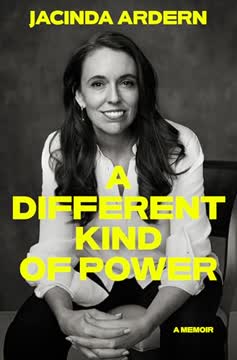
A Different Kind of Power receives polarized reviews averaging 4.46 stars. Admirers praise Ardern's empathetic leadership, honest reflections on imposter syndrome, motherhood, and crisis management during the Christchurch attacks and COVID-19. Many appreciate the audiobook narrated by Ardern herself. Critics note the book's focus on early life rather than political details, omissions about her father's policing history and Labour's second term, and controversy over pandemic policies. Some view it as rewriting history, while supporters see it as an inspiring memoir about compassionate leadership. New Zealand readers particularly seek more depth on domestic political issues.