

Key Takeaways
A sincere mission cannot substitute for rules governing a powerful platform.
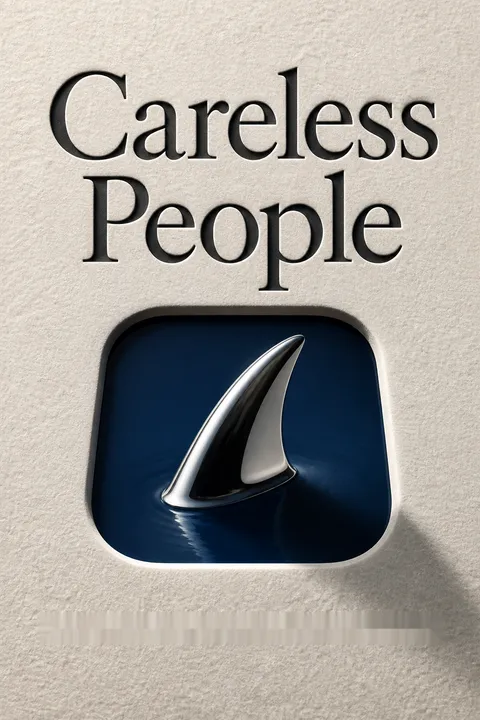
Idealism met real power. After surviving a shark attack as a teenager, Sarah Wynn-Williams felt she should use her life to help others. Diplomatic work at the United Nations left her frustrated by slow negotiations, but a 2011 earthquake in her hometown showed her Facebook helping people find relatives, share warnings, and coordinate supplies. She joined the company believing its global reach could make it a force for good.
The promise had a cost. The memoir follows her effort to bring diplomatic judgment to a company that initially treated politics as someone else's concern. In Panama, she even tries to get Mark Zuckerberg out of a state dinner by leading him through a tunnel where horses are entering. The comic mishap hints at a larger mismatch: Facebook's political influence was growing faster than its understanding of the world it entered.
What's compelling is that the author's faith begins with evidence of real public benefit, not blind devotion. During a disaster, a social platform can become practical infrastructure when official systems are slow or damaged. But usefulness in a crisis does not establish that a company is equipped to govern speech, privacy, or political life. That distinction matters: social value can coexist with institutional unpreparedness. The memoir's central tension is not that connection was fake, but that connection alone could not answer who sets the rules, who bears the risks, or who can demand correction.
Growth, not connection, became Facebook's operating principle.
The incentives told another story. Facebook's employee handbook presented the company as a social mission, while its workplace rewarded relentless output, long hours, and user growth. Perks made the office comfortable, but the company framed them as ways to keep employees focused on work. Wynn-Williams describes working through the night to keep pace with her boss and seeing little room for life outside the company.
More users meant more power. After Facebook reached one billion users, executives worried the easiest growth was over. The remaining markets and populations became strategic priorities. The growth team, responsible for recruiting users and expanding the business, often pushed into regulatory gray areas. The author's account suggests that growth was not merely one corporate goal among many. It became the practical test against which policy, ethics, and even international relationships were judged.
The gap between a mission statement and a working incentive system is more revealing than either one alone. Employees learn what matters by watching which work gets funded, praised, and promoted. Growth is especially powerful as a metric because it is visible and easy to compare, while harms such as lost privacy or social distrust are dispersed and harder to measure. That does not mean growth is inherently suspect. It means that when a company measures expansion closely but accounts for external costs poorly, its declared public purpose can be steadily displaced without anyone formally abandoning it.
Make content rules public before a founder's instincts become the appeals court.
Rules were built the hard way. Wynn-Williams describes early disputes over everything from explicit pages to violent videos. The team eventually created the Community Standards, Facebook's stated rules for what users could post, and made them public. A separate experiment showed the platform could change behavior: 61 million people saw a voting prompt, and a study found it led to about 340,000 additional votes.
Authority overrode process. During an organ-donation project, Sheryl Sandberg wanted a prominent Facebook prompt encouraging users to register. Zuckerberg opposed using Facebook's voice to steer users and overruled the effort. Later, he personally intervened in sensitive content decisions, sometimes departing from the published rules. The author's concern is not that every decision should be automatic. It is that rules become unreliable when one powerful executive can replace a shared process with personal judgment.
Public rules create more than consistency. They let users, employees, and governments understand the standard and challenge departures from it. The voting experiment also makes the platform's persuasive capacity concrete: interface choices can alter civic behavior at scale. Still, fixed rules cannot anticipate every crisis, and a rigid system may produce its own injustices. The important safeguard is not an unchanging rulebook but a transparent process for exceptions, with reasons, review, and appeal. Without that structure, discretion tends to flow upward while consequences flow outward.
Free access can still enclose users inside a company's commercial agenda.
Connectivity came with limits. Internet.org was Facebook's initiative to expand internet access, partly through basic services that mobile operators would provide without charging users for data. Its proposed offering focused on a selected set of text-friendly websites and apps. Critics argued that this was not the open internet: Facebook and telecom companies would decide what people could reach, creating a privileged gateway rather than equal access.
India exposed the conflict. Facebook rebranded the service as Free Basics and campaigned aggressively to defend it. Its system encouraged users to send supportive messages to India's telecom regulator. Facebook counted nearly 17 million submissions, but the regulator reported receiving only 1.4 million. The regulator objected that the campaign had turned a consultation into a numbers contest. India ultimately banned the service. The dispute made the core question unavoidable: who controls access when a private company supplies the gateway?
The strongest case for a limited free service is that some access may be better than none, especially where data is expensive. The strongest objection is that a company-selected menu can shape what new users understand the internet to be. Those concerns are not equivalent: one emphasizes immediate access, the other long-term agency and competition. The Indian consultation adds a further lesson. A platform's ability to mobilize millions does not make a campaign democratic if its design obscures how messages are generated or whether they address the question being asked.
Election tools can make a platform a kingmaker without choosing a candidate.
Politics became a revenue stream. Under Joel Kaplan, Facebook's policy operation began selling advertising and campaign services to politicians, including outside the United States. The company trained campaigns to target messages to particular groups of users. Wynn-Williams argues that this weakened Facebook's claim to be a neutral intermediary, especially when political clients became dependent on its tools and reach.
The 2016 campaign showed the machinery. On the flight described in the memoir, executives explained to Zuckerberg how the Trump campaign used Facebook's advertising tools, audience data, and repeated message testing. The campaign reportedly matched a database covering more than 220 million Americans with Facebook profiles, then tailored ads to voter interests. Some targeted posts were invisible to people outside the chosen audience. The book argues that Facebook helped make this strategy unusually effective, while acknowledging that it did not act alone in determining the election.
A platform need not endorse a candidate to influence political competition. It can shape the price, reach, and visibility of campaign communication while presenting those functions as neutral services. Yet evidence of sophisticated targeting is not, by itself, proof that one company determined an election. Voters respond to institutions, media, candidates, and local conditions as well as digital messages. The useful distinction is between sole cause and consequential infrastructure. The memoir makes a forceful case for the latter and raises a governance question: should political tools be audited differently from ordinary commercial advertising?
China's market strategy put surveillance, censorship, and user data on the table.
Internal plans went far beyond access. Wynn-Williams says Facebook's China project, code-named Aldrin, contemplated a local partner, code-named Jupiter, that would store Chinese users' data and help enforce government content restrictions. Internal documents described tools for filtering posts and messages, including mechanisms for suppressing material during periods of unrest. The plans also raised risks to employees who might be held responsible for data requests connected to imprisonment, torture, or death.
The public account differed. Facebook never launched its main platform in China, but the author describes smaller apps released under different names through a complex corporate arrangement. She also recounts preparations for congressional questions that, in her view, obscured how far the company had gone in planning for Chinese censorship. Zuckerberg later told Congress that no decision had been made about operating conditions in China. The memoir presents documents that, the author argues, contradict that assurance.
The China episode illustrates how market access can turn abstract ethical commitments into concrete design choices: where data is stored, what is filtered, and who receives technical control. A company may argue that operating under local law is better than leaving users without its service. That defense becomes harder to sustain when access requires building tools for state surveillance or concealing the arrangement from lawmakers. The memoir also invites scrutiny of its own evidentiary limits: internal plans reveal intent and preparation, but they do not mean every proposal was implemented. That distinction strengthens, rather than erases, the case for oversight.
In Myanmar, broken reporting and thin moderation left hate speech unchecked.
The platform was not ready for its reach. In Myanmar, many people encountered the internet primarily through Facebook. Yet, according to the memoir, Facebook's services did not reliably support Burmese text, reporting tools were difficult to use, and moderators lacked sufficient language expertise and staffing. The company initially relied on very few Burmese-speaking reviewers, while the author and colleagues repeatedly asked for better systems and more local capacity.
The consequences were grave. Anti-Muslim hate speech and fabricated stories circulated as violence grew against the Rohingya. The United Nations later documented Facebook's role in spreading dehumanizing content and threats. The memoir also recounts reporting that Myanmar's military used fake accounts and stolen profiles to spread inflammatory material. The author does not portray Facebook as the sole cause of the atrocities. Her indictment is that the company knew serious risks existed, yet repeatedly failed to build basic protections or respond quickly enough.
This account makes neglect visible as an operational choice. Language coverage, reporting interfaces, and local moderation can sound like product details, but in a volatile environment they determine whether people can report danger and whether anyone can recognize it. The state's role remains fundamental: Myanmar's military and long-running persecution of the Rohingya cannot be reduced to a platform failure. Still, amplification and weak response can alter the conditions in which violence spreads. The case shows why risk assessment must consider not only what a product enables, but also what a company fails to notice, staff, or repair.
A culture that praises candor can still punish people who speak.
The slogans met workplace reality. Wynn-Williams describes an employer that celebrated women speaking openly while expecting intense availability and treating motherhood as something best kept invisible. She recounts drafting work emails while in labor, being questioned about breastfeeding and postpartum bleeding, and receiving criticism for being difficult to reach during maternity leave after a life-threatening childbirth emergency.
Speaking up carried risk. The author says she raised concerns about her manager's sexually suggestive behavior and about broader harassment, but her requested transfer stalled. An internal investigation cleared the manager, and she was fired. Other women formed a private employee group to discuss sexism and harassment, suggesting the discontent extended beyond one person's account. The memoir presents a sharp contrast between public claims about workplace equality and the power relationships employees experienced in practice.
A formal invitation to speak is not the same as protection for speaking. In a hierarchy, employees watch what happens to colleagues who raise concerns, then adjust their own behavior before any explicit warning is needed. That is why reporting channels, independent investigations, and protection against retaliation matter more than inspirational language. The memoir is also a personal account, not a complete survey of every employee's experience. Its value lies in showing how a powerful organization's stated ideals can coexist with incentives and practices that make dissent costly.
Treat corporate neglect as a choice when leaders control the tools and budgets.
The ending is about accumulated omissions. Wynn-Williams's story moves from enthusiasm about connecting people to disillusionment with decisions involving political advertising, China, Myanmar, and vulnerable teenagers. She argues that many harms did not require a villain announcing a harmful plan. They grew through choices about what to fund, what to monitor, what to disclose, and which warnings to ignore. Eventually she raised concerns, lost her job, and pursued accountability through shareholder advocacy and a whistleblower complaint.
The warning extends beyond Facebook. In the epilogue, she turns to artificial intelligence and military systems, where technical errors could have far more severe consequences. Her point is not that every powerful technology is doomed to abuse. It is that leaders cannot treat public harms as unfortunate surprises when they control the systems, information, and resources that shape those harms.
The memoir's most useful moral category is not malice but avoidable indifference. That framing captures how institutional harm can emerge from ordinary decisions, though it risks underplaying the business models and structures that reward those decisions. Individual leaders matter, but so do board oversight, regulation, labor protections, and public scrutiny. The closing connection to AI is persuasive because it shifts attention from futuristic promises to present governance: who can inspect a system, halt it, and answer for its consequences? Good intentions are weak safeguards unless power is made answerable.
Analysis
Careless People is a first-person account of a political apprenticeship that becomes an anatomy of concentrated corporate power. Its narrative engine is the reversal between what Wynn-Williams believed Facebook could become and what she says she watched it choose to become. Early scenes of digital connection are not simply nostalgic setup. They establish that the platform's benefits were real, making the later critique more difficult than a claim that the company was always a sham.
The book's most important analytical move is to locate harm in routine governance. Product design, staffing, moderation queues, advertising tools, and executive escalations can look like separate technical or operational matters. Together, they determine whose speech is amplified, which governments are accommodated, and whose safety receives investment. That makes the memoir useful to readers studying sociotechnical systems: responsibility is distributed across people and processes, but ultimate authority and accountability are not distributed equally.
Its account also complicates the familiar villain story. Wynn-Williams portrays leaders as capable of charm, intelligence, and occasional generosity, while arguing that these qualities did not constrain their pursuit of growth and control. The contrast suggests that personal virtue is an unreliable substitute for institutional checks. A founder's good intentions cannot provide independent review of the founder's own decisions.
The book is also a memoir, not a neutral audit. Its close access, recalled conversations, and reproduced documents offer unusually vivid evidence, but the narrative is shaped by one participant's vantage point and interpretation. Claims about influence on elections or social violence should not be read as proof that Facebook alone caused those outcomes. The stronger argument is about contribution, foreseeable risk, and repeated refusal to mitigate it. That narrower claim is more defensible and more troubling: when a company can anticipate harm, control the relevant tools, and afford corrective action, inaction is not merely a technical accident. It is a consequential exercise of power.
Review Summary
Careless People receives widespread praise for its insider account of Facebook/Meta's unethical practices. Readers commend Wynn-Williams' storytelling and insights, finding the book compelling and horrifying. Many purchased it due to Meta's attempts to suppress it. Critics highlight the author's detailed exposé of Facebook's role in political manipulation, global conflicts, and privacy violations. Some readers note minor issues with the author's personal narrative but overall find the book crucial for understanding tech giants' impact on society. The majority recommend it as a must-read.
Glossary
Internet.org
Basic connectivity initiativeFacebook's initiative to expand internet access among people who were not yet online. Its proposals included basic text-focused services delivered through partnerships with mobile operators, as well as longer-term investments in connectivity technology. The initiative was presented as a public-benefit effort, but its design and Facebook's role in selecting services drew criticism.
Free Basics
Selected services without data chargesA service associated with Internet.org that gave users access to a limited selection of websites and apps without ordinary data charges in participating markets. Facebook argued that it could introduce people to online services. Critics argued that selecting which services were available violated net neutrality and gave Facebook and telecom providers undue influence over internet access.
Community Standards
Facebook's content rulesFacebook's published rules describing what users may post and what content the company may remove. Wynn-Williams recounts efforts to establish these rules through policy discussions and operational procedures. She argues that their legitimacy weakened when senior executives overrode them in sensitive cases without a consistent, transparent process.
People You May Know
Suggested connection featureFacebook's feature for recommending people a user might know or want to connect with. The memoir describes it as part of the company's growth strategy and notes that some recommendations could feel intrusive, including suggestions that exposed unexpected personal connections. Its operation raised questions about what personal information and relationships the platform used to generate recommendations.
dark posts
Targeted, nonpublic adsPosts or advertisements shown to selected audiences without appearing as ordinary public posts on the campaign or advertiser's page. Political campaigns could tailor different messages to different groups, while people outside the target audience, including researchers, might not see them. The memoir emphasizes how this made campaign messaging difficult to scrutinize publicly.
Aldrin
Facebook's China projectThe internal code name Wynn-Williams gives for Facebook's effort to enter China. Documents she describes show the project considering partnerships, local data storage, content censorship, and technical tools designed to meet Chinese government requirements. The project did not result in the full Facebook service becoming available in China.
Jupiter
Proposed Chinese partnerThe code name used in the memoir for Hony Capital, a Chinese private equity firm considered as a partner in Facebook's China plans. The proposed arrangement would have given the partner a role in storing data and moderating content under Chinese requirements. The documents described by Wynn-Williams show how a local partnership could also distance Facebook from direct responsibility.
Feminist Fight Club
Women's employee discussion groupA private Facebook employee group in which women discussed sexism, harassment, and workplace culture. Wynn-Williams describes it as a space where staff could compare experiences that were difficult to raise through formal channels. Its existence challenged the impression that the company's public messages about gender equality reflected employees' daily experiences.
double Irish
Tax avoidance arrangementA corporate tax structure described in the memoir in which companies used related subsidiaries, including entities in Ireland and a low-tax jurisdiction, to shift income associated with intellectual property. The arrangement helped multinational technology companies reduce taxes on revenue earned in other countries. The book presents it as one source of political resentment toward large technology firms.
FAQ
What's Careless People about?
- Personal Journey: Careless People by Sarah Wynn-Williams chronicles her experiences at Facebook, highlighting her transition from idealism to disillusionment.
- Tech and Politics: The book explores the intersection of technology and politics, focusing on Facebook's influence on global communication and governance.
- Cautionary Tale: It serves as a cautionary tale about power, greed, and the loss of idealism, reflecting on moral dilemmas in the tech industry.
Why should I read Careless People?
- Insightful Perspective: The book offers a unique insider's view of Facebook, revealing the challenges and ethical dilemmas faced by its leaders.
- Engaging Narrative: Sarah's storytelling is both engaging and relatable, making complex topics accessible through personal anecdotes.
- Critical Reflection: It encourages readers to reflect on technology's societal implications, sparking discussions about privacy, power, and tech company responsibilities.
What are the key takeaways of Careless People?
- Power Dynamics: The book illustrates how power dynamics within tech companies can lead to ethical compromises.
- Accountability Importance: It emphasizes the need for accountability, especially when companies like Facebook influence public discourse.
- Balancing Life and Career: Sarah's journey highlights the challenges of balancing personal life and a demanding career in a high-pressure environment.
What are the best quotes from Careless People and what do they mean?
- “We were careless people, Tom and Daisy…”: Reflects on the theme of carelessness and the consequences of privilege, echoing The Great Gatsby.
- “I SAVED MYSELF”: Signifies Sarah's resilience and determination, a recurring theme throughout her journey at Facebook.
- “The greatest threat to Facebook is us, it’s all of us.”: Sheryl Sandberg’s statement underscores the internal cultural risks to Facebook's integrity.
How did Sarah's views on Facebook change over time?
- Initial Idealism: Sarah began with a belief in technology's potential to connect people and create positive change.
- Growing Disillusionment: Over time, she became disillusioned by the company's compromises with authoritarian regimes.
- Critical Reflection: By the end, Sarah critically reflects on the complexities and moral ambiguities of working for a powerful tech company.
What role did Mark Zuckerberg play in Sarah's story?
- Leadership Style: Mark’s focus on engineering over politics often left Sarah feeling unsupported in diplomatic efforts.
- Decision-Making: His decisions reflected a prioritization of business interests over ethical considerations.
- Personal Connection: Despite differences, Sarah’s interactions with Mark reveal his vulnerabilities and pressures as a tech CEO.
How does Careless People address the issue of tech and ethics?
- Moral Compromises: The book highlights tech companies' moral compromises in pursuit of growth, especially with authoritarian governments.
- Accountability Call: It calls for greater accountability, emphasizing the need for ethical considerations on a global scale.
- Cultural Reflections: Sarah’s experiences reflect broader societal challenges posed by technology's rapid advancement.
What challenges did Sarah face while working at Facebook?
- Corporate Culture: Sarah struggled with Facebook's demanding corporate culture, which often overshadowed personal well-being.
- Ethical Dilemmas: She faced ethical dilemmas regarding Facebook's role in global politics and compliance with authoritarian regimes.
- Balancing Motherhood: As a new mother, Sarah grappled with balancing work responsibilities with her desire to be present for her child.
How does Careless People depict the leadership at Facebook?
- Indifference to Consequences: The leadership, particularly Mark Zuckerberg, is portrayed as indifferent to societal consequences.
- Profit Over Ethics: The leadership prioritizes profit and growth over ethical considerations, leading to harmful practices.
- Resistance to Change: The leadership's resistance to addressing issues raised by employees and critics contributes to a toxic culture.
What role did Facebook play in the 2016 U.S. election according to Careless People?
- Misinformation and Targeting: Facebook's tools were used to spread misinformation and target specific voter demographics.
- Campaign Collaboration: Facebook embedded staff within the Trump campaign, raising ethical questions about social media's role in politics.
- Consequences of Inaction: The leadership's failure to take responsibility for the platform's impact led to a crisis of trust in democratic processes.
How does Careless People address the issue of censorship?
- Censorship in China: The book details Facebook's collaboration with the Chinese government on censorship, raising ethical concerns.
- Myanmar's Crisis: It discusses Facebook's failure to address hate speech in Myanmar, contributing to violence against the Rohingya.
- Internal Conflicts: The narrative reveals internal struggles within Facebook regarding censorship and government pressure.
What does Careless People suggest about the future of Facebook and similar tech companies?
- Potential for Change: The book suggests potential for change if leadership prioritizes ethical practices.
- Risks of Complacency: It warns against complacency, highlighting dangers of profit-driven motives leading to societal harm.
- Call for Ethical Leadership: The narrative concludes with a call for ethical leadership, emphasizing accountability and responsibility.
Download PDF
Download EPUB
.epub digital book format is ideal for reading ebooks on phones, tablets, and e-readers.








