

Key Takeaways
Keep pursuing the education your family’s sacrifices made possible
A road divided her. In 1996, Reyna Grande left Los Angeles for UC Santa Cruz, carrying both excitement about becoming the first in her family to earn a university degree and grief over being pushed out of her father’s home. Years earlier, her father had brought her from Mexico after dangerous border crossings and insisted that education could open a future his own limited schooling had denied him. But after he reconciled with his wife, he excluded Reyna and two siblings from his life. She left anyway, determined to continue.
Arrival was not ease. At UCSC, Reyna faced loneliness, unfamiliar academic expectations, expensive living costs, and debt. Her degree would not undo family pain, but it gave her choices and a direction beyond the life she had inherited.
What's striking is that education functions here as both personal ambition and family history. Reyna is not pursuing a credential in isolation: she carries her father's hopes, her siblings' abandoned college plans, and the cost of migration. That inheritance gives her effort emotional force, but it can also make achievement feel like repayment. The distinction matters. A degree can honor sacrifice without making a young person responsible for repairing every family wound. Her story presents perseverance as powerful, while reminding readers that institutions, money, and care networks shape who can persist.
Belonging grows when you stop shrinking your name and voice
Difference became visible. At UCSC, Reyna's first roommate asked where she was from, and Reyna felt compelled to explain both her birthplace and her American life. In a literature lecture, the professor repeatedly mispronounced her name as “Renée Grand.” For a moment, she considered claiming the easier-sounding identity, hoping it would help her blend in. Instead, she corrected him.
Connection took action. Reyna initially felt isolated in the mostly white spaces of her college. When California voters passed Proposition 209, ending affirmative action in public education, her roommate brought her to a student protest. Joining students who demanded campus diversity made Reyna feel part of a community. She also found Latino classmates and familiar food at other colleges. Belonging arrived not through disappearing into the crowd, but through seeing and joining people who shared parts of her experience.
A name is not merely a label in this scene. It is a small test of whose comfort governs a public space. Correcting the professor does not instantly remove the imbalance, but it changes Reyna's position from someone silently misrecognized to someone able to insist on accuracy. The protest expands that individual act into collective voice. Belonging is therefore neither a private feeling nor a reward for assimilation. Still, visibility can bring vulnerability, and no single protest or community can erase structural exclusion. The memoir's strength is showing both the intimate and institutional scales at once.
Turn painful memory into art, but choose the distance you can bear
Writing began as survival. At thirteen, Reyna began writing in English after an earlier story in Spanish was rejected unread by a teacher who could not understand it. The rejection made her feel that her language and identity had been dismissed. She tried again in eighth grade, entered a story about separated sisters in a school contest, and won first place. Writing became a way to record experiences she could not yet explain directly.
Fiction created room. At UC Santa Cruz, Reyna wanted to write about the child immigrant experience, but memoir felt too painful. She wrote a novel instead, using a fictional girl to approach family separation and migration from a little distance. Teachers Diana, Marta, and Micah encouraged her work and connected her with writers whose subjects resembled her own. The form did not dilute the truth. It made the truth possible to approach.
The memoir offers a useful distinction between telling the truth and telling it in the most exposed form. Fiction gives Reyna a protective frame, much as metaphor can let people examine difficult experience without being overwhelmed by it. That distance is not evasion; it can be a condition for attention and craft. The scene also shows how recognition from a teacher can counter an earlier institutional dismissal. Yet validation cannot substitute for the writer's own judgment. Reyna's path depends on mentors who affirm her, and on her deciding which form lets her continue.
Treat a mixed identity as an expansion, not a deficit
Neither side was complete. Reyna felt too Americanized in Mexico and too foreign in the United States. She worried that her Spanish was imperfect and that she had lost part of her original culture. Her teacher Marta reframed her position: Reyna was bilingual, bicultural, and shaped by both countries, not a lesser version of either. Reyna came to recognize Spanglish, the mixed language formed through life between English and Spanish, as part of her experience rather than proof of failure.
Culture could be embodied. Her friend Erica introduced her to folklórico, Mexican regional dance that carries stories of the country’s history and cultural mixture. Learning and performing the dances gave Reyna a community and a way to inhabit her Mexican heritage. Discovering Frida Kahlo’s self-portraits also helped her see divided identity as two selves capable of holding on to each other.
This reframing replaces a purity test with a more realistic account of identity: people can acquire cultural fluency without losing their origins. Language and dance make that idea concrete. Reyna's Spanish need not match an idealized standard to belong to her, and folklórico lets history live in gesture as well as in books. The nuance is important: celebrating hybridity should not require pretending that displacement is painless. A mixed identity can be a resource and a wound at once. The memoir allows both realities to remain visible rather than forcing a tidy resolution.
Support a loved one without confusing rescue with control
Love did not give Reyna control. When Reyna learned that her fifteen-year-old sister Betty had been sent to Mexico, she traveled there and brought her back to Santa Cruz. Reyna wanted to offer the safe home and educational future their mother had not provided. She took responsibility for Betty, enrolled her in school, and moved off campus when housing rules threatened to separate them.
Betty's choices remained hers. She skipped classes, began a relationship, and became pregnant at sixteen. Reyna felt she had failed, then recognized that she could not make her sister want the life she had planned for her. Betty eventually graduated from high school and built a family in Santa Cruz. Their relationship recovered. The sisters' experience shows that care can create safety and opportunity, but it cannot dictate another person's readiness, choices, or definition of a worthwhile life.
The episode resists the familiar rescuer story in which love succeeds by finding the right strategy. Reyna's care matters, but Betty is not a project whose progress can be measured against Reyna's academic ambitions. That distinction is central to healthy support: make room for agency, even when the other person's decisions are frightening. At the same time, the memoir does not suggest that adults should withdraw from a young person's life. Reyna's housing, advocacy, and continued affection provide real support. The difficult question is how to stay present without turning help into ownership.
A creative dream needs a craft, a community, and a business plan
Talent alone was not enough. After graduating from UCSC, Reyna expected her creative writing degree to lead toward publication, but she knew little about agents, editors, or the business of writing. With loans due, she took a seasonal retail job, then an emergency teaching position. The demanding middle-school work left her exhausted and unable to write. On Diana's advice, she moved toward adult education and enrolled in writing classes, making time to revive her novel.
A network made the next steps legible. The Emerging Voices Fellowship connected Reyna with mentors, working writers, agents, editors, and peers. She revised her novel, Across a Hundred Mountains, and found an agent. When one editor offered a path to publication only if she replaced the immigrant protagonist with a U.S.-born Latina, Reyna refused. Another editor accepted the book without asking her to abandon its central story.
This arc makes visible the infrastructure hidden behind the image of the solitary writer. Craft improves through revision, but careers also depend on access to professional knowledge, time, money, and people willing to open doors. The fellowship supplies more than encouragement: it teaches Reyna how publishing works. Her refusal of a market-friendly rewrite protects the book's subject, though it also involves real risk. The memoir does not treat authenticity as a guarantee of commercial success. Instead, it shows that artistic conviction becomes more durable when paired with practical knowledge and a community.
Break inherited harm by making love compatible with your own life
Violence had a history. Reyna's father revealed that his own parents had beaten him, and he had run away as a teenager. That history helps explain, but does not excuse, the abuse he inflicted on his children. Reyna feared repeating the same pattern. As a new mother, she wanted to give her son Nathan the stability and affection she had missed, while also rebuilding her writing life. Her sister Mago worried that classes and work would leave too little time for him.
Care need not mean self-erasure. Reyna rejected the idea that a good mother must give until nothing remains of her. She chose to keep studying and writing, partly because she wanted her son to see a parent pursuing a meaningful life. This was not a simple balance: she struggled with guilt, exhaustion, and fear. But love, in her account, requires responsibility without requiring a parent to disappear as a person.
The memoir treats family patterns as inherited possibilities, not fixed destiny. Reyna can see how suffering travels across generations, while still holding people accountable for what they do with it. Her decision to pursue writing alongside motherhood challenges a false choice between devotion and personhood. That is especially important in a family where women have repeatedly been asked to absorb harm and keep going. The account also keeps the cost in view: limited time and childcare make this choice difficult, not merely a matter of attitude. Breaking a cycle requires both personal resolve and practical support.
Migration can wound a family and still open a future
The same journey carried loss and possibility. Reyna's father left Iguala to find work and build a house for his family. His departure left his children separated from their parents, and the later reunion could not restore the family to what it had been. Reyna crossed the border as a child after two failed attempts, with her father carrying her during the successful crossing. Years later, he told her he would make that journey again for his children.
There are two sides to separation. In Los Angeles, Reyna learned that Clemente, an undocumented fruit seller outside her home, had left his wife and four children in Mexico for twelve years to support them. His story echoed the pain of children left behind while revealing the parent's sacrifice. Migration is neither a clean rescue nor a simple betrayal. It can deliver opportunity while imposing emotional costs that no later success entirely cancels.
What's powerful here is the refusal to make migration morally simple. A parent may leave out of devotion and still cause a child lasting grief; a child may benefit from migration without becoming indebted to silence. Clemente's story widens the frame from one family to the transnational arrangement in which care is provided across distance. This perspective invites attention to both those who move and those who remain. It also cautions against treating economic opportunity as compensation for separation. Material improvement and emotional injury can coexist without either making the other unreal.
Build a home from stories, chosen care, and the work you refuse to abandon
Home changed meaning. Reyna first imagined it as the loving family she had lost. At Santa Cruz, she found shelter in redwoods, friendships, dance, and teachers who believed in her. Later, she made a home for herself and her son, and built a relationship with Cory. None of those places erased the past, but each offered a new form of safety and connection.
A book became portable belonging. When Across a Hundred Mountains was published, Reyna held a physical record of the people and experiences she had feared would be invisible. She also remembered a promise to support the family in Iguala. After her grandmother died, she began helping younger relatives pursue education. The memoir closes by linking writing, family, and future generations: a home is not only a place inherited or purchased, but something made through stories, care, and continued effort.
The title's central metaphor earns its force because it does not reduce home to an uplifting feeling. Reyna's portable home is a book, but also a network of teachers, sisters, friends, partners, and obligations. Writing preserves a world while allowing its author to move beyond it. The ending also complicates the idea of individual escape: success creates new capacity to support relatives who remain in Iguala. Yet one person's achievement cannot repair the unequal conditions that shaped the family. The memoir's hope is therefore specific, grounded in what art and relationships can do, and honest about what they cannot.
Analysis
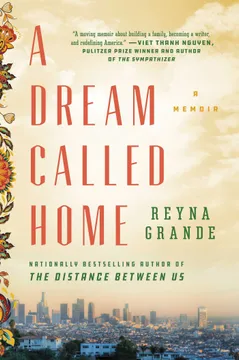
A Dream Called Home is a memoir of arrival that keeps revising what arrival means. Reyna reaches Santa Cruz, graduates, becomes a mother, publishes a novel, and builds a family, yet none of these milestones neatly resolves the estrangement that began with migration. The book's narrative power comes from resisting a simple success formula. Education and persistence matter, but so do scholarships, teachers, fellowships, childcare, affordable work, and people willing to take Reyna's writing seriously. Her achievement is individual, but its conditions are social.
The memoir also insists that family love can be real and damaging at once. Her father brings her across the border and urges her to dream, yet he is also abusive and later excludes her. Her mother can fail as a parent while showing loyalty to her own mother. Reyna's account does not excuse harm by explaining its origins, nor does it pretend that understanding automatically produces forgiveness. Instead, each revelation changes the meaning of earlier memories without erasing their consequences.
Writing is the book's most important instrument of agency. It lets Reyna preserve the voices and places that dominant narratives overlook, and it offers a way to interpret experiences that her family often refuses to discuss. Fiction first provides protective distance; publishing later turns a private practice into public testimony. The editorial rejection demanding a U.S.-born protagonist crystallizes the stakes: visibility purchased by changing the story's center would reproduce the exclusion the book challenges.
The resulting memoir is not a claim that every wound can become art or that determination defeats structural barriers. It is more precise: stories can make a person legible to herself and others, while relationships and institutions help that work reach an audience. Home is consequently neither a recovered past nor a final destination. It is a fragile construction made from memory, chosen connection, cultural inheritance, and the freedom to keep creating.
Review Summary
Reviews for A Dream Called Home are largely positive, averaging 4.29/5. Many readers praise Grande's inspiring, heartfelt account of navigating immigrant identity, pursuing education, and becoming a writer despite significant hardships. Recurring themes include belonging, generational trauma, and cultural duality. Positive reviews highlight her resilience and authentic voice. Critical reviews cite flat prose, excessive "telling rather than showing," pacing issues, and underdeveloped relationships. Some readers found her personal choices frustrating. The audiobook narration by Yareli Arizmendi received particular praise.
Glossary
añoranza
longing for what was leftA Spanish term for a deep, persistent longing for people, places, or a life left behind. In the memoir, it describes the emotional pull of family and homeland that persists after migration. It is more than missing home for a moment: it shapes how characters experience distance, belonging, and the possibility of returning.
Spanglish
Spanish-English mixed languageA flexible mixture of Spanish and English shaped by bilingual life. Reyna uses the term for a language formed through the collision and blending of her Mexican and U.S. experiences. She initially worries that her Spanish is deficient, but comes to see her mixed speech as evidence of a lived cultural identity rather than a failure to belong.
folklórico
Mexican regional folk danceA tradition of Mexican regional dances, performed in characteristic costumes and styles, that communicates histories and cultural influences through movement and music. Reyna encounters folklórico at UC Santa Cruz and finds in it a source of cultural pride, community, and connection to Mexico. The dances reflect Indigenous, Spanish, African, and other influences within Mexican culture.
ganas
fierce desire and resolveA Spanish word Reyna uses for the determined desire that drives a person to pursue a goal. In the memoir, ganas is more than wanting something: it implies commitment and effort despite discouragement. The term also marks a tension in Reyna's character, since her determination sustains her dreams but can make her cling to expectations that other people do not share.
Emerging Voices Fellowship
mentorship for writers of colorA seven-month writing program offered through PEN Center USA for aspiring writers of color. Fellows meet to discuss their work, receive individual mentorship, attend classes, and learn from published writers, editors, and agents. For Reyna, it provides both artistic guidance and practical knowledge of publishing, as well as a literary community she had struggled to find.
Chica Lit
mainstream Latina fiction trendA publishing category described in the memoir as popular fiction about middle-class Latinas who are assimilated into American culture, presented as accessible to mainstream audiences. An editor proposes that Reyna reshape her novel around a U.S.-born Latina protagonist to fit this market. Reyna refuses because doing so would displace the immigrant child's experience at the heart of her story.
border culture
identity formed between culturesA cultural identity produced by the intersection of the United States and Mexico, rather than belonging exclusively to either country. The memoir draws on Gloria Anzaldúa's writing to understand how migration forms a third space within a person, expressed through mixed language, divided attachments, and adaptations made to survive. Reyna comes to see this condition as complex identity, not simple deficiency.
Download PDF
Download EPUB
.epub digital book format is ideal for reading ebooks on phones, tablets, and e-readers.








