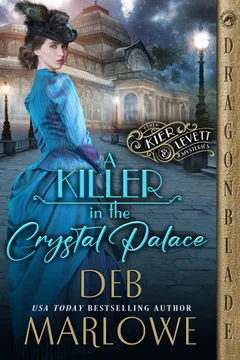


Plot Summary
Prologue
At the Great Exhibition, the one-armed Walter Forrester hides until the Crystal Palace empties, then steals the articulated arm from Kara Levett’s automaton. Its joints promise a small return to ordinary life, but his former employer catches him outside and tears a working part from the mechanism.
Walter refuses to help with a plan that would harm Kara. The other man’s scarred accomplice restrains him while the employer drives a metal arbor into his neck. Walter dies before his body is dragged toward the boiler house.
The opening makes invention both a promise and a weapon. Walter sees the automaton arm not as a novelty but as a way to reclaim daily gestures, which gives his theft a human motive without excusing it. The same device then becomes the instrument of his murder, its precision turned against the person who hoped to use it. The hidden killing also establishes the Exhibition’s uneasy double life: a public celebration of progress conceals private violence, and the body left behind will pull Kara and Niall into that collision.
Two Machines Win Entry
Months earlier, blacksmith and designer Niall Kier travels to London after a local committee excludes his work from the Great Exhibition. He persuades architect Mr. Grant to reconsider by showing him iron gates shaped around a Highland scene. At the same meeting, Kara Levett arrives with a clockwork ship she built herself.
Grant is so impressed that he admits both makers, despite his unease about exhibiting a woman without a husband or father to represent her. Kara thanks Niall for backing her, then asks him to find a wire worker for a new project. Their shared respect for craft begins as professional recognition, though each is already alert to the other’s unusual presence.
The first alliance is built through demonstrated ability, not courtship or status. Niall uses his own commission to open a door for Kara, but her automaton is what secures her place. Grant’s hesitation exposes the gendered gatekeeping beneath the Exhibition’s language of national progress: women may be celebrated as exceptions while still being treated as administrative problems. Kara and Niall recognize one another as makers first. That mutual recognition gives their later partnership a practical foundation, so attraction develops alongside trust in each other’s judgment.
Blood Beneath the Palace
On a morning before the doors open, Niall finds gears scattered near Kara’s display. Her intricate mechanical figure, nicknamed the Gambler, has been knocked over and its arm is missing. Outside, he finds street boys gathered by the boiler house, where they have discovered a finely dressed one-armed man, already dead.
A metal arbor from Kara’s automaton arm is stained with blood, and the boys have recovered the missing limb. Exhibitors quickly decide that Kara killed the thief, turning her work and her gender into supposed evidence. When one man tries to seize her, she throws him off with practiced self-defense. The crowd sees her defend herself, but the accusation has already taken hold.
The murder immediately places Kara in a double bind: her invention is treated as a weapon, while her competence in defending herself is made to look suspicious. The other exhibitors do not investigate so much as recruit familiar prejudice into a ready-made explanation. Niall’s first response is to protect the scene and then Kara, but the evidence is genuinely tangled: the lethal object came from her machine. The scene makes the mystery’s central question concrete. How can a woman prove innocence when the very skills that make her capable are recast as proof of guilt?
An Heiress Chooses Her Ally
Kara recognizes the dead man as the one-armed stranger who had watched her work and once disguised himself as a clergyman to condemn her automaton. Rather than wait for the police, she visits Harry Boggs, the surgical mechanic who made the victim’s wooden prosthesis.
Boggs identifies him as Walter Forrester, a debtor who had recently asked for a more functional artificial hand. Niall independently finds Forrester’s name through Lord Stayme, then warns Kara that Scotland Yard is looking for her.
At her home, he also spots a watcher near her hidden entrance. Kara agrees to flee with him and answer questions before magistrate Arthur Towland, whose fairness Niall trusts. They become partners, but the watcher proves the danger exceeds a murder charge.
Kara’s decision to investigate is not simply a display of independence; it is a response to institutions she has learned may fail her. The childhood abduction she survived, and Turner’s rescue when police ignored his warning, have taught her to prepare rather than wait. Niall’s help matters because he neither dismisses her fear nor tries to take control of her choices. Towland offers a limited form of institutional protection, not a solution. Their alliance rests on a useful tension: Kara supplies initiative and specialized knowledge, while Niall brings contacts and a willingness to share risk.
A Ball and a Runaway Gig
At Lady Loudin’s ball, Kara and Niall find Lord Peter, Walter’s closest friend, and learn that Walter had become fixated on the Exhibition and Kara’s mechanical man. Peter directs them toward Walter’s lodging, but they must leave before they can ask more. A fake footman then separates the group outside.
He trips Jenny, Kara’s maid for the evening, while a driver steers a buggy toward Kara and reaches to seize her. Kara dodges the vehicle but hits her head on the pavement. When she wakes, she remembers seeing Harold, the smallest street boy from the boiler house, trying to warn her. The attack confirms that someone is targeting her, not merely waiting for the police to accuse her.
The ball gives the investigation its first personal connection to Walter, but its social polish cannot protect Kara from a coordinated assault. The false footman, staged commotion, and attempted snatch convert a public street into a trap. Kara’s injury also narrows the difference between being suspected and being hunted: the threat is no longer reputational alone. Harold’s presence links the earlier street boys to the new danger, foreshadowing that people dismissed as nuisances may hold the clearest evidence. Kara’s refusal to retreat after the attack will be a choice made with full awareness of the physical cost.
Plans in the Rented Room
Despite her head injury, Kara joins Niall and Peter at Walter’s grim lodging near Hungerford Market. His few belongings are scattered among medical lotions, foreign letters, and a page of thirty numbers arranged under three initials.
Peter recognizes a German message directing someone to meet at a tavern near Berlin. They also find technical drawings connected to the Jacquard loom, a device displayed at the Exhibition. Kara explains that Walter could not have copied her work from formal plans because she develops mechanisms as she builds them.
The drawings suggest he was stealing industrial designs, not simply borrowing money. They take the documents before the landlady can sell them, but the evidence leaves them with more possible enemies than answers.
Walter’s room changes the scale of the mystery. His shabby circumstances and debts still matter, but they no longer explain the danger by themselves. The coded letters and loom drawings place him among competing manufacturers and national interests, where information can carry the weight of political power. Kara’s account of her improvisational method is important: she distinguishes creative knowledge from a reproducible blueprint, resisting the idea that invention belongs only to whoever can seize its plans. The case now asks not just who killed Walter, but who believed stolen knowledge was worth killing for.
The Exhibition Turns Watchful
Kara returns to the Crystal Palace while Inspector Wooten questions Niall and asks that she remain visible. He acknowledges Towland’s belief in her innocence but admits that other officials still suspect her. Kara and Niall use their public duties to investigate quietly.
Eleanor Braddock, Kara’s artist friend, introduces her to German visitors, while Niall speaks with a French exhibitor. Neither group openly admits concern about stolen designs, but Eleanor learns that a German exhibitor named Wernher is returning home.
The dinner also gives Kara a glimpse of how gossip wounds even a confident woman: Eleanor’s self-portrait turns society’s accusations about her marriage into art. Kara shares her own peril, and Eleanor agrees to help investigate.
Public visibility becomes a tactical resource: Kara’s return reassures the Exhibition while giving her access to people who might otherwise avoid questioning. Yet Wooten’s request that she stay in sight also shows how easily protection becomes surveillance. Eleanor’s painting supplies a parallel to Kara’s predicament. Both women are interpreted by society before their own explanations are heard, though Eleanor can transform that distortion into art while Kara faces the law. Their friendship expands the investigation beyond Niall’s contacts and gives Kara a model of solidarity that does not depend on male permission.
Pip Sees the Murder
A ribboned box of honeyed sweets appears at Kara’s workbench, but Harold, whom the other boys call Pip, warns her that the scarred man left it. Kara has a surgeon test the candy and learns it contains opium. She then asks Harold what he witnessed on the night Walter died. Hiding near the boiler room, he saw Walter argue with two cloaked figures.
A larger man with a severely marked face held Walter while another person tore a sharp internal part from the stolen automaton arm and stabbed him with it. Harold’s account shifts suspicion away from Kara and confirms that the attacker is still near her. His fear of being sent to prison for trespassing makes Kara promise to protect him.
Harold’s testimony gains force precisely because the adults have treated him as disposable. He is not an official witness with social standing, but his memory supplies the sequence that the polished investigators lack. Kara earns his trust by asking rather than extracting, and by taking seriously his fear of punishment. The poisoned sweets repeat the logic of the earlier street attack: kindness is used as bait, and vulnerability is mistaken for easy control. Kara’s choice to protect Harold suggests that her independence is gradually becoming relational. She is beginning to build a circle of mutual obligations rather than surviving alone.
Boggs Sends the Missing Pieces
The landlady at Walter’s lodging tells Kara and Niall that a parcel arrived for the dead man after his belongings were removed. They collect it and open it in private at a women’s club where Niall is welcome. Inside are ten small metal pieces and a note from someone afraid of being watched. Kara recognizes the parts as matching the unusual fittings she saw Harry Boggs shaping during her earlier visit.
The tradesman’s card the landlady saved confirms the link. Kara concludes that Boggs has been making components for the scheme, perhaps copying machinery rather than repairing tools. Since Boggs has closed his shop, the parcel is the first direct material evidence connecting him to Walter’s secret work.
The parcel makes technical observation function as detective work. Kara’s attention to a small shape, which she initially dismissed amid more urgent questions, now connects a tradesman’s ordinary shop to a larger conspiracy. The discovery also complicates Boggs’s role: his skill in prosthetics could have been used to improve lives, but the same metalworking knowledge may have fed industrial theft. The women’s club offers Kara a contrasting space, one organized around women’s intellectual and personal freedom rather than public judgment. Even here, though, the investigation must remain careful, because a plausible connection is not yet proof of guilt.
Thirty Pieces of Colt
Kara and Niall find Peter at Wellberg’s, where his companions use theatrical nicknames from a school performance. One nickname, Wallflower, matches an initial on Walter’s coded page, so Kara initially suspects Peter.
He explains that the three initials refer to their old roles, not a criminal partnership, and insists he knew nothing of Walter’s dealings. Then he recognizes the metal pieces from the parcel as parts of a Colt revolver. Walter had watched Colt demonstrate how identical, machine-made components could be exchanged among weapons.
The theft may therefore involve plans for producing interchangeable firearm parts. Peter’s earlier remark about such designs making a fortune may have encouraged Walter, but it also gives the investigators a credible motive for the conspiracy.
This revelation shows how a clue can mislead without being useless. The initials appear to implicate Peter, but their personal history explains them away; the same conversation then supplies the case’s most consequential technical insight. Peter’s shame is not only about criminal suspicion. He remembers having treated Walter’s ambition as a joke, and now fears that his careless remark helped direct a vulnerable friend toward danger. The revolver makes the stakes tangible: industrial standardization can make production efficient, but in this instance it also promises to multiply lethal capacity and attract buyers powerful enough to conceal murder.
The Yard Hears Everything
Kara gathers Niall, Peter, Turner, Harold, and their other helpers to present their findings to Inspector Wooten on their own terms. Wooten reveals that a court lady overheard German exhibitors discussing stolen designs and alerted Prince Albert, bringing Scotland Yard and Special Branch into a sensitive investigation.
Wernher, one of the men mentioned, has disappeared, and Harry Boggs is also missing. Wooten admits their discoveries exceed the police’s, but Kara refuses to surrender herself to official custody. Peter proposes searching for Walter’s relatives.
A family history of conspicuous red and purple facial marks gives Kara and Niall a possible link to the scarred attacker, though Wooten cannot confirm it. The industrial plot is now public to the investigators, but the personal threat remains unresolved.
The meeting reverses the usual hierarchy between professional authority and amateur inquiry. Wooten has access to a national investigation, yet Kara’s group has assembled the evidence he lacks. His willingness to listen is a meaningful shift, but Kara does not mistake respect for safety; she negotiates disclosure rather than handing herself over. The revelation of the government’s involvement also reframes the Exhibition as a diplomatic arena, not merely a fair. Meanwhile, the family markings suggest that the murderer’s identity may lie outside the foreign delegation, preventing the espionage explanation from swallowing the intimate motive.
A Fiancée’s Family Mark
Kara arranges a picnic with her cousin Joseph and his fiancée, Audrey Bailey, hoping to share the danger now that the attacks are escalating. Audrey is absent. A note arrives from Peter indicating that Walter’s marked relative may be a woman; Joseph then recognizes the surname Forrester as Audrey’s mother’s family name and recalls that her mother bears similar facial marks.
Kara sees the connection before she can question Audrey. When they reach Bluefield Park, Turner has disappeared from his rooms, and a note threatens his life unless Kara obeys. Audrey’s questions about the estate’s servants now look like preparation for an abduction. Kara refuses to wait for instructions and sets out with Niall toward the Bailey property in Greenwich.
The danger becomes intimate when Kara’s trusted family circle intersects with the Forrester name. Her earlier suspicion that someone might want her wealth was dismissed as unlikely, but the surname and facial marks make inheritance a concrete motive. Turner’s disappearance sharpens that logic: the attacker has identified the person Kara cannot treat as expendable. Joseph’s distress matters because he must reconsider the woman he intended to marry without being allowed the comfort of a simple explanation. Kara, meanwhile, moves from defending herself to accepting that protecting others may require action before the authorities can arrive.
A Stage Built for Rescue
Kara and Niall reach the abandoned Greenwich pleasure grounds by river and find Audrey waiting in an unfinished outdoor theatre. Turner is tied to a chair, and Audrey’s scarred Forrester cousin patrols the grounds. When the cousin spots their landing, Audrey orders him to kill them. Niall draws him away and fights him among the dark garden structures, while Kara climbs to the catwalks above the stage.
She rigs the theatre’s sandbags, painted cloud, and falling backdrop to control Audrey’s movement. A shouted warning distracts her; the weights strike and the canvas pins her to the stage. Kara frees Turner, then finds Niall wounded but alive. Local constables arrive before Audrey and her cousin can escape.
The climax rewards skills introduced across the novel rather than granting Kara a sudden advantage. Her mechanical understanding translates directly into stagecraft, while Niall’s physical courage keeps the scarred attacker occupied. The theatre is a fitting arena because spectacle, normally used to direct an audience’s attention, becomes a practical instrument of resistance. Kara does not defeat her captors by becoming less herself or by waiting for rescue; she converts the environment into a machine whose timing she controls. Still, the victory is collaborative: Niall’s fight and Turner’s endurance make her plan possible.
The Forge After Danger
After the arrests, Joseph grieves the betrayal and learns that Audrey had used his affection to pursue wealth and influence. The marked cousin faces execution for Walter’s murder, while Audrey is likely to be imprisoned; Boggs is found abroad with stolen blueprints. Kara insists that Walter receive a proper burial, because he refused to carry out the murder planned for him.
She also helps Harold find a possible place with the pie maker Maisie Dobbs. Back at Bluefield, Kara shows Niall a kinetic sculpture she made for her late father, then offers him an outbuilding to use as a forge, with room for Gyda. Niall accepts. They agree that the partnership begun at the Exhibition need not end with the case.
The resolution measures justice not only by arrests but by what the survivors choose to preserve. Kara refuses to let Walter’s theft erase his final refusal to kill her, and she gives his body the dignity his family denied him. Harold’s possible work with Maisie extends the novel’s concern with practical forms of care. The forge offer is more than a romantic gesture: it makes space for Niall’s creative life while leaving him free to choose where he belongs. Kara’s independence is not surrendered; it becomes compatible with friendship, shared labor, and affection.
Analysis
The novel places a murder inside a building devoted to public confidence in technology, then follows the consequences of treating progress as a prize rather than a responsibility. Walter wants an artificial hand because he imagines a return to ordinary acts, such as holding a fork or cards. His hope is personal and bodily. The stolen industrial designs, by contrast, turn invention into currency for people seeking wealth, influence, and military advantage. The plot keeps these motives in tension: machines can restore agency, but technical skill can also be appropriated for violence.
Kara’s position makes that conflict social as well as technological. She is an heiress with the knowledge to run businesses, yet male exhibitors treat her presence as an offense and police authorities consider her a convenient suspect. Her self-defense training, hidden exits, and careful observation are adaptations to a world that mistakes a woman’s capability for a threat. The novel does not ask her to abandon those adaptations. Instead, her development lies in choosing when to rely on others. Niall respects her decisions while offering resources, and her widening circle includes Turner, Eleanor, Harold, and working people such as Maisie and Mrs. Armstrong.
The investigation also tests what counts as evidence. The official inquiry has institutional reach but initially lacks the attention to interpret a small maker’s mark, a boy’s memory, or the shape of a metal fitting. Kara’s group succeeds through specialized knowledge and relationships, not through a single brilliant deduction. Their work exposes a weakness in authority: protecting national prestige can become more urgent than finding the truth.
Finally, the ending defines justice as more than punishment. Kara insists that Walter receive a proper burial because his last choice matters, even though his earlier actions were dangerous. She offers Harold a path toward work and gives Niall room to make things again. These acts do not erase harm. They show how a community can answer it by restoring dignity, usefulness, and connection where secrecy and ambition had stripped them away.
Review Summary
A Killer in the Crystal Palace is a well-received historical mystery set in 1851 London during the Great Exhibition. Readers praise the strong, intelligent female protagonist Kara Levett and her partner Niall Kier as they investigate a murder. The book is commended for its engaging plot, attention to historical detail, and slow-burn romance. Most reviewers find it an excellent start to a new series, appreciating the complex characters, intriguing setting, and unexpected twists. Some critics note occasional unrealistic elements but overall enjoy the unique blend of mystery and potential romance.
Characters
Kara Levett
Inventor and heiressKara is a wealthy, unmarried inventor whose mechanical clocks and automatons express both technical discipline and an imaginative appetite for movement. She manages the family’s businesses despite a society that expects a man to speak for her, and she has trained in practical self-defense after surviving an abduction as a child. Her habit of preparing for danger can make her seem self-sufficient to the point of isolation. Yet she is attentive to people whom others overlook, from street children to injured workers, and she is curious about the inner workings of both machines and human relationships. She values evidence, competence, and the freedom to decide what risks she will take.
Niall Kier
Blacksmith and allyNiall is a respected blacksmith, designer, and businessman whose ironwork joins sturdy function to elaborate artistry. He is socially adept but protective of a private life shaped by old obligations and secrets he does not readily explain. Having survived serious trouble in the past, he recognizes the loneliness behind Kara’s self-reliance and offers help without demanding obedience. His loyalty is practical: he investigates, uses his contacts, and stands beside her when danger becomes physical. Kara’s intelligence and directness unsettle his instinct to keep emotional distance, while their shared devotion to making things gives them a language of mutual respect.
Turner
Kara’s trusted protectorTurner is Kara’s butler, assistant, and oldest friend, with a talent for research and an instinct for danger. He has served her since rescuing her from a childhood kidnapping, and his loyalty is rooted in years of earned trust rather than mere employment. Turner supports Kara’s work, anticipates her questions, and protects the private routes and routines that keep her safe. His steady presence is so familiar that Kara can forget how much she depends on him, while he continues to watch over her with quiet devotion.
Walter Forrester
Restless machinery enthusiastWalter is a minor gentleman with a missing arm and a powerful desire to recover some of the independence his injury took from him. He is drawn to new machines because they suggest practical possibilities, not simply fashionable marvels. His social position is insecure, his finances strained, and his relationship with his family painful. Friendship gives him encouragement, but his ambition to prove himself can lead him toward risky schemes. Kara’s automaton represents the kind of ingenuity he longs to encounter and, perhaps, to make useful in his own life.
Lord Peter
Walter’s closest friendPeter is a young aristocrat and Walter’s closest companion. He is sociable and emotionally open, though accustomed to the comforts and blind spots of his class. His affection for Walter is genuine, and his easy encouragement sometimes obscures how precarious Walter’s position has become. Peter is capable of loyalty and self-reproach when he understands the consequences of his own casual remarks. His connection to Walter gives the investigation access to the dead man’s habits, friendships, and ambitions.
Arthur Towland
Independent magistrateTowland is a police-court magistrate who values careful listening over political convenience. He comes from a wealthy family but has chosen public service because he prefers direct work with people to idle privilege. His interest in character and his membership in the Order of Druidic Bards connect him to Niall and eventually to Kara. He offers her a fair hearing at a moment when official pressure could make her an easy scapegoat.
Inspector Wooten
Scotland Yard investigatorWooten is an experienced Scotland Yard inspector assigned to Walter’s murder. He understands the pressure to protect the Exhibition’s reputation, yet he is capable of revising his assumptions when evidence contradicts them. His measured manner earns some of Niall’s trust, while Kara remains wary because her past dealings with the police have taught her to expect little protection. Wooten’s challenge is to pursue justice inside institutions that are also guarding political interests.
Harold, called Pip
Streetwise witnessHarold is the smallest of the street boys who haunt the Exhibition grounds. He knows the city’s back routes and has learned to survive by staying quick and alert. Though he fears punishment for trespassing, he acts with unusual courage when he sees danger closing around Kara. Adults often treat him as a nuisance, but he notices details they miss and proves that observation is not the privilege of the respectable.
Joseph, Lord Camhurst
Kara’s titled cousinJoseph is Kara’s cousin and the heir to the family title and entailed estate. He is amiable, somewhat conventional, and more interested in agricultural management and parliamentary causes than in the industrial businesses Kara oversees. Their childhood friendship remains warm even though they are not constantly in one another’s company. Joseph’s affections and easy trust make him vulnerable to people who present themselves as reassuring and sensible.
Audrey Bailey
Joseph’s composed fiancéeAudrey is Joseph’s polished betrothed, raised in a family with ambitions tied to land and social position. She values order, conventional manners, and the security of a well-managed household, and she struggles to understand Kara’s unconventional public life. Her confidence can make her seem reassuring to Joseph and dismissive to Kara. Audrey’s presence brings the expectations of marriage and family into direct contact with Kara’s commitment to work and independence.
Gyda Winther
Niall’s forge partnerGyda is Niall’s skilled assistant and close friend, equally comfortable around a forge and an audience. She brings a lively wit, a strong artistic sensibility, and a personal command of Norse imagery to their work. Her position challenges assumptions about which labor belongs to women, while Niall’s trust in her is evident in the responsibility he gives her. She is also perceptive about the people Niall cares for.
Eleanor Braddock
Kara’s artist friendEleanor is a widowed painter who has built a career across Europe and shares Kara’s impatience with narrow expectations for women. Their friendship began in adolescence through a lively dispute over landscapes and seascapes. Eleanor is socially confident, but her art reveals that public contempt can wound even those who appear unbothered. She offers Kara companionship, useful introductions, and an honest perspective on the cost of being misread.
Harry Boggs
Surgical mechanicBoggs is a bootmaker and self-taught surgical mechanic who makes artificial limbs for a small clientele. His interest in prosthetics grew from his brother’s amputation, and he approaches the work as a practical craft still in need of refinement. He is proud of his designs, cautious about unpaid work, and surprised to meet a woman who shares his technical interests. His shop provides Kara with a useful glimpse into the imperfect choices faced by amputees.
Mrs. Armstrong
Walter’s landladyMrs. Armstrong is the sharp-tongued owner of the shabby lodging where Walter rents a room. She cares about unpaid rent and the upkeep of her building, and she is skeptical of fashionable claims about progress. Kara’s work at the Exhibition nevertheless prompts her to reconsider what a woman can manage for herself. Her blunt observations about the neighborhood help the investigators follow the trail left by Walter’s belongings.
Maisie Dobbs
Neighborhood pie makerMaisie runs a small pie shop and is one of Kara’s oldest friends outside the wealthy world. Years earlier, she intervened when a street bully cornered the young Kara, using the pies in her basket to turn the crowd against him. Warm, practical, and generous, Maisie offers Kara a place where status matters less than decency. She also knows how to stretch scarce resources without surrendering her pride.
The marked cousin
A formidable family shadowA powerful, scarred relative within the Forrester family, this man moves through the story as a frightening presence associated with Walter’s hidden troubles. His marked face makes him unforgettable, while his size and capacity for violence turn him into a danger Kara and Niall cannot dismiss.
Mr. Grant
Exhibition gatekeeperGrant is an architect serving on the Great Exhibition’s commission. He initially doubts the practicality of adding late submissions, especially one made by a woman, but Kara’s automaton and Niall’s ironwork overcome his resistance. He embodies both the opportunity and the restrictions built into the Exhibition’s selection process.
Lord Stayme
Niall’s information brokerStayme is an older aristocrat with a remarkable memory for people and their connections. He trades information according to his own rules and treats Niall with the fondness of a mentor who has helped him before. His private records allow Niall to identify Walter when ordinary channels offer no quick answer.
Emilia Nardonne
Lake Nemi’s welcoming hostEmilia is a warm, flirtatious member of the women’s social club known as Lake Nemi. She helps maintain it as a refuge for women interested in art, scholarship, travel, science, and companionship. Her easy confidence makes Kara feel welcome, while her invitation hints at a world of female community beyond conventional society.
Plot Devices
The automaton’s articulated arm
Invention becomes evidenceKara’s mechanical figure is a public attraction at the Great Exhibition, but its finely jointed arm becomes the central physical clue after it is stolen. Its parts help identify how Walter was killed, while Walter’s desire for a more capable artificial limb gives the theft a motive rooted in his lost independence. The arm connects Kara’s craft to prosthetic design, murder, and industrial espionage. It is both a marvel that attracts attention and an object that cannot be interpreted without understanding how it was made.
Bluefield’s hidden passages
Escape without exposureThe old tunnels beneath Kara’s estate link rooms and outbuildings to concealed exits beyond the grounds. Kara uses them to avoid the police when their attention becomes dangerous, and Niall follows her through them after choosing to help. The passages are practical remnants of the estate’s history, but they also express Kara’s habit of preparing alternatives before a crisis arrives. They provide safety for a time, while the watcher outside her home demonstrates that concealment cannot answer every threat.
Walter’s coded papers
Debts open into espionageA page of scattered numbers, three initials, German letters, and technical drawings appears among Walter’s few possessions. At first, the materials could point to creditors, friends, or accomplices. Peter’s knowledge of German and of Walter’s interests links them to a meeting near Berlin and to designs shown at the Exhibition. Later, metal parts and old nicknames clarify how the papers relate to firearm manufacture. The documents turn a local murder inquiry into a contest over stolen industrial knowledge.
Harold’s eyewitness account
The ignored see clearlyHarold, a street boy sleeping near the boiler house, saw the confrontation that led to Walter’s death. His testimony identifies the sequence of events and describes the scarred attacker, evidence unavailable to Kara and Niall through official channels. His position among the other boys also explains how pieces from the stolen automaton were recovered. The account is credible because Kara treats Harold as a person whose fears and judgment deserve attention, not as a convenient source to be questioned and discarded.
The unfinished theatre
Stage machinery becomes a trapTheater rigging at the unfinished Greenwich pleasure grounds includes ropes, weights, moving scenery, and a thunder device. Kara has experience with mechanisms of this kind from her own large-scale creations, so she recognizes the stage as something she can operate rather than merely hide within. During the rescue, she times the falling and swinging scenery to distract and restrain Audrey. The setting turns Kara’s artistic skill into tactical action, while Niall’s fight keeps the other attacker from reaching her.
Download PDF
Download EPUB
.epub digital book format is ideal for reading ebooks on phones, tablets, and e-readers.








