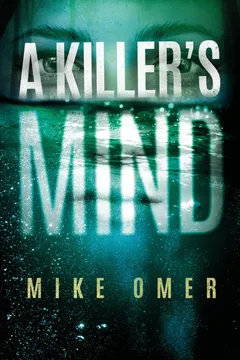


Plot Summary
Two Profiles, One Transfer
In Chicago, a meticulous killer3 strangles a captive woman and prepares her body for preservation, treating murder as the start of an imagined relationship. In Virginia, FBI consultant Zoe Bentley1 wakes from nightmares that return whenever another brown envelope reaches her.
Her unit chief, Christine Mancuso,6 gives her a different challenge: eight women found along highways may connect to 217 truckers. Zoe1 notices that some victims are missing shoes and underwear while others are not, suggesting two killers rather than one.
Before she can pursue the distinction, Mancuso6 sends her to Chicago, where a killer3 has begun leaving embalmed women in public. There Zoe1 meets Tatum Gray,2 a field agent transferred to the BAU after a controversial shooting, and learns the local police have invited federal help.
The opening binds two forms of concealment: a killer hides ordinary violence inside a private fantasy of devotion, while Zoe hides her own fear beneath work and routine. Her ability to divide a case into separate behavioral patterns is immediately practical, not merely intuitive. Yet her transfer interrupts that work before she can finish it, establishing a recurring tension between the clarity she seeks and the institutions that control where she can apply it. Tatum arrives with a parallel problem: his new post is presented as advancement, though he knows it is also a way to contain him.
The Beach Crying Woman
Tatum2 finds a Chicago task force with two victims, Susan Warner8 and Monique Silva,9 and a celebrated local profiler, Dr. Bernstein,18 steering the detectives toward a white funeral-home worker who wants attention. Tatum2 challenges Bernstein's18 certainty, but the detectives resist an outsider's criticism.
When Zoe1 arrives, she dismantles the profile by pointing out that two victims cannot establish a racial pattern and that the killer's3 embalming mistakes suggest an amateur, not an experienced undertaker. Their argument ends when police report another body.
At Ohio Street Beach, Tatum2 and Zoe1 find Krista Barker10 sitting as if she is crying, her throat bruised and a ring on her hand. The body is more flexible and carefully posed than the earlier victims, evidence that the killer3 is refining his method.
The competing profilers expose how confidence can masquerade as evidence. Bernstein offers a complete story before the facts can support one; Zoe's forceful correction is more rigorous, but her impatience risks alienating the people whose cooperation she needs. Tatum sees the same danger from another direction. He has sound instincts about the case, yet his abrasive manner makes useful observations harder to hear. The beach tableau sharpens the puzzle: the killer's work is not just concealment or display. He is learning how to make a dead body imitate an ordinary, emotionally legible person.
Trophies and Bad Embalming
Zoe1 recognizes Krista10 as a prostitute from the victim's tan lines and the clothes she wears, then clashes with Tatum2 when he doubts her inference. Krista's10 roommate, Crystal,11 confirms that she dressed differently from the dead woman and had no ring.
Crystal11 also recalls a tattooed man in a battered blue car trying to recruit women near Brighton Park, though she cannot identify him. At a funeral home, embalmer Vernon Abramson20 confirms the killer3 is learning: the first body was badly preserved, while Krista's10 is better handled but still discolored.
Zoe1 and Tatum2 begin to see an escalating process rather than a professional signature. Reports of animals found unusually rigid and posed in West Pullman suggest the killer3 practiced before moving from pets to women.
The clues gain force by showing change over time. The killer's errors are not noise around a stable method; they are a record of self-instruction. Zoe reads that record well, but her quarrel with Tatum shows how expertise can become defensive when it is repeatedly challenged. Crystal's testimony also resists the tidy logic of a profile: she supplies a vivid suspicious man, yet vividness alone does not make him the culprit. The animal reports are more useful because they establish a sequence of practice, persistence, and escalation, grounding the investigation in behavior rather than stereotype.
A Girl Studies Maynard
In 1997, fourteen-year-old Zoe1 watches her small Massachusetts town retreat indoors after young women are found dead. She visits the White Pond Road Bridge, then later bikes to Durant Pond, trying to replace frightening rumors with facts.
At the pond she sees her neighbor Rod Glover,4 who offers an unlikely story about a workplace fire and avoids answering why he is there. Zoe1 has already noticed that Glover4 responds to the killings with jokes rather than visible concern, though she likes his warmth and his shared enthusiasm for television.
After reading about serial killers and profiling, she begins comparing his charm, lies, and habits with the traits she has found in her books. Her curiosity grows into suspicion, and she decides to look for evidence in his home.
This childhood history explains Zoe's professional gift without turning trauma into a neat origin story. She is drawn to the crime scenes partly to master fear through observation, but her method is still developing: patterns can illuminate, and they can also seduce her into overconfidence. Glover's charm matters because it gives her a reason not to suspect him, even as his emotional misattunement unsettles her. Her emerging skill is therefore entangled with a painful question: when does close attention become knowledge, and when does a frightened mind make a pattern out of what it cannot bear?
The Wrong Man, The Right Fear
Using a borrowed key, Zoe1 searches Glover's4 bedroom and finds violent pornography, muddy clothing, women's underwear, a bracelet, and a drawer full of gray ties. She reports him, but the police dismiss her evidence because Glover4 joined the search party when Clara Smith disappeared.
They instead focus on teenager Manny Anderson,19 whose access to gray ties and supposed interest in victims fit their theory. Glover4 later enters Zoe's1 home and pounds on her bedroom door, threatening her and her little sister,5 Andrea.5
Their neighbor calls the police, but Glover4 has vanished before they arrive. The authorities arrest Manny;19 he dies in custody, and the killings stop. Six months later, a brown envelope containing a gray tie arrives for Zoe, a private warning she keeps receiving for years.
Zoe's first failure is not simply that she misreads evidence. The police convert an uncertain alibi into certainty because the town needs an answer, then treat their chosen suspect's death as confirmation. Their mistake leaves Zoe isolated with a truth she cannot prove and a lifelong distrust of easy consensus. Glover's threats make the failure bodily: the danger she identified reaches her bedroom, where she must protect Andrea with furniture and nerve. The recurring tie turns that night into an unfinished case. It keeps her alert, but also traps her in the emotional age at which nobody believed her.
Fourteen Minutes Too Late
Zoe1 builds a profile around a controlled, technically adept man who chooses vulnerable women and experiments with preservation. Meanwhile, the killer3 selects Lily Ramos,12 a prostitute who appears inexperienced, and keeps her captive while preparing to embalm her.
When detectives call Lily's phone, she cannot speak freely, so Lieutenant Martinez7 helps her identify her street and neighborhood one letter at a time. The team narrows the search to Huron Street, but the killer3 hears the call, strangles Lily,12 and tries to embalm her in haste.
He abandons the process when police close in and dumps her body in an alley. The delayed discovery of her death devastates the investigators. Zoe1 insists the failed ritual will not satisfy the killer3 and predicts he will adapt his next approach.
Lily's call transforms profiling from an abstract exercise into a race measured in seconds, battery life, and imperfect communication. The team does not lack effort; it lacks enough time and a precise enough location. That distinction matters to Zoe, who refuses to mistake failure for proof that their analysis was useless. The killer's interrupted embalming reveals how central the ritual has become: under pressure, he still tries to preserve the body rather than simply escape. His adaptability makes prediction possible, but it also makes every successful insight costly, because the next victim may encounter a more efficient version of the same fantasy.
Veronika's Missing Week
Searching for the killer's3 earlier attempts, Zoe1 links the recent crimes to Veronika Murray,13 murdered in West Pullman in 2014 before her body could be preserved. Her fiancé, Clifford Sorenson,14 has an alibi for the night she vanished, but he recalls that she had been anxious and angry about being left alone.
Clifford's14 employee, Ryan,22 confirms that Susan Warner's8 apartment had repeated plumbing problems, giving a repair worker access to her home. Zoe1 also finds two unsolved 2008 stranglings near water, though their connection remains uncertain.
Then reporter Harry Barry16 brings her three brown envelopes recovered from memorial sites for the Chicago victims. Each contains a gray tie, matching the objects Zoe1 has received since childhood and suggesting someone is deliberately reaching through her past.
The investigation expands from a sequence of bodies into a history of access, opportunity, and possible imitation. Veronika's case is important because it predates the embalming pattern, while Susan's plumbing problems offer a mundane route into a supposedly private home. Harry's discovery changes the emotional terms of the inquiry: the ties are no longer only relics of Zoe's childhood but evidence placed at current crime scenes. That connection is powerful and dangerous. It gives Zoe a reason to revisit her past, but it also risks making the personal history she fears the organizing principle of the entire case.
The Pond Gives Him Back
Convinced the envelopes point to Glover,4 Zoe1 searches Chicago murder records and finds the two 2008 cases that resemble the Maynard killings. She goes alone to Saganashkee Slough to inspect one victim's scene. Glover,4 now older, has followed her there. He strikes her, cuts her, and tightens a noose around her neck while boasting about another victim.
Zoe1 waits for his grip to slacken, then smashes him with her head, fights for his knife, and wounds his leg. Glover4 flees before she collapses. At the hospital, Zoe1 identifies him as the man who terrorized her in Maynard. Martinez7 removes Zoe1 and Tatum2 from the investigation, angry that she withheld the connection and went to the site without police protection.
The attack collapses the distance between casework and memory. Zoe's knowledge helps her anticipate Glover's confidence, but it cannot prevent him from exploiting her physical vulnerability. Her survival depends on a tactical choice, not on the fantasy that insight grants control. The institutional consequence is equally significant: Martinez has reason to distrust the pair because they concealed information, while Zoe's injury confirms that the old threat remains active. Her professional independence, once a defense against being dismissed, has become a liability when she treats solitary investigation as the only way to be believed.
Manny's Borrowed Alibi
While Zoe1 recovers, Tatum2 travels to Maynard and discovers that Glover's4 alibi for Clara Smith's murder depended on a medical examiner changing the estimated time of death. The shift placed Glover4 in a search party and made Manny Anderson19 appear guilty, although Manny19 had been in the library earlier.
Tatum2 realizes that the old case was distorted by investigators desperate to close it. Back in Virginia, he admits he dismissed Zoe's1 warning too quickly and asks her to rebuild the profile with him.
They separate Glover's4 confirmed crimes from the current embalming murders rather than forcing every clue into one story. Working from Zoe's1 old notes and the new evidence, they begin asking what the present killer3 wants from the bodies, not merely how he kills them.
Tatum's trip changes the meaning of Zoe's childhood certainty. She was right about Glover, but her inability to prove it was compounded by official misconduct, not just a child's incomplete reasoning. Tatum earns trust by investigating the system that produced the false conclusion, then acknowledging his own role in repeating its dismissal of Zoe. Their renewed collaboration depends on a more disciplined form of skepticism: her intuition is taken seriously, but not treated as infallible. They can now distinguish the emotional truth of Glover's return from the separate behavioral pattern of the Chicago killer.
The Mannequin's Audience
Brainstorming reveals that the embalmed women are dressed and posed as if they belonged to an ongoing relationship. The killer3 is preserving companions, then abandoning them when the imagined bond fails.
Zoe1 and Tatum2 trace Lily's12 clothing to a shop where a man spent several minutes staring at a lifelike mannequin, then left in a car registered to Bertha Alston. At Bertha's empty house, a neighbor describes her abuse and the week she forced her sons to sit beside their dead sister. The sons are Clifford Sorenson14 and Jeffrey Alston.15
Zoe1 recognizes that Clifford's14 plumbing business could have brought Jeffrey15 into Susan's8 apartment, and that the killer3 may now be seeking a mother and children to complete his fantasy family. By then, Jeffrey15 has already abducted Laura Summer and her two children.
The mannequin gives the detectives a concrete image of the killer's desired relationship: a partner who can be dressed, positioned, and kept from leaving. The discovery of his childhood does not excuse his violence; it clarifies the private logic he uses to justify it. His mother's treatment of a dead child appears to have fused preservation with companionship in his mind. The family abduction raises the stakes because the fantasy has expanded beyond a single silent partner. Zoe and Tatum's insight becomes actionable only when joined to mundane evidence: store footage, a vehicle record, a business connection, and a neighbor's memory.
A Family Held Hostage
At Sorenson's Plumbing, Clifford14 confirms that Jeffrey15 worked on Susan Warner's8 home and reveals the client list that may show where he has gone. Zoe1 identifies Laura Summer as a likely target, and she and Tatum2 race to her house. Tatum2 enters through the back and finds Laura strangled but alive, with her children tied nearby.
When Jeffrey15 uses Laura as a shield, Zoe1 enters unarmed and presents herself as a replacement companion who will never leave. Her willingness to act out his fantasy distracts him long enough for Tatum2 to free his weapon and shoot him. Zoe1 removes Laura's gag and confirms that the children are safe. Jeffrey15 survives and is arrested, ending the immediate threat to Chicago's missing women.
The climax turns Zoe's capacity for imaginative identification into a deliberately risky instrument. She does not persuade Jeffrey by appealing to morality; she gives him a version of the future he wants, then uses his need for control to create an opening. This is not a triumph of empathy over violence. It is tactical performance under threat, with Tatum's trained intervention and Laura's survival essential to the outcome. The scene also revises the partners' earlier conflict: Zoe trusts Tatum to act, and Tatum trusts her reading of the killer, allowing each to contribute without claiming sole authority.
The Tie Still Comes
Back at Quantico, Mancuso6 reprimands Zoe1 and Tatum2 for their unauthorized investigation, while Tatum2 accepts blame to protect Zoe's1 position. The Chicago police credit their work in private, and Mancuso6 keeps Tatum2 in the BAU, considering a field task force for the pair.
Zoe1 begins recovering at home with Andrea's5 care, and Tatum2 visits with food instead of another case file. Jeffrey's15 arrest brings public attention, but reporter Harry16 turns Zoe's1 history into a sensational profile and seeks her cooperation on a book.
Then a new brown envelope arrives. Inside is another gray tie and a photograph of Andrea5 beside Glover,4 proving that Zoe's1 childhood predator remains free and has found her sister.5 The Chicago case is closed, but Zoe's1 personal danger is not.
The resolution offers professional recognition and human closeness without granting emotional safety. Tatum's willingness to absorb blame counters the earlier pattern of institutions treating Zoe as expendable, while Andrea's practical care gives Zoe a form of support that does not demand explanation. Yet the media's conversion of her life into a hero narrative threatens to simplify the very complexity she has fought to preserve. The final photograph punctures the relief: Glover is not an old memory but an active agent who can reach into Zoe's present. The case ends, but the original wound remains strategically open.
Analysis
A Killer's Mind asks what happens when the desire to understand violence meets the desire to control it. Jeffrey's15 imagined relationships are built from bodies he can preserve and position, making companionship a form of possession. The horror lies not in an unknowable monster but in an ordinary man whose private logic has made another person's autonomy intolerable. Zoe's1 work counters that logic by reconstructing the victim as a person with routines, friends, vulnerabilities, and choices, though her own history shows how easily analysis can become entangled with personal need.
The novel also distrusts certainty when institutions are afraid. Bernstein's18 broad profile and the Maynard police's convenient suspect both offer reassuring explanations before the evidence is complete. Tatum2 and Zoe1 initially repeat that failure in miniature: each discounts the other's information because of professional pride, then learns that careful collaboration is stronger than either instinct or authority alone. The altered time of death makes the point especially sharp. A false story can acquire the force of fact when enough people need it to be true.
Zoe's1 trauma gives her insight, but it does not make her invulnerable or always correct. Her decision to investigate alone nearly costs her life, and the story treats that not as heroic independence but as the consequence of a person who has repeatedly been denied belief. Recovery comes through relationships that allow her to remain capable without being solitary: Tatum2 shares responsibility, Andrea5 offers care without demanding a performance, and Mancuso6 provides another chance with boundaries. Yet Glover's4 final photograph of Andrea5 refuses a clean ending. The Chicago killer15 is caught, but the unresolved threat reminds us that justice in one case does not erase an older wound, and that a survivor's life cannot be reduced to the moment she escaped.
Review Summary
A Killer's Mind receives generally positive reviews, averaging 4.22 out of 5. Readers praise the dynamic pairing of forensic psychologist Zoe Bentley and FBI agent Tatum Gray, enjoying their chemistry and complementary personalities. The book's fast pace, humor, and dual timelines connecting Zoe's past to the present investigation are frequently highlighted. Critics note some plot holes, predictability, and weaker moments in the final act. Despite minor flaws, most readers find it an entertaining thriller and eagerly anticipate subsequent installments in the series.
Characters
Zoe Bentley
The crime-scene interpreterA forensic psychologist and FBI consultant, Zoe is observant, intensely focused, and more comfortable reading evidence than managing ordinary social encounters. Her childhood exposure to Maynard's murders gives her unusual sensitivity to serial offenders, but it also leaves her vulnerable to personal fixation and nightmares. She uses work, coffee, and exacting routines to hold her anxiety at a distance. Zoe's instincts are often sharp, yet the story tests whether she can submit them to collaboration rather than defend them alone. Her bond with her sister5 Andrea5 and her uneasy partnership with Tatum2 reveal a woman who wants to be trusted without having to surrender the independence that once helped her survive.
Tatum Gray
The blunt field agentA former Los Angeles agent reassigned to the BAU after a disputed shooting, Tatum masks professional insecurity with jokes and a sharp tongue. He values action and practical evidence, but his impatience can turn skepticism into dismissal. His loyalty to his elderly grandfather17 Marvin17 shows a softer, more burdened side, while his failed engagement has left him wary of intimacy. Working with Zoe1 forces him to distinguish confidence from competence and to accept that another investigator's method may reveal what his own misses. He is most effective when he stops trying to control the room and begins sharing responsibility.
The Strangling Undertaker
The body-staging killerAn unidentified man who treats murder as preparation for an imagined domestic bond, he selects vulnerable women, restrains them, and experiments with ways to preserve and pose their bodies. His careful planning coexists with impulsive, violent behavior when events disrupt his fantasy. He learns from mistakes rather than repeating a fixed method, making each body a record of his changing technique. His insistence that possession can substitute for mutual affection exposes a mind that experiences another person's independence as a threat, not a condition of intimacy.
Rod Glover
The familiar old neighborGlover was Zoe's1 charming, eccentric neighbor in Maynard, a grown man who cultivated her friendship with jokes and stories. His easy manner made him seem safe, even as his evasions and indifference left Zoe1 with questions she could not resolve as a child. Years later, his connection to her history becomes impossible to separate from the new Chicago investigation. He represents the danger of familiarity: a person can be known by habit and still remain profoundly unread.
Andrea Bentley
Zoe's loyal younger sisterAndrea is Zoe's1 younger sister, warm, sociable, and far more at ease with people than Zoe1. As a child, she sought comfort from Zoe1 when fear entered their home; as an adult, she continues to offer food, company, and practical care. Her liveliness can grate on Zoe1, but their affection is deep and enduring. Andrea gives Zoe1 a relationship not organized around evidence or professional competence, a reminder that protection can be ordinary, mutual, and expressed through small acts.
Christine Mancuso
The demanding unit chiefMancuso leads the BAU and brings Zoe1 into the unit as a civilian consultant. She is politically astute, demanding, and alert to the damage agents can do when they mistake cooperation for control. Her aquarium and her blunt management style reveal a woman who values order but is not without eccentricity. She expects accountability from Zoe1 and Tatum2, yet recognizes their complementary skills and is willing to give them another opportunity under firmer supervision.
Lieutenant Samuel Martinez
Chicago's case commanderMartinez heads the Chicago task force and must balance a public murder investigation with limited personnel and the sensitivities of local and federal agencies. He is initially wary of outsiders who might undermine his detectives, but he listens when Zoe's1 conclusions are supported by evidence. His leadership is practical rather than theatrical: he assigns work, mobilizes officers, and makes hard decisions after Lily's12 death. His frustration with Zoe1 and Tatum2 reflects the real cost of their secrecy, not simple hostility.
Susan Warner
The first Chicago victimSusan is a quiet art student who lives alone and keeps a small social circle. Her private routines and vulnerable apartment make her an early target, while the problems with its plumbing create an important connection to the investigation. Her life is reconstructed through the memories of friends rather than through extensive direct action, emphasizing how little investigators may know about a victim before trying to explain her death.
Monique Silva
The posed bridge victimMonique is a young prostitute whose body is displayed on a bridge above a stream. The unusual preservation and staging of her remains help investigators recognize that the killer's3 actions form a pattern rather than an isolated crime.
Krista Barker
The beach victimKrista works the streets and shares a precarious life with her roommate, Crystal11. She is described as kind and careful with strangers, qualities that make her disappearance especially difficult to explain. Her clothes and ring do not belong to her, giving Zoe1 clues about the killer's3 attention to appearance and the private story he is staging.
Crystal
Krista's streetwise roommateCrystal is a vulnerable woman struggling with crack addiction and street exploitation. She initially resists helping investigators because naming her drug supplier could expose her to retaliation. Zoe1 reaches her by speaking plainly and treating her as a witness rather than a stereotype. Crystal's imperfect recollection supplies the clue of a suspicious client and gives the investigation a human view of the risks faced by women working the street.
Lily Ramos
The captive callerLily is a young prostitute who has learned to present herself as an inexperienced, harmless client to attract better-paying customers. When she is abducted, that performance offers no protection. Her attempt to communicate her location while gagged gives the police a fleeting chance to find her, and her circumstances expose the terrible gap between gathering information and reaching a victim in time.
Veronika Murray
The vanished fiancéeVeronika is Clifford Sorenson's14 fiancée, preparing to marry and build a family with him. In the weeks before she disappears, she is more anxious than those around her understand. Her earlier unsolved murder becomes a crucial bridge between the present killings and a pattern that began before the bodies were preserved.
Clifford Sorenson
The grieving plumberClifford owns a plumbing business and has spent years trying to live with the unexplained death of his fiancée13. He is practical and hardworking, but grief has made parts of that period difficult for him to revisit. His business records and memories help Zoe1 trace how a service worker might have encountered vulnerable clients. He is not a profiler, yet the ordinary details he supplies prove more useful than grand theories.
Jeffrey Alston
The capable plumbing employeeJeffrey works alongside Clifford14 in the plumbing business and has access to customers' homes through that work. He is physically strong and capable with practical tasks, but little in his outward role initially distinguishes him from any other tradesman. His connection to the investigation emerges through ordinary records, a vehicle, and the assumptions people make about who belongs in a home.
Harry Barry
The hungry city reporterHarry is a Chicago newspaper reporter whose instinct for attention-grabbing stories often competes with his respect for people caught in them. He discovers the envelopes at memorial sites and brings them to Zoe1, forcing a private history into the investigation. His interest in Zoe1 grows beyond the case, and he sees her life as material for a larger narrative. He is neither a simple ally nor a villain; he is a professional who knows how to make a story travel.
Marvin Gray
Tatum's unruly grandfatherMarvin is Tatum's2 elderly grandfather, a widower who lives with him and resists both medical advice and household rules. His confused nighttime wandering, unruly social life, and mishandling of Tatum's2 cat bring comedy into the case's bleakness. Beneath the chaos, their relationship carries genuine affection and obligation. Marvin raised Tatum2, and Tatum's2 concern for his health shows how responsibility can persist even when care is exhausting.
Dr. Bernstein
The television profilerBernstein is a well-known local expert whose confident public profile encourages the Chicago detectives to trust broad assumptions. His role exposes how media authority can be mistaken for case-specific knowledge.
Manny Anderson
The suspected Maynard teenagerManny is a quiet high school student whom Maynard police suspect during the killings. His solitary habits and access to gray ties make him easy to cast in the role of culprit, though the case against him is shaped by investigators' urgency as much as by evidence. His story demonstrates the lasting harm of a conclusion that becomes accepted before it has been properly tested.
Vernon Abramson
The experienced embalmerVernon runs a funeral home and personally handles difficult embalming work. He explains the technical mistakes in the victims' preservation, giving Zoe1 evidence-based confirmation that the killer3 is learning rather than practicing as a professional.
Daniella Ortiz
Susan's grieving art friendDaniella is Susan's8 closest friend, an art student whose colorful, crowded apartment contrasts with Susan's8 solitary habits. Her memories establish how private Susan8 was and reveal the problems in her apartment. Daniella is frightened by the murders and struggles with grief, yet she cooperates with the investigators because she wants to help explain what happened to her friend.
Ryan
Daniella's mechanic boyfriendRyan is Daniella's21 boyfriend and a former art student who now works at an auto repair shop. His recollection of Susan's8 apartment flooding helps establish why a plumber may have visited her home.
Plot Devices
The posed bodies
A fantasy made visibleThe killer's victims are not simply left where they die. He preserves, dresses, and positions them, turning each body into an image that investigators must interpret. Changes in flexibility, color, and appearance reveal his learning curve, while the poses gradually suggest a relationship story rather than a professional display or a bid for fame. The bodies function both as evidence and as the killer's private messages to himself. Their meaning becomes clearest when Zoe1 and Tatum2 ask what emotional scene each pose is meant to represent.
Gray ties in envelopes
A past made presentFor years, Zoe1 receives brown envelopes containing gray ties, a pattern tied to the unsolved Maynard murders. When matching ties appear at memorials for Chicago victims, a personal threat becomes an investigative clue. The envelopes pull Zoe1 toward Glover4 and make it difficult for her to separate what she knows from what she fears. Their meaning is deliberately misleading at first: they establish a connection between crimes and a person, but not necessarily between that person and every current murder.
Lily's fading phone
A fragile line to rescueLily's12 concealed phone allows the police to reach her while she is held captive. Because she cannot speak clearly, Martinez7 has her identify a street through repeated letters, while the team tries to trace the call. The method turns communication into a painstaking sequence of choices, with limited battery and the killer3 approaching. It makes the distance between a victim and rescuers measurable, and it shows how even correct investigative procedure can fail when location data is too broad and time runs out.
The altered time of death
An alibi manufactured by fearIn the Maynard case, an altered time-of-death estimate puts Glover4 inside a search party when Clara is believed to have been killed. That apparent alibi redirects suspicion toward Manny Anderson19 and helps the town accept a convenient answer. Years later, Tatum2 compares records and discovers that the estimate shifted after police knew Manny19 had a library alibi. The device links two investigations through institutional failure and shows that a false conclusion can be built from ordinary paperwork, not only forged physical evidence.
Download PDF
Download EPUB
.epub digital book format is ideal for reading ebooks on phones, tablets, and e-readers.








