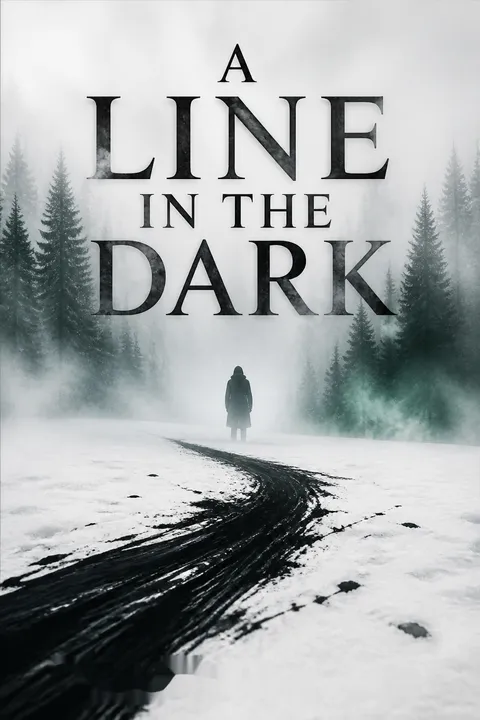


Plot Summary
Prologue
Jess remembers a winter party in broken, alcohol-blurred pieces: a small gold gun on a kitchen island, Angie arriving with Margot, and Ryan accusing Jess of lying.
Angie takes the gun from Jess and returns it to its box. Margot reaches for it as Angie leads Jess away. The moment feels like a memory already coming apart, but Jess cannot yet tell which pieces are true.
The opening offers an image of danger before it offers a stable account of what happened. Jess’s drunken perception places the gun in her own hand and turns Ryan’s accusation into a scene witnessed by everyone, establishing the story’s central problem: memory is not simply a record but a defense shaped by shame, desire, and fear. The gold gun’s ornamental appearance also unsettles the distinction between an object that looks harmless and one that can kill. The later narrative must test Jess’s recollection against evidence and other people’s accounts.
The Creamery Crush
Fourteen weeks before the winter party, sixteen-year-old Jess Wong spends a hot afternoon at the Creamery, where her best friend Angie Redmond works. Jess knows Angie’s habits by heart and hides how intensely she watches her. When a stylish Pearson Brooke student named Margot Adams orders dessert, Angie lights up; Jess notices Margot steal maple candies but stays quiet.
On the drive home, Angie admits she thinks Margot is queer and may have been flirting with her. Jess dismisses the idea too sharply, then sees Angie’s hope harden into certainty. Their talk exposes the gap Jess has kept sealed: she wants Angie’s attention to remain theirs alone, while Angie is beginning to imagine a life beyond their friendship.
The Creamery makes Jess’s longing visible through attention rather than confession. She notices Angie’s gestures, clothes, and routines with an intimacy that Angie can mistake for ordinary friendship because Jess has never named its cost. Margot’s theft provides a small but telling test: Jess could protect Angie by speaking up, yet she remains silent, partly because Margot’s confidence fascinates her and partly because Angie is watching Margot. Class divisions between West Bedford and Pearson Brooke sharpen the scene, but the deeper imbalance is emotional. Jess knows Angie closely; she does not know how to ask for anything in return.
A Meeting in the Woods
Angie arranges to meet Jess in Ellicott Park, where West Bedford students gather at night, but keeps quiet that she has invited Margot and Margot’s friend Ryan Dupree. Jess drinks cheap vodka, smokes a little, and watches Angie focus on Margot while Ryan coolly dismisses her attempts at conversation. When Jess stumbles away, Angie walks her home and worries over her scraped hand.
The next morning Jess learns that Angie had privately messaged Margot and had hoped she would show up. Angie’s excitement makes clear why she concealed the plan: she feared Jess’s disapproval might spoil a chance at romance. Jess forgives the omission, but the secret leaves her feeling less like Angie’s closest companion than a convenient shield.
Angie’s secret is not a grand betrayal, yet it changes the meaning of Jess’s presence. Angie wanted her there for courage, not as an equal participant in the evening. Jess’s drinking turns unspoken jealousy into physical disorientation, and Angie’s care afterward restores their familiar roles without resolving the resentment underneath. The woods also become a social borderland where teenagers from neighboring communities can meet beyond school rules. That openness lets the relationships begin, but it creates a secluded setting that will later hold evidence neither girl understands yet.
Brooke’s Old Wound
Jess enters Pearson Brooke’s arts-exchange program and meets Emily Soon, her reluctant student partner. During a campus tour, she sees Margot trip a teammate during field hockey, then instantly smooth her face as the coach approaches.
Later, Margot and Ryan confront Emily on a path, taunting her with an old accusation that she stalked Margot. Emily tells Jess that she once joined Margot and Ryan in online gossip to avoid being bullied herself; when she refused to carry out a crueler attack, they spread the stalking rumor.
The lie cost Emily her reputation and helped end a relationship. Jess recognizes Margot’s social charm as something that can conceal aggression, and Emily becomes the first person willing to give her a reason to distrust the popular girl.
Emily’s account complicates Jess’s tendency to sort people into innocent victims and privileged villains. Emily admits she once helped harm others, even as she describes being punished for refusing to go further. Her history gives Jess evidence, not certainty: Margot may be cruel, but Jess’s judgment is also entangled with jealousy over Angie. The arts program places Jess inside Brooke’s protected world while leaving her socially peripheral, so she observes its power arrangements without fully belonging to them. Emily’s caution reflects the lasting effect of public humiliation, where a rumor can outlive the event that produced it.
Letters Under the Log
While sketching in a sheltered hollow of Ellicott Park, Jess overhears Margot and Ryan discussing a secret exchange of letters. After they leave, she finds a leather messenger bag hidden beneath a fallen log. Inside are notes to Ryan from an unnamed admirer, plus one intimate letter written by a girl.
When Jess later brings Emily back to inspect the cache, Emily recognizes the girl’s handwriting as Ryan’s and photographs the note. She also realizes the mysterious correspondent is not Ryan’s boyfriend, Noah Becker.
Jess suspects an older student or teacher, turning a private romance into evidence of a concealed, unequal relationship. The letters give Jess a reason to investigate Ryan, though her personal interest in proving Margot dangerous clouds what the evidence can actually establish.
The hidden letters turn the woods into both archive and trap. Their anonymity protects the people involved, but it also invites Jess to fill missing names with her own suspicions. Emily’s photographs make their discovery more than a private secret: someone else can verify what Jess has read. The contrast between romantic stationery and the concealed exchange is significant, but its prettiness does not make the relationship safe. At this stage Jess sees the letters chiefly as proof that Margot and Ryan are hiding something. Her partial reading of the situation mirrors the larger mystery, in which facts become meaningful only when placed in a fuller chain of events.
Best Friends, Almost Strangers
Angie tells Jess she and Margot are dating, and Jess can offer neither honest enthusiasm nor a clean objection. She snaps that Margot is a shoplifter, leaves Angie’s room, then avoids her calls. When Courtney jokes that Margot has taken Jess’s girlfriend, Jess flees school and skips class, earning a two-week grounding. She enjoys Angie’s worried messages until Angie finally turns away from her at school.
Jess draws an apology into a comic and slips it into Angie’s locker. Angie visits, reads Jess’s work, and embraces her; the closeness revives their friendship without settling Jess’s feelings. Meanwhile, Jess and Emily continue tracking Ryan’s letters, and Margot eventually sends Jess an invitation to her Marblehead holiday party.
Jess’s withdrawal is both self-protection and a bid for proof that Angie will pursue her. She treats concern as reassurance, even when her silence makes Angie increasingly anxious. The comic offers a form of apology Jess can manage: she can draw the feelings that she cannot yet state plainly. Angie’s return is genuine, but their renewed closeness is still organized around Jess’s hope that affection might mean more than friendship. Meanwhile, Emily’s evidence-gathering gives Jess a separate focus, allowing her to frame jealousy as vigilance. The party invitation brings these private pressures into a setting where Jess cannot control who sees them.
Marblehead’s White Rooms
At Margot’s oceanfront house, Angie is absorbed into Margot’s wealthy circle while Jess drinks alone. Ryan finds Jess upstairs, mocks her attachment to Angie, and denies the letters when Jess accuses her of seeing someone behind Noah’s back. Ryan discovers a small gold gun in Margot’s mother’s closet.
Later, Jess remembers confronting Ryan in the kitchen, with the weapon between them, before Angie takes Jess away. On the drive home, Jess vomits, accuses Angie of making her attend, and walks home rather than stay over. She wakes with missing hours and a dead phone. Ryan has vanished, but Jess does not yet connect the disappearance to the confusing fragments she carries from the party.
The party compresses Jess’s social and emotional fears into one hostile room. She feels abandoned by Angie, exposed by Ryan, and unable to stop drinking once humiliation takes hold. Her account of the gun is therefore both important and suspect: she remembers its presence but cannot reliably place who held it or when. This uncertainty is not a convenient puzzle alone. It follows from Jess’s intoxication and from the fact that she has been watching the night through jealousy rather than attention to sequence. The luxurious white interior makes her mess conspicuous, while the dark ocean outside offers no clear exit from the scene.
The Body in the Park
After a severe snowstorm, a jogger finds a teenage girl’s body in Ellicott Park. Police identify her as Ryan, and the news pulls Jess back into the night she has tried to blur. Her parents learn that she lied about attending Margot’s party and forbid her from seeing Angie. Detectives Donna Cardoni and Kyle Griffin interview Jess and the other guests.
Jess initially minimizes her connection to Ryan, then admits she found the letters and leads the detectives to the hidden bag. They recover the correspondence near the place where Ryan’s body was found. Angie also tells police that she saw Jess arguing with Ryan and recalls the gold gun, intensifying suspicion around Jess even as the competing accounts begin to expose gaps in her memory.
The discovery of Ryan’s body turns Jess’s private guilt into public scrutiny. Her parents’ anger focuses on the lie that brought her to the party, while the detectives want details she herself cannot confidently supply. Their questions make memory a social contest: each witness offers a different version, and Jess’s silence can look like concealment. The letters provide independent evidence, but they also draw attention toward Jess because she found them and confronted Ryan. Cardoni’s procedural caution and Griffin’s conversational approach test different kinds of trust. The investigation does not simply ask who is lying; it asks which fragments can withstand comparison.
A Kiss, Then a Rumor
The letters point police toward Pearson Brooke teacher Jonathan Krause, whose relationship with Ryan is exposed and whose school fires him. His absence from Massachusetts on the night Ryan disappeared gives him an alibi for her killing, though not for exploiting a student.
During a snowbound trip to an MIT comics event, Angie kisses Jess while they share a room in her brother Justin’s dorm, then retreats and calls the kiss a mistake.
The next day, a party video circulates online, edited to make Jess look threatening; anonymous commenters claim she waved the gun at Ryan. Griffin tells Jess the weapon may have killed Ryan. The video and the kiss leave Jess newly vulnerable: Angie’s affection is real, but neither girl can make it simple or safe.
The kiss briefly gives Jess the intimacy she has wanted, then deepens her uncertainty when Angie withdraws. Angie’s desire and her commitments to Margot are not mutually exclusive, but she treats the kiss as an error rather than a choice she must explain. The online video performs a parallel distortion: selective images turn Jess’s jealousy into an apparent motive and omit the context of her night. Krause’s exposure adds a second imbalance of power to the story, one that remains serious even though his alibi separates him from Ryan’s death. Public narratives simplify what the girls experience as tangled and unresolved.
Margot’s Missing Hour
Jess remembers that Ryan texted her after the party from Margot’s phone, accusing her of taking the letters. The messages placed Ryan and Margot near the park, so Jess tells Griffin that Margot may know what happened.
Griffin confirms Margot posted the damaging video, and Jess confronts her outside Ellicott Park. Police records then show Margot’s car entered Pearson Brooke after 1:40 a.m.; Margot finally admits she drove Ryan back to retrieve the letters, which Ryan believed were missing.
In her interview, Margot says she took the gun from Ryan during their argument and accidentally fired it. She hid the weapon and later returned the letters to implicate Krause. Margot asks for a lawyer, leaving her confession and the case’s legal outcome uncertain.
Jess’s crucial contribution is not a sudden intuition but a reconstruction built from timestamps, phone access, and the letters’ return. She moves from accusing Margot out of rivalry to identifying a testable contradiction in Margot’s account. Margot’s confession reveals how friendship can become a private courtroom: she had kept Ryan’s secret, resented its demands, and then tried to control the story after the shooting. Her account does not absolve her of concealment, while the legal uncertainty prevents confession from functioning as neat closure. Jess’s willingness to tell the police what she remembers marks a shift from withholding information to accepting the risks of being believed.
The Story Jess Keeps
Four months later, Jess exhibits three color prints from her Kestrel comic at the arts program’s year-end show. One depicts Kestrel opening a magical doorway; another shows the consequences of the spell through Raven’s ghostly presence beside Laney. Angie arrives late and studies the work, but she is still with Margot, who has been released with an ankle monitor while her lawyer challenges the confession.
Angie says she wishes circumstances were different, yet does not leave her girlfriend. Jess does not chase her. She stays beside her art as Emily returns with cupcakes, and turns back toward the first panel of Kestrel and Laney meeting. The friendship remains wounded, but Jess has made a story that belongs to her.
The exhibition resolves Jess’s artistic arc more firmly than her romantic one. Her work now gives visible form to consequence: a spell’s power cannot be separated from what it costs another person. Angie’s visit offers care without the answer Jess wants, and Jess’s decision not to follow her is a modest but meaningful act of self-possession. Emily’s presence supplies companionship that is not based on Jess’s devotion to Angie. The unresolved legal case also resists a tidy moral ending. Jess can finish and display a piece of art even when the people around her remain difficult to understand.
Epilogue
At 2:17 a.m., in the snow-covered hollow, Ryan points Margot’s mother’s gun at Jess and demands the letters. Margot tries to stop her, but Ryan turns the weapon on Margot. Angie rushes in and wrests it away; it fires, striking Ryan.
Margot takes the gun and insists the shooting was an accident, then leaves with it rather than calling for help. Jess gathers the letters from her coat and hides them again beneath the fallen log. She leads the shaking Angie out of the woods, holding her gloved hand as they walk toward home.
The epilogue corrects the central image from the opening: Jess did not fire the gun, and the scene she remembered as a kitchen confrontation actually culminated in the woods. Angie’s impulsive attempt to protect Jess produces the fatal shot, while Margot’s choice to hide the weapon turns an accident into a deliberate cover-up. Jess’s return of the letters protects Ryan’s secret even after Ryan can no longer protect it herself, but it also preserves evidence that may later be found. The handholding that closes the scene is care under pressure, not a romantic resolution. Jess’s loyalty remains powerful, though no longer innocent of its consequences.
Analysis
A Line in the Dark builds its mystery from a problem of perception: Jess sees carefully, but seeing is not the same as understanding. Her attention to Angie’s body language and to the hidden details of Ellicott Park makes her an unusually observant narrator, yet her longing turns observation into interpretation. The novel asks readers to distinguish what Jess notices from what she assumes, then makes that distinction consequential when her recollection of the gun proves incomplete.
The story’s two social worlds are sharply unequal. Pearson Brooke has expensive rooms, private transport, and an institutional instinct to protect its reputation; West Bedford has fewer resources and a more exposed relationship with authority. But privilege is not a simple explanation for cruelty. Emily’s history shows how vulnerable students can reproduce harm to avoid becoming its target, while Margot’s and Ryan’s closeness contains both loyalty and control. Their private conflicts cannot be reduced to Jess’s romantic rivalry, even though she initially tries to read them that way.
The letters and the comic are paired forms of storytelling. Ryan’s correspondence hides a relationship in fragments, while Jess’s drawings make emotional possibilities visible without claiming they are factual. Both invite interpretation, and both can be misread when the audience wants a clean answer. Kim’s guidance that a story’s ending changes its middle echoes the investigation itself: details acquire new meaning when their consequences are known.
Jess’s movement toward maturity is not a triumphant escape from jealousy. She remains in love with Angie, and Angie remains attached to Margot. What changes is Jess’s willingness to admit what she knows, accept the limits of her memory, and continue making art without receiving the romantic answer she wants. The ending offers no neat justice or reconciliation. Instead, it leaves Jess with a more difficult form of agency: she can tell a truer story while still living with what cannot be undone.
Review Summary
A Line in the Dark received mixed reviews, with praise for its diverse representation and exploration of complex relationships, but criticism for its marketing as a thriller. Some readers found the characters compelling and the plot engaging, while others felt the mystery aspect was underdeveloped. The book's shift in narrative perspective and abrupt ending were controversial. Many appreciated the exploration of queer themes and Chinese-American identity, but some found the protagonist's behavior problematic. Overall, opinions varied widely on the book's success as a psychological thriller.
People Also Read
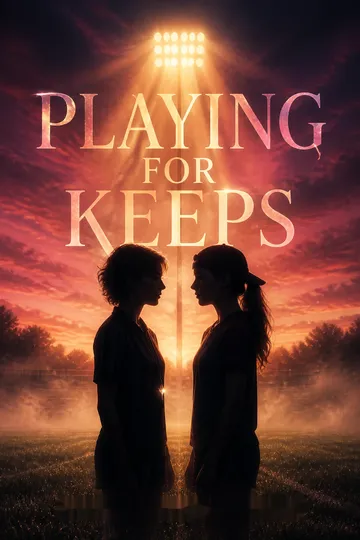
Characters
Jessica Wong
Artist and watchful friendJess is a sixteen-year-old West Bedford student who draws comics and enters Pearson Brooke’s arts-exchange program. Her closest bond is with Angie, whom she watches with an intensity she does not know how to name. Jess is perceptive about gestures, social performance, and visual detail, but her jealousy can turn observation into certainty before she has all the facts. Drawing gives her a way to examine feelings she cannot say aloud, and it also shapes how she remembers events. She is neither a detached detective nor a passive witness: her loyalties, silences, and imperfect recollections all affect the investigation. Her struggle is to distinguish caring for Angie from believing she is entitled to Angie.
Angela Redmond
Jess’s beloved best friendAngie is Jess’s longtime best friend, a warm and expressive teenager who works at the Creamery and participates in theater. She seeks closeness readily, but she also wants the freedom to explore attraction and relationships beyond Jess. Her excitement about Margot brings out both her courage and her desire for approval; she often worries that Jess’s disapproval will cost her their bond. Angie can be tender and attentive, yet her wish to keep everyone happy leads her to hide plans and blur boundaries. She is not simply the object of Jess’s longing. She has her own romantic choices, fears about being understood, and responsibilities that her affection for Jess cannot erase.
Margot Adams
Angie’s magnetic girlfriendMargot is a Pearson Brooke student whose athletic confidence and social ease attract Angie and unsettle Jess. She can be charming, bold, and persuasive, but also cutting when challenged. Her close relationships are marked by loyalty and competition in ways that outsiders struggle to read. Margot wants to manage how others see her, particularly when private matters threaten to become public. That instinct can make her protective of people she loves, but it can also lead her to treat other people’s choices as things she can steer. Her position between Angie and Jess is not merely romantic rivalry; she has her own history with Ryan and Emily, and her own ideas about what friendship requires.
Ryan Dupree
Margot’s private confidanteRyan is a Pearson Brooke junior and a close friend of Margot’s, known for being opinionated and difficult to read. She can be reserved in a crowd yet forceful when she believes someone has crossed a line. Ryan’s friendships are intense, and she expects loyalty from the people closest to her. At school, she moves within a privileged social world that can conceal more complicated pressures than outsiders see. Her private choices affect several people who think they understand her, though no single friend has a complete view. Ryan’s role in the story asks readers to look past the polished accounts others give of a girl they knew only in pieces.
Emily Soon
A wary former insiderEmily is a Korean American violinist and Jess’s assigned partner in the arts exchange. She keeps people at a distance, partly because a past friendship with Margot and Ryan left her carrying the cost of a damaging rumor. Emily admits she once joined in online cruelty to protect herself, which gives her account moral complexity as well as credibility. She is observant and guarded, reluctant to be pulled back into Brooke’s social conflicts. Her partnership with Jess grows through shared evidence rather than instant trust, and her practical skepticism helps Jess separate what she suspects from what she can prove.
Kim Watson
Jess’s arts mentorKim directs Pearson Brooke’s arts-exchange program and teaches art. She encourages Jess to think about the shape and ending of her Kestrel story, treating the teenager’s comics as serious work rather than a childish pastime. Kim is attentive to process and careful about the boundary between art and biography; she resists the detectives’ assumption that a comic directly reveals its creator’s intentions. Her advocacy gives Jess access to materials, instruction, and an audience beyond West Bedford. Kim’s support is practical as well as emotional, especially when Jess needs an adult who can recognize her talent without reducing her to the investigation.
Donna Cardoni
The careful investigatorDetective Lieutenant Cardoni questions the witnesses with steady procedural discipline. She is alert to omissions and contradictions, but she does not assume that a teenager’s first account will be complete. Her calm manner contrasts with Griffin’s more conversational style, and her insistence on verifiable details keeps the investigation from resting on rumor alone. Cardoni represents the institutional effort to reconstruct a night remembered differently by everyone who attended the party.
Kyle Griffin
The conversational detectiveLieutenant Griffin works with Cardoni and often approaches young witnesses with informal warmth. He tries to make Jess comfortable enough to speak, sometimes using her comics as a path into conversation. His methods can feel manipulative to Jess, who recognizes that friendliness does not make an interview private. Griffin remains focused on inconsistencies, especially the gun and the hours after the party, and asks Jess to contact him if her memory changes.
Peter Wong
Jess’s guarded fatherPeter is Jess’s father, a pharmacist who values education and security. He is proud of his son Justin’s academic success and initially has difficulty understanding why Jess’s comics matter so much to her. The investigation exposes his fear that Jess has kept important parts of her life from him. He can be strict and blunt, but Kim’s invitation to look at Jess’s work gives him a chance to recognize a creative inheritance he had not known how to discuss.
Esther Wong
Jess’s anxious motherEsther is Jess’s mother, a medical assistant who worries about her daughter’s safety, schoolwork, and dependence on Angie. She is quick to interpret Jess’s loyalty as vulnerability and fears that Angie may be leading her into trouble. Her concern can arrive as criticism, particularly when she feels excluded from Jess’s life. When she addresses Jess’s sexuality, she tries to offer acceptance while also urging her daughter to be more honest and self-protective.
Justin Wong
Jess’s watchful older brotherJustin is Jess’s older brother and an MIT student whose academic success earns him considerable parental admiration. He is practical and sometimes teasing, but he notices when Jess is struggling more than he lets on. His cramped dorm becomes a temporary refuge during the snowstorm, and he gives Jess a glimpse of a future beyond her family’s expectations without pretending he can solve her relationships.
Jamie Wong
Jess’s younger sisterJamie is Jess’s eleven-year-old sister, energetic and fond of asking Jess to draw for her. Her uncomplicated delight in Jess’s art contrasts with their parents’ doubts about whether drawing is a worthwhile pursuit. She is a source of ordinary sibling affection in a household increasingly unsettled by Jess’s secrets.
Jonathan Krause
A charismatic English teacherKrause teaches English and Modern Poetry at Pearson Brooke. Students regard him as engaging, funny, and sympathetic, qualities that make him easy to trust. His role in the story raises questions about adult responsibility and the ways a respected teacher can cross boundaries with a student. The school’s reputation and his personal charm complicate how quickly people are willing to name the power imbalance.
Noah Becker
Ryan’s public boyfriendNoah is a Pearson Brooke senior who dates Ryan and belongs to Margot’s broader social circle. He appears straightforward and unromantic to Emily, but his relationships are not as transparent as the labels attached to them suggest. His connection to Ryan gives the detectives another account of the party and another possible source of conflict.
Courtney Alvarez
A sharp-tongued theater friendCourtney is one of Angie’s theater friends, recognizable by her dramatic style and blunt humor. She mocks Jess’s attachment to Angie, turning a private feeling into public embarrassment. Courtney’s teasing shows how quickly a friend group can turn intimacy into social currency.
Plot Devices
The hidden letters
A secret with consequencesRyan’s letters are stored in a leather bag beneath a fallen log in Ellicott Park. Jess discovers them after overhearing Ryan and Margot discuss the hiding place, then brings Emily into the discovery and learns the correspondence points toward a relationship Ryan has concealed. The letters motivate Jess’s accusation at the party, draw police into the woods, and later help expose Margot’s movements. Their temporary disappearance and return make them evidence as well as a source of misdirection. The letters do not identify every participant by themselves, so their meaning depends on handwriting, phone messages, and the people willing to explain what they know.
Ellicott Park
A borderland and crime sceneThe wooded strip between West Bedford and East Bedford offers teenagers a place to meet beyond the supervision of either town. Jess uses its quiet hollow as a place to draw, while Ryan uses a fallen log to conceal her correspondence. The same landscape becomes central to the police investigation after a body is found in the snow. Its paths and hiding places connect the characters’ private lives to the public case, and its familiar terrain makes Jess’s knowledge useful even when her memory is uncertain.
Kestrel’s comic
A mirror Jess can redrawJess’s fantasy comic follows Kestrel, Laney, and Raven at a boarding school where magic can open a doorway to another world. Kim encourages Jess to plan the story’s ending, pushing her to think about how choices shape what comes after. As Jess revises the characters and their relationships, the comic develops questions about jealousy, power, and the cost of protecting someone. It is not a literal transcription of Jess’s life, but its images give her a way to approach feelings and consequences she cannot yet discuss directly. Its public exhibition marks her growing confidence as an artist.
The gold gun
A beautiful object, real dangerThe small gold gun belongs to Margot’s mother and looks decorative enough to be mistaken for a toy. It appears at the Marblehead house before Jess can make sense of who has handled it or where it goes. The weapon turns conflicting memories into a concrete question for the detectives: who possessed it, and when? Its ornate appearance contrasts with its lethal function, while its movement between the house and the park links the party to Ryan’s death and Margot’s attempt to control what investigators will find.
Competing accounts
Memory under cross-examinationThe police interviews, online video, phone messages, and school records present different pieces of the night Ryan disappeared. Jess’s alcohol-blurred recollection conflicts with what Angie and Margot report, while the edited party footage encourages strangers to treat a few seconds as proof. Investigators compare those accounts with the letters and the parking records, gradually exposing what each witness left out. The device makes the mystery depend not on a single revelation but on weighing fallible testimony against material traces. It also keeps Jess’s point of view central without treating her first explanation as unquestionably reliable.
Download PDF
Download EPUB
.epub digital book format is ideal for reading ebooks on phones, tablets, and e-readers.








