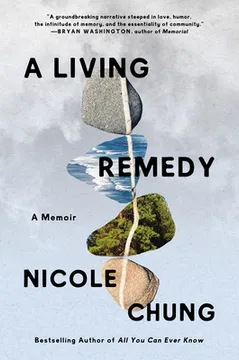


Key Takeaways
Let love define family without asking it to erase adoption's losses.
Love does not cancel origin. Nicole Chung was adopted from Korea as a premature infant by white parents in a small Oregon town. Her parents chose her wholeheartedly and raised her with devotion, yet she grew up without Korean relatives, surrounded by white people, and targeted by racist taunts. Adoption professionals had urged her parents to treat race as irrelevant, leaving her without language for what she experienced. As an adult, she can affirm her parents' love while naming what it did not repair: racial isolation, separation from her birth family, and questions about where she came from.
Belonging can be plural. Reconnecting with her biological sister decades later does not replace her adoptive family. It enlarges the family she can claim. The memoir resists a forced choice between gratitude and grief. A person can cherish the parents who raised her while mourning what adoption severed.
What's striking is the memoir's refusal to treat love and loss as competing verdicts on adoption. That distinction matters in any family formed through separation: gratitude can be genuine without making every consequence benign. The account also shows how color-blind intentions can leave a child alone with racial hostility, even in a loving home. Still, adoptee experiences are not uniform, and no single story can stand for all. The useful lesson is to let the person most affected name both connection and rupture.
Let a child's departure be an act of love, not a rejection.
Leaving made room. Chung grew up feeling conspicuous as the only Asian girl she knew in a predominantly white Oregon town. Racism and isolation helped make leaving feel necessary, even before she knew how she would manage it. Need-based aid opened a path to college far from home. Her parents supported that choice, despite the distance and the worry it brought. They had also left Ohio to build a life together in the West, and their willingness to choose an unfamiliar future became part of what they passed on to her.
Distance has two sides. College gave Chung a place where she felt more at ease, but visits home could make her feel trapped again. Her parents' pride in her independence coexisted with the sadness of seeing her rarely. The memoir holds both truths: a child may need to go, and a loving parent may still miss her.
The parents' support offers a model of attachment that does not depend on possession. In developmental terms, a secure base is valuable partly because it makes exploration possible; here, the parents' own history of migration helps them recognize that departure can serve a child's growth. Yet distance is not automatically liberating. Race, money, and geography shape who can leave and what leaving costs. The insight is not that separation is easy, but that love can make room for a life its parents cannot share.
Class is felt in the emergencies your family cannot afford.
Scarcity can look ordinary. Chung's parents worked, saved where they could, and tried to keep money worries from their daughter. She had what she needed, but the family had little room for a crisis. Job losses and medical costs consumed savings; her parents sometimes lacked health coverage, and her mother delayed care. As a teenager, Chung worked, paid school-related costs, and searched for scholarships. Her family's financial aid forms showed an expected family contribution of zero, a fact she had not understood as a child.
Opportunity does not erase origin. College gave her access to a life her parents could not afford, but it also exposed class differences through costly outings, gift exchanges, and travel. She and her husband could call themselves financially stretched, yet they had options her parents lacked. The memoir makes class visible through the practical choices money permits, not merely through income labels.
The memoir captures a form of scarcity that can be missed by people who equate poverty with visible deprivation. A family may keep food on the table while having no cushion for illness, unemployment, or travel. That distinction also explains why the same financial shock lands differently across households. Still, individual memories cannot measure every family's class position, and labels can flatten variation. Chung's sharper contribution is to show how class becomes legible in decisions: whether a person can seek care, take a risk, or help a parent.
Treat illness as a social risk, not just a private misfortune.
Treatment arrived late. Chung's father had diabetes but struggled to manage it while working long restaurant shifts. Medication was expensive without insurance and made him feel sick; his work offered little time for exercise, medical visits, or reliable meals. After years of declining health, a sliding-scale clinic found that his kidneys had lost more than 90 percent of their function. He needed dialysis, and only then did he qualify for disability benefits and public health coverage. He died at sixty-seven after years of treatment and further complications.
Care depends on access. The memoir does not deny the role of disease or individual choices. It shows how those choices are constrained by wages, insurance, working conditions, and the availability of care. Chung argues that her father's death was not simply bad luck or inherited illness. He needed sustained medical attention before his body reached crisis.
This story shifts the frame from personal responsibility to the conditions under which responsibility can be exercised. Health advice means little when medication competes with rent or a worker cannot leave a shift for an appointment. The account also cautions against assuming that a diagnosis automatically brings adequate care: her father's access came only after severe organ damage. That does not prove every outcome was preventable, but it makes prevention and timely treatment central questions, rather than treating illness as fate.
You cannot repay love by being everywhere at once.
Distance became a moral burden. Chung built a life across the country, raising children, pursuing graduate study, and working in a precarious writing career. Her parents' health and finances worsened while she struggled to afford visits or offer meaningful help. They did not accuse her of failing them; they often told her to focus on her own family. Still, she felt guilty for being far away and unable to provide the care she believed a good daughter should give.
Good intentions meet limits. Her father eventually received treatment through a local clinic, while her mother relied on nearby friends and relatives when Chung could not be there. These were not substitutes for the daughter's love, but the practical network that made care possible. The memoir asks readers to distinguish responsibility from omnipotence: devotion does not create money, time, proximity, or control over illness.
Caregiving guilt often turns structural limits into personal accusations. That conversion can feel morally satisfying because it identifies someone to blame, but it also obscures the real constraints: distance, work, money, and inadequate public support. Chung's story makes visible how family care is distributed among relatives, friends, clinicians, and institutions. The challenge is not to dismiss regret, which may reflect genuine attachment, but to resist treating regret as evidence of wrongdoing. Love can motivate care without making one person capable of meeting every need.
Grief is not measured by how efficiently you keep functioning.
Productivity can conceal distress. After her father died, Chung kept working, parenting, and meeting professional obligations. She took pride in remaining dependable, even as she had thoughts of no longer wanting to live. Months passed before she recognized that she was not simply coping and began therapy. Her family, friends, and therapist helped her stay connected when grief narrowed her sense of possibility.
Function is not recovery. The memoir shows how easily others can mistake competence for wellness, especially when a grieving person continues to answer messages, meet deadlines, and care for children. Chung's experience does not suggest that everyone grieves in the same way or needs the same response. It does show why asking directly, accepting help, and seeking professional support can matter even when someone appears to be managing.
The distinction between outward performance and inner state is important in workplaces and families that reward uninterrupted productivity. A person can keep meeting obligations while becoming dangerously unwell. Chung's account makes asking for support part of grief care, not a sign that grief has been handled incorrectly. It also resists turning therapy into a universal prescription: access, fit, and personal preference matter. The broader point is that visible functioning is weak evidence of emotional safety, so care should not wait for a dramatic collapse.
Ritual and community give grief a place to land.
Shared acts carry the loss. Chung's parents found a home in an Orthodox parish whose members cared for them in practical and spiritual ways. After her father's death, the community organized his funeral, prepared food, built his casket, and prayed with the family. The rituals gave Chung tasks to do and placed her sorrow among people who had known and loved her father. Her children could also begin to grasp his death by seeing him and saying goodbye.
Care is more than comfort. Community showed up as rides, meals, company, and help with arrangements, not only kind words. The memoir also recognizes that such support is unevenly available. Chung's mother had a close parish network; her daughter, far away, felt the distance from that everyday circle. Ritual cannot remove grief, but it can make mourning less solitary and more concrete.
Rituals work partly by giving emotion a shared form. A funeral, meal, prayer, or burial lets people act together when language fails, and offers children concrete experiences around an abstract loss. The parish also illustrates social infrastructure: relationships built before a crisis become practical support during one. Yet community should not be romanticized. Some people lack safe or welcoming institutions, and religious rituals may not fit their beliefs. The principle is broader than church: grief benefits from dependable people and meaningful practices that make care visible.
Help a dying parent choose without taking the choice away.
Agency needs support. When Chung's mother's cancer spread to her brain, doctors outlined urgent options: radiation, surgery, or no further treatment with hospice care. Her mother was frightened, exhausted, and sometimes unable to retain complex information. Chung struggled to explain the stakes without pressuring her. Two trusted friends helped discuss the choices, complete basic legal forms, and clarify what her mother wanted. Her mother chose radiation to preserve awareness for as long as possible, then hospice.
Clear communication is care. The process also established who could make decisions if her mother could not, and who would handle bills and other practical matters. The memoir does not offer a simple script for end-of-life choices. It shows the value of patience, plain explanations, trusted support, and respecting the patient's authority while making sure the decision is informed.
This episode shows that autonomy is not the same as making a decision alone. Serious illness can impair attention, energy, or memory, so supporting agency may require repetition, trusted advocates, and time to absorb information. At the same time, family members can mistake their fear for the patient's preference and push too hard. The friends' presence helps separate explanation from pressure. Advance planning can reduce confusion, but it cannot make end-of-life choices emotionally easy or guarantee that every care option is affordable.
A pandemic can turn the ordinary goodbye into an unequal privilege.
Distance became dangerous. When COVID-19 spread in 2020, Chung postponed a planned trip to see her terminally ill mother. She feared carrying the virus to her immunocompromised parent, and also faced the risks and practical demands of cross-country travel while caring for children during school closures. Her grandmother died in a locked-down memory-care facility, without family at her bedside. Chung's mother died months later, and her daughter could attend the funeral only by livestream.
Mourning depends on access. Chung had expected to travel, hold her mother's hand, and join the funeral rites. Instead, public-health precautions and distance removed those familiar forms of farewell. The book does not treat the choice as simple: visiting could risk infection, while staying away meant losing irreplaceable time. In a crisis, safety and closeness can become painful competing obligations.
The pandemic made visible how much mourning depends on mobility, institutional rules, and the ability to be physically present. It also exposed a cruel asymmetry: precautions can protect vulnerable people while depriving them of touch and companionship. Chung's dilemma resists easy judgment because both choices carried risk. The episode suggests that public health decisions are not only technical; they shape family memory and the rituals through which loss is understood. Naming that cost does not invalidate the precautions that made those decisions necessary.
Let the dead remain part of life without making grief your penance.
Love outlasts a role. On her last visit with her mother, Chung feared she had failed as a daughter. Her mother told her there was nothing to forgive and affirmed that she had done what she could. That reassurance did not prevent grief, but it gave Chung a memory she could return to without wondering whether love had been left unsaid. After both parents died, she found their presence in family stories, inherited objects, prayer, and her own learned habits of care.
Life is not betrayal. A new puppy helped her family find moments of uncomplicated joy; a beach trip gave her space to mourn. Neither erased her parents or repaired the losses. The memoir's living remedy is not a cure for grief. It is the possibility of carrying love forward while allowing ordinary life, and even happiness, to continue.
The ending avoids the familiar demand that grief resolve into closure. Memory changes as the bereaved person changes, and the dead can remain part of identity without requiring constant suffering as proof of devotion. The mother's forgiveness also interrupts the daughter's imagined ledger of debts, a pattern common in caregiving and adoption narratives. Still, reconciliation is not always possible before death, and no one should be made to feel responsible for achieving it. Here, the comfort is specific: Chung received the words she needed while her mother could still say them.
Analysis
A Living Remedy links three kinds of separation that are often discussed apart: adoption from birth family, class mobility away from one's upbringing, and physical distance from aging parents. Chung's life is marked by love, but love does not dissolve these separations. Instead, it makes their costs more legible. Her adoptive parents offer the security that enables her to leave, while her departure later becomes a source of guilt when illness exposes how little money, time, and institutional support the family has. This is a memoir about attachment under constraint, not a morality tale about choosing career over family.
Its strongest political argument emerges through intimate details. A medication that disrupts a restaurant worker's shifts, an uninsured father delaying medical care, and a daughter unable to afford frequent flights are not separate personal failures. They are examples of how policy and labor conditions enter family life. The book's account of her father's death is especially forceful because it rejects the idea that mortality levels everyone. Illness may be universal, but access to prevention, treatment, and caregiving resources is not.
The narrative also complicates the usual language of resilience. Chung keeps working through grief, but that competence masks serious distress. Community, therapy, ritual, and family support help, yet none produces a clean recovery. The pandemic then strips away familiar mourning practices, making absence harder to metabolize. Her eventual return to joy is modest and embodied: a dog, the coast, a ring, a remembered voice. These are not substitutes for the dead. They are ways love remains active in a changed life.
The memoir's central insight is that grief is not only an inward feeling. It is shaped by identity, economic security, care systems, geography, religion, and public crises. Personal guilt can arise where systemic failures leave families with impossible choices. Naming those structures does not erase responsibility or regret. It gives them proportion, allowing love to be remembered without turning every limit into a moral debt.
Review Summary
Reviews for A Living Remedy are largely positive, with most readers praising Nicole Chung's raw, emotional portrayal of grief, loss, and the failures of the American healthcare system. Many found it deeply relatable, particularly those who have experienced parental loss or financial hardship. Readers frequently noted being moved to tears. Critics of the book cite repetitiveness, lack of substance, and pacing issues as drawbacks. Comparisons to Crying in H Mart and Chung's debut memoir appear frequently, with many recommending readers experience both works.
Glossary
Ladder of Divine Ascent
Christian ascent allegoryA spiritual text traditionally attributed to Saint John Climacus, which presents thirty stages of monastic progress toward union with God. In Chung's memoir, its image appears in an Orthodox icon and in her father's account of seeing a ladder on a mountain. The text also informs her reflections on mortality, spiritual preparation, and suffering.
remembrance of death
Mortality as spiritual disciplineA Christian practice of keeping mortality in mind, not as a wish for death but as a prompt to live faithfully and attend to what matters. Chung connects the idea to the Ladder of Divine Ascent and considers how her father may have made peace with dying. She remains uncertain about the spiritual meaning of his acceptance.
koliva
Orthodox memorial wheat dishA sweet dish of boiled wheat berries, nuts, dried fruit, and seeds, prepared and shared in some Orthodox Christian memorial services. In the memoir, a parishioner makes koliva for the gathering after Chung's father's funeral. Its preparation is one example of the community's practical participation in mourning.
Panikhida
Orthodox memorial serviceA short Orthodox Christian memorial service for someone who has died. Chung's mother's priest and friends hold one at her grave forty days after her death. The service links private grief to a shared religious practice and gives the community a way to remember and pray for the deceased.
common American death
Death shaped by unequal careA phrase used in the memoir to describe a death made tragically familiar by inadequate access to health care and financial security. Chung applies the idea to her father's death from kidney failure and diabetes, conditions that required sustained treatment. The phrase challenges the claim that death is an equalizer by emphasizing that people face illness with unequal resources.
living remedy
Grief carried into lifeThe memoir's central image for grief as something that does not cure loss but can coexist with continued living. The phrase comes from a poem by Marie Howe. Chung's experience gives it a practical meaning: memory, family care, ritual, forgiveness, and new joy can all occupy a life still shaped by absence.
Download PDF
Download EPUB
.epub digital book format is ideal for reading ebooks on phones, tablets, and e-readers.








