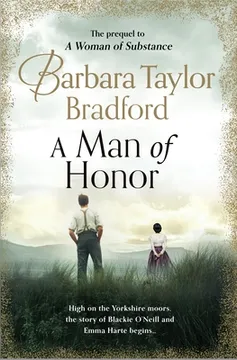


Plot Summary
The Kerry Orphan Leaves
In North Kerry in 1899, Shane O’Neill, known as Blackie, has buried his parents, brother William, and sister Bronagh, all lost to poverty and illness. His cousins Michael and Siobhan take him in, while Martha O’Malley and Father O’Donovan help him imagine a life beyond the hamlet.
His uncle Patrick Kennedy, a successful Leeds builder, offers him work and a home. Blackie’s ambition is already larger than escape: he wants to design and construct beautiful houses.
After a gale nearly throws him from the cliffs, he turns from the Atlantic with his decision firm. Michael accompanies him to Queenstown, where Dennis O’Malley sees him onto the ship. Blackie crosses to Liverpool, carrying borrowed clothes, a suitcase, and the hope that work can remake his future.
Blackie’s ambition is not presented as a cure for grief so much as a structure built around it. After successive deaths leave him with no dependable past, he treats work, learning, and money as forms of protection. His departure is also made possible by a network of ordinary kindness: food, clothing, a book, an escort to the docks. The story thus gives his self-reliance a social foundation. He imagines himself as an independent maker, but first survives because other people refuse to let him be entirely alone.
A New Room in Leeds
Patrick meets Blackie in Liverpool after the dangerous crossing, then takes him north by train to Leeds. The boy’s first tram ride and first sight of the city’s grand buildings sharpen his sense of what he wants to build.
Patrick and his wife Eileen give him a private bedroom, regular meals, and a place in the family carpentry business. Blackie studies the workshop, asks how everything works, and prepares to begin as an apprentice. The kindness of his Irish cousins and helpers remains vivid, but this new household offers something different: a route from hunger to skilled work.
Eileen’s failing health makes his arrival a source of comfort as well as responsibility. Blackie begins learning the trade while keeping his own ambition in view: he wants to build houses of his own design.
The room matters because it gives Blackie privacy, not merely shelter. For a child who has slept on shared mattresses, a desk and a door mark the possibility of an inner life devoted to study. Patrick’s household also complicates the idea that success means leaving family behind. Blackie’s route upward depends on kinship, instruction, and Eileen’s care. His hunger for money has practical roots, but the city’s architecture offers a second kind of nourishment: a visible language for the life he hopes to make.
The Glass Wall Kitchen
By 1903, Blackie has returned from six punishing months as a navvy, work Patrick opposed because of its disease, violence, and unsafe lodgings. He has saved money and learned how much strength construction demands.
Back in Leeds, he joins Patrick’s expanding business and befriends Finn Ryan, a new Irish apprentice. Blackie then takes charge of a major kitchen renovation for Mrs Wilson. He enlarges the windows, installs a near wall sized sheet of glass, and designs a striking black and white tiled floor.
Finn helps him finish the work, and Patrick praises the completed room, including its practical glass fronted cupboard. The commission proves Blackie can do more than follow instructions. His eye for light, balance, and use gives him the confidence to seek larger projects.
The kitchen converts Blackie’s private vision into visible competence. His choices are aesthetic, but they also improve the household’s daily life through more daylight and easier access to stored china. That combination defines his developing craft: beauty is not ornamental excess but a form of practical intelligence. The earlier navvy work has shown him the bodily cost of building; the renovation lets him claim authorship rather than merely labor. Patrick’s praise matters because Blackie is ready to become an adult professional, not simply a grateful nephew.
The Dance Hall Disappearance
When young Gwen Turner vanishes after leaving the Upper Armley dance hall, her boyfriend Alf searches the streets with Blackie, Finn, and Sarah Clough. Gwen never returns, and neither the police nor her neighbours find an explanation.
While escorting Sarah home, Blackie meets her sister Angela Welles, a beautiful young widow whose husband died at sea during the Boer War. The attraction is immediate. Angela invites Blackie to supper, and they discover a shared appreciation for books, elegant houses, and Harrogate.
She lives with Claudie, a trusted companion, and has built a calm, carefully ordered home. Blackie, inexperienced in love but determined to behave respectfully, waits for Angela to set the pace. Their meeting grows out of an act of ordinary concern, while Gwen’s disappearance leaves Upper Armley unsettled.
The unresolved disappearance establishes that danger can enter even a community Patrick regards as safe. Blackie’s response is practical, joining the search, but it also makes him attentive to the limits of local knowledge. Meeting Angela immediately afterward gives the episode an emotional counterweight: tenderness arrives through the same act of escorting someone home. His restraint around her reflects Patrick’s moral instruction, while his sudden desire reveals how little experience he has with intimacy. The plot holds these two facts together, suggesting that care can make a person vulnerable without making that vulnerability a mistake.
Angela’s Brief Happiness
At Angela’s home, Blackie and the widow begin a passionate relationship, each finding affection and closeness they had not known before. They arrange another meeting in Harrogate, but Blackie arrives to find the house empty.
He later learns that Angela had been beaten by Barry Simmonds, a former suitor who returned after she rejected him. Sarah initially suspects Blackie, then discovers the assault’s true cause. Doctors treating Angela’s injuries also find advanced cancer. She dies within weeks, before Blackie sees her again.
He grieves not only the loss but the future they had begun to imagine, and the fact that he never reached her bedside or funeral. Sarah’s apology eases their rupture, but it cannot return the brief happiness or give Blackie a chance to say goodbye.
Angela’s illness and assault make romantic loss inseparable from the vulnerability of women in a world where private safety is precarious. Blackie’s grief is sharpened by incomplete knowledge: he learns the truth only after suspicion has already damaged trust, and then loses the chance to act. His initial anger at Sarah gives way when he understands her fear for her sister, a small but important emotional correction. The episode also punctures his belief that diligence and good intentions can protect everyone. Some losses arrive before he can build anything around them.
Moira Leaves the Bank
Finn’s friend Moira Aherne has been sent to stay with relatives in the Bank, a foul and dangerous Leeds slum. When Finn learns where she is, he asks Blackie, Patrick, and Patrick’s friend Jack Blane to help bring her out.
They find Moira confined indoors because her extraordinary beauty could attract violence outside. Patrick has arranged a position for her at Mrs Wilson’s house, and the group escorts her safely to the Blue Door Café before taking her to work.
Moira accepts the post, but Blackie’s curiosity about her polished manner and unexplained past makes him press her with questions. She rebukes him for his rudeness. Although he apologizes, she keeps her history private. Her composure and guardedness make her seem unlike the ordinary servant he assumes she is.
The rescue reveals how class and gender shape access to safety. Moira is protected by a coordinated group of men, yet her beauty itself is treated as a liability that confines her. Patrick’s employment arrangement offers immediate security, but it also places her inside another household’s hierarchy. Blackie notices signs of a hidden history, though his instinctive investigation becomes an intrusion. His apology recognizes a boundary without solving the mystery. Moira’s self-possession is therefore both character and survival strategy: she accepts help while refusing to surrender control over what others know about her.
Robert Meets Vanessa
In London, Robert Lassiter, Earl of Harding, meets Vanessa Stratton at a crowded charity gathering and is struck by her intelligence, beauty, and frankness. Vanessa has wanted to know him for a year, but Robert is still legally married to Lucinda, though they have lived apart emotionally for years.
His closest friend Adrian Fraser urges him to face the marriage rather than begin a hidden affair. Adrian hires a private investigator, whose report documents Lucinda’s long relationship with French politician Léon Theroux. The evidence gives Robert grounds to seek a divorce.
He and Vanessa agree to wait rather than begin their life together secretly. Adrian helps secure a Swiss villa as leverage in negotiations, and Robert proposes marriage once he can be free. Their attraction has become a promise, but the promise depends on confronting his past.
Robert’s decisive problem is not whether he desires Vanessa, but whether he will convert desire into ethical action. His social position allows men around him to treat adultery as ordinary, yet he refuses to make Vanessa a concealed convenience. Adrian’s investigation supplies evidence, but it also exposes how marriage operates as a legal and public structure, not just a private feeling. Robert’s delay has protected his business and family image while limiting both his and Lucinda’s freedom. The proposal therefore begins with accountability: he must settle the old bond before claiming a new one.
Moira’s Name Restored
Robert is reunited with Moira at Bolton Manor after she tracks him down through Blackie. She explains that her half brother Lawrence drove her from Galway, falsely claiming the family rejected her because she was born outside marriage.
Robert recognizes the deception and reads a letter from her dying mother, Lady Henrietta, which confirms Moira’s place in the family and identifies a bank deposit of inherited jewels. The jewels, left by Moira’s father, are meant to secure her future. Robert agrees to help her claim them and bring her back into society.
Meanwhile, he confirms that Harry Peterson’s Cézanne is a forgery; the London gallery later reimburses Harry, and the false painting is destroyed. Robert marries Vanessa, and Moira marries Adrian, beginning a safer life with kin and resources.
Moira’s recovery is not a discovery of worth but a correction of a lie that made her doubt her worth. Lawrence weaponizes social stigma to isolate her, while Henrietta’s letter provides documentary proof and material security. The inheritance matters because emotional recognition alone cannot protect a woman navigating a rigid class system. Robert’s intervention reunites family knowledge with legal access. Harry’s forged painting offers a smaller parallel: appearances can deceive, but scrutiny and evidence can restore what was misrepresented. Both plots reward attention to provenance, whether of a person or an artwork.
A Girl in the Mist
In 1904, Blackie travels through dense mist to Fairley Hall to complete chimney repairs for Squire Fairley. Lost on the moors, he finds Emma Harte, a guarded young servant who is also heading to the estate. She shows him the way and speaks of wanting a future beyond the village.
Inside the Hall, Blackie sees the butler Murgatroyd slap Emma and try to underpay him; Cook Mrs Turner intervenes, while Blackie holds back from striking the butler.
He observes a household divided between the courteous Edwin and his bullying brother Gerald, with their alcoholic mother and an overworked staff. Emma’s intelligence and resolve become clear when she proposes a better schedule for the housework. Blackie leaves impressed by her, and disturbed by the cruelty she faces.
The meeting positions Emma as both vulnerable and already strategic. She knows when to withhold information, reads danger quickly, and imagines a life beyond service even before she can reach it. Blackie’s impulse to defend her is sincere, but Cook’s intervention shows that solidarity can take forms other than physical force. Fairley Hall’s architecture and household order conceal a disordered moral system: a servant is expected to absorb abuse while the family’s young men enjoy protection. Emma’s timetable is a modest act of administrative intelligence, an early sign that she sees systems as things one can redesign.
Emma Chooses the City
During the following year, Emma and Edwin begin a secret relationship. When Emma discovers she is pregnant, Edwin panics about his father’s reaction and proposes an unsafe abortion rather than accepting responsibility. Emma rejects him and leaves Fairley Hall, carrying her savings and a suitcase.
In Leeds she rents a small attic room from Mrs Daniel, using a carefully constructed story to protect herself. She searches for work in shops and tailoring rooms, determined to support herself and her unborn child.
Her ambition is sharpened by anger at Edwin, but also by the practical knowledge she gained in service and sewing. Emma is not yet in a position to choose freely, but she refuses to let Edwin’s fear decide the child’s future. She begins converting exclusion into a plan for financial independence.
Emma’s departure is a point of no return because it severs her from the only household that has supplied regular work, even as that household has failed to protect her. Edwin’s proposal makes clear that his fear of status loss outweighs concern for her bodily safety. Emma’s refusal is therefore an act of judgment as well as defiance. Her fabricated marital identity shows that agency under constraint may require concealment. She does not yet possess power, but she begins to accumulate the tools of it: savings, adaptable skills, and a clear-eyed understanding that economic dependence leaves her exposed.
The Kallinskis Take Her In
While searching for work in Leeds, Emma sees two boys throwing stones at Abraham Kallinski, a Jewish tailor. She drives them off, helps him home, and is welcomed by Abraham and his wife Janessa for Sabbath dinner. Their sons, David and Victor, treat her as a guest rather than a curiosity.
When the family learns she needs work, Abraham offers her a place in his tailoring shop. Emma proves a rapid learner, progressing from buttonholes to cutting and assembling suits, while keeping her pregnancy concealed.
By autumn, Blackie returns from Ireland and finds her transformed by confidence and a new hairstyle. She tells him about the baby. He offers to marry her, but she refuses, unwilling to make him surrender his ambitions. Their friendship deepens as he promises support, and the Kallinskis become a dependable family around her.
Emma’s intervention against antisemitic violence expresses a moral instinct that precedes knowledge: she protects Abraham before understanding why he is targeted. The Kallinskis answer with hospitality and employment, turning gratitude into opportunity rather than debt. At the shop, Emma’s rapid advancement depends on skill, but also on a workplace willing to recognize it. Blackie’s marriage offer is generous, yet Emma refuses to let rescue dictate her future or his. Their bond rests on affection without possession. The section makes belonging concrete through shared meals, wages, training, and a place to return.
A Name for the Baby
Emma gives birth to a daughter in March 1906 and stays with Laura Spencer, who helps her through the delivery. Afraid the child will be exposed as illegitimate, Emma worries about baptism and the birth record.
Blackie performs a private christening, naming the girl Edwina Laura Shane, and offers to be listed as her father. When Emma accidentally says the name Edwina before settling on it, Blackie understands Edwin Fairley is the child’s biological father but does not force a confession.
Emma later leaves the baby with her cousin Freda in Ripon so she can earn a living. On a visit home, she learns her own father died saving Edwin from a mill fire. The news intensifies her anger at the Fairleys and her determination to build security for her daughter.
The naming scene reveals how language can expose what a person is trying to conceal. Blackie’s deduction could become a claim over Emma’s story, but he chooses discretion and offers practical care instead. His willingness to assume public responsibility is not a romantic shortcut; it is a deliberate answer to the stigma and material risks facing an unmarried mother. Emma’s decision to place the baby with Freda is painful because protection requires separation. Learning that her father died saving Edwin turns grief into a more complicated inheritance: love for her family now sits beside a resentment she cannot easily set aside.
Emma Rents Her First Shop
After placing her daughter with Freda, Emma works days at the mill and spends evenings sewing garments for customers, while Laura helps her sell preserves and baked goods. She saves with near punishing discipline, visiting her child when she can and refusing distractions that might slow her plans.
Meanwhile, Blackie’s work for Lord Robert expands: he designs and builds a guesthouse at Bolton Manor, gaining the kind of commission he once only imagined. At a Sunday concert, he tells Laura that he loves her, and they agree to court privately.
Emma, meanwhile, sees a small shop for rent on Town Street and negotiates directly with its owner, paying six months in advance. Blackie accompanies her to inspect the premises. They leave with the keys, unaware that this first lease begins a lifelong partnership of trust and ambition.
The ending offers beginnings rather than completion. Emma has not yet built an empire, but a lease turns her ambition into an address, a rent obligation, and a place where customers can meet her work. Her relentless labor is admirable and also costly: she treats rest as a threat because insecurity has taught her that safety must be purchased. Blackie and Laura’s courtship forms a quieter counterpoint, founded on mutual regard rather than rescue. Their support does not diminish Emma’s independence; it helps make her first risk possible. The future remains open, but the shop key gives it a material foothold.
Analysis
A Man of Honour braids two forms of self-making. Blackie builds through craft, turning his childhood fascination with architecture into skilled work and a larger professional life. Emma builds through trade, converting sewing, cooking, and disciplined saving into the first material foothold for her ambitions. Their trajectories differ, but both begin with insecurity and depend on seeing practical knowledge where others see only service or labor.
The novel repeatedly tests whether protection can become control. Patrick’s guidance gives Blackie a home and moral framework, while his impulse to question Moira shows that good intentions can still cross boundaries. Blackie’s offer to marry Emma is loving, but her refusal preserves her right to choose the shape of her future. Robert’s story offers a contrasting version of agency: wealth gives him options, yet he must still act honestly toward Vanessa and confront the marriage he has avoided.
Class is not merely a divide between rich and poor. It determines who is believed, who is safe, whose work is recognized, and who can move through a city without fear. Moira’s concealed history and Emma’s invented identity expose how social standing can be both a shelter and a weapon. The Kallinskis’ hospitality offers an ethical counterworld, where a stranger’s courage earns welcome and employment rather than suspicion.
The ending is deliberately provisional. Emma has secured a shop, not a fortune; Blackie and Laura have begun a courtship, not finished a life together. What has changed is the scale of their choices. The people once defined by hunger, grief, or exclusion now possess skills, relationships, and places from which to shape what comes next.
Review Summary
A Man of Honor receives mixed reviews, averaging 3.93/5. Fans of the Emma Harte series generally appreciate the backstory of Blackie O'Neill, praising his likable, ambitious character and the vivid descriptions of Ireland and Yorkshire. However, many readers criticize the book's slow pacing, excessive characters, unresolved storylines, and repetitive narrative. Several felt the Robert Lassiter subplot was disconnected, and some wished Emma Harte appeared sooner. Long-time Bradford fans tend to rate it more favorably, while new readers often struggle to connect with the story.
Characters
Blackie O’Neill
The self-made builderBorn Shane O’Neill in rural Kerry, Blackie is a bright, physically imposing boy whose family is devastated by poverty and loss. He is curious about how things work, drawn to history and architecture, and convinced that skill and money can give him greater security. His warmth makes people trust him, while his ambition pushes him toward risks such as navvy work and demanding building projects. Patrick’s guidance shapes his sense of courtesy and responsibility, but Blackie develops his own eye for design. He is generous with friends and protective of people in danger, sometimes so eager to help that he oversteps their boundaries. His life is driven by a desire to build both structures and a dependable circle of belonging.
Emma Harte
The determined shopkeeperEmma is an intelligent, observant young woman raised in service at Fairley Hall. She learns quickly, guards her private history, and studies people and systems with equal care. Her ambition is practical: she wants money and control over her circumstances, not merely admiration. Skilled with sewing and attentive to clothing and presentation, she recognizes that commerce can turn talent into independence. Emma can be warm and loyal, but pressure hardens her into a disciplined, sometimes unforgiving worker. Her deepest motive is to create safety without having to depend on someone else’s goodwill. She is especially alert to hypocrisy among the powerful, having seen how status can excuse cruelty and how a servant’s intelligence is often overlooked.
Patrick Kennedy
The generous master builderPatrick is Blackie’s maternal uncle, a former sailor who has built a successful carpentry and construction business in Leeds. He combines discipline with affection, offering his nephew a home and training while expecting him to work hard and behave honorably. His experience has made him cautious about danger and attentive to financial security. Patrick is loyal to Eileen and proud of Blackie, whom he increasingly treats as a son and business partner. He is also willing to act on conscience, as when he helps remove Moira from an unsafe situation. His instinct is to protect, though he sometimes assumes he knows what is best. A practical man, he measures care by what he is prepared to do.
Robert Lassiter
The principled earlThe Earl of Harding is a wealthy property developer whose polished manner conceals a vigilant, analytical mind. Robert is accustomed to control, from business decisions to the management of his estates, and he weighs risks before acting. His sense of honor is genuine, though convention and work have allowed him to postpone difficult personal decisions. He values trusted friendships, especially Adrian’s, and notices talent in people outside his own class, including Blackie. Robert’s central tension lies between the stability of his public position and the private life he wants to choose. He is most compelling when he applies the same discipline to personal responsibility that he brings to property and finance.
Moira Aherne
The guarded newcomerMoira arrives in Leeds with little money, no dependable local network, and a manner that suggests an education beyond the life she claims. She is poised, observant, and careful about what she reveals, having learned that personal information can become a weapon in the wrong hands. Her beauty draws attention, but her intelligence and self-command define her more deeply. Moira accepts practical help while retaining her own judgment, and she can distinguish genuine kindness from social performance. Her relationships with Finn, Blackie, and Patrick offer different forms of safety, yet she is not simply a passive recipient of rescue. She wants the chance to live on her own terms and to recover a secure place in the world.
Laura Spencer
The steady-hearted friendLaura is a warm, capable woman whose cooking and sewing make her home a refuge for friends. She is perceptive without being intrusive, and her instinct is to understand rather than condemn. Laura supports Blackie and Emma in different ways, offering affection, practical help, and a calm place to think. Her gentleness is not passivity: she can recognize what people need and say so plainly. She values loyalty and emotional honesty, and her patience allows relationships to develop without forcing them. Laura’s home and ordinary acts of care provide an alternative kind of security to wealth or rank.
Vanessa Stratton
The outspoken romanticVanessa is a confident young woman from a wealthy family who wants more than the expected life of a debutante. She hopes to write and has considered work that would take her beyond polite society. Her directness and initiative help her meet Robert, whom she has admired from a distance, and she speaks openly about desire and commitment. Vanessa is not embarrassed by wanting a future with him, yet she accepts the need to proceed carefully while his marriage remains unresolved. Her mix of romantic intensity and independence challenges Robert’s habit of keeping his emotional life under control.
Adrian Fraser
Robert’s loyal strategistAdrian is Robert’s closest friend, a banker with the resources and confidence to intervene when Robert avoids a difficult decision. He is witty, loyal, and adept at turning practical connections into solutions, including hiring investigators. Beneath his social ease, he carries grief over a past love and is slower than Robert to imagine a new future. Adrian’s friendship is unusually direct: he challenges Robert, then takes on real work to help him change his circumstances.
Eileen Kennedy
The caring auntEileen is Patrick’s devoted wife and Blackie’s aunt. A talented cook and baker, she makes their modest home feel abundant and welcoming. Her health has been fragile, but she remains attentive to the emotional needs of both men and takes pride in supporting their work. Eileen’s gentleness is active: she notices hunger, fatigue, and loneliness, and answers them with food, comfort, and practical help.
Finn Ryan
Blackie’s Irish apprenticeFinn leaves Ireland after losing his father and horse, arriving in Leeds with little beyond his willingness to work. Patrick gives him an apprenticeship, and Blackie becomes his guide and friend. Finn is sociable, curious, and less physically suited to navvy work than Blackie, but he proves dependable in the workshop and in moments of danger. His affection for Moira grows from gratitude and genuine interest.
Angela Welles
The elegant young widowAngela is Sarah’s older sister, a young widow who lives in a carefully arranged home near the moors. Refined and kind, she has a strong interest in books, architecture, and the places she has known, especially Harrogate. Her manner is reserved in public but emotionally direct in private. She seeks companionship after loss and is willing to take the initiative when she recognizes a mutual attraction.
Sarah Clough
The observant sisterSarah is Angela’s younger sister and one of Blackie’s friends. She enjoys conversation and local news, but her talkativeness is balanced by a keen ability to read people. She cares fiercely for her family and friends, and her judgments are shaped by that protective instinct. At times concern leads her to conclusions she later has to reconsider.
Lucinda Lassiter
Robert’s estranged countessLucinda is Robert’s wife, an aristocratic woman whose public title and private independence coexist uneasily within their marriage. She keeps much of her life separate from Robert and has her own financial resources and social connections. Her distance from him has shaped the household for years, while her preferences and decisions affect their sons and Robert’s choices. She is presented as guarded and difficult to read, not as someone who explains herself readily.
Martha O’Malley
Blackie’s second motherMartha O’Malley is a widowed neighbour who has cared for Blackie since infancy. She teaches him, feeds him, and offers the constancy of a parent without claiming to replace his mother. Her home represents the communal kindness that keeps him alive through hardship. She is practical, affectionate, and proud of the boy’s future.
Abraham Kallinski
The generous Jewish tailorAbraham is a tailor in Leeds who welcomes Emma after she intervenes to protect him from antisemitic youths. He responds to her courage with hospitality and then offers her work. Gentle, thoughtful, and generous, he helps make his family’s home and shop places where Emma can belong and develop her skills.
Janessa Kallinski
Emma’s welcoming hostJanessa is Abraham’s wife and the warm center of the Kallinski household. She welcomes Emma to Sabbath dinner and makes a stranger feel safe without demanding an explanation of her circumstances. Her generosity is expressed through food, attention, and a readiness to treat Emma as a guest rather than a burden.
Edwin Fairley
The cautious heirEdwin is the elder son of Squire Fairley. Unlike his brother Gerald, he is courteous and generally considerate toward the household staff. He is still young and uncertain, shaped by the expectations of his family and his position as heir. His gentler manner does not guarantee courage when his own future is at stake.
Gerald Fairley
The household bullyGerald is Edwin’s younger brother, a loud and entitled young man who enjoys ordering people around. His treatment of servants reflects the hierarchy he has inherited and the lack of correction he has received. His presence helps make Fairley Hall an intimidating place for those with less power.
Adelaide Fairley
The troubled mistressAdelaide is the Squire’s wife and the mother of Edwin and Gerald. She is withdrawn and struggles with alcohol, leaving much of the household’s daily management to others. Her unhappiness contributes to the unsettled atmosphere at Fairley Hall.
Murgatroyd
The cruel butlerMurgatroyd is Fairley Hall’s butler, a senior servant who uses his position to dominate those beneath him. He is lazy, irritable, and especially harsh toward Emma. His conduct shows how a rigid household hierarchy can enable abuse even among people who are themselves employees.
Plot Devices
Building and design
Skill becomes social mobilityConstruction carries Blackie’s central ambition from childhood into adult work. First he studies buildings as a hungry boy imagining another life; later he learns carpentry, bricklaying, and design under Patrick. His renovations and commissions let him prove that his ideas have practical value, while each completed structure brings him closer to larger work and partnership. Building also connects him to Robert and to the estates where Emma’s story unfolds. The device is not simply a career motif: it makes ambition visible in rooms, windows, floors, and houses that change how people live.
Henrietta’s letter and jewels
Proof restores Moira’s securityA letter from Moira’s dying mother corrects the lies Lawrence used to isolate her. It confirms that Robert’s family cares for her and explains that a bank deposit of jewels was intended to secure her future. A key enclosed with the letter gives Robert and Moira access to the inheritance. The document joins emotional recognition to material protection, allowing Moira to return to her family and reenter society. It is a late revelation and discloses important plot information.
The investigator’s dossier
Evidence clears Robert’s pathAdrian hires a private detective to establish Lucinda’s relationship with Léon Theroux. The report, including corroborating details and photographs, gives Robert evidence to seek a divorce on grounds of adultery. Adrian also uses the information in negotiations involving a Swiss villa that Lucinda wants. The dossier transforms Robert’s private dissatisfaction into a legal strategy, but it does not erase the emotional cost or guarantee a quiet separation. It reveals the central marital secret and is therefore a spoiler.
The Ham Shank
A city’s danger prompts rescueThe Bank, known locally as the Ham Shank, is a crowded and unsanitary Leeds slum where Moira has been left with relatives. Its violence and lack of safety make Finn’s decision to seek help urgent. Patrick, Jack, Blackie, and Finn enter together and bring Moira out, then arrange a position in Upper Armley. The district also recalls Blackie’s own dangerous lodging during navvy work, showing how poverty can put vulnerable people at risk even within the same city. Its rescue episode reveals the context of Moira’s arrival and is a spoiler.
The missing Gwen
A disappearance unsettles safetyGwen vanishes after leaving the dance hall, and neither her friends nor the police discover what happened to her. The disappearance brings Blackie and Finn into a search, leads Blackie to escort Sarah home, and thereby gives him his first meeting with Angela. It also challenges Patrick’s confidence that Upper Armley is safe. The novel leaves Gwen’s fate unresolved, so the event functions as an enduring uncertainty rather than a mystery with a confirmed answer. Its place in the plot is revealed here.
Download PDF
Download EPUB
.epub digital book format is ideal for reading ebooks on phones, tablets, and e-readers.








