

Key Takeaways
Treat self-reliance as a tool, not an ideal
Their escape became dependence. Maurice and Maralyn left England in 1972 to sail around the world, seeking a life beyond jobs, property, and social expectations. In March 1973, a whale struck their boat, Auralyn, which sank in the Pacific. The couple had no radio and drifted for nearly four months in a life raft and dinghy, far from their planned route. Their seamanship and ingenuity mattered, but neither could guarantee rescue.
Other people made survival possible. On June 30, South Korean fishing captain Suh Chong-il turned his ship around after spotting them. His crew brought them aboard, cared for their injuries, and fed them. The Baileys had set out to need no one. They survived because Maralyn sustained Maurice, and because strangers chose to help.
What's striking is the gap between independence as an aspiration and independence as a literal survival strategy. The couple's self-sufficiency gave them skills and purpose, but it could not replace communication, medical care, or another person's decision to stop. Their story resembles a broader truth in emergency response: individual competence works best inside networks of mutual aid. That does not make self-reliance foolish. It makes it incomplete. The distinction matters because admiring endurance can obscure the role of rescue, luck, and care, and can wrongly turn survival into a test of personal virtue.
Make routine a shelter when the future disappears
Order made the raft livable. Once Auralyn was gone, Maralyn inventoried what they had saved, counted their food, and set a daily ration. Their stores included thirty-three tins and a single pint of water per day. Breakfast, lunch, and dinner gave shape to otherwise empty hours. She also kept a diary and marked dates on the raft's canopy, preserving a sense that time was passing and that they still had a life to record.
Small tasks occupied the mind. The pair read aloud, invented paper dominoes and playing cards, and discussed plans for another boat. Those plans included menus and cabin layouts, even when a new voyage seemed remote. Such activity did not solve the danger, but it gave each day a sequence and each person something to do besides anticipate death.
Routine is powerful here not because it creates control over the ocean, but because it creates a modest pocket of control within it. Repeated tasks reduce the number of fresh decisions a person must make under stress, while writing and planning preserve continuity between a threatened present and an imagined future. This resembles behavioral activation, a therapeutic approach that uses purposeful activity to interrupt withdrawal and rumination. The limit is important: organization cannot repair a failing raft or guarantee rescue. Its value is narrower and more humane. It helps people remain mentally engaged while material circumstances remain largely beyond their command.
Let hope create motion, even when certainty is impossible
Maralyn turned belief into action. Maurice tended to interpret the couple's predicament as evidence that his decisions had failed. Maralyn was more willing to believe they would survive, though her confidence was not passive. When rowing toward the Galápagos proved ineffective, she proposed using a makeshift sail to seek a shipping lane. She kept finding practical work, from fishing to repairing equipment, and urged Maurice to imagine a life after the raft.
Her certainty was not proof. Maralyn sometimes read meaning into events, including her conviction that a particular future ship would rescue them. Ships passed without seeing the couple, and her predictions were not a reliable guide to events. Yet she resisted Maurice's conclusion that the worst outcome was inevitable. Her hope helped keep both of them acting while the result remained unknown.
The story distinguishes optimism from prediction. Maralyn's belief that rescue was coming was not consistently accurate, but her willingness to act despite uncertainty kept possibilities open. In decision science, the useful question is often not whether confidence is justified in the abstract, but whether it supports a reasonable next step without suppressing evidence. The couple needed both: Maurice's attention to currents and danger, and Maralyn's refusal to treat uncertainty as a verdict. The caution is that stories of survival can make optimism look like a cause of survival, when chance and external help also determine who lives.
Prepare thoroughly, but leave room for luck and improvisation
Preparation gave them real capability. Before leaving England, Maurice studied navigation and reinforced their thirty-one-foot yacht. Maralyn calculated food needs and carefully stored provisions. On the voyage, Maurice used a sextant, charts, and astronomical tables to locate the boat. The couple were not careless adventurers. They had trained, planned, and repeatedly checked their supplies.
Yet preparation had blind spots. Maurice refused to carry a radio transmitter because he wanted freedom from outside interference. After the whale strike, they had no way to call for help. Later, their flares failed, their water containers were damaged, and they discovered they had left out fishing hooks. The plan had covered many imaginable problems, but the decisive emergency was not one they could fully control.
Their choices expose the difference between detailed preparation and robust preparation. Detail makes a plan precise; robustness helps it survive surprises. The couple's careful provisioning and navigation served them well, while the absence of a radio sharply limited their options after the wreck. This is a useful lesson for any high-stakes project: redundancy and communication can be as important as technical mastery. At the same time, the book does not reduce the disaster to a planning error. A whale strike in open water is an extreme contingency, and no checklist can eliminate chance. Better preparation can improve odds, not abolish uncertainty.
Adaptation begins when the plan fails
Improvisation kept food coming. The Baileys had packed for a voyage, not for months on an inflatable raft. When their fishing hooks were missing, Maralyn bent safety pins into hooks and tied them to line. Later, she and Maurice adapted an empty kerosene container into a fish trap. They also killed turtles for meat and used their knowledge of the animals and fish around them to extend their supplies.
Each solution required revision. Their first attempts to row toward the Galápagos gained little ground, so they changed tactics. Their improvised equipment sometimes worked and sometimes failed, as when patches came loose from the raft. Survival was not one brilliant invention. It was a cycle of noticing what was failing, trying something workable, and adjusting when the results came in.
The ingenuity here is practical rather than romantic. It depends on close observation, experimentation, and willingness to abandon a method that is not working. That pattern is shared by engineering and scientific inquiry: propose a solution, test it against reality, and revise. The story also shows why flexibility matters more when resources are scarce. A failed experiment can cost food, strength, or time. Adaptation is not unlimited creativity; it is creativity constrained by risk. The couple's experience offers no general recipe for survival, but it does make a clear case for treating failure as information rather than as a command to repeat the same approach.
Give authority to competence, not the person holding the title
The captain was not always the best decision-maker. On Auralyn, Maurice was skipper and navigator, while Maralyn managed the provisions and galley. After the boat sank, Maurice's self-blame weakened his ability to decide. Maralyn proposed rowing, then devised another way to seek help when the rowing made little progress. He recognized that she was more capable of sustaining action, even though his formal role had been captain.
Leadership shifted with the crisis. Maralyn's practical judgment and steadiness became essential, while Maurice's navigational knowledge still mattered. Their survival depended on different strengths, not on one person being universally in charge. The change was particularly revealing because Maurice had designed the boat's hierarchy and taken pride in being its captain.
This is a vivid example of situational leadership, in which authority should respond to the task and the expertise available rather than remain fixed by status. Maurice's knowledge did not become useless when his confidence collapsed, and Maralyn's confidence did not make her an expert in every domain. Their complementary skills mattered most when each could contribute without defending rank. That principle applies beyond crises, although the analogy has limits: a raft leaves little room for negotiation, and urgency can make a decisive leader necessary. The deeper point is not that titles should vanish, but that titles cannot substitute for sound judgment.
Treat the ocean as a living system, not empty scenery
The Pacific both sustained and threatened them. From the raft, the Baileys first saw stretches of water that seemed empty. In fact, they were drifting near currents that brought nutrients toward the surface, supporting plankton, fish, birds, and turtles. Those animals became part of the couple's daily world. Fish and turtle meat helped keep them alive; birds and sharks could also damage their small craft or complicate their fishing.
Nature offered no simple moral. A whale had struck and sunk their boat. Another whale later approached the raft peacefully, close enough for the couple to see it at intimate range. The same ocean held beauty, food, danger, and indifference. Their experience challenged the idea that wilderness is merely an escape from human society or a landscape waiting to be mastered.
The ocean in this account is not a blank stage for human courage. It is an ecological system with its own movements and inhabitants, some of which sustain the couple and some of which threaten them without intention. That perspective aligns with ecological thinking, which treats living systems as interdependent rather than as a backdrop or a stock of resources. The couple's dependence on fish and turtles also makes survival ethically complicated: necessity pushes them to kill animals they would rather spare. The book preserves that discomfort instead of turning the sea into either a benevolent refuge or a villain.
A shared ordeal reveals a marriage's strengths, not its whole character
The crisis changed the balance between them. Maralyn had first persuaded Maurice to leave suburban England and build a life at sea. On the raft, she repeatedly sustained his morale and took practical initiative as he became consumed by guilt and despair. Maurice later acknowledged how much he had depended on her. Their partnership was real, but it was not a simple story of equal contributions at every moment.
The next voyage exposed other patterns. After their rescue, the couple built Auralyn II and sailed toward Patagonia with friends Colin, June, and Tony. Maurice could be exacting and domineering toward the crew, while Maralyn often softened the effects of his behavior. The experience that had shown their mutual reliance did not erase his need for control or his difficulty with other people.
Extreme conditions can reveal capacities that ordinary life leaves hidden, but they do not provide a complete moral portrait. Maralyn's resilience and Maurice's dependence are central to this survival story; the later voyage also shows that affection and shared achievement do not automatically make a person easy to live or work with. This is a useful counterweight to the tendency to treat couples as a single heroic unit. Partnerships contain distinct agency, unequal emotional labor, and sometimes troubling behavior. Recognizing those tensions does not diminish their bond. It makes the bond more credible and the account less flattering in a useful way.
Publicity turns survival into a story someone else can sell
Their rescue immediately became a public narrative. Reporters wanted dramatic answers about the whale, religion, and how close the couple had come to death. Early coverage misidentified them and gave little attention to Maralyn beyond describing her as Maurice's wife. Later headlines emphasized her role in sustaining him, but the press still shaped the experience into a simplified tale of heroism and endurance.
The story also gave them leverage. The Baileys sold their account to the Daily Express for £10,000, money that helped finance Auralyn II. They accepted interviews and public appearances because they needed support for their next voyage. Yet repeated reenactments and questions could not convey the private texture of months adrift. Their experience was both their own and, increasingly, a commodity.
Public storytelling can bring material rewards and broaden attention, while also narrowing a complex experience into a version that audiences can quickly recognize. Here, commercial coverage helped the couple pursue the life they wanted, even as it imposed familiar roles and made Maralyn's contributions easy to overlook. This tension anticipates modern attention economies, where personal hardship can become both testimony and content. There is no pure choice between privacy and publicity when money, sponsorship, and recognition are involved. The useful question is who gets to shape the account, whose work is visible, and what parts of lived experience resist a headline.
Measure love by its daily care, not its perfect symmetry
Their shared life outlasted the voyage. Maralyn and Maurice married in 1963, chose not to have children, and made boats and travel central to their life together. Maralyn died of cancer in 2002. Maurice survived her by fifteen years, struggling with loneliness and guilt. He wrote a series of long letters about her and their voyages, using memory and writing to keep their shared life present.
His final measure was not achievement. Their story includes a shipwreck, a celebrated rescue, another voyage, and years of ordinary routines. Maurice's later reflections turn away from fame and adventure toward the value of loving and being loved. That conclusion does not make grief disappear or make their marriage flawless. It gives their remarkable public story a quieter measure: the care they offered one another over decades.
The ending resists the usual biography's scoreboard of fame, accomplishment, and legacy. Maurice's letters were not a commercial success, but they gave his grief a form and kept his memories in circulation. The account suggests that love is not proven by perfect balance in every episode, but by sustained attention, care, and a shared history that remains meaningful after loss. That is a humane standard, though it should not turn dependence into an ideal or excuse harmful behavior. The story's strongest claim is more modest: a life can matter deeply even when its value is private, uneven, and difficult to explain.
Analysis
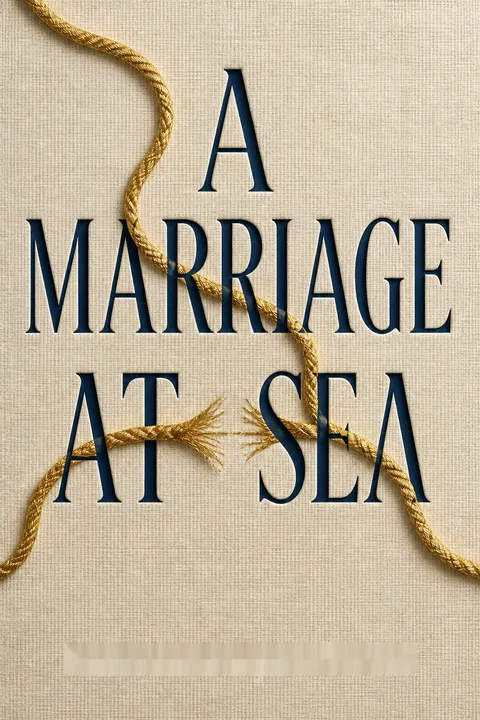
A Marriage at Sea works as an adventure narrative, a marriage portrait, and an inquiry into the stories people tell about survival. Its central tension is that Maurice and Maralyn seek freedom from ordinary obligations, yet survive through obligations to each other and through a stranger's decision to help. Their chosen isolation is meaningful, but it is never total. The sea makes that contradiction literal: they can no longer rely on society, then discover that without other people they may not live.
The account also complicates the conventional survival-hero model. Maurice has technical knowledge and a captain's title, but those do not make him emotionally invulnerable or consistently decisive. Maralyn's competence is practical and relational: she keeps tasks moving, invents ways to fish, and gives Maurice reasons to imagine a future. This should not be simplified into a lesson that positive thinking saves lives. Her confidence coexists with mistaken predictions, and their outcome depends on currents, weather, the condition of their equipment, and the Korean captain's choice to investigate a distant shape.
The book's form matters. It draws on the Baileys' accounts, diaries, photographs, interviews, and press coverage, showing how one event changes as it moves from private experience to public spectacle to later recollection. The differences between Maurice's candid self-accusation and Maralyn's restrained public presentation expose the limits of a single authoritative version. Neither memoir nor newspaper coverage can fully recreate what months of hunger and uncertainty felt like. Their surviving records instead reveal different kinds of truth: logistical detail, emotional strategy, and the pressures of being watched.
The later chapters prevent the rescue from becoming a neat redemption. Maurice's dependence on Maralyn was profound, but after the ordeal he could still be controlling toward other people. Maralyn's steadying role carried emotional labor that the heroic couple image can hide. The ending finds value not in flawless conduct or public acclaim, but in a long attachment that shaped both lives. Its most durable insight is that self-sufficiency may be a compelling dream, while human life remains materially and emotionally interdependent.
People Also Read










Glossary
seamanlike
Sound judgment at seaA quality Maurice associates with more than technical sailing skill. It means responding to danger with alertness, practical judgment, and the ability to act without becoming paralyzed by doubt. The book presents this as a difficult blend of experience and character, while showing that even careful sailors cannot control every emergency.
sextant
Celestial navigation instrumentA handheld instrument used to measure the angle between the horizon and a celestial body, such as the sun or a star. Maurice combined sextant readings with the time, nautical almanac, and charts to estimate Auralyn's position at sea. It let the couple navigate without relying on electronic positioning equipment.
bosun
Deck crew supervisorA traditional shipboard role responsible for practical deck work and the upkeep of equipment such as sails, ropes, and dinghies. Maurice gave June Foskett this title during practice voyages and continued using it socially, reflecting his fondness for old sailing terminology. On the later Patagonia voyage, June again held responsibility for deck maintenance.
Download PDF
Download EPUB
.epub digital book format is ideal for reading ebooks on phones, tablets, and e-readers.








