


Plot Summary
Prologue
Teixcalaan has summoned a new ambassador from Lsel Station without explaining what happened to its previous representative, Yskandr Aghavn. Mahit Dzmare is chosen to carry his recorded memories, despite having only weeks to integrate them. Meanwhile, pilot scouts vanish near the Anhamemat Gate, destroyed by an unknown force.
Councilor Darj Tarats sees an opportunity in that danger: perhaps a threat larger than Teixcalaan can keep the Empire from swallowing Lsel. He sends Mahit toward the imperial capital, where personal ambition and the fate of her home will soon become inseparable.
The opening places two kinds of danger on the same map. Teixcalaan is an empire whose expansion is presented as civilization, while the unknown ships beyond Lsel threaten annihilation without negotiation. Tarats does not simply fear either power. He calculates how one might be turned against the other, revealing the novel’s central political unease: survival can demand alliances with forces that also endanger the self. Mahit’s assignment begins inside that contradiction. She is sent to preserve Lsel by entering the very culture that has been teaching its young to desire absorption.
Aghavn’s Body Awaits
Mahit descends from the imperial cruiser into the City, the planet-spanning capital she has studied in poetry and history since childhood. Her imago, the recorded memory of former ambassador Yskandr Aghavn, guides her through unfamiliar etiquette, though their hurried integration makes his presence feel too physical and unpredictable.
At the Judiciary, her new liaison, Three Seagrass, leads her to a preserved corpse. It is Yskandr’s body, dead for three months. Recognition floods the imago with panic, and he disappears from Mahit’s mind. The Empire has not merely replaced her predecessor. It has left her alone with his unexplained death, his unfinished work, and no reliable access to the memories meant to help her survive.
Mahit’s arrival makes cultural longing bodily: she enters the City through spectacle, then meets the dead man whose memories she hoped would make her belong there. The imago is not a convenient archive but a relationship under pressure, with an older self capable of overwhelming the younger one. Its sudden silence removes both practical guidance and emotional companionship. That loss also sharpens the political stakes. Mahit must investigate Yskandr’s death while inhabiting a society whose manners and institutions she admires, but whose officials already control the terms of her arrival.
Metal Beneath the Skin
Alone in Yskandr’s apartment, Mahit searches his delayed correspondence and finds unfinished permits that would have let Teixcalaanli warships cross Lsel space. Three Seagrass explains how court messages are encrypted as literary puzzles, then helps her handle the backlog.
Her friend Twelve Azalea arrives with a more disturbing discovery: scans show metal embedded in Yskandr’s brainstem, not an ordinary medical implant. Mahit recognizes the device as the secret machinery that stores an imago, but she hides its purpose.
In a bargain of mutual disclosures, she explains that it preserves memory and personality across generations. Twelve Azalea admits he suspects murder and wants to know why the court concealed the device. They agree to investigate together.
The implant turns Mahit’s private inheritance into a diplomatic vulnerability. A technology that Lsel regards as collective memory appears to Teixcalaan as a dangerous alteration of individual identity, so disclosure creates both understanding and risk. Meanwhile, the unsigned military permits suggest that Yskandr’s duties may have exceeded ordinary diplomacy. Mahit’s first alliance in the City forms through controlled honesty rather than trust: she reveals enough to recruit help, while withholding the very fact that makes her valuable. Her negotiation skills are already serving her, even as she feels less prepared than the people around her.
A Vigil Improvised
Twelve Azalea takes Mahit and Three Seagrass back to the morgue to examine the implant in Yskandr’s corpse. They confirm that it is a neural device, and Mahit conceals its exact function. Nineteen Adze, an influential member of Emperor Six Direction’s inner circle, arrives to visit the dead ambassador, whom she calls a friend.
To keep her from probing the body, Mahit invents a Stationer funeral vigil and asks the two officials to witness it. Nineteen Adze accepts the performance but makes clear that she expects to meet Mahit again. After she leaves, the three investigators make a pact to exchange truths and keep one another’s secrets. Mahit learns that Yskandr had reached far higher in court than his title alone would suggest.
Mahit’s invented ritual is more than a quick deception. It asserts that Lsel has its own practices for remembering the dead, refusing to let the Empire define what counts as a meaningful farewell. Yet the scene also exposes the unequal intimacy between cultures: Nineteen Adze knows Yskandr personally, while Mahit knows him only through an incomplete recording and a corpse. The truth pact offers a fragile counterweight to that imbalance. Its members do not become innocently trusting; they agree to make deception reciprocal, giving each a chance to remain an agent rather than merely a source of information.
The City Turns Blue
Three Seagrass arranges breakfast with Fifteen Engine, Yskandr’s former cultural liaison, hoping he can explain the ambassador’s court relationships. A bomb tears through the restaurant before the meeting can yield answers.
Fifteen Engine dies, Mahit is pinned beneath debris, and Three Seagrass frees her as the City seals the plaza behind glowing barriers. When Three Seagrass tries to use her cloudhook to open one, the City’s automated defenses electrocute her.
Mahit keeps her alive until the Sunlit arrive, then refuses their demand to take her into military custody. She invokes an appointment with Nineteen Adze, who outranks the immediate pressure of the soldiers. The claim works, and Mahit is escorted to the ezuazuacat instead of disappearing into military hands.
The bombing turns political inquiry into bodily danger, but the more unsettling violence comes from the City itself. Its barriers and security system treat a trusted official as a threat, making technological order indistinguishable from coercion. Mahit survives by using a court appointment as a legal shield, an early sign that her literary preparation can function as practical power. The loss of Fifteen Engine also closes off a human source of Yskandr’s history. Mahit is left to reconstruct the past through unstable memories, competing institutions, and people who may have reasons to keep it buried.
Sanctuary in White
At Nineteen Adze’s residence, Mahit learns that the ezuazuacat is more interested in Yskandr than in the official story of his allergic death. Adze questions her about the broken imago, and Mahit admits that the voice in her mind vanished when she saw the corpse.
She also learns that unrest and bombings have spread beyond the capital’s center. Adze offers a place to stay, formally protecting Mahit while keeping her under observation. Three Seagrass recovers from the City’s electrical strike and returns to her post.
Mahit begins sending messages from Adze’s offices, including a discreet request to learn who authorized her hurried appointment. A warning from Lsel’s Councilor for the Pilots says her imago may have been sabotaged before she ever left home.
Adze’s hospitality refuses a clean distinction between refuge and captivity. Mahit is safer inside the ezuazuacat’s household, but her movements and communications are no longer fully her own. The warning from Lsel adds a second layer of estrangement: the threat may have come from the people who sent her, not only from the Empire that received her. Even her malfunctioning memory becomes politically legible, potentially an accident, a personal failure, or sabotage. The result is a protagonist who must build trust without stable ground beneath her, choosing allies through observed conduct rather than inherited loyalties.
The Banquet’s Hidden Deal
Three Seagrass brings Mahit to the Emperor’s banquet, where court poets and political factions share the same crowded floor. Mahit meets Thirty Larkspur, a wealthy imperial associate, who tells her that an agreement made by Yskandr has been canceled.
The remark confirms that her predecessor negotiated something beyond routine diplomacy. Mahit is formally received by Six Direction, whose feverish warmth and familiarity trigger a powerful echo of Yskandr’s feelings. She also meets Science Minister Ten Pearl, who warns her that the City watches everyone.
During the oration contest, poet Nine Maize delivers an unsettling piece about imported flowers and hollow futures. Mahit and Three Seagrass read it as a warning that the Empire is preparing another expansion war, though its target remains concealed.
The banquet makes culture function as a political instrument rather than ornament. A poem can criticize trade, signal support for war, or warn a foreign ambassador without naming its real subject. Mahit’s fluency gives her access to those signals, but it also deepens her longing to be recognized as more than a clever outsider. The Emperor’s response complicates that desire: his affection reaches her through Yskandr’s emotional residue, blurring her own reactions. Thirty Larkspur’s canceled deal gives the evening its hard edge. What Mahit inherited is not only a dead ambassador’s work, but a promise whose failure may determine whether Lsel remains independent.
The Fleet Turns Homeward
At the banquet’s edge, Mahit meets the young imperial heir Eight Antidote in a palace garden of captive hummingbirds. He speaks with unsettling seriousness about visiting Lsel, then sends her back to the party.
Later, a drunken veteran, Eleven Conifer, tries to recruit her for the popular commander One Lightning; Thirty Larkspur intervenes before the encounter turns violent. The next morning, the Emperor announces a campaign toward Parzrawantlak, Teixcalaan’s name for Lsel’s sector. Mahit realizes the fleet is moving toward her home.
A second message from Councilor Dekakel Onchu warns that Lsel suspects Heritage Councilor Aknel Amnardbat may have damaged Mahit’s imago. An official reply identifies Eight Loop as the person who ordered Mahit’s appointment, giving her another political lead.
The garden and the war announcement place innocence and imperial appetite side by side. Eight Antidote is a child surrounded by beautiful things that cannot leave their enclosure, while Lsel is a small polity about to be approached by a fleet it cannot resist. Mahit’s encounters with One Lightning’s supporter also show how political allegiance is recruited through personal contact, not just proclamations. The messages from Onchu make her own mind a disputed territory: her assignment may have been arranged by rival factions, and the very memory meant to protect her may have been deliberately weakened.
The Dead Man Speaks
Back in her apartment, Mahit finds Eleven Conifer waiting with a poisoned needle. When he attacks, she uses her size and surprise to turn his weapon against him, killing him in the struggle.
Three Seagrass arrives as the fight ends, and Twelve Azalea soon brings the imago-machine he has secretly removed from Yskandr’s body. Mahit hides the device before the Sunlit investigate the death. Under the shock of danger, a fragment of Yskandr’s voice returns, then vanishes again.
Meanwhile, the warnings from Lsel make clear that the Empire’s invasion could reach the Station before help arrives. Mahit is no longer merely trying to find out who killed her predecessor; she must obtain the memories locked in his recovered machine before her home is conquered.
Mahit’s first act of lethal violence is neither a triumph nor a loss of control. She survives because she acts under threat, then immediately has to confront what survival has made her do. The recovered machine offers hope, but it is also evidence that Yskandr’s body and memory remain objects of political competition. His brief return is emotionally destabilizing: a voice that had seemed lost can still surface, though no one knows what will bring it back. The scene shifts the story from investigation toward intervention. Mahit needs knowledge not for curiosity, but because time is running out for Lsel.
A Deal With the Emperor
Mahit obtains a private audience with Six Direction and discovers what Yskandr had offered. In exchange for Lsel’s independence under the Emperor’s dynasty, Yskandr promised the schematics for imago-machines and devices for immediate imperial use.
The Emperor wanted to preserve his own mind by placing it in a clone, a plan Mahit recognizes as a profound violation of Lsel’s principles. She refuses to endorse the bargain, though she cannot yet offer a better way to save her home.
The meeting also reveals the Emperor’s fear that his three designated successors will plunge Teixcalaan into civil war. Afterward, Mahit steals access to Three Seagrass’s cloudhook, sends encrypted warnings to Lsel, and prepares to recover the knowledge her damaged imago cannot provide.
The bargain exposes the danger hidden inside the language of preservation. For Yskandr, the technology might have purchased Lsel’s continued sovereignty; for Six Direction, it promised survival of the self and stability of the state. But the same machine that carries a person forward through integration becomes, in the Emperor’s imagined use, a means of imposing one identity on a child. Mahit refuses to treat an effective bargain as an ethical one. Her choice isolates her from Yskandr’s strategy, yet it is also the first clear act of political independence from her predecessor.
Surgery in Belltown Six
After a meeting with Eight Loop leaves Mahit without support, she and her companions travel to Belltown Six to find Five Portico, an unlicensed mechanic who performs neurological surgery. Before the operation, Mahit confronts Ten Pearl, who admits he let Yskandr die after poisoning him at dinner.
Nineteen Adze had not stopped it. Mahit proceeds with the surgery anyway, asking Five Portico to replace the damaged imago with the machine removed from Yskandr’s corpse. The procedure nearly kills her, but it brings both versions of Yskandr into her consciousness.
Their memories reveal the deal’s origins, the Emperor’s plan for a cloned host, and Yskandr’s complicated love for Six Direction and Nineteen Adze. Mahit emerges with the knowledge and shared mind she had been missing.
The operation is a literal reconstruction of political and psychological continuity. Mahit risks her own capacity to think in order to recover an older self, but the result is not a clean restoration: two versions of Yskandr join her, bringing contradictory memories and desires. Ten Pearl’s confession clarifies that institutional power can commit murder through deliberate nonintervention, while Adze’s complicity makes friendship morally harder to parse. Mahit does not simply inherit Yskandr’s answer. She gains access to the person who made the bargain, then must decide how much of his history can be used without surrendering her own judgment.
Tarats’s Hidden Map
Awake after surgery, Mahit uses Yskandr’s mathematical memory to decrypt Councilor Darj Tarats’s message. It contains coordinates marking the unknown ships gathering near several borders, along with instructions to present them as evidence that Teixcalaan’s frontier is not secure.
If the Empire faces an external threat, its own law may bar an expansion war. A separate account reveals that Tarats has known about the aliens for years and intends to draw Teixcalaan into conflict with them, hoping the collision will end both empires’ power.
Mahit does not share that larger scheme with her Teixcalaanli allies. She tells Three Seagrass and Twelve Azalea enough about the imago process to explain why she needed surgery, then learns that One Lightning’s forces are entering the City.
Tarats’s coordinates turn information into leverage, but the strategy behind them is ethically compromised. He wants to protect Lsel by steering a human empire toward a potentially catastrophic confrontation, treating both peoples as pieces in a design for ending imperial rule. Mahit inherits the useful part of his plan without accepting its full logic. Her choice to withhold his intentions from her allies is not simple deceit; it preserves room to negotiate while she tests what kind of future the available evidence can support. The restored imago expands her knowledge, but it does not settle the question of whose purposes that knowledge should serve.
A Verse Becomes a Signal
One Lightning’s forces and Thirty Larkspur’s supporters drive the capital toward open conflict. Trapped inside the Information Ministry after Thirty Larkspur’s faction takes control, Mahit and Three Seagrass compose a poem that encodes their location and danger.
Its images refer to Five Agate’s son, the violet flowers associated with Larkspur, and the Ministry building itself. Three Seagrass releases it across public and internal feeds. Six Helicopter arrests the pair and takes their cloudhooks, but Nineteen Adze understands the message.
Five Agate arrives with an ally to free them. Six Helicopter opens fire; Twelve Azalea is shot, and Five Agate’s companion kills the attacker with a shockstick. Mahit and Three Seagrass escape with Five Agate, carrying grief and the coordinates they still need to deliver.
Poetry becomes infrastructure when ordinary channels have been seized. Its layered references make the message legible to an ally while allowing it to circulate as public art, turning a cultural form into a rescue mechanism. The method also shows how completely Mahit has entered the symbolic habits she once admired from a distance. Yet this success exacts a cost: Twelve Azalea’s death makes the alliance personal, not merely useful. Three Seagrass’s loyalty and Mahit’s dependence on her now coexist with a grief neither can control, binding their political work to the intimate consequences of the coup.
The Emperor’s Last Bargain
At Nineteen Adze’s headquarters, Mahit reveals that the alien ships threaten Teixcalaan as well as Lsel, and explains how Eight Loop’s legal warning about insecure borders can invalidate the expansion campaign. Adze admits that she allowed Ten Pearl to kill Yskandr, then spared Mahit when Thirty Larkspur sent her a poisonous flower as a test of loyalty.
Mahit still asks Adze to take her to Six Direction. In the bunker beneath Palace-North, the Emperor again offers to preserve Lsel in exchange for the imago technology. Mahit refuses. Instead, she argues that One Lightning has neglected the true danger and that Thirty Larkspur has helped make the Empire vulnerable. Six Direction accepts her case and prepares a public declaration.
This confrontation makes truth a negotiated resource. Mahit reveals enough to secure the Emperor’s attention but keeps Tarats’s endgame private, distinguishing necessary disclosure from total surrender. Adze’s confession complicates the word friend: she was close to Yskandr, participated in the conditions of his death, and nevertheless chose to save Mahit. The Emperor’s renewed offer tests whether Mahit’s refusal was principled or merely tactical. By choosing a legal and military argument over a technological bargain, she tries to protect Lsel without allowing its collective memory to become the Emperor’s private instrument.
Blood Rewrites Succession
Mahit, Three Seagrass, and Nineteen Adze swear loyalty to Six Direction in a blood ritual, then prepare to broadcast the Emperor’s response. Rather than remain hidden, he appears in a sun temple with Nineteen Adze and the child heir, Eight Antidote. He displays Mahit’s evidence of the alien threat, then refuses the fiction that he can rule indefinitely.
With a ceremonial blade, he kills himself before the watching Empire and names Nineteen Adze his successor, with authority to govern for Eight Antidote until the child comes of age. His act transforms the political crisis: One Lightning’s claim to rule by military acclamation now faces an emperor whose death has been publicly framed as sacrifice for the Empire’s survival.
The climax joins political succession to bodily cost. Six Direction refuses the immortality bargain that once seemed capable of preserving both his life and imperial stability, choosing instead to make his death itself a source of legitimacy. The broadcast turns a private decision into a public event that no faction can easily erase or reinterpret. Mahit’s evidence helps him name a real external threat, but she cannot control what he does with it. The act leaves her with a victory that is inseparable from loss: the Empire may survive its succession crisis, yet the person who made that possible has chosen not to survive it.
The Fleet Stands Down
After Six Direction’s death, One Lightning recalls his soldiers and publicly pledges loyalty to the new Emperor, Nineteen Adze. The expected annexation war against Lsel is no longer announced, and the alien threat becomes Teixcalaan’s next military priority.
Thirty Larkspur loses his place among the imperial successors but remains in government with an advisory role on commerce. The insurrection takes thirty-six hours to end, leaving the City wounded and hundreds dead.
Mahit, exhausted by the upheaval and by the combined memories in her head, refuses the possibility of remaining at court for prestige or influence. She asks Nineteen Adze to send her home while she still wants to leave, choosing distance before the Empire can turn her longing into another form of possession.
The political resolution is deliberately incomplete. Lsel escapes the immediate conquest, but Teixcalaan does not cease to expand; it redirects its military toward the aliens, and the new Emperor must inherit both imperial machinery and its appetite. Thirty Larkspur’s continued position shows that defeated factions are managed rather than erased. Mahit’s decision to leave is therefore not a rejection of everything she learned in the City. It is a refusal to confuse access with belonging. She has gained authority by becoming more fluent in Teixcalaan, but recognizes that fluency cannot make the Empire hers.
Epilogue
In the aftermath, Nineteen Adze is crowned, Six Direction is buried, and the City begins preparing for war against the unknown ships. Three Seagrass recites a grief-struck poem for Twelve Azalea, whose body has been donated to medical study. Mahit arranges for Yskandr’s preserved body to be cremated, but keeps the ashes rather than consuming them.
She and Nineteen Adze meet before dawn, and Mahit confirms that she wants to return to Lsel. As the Station comes into view, it feels familiar but no longer simply home. Mahit has carried the City inside her, alongside two versions of Yskandr, and must now discover what remains of herself.
The ending declines the easy reward of assimilation. Mahit can remain near power, continue her diplomatic career, and pursue the cultural world she once desired, but she chooses to return before those desires decide for her. Her departure does not restore an untouched Lsel: she carries imperial language, political knowledge, grief, and a changed relationship to memory. Nor does she resolve the damage between herself and her imago-line by consuming Yskandr’s ashes. The final image makes home a place she approaches rather than recovers. Belonging becomes an ongoing choice, not a prize awarded by either culture.
Analysis
A Memory Called Empire examines assimilation as both desire and danger. Mahit does not arrive in Teixcalaan as a detached critic: she loves its literature, studies its language, and wants access to the world its culture promises. That attraction makes her perceptive, but it also makes her vulnerable to the Empire’s claim that whatever it absorbs becomes more fully real. The novel’s central political metaphor is not simply conquest by force. It is the gradual conversion of other people’s memories, names, and ambitions into imperial resources.
The imago system gives that problem an intimate form. Mahit inherits Yskandr’s experience, but their relationship cannot be reduced to a transfer of data. Memory carries appetite, fear, and attachment. The damaged integration forces Mahit to distinguish what she knows from what she feels, then to decide which parts of an inherited life she will act upon. Her eventual recovery of Yskandr does not erase her; it makes identity more crowded and more negotiated. Against the Emperor’s fantasy of preserving one self inside a child, the novel proposes continuity through difference.
Language is another contested technology. Teixcalaanli poetry can disguise political messages, create social belonging, and lend violence the appearance of inevitability. Mahit’s literary education helps her read power, while her own poem turns that education into a rescue signal. Yet fluency never makes her fully native. Her final choice to return to Lsel rejects the idea that mastery must culminate in absorption.
The resolution is deliberately uneasy. The Empire averts immediate civil war and postpones its invasion of Lsel, but its military attention shifts toward another enemy rather than disappearing. Political survival is not moral innocence. Mahit protects her home through compromise, selective disclosure, and alliances with people she cannot entirely trust. The novel’s hardest insight is that resisting empire may require using its institutions, while refusing to let those institutions define the self that survives.
Review Summary
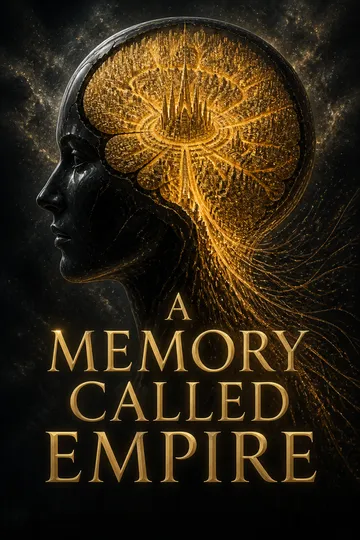
A Memory Called Empire is a highly acclaimed sci-fi novel featuring intricate worldbuilding, political intrigue, and cultural exploration. Readers praise Martine's complex characters, poetic language, and themes of colonialism and identity. The story follows Mahit Dzmare, an ambassador navigating a vast empire while investigating her predecessor's death. While some found the pacing slow and names confusing, many lauded the book's intelligence and depth. Critics noted similarities to works by Leckie and Cherryh. The novel won the 2020 Hugo Award and is considered a standout debut in the genre.
People Also Read






Characters
Mahit Dzmare
The divided ambassadorMahit is a young diplomat from Lsel Station, selected for her command of Teixcalaanli language and culture and for her compatibility with the imago of her predecessor. Her fascination with imperial poetry is sincere, but it also exposes her to the seduction of a culture that treats its own expansion as the natural shape of the world. She is observant, intellectually agile, and often more uncertain than her careful manners suggest. Under pressure, she learns to use cultural knowledge as political leverage without mistaking fluency for belonging. Her central psychological struggle is how to inherit another person’s memories without surrendering her own judgment, and how to love a culture without accepting its claim to own her.
Yskandr Aghavn
The inherited diplomatYskandr is the former ambassador from Lsel, whose recorded memories are implanted in Mahit to guide her work. He spent decades at the Teixcalaanli court, mastering its political language and forming relationships that Mahit can only partly understand. His memories preserve practical knowledge, emotional reflexes, and a deep attraction to the City, but they also carry choices that place Lsel at risk. Yskandr is clever, ambitious, and capable of loving individuals within an empire whose power he distrusts. His presence raises a difficult question for Mahit: whether memory is a tool, a relationship, or a competing claim to identity.
Three Seagrass
The sharp-tongued liaisonThree Seagrass is an Information Ministry agent assigned to guide Mahit through court protocol and the City’s intricate social codes. She is quick-witted, politically ambitious, and skilled at turning performance into influence. Her professional instincts make her watchful, but her curiosity about noncitizens gives her a genuine appetite for lives beyond the Empire’s assumptions. Friendship with Twelve Azalea reveals her capacity for loyalty, while her growing bond with Mahit complicates the line between duty and personal desire. She wants to serve the state and understand the people it classifies as outsiders, even when those commitments pull in opposite directions.
Nineteen Adze
The imperial confidanteNineteen Adze is one of Emperor Six Direction’s closest advisers, an experienced political actor with a past in the fleet. Her presence commands attention, but beneath her controlled manner lies a strong attachment to the people she serves. She is pragmatic enough to make morally compromising choices and perceptive enough to understand their human cost. Her friendship with Yskandr shapes how she regards Mahit, though she refuses to treat the younger ambassador as a simple continuation of him. Adze embodies the tension between loyalty to a person and loyalty to an institution, and her sharp intelligence makes compassion, when she offers it, feel like a consequential decision.
Six Direction
The aging emperorSix Direction has ruled Teixcalaan through a long era of stability and expansion. He is politically acute and personally capable of warmth, especially toward those who challenge him with serious arguments. His fear of succession is not merely a hunger for power; he believes the Empire’s fragile peace depends on continuity and fears what his possible heirs might do. That conviction leads him to consider technology that could preserve his identity beyond his body. The Emperor’s relationship with Yskandr and his interest in Lsel’s memory practices reveal a ruler who can admire a culture while trying to appropriate what makes it distinct.
Twelve Azalea
The curious courtierTwelve Azalea is an Information Ministry official with a fascination for medicine, forensics, and political mysteries. His curiosity first leads him to detect the metal in Yskandr’s brain, then draws him into Mahit’s investigation. He and Three Seagrass have a long, teasing friendship built on shared history and clear knowledge of each other’s limits. He enjoys intrigue, but his willingness to take risks for people he cares about shows that curiosity is also his form of courage.
Darj Tarats
The strategic councilorDarj Tarats represents the Miners on Lsel’s governing Council and thinks in terms of resources, sovereignty, and long-range risk. He is a patient strategist who regards political power as something that can be redirected through careful pressure. His distrust of Teixcalaan coexists with a willingness to use its military reach when Lsel faces a threat it cannot manage alone. Tarats’s calculations protect his station, but they also make him willing to endanger others for a future he believes might end imperial domination.
Dekakel Onchu
The watchful pilot councilorDekakel Onchu is Councilor for the Pilots, responsible for navigation, defense, and the safety of Lsel’s ships. Practical and experienced, she takes the disappearance of scout crews seriously when other councilors hesitate. Her loyalty is first to the Station and its people, but she is alert to the political danger posed by her own government’s decisions. Onchu tries to warn Yskandr and Mahit without knowing how much of the truth they can receive.
Aknel Amnardbat
The guardian of memoryAknel Amnardbat is Councilor for Heritage, charged with protecting Lsel’s cultural inheritance and its imago-lines. She is fiercely committed to preserving the Station’s identity and fears the influence of Teixcalaanli art, language, and ambition. Her protective instincts are complicated by her power over the very memory technology she safeguards. Amnardbat’s role shows how care for a community can harden into control when its leader believes cultural survival permits private intervention.
Ten Pearl
The algorithmic scientistTen Pearl is Teixcalaan’s Minister of Science, a technically accomplished official whose automated systems have helped earn him political power. He believes in the competence of carefully designed systems and in the importance of defending the Empire’s social order. His polished manner can make dangerous actions sound administrative and reasonable. Ten Pearl’s confidence in systems exposes a central weakness: algorithms inherit the assumptions and purposes of the people who build them.
Eight Loop
The judicial heirEight Loop is Minister of the Judiciary and one of Emperor Six Direction’s designated successors. She is his longtime companion from childhood, a formidable administrator whose authority rests on law and institutional memory. Her public interventions are cautious and densely coded, but they can alter the political meaning of a war. She treats power as something that must be made legitimate as well as exercised, which places her in tension with commanders who rely on acclaim or force.
Eight Antidote
The child successorEight Antidote is a ten-year-old, ninety-percent genetic copy of Six Direction and one of the designated imperial heirs. He is observant, composed, and already accustomed to being treated as a political future rather than an ordinary child. His knowledge of the palace birds offers a glimpse of private curiosity beneath public symbolism. His vulnerability raises the ethical stakes of the Emperor’s interest in placing an older mind inside a younger body.
Thirty Larkspur
The merchant heirThirty Larkspur is a court favorite from a powerful Western Arc family, known for his wealth, polished presentation, and skill at shifting between political audiences. He champions commercial interests and has influence among people who benefit from trade beyond the imperial center. His charm makes him difficult to read: he can offer help, issue warnings, or conceal a threat within the same courteous exchange. Larkspur represents a faction that wants power without necessarily sharing the Emperor’s preferred route to stability.
One Lightning
The acclaimed commanderOne Lightning is a popular military commander whose soldiers admire his leadership and whose supporters imagine him as a possible ruler. He speaks with the confidence of someone accustomed to being obeyed, and his public appeal draws strength from uncertainty about the Emperor’s succession. His political ambition is tied to military achievement and the promise of order. He demonstrates how quickly a commander’s reputation can become a rival source of legitimacy.
Five Agate
Adze’s devoted aideFive Agate is Nineteen Adze’s aide and analyst, trusted with sensitive work and close observation of the court. She is a devoted mother to her son, Two Cartograph, and her care for him sits alongside a demanding professional life. Her quiet competence can become decisive under pressure. Through her, Mahit sees that service to a powerful figure can involve affection and chosen loyalty, not only ambition or coercion.
Fifteen Engine
Yskandr’s former liaisonFifteen Engine once served as Yskandr’s cultural liaison and later retired from the Information Ministry. His history with the former ambassador makes him a possible guide to Yskandr’s life at court. He is guarded and difficult to draw out, shaped by old political connections he no longer discusses openly.
Five Portico
The underground mechanicFive Portico is a Belltown mechanic who performs illicit work on bodies and machines beyond the reach of official institutions. Her artificial eye and blunt manner announce a life shaped by practical survival rather than court polish. She evaluates risk carefully, asks patients to define what they are willing to lose, and expects payment for her skill. Her work gives Mahit a dangerous route back to the memory she needs.
Eleven Conifer
The volatile veteranEleven Conifer is a retired legionnaire and supporter of One Lightning. He first approaches Mahit with recruitment and political grievance, then reappears as a source of direct danger. His military identity gives him confidence in physical confrontation, while his resentment toward outsiders makes him easy to use as an instrument of factional conflict.
Gorlaeth
The Dava ambassadorGorlaeth represents Dava, a recently annexed world, and tries to draw Mahit into a gathering of ambassadors from distant systems. She mixes apparent friendliness with a sharp awareness of what imperial rule means for people at the edges. Her brief encounter offers Mahit a glimpse of other outsiders learning to navigate the same center.
Nine Maize
The political poetNine Maize is a celebrated court poet whose spare, unsettling verse carries political implications beneath its formal beauty. His work gives Mahit and Three Seagrass clues about the pressures building around trade, succession, and war. He shows how an artist can speak into a dangerous public debate without reducing a poem to a straightforward declaration.
Plot Devices
Imago-machines
Memory across generationsLsel’s imago-machines record a person’s memories and patterns of thought, then pass them to a carefully selected successor. Integration is meant to create a new person who carries useful experience without simply erasing the host. Mahit’s damaged connection to Yskandr makes the technology both a source of expertise and a private crisis. Teixcalaan misunderstands it as a route to immortality, creating the central conflict over whether collective memory can be used to preserve an individual ruler.
Cloudhooks and the City
Access and surveillanceTeixcalaanli citizens wear cloudhooks to receive information, communicate, and access locked doors and public systems. The City’s automated intelligence uses that connected infrastructure to manage transport, security, and movement. For Mahit, who lacks a cloudhook, the system makes her dependent on Three Seagrass while also exposing the state’s power to watch and confine its citizens. Failures in its operation suggest that technical systems can reproduce political interests rather than neutral order.
Poetry as code
Meaning hidden in formTeixcalaanli court culture communicates through allusion, meter, and double meanings. Poems can encode social criticism, encrypted correspondence, or urgent instructions, while their public form allows a message to pass as art. Mahit’s study of imperial literature becomes a practical diplomatic skill: she reads Nine Maize’s warning, exchanges coded notes with allies, and helps Three Seagrass send a public signal that reaches Nineteen Adze. Literary fluency gives outsiders access, but never guarantees that the audience will interpret them fairly.
Imperial succession
Legitimacy under pressureSix Direction has designated three possible successors, leaving the Empire vulnerable to competing claims from a child, a judicial insider, and a popular commander. Court factions use legal precedent, public poetry, military acclaim, and demonstrations to shape which form of authority appears legitimate. The succession crisis turns Mahit’s diplomatic mission into a struggle over the Empire’s future, while her information about the alien threat offers a way to challenge the proposed expansion campaign under Teixcalaanli law.
The unknown ships
A threat beyond empireShips of unknown origin attack pilots and vessels near Lsel’s borders, leaving wreckage and no evidence of a negotiable intelligence. Darj Tarats secretly tracks their movements and gives Mahit coordinates that may establish a threat to Teixcalaan itself. The danger creates a possible reason to stop the Empire’s annexation war, but Tarats also hopes to turn Teixcalaan against the alien force. The external threat therefore offers both a chance of survival and a morally compromised strategy.
FAQ
Synopsis & Basic Details
What is A Memory Called Empire about?
- Ambassador navigates imperial intrigue: Mahit Dzmare, ambassador from independent Lsel Station, arrives in the vast, culture-obsessed Teixcalaanli Empire's capital, the City, to find her predecessor dead under suspicious circumstances.
- Imago malfunction complicates mission: Mahit carries an imago-machine containing her predecessor's memories and personality, meant to guide her, but it malfunctions, leaving her isolated and vulnerable in a foreign court.
- Uncovers political conspiracy: As Mahit investigates the death and navigates the complex social and political landscape, she uncovers a conspiracy involving imperial succession, military ambitions, and a hidden threat that could engulf both Teixcalaan and her home station.
Why should I read A Memory Called Empire?
- Rich cultural immersion: The novel offers a deep dive into a meticulously crafted alien empire obsessed with poetry, language, and history, exploring themes of cultural assimilation and identity.
- Intricate political thriller: It presents a compelling narrative of courtly intrigue, hidden agendas, and power struggles, blending diplomatic maneuvering with elements of mystery and suspense.
- Unique exploration of consciousness: The concept of the imago-machine provides a fascinating framework for examining memory, identity, and the self, adding a unique layer to the protagonist's internal and external conflicts.
What is the background of A Memory Called Empire?
- Vast, ancient empire: Teixcalaan is a multi-system empire that has expanded over millennia, viewing itself as the center of the universe ("the world" and "the empire" are the same word in Teixcalaanli). Its capital is a planet-sized city.
- Independent stationers: Lsel Station is one of several independent mining outposts in the Bardzravand Sector, strategically important for resources (molybdenum, tungsten, osmium) and jumpgate access, but constantly under threat of Teixcalaanli annexation.
- Advanced technology & social structure: The Empire possesses advanced technology like jumpgates, AI-controlled cities, and cloudhooks (personal data interfaces), alongside a rigid social hierarchy based on titles, ministries, and cultural fluency, particularly in poetry and allusion.
What are the most memorable quotes in A Memory Called Empire?
- "Our memory is a more perfect world than the universe; it gives life back to those who no longer exist.": This epigraph sets the tone for the novel's exploration of memory, identity, and the power of the past, directly relating to the imago concept.
- "These things are ceaseless: star-charts and disembarkments.": This recurring phrase, appearing in the prelude and later as a line in a politically charged poem, symbolizes Teixcalaan's relentless expansion and its self-perception as an unstoppable force.
- "Released, I am a spear in the hands of the sun.": Originally a line from a historical poem, this phrase is co-opted by Mahit and Three Seagrass, becomes a protest slogan, and is ultimately used by the dying Emperor Six Direction in his final, sacrificial act, highlighting the power of language and narrative to shape reality and destiny.
What writing style, narrative choices, and literary techniques does Arkady Martine use?
- Dense, allusive prose: Martine's writing is rich with complex vocabulary, layered metaphors, and constant allusions to Teixcalaanli history, literature, and mythology, mirroring the Empire's own cultural density.
- Dual perspective (Mahit & Imago): The narrative primarily follows Mahit's first-person perspective, but is frequently interrupted or overlaid by the fragmented thoughts, memories, and emotional responses of the Yskandr imago, creating a sense of internal multiplicity and conflict.
- Emphasis on language and poetry: Teixcalaanli language itself, with its logosyllabic script and capacity for double meanings and puns, is a central element, and poetry serves as both a social currency and a tool for political maneuvering and coded communication.
Hidden Details & Subtle Connections
What are some minor details that add significant meaning?
- Flower symbolism is pervasive: Different flowers (larkspurs, violets, chrysanthemums, xauitl) appear repeatedly in names, decorations, food, and even as a poison, subtly linking characters (Thirty Larkspur, Three Seagrass, Twelve Azalea, Nineteen Adze), locations (gardens, restaurants), and themes (beauty, decay, hidden danger, political factions).
- The City's AI is a character: The City's algorithmic intelligence, initially presented as a benign utility controlling infrastructure and security, is revealed to have agency and biases ("The City noticing," "The City will call them"), acting as an extension of the Science Ministry's control and potentially influenced by political agendas.
- Names reveal identity and status: Teixcalaanli names, composed of a number and a noun (plant, object, concept), signify status (low numbers are fashionable), personality (Thirty-Six All-Terrain Tundra Vehicle is seen as having "no taste"), and even hidden traits (Two e Asteroid is "hilarious" and "accidentally subtle"), reflecting the culture's obsession with categorization and meaning.
What are some subtle foreshadowing and callbacks?
- Early mention of the Anhamemat Gate threat: The prelude introduces Councilor Onchu's concern about lost ships and an unknown threat beyond the Anhamemat Gate, foreshadowing the alien invasion plot revealed later through Tarats's message to Mahit.
- Yskandr's memory flashes hint at his past: Fragmented, often emotional, flashes of Yskandr's memories (the blood oath, conversation with Ten Pearl about the City AI, being in the Emperor's bed) appear before Mahit fully integrates or understands them, foreshadowing key relationships and the circumstances of his death.
- Recurring phrases gain new meaning: Lines like "These things are ceaseless: star-charts and disembarkments" or "Released, I am a spear in the hands of the sun" reappear in different contexts (poetry, newsfeeds, final words), demonstrating how language and narrative are re-used and re-interpreted for political purposes throughout the Empire.
What are some unexpected character connections?
- Yskandr's intimate ties to the Emperor and Nineteen Adze: Mahit discovers through fragmented memories and later confirmation that Yskandr was not just a diplomat but had a deep, personal relationship with both Emperor Six Direction and Nineteen Adze, including being lovers with both, which profoundly shaped his political maneuvering and ultimate fate.
- Twelve Azalea's anti-establishment contacts: Despite being an Information Ministry patrician, Twelve Azalea maintains connections with unlicensed medical practitioners and anti-imperial activists in the outer provinces (like Five Portico and Two Lemon), revealing a hidden side to his character and providing crucial aid to Mahit outside official channels.
- Five Agate's fierce loyalty to Nineteen Adze: Initially appearing as a competent aide, Five Agate is shown to be fiercely loyal to Nineteen Adze, willing to risk her life and engage in violence (using a shockstick against Six Helicopter) to protect her mistress and carry out her orders, highlighting the deep personal bonds within the ezuazuacat's household.
Who are the most significant supporting characters?
- Three Seagrass, the indispensable liaison: More than just a guide, Three Seagrass becomes Mahit's primary ally, friend, and confidante, navigating the complexities of Teixcalaanli culture and politics alongside her, providing crucial information, emotional support, and actively participating in Mahit's increasingly dangerous plans.
- Twelve Azalea, the unexpected accomplice: Initially a minor courtier, Twelve Azalea's curiosity and connection to Three Seagrass draw him into Mahit's orbit. He provides vital assistance (retrieving Yskandr's imago-machine, finding Five Portico, offering a safe house) and becomes a loyal friend, demonstrating that genuine connection can form across cultural and political divides.
- Nineteen Adze, the complex power broker: As an ezuazuacat and later Emperor, Nineteen Adze is a pivotal figure. Her ambiguous relationship with Yskandr, her political maneuvering, her decision to save Mahit's life, and her ultimate ascension to the throne make her a central force shaping the narrative and Mahit's fate within the Empire.
Psychological, Emotional, & Relational Analysis
What are some unspoken motivations of the characters?
- Yskandr's desperate love for Teixcalaan: Beyond his duty to Lsel, Yskandr's actions are driven by a deep, almost worshipful love for Teixcalaanli culture and the Emperor, leading him to make dangerous bargains and prioritize the Empire's perceived stability over Lsel's strict independence.
- Three Seagrass's yearning for genuine connection: Despite her ambition and professional detachment, Three Seagrass's fascination with "aliens" and her willingness to risk her career for Mahit suggest a deeper desire for authentic relationships and experiences outside the performative nature of court life.
- Darj Tarats's anti-empire fanaticism: While presented as a pragmatic Councilor, Tarats's secret plan to use Teixcalaan as a shield against aliens, hoping it leads to the Empire's destruction, reveals a deep-seated, almost fanatical hatred of imperial power and a willingness to sacrifice others for his vision of Lsel's ultimate freedom.
What psychological complexities do the characters exhibit?
- Mahit's fractured identity: Mahit struggles with the psychological burden of carrying an imago, particularly one that is malfunctioning and contains conflicting information and emotional responses, leading to moments of depersonalization, confusion about her own motivations, and a blurring of self and other.
- Teixcalaanlitzlim's performance of self: Many Teixcalaanli characters, especially at court, exhibit a performative aspect to their personalities, constantly referencing literature and adhering to complex social codes, suggesting a potential disconnect between their public persona and private self, and highlighting the psychological toll of living in a culture of constant allusion and expectation.
- The psychological impact of the City: The City itself, with its overwhelming scale, constant information flow via cloudhooks, and algorithmic control, exerts a psychological pressure on characters, leading to sensory overload, paranoia (Mahit's fear of being watched), and even physical reactions (Three Seagrass's City-strike).
What are the major emotional turning points?
- Mahit seeing Yskandr's corpse: This moment triggers the imago's malfunction and Mahit's profound sense of isolation, shifting her mission from a diplomatic posting with guidance to a desperate investigation alone in a hostile environment.
- Three Seagrass's City-induced seizure: This event breaks Three Seagrass's professional facade, revealing her vulnerability and fostering a deeper, more personal connection with Mahit, moving their relationship beyond that of liaison and ambassador.
- Emperor Six Direction's sacrifice: This shocking act is a major emotional climax, triggering widespread grief and awe, fundamentally altering the political landscape, and forcing Mahit and other characters to confront the human cost of empire and the complex legacy of the Emperor.
How do relationship dynamics evolve?
- Mahit and Three Seagrass: Their relationship transforms from a formal liaison-charge dynamic, marked by Mahit's suspicion and Three Seagrass's professional detachment, into a bond of mutual trust, reliance, and even affection forged through shared danger and vulnerability.
- Mahit and Twelve Azalea: Initially a minor contact, Twelve Azalea becomes a crucial ally and friend through his willingness to engage in illegal activities for Mahit (corpse desecration, providing a safe house) and his genuine concern for her and Three Seagrass, demonstrating loyalty beyond political affiliation.
- Mahit and the Yskandr Imago: The relationship with the imago shifts from a guiding presence to a source of confusion and distress due to the malfunction, then to a complex internal dialogue as Mahit integrates the older Yskandr's memories and personality, ultimately becoming a unified, albeit changed, self.
Interpretation & Debate
Which parts of the story remain ambiguous or open-ended?
- The true nature and origin of the alien threat: While Tarats provides coordinates and describes the aliens as "hungry" and incomprehensible, their ultimate goals, capabilities, and whether they pose an existential threat or are simply another expansionist power remain largely unknown by the end of the novel.
- The full extent and cause of the imago malfunction: It's suggested that Aknel Amnardbat sabotaged Mahit's imago-machine, but the exact method and whether it was the sole cause of the malfunction (vs. stress, incompatibility, or the shock of seeing Yskandr's corpse) are not definitively proven, leaving room for interpretation about the reliability of Mahit's own perceptions and the possibility of internal failure.
- The future of Lsel Station's independence: While Emperor Nineteen Adze states she has no immediate plans to annex Lsel, this is based on the current crisis and her personal disposition. The long-term security of the station remains uncertain, dependent on the stability of the new imperial regime and the ongoing alien threat.
What are some debatable, controversial scenes or moments in A Memory Called Empire?
- Yskandr's decision to sell imago technology: Yskandr's bargain with Six Direction to trade Lsel's core technology for guaranteed independence is highly debatable. Was it a necessary sacrifice for survival, a betrayal of Lsel's principles, or an arrogant overreach based on his personal feelings for the Emperor?
- Emperor Six Direction's public sacrifice: While presented as a strategic act to stabilize the Empire and prevent civil war, Six Direction's dramatic suicide could be interpreted as a manipulative performance, forcing loyalty through shock and spectacle rather than genuine leadership, and potentially traumatizing the populace he claims to protect.
- Mahit's decision to give Five Portico Yskandr's imago-machine: Mahit trades a piece of Lsel's proprietary technology to an unlicensed mechanic involved with anti-imperial activists. Was this a pragmatic choice for survival and access to information, or a reckless act that further endangers Lsel's secrets and aligns her with potentially destructive forces?
A Memory Called Empire Ending Explained: How It Ends & What It Means
- Emperor Six Direction's Sacrifice: Facing a coup attempt by One Lightning and political maneuvering by Thirty Larkspur and Eight Loop, the ailing Emperor Six Direction performs a public ritual suicide in a sun temple, citing the alien threat (revealed by Mahit) as justification for a war of preservation and naming Nineteen Adze as his successor and regent for Eight Antidote. This act, referencing ancient traditions and Mahit's poetry, shocks the Empire into temporary unity.
- Nineteen Adze's Ascension and Stabilization: Nineteen Adze assumes the throne, her authority legitimized by Six Direction's sacrifice and her own competence. She quickly quells the immediate insurrection, securing One Lightning's loyalty and neutralizing Thirty Larkspur's power base (though not eliminating him entirely). The focus shifts from internal conflict and annexation to preparing for the alien threat.
- Mahit's Choice and Return: Having played a pivotal role by revealing the alien threat and providing the language for Six Direction's final act, Mahit is offered continued influence in Teixcalaan by Emperor Nineteen Adze. However, Mahit chooses to return to Lsel Station, carrying the integrated memories of both Yskandrs and the complex, often painful, knowledge gained from her time in the Empire. She returns changed, no longer just a Stationer, but a composite of her experiences and predecessors. The ending signifies Lsel's temporary reprieve from annexation, Mahit's personal transformation through the imago process and cultural immersion, and the ongoing uncertainty of the future for both the Empire and the Stationers facing external threats.
Teixcalaan Series
Download PDF
Download EPUB
.epub digital book format is ideal for reading ebooks on phones, tablets, and e-readers.








