

Key Takeaways
In emergency care, sound judgment matters more than pretending certainty.
Uncertainty at the bedside. In April 2020, Shirley arrived with Covid symptoms but initially seemed stable. Louise Curtis, an advanced clinical practitioner (ACP), reassured her and her mother, believing she needed only oxygen. Then an X-ray showed severe lung damage, her oxygen levels fell, and she was rushed to intensive care. Curtis felt responsible, especially because her earlier reassurance had proved wrong. The episode captures the book’s central tension: decisions must be made before anyone has reliable answers.
Learning in real time. Curtis was only months into a role that involved assessing, diagnosing, and treating patients. Evidence about Covid was changing rapidly, and even senior clinicians were working without certainty. A colleague’s reassurance helped her distinguish a difficult outcome from a mistake. The lesson is not that clinicians can avoid error, but that they must keep checking, consult others, and stay honest about what they do not know.
What's striking is how quickly hindsight turns a reasonable judgment into an apparent failure. Psychology calls this hindsight bias: once an outcome is known, people tend to believe it was more predictable than it really was. Shirley's sudden decline makes that bias especially tempting. The account also shows why calibrated uncertainty is a professional skill, not a weakness. Patients need clear guidance, but false confidence can damage trust. The challenge is to communicate both the best available judgment and the limits of that judgment, especially when the evidence itself is moving.
Turn your own experience of neglect into a standard of care.
A patient remembers. At nineteen, Curtis was injured in a cycling accident and spent five days in hospital with both elbows broken. She could not feed herself, had no call bell, and was left in a chair at the entrance when she was discharged. Her memories of that stay were foggy, but the feeling of being overlooked stayed clear. One night, her sister simply straightened the tangled sheets on her bed. Curtis fell asleep almost immediately.
Small acts matter. That ordinary gesture helped her recognize what professional care had failed to provide: attention to a person's discomfort and dignity, not only their medical needs. Curtis changed direction from theology to nursing because she wanted patients to be treated better. The book returns to this principle in her practice, from explaining uncomfortable procedures to sitting with patients who are dying alone. Care can be technically competent and still feel cold; small acts help bridge that gap.
This story makes patient experience more than a satisfaction score. It shows how illness can temporarily remove a person's ability to do basic things, and how apparently minor help can restore a sense of safety. In care ethics, attention and responsiveness are part of the work itself, not decorative extras. The account also resists a simplistic blame of individual staff: hospitals can be understaffed and routines can obscure need. Personal memory can sharpen professional empathy, but reliable care requires systems that make attentive acts possible for everyone.
Ask what a symptom is hiding, not only what tests reveal.
The second emergency. A&E treats visible injuries and urgent illness, but Curtis often encounters a deeper crisis beneath the presenting complaint. A woman arrived with injuries after attempting suicide and told Curtis that a neighbour was sexually assaulting her. Another patient insisted she had fallen from a fence, though her fracture and extensive bruising suggested a different cause. Curtis raised concerns with safeguarding colleagues, even when patients denied abuse or their time in the department was brief.
Patterns carry meaning. Repeated visits, injuries that do not fit the explanation, a controlling companion, or a sudden disclosure can signal danger outside the hospital. Patients may use a medical complaint as a temporary route to safety, while others cannot safely ask for help directly. Curtis describes A&E as a cross-section of society, where poverty, exploitation, violence, and loneliness appear alongside medical emergencies. A careful question can reveal that treating the injury is only the beginning.
The key skill here is contextual attention. A symptom is data, but so are a patient's history, relationships, and the pattern of repeated visits. This resembles trauma-informed practice, which asks how past or present danger may shape what someone says and does. It also calls for restraint: a mismatch between injury and explanation should prompt careful inquiry, not an assumption of abuse. Emergency clinicians cannot solve every social crisis in a short encounter, but they can create a safer opening and connect a patient to people whose work continues beyond discharge.
Treat pandemic distress as an emergency, even without infection.
Stress became physical. Early in the pandemic, a supermarket delivery driver arrived in a severe mental crisis, repeating reminders to wash her hands. Tests found no physical cause, and the mental health team diagnosed stress-induced psychosis. Curtis also began seeing young people with chest pain and breathlessness that appeared linked to anxiety, alongside patients with suicidal thoughts and self-harm.
No one was untouched. Lockdown brought isolation, job insecurity, grief, disrupted routines, and fear of infection. People with existing mental health needs lost support or familiar ways of coping, while others experienced a crisis for the first time. Curtis herself developed chest tightness during work shifts and later recognized anxiety as a likely cause. These episodes were not imaginary simply because they were not caused by Covid. They required assessment, reassurance, and, when necessary, specialist support.
The account makes visible how social conditions can become bodily distress. Anxiety may produce real physical symptoms, and the emergency task is first to rule out dangerous medical causes, not to dismiss the patient. The delivery driver's case is vivid, though one episode cannot establish how common pandemic-triggered psychosis was. Its value is as a warning about pathways of harm: public-health crises affect minds through uncertainty, isolation, and material insecurity as well as through infection. Accessible mental health care is therefore part of crisis response, not an optional service for calmer times.
When PPE hides your face, make compassion audible and deliberate.
Care behind a mask. Personal protective equipment, or PPE, kept staff safer but made ordinary communication harder. Masks and visors concealed facial expressions, muffled speech, and made conversations physically exhausting. Patients could not see a smile, and clinicians could not rely on the usual cues that help someone feel at ease. Curtis wrote her name on her apron so patients could identify her and told them when she was smiling, even though they could not see it.
Adapt the human signals. She also spoke more clearly, repeated explanations, and used small gestures such as placing a hand near a patient. The equipment added heat and claustrophobia, and removing it required careful steps. PPE was not simply an inconvenience: inconsistent guidance and shortages made staff question whether they were adequately protected. The memoir shows both sides of the barrier: protective equipment helped reduce exposure, while its physical and social costs changed how care could be delivered.
The mask becomes a useful example of how communication depends on more than words. When facial expression disappears, tone, pacing, names, and explicit reassurance carry extra weight. This is a practical form of redundancy: several channels convey care, so the message does not depend on one. Yet interpersonal skill cannot fully compensate for isolation, especially when visitors are barred and patients are frightened. The account therefore points to a design question as well as an individual one: how can protective procedures preserve enough connection for patients to understand who is helping them?
A&E improved when staffing and patient flow finally matched the need.
A revealing contrast. Before Covid, winter pressures could leave patients waiting hours for assessment while staff tried to run a ward inside the emergency department. Curtis recalls a cyclist with a ruptured spleen who waited during an eight-hour backlog and deteriorated before being seen. During the pandemic, more clinicians from other specialties came to help, elective work was cancelled, and hospital departments accepted referrals more smoothly. Curtis says patients could be seen within minutes rather than waiting for hours.
Capacity changes care. The department also became less crowded because attendances fell, at one point by about half from its usual 600 to 700 patients a day. Staff had more time to provide care and move patients onward. But quiet did not mean need had vanished: some people delayed treatment because they feared catching the virus. The contrast suggests that overcrowding was not an unavoidable feature of A&E. Staffing, coordination, and patient flow made a visible difference.
The episode resembles a basic lesson from queueing theory: when demand approaches or exceeds capacity, waiting times can rise sharply, and small disruptions cascade. The book gives that abstract idea a human face through the cyclist whose internal bleeding worsened in the queue. It also cautions against reading reduced attendance as proof that the system has improved. Some demand was deferred or hidden by fear. The strongest implication is not that emergency departments should always be quiet, but that adequate staffing and reliable transfers can prevent predictable bottlenecks from becoming clinical risks.
Grief and clinical trauma need space, not a rushed return to normal.
Two kinds of loss. Curtis's father died suddenly in January, just before Covid reached the UK. The grief left her unable to get up from the floor for hours, and she worried that caring for critically ill patients would exceed what she could manage. Bereavement leave formally allowed only two days, so she took more time away and returned when she felt able. Her first shifts back brought emotionally difficult encounters, including a family facing a decision not to resuscitate their father.
The shift does not end. During the pandemic, memories of patients who died began appearing in Curtis's dreams. She recognized that being able to function at work did not mean she had processed what she had seen. A colleague's support after Shirley's deterioration and the promise of better staff support mattered, but neither erased the need for recovery. The book treats grief and occupational trauma as human responses, not evidence that a clinician lacks toughness.
This account challenges the idea that resilience means returning quickly to full performance. Bereavement and repeated exposure to suffering can coexist, and each may intensify the other. The distinction between functioning and recovering is especially important in professions where people must keep working through distress. Peer support offers immediate recognition, as Phoebe's conversation with Curtis does, but institutions also shape whether staff can rest and seek help. A personal memoir cannot prescribe one timeline for grief; it can show why a fixed, minimal leave policy is a poor measure of readiness.
Explain that declining intensive care is not declining all care.
Separate treatment from escalation. During Covid, relatives sometimes heard that an older or frail patient would not go to intensive care and concluded the hospital was giving up. Curtis explains that patients could still receive oxygen, fluids, antibiotics, ward care, or treatment in a high-dependency unit. A Do Not Attempt Resuscitation (DNAR) decision concerns CPR if the heart stops; it does not mean withholding other appropriate care.
Judgment is uncertain. Curtis once believed an elderly woman with a brain bleed was close to death and told her children to prepare for the worst. Four days later, the woman was eating, talking, and walking. The case shows why prognosis should be explained carefully rather than presented as certainty. Discussions about frailty, resuscitation, and intensive care need to consider the patient's interests and wishes, not simply age or a form. In A&E, time is short, which makes clear language especially important.
This distinction matters because families often hear treatment limits as judgments about whose life is worth saving. The account separates an intervention's likely burdens from the broader commitment to care. It also shows the limits of prediction: a clinician can make a defensible assessment and still be wrong about the outcome. Good communication should therefore explain what will continue, what is being ruled out, and why, while making room for the patient's values. The short timeline of emergency care makes such conversations difficult, but not less consequential.
Treat solidarity as a promise to reduce unequal risks, not just applause.
One crisis, unequal lives. Communities brought food, sewed scrubs, and applauded health workers, and Curtis felt newly recognized. Yet workers also faced uncertainty about PPE, long shifts, and the risk of bringing infection home. At the same time, lockdown meant very different things to different people: some worked safely from home, while others faced job loss, overcrowded housing, abuse, or isolation in care homes. Curtis saw survivors of domestic violence arrive at A&E because refuge places and support were scarce.
The costs continued. The crisis exposed people already living with trauma, poverty, addiction, or loneliness to even greater strain. It also left patients dying without family nearby and staff carrying the emotional consequences. Curtis ends with gratitude for the colleagues and communities who helped, but rejects the idea that everyone shared the same risks or resources. Applause mattered, but safety, social support, and functioning services mattered more.
The memoir's strongest social argument is that a common emergency does not create equal exposure. Housing, work, income, family safety, and access to care determine how much protection someone can actually use. This connects the hospital floor to the social determinants of health: conditions outside medicine shape who becomes ill and who can recover. Public gratitude can build solidarity, but it becomes thin if it does not translate into protection and services. The account is a witness rather than a full policy audit, yet its concrete cases make unequal risk difficult to treat as an abstraction.
Analysis
This memoir is most powerful when it holds two kinds of uncertainty together. The first is clinical: a patient can look stable, then deteriorate; a prognosis can sound certain and prove wrong; guidance can change before practice catches up. The second is personal: Curtis is a new advanced practitioner, a bereaved daughter, and a frontline worker who must keep acting while unsure how the experience is affecting her. Shirley's deterioration establishes this tension early, while the later stories widen it from individual judgment to institutions, families, and communities.
The emergency department provides the book's organizing lens. Its cases move from viral illness to abuse, addiction, mental distress, poverty, and loneliness, making the hospital a place where social problems become medically urgent. This gives the narrative breadth without turning it into a policy report. Humor about dogs, night shifts, and family life also matters. It preserves the ordinary person behind the professional role and prevents the book's many deaths from becoming a single undifferentiated tragedy.
The account's limits are part of its value. It is a first-person record written during the first months of a crisis, not a comprehensive assessment of pandemic policy or a representative study of every hospital. Its judgments about changing practice belong to that unsettled moment. The strongest reading therefore treats its anecdotes as situated evidence: they reveal what uncertainty, staffing shortages, isolation, and unequal support felt like at the bedside, without claiming that one clinician's experience proves every wider explanation. The result is both intimate and structural. Compassion appears as personal attention, but the ability to provide it depends on staffing, time, protective equipment, and services beyond the emergency department.
Review Summary
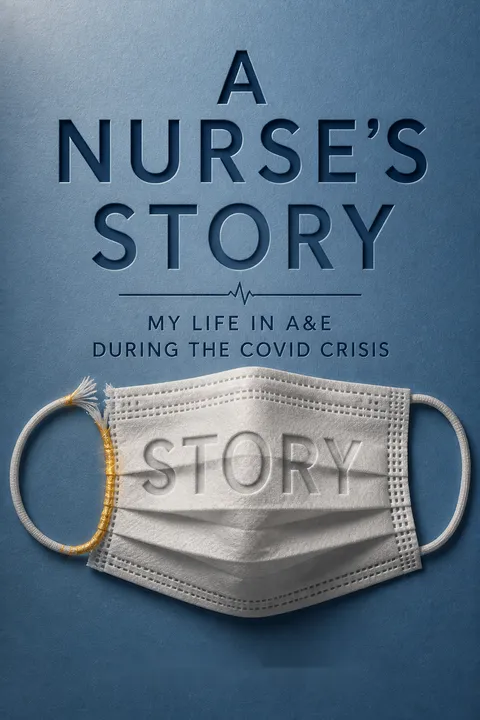
A Nurse's Story provides an eye-opening look into the experiences of frontline healthcare workers during the COVID-19 pandemic. Readers praised the book for its insightful, emotional, and sometimes humorous portrayal of life in an A&E department. Many found it enlightening and appreciated the author's honesty in depicting the challenges faced by NHS staff. While some criticized the writing style or structure, most reviewers felt the book offered valuable perspective on the pandemic's impact on healthcare workers and the importance of following safety guidelines.
People Also Read
Glossary
advanced clinical practitioner (ACP)
Advanced non-doctor clinicianA clinician who may come from nursing, physiotherapy, pharmacy, paramedicine, or another health profession and take on advanced assessment and treatment responsibilities. Curtis's role includes seeing patients, making diagnoses, and prescribing. ACPs can work at a level comparable to some doctors, but they have not completed medical school and the role is relatively new and not widely understood.
personal protective equipment (PPE)
Infection-protective clothing and gearEquipment worn by healthcare staff to reduce exposure to infection. In Curtis's Covid unit, it included items such as gloves, an apron, a respirator mask, and eye protection. Staff had to put it on and remove it in a careful sequence to avoid contamination. It offered protection but also caused heat, discomfort, difficulty speaking, and barriers to showing facial expression.
Do Not Attempt Resuscitation (DNAR)
Decision not to perform CPRA clinical decision recorded for a patient who is unlikely to benefit from cardiopulmonary resuscitation if their heart or breathing stops. A DNAR applies to resuscitation, not to all treatment. Patients may still receive appropriate care such as medication, oxygen, or hospital admission. The book emphasizes the need to explain this distinction clearly to patients and families.
hot and cold areas
Separate suspected-infection care zonesThe emergency department divided its space into hot areas for patients suspected of having Covid-19 and cold areas for other patients. The separation aimed to limit infection spreading between patients and staff. Because symptoms could be ambiguous and testing was limited, deciding where someone belonged was difficult: placing a patient in the wrong area could expose them or others to risk.
clinical frailty score
Scale of functional dependenceA scale used in the book to describe the degree of frailty and independence of patients over sixty-five, from one, meaning fully independent, to nine, meaning highly dependent and expected to be nearing the end of life. Curtis describes the score as one consideration in treatment planning, including discussions about resuscitation, rather than a substitute for individual clinical judgment or patient preferences.
Download PDF
Download EPUB
.epub digital book format is ideal for reading ebooks on phones, tablets, and e-readers.








