

Plot Summary
Prologue
At Hetta and Wyn’s wedding, Marius Valstar and Rakken Tempestren finally give in to months of mutual attraction. Marius asks Rakken to come to his room, but Rakken abruptly withdraws, dismisses their encounter as enough, and leaves him alone with the shock of being rejected after he had dared to want more.
The opening establishes the romance’s central imbalance before the main story begins: Marius risks vulnerability by naming what he wants, while Rakken protects himself by ending the moment first. Marius interprets the rejection through older wounds, especially his fear that affection makes him easy to use. Rakken’s retreat is not explained yet, so the scene functions as an unresolved injury rather than a simple romantic obstacle. Its emotional force comes from the abrupt reversal: a moment of mutual desire becomes evidence, in Marius’s mind, that wanting someone is dangerous.
A Prince Through the Wall
Three months after the wedding rejection, Marius’s cousin Caro persuades him to leave his greenhouse and attend a crowded gathering. He is lonely, wary of being read as a closeted academic, and increasingly unable to keep other people’s thoughts out of his own head.
A fellow student, Thomas Bakir, shows interest in him, but Marius’s telepathy swells until the crowd becomes unbearable. He escapes to his college room, where his mind finally quiets. Then a portal opens, and Rakken stumbles through naked, bloodied, and visibly disoriented. Marius’s resentment at being abandoned is immediately complicated by the sight of Rakken hurt and needing help.
Marius’s social retreat is not simply shyness. His telepathy makes ordinary company feel like a loss of bodily privacy, while his history with John and Rakken has taught him to distrust desire. The gathering briefly offers the possibility of connection through Bakir, but Marius cannot distinguish attraction from danger or his own thoughts from others’. Rakken’s arrival disrupts that pattern by making Marius act before he can retreat into analysis: he helps an injured person despite anger and attraction. The portal turns private avoidance into an unavoidable encounter, forcing the emotional plot and the murder plot into the same room.
Blood in the Greenhouse
Rakken cannot explain his injuries, but he senses dark fae magic near the university gardens and heads there with Marius. In Marius’s greenhouse they find botanist Martin Vane dead among broken pots and bloodied plants. A dryad-made blade lies nearby, while empty crates and traces of fae magic suggest Vane had been trading in unusual specimens.
Marius touches Vane’s body and nearly collapses; Rakken steadies him and cleans the blood from his hands. Professor Greenbriars’s daughter, Jenny, arrives and confirms the death to the authorities. Rakken stays behind to investigate the magical traces, while Marius accompanies Jenny to summon the police, beginning a reluctant partnership between human procedure and fae expertise.
The greenhouse is Marius’s refuge and workplace, so the murder violates more than a crime scene: it contaminates the place where he has tried to make uncertainty manageable through observation. His instinct to notice the damaged plants even while confronting Vane’s body reveals how scientific attention can become both shelter and avoidance. Rakken’s practical tenderness, cleaning Marius’s hands without demanding emotional disclosure, contrasts with his usual secrecy. Yet the crime immediately raises political stakes: a human has died amid fae trade, and a fae prince is present. The investigation must therefore negotiate not only evidence, but competing systems of authority.
The Missing Lowfae
The police question Marius through the next morning, and his exhausted telepathy turns their suspicions into a second assault. Rakken uses his influence to get Marius out and accompanies him back to the gardens. There, they offer the dead lowfae they found in Vane’s pocket to its kin.
A hedgehog-like fae explains that Vane had been trapping small fae for weeks and that another mortal left the gardens after a burst of dark magic. In Vane’s locked office, Marius picks the door and Rakken finds a concealed threat of blackmail. Jenny then admits she was involved with Vane and says he kept a flat in Meridon, giving them a new place to search.
The dead lowfae changes the moral scale of the case. Vane is no longer only a promising botanist killed in a mysterious exchange; he may also have treated sentient beings as research materials. Marius’s work on anti-glamour plants now sits uncomfortably beside the device used to capture them, forcing him to examine how knowledge can be repurposed without the maker’s intent. The investigation also exposes how private shame shapes evidence: Jenny hides her relationship, while Marius recognizes his own reflex to justify his presence. Each character is negotiating what may safely be known, and by whom.
A Flat Full of Cages
Rakken tracks Vane’s belongings to a Meridon flat, where Marius and Rakken discover shelves of imprisoned lowfae, some dead and some still alive. Marius recognizes a glamour-detecting device built on principles like his own experiments. Before they can take the captives to safety, Bakir arrives, intending to free them.
Under Rakken’s compulsion, Bakir explains that Vane hired him to research fairy plants and traded with an unnamed fae supplier. Vane grew requested plants, then received new specimens, but had begun trapping lowfae to test them and possibly sell them. Bakir says the exchange that night went wrong, though he does not know who killed Vane. Rakken frees the captives and takes them toward a Gate to Faerie.
The discovery sharpens the difference between curiosity and responsibility. Vane’s research crosses into captivity because he treats the unknown as an object to possess, while Marius’s scientific ambition is forced to confront the possible consequences of his own tools and disclosures. Bakir is neither innocent nor the murderer: he accepted paid work and initially overlooked the captives’ personhood, then changed course when he recognized their capacity to suffer and communicate. Rakken’s coercive questioning secures information but also makes his power ethically visible. The rescued lowfae are not evidence alone; their safety becomes a duty that the investigators must honor.
A Home Between Worlds
Rakken leaves to brief his twin, Queen Catsmere, while Marius returns to Stariel with the rescued helichaun, Thistlefel, wrapped in his scarf. His sister Hetta and her husband Wyn hear the case, and Wyn warns him that his telepathy is worsening. Marius also tells Caro the truth about his mind-reading, and she admits she had invited him to the unconventional gathering partly because she hoped he might meet someone.
When Rakken returns, he cannot identify the stolen plants but explains that the Goblin Market may offer a lead at the next full moon. Marius’s family offers affection and help, yet he still feels divided between Stariel, where he grew up, and Knoxbridge, where he is trying to build a life.
This interval makes belonging a practical question rather than a sentimental one. Marius can cross the Gate to Stariel, but the family home no longer feels fully his; at university, meanwhile, he is isolated by age, reputation, and an ability he cannot control. Telling Caro about telepathy is a small but consequential act of consent: he gives someone he trusts the choice to know what may happen in her presence. Thistlefel’s attachment introduces a different model of kinship, one formed through rescue rather than inheritance. The case keeps Marius moving between realms while he struggles to decide where he can act without being treated as a problem.
Emyranthus Breaks In
Back in Knoxbridge, Marius is working in his room when Emyranthus Gracehame, a stormdancer fae and Rakken’s former lover, attacks him with a knife. Her fury is aimed at Rakken, but Marius becomes the target of her insult and revenge. Under the pain, his telepathy lashes out and throws her through the window before Rakken arrives to drive her away.
Marius collapses from the wound and the magical exertion. Rakken carries him to ThousandSpire, where Queen Catsmere challenges Marius’s usefulness and intentions, then permits Rakken to protect him. Since Emyranthus remains at large and Marius is now a political liability as well as a possible target, Rakken agrees to serve as his bodyguard.
Emyranthus’s attack makes Marius’s hidden power materially consequential: his telepathy can repel an assailant, but it does so without his conscious direction and leaves him injured and unconscious. The event also exposes the cost of Rakken’s relational habits. He treats casual intimacy as harmless until a former partner’s unresolved feelings become violence directed at someone he values. Catsmere’s blunt assessment of Marius echoes his private self-doubt, but it also provokes him to name forms of competence that do not resemble combat or court politics. Protection begins as an obligation, yet it places the two men in sustained proximity.
Water Lilies at Dusk
After Marius recovers, Rakken takes him through Aerest, the towering city of ThousandSpire, and introduces him to its public life. At a market beside a pond, the two watch magical water lilies open at sunset. Rakken openly tries to seduce Marius, and Marius, despite his mistrust, accepts the kiss.
Back in Rakken’s library, desire becomes sex, and the ease of their physical intimacy unsettles Marius more than their arguments ever did. Rakken’s proposal remains deliberately casual, while Marius worries that his attachment will repeat the heartbreak he suffered with John Tidwell.
During a later attempt to use compulsion to help Marius control his telepathy, Rakken becomes visibly afraid of influencing him, revealing a care that does not fit his careless persona.
The romance advances through a collision between Marius’s need for boundaries and Rakken’s habit of defining intimacy before it can define him. Marius agrees to physical pleasure because it appears safer than hope, while Rakken’s insistence on consent during their magic practice shows that his ethical limits are more developed than Marius assumes. Their telepathic entanglement makes desire unusually difficult to keep private: each can become involuntarily present in the other’s mind. The water lilies offer a deliberate contrast to Marius’s scientific attention, but he responds to them through observation as well as wonder. He is not asked to abandon his intellect to feel; he is invited to let feeling coexist with it.
A Feather and a Bargain
At a Meridon palace function, Rakken draws information from Vane’s former fiancée, Miss Claridge, whose thoughts reveal that she sent the threatening note found in Vane’s office. She was angry about Vane’s affair with Jenny, not responsible for his murder. Marius resents Rakken’s calculated flirtation and admits he will not share him while their arrangement continues.
Rakken agrees that neither will take other lovers. Before the Goblin Market opens, Rakken fastens one of his feathers into Marius’s hair as a protection token and warns him not to bargain. He explains that the Market operates by strict posted rules, but not every danger there is covered by them. Marius goes with him because the supplier of Vane’s plants may be there.
The exclusivity agreement is a turning point because Marius states a limit without translating it into an apology. His request does not demand a promise of love; it defines what he needs to continue participating. Rakken accepts the same condition for himself, making the arrangement more reciprocal even if neither names its emotional implications. The feather is both magical safeguard and visible sign of attachment, a token that can protect Marius only while it remains with him. Miss Claridge’s revelation also demonstrates the danger of using telepathy as an investigative shortcut. Marius is learning that accuracy does not automatically make intrusion ethically neutral.
The Auction Block
The Goblin Market overwhelms Marius with its crowds and strange wares. A midnight dance separates him from Rakken, and the protection feather disappears from his hair. The stallholder who sold Marius a tiny clockwork dragon drugs him and delivers him to a hidden auction, where a collar silences him and iron shackles pin him inside a magical circle.
The auctioneer offers him as a rare human telepath. When Rakken finds him, the market refuses to release Marius without a valid bargain. Rakken offers his own service under a binding set of conditions, but Marius breaks the crowd’s spell by projecting his fear and anger through Rakken’s compulsion. The force ejects both men from the Market before the auctioneer can accept Rakken’s price.
Marius’s abduction converts the romance’s abstract questions of power into a literal market transaction. His body, mind, and magical capacity become saleable, and the Market’s legalistic distinction between lost protection and theft offers no meaningful safety. Rakken’s willingness to bargain himself away shows that duty and attachment have already become entangled, even if he resists naming that entanglement. Marius is not merely rescued by Rakken’s power: he uses his own involuntary ability as an instrument, turning a mechanism designed to compel him into the means of escape. His agency remains imperfect, but it is no longer only defensive or accidental.
Another Body in Glass
After escaping the Market, Marius and Rakken return through Stariel and rest together before heading back to Knoxbridge. Hetta then tells them another botanist has been murdered in a university greenhouse. The victim is Peter Kendrick, a colleague Marius had planned to help. The scene resembles Vane’s: blood, broken plants, a blow to the head, and later stab wounds, while Rakken detects the same strange fae signature.
Marius discovers that some of the missing fae plants have been hidden in the greenhouse. Professor Greenbriars, Peter’s supervisor and Vane’s rival, appears shaken, but his connection to both dead botanists makes the case more tangled. The repeated murder destroys the idea that Vane’s death was an isolated dispute.
Peter’s death gives the investigation a pattern, but not yet an explanation. The repeated method could indicate a deliberate staging, a ritual, or a supernatural process repeating itself; the evidence refuses to settle into one category. Marius’s grief is sharpened by the ordinary appointment he was supposed to keep with Peter, making the crime feel like a rupture in daily academic life rather than a distant political incident. The presence of the plants redirects suspicion toward anyone who could access or recognize them. Greenbriars’s grief appears sincere, yet professional rivalry and family secrecy make sincerity insufficient proof. The story insists that emotional plausibility must still be tested against material evidence.
Jenny Keeps the Plants
Marius and Rakken return to the university’s potting shed, where Jenny helps identify the surviving plants. Marius realizes she took Vane’s specimens from the first crime scene and concealed them in the larger greenhouse after his death. Jenny explains that she hoped to protect the research from the police and the department, which she expected to suppress it.
She insists she did not kill Vane, and Marius believes her after hearing what she knew and did not know about his experiments. Their shared experience of being treated as secondary to more powerful people softens their earlier suspicion of each other. A telegram from Hetta then names Ithras Stoneholm, a greater dryad who used Stariel’s Gate, giving Rakken a lead on Vane’s supplier.
Jenny’s decision to take the plants is both an act of grief and an attempt to preserve work she believes the institution will erase. Her choice is ethically compromised because it interferes with evidence, yet it arises from a rational distrust of the department’s priorities. Marius recognizes that she was not merely Vane’s lover but an unpaid collaborator denied access to the most consequential parts of his research. Their mutual apologies do not erase what was said between them; they establish a way to work together without pretending either was blameless. The Stoneholm lead also shifts the investigation from campus politics toward Faerie, where Marius’s botanical knowledge will matter beside Rakken’s magic.
The Dryad’s Nursery
Marius and Rakken find Stoneholm in an isolated Faerie nursery growing controlled plants, including bloodlock. Under Rakken’s compulsion, the dryad admits trading specimens with Vane and using him to cultivate plants, but denies killing him. Stoneholm says the dryad blade left in the greenhouse was meant to frighten Vane, not kill him.
Before they can learn more, Emyranthus attacks from concealment. She fights Rakken while Stoneholm escapes, then injects Rakken with bloodlock, a drug that makes greater fae unusually compliant and unable to lie. Marius’s telepathic projection disrupts her command long enough for him to lead Rakken through a portal and across Stariel’s boundary, where Emyranthus cannot follow.
This confrontation separates two forms of wrongdoing that the investigation had begun to conflate. Stoneholm is a black-market trader who threatened Vane, but threat and murder are not interchangeable; the dryad’s admission narrows rather than solves the case. Emyranthus’s attack exposes the danger of bloodlock as a form of coerced access, stripping Rakken of his usual defenses and making his truthfulness exploitable. Marius responds not with greater physical force but by recognizing the moment when Rakken’s behavior has been altered and using telepathy to break the command. His protective role now reverses the earlier pattern: he is no longer simply the person Rakken carries to safety.
Orenn’s Unfinished Shadow
Before the final investigation, Marius asks Rakken why he killed Prince Orenn of DuskRose. Rakken explains that Orenn once overpowered him through compulsion and subjected him to a humiliating encounter, then released him as a calculated insult. Years later, Rakken and Catsmere assassinated Orenn; Rakken admits ambition and revenge both shaped the decision, and that the killing helped reignite war.
Marius does not excuse the murder, but he understands the history Rakken has concealed. He comforts Rakken rather than withdrawing from him. Meanwhile, the investigators gather evidence: the killings occurred at full moon, the murders share a staged pattern, and one specimen on Stoneholm’s manifest, myrtleaf, remains unaccounted for.
Rakken’s disclosure complicates the distinction between victimhood and culpability without dissolving either. He was once coerced, and that experience helps explain his vigilance around consent, but it does not make his later assassination morally simple. By giving Marius both the injury and the ambition behind the killing, Rakken risks being known in a way his cultivated menace usually prevents. Marius’s response is neither absolution nor rejection. He can hold the fact of harm alongside affection, which marks a change from his earlier belief that love requires idealization. The missing myrtleaf brings that intimate revelation back into the case: the investigation also requires them to examine what plants can retain and enact.
The Missing Myrtleaf
At a case conference in ThousandSpire, Marius and Rakken review the evidence with Catsmere, Irokoi, Caro, and Jenny. The manifest accounts for nearly every plant, but myrtleaf is missing. Marius suspects it changes form under full moon and may have absorbed the circumstances surrounding Vane’s death.
The group reasons that both murders happened at the same lunar phase, and the repeated injuries may be part of a supernatural cycle rather than a human killer’s deliberate method. Marius moves the recovered plants into his greenhouse and volunteers to act as bait on the next full moon. Jenny secretly comes to the garden with an old pistol. Professor Greenbriars arrives searching for her and reveals knowledge that he should not possess.
The conference turns scattered facts into a testable hypothesis, with Marius’s botanical method complementing Rakken’s magical senses. The missing specimen is significant not because the characters know its power, but because its absence has resisted every ordinary explanation. Marius volunteering as bait shows a shift from anxious self-effacement toward chosen risk, though he does not mistake courage for invulnerability. Jenny’s refusal to remain outside the investigation parallels her earlier refusal to let the department define the value of her work. Greenbriars’s arrival brings the private family conflict into the open, where the next revelation will be made by evidence rather than by anyone’s reputation.
The Plant Remembers Blood
As Greenbriars argues that a dryad must have killed Vane, Marius notices that the professor knows details he should not know. The greenhouse erupts as the missing myrtleaf transforms into a vast tangle of violent vines, carrying crude faces that mimic Greenbriars and Vane. It replays their earlier confrontation: Greenbriars discovered Vane with Stoneholm, Vane mocked him, and Greenbriars struck him with a rake.
Vane died from the blow; Greenbriars then stabbed the body with Stoneholm’s blade to frame the dryad. At the next full moon, bloodied myrtleaf repeated the violence against Peter and now targets Marius, whose appearance resembles Vane’s. Rakken’s compulsion finally stills the creature, but an iron railing pierces his chest.
The myrtleaf functions as an involuntary witness: it preserves violence without understanding guilt, motive, or the difference between repetition and justice. Its imitation reveals Greenbriars’s crime, but it also shows how a natural specimen can be transformed by human actions into something monstrous. Greenbriars’s decision to frame Stoneholm grew from panic and self-preservation, while his professional ideals had already made him vulnerable to resentment toward Vane. The plant’s attack on Marius demonstrates the danger of treating resemblance as identity. Rakken’s victory depends on Marius transmitting the plant’s alien mind to him, making their distinct abilities necessary to one another at the moment when the cost becomes bodily.
A Call Across Stariel
Marius finds Rakken unconscious with the iron railing through his chest. He and Jenny pull the iron free, but the wound is severe and Rakken’s breathing is uncertain. Refusing to accept that ordinary help will arrive in time, Marius reaches through his telepathy and land-sense toward Stariel, calling for Wyn. A portal opens, and Wyn carries Rakken to ThousandSpire for treatment.
Marius brings the dormant myrtleaf back to Stariel and tells Hetta that Greenbriars killed Vane; she comforts him while he waits for news. Wyn eventually returns with word that Rakken is alive and recovering. The answer releases the fear Marius had been holding since the greenhouse attack, and he breaks down in relief.
Marius’s most powerful act is not a controlled spell but a desperate connection assembled from the abilities he has spent the novel fearing. Telepathy, land-sense, and emotional urgency converge in a call that reaches beyond ordinary distance. The moment does not magically cure his difficulty with control; it shows that his power can be relational rather than merely invasive. He asks for help instead of trying to manage the crisis alone, and Wyn answers. The scene also places the romance inside a family network: Marius’s fear is witnessed by Hetta, while Rakken’s survival depends on the cooperation of people who care about both men.
A Love Without Evasion
Three days later, Rakken wakes in ThousandSpire and learns that Greenbriars confessed to killing Vane; the myrtleaf had repeated the confrontation that ended in the fatal blow and the attempt to frame Stoneholm. Rakken recovers under a healer’s restrictions while Marius keeps watch beside him.
Weeks later, at Malvern Place, Rakken proposes making the neglected townhouse a permanent base in the Mortal Realm, where he can serve as an ambassador and Marius can pursue research with better access to fae plants.
Marius finally tells Rakken he loves him, not because he has mistaken him for an ideal but because he knows his difficult, guarded character. Rakken answers that he will not leave. They choose a relationship beyond the casual terms that once kept them safe.
The ending resolves the opening injury by reversing its governing action. At the wedding, Marius asked for more and Rakken retreated; here, Marius names love after taking time to understand what he feels, and Rakken stays present to receive it. Their commitment does not erase Rakken’s past or Marius’s fear of heartbreak. Instead, they make those histories discussable without letting them dictate the outcome. The proposed house and research base give the romance a material form: shared work, political responsibility, and a place to return to. Love becomes less an escape from uncertainty than a decision to build within it.
Analysis
The novel’s central tension is not simply whether Marius can trust Rakken, but whether trust can exist without surrendering judgment. Marius’s earlier relationship with John taught him to treat desire as a solvent that dissolves self-respect. Rakken appears to confirm that lesson: he is sexually confident, strategically secretive, and capable of lethal violence. Yet the evidence of his character accumulates through choices rather than reassurances. He protects lowfae from captivity, worries about coercing Marius during magical training, and risks his own freedom when the Market refuses to release Marius. Marius’s eventual commitment therefore does not depend on imagining Rakken as harmless. It depends on learning to distinguish danger from betrayal and desire from manipulation.
The murder plot gives this emotional development a material structure. Plants carry meanings across the boundary between Faerie and the Mortal Realm, but the story resists treating nature as automatically benevolent. Vane’s specimens become instruments of exploitation; myrtleaf becomes a violent witness after Greenbriars’s act of panic and concealment. The plant’s transformation links ecology to ethics: organisms respond to environments, but human intent helps shape what those environments become. Marius’s botanical attention is not decorative expertise. It is the method that lets the characters understand a supernatural crime without reducing it to magic alone.
The book also treats privacy as a political and interpersonal right. Marius’s telepathy offers access to information, but every useful discovery carries the danger of violating another person’s mind. Rakken’s compulsion creates a parallel problem at greater scale, while the Goblin Market turns bodies and abilities into commodities. Against these systems, the story repeatedly asks who gets to decide what is owed, what may be taken, and what counts as consent. Marius grows not by mastering every power, but by accepting help, setting limits, and acting despite uncertainty. The ending joins romance to practical responsibility: a shared home, cross-realm diplomacy, and research into the living consequences of contact between worlds.
Review Summary
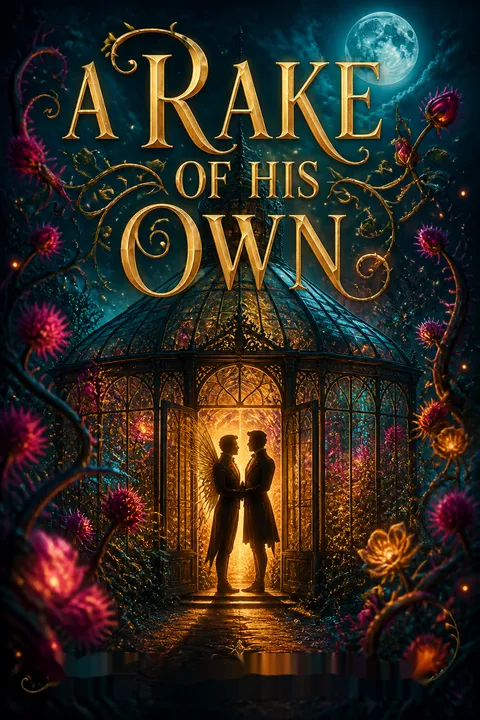
A Rake of His Own is a highly praised addition to the Stariel series, focusing on Marius and Rakken's romance. Readers love the witty banter, steamy scenes, and intriguing murder mystery. The book is praised for its world-building, character development, and balance between romance and plot. While some found minor issues with pacing or character consistency, most reviewers were thoroughly entertained. Many recommend reading the previous books for context, though it can work as a standalone. The audiobook narration by Nicholas Boulton is also highly commended.
People Also Read

Characters
Marius Valstar
The telepathic botanistMarius is a returning university student and botanist whose careful attention to plants is matched by a habit of scrutinizing his own motives. An attack has awakened telepathy he cannot reliably control, making crowds and intimacy equally exhausting. He carries the effects of a controlling father, an ended relationship with John, and the feeling that he has missed the proper time to build a career. His intelligence is practical and observational rather than socially forceful; he notices growth patterns, inconsistencies, and the details other people overlook. Marius longs for closeness but fears that wanting someone will make him surrender his judgment. His challenge is to treat vulnerability as a choice he can make, not proof that he is foolish or weak.
Rakken Tempestren
The guarded fae princeRakken is a stormdancer prince of ThousandSpire, a skilled sorcerer and diplomat who uses confidence, charm, and calculated menace to control how others see him. He is quick to notice leverage and slow to explain his own motives, especially when personal feeling threatens to make him dependent. His loyalty to his twin Catsmere is central to his identity, and his complicated position in court has taught him to treat vulnerability as a risk. Rakken’s sensual confidence masks a more exacting conscience: he recognizes the danger of coercion and takes promises seriously, even when he resists emotional accountability. Marius unsettles him because Marius sees past performance and asks for an honest relation between desire, responsibility, and care.
Catsmere Tempestren
The warrior queenCatsmere is Rakken’s twin and the recently elevated queen of ThousandSpire. A disciplined warrior, she meets political uncertainty with directness and expects others to state what they can contribute. Her bond with Rakken is intimate but not uncomplicated; she understands the risks of his choices and will challenge him when loyalty threatens judgment. Catsmere’s authority is both personal and institutional, so even private decisions can carry consequences for her court.
Hallowyn Tempestren
The diplomatic brotherKnown as Wyn to Marius, Hallowyn is Rakken’s younger brother and Hetta’s husband. He bridges fae and human life after years spent in the Mortal Realm, where he learned to read people and institutions from both sides. His instinct is to protect his family, but he also understands that protection can become another person’s confinement. As ambassador, he must turn personal ties into workable political agreements.
Hetta Valstar
Marius’s ruling sisterHetta is Marius’s younger sister, the ruler of Stariel, and Wyn’s wife. Practical, perceptive, and independent, she has experience making choices that defy her family’s expectations. She cares deeply for Marius but knows that concern can become overprotection, so their conversations often balance affection with argument. Her role as landholder gives her a distinctive relationship to the estate and to the fae who use its Gate.
Thistlefel
The stubborn lowfae companionThistlefel is a helichaun, a lowfae with a long body, an expressive ruff, and a talent for appearing when she chooses. Wary of humans after captivity, she attaches herself to Marius on her own terms and expects him to respect her independence. Her growing size and unusual loyalty make her a living reminder that contact between realms can change both sides.
Jenny Greenbriars
The overlooked researcherJenny is a botanist and the daughter of Marius’s supervisor. She has scientific skill and ambitions of her own, though her father’s expectations and the department’s hierarchy restrict her opportunities. Her relationship with Vane gives her a private life she cannot openly acknowledge, and her grief is complicated by the knowledge that he did not trust her with everything. Jenny’s insistence on being treated as a researcher rather than a dependent makes her an uneasy but valuable partner in the investigation.
Professor Greenbriars
The old-guard botanistProfessor Greenbriars is Marius’s supervisor and Jenny’s father, a respected botanist who prizes careful, conventional research. He supports Marius’s return to university but also wants him to follow a safe academic path. His loyalty to the department and concern for his daughter shape the way he responds to changing scientific and social conditions.
Martin Vane
The ambitious botanistVane is a young, energetic botanist whose research attracts public attention and potential funding. He is confident in academic competition and interested in new sources of specimens. His work brings him into contact with people beyond the university’s usual research structures, unsettling colleagues who prefer established methods.
Thomas Bakir
The folklorist inquirerBakir is a literature post-graduate studying folklore and an acquaintance of Marius’s at Knoxbridge. A scholarship student with limited money and connections, he takes paid research work when it appears. He is curious and personable, but his willingness to accept a commission before examining its ethics leaves him vulnerable to other people’s agendas.
Emyranthus Gracehame
The dangerous former loverEmyranthus is a stormdancer sorceress and a former lover of Rakken. She is powerful, proud, and accustomed to treating conflict as a contest of will. Her refusal to show hurt directly can make her seem invulnerable, but she is deeply responsive to perceived insult and rejection.
Irokoi
The fractured seerIrokoi is the eldest Tempestren sibling, known for an unpredictable manner and glimpses of possible futures. His perceptions make him unusually alert to uncertain outcomes, though he cannot always turn them into actionable warnings. He is curious, affectionate in his own eccentric fashion, and more perceptive than his playful presentation suggests.
Caroline Valstar
Marius’s candid cousinCaro is Marius’s cousin and a reliable friend who notices when he has withdrawn from the world. She encourages him to socialize, worries about his health, and is willing to revise her understanding when he tells her about his telepathy. Her care is warm but not smothering; she makes room for awkward truths without demanding that Marius become easy to understand.
Ithras Stoneholm
The independent dryad traderStoneholm is a greater dryad who belongs to no fae court. They cultivate unusual plants and conduct exchanges beyond the formal channels being negotiated between Faerie and the Mortal Realm. Their independence gives them freedom from court obligations, but also leaves them outside the protections and accountability that court membership can provide.
John Tidwell
Marius’s former loverJohn is Marius’s former lover from his earlier years at university. His charm and Marius’s loneliness made the relationship powerful for Marius, while its painful end left Marius wary of mistaking attention for care.
Miss Claridge
Vane’s society fiancéeMiss Claridge is Vane’s wealthy fiancée and the daughter of a diplomat. She moves through elite social circles with a practiced sense of what public appearances require, while her private feelings about Vane are more complicated than outsiders assume.
Peter Kendrick
The promising post-graduatePeter is a young botanist in Greenbriars’s department, working on plant trials and building a reputation as a promising researcher. Marius expects to help him with his specialist plants, a small appointment that becomes emotionally important to the investigation.
Laurel Valstar
The youngest Valstar siblingLaurel is Marius’s youngest sister, an affectionate and excitable child who greets him with immediate enthusiasm. Her openness toward Thistlefel reflects the family’s everyday capacity to make room for unexpected guests.
Alexandra Valstar
The young fae observerAlexandra is Marius’s teenage sister, gifted with the Sight and interested in sketching the wyldfae around Stariel. She approaches unfamiliar beings with curiosity, while still understanding that their consent and comfort matter.
Jack
Marius’s grounded cousinJack is Marius’s cousin and a practical presence in the Valstar household. His dry humor and familiarity with estate life give Marius a comfortable point of contact when the family gathers.
Lady Phoebe
Marius’s steady stepmotherPhoebe married Marius’s father when Marius was a child and became a source of support during his difficult adolescence. She is attentive to the family and offers care without insisting that it erase old hurts.
Miss Dauntry
The human magic consultantDauntry is an illusionist brought in by the police when fae magic complicates the murder inquiry. Curious and professionally resourceful, she recognizes how poorly prepared human authorities are for supernatural evidence.
Plot Devices
Marius’s telepathy
Mind-reading under pressureMarius’s telepathy begins after a fae attack and lets him catch surface thoughts, emotions, and sometimes memories. It has no dependable off switch, so crowds, distress, and magic can overwhelm him. The ability first feels like an invasion of other people’s privacy and a threat to his own stability. During the investigation, it reveals information from witnesses and helps him sense the myrtleaf’s violent mind. When Marius learns to project as well as receive, telepathy becomes a means of action: he can disrupt Emyranthus’s control, help Rakken reach the plant’s mind, and summon Wyn across a great distance. The power develops through risk, but not into effortless mastery.
Fae debts and compulsion
Power with social consequencesFae magic is bound to conventions of obligation, promises, and hierarchy. Rakken often frames assistance as a debt to be repaid, while Marius insists that ordinary decency should not create ownership. Compulsion can make its target obey against their will, whereas glamour changes perception; Rakken’s allure can also influence a room without direct commands. These distinctions drive conflicts over consent, evidence, and political authority. Marius’s natural resistance to compulsion gives him a rare defense, but attempts to trigger his telepathy through Rakken’s magic can cause psychic backlash. The device therefore makes intimacy and investigation inseparable questions of power.
The myrtleaf wyrbark
A plant that repeats violenceMyrtleaf appears to be an unremarkable Faerie plant until mortal blood, violent intent, and the full moon transform it into a creature that reenacts the scene connected to its change. Greenbriars’s killing of Vane stains the plant with a memory it cannot interpret. At the following full moon, it attacks Peter, then later targets Marius because both resemble Vane. Its crude imitations preserve the words and actions of the original confrontation, exposing Greenbriars’s guilt. Marius’s botanical observations identify the transformation, while his telepathy lets Rakken find a way to compel the plant. The device turns a living specimen into both clue and danger.
Bloodlock
A drug that removes defensesBloodlock is a highly controlled Faerie plant that affects greater fae, especially royal fae. It can act through skin contact and becomes more potent when concentrated. Its effects make the user unusually compliant and unable to lie, stripping away judgment and mental defenses rather than simply producing intoxication. Emyranthus injects Rakken with it during their confrontation with Stoneholm, then uses compulsion to direct him. Marius must protect Rakken without treating the drugged version of him as free to consent. The episode exposes how magical substances can be weapons even when they look like plants, and why Faerie regulates some botanical knowledge so strictly.
Gates and moon paths
Routes between realmsFixed Gates connect known locations and allow people without magic to travel between realms, while portals require magical skill and a suitable resonance. Rakken can also open a temporary moon path through ritual, leading Marius to the Goblin Market at full moon. These routes make the investigation physically possible but never entirely safe: travel can separate allies, expose them to unfamiliar jurisdictions, or leave them without an immediate way back. Stariel’s Gate is especially important because it links the Valstar estate to Faerie and gives Marius a connection through which he can eventually call Wyn for help.
Stariel Series


About the Author
Other books by A.J. Lancaster
Download PDF
Download EPUB
.epub digital book format is ideal for reading ebooks on phones, tablets, and e-readers.








