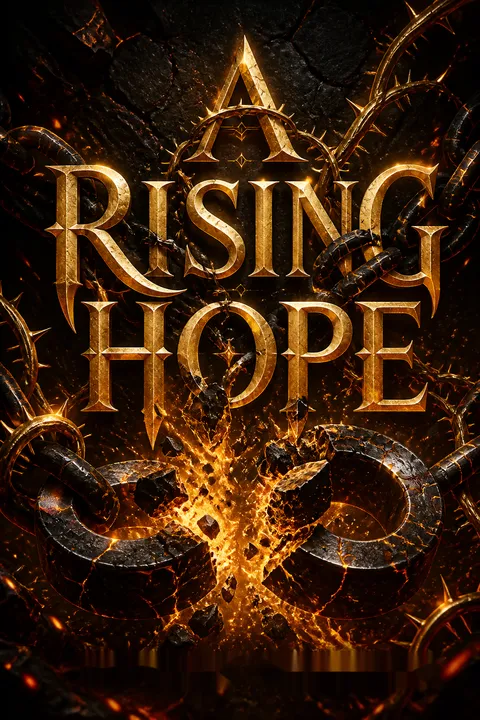


Plot Summary
Seven Days to Surrender
At dawn, Gideon Bellator, rebel general and Finnleah’s husband, finds Insanaria’s victims crucified on black vines outside his army’s manor. The Queen offers him the Destroyer throne if he submits, then uses his split-second glance toward Finnleah’s bedroom to abduct her.
She leaves Gideon with a seven-day deadline and a threat to kill Finnleah if he refuses. Finnleah wakes in the Queen’s island castle wearing Basalt Glass shackles that suppress her magic. Gideon’s fury cannot reach her across the sea, so he turns to an estranged half-brother, Godric, a powerful Healer who may help him find a way in.
Insanaria’s ultimatum targets more than Gideon’s political ambition. She turns the person he loves into evidence that his old belief in sacrifice has changed. His glance toward Finnleah gives the Queen her opening, while her capture makes his private attachment a public vulnerability. The bodies outside the manor show the cost of refusing: people become currency in Insanaria’s rule. Yet the offer of kingship also exposes her misreading of Gideon. She assumes power is the prize he wants, when his defining conflict is whether protecting one beloved person can coexist with saving everyone else.
A Bargain Built on Lies
Insanaria explains that she sees Finnleah as Gideon’s weakness, so Finnleah pretends she wants freedom from their marriage and offers to help remove him. The Queen entertains the proposal, giving Finnleah a chance to study the castle. She discovers that Insanaria keeps Magic Wielders alive as drained bodies suspended on thorns, and recognizes one captive from the Rock Quarries.
Finnleah’s plan to escape depends on breaking her shackles, but she does not know they are magically rigged. When she strikes a window, the shackles shatter and sever both hands, sending Basalt Glass fragments into her bloodstream. Insanaria reveals Finnleah is the Lost Destroyer she has sought, a sacrifice for her bid to become a god.
Finnleah’s performance turns survival into a contest over who can interpret the other first. She lies strategically, but the lies work because they contain genuine anger at being treated as a possession. Her discovery of the suspended victims changes the moral stakes: escape would save her, while action against the Queen might save strangers at enormous risk. The booby-trapped shackles punish not simply disobedience, but the assumption that bodily autonomy can be reclaimed by force alone. Finnleah’s survival instinct and protective impulse pull in opposite directions, and the Queen exploits that division by making her compassion part of the trap.
The Portal's Price
Gideon visits Godric with Finnleah’s blood, preserved from their bonding, and asks him to help open a portal to the Queen’s castle. Their uneasy history becomes personal when Gideon admits that Finnleah is his wife and the person he loves. Godric agrees to protect her if Gideon can get her out.
At the castle, Gideon and Godric arrive as Insanaria’s thorns pierce Gideon and Godric carries Finnleah through the portal. Gideon remains inside the Queen’s domain, allowing his blood magic to seal the castle behind them. Insanaria kills him with a Basalt Glass arrow through the heart, believing the barrier has trapped him with her and left Finnleah beyond her reach.
Gideon’s sacrifice is not a sudden transformation into a selfless hero. It is the culmination of his old military arithmetic, now turned against his own life. He accepts the cost because he believes Finnleah can live if he stays behind. Godric’s promise offers apparent security, but it also makes the plan depend on the judgment of a brother who fears Gideon’s power. The portal gives the rescue its narrow possibility, while the blood barrier makes the choice irreversible. Gideon acts with certainty about what he can give up, but not about what Finnleah will have to endure in return.
The Dead Return
Finnleah drifts in a black afterlife until a Soul Eater returns her soul, saying their bargain has been fulfilled and hinting that gods are made. Godric restores her body, including hands rebuilt from magic, but tells her Gideon cannot return: his blood shields have sealed him inside the castle. Gideon’s farewell letter confirms he expected to die.
Finnleah grieves, then discovers Godric’s research into killing Gideon and realizes he helped make the sacrifice possible for selfish reasons. She burns his home and leaves him alive as the Black Shadows sweep across Esnox. The shadows trap people in their worst nightmares, while Gideon’s death removes the Justice Fire that had kept them in check.
The return from death gives Finnleah a body, but not the security of being alive. She must absorb the consequences of Gideon’s choice through a letter written to spare her, though its instruction to move on only sharpens her sense of abandonment. Her judgment of Godric marks a crucial shift: she no longer accepts another person’s explanation as a substitute for accountability. The spreading Black Shadows externalize a world that has lost its source of balance, but they also mirror Finnleah’s altered inner landscape. She refuses to remain protected at the price of staying ignorant or contained.
Fire Against the Night
Finnleah crosses the protective boundary around Godric’s cottage and finds the Black Shadows unable to seize her mind. At a ruined village, she sees a mother shielding her baby while battling the nightmares, and chooses to act rather than hide. Using Gideon’s flaming swords, Finnleah releases a wave of Justice Fire that destroys the shadows without burning the living or their homes.
Sunlight returns, and the survivors name her Empress and protector. She reaches the rebel camp, where Zora and Orest have endured the darkness and Priya, her former assassin mentor, has returned. Priya reveals that Orest is a Truth Teller, and Finnleah accepts his secret while preparing to confront the Queen.
Finnleah’s first act as a ruler is not a command over an army but a distinction: she burns the force harming people without destroying the people themselves. That precision separates her Justice Fire from simple vengeance, a distinction the novel will test repeatedly. The mother with the baby gives her an image of courage that does not depend on certainty or rescue. Being acclaimed Empress follows the deed, rather than causing it. At the same time, Finnleah’s acceptance of Orest’s secret shows a new form of power: she can protect people by refusing to turn knowledge into a weapon against them.
The Island Under Siege
Finnleah and Priya travel toward Insanaria’s island while Esnox’s scattered armies struggle to survive. At Dragon’s Island, the pair meet a swarm of eyeless, winged creatures attacking a village full of refugees and children. Finnleah tries to draw the creatures away on a dragonfly, but they tear its wing and force the women onto a cliff.
The two fight with blades and fire until Finnleah’s raw power forms a fiery dragon, but the enormous mother creature overwhelms it. Priya then reaches across the swarm with her Truth Telling ability and destroys the creatures’ minds. She collapses from the effort, but Finnleah revives her with sugar, and the islands sound their horns to confirm the people survived.
The rescue makes the difference between Finnleah and Priya concrete. Finnleah’s power is vast and increasingly difficult to contain; Priya’s is precise, invasive, and costly to her own body. Neither can save the island alone. Their old teacher-student bond has become a working alliance in which distrust and affection coexist without being neatly resolved. The damaged dragonfly also removes the fantasy of easy escape: their route forward depends on risking themselves rather than fleeing. Priya’s collapse after saving the villagers exposes the bodily price hidden beneath her flippant manner, while Finnleah’s care for her turns a tactical victory into an act of loyalty.
The Meadow Breaks
While Finnleah and Priya are away, Zora and Orest lead Gideon’s depleted army against hostile Destroyer battalions. A sudden retreat proves to be a trap: the sky fills with the same winged monsters, and the army is torn apart. Lachlan abandons his allies, so Orest kills him and forces his soldiers to return to the fight.
Zora’s father watches from the opposing side and rides away without helping her. As the survivors are nearly overrun, an Elven army arrives, summoned by Finnleah’s message and Tuluma’s necklace, and turns the battle. Zora’s close friend Gia dies protecting her. Grief drives Zora toward the Numb, a state that cuts her off from feeling, and Orest imprisons her when she tries to jump from a roof.
The battle strips leadership of its ceremonial comforts. Zora and Orest can issue orders, but cannot prevent every loss or make their allies honorable. Lachlan’s desertion and Zora’s father’s refusal to help expose two forms of betrayal: self-preservation disguised as strategy, and parental rejection disguised as judgment. The elves’ arrival shows that old hostility can be interrupted by a specific debt and remembered relationship, not merely by political calculation. Gia’s death, however, leaves no strategic solution. Zora’s turn toward the Numb is an attempt to escape unbearable grief, and Orest’s confinement of her is an act of desperate protection that also becomes a violation of her agency.
The Queen's Wound
Finnleah and Priya reach the hidden castle by crossing its sea barrier with their mingled blood and Finnleah’s fire. Insanaria intercepts them, confident that Gideon’s blood lets her siphon his power through the shield. As Finnleah confronts her, the Queen forces her to witness memories of a lonely childhood, a dead newborn daughter named Elpis, and the rejection that followed Insanaria’s pleas for help.
The scenes reveal the grief beneath her ambition, but not an excuse for the people she has killed. Finnleah recognizes that their lives share pain but diverged through the kindness each received. She stabs Insanaria through the heart with Heart Piercer, accepting the danger that the Queen’s uncontrolled magic may be released.
Insanaria’s memories turn the antagonist from an abstraction into a person formed by neglect and bereavement. That revelation risks making suffering seem like a moral alibi, but Finnleah refuses that shortcut. She understands the Queen’s wound without surrendering judgment of her choices. The contrast is not that Finnleah has suffered less, but that other people intervened in her life with care. Mercy therefore becomes relational rather than innate: it depends on acts of attention that can interrupt a cycle of harm. Finnleah’s strike is a decision to stop the Queen, not a denial of her humanity, and the distinction prepares the story’s more demanding form of justice.
Four Mothers' Bargain
After striking Insanaria, Finnleah enters the realm beyond death and offers her own life to mend the broken and restore hope. Lady Death refuses because Finnleah’s soul has already been bargained for. The four High Ladies appear: Diamara, Destroyer Empress; Petra, Seer; Railin, Creator; and Ocsanna, Healer.
They explain that they gave their magic and lives to revive Finnleah as an infant, hoping to create a being capable of restoring balance. Her mother, a guard captain, died giving birth, and Tuluma rescued the newborn and raised her in hiding. The High Ladies bargained their souls to give Finnleah time to choose whether to accept godhood. Finnleah learns that her powers reflect their gifts, including healing people’s wounded spirits.
The revelation reframes Finnleah’s life without reducing it to destiny. She was created through a deliberate sacrifice, yet the High Ladies also recognized the ethical problem of assigning a newborn an eternal role without consent. Their bargain gives her time, making choice part of the gift rather than an afterthought. Tuluma’s care becomes essential to the design: divine magic alone could revive Finnleah, but human attachment gave her a life worth choosing. Her healing ability likewise exceeds technical repair. The novel locates restoration in relationships that make people feel seen, while insisting that even benevolent power must answer to the person whose future it shapes.
Justice With Mercy
Finnleah returns to the border between life and death with a new understanding of her authority. Rather than simply destroy Insanaria’s soul, she sentences the Queen to serve time in a realm of demons for every innocent life she took, while granting her a chance to meet Elpis, the daughter she never knew alive.
Meanwhile, Priya reaches Gideon, who pulls the Basalt Glass from his own chest and escapes the collapsing castle. When Finnleah returns to her body, she and Gideon both fall near death. She channels the released magic into herself, then follows Gideon’s instructions to let some of it go before it destroys her. Finnleah heals his shattered body, while Priya survives the battle against the castle’s monsters.
Finnleah’s sentence refuses two easy endings: vengeance that makes suffering the only answer, and forgiveness that leaves victims’ injuries uncounted. Insanaria receives punishment for her actions and compassion for her own loss. The distinction is difficult because Finnleah must exercise godlike authority without treating herself as beyond error. Gideon’s survival is equally costly. He cannot simply reclaim his former strength; he and Finnleah have to coordinate their choices while magic threatens to consume her. Priya’s part in freeing him makes their alliance indispensable, even as her distrust remains. Justice here is an act of judgment that preserves consequence without making cruelty hereditary.
Dragons Return to War
The winged monsters threaten the scattered rebel armies as the survivors retreat toward Svitar. Orest searches for Zora, while Gideon remains trapped inside the Queen’s castle and Finnleah’s mission keeps her away.
After the Queen’s defeat, Finnleah releases more of her Creator power, which takes the form of two dragons capable of breathing raw fire. She and Gideon return to the campaign on their backs, startling Orest’s soldiers and burning through an enemy force that was moving to finish them.
Finnleah reassures the frightened survivors, while Gideon reveals that he has repeatedly died and returned, a secret he had not understood well enough to promise her. The dragons give the battered rebellion a new weapon and a route toward the final campaign.
The dragons translate divine power into a visible, political fact. Their arrival rescues the army, but it also changes what the people believe Finnleah can be. She must manage not only her magic but the fear and expectations it produces. Gideon’s return complicates the relief: survival is not a simple assurance when he has hidden the uncertainty of his immortality from her. Their reunion therefore begins with a new truth rather than a clean restoration of trust. The army’s response matters too. The soldiers who once followed Gideon now bow to Finnleah, showing that legitimacy has shifted through her actions, even as she remains unsure how to rule.
The Cellar Door Opens
After Gia’s death, Zora withdraws from her remaining comrades and enters the Numb, unable to bear grief or guilt. Orest prevents her from jumping from the roof, then imprisons her in a cellar, hoping confinement and his hostility will give her something to feel. He leaves for the next campaign believing she may hate him enough to return to herself.
Gideon later finds her and listens as she mourns Gia and fears that Orest will never forgive her. He reminds her of their shared childhood and tells her that forgiveness is offered, not earned through self-punishment. Zora accepts his help, leaves the cellar, and faces the surviving Ten. They embrace her, grieve together, and agree to fight again.
Zora’s crisis makes clear that competence does not immunize a person against collapse. She has spent years converting vulnerability into command, but Gia’s death exposes the limits of that strategy. Orest’s decision to imprison her is ethically compromised: he acts from love, yet uses control because he cannot tolerate watching her choose danger. Gideon’s response offers a different model. He does not solve grief or excuse Zora’s actions; he stays with her while she names them. The Ten’s embrace then restores her through community, not authority. Her return begins when others let her belong before she can prove she deserves it.
Love After the Numb
Once Zora returns to command, she and Orest join Gideon and Finnleah in planning the assault on Svitar. Their shared history and attraction become harder to ignore, but Zora fears that her lack of fire makes her unworthy of Orest, a powerful Truth Teller. After the battle and the grief that follows, she admits that she loves him.
Orest answers by staying with her rather than demanding that she become fearless or powerful. Their relationship moves from pursuit and resistance into mutual choice. At the same time, Zora faces her estranged father’s influence over the coming defense of Svitar, while the Ten prepare to risk themselves beside her. The personal alliance gives her a reason to return to the fight beyond duty alone.
Zora’s intimacy with Orest is shaped by a fear that desire will expose her as inadequate. She reads his power as a measure of her own worth, repeating the judgment she learned from her father. Orest’s devotion can reassure her, but it cannot make the choice for her; what changes is her willingness to state what she wants. Their bond becomes most persuasive when it stops functioning as a rescue fantasy and becomes reciprocal commitment. This emotional shift runs alongside military planning, showing that private trust is not an escape from public responsibility. It is one of the relationships that makes continued responsibility bearable.
The Tunnels to Svitar
Svitar’s defenders reject Finnleah’s treaty offer, and Gideon reveals himself to their messengers, killing two after they insult her claim to rule. Rather than launch a costly siege, the allies accept Zora’s plan to use forgotten tunnels beneath the city.
Florian Casteol, a smuggler and Finnleah’s old friend, knows the routes and guides a small group through the cramped passages. The Ten disguise themselves as townspeople, then emerge inside the city while Xentar’s magic spreads artificial darkness through its streets.
Their aim is to draw enemy soldiers away from civilians and prevent the defenders from using their knowledge of the city to overwhelm the smaller rebel force. Gideon’s main army advances along the river, forcing Svitar to divide its attention.
The tunnel plan turns family knowledge and social disguise into military tools. Florian’s usefulness comes from access that raw power cannot provide, while the Ten’s clothing lets trained fighters move through a city that would otherwise identify them as enemies. The plan also reflects Finnleah’s preference for ending the war without burning the population’s homes. Yet the deception is not morally neutral: darkness makes combat harder to distinguish, and Zora knows the city will become dangerous once soldiers appear. The strategy’s promise depends on coordination between people with different forms of expertise, making trust and timing as consequential as magic.
Svitar Falls at Last
At Svitar’s walls, Gideon finds the enemy fleet blocking the Kinderby River and evaporates the water with his flaming swords, exposing a path into the city. Finnleah fights through the castle and frees the imprisoned monsters, then helps Priya destroy them before they can devastate the streets. In the darkness, Zora and the Ten hunt the defenders, and Zora faces her father in an alley.
He refuses to recognize her as his daughter and attacks; she kills him in self-defense, then breaks down over the parent she had hoped would love her. Orest carries her from the fighting. The rebel army takes the city, ending the war, but victory comes with devastation and a long obligation to rebuild.
The fall of Svitar resolves the military conflict through several distinct kinds of agency: Gideon changes the terrain, Finnleah and Priya contain the monsters, and Zora’s unit fights inside the city. The destruction of the river is a triumph of force that also leaves a real cost for repair, preventing victory from appearing effortless. Zora’s confrontation with her father is the emotional counterpoint. Killing him ends the immediate threat, but cannot give her the recognition she wanted from him. Her grief survives the military victory. The ending therefore distinguishes political closure from personal healing: the war can end in a day, while its injuries require ongoing care.
Epilogue
Two years after the war, Finnleah and Gideon return to the scorched land where Tuluma died. The Elf King, Tukum, joins them for an Elvish burial rite, and Finnleah restores the burned ground with flowers. Seven years later, Priya visits Finnleah’s home, where the former assassin finds her friend surrounded by family and a bustling household.
She cannot share that life, but admits she is glad Finnleah has it before leaving to travel with Beatrice. A decade after the war, Frederick De Villiar discovers his daughter Aurelia and Florian together and must accept that the girl he protected has grown into her own desires. The future is no longer free of danger, but the characters now have room to choose what comes next.
The epilogues measure peace through ordinary actions rather than a declaration that every wound has healed. Finnleah’s flowers restore a place of mourning without erasing the burned ground beneath them. Priya’s visit lets affection coexist with distance: she can be glad for Finnleah’s happiness without adopting it as her own. Frederick’s alarm over Aurelia’s intimacy repeats the impulse to protect by controlling, but his wife reminds him that children eventually make lives beyond their parents’ plans. Across the scenes, the old patterns of secrecy, loss, and fear remain recognizable, yet they no longer dictate every choice. Peace means having a future in which people can choose differently.
Analysis
A Rising Hope asks whether justice can interrupt the conversion of pain into power. Insanaria’s history makes the question difficult: she was once a child and a grieving mother whom other people failed, but she later chooses to make countless others pay for that failure. Finnleah recognizes the shared injury without confusing recognition with absolution. Her final judgment pairs punishment with mercy, resisting both the Queen’s demand for vengeance and the easy optimism that suffering automatically produces goodness.
The novel also treats love as a problem of agency. Gideon’s sacrifice is an expression of devotion, but it denies Finnleah the chance to choose the risk with him. His letter leaves her alive and furious, forcing the couple to confront the difference between loving someone and deciding on their behalf. Zora and Orest face a related tension: his protection can become coercion, while her independence can become self-erasure. Their relationships develop not through affection alone, but through whether care can make room for another person’s choices.
Power in the book is never merely a weapon. Finnleah’s godhood begins in sacrifices made without her consent, yet the High Ladies’ bargain gives her time to decide what that inheritance means. Her healing is expressed through attention to people’s inner wounds as well as their bodies. That expanded idea of healing binds private relationships to political leadership: a ruler must restore conditions in which others can live, not simply defeat whoever threatens them.
The ending refuses to equate victory with repair. Svitar falls, the Queen is judged, and the shadows are burned away, but Gia’s death, Zora’s grief, the damaged city, and the broken river remain real. The epilogues therefore matter: flowers grow over a burned place, friends make separate choices, and children begin lives beyond the war. Hope is not proof that harm has vanished. It is the difficult willingness to build a future without repeating the harm that made the conflict possible.
Review Summary
People Also Read






Characters
Finnleah
The reluctant EmpressKnown as the Daughter of the Dead, Finnleah is a survivor shaped by slavery, loss, and the people who chose to help her. Her instincts favor endurance and action, but her compassion repeatedly draws her toward risks that a purely strategic leader might avoid. As Gideon’s wife, she shares a bond that is both intimate and politically consequential. Her growing powers unsettle her because they exceed what she understands, while her distrust of imposed roles makes her wary of authority. Finnleah’s strength lies less in invulnerability than in her capacity to keep choosing connection after betrayal. She is learning that leadership requires not only courage, but judgment about when force should stop.
Gideon Bellator
The rebel generalGideon is the feared Destroyer General, a tactician trained from childhood to treat sacrifice as the price of victory. His public reputation for brutality helps him lead a rebellion, but his private loyalties reveal how much that mask costs him. He loves Finnleah with a devotion that changes his calculations, though he often makes decisions for her instead of trusting her to choose for herself. His connection to Zora is familial and long-standing, while his relationship with Godric carries old resentment and obligation. Gideon’s deepest tension is between control and attachment: he can plan for armies, but cannot make love, survival, or forgiveness obey a strategy.
Zora
The fireless commanderZora commands warriors despite lacking the fire expected of a Destroyer. Her skill, tactical intelligence, and refusal to be underestimated have made her formidable, but her father’s rejection has left her with a persistent fear of being unworthy. She is close to Gideon, who treats her as family, and is drawn to Orest while resisting the vulnerability that relationship demands. Zora often converts pain into discipline, using competence to avoid asking for care. Her courage is genuine, but not effortless; grief can overwhelm the structures she has built around herself. She represents a form of leadership based on craft and loyalty rather than the magic her culture prizes.
Orest
The guarded Truth TellerOrest is Gideon’s strategist and a Truth Teller, able to read and influence minds and emotions. His childhood under a cruel master taught him to conceal vulnerability and pursue perfection, leaving him watchful, controlled, and quick to blame himself for failure. He is intensely loyal to Gideon and deeply attached to Zora, though that attachment can push him toward possessive choices. Orest understands other people’s hidden motives more readily than his own emotional limits. His desire to protect Zora is sincere, but the story asks whether protection without consent can become another form of control. His discipline makes him an effective commander and a difficult man to know.
Insanaria
The ruling Shadow WalkerInsanaria is a Creator Queen who rules through shadows, surveillance, and the extraction of magic from other wielders. She is patient enough to turn information into leverage and theatrical enough to use speeches as instruments of intimidation. Her pursuit of godhood rests on an absolute conviction that power can repair a world she considers irredeemably cruel. She recognizes attachment as vulnerability and deliberately uses Finnleah against Gideon. Beneath her command is a person formed by profound loss, but the Queen’s capacity to understand pain does not prevent her from inflicting it. Her character tests whether explaining the origins of cruelty can ever substitute for answering for its consequences.
Priya
The ruthless assassinPriya is Finnleah’s former mentor, an assassin and Truth Teller who trusts skill more than institutions or promises. Her humor is sharp, her violence efficient, and her independence fiercely guarded. She resists emotional dependence because it threatens the self-sufficiency that has kept her alive. Finnleah remains an exception: their bond survives abandonment, disagreement, and Priya’s discomfort with the rebellion. Priya’s power can overwhelm minds, but using it exacts a physical cost, making her competence far from effortless. She does not become gentle or conventional; instead, her care appears through action, loyalty, and the willingness to risk herself for someone she has chosen.
Godric
Gideon's Healer brotherGodric is Gideon’s older half-brother, a skilled Healer who lives apart from the Destroyer conflict. Years of being hunted have made him suspicious and resentful, especially toward Gideon, whose power unsettles him. He is capable of genuine medical care and of making decisions that protect his own interests, sometimes at another person’s expense. His difficult relationship with Gideon mixes family history, fear, and reluctant cooperation. Godric’s healing skill gives him a practical role in the crisis, but his knowledge does not automatically make him wise about the people he treats.
Xentar
The rebel's wise mentorXentar is Finnleah’s mentor and a Creator whose practical magic and steady counsel support the rebellion. He balances warmth with a blunt awareness of danger, having watched Gideon and Finnleah make costly choices before. Xentar can use vines and other Creator abilities to protect people, but he is not a substitute for their judgment. His guidance often arrives as a hard truth delivered with humor, particularly when Finnleah’s exhaustion threatens her ability to continue. He represents the value of experience offered without demanding obedience.
Gia
Zora's steadfast secondGia serves as Zora’s Second and a trusted member of the Ten. She is practical, warm, and willing to make others laugh when the situation offers little comfort. Her closeness to Zora gives the commander a source of support that is not based on rank or family obligation. Gia’s easy optimism is not naïveté; it is a deliberate way of keeping a unit human under pressure. She helps make the Ten feel like a community rather than a collection of soldiers.
Tuluma
Finnleah's devoted guardianTuluma raises Finnleah and becomes the closest thing she has to a parent. An Elven woman living far from her own people, she carries grief and displacement while choosing to build a life around caring for a child. Her presence gives Finnleah an experience of patient affection that contrasts with the violence and rejection she later faces. Tuluma’s influence is practical as well as emotional: the bond she forms with Finnleah reaches beyond their household and connects to a larger history between Elves and Destroyers.
Viyak
Finnleah's former companionViyak is Finnleah’s former slave mate, a person she once promised to protect. Their bond comes from shared vulnerability and the hard-won trust of people denied freedom. Viyak represents a part of Finnleah’s past that remains emotionally important even as her life and responsibilities change. His presence among the freed refugees gives her a concrete reminder of the people her choices affect beyond the rebellion’s leaders.
Aurelia
The curious young flyerAurelia is a young woman with a gift for flight, observation, and unexpected connections between ideas. Her curiosity often makes her notice patterns others overlook, while her direct manner can unsettle people accustomed to courtly restraint. She grows up amid danger but keeps a lively imagination and a taste for unusual pursuits. Aurelia’s bond with Finnleah is affectionate and trusting, and her relationship with her parents reflects the strain between their instinct to protect her and her need to choose her own life.
Florian Casteol
The charming smugglerFlorian is heir to a powerful family and a smuggler who knows the hidden routes beneath Svitar. His polished charm and theatrical flirtation conceal a practical understanding of risk, family power, and the value of information. He is Finnleah’s friend and remains willing to help her, even when her cause puts him in conflict with his family’s interests. Florian’s social ease gives the rebellion access to spaces its soldiers could never enter unnoticed.
Liriya
The loyal demon-birdLiriya is Finnleah’s unusual bird companion, a sharp-eyed creature capable of carrying messages and appearing when needed. She is more than a pet or transport: her loyalty connects Finnleah to people and places beyond the reach of ordinary communication. Liriya’s presence adds a strange, affectionate counterpoint to the violence around her, and her ability to respond to Finnleah’s signals becomes useful in moments when allies are separated.
Frederick De Villiar
The veteran lordFrederick is a former noble and experienced military leader who helps defend the refugees on Dragon’s Island. He understands the danger of the approaching creatures and rallies ordinary men to buy time for families to reach shelter. His loyalty to his wife and daughter is plain, but so is his ability to act when conventional authority has disappeared. Frederick offers a civilian perspective on what armies are supposed to protect.
Fleur De Villiar
The fearless noblewomanFleur is Frederick’s wife and Aurelia’s mother. She is composed, affectionate, and far less fragile than the expectations attached to her status suggest. When danger reaches her community, she stands beside Frederick rather than treating safety as his responsibility alone. Fleur’s relationship with Aurelia is loving but not possessive; she can recognize her daughter’s independence even when Frederick struggles to do so.
Tukum
The Elven KingTukum is the Elven King and Tuluma’s brother. His people’s long conflict with the Destroyers makes cooperation politically difficult, yet family loyalty and old obligations remain important to him. He speaks and acts with the weight of a ruler but is also a grieving sibling seeking a way to honor Tuluma. His presence suggests that inherited enmity need not be the only bond connecting two peoples.
The Soul Eater
The keeper of a bargainThe Soul Eater is a frightening supernatural being who appears in Finnleah’s altered consciousness. He speaks indirectly, offers unsettling knowledge, and treats bargains as binding obligations. His presence connects mortal danger to the rules governing souls and death. Rather than explaining everything plainly, he leaves Finnleah with clues she must later interpret.
Lady Death
The keeper of soulsLady Death governs the passage of souls and approaches bargains with calm authority. She is not presented as a simple enemy or rescuer; she observes the costs people offer and the promises already made on their behalf. Her attention to time gives her a perspective that differs from the urgency of the living. She serves as the threshold figure through whom Finnleah confronts what she is willing to sacrifice.
Diamara
The former Destroyer EmpressDiamara is a former Destroyer Empress and a formidable warrior whose decisions shape the fate of Finnleah and Gideon. She believes power carries obligations to the people who must live under it. Her history connects the Destroyer line to a wider effort to preserve balance, while her relationship to Gideon combines authority with family loyalty. She is among the women who understand that a future cannot simply be commanded into being.
Petra
The High Lady of SeersPetra is the High Lady of the Seers, a patient interpreter of visions and possibilities. She understands that a glimpse of the future is not the same as certainty, and that choices can change what a vision seems to promise. Her knowledge provides a framework for Finnleah’s difficult relationship with prophecy. Petra’s guidance emphasizes interpretation and responsibility rather than blind submission to fate.
Railin
The High Lady of CreatorsRailin is the High Lady of Creators, associated with the power to shape and beautify the world. She sees creation as more than appearance, linking it to care, nurture, and the conditions that allow people to flourish. Her experiences with Tuluma and Finnleah connect political history to personal acts of loyalty. Railin’s authority is tempered by an understanding that powerful beings can still make choices whose consequences require humility.
Ocsanna
The High Lady of HealersOcsanna is the High Lady of Healers, a compassionate figure who understands that healing can address more than physical injury. She attends to the emotional costs carried by people who have survived violence, while recognizing the limits of what magic can repair. Her perspective helps Finnleah understand that her own instinct to comfort and restore is part of her strength, even when it does not resemble conventional spellcraft.
Lachlan Byrningham
The self-serving generalLachlan is a Destroyer general whose vanity and opportunism shape his dealings with Zora and Gideon’s allies. He uses personal remarks to unsettle people and treats military loyalty as conditional on his own chances of survival. His presence makes the rebellion’s internal political weakness tangible: a shared enemy does not guarantee shared purpose.
General Thynirite
Zora's rejecting fatherGeneral Thynirite is Zora’s father and a celebrated strategist who values legacy and military authority. His disapproval has left a deep mark on Zora, especially because he measures her against Destroyer standards she cannot meet. He is capable of planning far ahead, but his attention to reputation narrows his capacity for family affection. His political influence makes him a threat both on the battlefield and within Zora’s private history.
Plot Devices
Basalt Glass
Magic's deadly restraintBasalt Glass suppresses magical power and can be made into shackles, weapons, or traps. Finnleah’s restraints keep her fire inaccessible in Insanaria’s castle, and their hidden enchantment causes them to sever her hands when she tries to break them. Fragments can enter the bloodstream and kill the wearer. Gideon is repeatedly pierced by Basalt Glass, which interrupts his healing and makes his apparent immortality a painful, uncertain advantage. The material thus functions as both a practical obstacle and an instrument of control: it lets powerful characters be captured, but never without bodily cost.
Blood Magic and Soulbond
A bond that opens pathsGideon’s blood magic can track a person through their blood and create protective barriers. His Soulbond with Finnleah gives him a trace of her blood, allowing Godric to help him open a portal to her prison. Gideon later uses shared blood to seal Insanaria inside her island castle, though that protection traps him as well. These abilities turn intimacy into literal infrastructure: the bond enables rescue, but also makes Finnleah a target and makes separation a condition of Gideon’s plan. Blood magic therefore links emotional commitment with political risk rather than treating love as a refuge from the war.
The Black Shadows
A world made of nightmaresThe Black Shadows are a destructive form of Creator magic that spreads across Esnox when the Justice Fire disappears. They force people to experience their worst fears, leaving soldiers and civilians disoriented, terrified, or unable to act. Their presence turns the aftermath of Gideon’s sacrifice into a crisis that cannot be solved by defeating one army. Finnleah’s resistance to the shadows becomes an early sign that her magic is changing, and her decision to burn them away establishes the kind of ruler she wants to be. The shadows make psychological suffering visible as a force with military and social consequences.
Justice Fire
Power tempered by judgmentJustice Fire is the raw fire wielded by the rare Justice Wielders and concentrated in Gideon’s inherited swords. It can devastate enemies, but it also offers Finnleah the means to destroy the Black Shadows without harming the living. The rubies in the swords carry traces of earlier wielders, making them both weapons and a record of inherited power. Finnleah’s ability to use them signals that she belongs to a lineage larger than she knows. Throughout the story, the fire’s meaning depends on how it is used: it can punish, protect, or destroy, and its wielder must choose among those possibilities.
Death's Bargains
Choice across the veilThe Soul Eater, Lady Death, and the High Ladies establish that bargains can preserve souls, delay an appointed role, or shape the terms of an afterlife. Finnleah’s return from death depends on an earlier promise, while Gideon’s willingness to bargain for her survival reflects his fear that godhood might claim her permanently. The High Ladies’ sacrifice gives Finnleah time to choose whether to accept divine responsibility rather than forcing the decision at birth. These bargains make death part of the story’s moral structure, not merely a threat. Each promise carries a cost, and each character must decide whether the price honors the person being saved.
About the Author
Other books by Tetyana Walker

Download PDF
Download EPUB
.epub digital book format is ideal for reading ebooks on phones, tablets, and e-readers.








