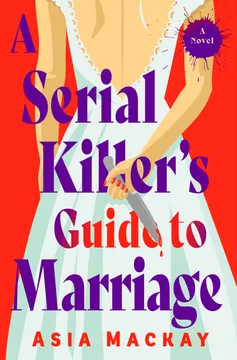


Plot Summary
Prologue
At one in the morning, Haze and her husband, Fox, face each other in a Berkshire nature reserve, both holding knives. They are bruised, bleeding, and arguing over which of them should act first. A black SUV nearby rocks with the movement of someone trapped in its boot.
The storm gathering overhead makes the clearing feel like a stage built for the worst possible end to their marriage. Haze remembers their extravagant, blood-soaked honeymoon and blames Fox for what they have become. Their question is no longer whether they love each other, but whether love can survive what they have done.
The opening makes marriage and murder share the same physical space: the couple’s vows have not disappeared, but they now stand beside a car containing a captive and knives in their hands. Its central uncertainty is moral as much as practical. Haze and Fox are not deciding whether violence belongs in their relationship; violence has always been part of its grammar. They are deciding whom they will protect when their shared rules collapse. The scene also uses the trapped person in the boot as a pressure on their private quarrel. Whatever happens between the spouses will have immediate consequences for someone beyond them.
Suburbia's Sharp Edges
Three months before the opening standoff, Haze lives with Fox and their toddler, Bibi, in a polished gated community. Fox tracks Bibi's speech, food, and routines; Haze loves her daughter but feels imprisoned by domestic repetition and by the art she cannot make.
She has not killed in more than three years. At a toddler music class, Haze meets Jenny, a struggling single mother whose son, Felix, becomes Bibi's playmate. Haze initially judges Jenny as needy, then recognizes that her own impatience and anger do not fit the cheerful performance expected of local mothers.
Her marriage is also thinning: Fox avoids intimacy and refuses to resume their old life. Haze's boredom is not a passing mood. It is the pressure that starts the story moving.
Haze's dissatisfaction is deliberately double-edged. She is not simply an ungrateful parent resentful of ordinary work; she is someone whose identity was built around art, danger, and chosen intimacy, now asked to compress herself into a suburban role. Her love for Bibi is genuine, which prevents motherhood from serving as an easy villain. The conflict comes from the belief that caring for a child must require the disappearance of the self who existed before her. Jenny enters as a possible friend because Haze sees pain without demanding that it be made pretty. That capacity for blunt recognition will become both a bond and a liability.
The Thorn and the Bird
Haze's history explains why ordinary safety feels like confinement. Shunted through foster homes, she finds refuge in art school and in Matty, a gifted sculptor who becomes her chosen family. After Matty dies by suicide, Haze grieves alone and blames herself for missing how badly he was suffering. Soon after, her tutor Dan touches her without consent; Haze cuts his hand and refuses his excuses.
At a bar job, a manager attacks her after she rejects him, and she kills him with a corkscrew. A violent boyfriend later dies when Haze strikes him with a skillet. She begins choosing men she believes have abused others, treating herself as judge and executioner. The killings restore a sense of power, and their aftermath feeds her painting.
Haze's vigilantism grows from a recognizable injury but becomes dangerous precisely because she turns injury into authority. Matty's death leaves her with grief and self-reproach, while Dan's and the manager's conduct give that grief a target. Killing offers immediate agency where childhood systems and institutions repeatedly failed to protect her. Yet her certainty that she can identify guilt and impose proportionate punishment is self-authorizing, not evidence-based justice. The paintings complicate the impulse: art gives Haze a way to transform violence into form, but using traces from victims also blurs remembrance, expression, and concealment. Her strength and her self-deception develop together.
Paris, Then Parenthood
Fox, an American heir estranged from his controlling parents, also believes killing predatory men can serve a purpose. His family once concealed his first murder rather than make him face consequences, helping him mistake privilege for immunity.
In Paris, he finds Haze killing a man who attacked her; their recognition becomes a romance, and they marry within six months. Fox plans their European hunts, while Haze lures targets and paints. The couple use disguises, false travel records, and careful routines, earning the police nickname the Backpacking Butcher.
When Haze becomes pregnant during the pandemic, Fox decides they must stop before a child can be left alone or placed with his parents. Bibi's birth brings Haze fierce love, but also ends the shared work that had defined their marriage.
Fox and Haze build intimacy through a private moral system that makes them feel uniquely understood. Their division of labor resembles both a marriage and a business: he manages risk, she supplies force and artistic transformation. The arrangement works while pleasure and danger reinforce each other, but parenthood exposes its dependence on unequal assumptions. Fox treats stopping as a necessary decision he can manage; Haze experiences it as the loss of a self she never agreed to surrender. Their criminal life is not merely a thrill they abandon. It has been their shared language, and neither knows how to replace it with the unglamorous communication that family life requires.
Jenny's Unfinished Case
As Haze and Jenny grow closer, Jenny explains that her former partner, Bill, left her pregnant, changed the locks, owes her money, and frightened her into lying at work. She had defended him after he was accused of exposing himself to a colleague, then lost standing at the police force when CCTV disproved her account.
Haze urges Jenny to pursue repayment and find a lawyer, and helps her begin self-defense training. Jenny's improving confidence gives Haze a new role: she can help a woman with words and practical support rather than a knife. At the same time, Haze spots a suspicious man lingering near the common by her home. She decides to watch for him, telling herself the danger matters because Bibi lives nearby.
Jenny's disclosure redirects Haze's anger from abstract vengeance toward a living person's recovery. The distinction matters: encouraging legal action makes Haze participate in a system she usually dismisses, and training Jenny gives her care a practical form. Still, her advice carries the logic of her old life. She frames strength as the ability to fight back, while Jenny's needs include safety, money, work, and the confidence to choose. Haze's growing friendship is real, but it also awakens her appetite for intervention. The suspicious man gives that appetite an immediate object, allowing protection of Bibi to become the justification for a return to violence.
Blood on the Common
Fox continues to insist that the couple's pact must hold, but Haze sees the lurking man again and carries a knife on her next run. After an argument with Fox about his parents' suggestion that they move to America, she runs through the common and encounters the stranger alone. He grabs and shoves her into the undergrowth.
Haze fights back and stabs him repeatedly, then leaves branches over his body and hurries home. She washes herself and hides the knife inside a water bottle, burying it later in the garden. Five days pass before the body is found. The victim is an ex-con with a prior fight on the common, so police initially suspect a homeless man. Haze feels relief, then fears Fox will discover what she did.
The killing is simultaneously self-defense and a chosen return to a forbidden identity. Haze's decision to carry a blade before the attack shows that she had already prepared herself to act, while the man's assault makes the violence feel morally uncomplicated to her. That distinction is psychologically useful and ethically unstable: genuine danger does not erase the fact that she sought a situation in which she might kill. Her concealment also changes the nature of the marriage. She has not only broken the pact; she has taken over the secret-keeping that Fox once handled. Her relief at the victim's criminal record reveals how quickly she uses a flawed life to quiet her own fear.
Jenny Names the Butcher
The murder unsettles Haze when she worries that an AirPod fell from her ear during the struggle. At a play café, Jenny explains that she is a police detective on maternity leave and has been studying the Backpacking Butcher case.
She connects the killer's European locations with Haze's travels, including a rare exhibition Haze attended, and suspects the Butcher has returned to Berkshire. Jenny concludes that Fox may be the killer. Haze deflects the accusation by questioning Jenny's judgment and pointing out the gaps in her evidence.
She then learns that Jenny is isolated from her former colleagues and anxious about a review that will determine whether she can return to work. Haze decides to keep Jenny close, both to understand what she knows and to prevent her from exposing the family.
This revelation reverses the friendship's balance of knowledge. Haze had assumed Jenny was the needy person being helped; Jenny has been observing and investigating her world with professional habits. The irony is sharper because Jenny's suspicion is not a random leap. Her attention to location, timing, and recurring methods makes her a genuine threat, even though she lacks official access. Haze responds by treating the detective's isolation as a weakness to exploit. Her growing care for Jenny does not stop her from manipulating her. The story makes friendship morally difficult: intimacy creates attachment, but it also gives Haze information that can be used to control the person she claims to protect.
A Wall of Evidence
Haze tries to make Jenny doubt her theory, then accepts an offer to feed Jenny's hamster while her family is away. At Jenny's parents' house, she finds prescription medication and a shed covered with case files, photographs, maps, and notes.
The Backpacking Butcher is only one of several investigations Jenny has pursued while on leave; her records are organized and perceptive. Haze photographs the evidence and realizes Jenny is a capable detective, not a fantasist. Meanwhile, Fox is carrying secrets of his own.
He is losing money, playing high-stakes poker, and trying to resist an enticing colleague, Suzanne, who is connected to his parents. Haze spots his unexplained absences and begins to wonder whether he is unfaithful. Their silence now feeds suspicion on both sides.
The shed materializes the difference between Haze's improvisation and Jenny's disciplined attention. Haze has treated Jenny's theory as fragile because it lacked official backing, but the wall demonstrates that institutional exclusion has not erased her investigative ability. Her response is not to respect Jenny's work; it is to study it for weaknesses and possible diversions. In parallel, Fox's poker and concealment reveal that restraint has not made him emotionally transparent. Each spouse interprets the other's secrecy through the fear they already carry: Haze expects betrayal, Fox expects danger. Their marriage becomes a closed investigative loop in which both gather evidence while refusing the conversation that might explain it.
The Blaine Tapes
To give Jenny a case more immediate than the Butcher, Haze investigates Nicky Blaine, a nightclub owner suspected of rape and sex trafficking. At a masked party, she sees young women being handled by powerful men and learns that Blaine may have filmed assaults.
During a private tour of his house, Haze hides in his cinema and hears a staff member attacking a young woman. She strikes him unconscious with an ice bucket, helps the woman escape, then steals several DVDs bearing names linked to case files.
Haze watches the recordings and passes them to Jenny through an invented victim and anonymous friend. Jenny sees a possible route to a real prosecution, and Haze believes she has turned her friend's attention away from the Butcher without having to kill her.
Haze's intervention at Blaine's house is a rare moment when she protects someone without killing the assailant. The choice is partly ethical and partly practical: another murder would deepen the danger surrounding her. Yet the rescue is immediately converted into a deception, as she steals evidence and fabricates its source. Her approach bypasses the victim's consent and the legal chain of custody even as it offers Jenny a chance to pursue a predator. This is the novel's recurring tension between results and process. Haze can produce a useful outcome, but she cannot resist controlling how it happens. Her care is most effective when it respects another person's agency, and most dangerous when it replaces it.
The Cabot Leverage
Fox's parents return to London and criticize his marriage, then reveal that they possess evidence of his and Haze's past crimes. They want Fox's vote against a hostile takeover of the family pharmaceutical company and threaten to give their files to police, emphasizing that they could seek custody of Bibi.
Fox refuses to move back to America. His brother Julian then arrives with a copy of the surveillance files and explains that he is leading the takeover because he intends to escape their parents' control and run the company differently.
Julian's files reveal that their parents have monitored both brothers for years. Fox agrees to vote with him, and the brothers begin to unite against their parents. Yet the threat deepens Fox's secrecy and adds another danger to the couple's already unstable home.
The Cabot parents use affection, inheritance, and custody as instruments of governance. Their threat is effective because Fox's deepest fear is not prison alone, but losing Bibi to the same family culture that shaped him. Julian's intervention exposes the parents' strategy of keeping their sons isolated and competitive, while offering Fox a rare alliance grounded in shared history. However, the subplot does not simply give Fox a path to freedom. It places additional pressure on his belief that he must privately manage every threat. His impulse to protect his family is sincere, but his methods reproduce the secrecy and control that are already corroding his marriage.
The Marriage Goes Quiet
Fox hires Helga, an experienced nanny, after remembering Haze's request for help returning to her art. Haze initially mistakes his care for evidence that he has discovered her killing. Soon, she notices his contact with an unknown woman and a purchase of a Mayfair townhouse he has not explained.
Fox also misses Haze's long-awaited lecture at her former art college. Feeling abandoned, Haze confronts him and orders him to leave. In the days apart, Fox's work absences and bruises seem to confirm her suspicion of an affair.
When he finally explains, Haze learns that Petra is a women's shelter where he volunteers, that he has been attending recovery meetings, playing poker to manage his urge to kill, and has been fired from his job after his parents interfered. He asks her to try a night away together.
The failed lecture is a small event carrying the weight of Haze's whole history: Matty once imagined sharing that kind of achievement with her, and Fox's absence makes success feel lonely rather than triumphant. Her suspicions are partly mistaken, but not groundless; Fox has hidden substantial parts of his life, including the emotional cost of their pact. His volunteer work and recovery efforts show that he is trying to build an alternative identity, yet concealing them turns care into another unilateral decision. Haze's demand for honesty is undermined by her own concealed murder. Their separation is therefore not a simple misunderstanding but the consequence of reciprocal self-protection.
Bill Enters the Garage
Haze agrees to meet Fox at a secluded rental, taking a knife because she fears his unexplained plans may conceal a confrontation. Before leaving, she discovers that Fox has removed his encrypted record of their murders and hidden her painting, which contains blood and fabric from the man she killed.
She assumes he intends to use the evidence against her. At the lodge, Jenny's ex, Bill, attacks Haze in the garage, blaming her for the legal pressure Jenny has placed on him.
Haze fights him off, but when he charges again with a hammer, he runs onto her knife and dies. She loads his body into her Range Rover, cleans the garage, and puts his bicycle in the boot. Fox still has not arrived, leaving Haze alone with a second murder and no clear way out.
The lodge turns the couple's planned retreat into a collision between private suspicion and external violence. Haze arrives prepared to defend herself from Fox, but the actual attacker is Bill, a man whose abuse has been described and whose hostility has been steadily escalating. Her second killing is not framed as a calculated hunt; it is a panicked sequence of defense, mistake, and frantic concealment. Still, she immediately restores the old language of cover-up, cleaning the scene and hiding the body instead of seeking help. The missing painting and record sharpen the question of whether the spouses can distinguish protection from coercion, especially when each believes the other may be preparing to betray them.
Gerald's Final Disguise
Fox finally appears in the stormy woods with a knife and confronts Haze over the earlier murder. He explains that he found the victim, recognized Haze's familiar pattern, and arranged the homeless-witness story and local complaints that misdirected police.
He also reveals that Gerald, Jenny's French suitor, was Fox in disguise. Fox has abducted Jenny because he believes her detective work will eventually expose them, and he plans to make Bill appear to have killed her before dying himself.
Haze learns that Fox deliberately encouraged Bill to attack her, trusting she could survive, then planned to use the resulting body as a cover story. Fox's attempt to save their family has become a plan to sacrifice Jenny, the friend Haze has finally learned to trust.
The Gerald revelation recasts the romantic subplot as an extension of Fox's surveillance and risk management. He has not merely hidden facts from Haze; he has entered her friendship and shaped Jenny's trust for strategic reasons. His plan reflects a chilling hierarchy in which family safety justifies manipulating and potentially killing anyone outside the household. Haze is forced to confront the cost of her own earlier choices: she befriended a detective, then tried to manage her through lies, but Jenny remains a person rather than a loose end. The storm and knives echo the opening frame, while the captive makes the couple's private crisis impossible to treat as a marital game.
Jenny Chooses to Live
Haze refuses to kill Jenny, telling Fox that protecting their daughter cannot mean making an innocent woman pay for their mistakes. Fox drops his knife and admits his own fear and failures; the two finally confess what they have hidden from each other.
They free Jenny and tell her the truth about the murders, Gerald, and Bill's death. Jenny is furious, but accepts that Bill's death has removed a danger from her and Felix. Rather than expose them immediately, she helps them stage Bill's death as a suicide in a car crash and arranges her own disappearance as his presumed victim.
After the police identify Bill as the Backpacking Butcher, Jenny returns alive and is welcomed back to the force. She later offers to research targets and help the couple evade detection.
Haze's refusal is the moral hinge of the story. She chooses a limit on violence even when violating that limit could threaten her marriage, freedom, and family. Fox's surrender does not erase his coercive plan, but it makes mutual truth possible for the first time in months. Jenny's decision to cooperate is not simply forgiveness; she has seen the failures of both law enforcement and the couple's methods, and she negotiates a role that serves her own ambitions as well as their operation. The staged cover-up converts a threatened murder into a fragile alliance. Its resolution is morally uneasy by design: honesty repairs intimacy, but it does not bring them back within the law.
A New Kind of Team
Six months later, Haze visits Matty's mother, Cathy, and learns that Cathy has kept his old number and read Haze's messages to him. Cathy tells Haze that Matty's depression was not hers to cure. Haze returns the small bird sculpture she stole after his death, allowing grief to become remembrance rather than a private punishment.
In London, Fox, Haze, and Jenny establish a discreet operation from Fox's Mayfair investment firm, combining Jenny's police knowledge with the couple's investigative and violent skills.
Fox has lost his trust fund, but the three move forward together. In Vienna, Jenny directs Haze toward a fugitive former teacher accused of abusing children. Haze approaches him at an opera ball, ready to lead him into Fox's private room, and the novel closes on their renewed partnership.
The ending gives Haze two forms of resolution that do not cancel each other. Returning Matty's sculpture loosens the guilt she has carried since his death, while the new operation restores the intensity she and Fox missed. The friendship with Jenny also changes the meaning of female solidarity: it is no longer only something Haze claims through vengeance, but a relationship built through disclosure, conflict, and negotiated complicity. Yet the final Vienna mission refuses a conventional moral conversion. Haze does not renounce killing; she and Fox institutionalize it with Jenny's assistance. The book's ending is therefore emotionally hopeful and ethically unsettled, presenting belonging as possible without pretending that love makes their choices innocent.
Analysis
The novel uses the machinery of a domestic comedy to examine a marriage whose shared hobby is murder. Its central question is not whether Haze and Fox are good people, but how they decide who counts as worth protecting and who may be sacrificed to preserve their family. Each spouse believes care grants authority. Fox hides plans because he thinks he can manage risk better alone; Haze lies because she thinks she can preserve her freedom and keep the consequences contained. Their methods mirror the controlling behavior they oppose, even as they target men who have abused power.
Parenthood changes the scale of their choices without automatically making them virtuous. Bibi gives Fox a reason to stop, and gives Haze a reason to fear losing what she never had as a child. Yet the idea of protecting Bibi becomes a flexible justification for secrecy, surveillance, and violence. The novel refuses the comforting claim that love naturally produces ethical judgment. Love may intensify responsibility, but it can also make self-serving decisions feel noble.
Jenny complicates the couple's private moral code. Her professional investigation represents law's limits and its procedures, while her friendship with Haze demonstrates that care requires treating another person as more than a threat or instrument. Haze's decision to spare Jenny marks genuine moral growth, but the ending stops short of conventional reform. Jenny joins the operation, turning the couple's vigilantism into a more efficient enterprise. This is a comic resolution with a disturbing edge: the characters repair their marriage by telling the truth, then recommit to a form of justice that remains unaccountable.
Art and evidence are linked throughout. Haze transforms feeling into paintings, while Fox records violence in spreadsheets and Jenny maps it in case files. Each system claims to make experience legible, but each can also conceal its maker's assumptions. The final image of the team preparing another hunt offers emotional belonging rather than moral absolution. Their family may be more honest and more connected, but the book leaves readers to question whether better coordination makes their work better, or merely harder to stop.
Review Summary
A Serial Killer's Guide to Marriage receives predominantly positive reviews, averaging 3.6 stars. Readers frequently praise its dark humor, dual POV narrative, and entertaining premise of ex-serial killers navigating suburban parenthood. Many compare it to Mr. & Mrs. Smith and Dexter. Fans highlight the witty, sarcastic tone and well-crafted main characters, particularly Hazel. Common criticisms include pacing issues in the middle, repetitive plot elements, an overly convenient ending, and a reliance on the miscommunication trope. Overall, most readers found it a fun, addictive thriller.
Characters
Haze
Artist with a bladeHaze is an accomplished mixed-media artist, a mother, and a former vigilante killer whose blunt humor often conceals a deep fear of being abandoned. Raised in foster care, she learned to adapt quickly and rely on herself; Matty's friendship and later her marriage to Fox give her rare experiences of chosen family. She loves Bibi intensely but struggles with the loss of independence and creative purpose that parenting brings. Haze experiences anger as both a source of energy and a threat to her control. Her paintings turn emotional experience into material form, while her insistence on punishing abusive men lets her mistake personal certainty for justice. She is fierce, perceptive, and capable of tenderness, though not always of seeing where one ends and the other begins.
Fox
Planner and devoted fatherFox, whose full name is Nathaniel Foxton Cabot, is Haze's American husband and Bibi's father. Raised in a wealthy family that treated reputation as more important than accountability, he became methodical, controlled, and skilled at turning danger into a plan. He and Haze share a history of targeting men they consider predatory, but Fox's deepest drive is to keep his family safe. Fatherhood gives him a new mission, yet he often confuses protection with making decisions alone. He is affectionate, attentive, and proud of being dependable, while privately struggling with the loss of the life he and Haze shared. His need to manage every contingency can make him both an effective partner and an evasive one.
Jenny Needham
Detective and new friendJenny is Felix's mother and a detective whose career has been damaged by her relationship with Bill and the false alibi he pressured her to provide. Living with her parents, she is anxious about work, money, and whether she can regain her former confidence. Her earnestness can appear needy, but it also reflects a real desire for connection after isolation and professional humiliation. Jenny is observant, persistent, and more capable than she initially believes. Her interest in unresolved crimes gives her a strong sense of purpose, while her commitment to procedure can leave her frustrated when institutions fail victims. Her friendship with Haze grows from candid conversations about motherhood and safety.
Bibi
Haze and Fox's daughterBibi, whose name honors Haze's grandmother Sabina, is a toddler loved fiercely by both parents. Fox records her routines and milestones, while Haze wants to give her the secure childhood she herself never had. Bibi is playful, direct, and still frightened of dogs despite her parents' efforts to make her fearless. Her presence raises the stakes of every secret and violent choice Haze and Fox make. She is not responsible for their moral compromises, but their desire to protect her becomes the argument each parent uses to justify control.
Matty
Haze's chosen familyMatty is Haze's closest friend from art school, a talented sculptor who understands her sharp humor and difficult past. Their friendship gives Haze a sense of belonging she has rarely known. He struggles with depression and with the pressure of managing it alongside his creative identity. Haze remembers his warmth, artistic seriousness, and teasing affection, but also carries regret about how little she understood his suffering. His small bird sculpture becomes a private reminder of their bond and of the limits of what one friend can know or prevent.
Bill Grundy
Jenny's abusive exBill is Felix's father and Jenny's former partner, a police officer whose public role contrasts with his coercive behavior at home and at work. He leaves Jenny without housing or financial support, pressures her to defend him, and uses anger to keep her wary of challenging him. Bill's badge does not make him trustworthy; it gives his misconduct a more disturbing institutional context. His resentment and entitlement threaten Jenny's chance to rebuild her life.
Julian Cabot
Fox's estranged brotherJulian is Fox's younger brother and a long-serving executive in the Cabot family business. Their parents have encouraged distance and competition between the brothers, leaving them with little adult intimacy. Julian is strategic and patient, with a strong desire to make his own choices and stop the family's control from extending into another generation. His marriage and fatherhood shape his view of what kind of home his sons deserve.
Reginald Cabot
Fox's controlling fatherReginald is Fox and Julian's father, a powerful businessman who values the family's reputation and control. He treats money, confidential information, and social standing as tools for managing his sons. His idea of parental responsibility is inseparable from expectation and obedience, and he is most concerned when his children's choices threaten the family name or company.
Sarah-Anne Cabot
Fox's status-minded motherSarah-Anne is Fox and Julian's mother, a socially polished woman who protects her family's standing and expects her sons to fit its standards. Her composure makes her disapproval especially chilling: she can discuss profound consequences, including family separation, as if they were ordinary practicalities. She regards respectability as a form of safety, even when her methods damage the people she claims to protect.
Cathy
Matty's grieving motherCathy is Matty's mother, a grieving parent who preserves photographs and memories of her son. Her sorrow does not erase her capacity to listen to Haze or recognize that a friend cannot control another person's illness. She offers Haze a more compassionate account of their shared loss and helps separate love from impossible responsibility.
Helga
Bibi's capable nannyHelga is the experienced nanny Fox hires after realizing Haze needs time to paint and recover some independence. She is steady, practical, and good with Bibi, offering a kind of support that is concrete rather than sentimental. Her presence helps the family manage daily care, though her competence also exposes how much of that work Haze and Fox had been trying to carry alone.
Nicky Blaine
Predatory nightclub ownerNicky Blaine owns nightclubs and is suspected of rape and sex trafficking. Haze sees his business as a place where vulnerable women are treated as commodities and powerful men expect impunity. He is a target of Jenny's research, and the evidence connected to his private cinema offers a potential route toward prosecution.
Dan Richards
Haze's former art tutorDan is Haze's art-school tutor and an early champion of her work. His professional encouragement is complicated by his attempt to touch her without consent when she is grieving and vulnerable. He represents how apparent mentorship can conceal entitlement.
Suzanne
Fox's watchful colleagueSuzanne is an American colleague at Fox's investment firm, newly transferred from Washington. Confident and openly flirtatious, she becomes part of the Cabot parents' effort to observe Fox and stir trouble in his life. Her presence intensifies Haze's suspicion before Fox explains the larger family pressure behind it.
Griff
Fox's recovery sponsorGriff leads the recovery meetings Fox attends as a way to manage the urge to kill. He is earnest about mutual support and sobriety, though he assumes Fox's problem is alcohol before understanding what Fox is actually trying to control. Their meetings give Fox a place to speak, but not always one where his experience is understood.
AJ
Self-defense instructorAJ teaches the fitness and self-defense class Haze attends with Jenny. His instruction helps Jenny build confidence and gives Haze a familiar physical outlet. His brief attention also reminds Haze that she still wants to be seen as a woman beyond the role of mother.
Cal
Fox's paid witnessCal is a homeless man whom Fox pays to support the misleading account of the first Berkshire killing. Fox's use of him shows how his elaborate risk management depends on people he can hire and direct, rather than on luck alone.
Felix
Jenny's young sonFelix is Jenny's toddler and Bibi's playmate. His need for a stable home and loving parent gives Jenny a reason to pursue money and work even when she fears the consequences. He is also a reminder that the adults' conflict reaches beyond the people holding the secrets.
Plot Devices
The Backpacking Butcher
A trail across EuropeThe Backpacking Butcher is the name investigators give the killer responsible for a series of murders in European destinations. Its apparent pattern links locations, methods, and evidence left near victims, while concealing the fact that the killings were carried out by a wealthy couple who traveled under disguises. Jenny's research brings the old cases into the present after Haze kills a man near home. The label creates suspense because it gives police a theory that is partly right but built on a false picture of the killer's identity and means. Its resolution depends on the story's central contrast between visible evidence and the people who know how to manipulate it.
Fox's encrypted records
A ledger of hidden crimesFox keeps an encrypted record of targets, disguises, travel, and methods. It makes their past operations organized rather than spontaneous, and reflects his need to believe that enough planning can contain every risk. The record also becomes a form of leverage when the Cabot parents threaten to expose their sons, and its disappearance during the marital crisis signals that Fox is acting without Haze's knowledge. Its existence explains how the couple managed to keep their crimes concealed for years, while its contents make clear how fragile that security is. The ledger is both a practical tool and a portrait of Fox's compulsive responsibility.
Haze's mixed-media art
Violence made visibleHaze's paintings give physical form to anger, grief, and desire, using materials and images connected to her life and, at times, to her killings. Art once provides a private refuge from childhood instability and later becomes evidence of professional success. When motherhood and the end of the couple's shared hunts leave her unable to paint, her blank canvases mirror her feeling that she has lost access to herself. Returning to art is therefore not a decorative subplot but a measure of whether she can reclaim a meaningful identity. The material traces she incorporates also turn creative expression into a potential forensic danger.
Jenny's case shed
An amateur-looking evidence wallJenny's shed is filled with maps, police materials, photographs, and organized notes on unresolved cases. At first Haze treats Jenny's theory about the Butcher as a product of isolation and medication; the shed shows that Jenny has researched the case methodically and is tracking several other possible predators as well. Its contents raise the danger to Haze and Fox, but also reveal Jenny's professional intelligence and frustration at being shut out of work. The shed transforms an abstract suspicion into a concrete investigative threat, and gives Haze both the means to sabotage Jenny and the knowledge to redirect her toward another case.
The wedding pact
A family safety boundaryFox persuades Haze to stop killing when they learn she is pregnant, arguing that Bibi must not be left alone or sent to live with his parents. The pact is meant to keep the family safe, but it also removes the shared activity that once organized Haze and Fox's intimacy. Haze experiences it as a decision Fox imposed at her most vulnerable, while Fox sees it as the necessary work of fatherhood. When Haze breaks the agreement, the consequences are not only legal. The secret exposes the different meanings each spouse has attached to sacrifice, protection, and partnership.
Download PDF
Download EPUB
.epub digital book format is ideal for reading ebooks on phones, tablets, and e-readers.








