

Plot Summary
The Moonlit Sandbar
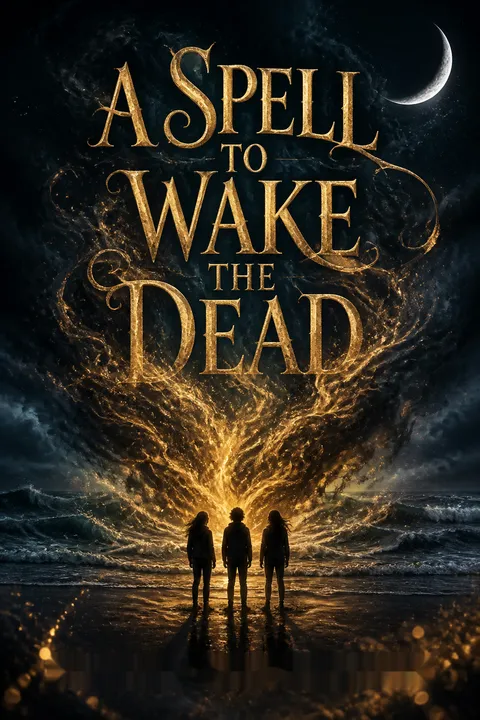
Seventeen-year-old Mazzy Carlin drives her best friend, Nora Hawthorne, and their longtime friend Elliot to Mayflower Beach for Nora’s internet-sourced full-moon spell. Mazzy worries that the vague ritual could reveal more than they intend, but helps arrange the shells, candle, and barnacle-covered rock. The flame dies before the spell feels complete.
Nora carries the rock toward the water, then screams. At the tide line, the three friends find a dead woman in a gray dress, her hands and teeth missing. Mazzy calls the police as the incoming tide creeps toward the body. Officers take their statements, and their parents bring them home. Walking away, Mazzy thinks she hears a woman singing in the wind.
The spell begins as a disagreement about method: Mazzy seeks boundaries and Nora trusts instinct. Its apparent failure immediately overturns their sense that magic is an experiment they can stop at will. Finding the body makes them witnesses, but the timing also invites the possibility that their ritual caused the discovery. Mazzy’s fear is therefore double-edged: she is horrified by the dead woman and unsettled by the possibility that her own actions opened the door.
A Song Finds Its Voice
At Mazzy’s house, Nora searches missing-person records and describes the dead woman as young, graceful, and possibly named with an M. Their tarot reading turns ominous, ending with the Tower card. Later, Nora sings an unfamiliar melody in her sleep and speaks in a voice Mazzy does not recognize.
The next day, Mazzy’s four-year-old brother, Henry, draws a long-haired woman lying on the ground and calls her his friend. Mazzy tries to dismiss the drawing, then plays the melody on her cello until she loses track of time. When she finishes, she senses someone listening in her doorway, but finds the room empty. The song now links Nora’s sleep, Henry’s image, and Mazzy’s own strange experience.
The supernatural evidence reaches the friends through ordinary intimacies: a shared bed, a child’s drawing, a familiar instrument. That makes denial harder, but it also gives the haunting an unsettling domestic reach. Mazzy’s cello turns involuntary fear into something she can shape, suggesting that her artistic attention may be a form of perception, not merely expression. The Tower card also frames her central anxiety: she wants to anticipate disaster, yet the signs arrive in forms she cannot control.
Teeth Beneath the Tide
When Mazzy and Nora return to Mayflower Beach, they find seven human teeth where the body washed ashore. The teeth buzz against their palms, and Nora insists they belong to the dead woman. They turn them over to Detective Eva Huld, whose questions about their candle and spell leave them uneasy.
At a metaphysical shop, regular customer Tina claims a secret society called the Hand of Nephthys uses sea magic and human sacrifices. Mazzy and Nora attempt a safer search through a mirror, but the reflection becomes a vivid scene of nine hooded figures dancing around a bound woman. The figures sing the same melody Nora had sung in her sleep, and Mazzy recognizes the vision as a possible glimpse of the woman’s killing.
Evidence and interpretation begin to blur. The teeth may help identify a victim, while their strange sensation seems to endorse Nora’s spiritual reading. Tina’s story supplies a possible culprit, but it is still rumor, and Mazzy knows that fear can turn coincidence into a pattern. The mirror vision changes the stakes because it gives her sensory access to a ritual she could not have witnessed. Her skepticism is not erased; instead, it becomes a struggle to judge what counts as knowledge.
Scargo's Second Body
Before the friends can repeat their scrying, Nora abandons school and follows a scream only she can hear to Scargo Lake. Mazzy and Elliot find her beside another dead woman in a gray dress, this one blond, missing her hands, and bearing a stitched wound where her heart should be. Nora says the spirit called the stranger her sister.
Afraid Huld will suspect them after their first discovery, the trio reports the body anonymously from a pay phone. A gray Delaware SUV appears nearby, and Nora photographs its driver, whose neck bears a thorny tattoo. Online forum posts add rumors of the Hand’s rituals and missing victims. Their search now involves a second corpse, a possible witness, and a threat they cannot safely name.
Nora’s psychic link has shifted from a strange visitation to a force that can interrupt school and direct her body toward danger. Her loyalty to the dead woman is sincere, yet it also makes her vulnerable to coercion. Mazzy and Elliot respond by concealing their identities from police, a choice that protects them from immediate scrutiny but deepens their isolation. The matching wounds and the tattooed stranger make the occult theory more plausible without yet proving who is responsible.
The Key in the Tomb
Convinced that the police might be overlooking evidence, the friends steal into the medical examiner’s building using a badge Nora lifted from the front office. Nora’s spell briefly disables the electronics, but the drawer marked for the first victim is empty. Inside, they find an ornate horseshoe-crab key that calms Mazzy when she holds it.
Elliot recognizes its design on a mausoleum door at Woodside Cemetery. The key opens the tomb, where empty coffins and a floor hatch suggest someone has been using the site. Elliot finds a Polaroid of a dark-haired woman entering an antique shop; Mazzy and Nora recognize her as the beach victim. A groundskeeper interrupts their search, forcing them out before they can explore the hatch.
The empty morgue drawer turns the investigation from a question of who killed the women into a question of who is controlling the evidence. The key and the Polaroid offer material clues, but each also pulls the teenagers deeper into spaces associated with the dead. Their break-in shows how quickly fear and distrust can make unlawful actions feel like the only practical route. The hatch remains unexplored, a literal threshold marking the growing gap between what they know and what they risk.
The Magpie's Evidence
Mazzy identifies the Polaroid’s shop as The Magpie’s Nest. Inside, she finds a phonograph with a horseshoe-crab crank and accidentally plays the dead woman’s haunting melody. Nora discovers another Polaroid showing the blond woman from Scargo Lake pouring a dark liquid onto a beach, alongside a small bone cup that carries the same unsettling energy as the teeth and key.
The friends bring their findings to Ione, the experienced shopkeeper who has advised them for years. Ione confirms that the Hand of Nephthys is real and dangerous, with a history of killing people in pursuit of forbidden magic. She instructs Mazzy and Nora to destroy the cup and a tooth, then gives them an unbinding ritual intended to sever their connection to the spirit.
The antique shop makes the mystery tactile: music, photographs, and a bone vessel point to a history the police have not uncovered. Ione offers the first reliable adult guidance, but her advice is shaped by the same secrecy that has kept the cult hidden. Her proposed severance recognizes that a supernatural connection can become an ethical problem when it overrides consent. Nora and Mazzy are no longer merely asking what the spirit wants; they must decide whether helping her is worth surrendering control of themselves.
The Mirror Breaks
At Mayflower Beach, Mazzy and Nora recreate their first ritual in reverse, using Ione’s instructions to send the spirit away. They are meant to avoid the mirror, but both become entranced by figures appearing in its reflection. A withered hand reaches through the glass toward Mazzy, and Elliot smashes the mirror before it can emerge.
The friends escape without knowing whether the bond has been broken. Later, Huld leaves Mazzy a series of increasingly urgent messages warning her to stop interfering. Nora’s link to the spirit grows more violent: a scream inside her head forces Mazzy to drive them to Grays Beach. There, they find a third dead woman beneath a marsh boardwalk, missing her hands and heart.
The failed ritual exposes the cost of treating magical procedure as a substitute for judgment. Mazzy and Nora know the rule about the mirror, yet fascination overrides it, and Elliot has to interrupt the danger physically. Huld’s warning could be protection or intimidation, and the friends lack enough trust to tell the difference. The third body intensifies that uncertainty. The spirit’s coercion may be directing them toward truth, but it also makes their own intentions increasingly difficult to separate from hers.
Nora Vanishes
Nora fears that police will blame her for touching the bodies, and at her house Mazzy finds a large meat cleaver hidden inside a tote bag. While Nora showers, Mazzy discovers private messages with an online stranger who knows about the dead woman and claims to understand Nora’s unusual abilities.
Before Mazzy can confront her, Nora disappears through the bathroom window, leaving wet clothes behind. Mazzy calls the police and reports the bodies, but officers find no corpses at any of the three locations. The online messages vanish, and Nora’s mother says she has gone to her father’s home. Mazzy suspects the explanation is false, but she has no surviving evidence to make anyone believe her.
The disappearance turns the investigation into a crisis of trust. Mazzy violates Nora’s privacy to understand what is happening, while Nora has already sought help from someone she kept secret. The cleaver gives Mazzy a frightening alternative explanation for the bodies, though she cannot reconcile it with the supernatural evidence she has witnessed. The police’s failure to find the corpses makes her reality socially fragile: what she knows is vivid to her, but without evidence it can be dismissed as trauma.
Polaroids in the Dark
Mazzy and Elliot check Nora’s father’s house and discover he is abroad, disproving the claim that Nora went there. A Polaroid left at the property sends them back to the mausoleum, where someone traps them inside; they escape through the underground passage and find a hidden altar. Outside, the tattooed man from Delaware confronts them, then leaves a final photograph of Huld sitting with the dead woman.
At Midnight Alchemy, the stranger, Rowan Moore, explains that his missing girlfriend, Kaia, left a cache of Polaroids tied to the Hand of Nephthys. He has followed the teenagers hoping they would identify the locations. As Mazzy and Elliot pursue the photos’ meaning, a car rams them into a marsh, and hooded figures abduct them.
The Polaroids function as both evidence and bait. Rowan’s grief gives his stalking an intelligible motive, but it does not make his choice to manipulate teenagers harmless. The false story about Nora’s whereabouts confirms that someone can interfere with ordinary systems as well as magical ones. Mazzy and Elliot keep moving because no institution has taken their claims seriously. The crash demonstrates the danger of that isolation: pursuing proof without allies leaves them exposed to whoever has been watching.
The Cult's Borrowed Hearts
Mazzy wakes chained in the basement of a condemned house with Nora nearby, but Elliot is missing. Nora admits she met the online stranger hoping to escape the spirit’s punishing voice; the stranger’s trap brought her to the Hand of Nephthys. The cult has watched the friends since they found the bodies and wants Nora to channel the dead woman, whom they call Rosemary, for a ritual meant to restore her and the other sisters.
They believe Rosemary’s spirit can provide what they need, but she has gone silent. A masked woman threatens Elliot’s life unless Mazzy and Nora obey. The friends are dressed in the same gray gowns as the corpses and marched toward a cliffside ritual ground lined with coffins.
The captives learn that the haunting is not simply a plea for justice: the Hand wants to exploit the spirit for its own work. Nora’s attempt to escape the voice has led her into another form of control, while Mazzy’s choice to pursue her has placed Elliot in danger too. The gray dresses collapse the distinction between witness and victim. The ritual’s borrowed traditions also mirror the cult’s treatment of people as instruments, bodies, and containers for power.
The Tower Turns
At the sandbar, the cult lays out three bodies and the hearts Ione stole from them. Ione arrives with the hearts, revealing that she killed the women to break the Hand’s magic; one of them, Kaia, was her half sister who had faked her death to join the group. Ione shoots the masked leader, Valia, but the sisters overpower her and cut off her hand.
Rosemary takes control of Nora, restores the sisters’ hearts, and prepares to sacrifice Elliot. Mazzy invites Rosemary into herself to free Nora, then redirects the dagger into her own thigh before binding the spirit inside Ione’s compact mirror. Injured but conscious, Mazzy helps Nora fight back. Police flood the beach before the cult can finish the rite.
The climax refuses an easy division between innocent and guilty. Ione has committed killings in an effort to prevent the cult’s resurrection ritual, while Rosemary’s victimhood coexists with her coercive appetite for power. Mazzy’s decisive act is not defeating the spirit by force but accepting a terrible risk and then redirecting the blade away from Elliot. Her injury makes agency physical: she claims control by choosing where the violence lands, even as the ritual leaves her unable to control every consequence.
The Mirror Goes Dark
Detective Huld arrives with the officers and confirms that she had been investigating the Hand, not protecting it; she had been away because her mother suffered a stroke. Tina helped locate the group after hearing Rowan’s account.
Valia is dead, several cult members are arrested, and Ione disappears into the surf after the raid. Nora has secretly taken the compact containing Rosemary’s spirit. Five days later, once Mazzy’s leg is healing, the friends return to Mayflower with Elliot and perform their own banishment ritual.
They burn Henry’s drawings, reverse the original spell’s objects, and release Rosemary from the mirror. The bond breaks without another apparition. The women’s bodies and the cult’s crimes remain for investigators to address, but the spirit no longer commands the friends.
The rescue corrects the friends’ misreading of Huld, showing how secrecy and fear can make a legitimate investigator resemble an enemy. Yet the official resolution remains incomplete: Ione is gone, and a wider history of disappearances still awaits investigation. The banishment is different from their earlier attempts because the friends choose its terms together rather than relying on an anonymous spell or a mentor’s instructions. Their agency comes not from perfect knowledge but from shared consent and a willingness to stop the relationship.
Lanterns Under Beech
After the banishment, Elliot takes Mazzy to a clearing beneath a weeping beech tree, where he has arranged handmade ceramic lanterns. He tells her that his feelings have long been for her, not Nora, and explains that he delayed confessing because he feared damaging their friendship. Mazzy admits she has been hiding the same feelings, and they kiss.
Nora has already guessed what was happening and helped create the chance for them to be alone. Two weeks later, Mazzy visits Nora in her new apartment. Insomnia still follows the ordeal, but when Nora hums the melody that once belonged to Rosemary, Mazzy joins in, then shares one of her own compositions. The girls make the songs theirs rather than letting fear own them.
The romance resolves a quieter conflict that has threaded through the danger: Mazzy’s fear that speaking honestly will destroy a valued relationship. Elliot’s handmade lanterns offer a deliberate counterpoint to the occult objects that have guided the plot. This intimacy is not a reward that erases trauma. Mazzy remains sleepless, and the final shared song acknowledges what happened while changing who controls its meaning. Creative expression becomes a practice of integration rather than a symptom of haunting.
Analysis
The novel makes interpretation its central danger. Mazzy and Nora do not lack signs: they have tarot cards, dreams, bodily sensations, songs, photographs, and actual corpses. Their problem is deciding what those signs authorize them to do. Mazzy’s anxiety makes her seek rules, while Nora’s intuition makes her willing to act before evidence is complete. Neither strategy is sufficient. Caution can become avoidance, but conviction can become a route by which another will takes control.
That tension is sharpened by the book’s treatment of institutions. The police are not uniformly corrupt, yet the teenagers experience disbelief, missing evidence, and confusing authority. Their isolation makes clandestine investigation feel necessary, even as it exposes them to the cult and to Rowan’s self-serving pursuit. The story therefore avoids a simple opposition between supernatural knowledge and rational procedure. It asks what responsibility people have when their evidence is real to them but difficult to communicate, and how they can seek help without surrendering judgment.
The Hand of Nephthys embodies power stripped of context. Its members assemble symbols from traditions they do not respect, converting spiritual practice into a technology for domination. Ione’s counterviolence complicates any easy moral answer: she has tried to stop the cult through lethal means, but secrecy and control have not made her actions harmless. Against both the cult and the spirit, Mazzy’s decisive act is neither obedience nor pure force. She chooses to redirect the ritual’s violence and accept injury rather than let Elliot become its victim.
The conclusion does not erase what happened. Mazzy’s insomnia, her healing wound, and the final shared song show trauma being integrated rather than magically cured. Her love for Elliot and loyalty to Nora give her reasons to speak more plainly, but the deeper change is her willingness to trust her own judgment without mistaking it for certainty. The friends regain agency through cooperation, consent, and the choice to release a relationship that has become coercive.
Review Summary
A Spell to Wake the Dead receives positive reviews for its eerie atmosphere, witchy elements, and engaging mystery. Readers praise the Cape Cod setting, well-developed characters, and the balance of supernatural and thriller aspects. The story follows two teenage witches who discover a body and become entangled in a dangerous occult mystery. While some found certain character decisions frustrating, most enjoyed the creepy vibes and twists. The book is recommended for fans of YA horror and those seeking a perfect autumn read.
Characters
Mazzy Carlin
The wary cellistMazzy is a seventeen-year-old cellist, tarot reader, and careful practitioner of witchcraft. She prefers researched spells and clear intentions because uncertainty feeds her anxiety; she has also learned to monitor her father’s recovery from alcoholism, often taking responsibility for feelings and risks that are not hers to manage. Her bond with Nora is intimate but complicated by comparison and quiet jealousy, while her growing attraction to Elliot makes honesty feel as dangerous as any ritual. Mazzy’s intelligence is practical and self-questioning. She rarely trusts her first interpretation, yet she notices patterns others overlook, and music gives her a way to shape emotions she cannot otherwise contain.
Nora Hawthorne
The instinctive witchNora is Mazzy’s best friend, a goth color-guard performer, and a more intuitive, improvisational witch. She trusts sensations and spiritual impressions over rules, which makes her bold and perceptive but also prone to treating conviction as proof. Nora is warm, funny, and intensely loyal; she is also facing her mother’s financial instability and an imminent move from the home she has known since childhood. Her need to help the dead reflects genuine compassion, though her confidence can push her and her friends beyond safe limits. The contrast between her instincts and Mazzy’s caution is a source of friction as well as a durable friendship.
Elliot Winters
The skeptical artistElliot is Mazzy and Nora’s longtime friend, a gifted ceramicist and visual artist who works at a pottery shop while his family faces financial uncertainty. He tends to explain away magic, but his skepticism is not indifference: he notices practical dangers, documents evidence, and keeps showing up when his friends need him. His early crush on Nora has long since given way to feelings he has not known how to disclose to Mazzy. Elliot’s steadiness complements Mazzy’s anxious foresight, while his art and handmade gifts reveal a tenderness he struggles to put into words.
May, later identified as Rosemary Newcombe
The haunting strangerThe dead woman found on Mayflower Beach is first known publicly as May. Her body is missing its hands and teeth, and her identity is obscured by the circumstances of her death. She reaches the friends through song, visions, drawings, and Nora’s increasingly forceful psychic experiences. Because she cannot explain herself in ordinary conversation, her messages arrive as fragments that invite interpretation. Her apparent vulnerability draws Mazzy and Nora into the mystery, while the pressure she places on them complicates the difference between seeking help and demanding obedience.
Ione
The experienced shopkeeperIone owns Midnight Alchemy, the metaphysical shop where Mazzy and Nora have sought advice for years. A practiced, thoughtful mentor, she tries to teach them that magical work has limits and that good intentions do not make a dangerous practice safe. She is compassionate toward people in distress, including the troubled regular Tina, but keeps much of her own history private. Ione’s knowledge of occult threats gives the teenagers a rare adult source of guidance, even as her guardedness leaves them uncertain about how much she understands.
Eva Huld
The watchful detectiveHuld is the detective assigned to the Mayflower Beach investigation. Her questions about the teenagers’ candle and spell make her seem suspicious, and her reserved manner offers little reassurance to Mazzy and Nora. She is observant, persistent, and accustomed to keeping information close while she works. The friends struggle to tell whether her scrutiny is a threat or part of her job, a tension that reflects how little they understand the investigation around them.
Rowan Moore
The searching boyfriendRowan is a software engineer from Delaware searching for his missing girlfriend. He follows clues from her past and becomes fixated on the Polaroids she left behind. His grief and frustration are understandable, but he handles them badly, pursuing Mazzy, Nora, and Elliot without telling them what he knows. Rowan embodies the danger of letting desperation justify manipulation, even when the goal is to find someone he loves.
Henry Carlin
Mazzy's perceptive brotherHenry is Mazzy’s four-year-old brother, affectionate, imaginative, and usually occupied with trains, drawings, and cartoons. His childlike openness makes him notice and describe things the older characters are trying to explain away. Mazzy is protective of him, partly because her family has already been shaped by her father’s addiction and recovery. Henry’s presence gives the supernatural mystery an unsettling closeness to home.
Tina
The rumor-gathering regularTina is a frequent visitor to Midnight Alchemy who trades in occult rumors and elaborate theories. Mazzy and Nora initially treat her claims with skepticism, especially given her tendency toward conspiracy thinking. Beneath the eccentricity, Tina is struggling with addiction and responds to kindness from Ione. She notices more than the teenagers expect, making her both an unreliable source and a potentially important observer.
Valia
The masked authorityValia is a formidable older woman associated with the Hand of Nephthys. She projects discipline and control, and her ritual role gives her authority among the masked figures. Her certainty about the group’s purpose makes her dangerous, especially because she treats human bodies as components in a larger design. Valia’s composure contrasts with the chaotic collection of symbols and practices surrounding the cult.
Mazzy's mother
The protective parentMazzy’s mother manages a gift shop and tries to keep her family functioning through work, parenting, and her husband’s recovery. She responds to Mazzy’s distress with practical care, though she is skeptical of witchcraft and initially interprets the strange events as trauma. Her concern is genuine, but her attempts to contain what she cannot understand can leave Mazzy feeling dismissed.
Mazzy's father
The recovering fatherMazzy’s father is a line cook working to maintain his sobriety after an alcohol-related crash. He is loving but often tired and quiet, and Mazzy worries about adding stress to his recovery. When she finally explains the danger, he listens without accepting every theory, offering a useful balance between belief in his daughter and a request to consider evidence carefully.
Plot Devices
Tarot imagery
A map of unfolding dangerMazzy’s tarot practice establishes her habit of interpreting patterns while fearing the Tower card’s promise of upheaval. Later, photographs made from images of the Hand’s members and victims form a hidden tarot sequence. Mazzy reads its cards as a forecast of murder, imprisonment, and an approaching catastrophe. The Seven of Pentacles and Ace of Swords eventually give her the idea to disrupt the ritual’s plan. The cards do not provide a clean answer; their ambiguity makes interpretation itself a risky act.
Rosemary's song
A haunting carried by musicA wordless melody first appears in Nora’s sleep, then in Henry’s recollection and Mazzy’s cello playing. It links the friends to a ritual vision and becomes a recurring sign of Rosemary’s presence. Because the melody can be frightening, beautiful, or coercive depending on who controls it, it tracks the changing relationship between the girls and the spirit. In the final scene, Mazzy and Nora choose to sing it together, changing its emotional meaning without pretending its history has disappeared.
The found objects
Clues with dangerous agencyThe teeth, bone cup, horseshoe-crab key, athame, and compact mirror connect the beach discoveries to the mausoleum, antique shop, and Hand’s rituals. Each object carries a physical charge that suggests the friends are handling more than ordinary evidence. The artifacts move the investigation forward, but they also lure the teenagers into increasingly risky spaces and practices. Their changing use shows that knowledge in this story is never entirely passive: touching a clue can create a new relationship with the danger it represents.
The shifting tide
A clock for discoveryNora schedules the original spell for the turn of the tide, and the receding water exposes the sandbar where the first body appears. Later, the tide and marsh landscape shape the friends’ repeated encounters with bodies and ritual sites. Water makes evidence vulnerable to disappearance, while the coast’s changing levels create deadlines the teenagers cannot control. The setting is not merely atmospheric: it determines when clues surface, how quickly they may be lost, and why each return to the beach feels like entering a place that has already changed.
The Hand of Nephthys
A cult built on stolen powerThe Hand is introduced through Tina’s rumors, online forum posts, and Ione’s more informed warning. Its members borrow and combine magical symbols and traditions in pursuit of a ritual that can reverse death. The group supplies the central mystery and the danger behind the bodies, but its secrecy also creates false leads: Huld’s investigative behavior and Rowan’s stalking both resemble threats connected to the cult. Its methods make the story’s question of power concrete, since people are treated as resources to be controlled or sacrificed.
Download PDF
Download EPUB
.epub digital book format is ideal for reading ebooks on phones, tablets, and e-readers.








