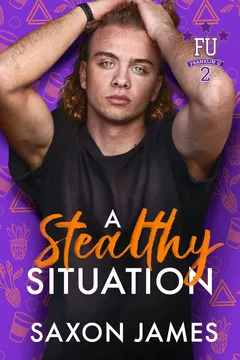


Plot Summary
Prologue
After a drunken party, Benny Dalton1 finds his identical twin,3 Emmett,3 climbing into his bedroom window with bad news: a dare led Emmett3 to start a fire in his dorm, and the university expelled him.
The twins had crossed the country to escape the pressure attached to their hockey-famous family, and Emmett’s3 sudden dependence on Benny1 threatens the separate lives they hoped to build. Benny1 immediately turns from his own plans to protect his brother,3 while Emmett3 hides the expulsion from their older siblings. Their closeness is both shelter and trap.
The opening makes the twins’ intimacy a practical force, not merely an emotional bond. Emmett’s expulsion gives Benny a concrete reason to begin protecting him, while their shared history of switching places makes that protection dangerously easy to extend into deception. Their move away from hockey’s legacy was an attempt to become individuals, yet crisis pulls them back into a fused identity. The prologue also establishes Benny’s reflex: when someone he loves is in trouble, he acts first and considers the cost to himself later. That instinct will shape both his romance and his struggle to own his education.
The Statistics Seat
Harrison Dunn,2 a graduate student devoted to plants, returns to Franklin University unsure how to turn his ecology training into a career. While auditing statistics, he meets Benny Dalton,1 a confident junior who usually gets help from a classmate.
Harrison2 recommends a British comedy, and Benny1 wagers that if it fails to make him laugh, Harrison2 must attend a party at his house. Their teasing quickly becomes easy company. After class, Benny1 surprises Harrison2 with a burger and asks him to bring his roommates to the party.
Harrison2 accepts, pleased to have made a friend beyond his usual circle. Neither yet understands how much the other is looking for: Benny1 wants the handsome redhead,2 while Harrison2 thinks he has simply found someone fun to know.
The first connection grows from a wager, but the wager matters because it lets both men approach intimacy without naming it. Harrison uses enthusiasm as a bridge, offering comedy as something shareable; Benny uses the bet to disguise a wish for continued contact. Their contrasting attention is already visible: Harrison notices experiences and details, while Benny tests the social world with confidence and jokes. The opening also plants Harrison’s central vocational frustration. He knows what he loves, but not how to make other people care about it. Benny’s instinct for reading an audience will later become more than flirtation; it will help Harrison shape his work.
The Attic Above Chaos
At the fraternity party, Benny1 prevents a drunken cooking stunt from setting the kitchen on fire, then leads Harrison2 above the noise to the attic. Harrison2 explains his fascination with plants, while Benny1 listens closely enough to look up the unusual orchid Harrison2 describes.
Their attraction sharpens when Benny1 admits he hoped the night might end in sex. Harrison2 makes clear that he has considered himself straight and does not want to hook up, but he refuses to treat Benny’s1 interest as an offense.
Instead, he stays, accepts Benny’s1 teasing, and joins the Jell-O wrestling in the yard. Benny1 wins the first round of physical attention, while Harrison2 discovers that being close to him is more stirring than his certainty about his sexuality can explain.
The party gives the men a low-stakes setting in which embarrassment can be absorbed by noise, jokes, and spectacle. Yet their conversation in the attic briefly strips away that cover: Harrison shares a passion he expects others to dismiss, and Benny offers desire without pretending it is friendship. Harrison’s response is significant because he neither reciprocates falsely nor punishes Benny for asking. His boundaries are real, but so is his willingness to remain present. The Jell-O match converts the question of attraction into bodily experience, where Harrison’s inherited certainty starts to feel less conclusive than his actual reactions.
The Cleanup Conversation
The morning after the party, Harrison2 turns up to help clean the fraternity house, despite a hangover and the mess Benny’s1 brothers have left behind. As they work, Benny1 explains why some men who call themselves straight may still choose to experiment with another man, and he distinguishes curiosity from using queer people as a stunt.
Harrison2 listens, then spends the rest of their day together watching comedy and wondering what it would be like to kiss Benny.1 That night, he dreams about Benny1 and wakes after an unusually intense orgasm. He tells his roommate Marshall,5 who advises him not to force a test of his sexuality. Harrison2 takes the advice seriously, but the dream makes it impossible to dismiss his interest as abstract curiosity.
The cleanup turns intimacy into a form of shared work: Harrison sees Benny beyond the party persona, and Benny gives him a nuanced account of sexual experimentation without pressuring him. That distinction gives Harrison a safer vocabulary for thoughts he has kept at arm’s length. His dream is not proof of a fixed identity, but it makes denial less comfortable. Marshall’s advice introduces a crucial counterweight to Harrison’s scientific impulse to test everything immediately. The section treats desire as information, not a verdict. Harrison can acknowledge that something is happening without demanding that one encounter explain who he is.
The Chicken Can Wait
Benny1 joins Harrison2 on a day of lawn work, grumbling through broken equipment, heat, and rocks while Harrison2 quietly maintains an elderly widow’s garden without charging her. The contrast unsettles Benny’s1 cynical assumptions about people, and he finds himself admiring Harrison2 as much as wanting him.
At Harrison’s2 home, the two start preparing dinner. Benny1 apologizes for thinking Harrison2 had rejected him, and Harrison2 realizes his own uncertainty had caused the awkwardness. He kisses Benny1 before either can retreat into jokes.
Their first sexual encounter is tentative at first, then unmistakably mutual: they touch each other, share an intense hand job, and stop worrying about what the experience must mean. Afterwards, they shower and eat the chicken dinner they nearly forgot to finish cooking.
The day gives Benny a close view of Harrison’s ethics in action. Harrison helps the widow because her need matters, not because he can prove she deserves it; that unsettles Benny’s defensive habit of expecting selfishness. At dinner, the real obstacle is not a lack of attraction but the way each man has misread the other’s caution. Their first encounter succeeds because Harrison acts from desire without requiring a complete identity theory first, while Benny states what he needs: honesty and friendship afterward. The unfinished meal is a small but fitting consequence. They have let experience interrupt the schedule, and neither wants to pretend it did not matter.
The Greenhouse Wall
Harrison2 keeps texting Benny1 and eventually surprises him with a late-night visit to the campus greenhouse, his favorite place. He shows Benny1 his carefully tended plants, including the flame lily and the ailing rose he calls Rich.
Benny’s1 jokes soften into genuine attention, and Harrison’s2 excitement gives the plants a kind of personality Benny1 can recognize. Their kissing becomes more urgent, and Harrison2 goes down on Benny1 against the greenhouse wall. Without a condom, they improvise with their bodies rather than risk intercourse, but the encounter leaves both wanting another time.
Harrison2 takes Benny1 into the greenhouse afterward, and Benny1 tries to show interest in the plants. Their intimacy now includes the small, deliberate act of being invited into each other’s private worlds.
The greenhouse is both Harrison’s refuge and the place where he most fears being dismissed. Bringing Benny there is a greater act of trust than simply inviting him into bed: Harrison exposes the enthusiasm he often expects people to call strange. Benny responds not by adopting Harrison’s passion wholesale, but by paying attention because it matters to him. Their sexual connection deepens alongside that effort. The encounter also shifts their relationship from a single experiment toward repetition, yet they still avoid discussing what repetition might mean. Their humor protects them, but the growing intimacy makes that protection increasingly thin.
The Scar on Emmett's Hand
In statistics class, Harrison2 notices a scar on Benny’s1 hand that was absent during their intimate encounter. The student beside him panics, leaves class, and Harrison2 realizes he has been sitting with Emmett,3 Benny’s1 identical twin.3
Benny1 later explains that Emmett has been impersonating him in class, continuing a habit the brothers developed years earlier. Harrison2 had never known there were two Daltons3 in his life, and now he questions which moments belonged to Benny1 and whether the brothers deliberately deceived him.
Benny1 insists the switch was meant to let Emmett3 attend class, not manipulate Harrison,2 but the distinction cannot immediately repair the breach. Harrison2 is hurt, confused, and unsure whom he can trust, so Benny1 leaves without resolution.
The scar turns bodily difference into evidence. For Harrison, the revelation destabilizes not only a secret but his own memory of intimacy: he must sort genuine moments from mistaken recognition. Benny’s intention does not erase that impact, especially because their shared habit of switching has made concealment feel ordinary to the twins. The conflict exposes the cost of a fused identity. What protects Benny and Emmett from outside scrutiny also prevents Harrison from knowing whom he is choosing. His withdrawal is not punishment so much as an attempt to recover a reliable account of his own experience.
Benny Waits Outside
After a week apart, Harrison2 sees Emmett3 in class and talks through the confusion with Jordan,11 a fellow student. Emmett3 intervenes, admits Benny1 has been miserable, and pushes Harrison2 to speak to his brother1 directly. Outside the building, Benny1 finds Harrison2 with Jordan11 and assumes he is being replaced.
Harrison2 lets the jealousy surface, then makes clear that the real injury was the secrecy, not Benny1 having a twin.3 Benny1 admits he never slept with anyone else and asks for a chance to date Harrison2 seriously.
Harrison2 agrees, but only after insisting they stop switching identities in class. Benny1 explains how childhood loss and pressure around the Dalton hockey legacy helped make the deception habitual. He returns to statistics under his own name, and Harrison2 promises to help him learn.
The reunion works because both men stop treating vulnerability as something the other should infer. Benny’s jealousy reveals how much he fears being interchangeable, while Harrison’s account names the actual harm: not the existence of Emmett, but the loss of informed trust. Their agreement to end the class-switching is therefore more than a romantic concession. It asks Benny to separate love from concealment and to accept responsibility for a habit that began as childhood improvisation. Harrison’s support is not absolution; it is a commitment to remain present while Benny faces consequences himself.
No More Borrowed Answers
Benny1 starts attending statistics as himself, though the class feels increasingly impossible. He and Harrison2 become a couple, and their physical relationship grows more trusting, but Benny1 cannot admit how far behind he is in basic numeracy.
After a long night studying with Emmett,3 he takes a timed test and leaves certain he has failed. The result confirms it: thirty-two percent. Benny1 is ashamed, not angry at Harrison,2 and cannot bring himself to answer Harrison’s2 messages.
Harrison2 visits with hot chocolate, listens as Benny1 explains that numbers, clocks, and calculations have always defeated him, then recognizes that the problem is deeper than poor preparation. He suggests a professional learning assessment. Benny1 resists the idea at first, fearing that disclosure could expose the cheating, but agrees to seek help.
The test converts Benny’s private workaround into a public limit. His failure is not simply a consequence of stopping the cheating; it reveals how effectively the twins’ arrangement concealed a need neither had learned to name. Benny’s silence after the grade comes from shame, while Harrison’s response matters because he does not confuse a low score with low intelligence. He attends to specific evidence: Benny cannot read an analog clock or handle elementary calculations. The movement toward assessment replaces moral self-condemnation with inquiry. Benny still has to face the deception, but he can now ask what his mind needs rather than only why he has failed.
Thirty-Two Percent
Benny1 gets a referral and begins confronting the possibility that his difficulties have a name, even as he worries an official diagnosis could reveal his academic dishonesty. Harrison2 encourages him without taking control of the decision.
While the assessment process begins, Benny1 and Emmett3 talk about their dependence on each other and get matching linked-triangle tattoos on opposite arms, a visible reminder that they are individuals as well as twins. Harrison2 accidentally tells Benny1 he loves him while discussing his plant project, then repeats it deliberately.
Benny1 admits he loves Harrison2 too. The confession gives their relationship a firmer ground just as Benny1 faces an uncertain academic future. He has not yet solved statistics or told his family the truth, but he is no longer trying to carry either problem entirely alone.
Benny’s assessment is not a clean conversion from shame to confidence. He still fears the institutional consequences of telling the truth, and the tattoos do not erase the twins’ history. Instead, the linked marks make difference and connection coexist: each brother carries a related symbol on a separate body. Harrison’s accidental confession similarly becomes meaningful only when he chooses to say it again, turning a slip into an accountable declaration. Benny’s response is a rare surrender of his usual ironic distance. Love does not solve his academic problem, but it creates a relationship in which his vulnerability can be seen without becoming the whole of his identity.
Plants With a Price Tag
Benny1 helps Harrison2 turn his ecology project into an event built around plants people might actually find fascinating. Rather than present a dry survey, Harrison2 fills the greenhouse with unusual species, including a naked-man orchid and a rare ghost orchid, and explains the less charming facts that make plants essential to human life.
Fifty guests attend the charity dinner, where Harrison2 uses humor, vivid images, and the audience’s appetite for novelty to keep their attention. Benny1 quietly circulates the donation code, and many guests contribute.
Claribel,14 the conservation group’s representative, tells Harrison2 that her director wants to see his findings and may have further work for him. The event proves that Harrison2 can translate passion into public interest, while raising a possible conflict with Benny’s1 plans to return east.
The fundraiser stages Harrison’s central problem in public: ecological importance does not automatically command attention. Benny’s advice helps him recognize that audiences need an entrance, not a lecture, and Harrison builds one through strange plants, humor, and spectacle without abandoning scientific purpose. The money raised is meaningful, but so is the conservation director’s interest, which validates Harrison’s work beyond the university. That opportunity complicates the couple’s imagined future. Love cannot mean that one person must refuse a vocation to preserve proximity; Benny’s support for Harrison’s prospects shows a more mature kind of attachment than possessive reassurance.
A Vermont Contingency
After the holidays, Benny1 receives a formal dyscalculia diagnosis. His clinician explains that he may be able to pass statistics with accommodations, but using university learning support could expose the years of cheating.
Benny1 decides to drop the course for now and consider transferring to Vermont, where his brother-in-law8 Jas8 leads a mathematics department and could help him finish his degree honestly. Emmett3 agrees to go with him, and the brothers plan to tell their older siblings together.
Harrison2 does not ask Benny1 to stay for his sake; he is willing to move or endure time apart while Benny1 pursues the education he needs. They return to campus with the academic problem unresolved, but their future is no longer built on pretending it does not exist.
The diagnosis gives Benny an explanation, not a cure. Accommodations may make the course possible, but the institution’s legitimate questions collide with the twins’ long history of concealment. Benny’s decision to consider Vermont acknowledges that love for Franklin and Harrison cannot substitute for a workable education. Emmett’s choice to accompany him also changes their bond: rather than silently impersonating one another, they can make a shared decision as two people. Harrison’s willingness to support a future that may involve distance is an important counter to Benny’s fear of abandonment. Their resolution is not certainty, but honest contingency.
Epilogue
Ten years later, Harrison2 takes Benny1 into an Australian forest on a trip planned around finding glowing ghost mushrooms. After a long search, they find a cluster illuminating the tree trunks. Harrison2 reveals that the expedition was arranged so he could propose in a place that joined his love of nature with his love for Benny.1
Benny1 accepts, moved by the painstakingly personal gesture. Their relationship has outlasted the uncertainty that once made even a second hookup feel risky, and Harrison2 asks to make their commitment official through marriage.
The proposal completes the book’s recurring movement from private fascination to shared attention. Harrison once worried that nobody cared about plants; now he has spent years learning exactly which natural wonder would matter to Benny because it matters to him. The forest is not merely a scenic backdrop but a record of sustained devotion, research, patience, and deliberate effort. Benny’s acceptance also gives emotional closure to his fear that attachment makes him vulnerable to loss. Marriage does not erase that vulnerability; it makes their chosen interdependence explicit. The glowing mushrooms offer a rare spectacle, but the deeper wonder is the ordinary decade of care that brought them there.
Analysis
The novel links romance to the difficult work of becoming legible to oneself and to other people. Benny1 and Emmett’s3 twinship begins as a source of comfort, but their repeated identity swaps show how closeness can become a shelter from necessary knowledge. Benny1 has let Emmett3 manage a subject he cannot understand, while Emmett’s3 own expulsion leaves him without a plan. Their bond is loving, but love alone cannot make their arrangement sustainable. The matching tattoos offer a compact counterimage: connection remains, yet each brother1 has a mark on his own body.
Benny’s1 dyscalculia also challenges the moral shortcut of treating academic failure as laziness or low intelligence. His cheating is wrong, and the story does not excuse it. At the same time, the diagnosis reveals that the habit grew around an unrecognized disability and years of compensating in secret. Accountability therefore means more than punishment. Benny1 must stop the deception, accept the limits of his knowledge, and seek accommodations even when disclosure could threaten the degree he wants.
Harrison’s2 ecology plot echoes that movement from invisibility to recognition. Plants are vital but routinely ignored because they lack the immediate appeal that drives popular attention. Benny1 helps Harrison2 translate his expertise into an event that attracts donors without requiring him to abandon scientific seriousness. The romance works similarly: Harrison2 first meets Benny1 through banter, but intimacy deepens when each takes the other’s interior life seriously, including the parts that are inconvenient or hard to explain.
Their relationship does not cure either man’s uncertainty. Harrison’s2 changing understanding of his sexuality develops through actual desire and care, not a forced label. Benny’s1 fear of being left does not vanish when Harrison2 commits. The story instead presents love as a practice of truthful participation: Harrison2 supports Benny1 without doing his work for him, Benny1 encourages Harrison’s2 career without demanding proximity, and the brothers3 begin to imagine a future in which they can remain close without pretending to be one person. The ending’s marriage proposal makes that practice visible, but its foundation is built much earlier, in the choices to listen, disclose, and stay.
People Also Read





Characters
Benny Dalton
The snarky hockey escapeeBenny is a confident, quick-witted college student from a family shaped by hockey fame and early loss. He uses humor, flirtation, and apparent self-sufficiency to manage situations that make him feel exposed. His sharp social instincts let him read people and enliven a room, but they also help him hide uncertainty, particularly around school and his future. Benny is intensely loyal to his twin3 and protective of the people he loves, sometimes so automatically that he neglects his own needs. He wants to become a sports journalist partly because he has seen how careless coverage can harm athletes. Beneath his swagger is someone learning that asking for help need not mean surrendering control.
Harrison Dunn
The devoted plant ecologistHarrison is a graduate student who finds wonder in plants, soil, and the systems people overlook. He is warm, sociable, and generous with his attention, though repeated experiences of being dismissed have made him sensitive to whether others take his passions seriously. His ecological work reflects an ethical conviction that care should extend beyond whatever is cute or immediately useful. Harrison is also curious about himself: he has relied on familiar assumptions about attraction without examining them closely. He approaches uncertainty with patience rather than panic, and his capacity to listen lets Benny1 feel valued without being managed. He wants both meaningful work and a relationship built on genuine friendship.
Emmett Dalton
Benny's identical twinEmmett is Benny’s1 identical twin and closest confidant. Where Benny1 performs confidence and deflects discomfort with jokes, Emmett is gentler and more openly earnest, though he can avoid difficult decisions by postponing them. Their shared history makes their loyalty unusually intimate, and their habit of covering for each other grew from childhood mischief into a way of coping with family upheaval. Emmett wants a life separate from the expectations attached to the Dalton name, but he also fears isolation and depends on the familiarity of his brother1. His kindness is genuine, yet his reluctance to explain his plans can leave Benny1 carrying worries Emmett has not invited him to solve.
Felix
Harrison's veterinary friendFelix is Harrison’s2 close friend and one of the two people who share his home. A veterinary student, he feels the emotional weight of difficult cases but relies on his partner, Marshall5, and Harrison2 for support. Felix is affectionate, lively, and perceptive about attraction, often noticing what Harrison2 has not yet admitted to himself. His playful confidence helps make the household a safe place for conversations about identity and relationships.
Marshall
Harrison's thoughtful roommateMarshall is Harrison’s2 best friend and Felix’s4 partner, a graduate student whose interests center on literacy and history. He tends to approach emotional questions carefully and offers Harrison2 a perspective that does not reduce attraction to an immediate physical reaction. His thoughtful, low-pressure advice helps Harrison2 tolerate uncertainty rather than rush to a label. Marshall is observant without being intrusive, making him a steady presence when Harrison2 needs to think aloud.
West Dalton
The retired hockey brotherWest is one of Benny1 and Emmett’s3 older brothers, a former professional hockey player who now coaches. After the family suffered a major loss, he took on substantial responsibility for his younger siblings, which left him protective and sometimes prone to a parental style. He loves the Daltons1 fiercely and wants them safe, but his intensity can make them reluctant to bring him bad news. His history explains why hockey and family responsibility carry such weight for Benny1.
Asher Dalton
The celebrated hockey brotherAsher is an older Dalton sibling whose success in professional hockey intensified the family’s public profile. Benny1 admires his talent but also resents the attention and scrutiny that came with the family name. Asher is direct, competitive, and difficult to fool, especially when he suspects one of his brothers is hiding something. His presence represents both the achievement Benny1 once pursued and the expectations he chose to escape.
Jasper
West's steady husbandJasper is West’s6 husband and a mathematics professor who brings calm, exacting judgment to the Dalton family. Benny1 and Emmett3 respect him as an adult whose approval matters, partly because he is less likely than a Dalton to erupt in anger. His academic expertise makes him a possible source of practical guidance, while his measured manner gives the family a counterbalance to its more impulsive personalities.
Rhys
The mathematics-minded brotherRhys is one of Benny’s1 older siblings, known for exceptional mathematical ability and an early college graduation. His success gives Benny1 an intimidating family comparison, especially when Benny1 struggles with numbers. Rhys is part of the larger Dalton network of support, even when Benny1 fears falling short of what his family finds easy.
Kole
Asher's doctor partnerKole is Asher’s7 partner and a doctor. He belongs to the extended Dalton circle that Benny1 trusts, though the story gives him little direct action. His relationship with Asher7 helps establish that Benny’s1 family includes queer adults whose lives are not organized around hockey.
Jordan
The curious statistics classmateJordan is a student in Harrison2 and Benny’s1 statistics class. He is friendly, attentive, and willing to listen when Harrison2 needs to talk through his confusing feelings. His good-natured presence briefly becomes part of Benny’s1 jealousy, though Jordan is not trying to come between them. He offers Harrison2 an uncomplicated conversation at a tense moment.
Professor Brooks
The fast-talking statistics teacherProfessor Brooks teaches the statistics course Benny1 must complete. Young and brisk in his delivery, he moves quickly through material that Benny1 finds difficult to process. His class becomes the setting where Benny1 can no longer rely on Emmett’s3 academic substitution.
Professor Nottering
Harrison's greenhouse mentorProfessor Nottering supervises Harrison’s2 greenhouse work and supports his research into plant regeneration. He provides Harrison2 with access to the space and encourages the academic project that may shape his future in ecology.
Claribel
The conservation group contactClaribel represents a local conservation organization that helps Harrison2 source unusual plants and organize his public event. She recognizes the value of his project and connects him with the organization’s director, opening a professional door beyond the university.
Plot Devices
The Dalton twin switch
Identity under pressureBenny1 and Emmett3 are identical twins who have sometimes exchanged places, initially for amusement and later to cover for each other at school. The practice lets Emmett3 attend Benny’s1 statistics class, but it also creates the central rupture when Harrison2 mistakes him for Benny1. The switch makes the twins’ closeness concrete while showing how dependence can obscure individual needs. Its consequences extend beyond romance: Benny1 has to stop borrowing Emmett’s3 work and confront the academic gaps the arrangement concealed. The device is introduced in the prologue and becomes the story’s major crisis when Harrison2 recognizes the scar on the wrong twin’s hand.
The statistics course
A test of independenceStatistics is both a required class for Benny’s1 degree and the subject he has most successfully avoided by relying on Emmett3. The course initially gives Benny1 and Harrison2 a reason to sit together, but it later becomes the place where Benny’s1 academic workaround collapses. Once Harrison2 learns about the switching, he refuses to help conceal it and encourages Benny1 to take the class himself. Benny’s1 failing test then exposes difficulties that go far beyond a single semester. The course ties romance to accountability: Harrison2 can support Benny1, but he cannot do the learning for him.
The learning assessment
A name for difficultyHarrison2 notices that Benny’s1 struggle with mathematics, clocks, and measurements may reflect a learning difference rather than laziness or lack of intelligence. He encourages Benny1 to seek professional assessment, which leads to a diagnosis of dyscalculia and discussion of accommodations. The assessment reframes years of shame and hidden coping strategies, but it does not instantly solve Benny’s1 education problem. He must weigh the support he needs against the risk that disclosure could expose his academic dishonesty. The device makes the story’s emotional conflict practical: Benny1 must decide how to pursue a degree honestly while learning what his mind can and cannot do.
Harrison's greenhouse
A garden of trustThe campus greenhouse holds Harrison’s2 research plants and represents the work he fears people find dull. It gives him a place to be fully himself, first in solitude and then with Benny1. Their nighttime encounters there link physical attraction to Harrison’s2 most personal passion, while Benny’s1 curiosity helps Harrison2 see how his ideas might reach a wider audience. The greenhouse eventually becomes the venue for Harrison’s2 charity dinner, transforming a private refuge into a public demonstration. Its role follows Harrison’s2 movement from wanting someone merely to tolerate his interest to making that interest compelling to others.
The plant fundraiser
Wonder made visibleHarrison’s2 charity event tests whether unusual plants and lively storytelling can draw attention and money toward conservation. Benny1 helps him recognize that audiences respond to vivid, surprising details, while Harrison2 supplies the research, care, and conviction behind the spectacle. The dinner allows Harrison2 to present ecology as both strange and essential, raising donations and attracting interest from a conservation organization. It is more than a school project: it puts Harrison’s2 vocation into public view and opens a possible professional path that complicates the couple’s future plans.
Download PDF
Download EPUB
.epub digital book format is ideal for reading ebooks on phones, tablets, and e-readers.








