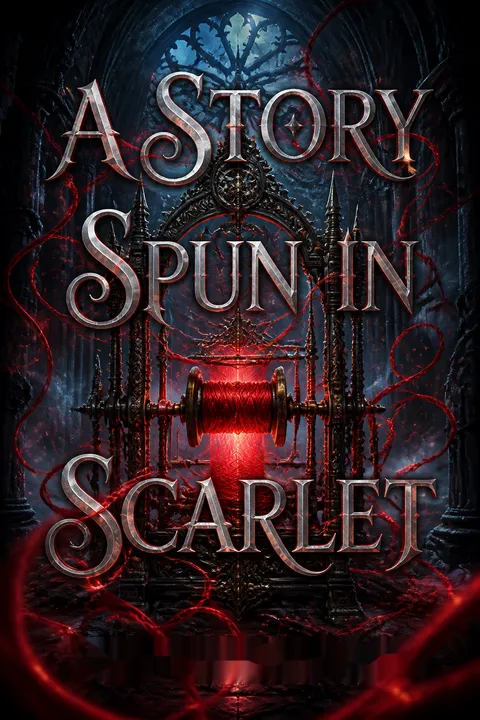


Plot Summary
Stories Lose Their Endings
In a drought-stricken Mithra-Sha, Storycrafter Audra Jashowin can still summon vivid scenes, but every tale collapses before its ending. Her gray cloak marks the loss of the power that once fed the country, and she believes her family rejected her because she can no longer serve them.
After soldiers unsettle her in Rothmere, she slips away and continues south along the glass road, hoping the border city of Krylan will offer work and a place to stay. On the way, she watches farms fail and hears that desperate Storycrafters are turning to dangerous amplifiers. She reaches the city expecting another closed door, but decides this is the last place she will run from.
Audra’s crisis is material as well as magical: failed stories mean failed crops, dwindling meals, and a society searching for someone to blame. Her gray cloak makes private loss publicly legible, reducing a person to a visible measure of usefulness. The belief that her family has rejected her deepens this injury, though she has not yet understood what happened to their memories. Her journey toward Krylan is therefore more than a search for wages. It is an experiment in whether she can remain present in a world that has stopped rewarding her for what she can do.
Krylan’s Guard at the Gate
At Krylan’s gate, the redheaded soldier Galan singles Audra out for being a Storycrafter and threatens to drive her from the city. She stays anyway, stowing her gray cloak and taking work at The Tiller’s Tankard, a tavern run by one-armed former farmer Errick Dubain.
There she finds a modest routine and befriends Lionyra Vara, an immigrant baker who offers food, teasing, and the first reliable kindness Audra has known in years. When a booked troupe cancels and Errick fears he will have to cut staff, Audra agrees to perform a story for his patrons. The bargain promises security, but it also puts her forbidden craft before the very soldiers Galan has warned her to avoid.
Audra’s first act of resistance is practical: she earns wages, changes clothes, and builds a life that does not depend on public recognition. Lio’s friendship matters because it is not payment for a successful performance; she welcomes Audra on ordinary mornings, when there is no magic to admire. Errick’s offer tests whether Audra can keep those parts of life separate. Her choice to perform is understandable, since the money could protect her new home, but it exposes the tension between survival and concealment that will keep shaping her decisions.
The Story That Blooms
Audra begins a serial tale about a cruel king and his Frost Queen, but the story falters when soldiers enter the Tankard. Then she notices Jaik Grissom, a broad-shouldered farmhand whose face matches the hunter in her imagination. With him in the room, her words recover their force: the hunter spares the queen, and the finished tale fills the tavern with flowers and living greenery.
Audra realizes she has completed a story for the first time in years, and that Jaik’s presence made it possible. When he tries to leave, she knocks him unconscious with a street-cleaning bucket and takes him to her room. Lio hears the truth and agrees to help them escape before Galan can seize Jaik.
The flowers are both a wonder and a warning. Audra’s art has returned, but its return immediately creates a market for Jaik’s body and a threat to his freedom. Her impulsive abduction repeats the logic she will later condemn in others: she treats a person as the necessary means to a larger good. Yet her shame and her insistence that he is a person, not a charm, show that she recognizes the contradiction. Lio’s intervention is the first instance of friendship becoming costly action rather than comfort alone.
The Bridge Out of Krylan
With Galan’s soldiers breaking into Audra’s room, she and Jaik flee across a black bridge she creates by telling a pirate story. Jaik chooses not to return to his farm, since Galan would pursue him there, and joins Audra in seeking answers at Fablehaven Academy.
On the road, a notice in Kalvikan pairs Audra’s name with another woman’s face, triggering a panic that Jaik calms by helping her focus on the town around them. Their journey brings its own trust: Jaik shares that his Storycrafter siblings overshadowed him, while Audra admits she has been estranged from her own family. She even overcomes her fear of horses when Jaik steals a mare, Hectra, to carry them faster.
Flight turns the pair into partners, but not equals in the same way. Audra provides the power to reshape their surroundings; Jaik notices danger, makes decisions under pressure, and helps her return from panic. Their exchanged family wounds complicate the simple labels of gifted and ordinary. Both have been defined by what others valued in them, and both know the loneliness of feeling secondary or disposable. The mismatched wanted sketch plants a clue that Audra’s identity is unstable, while the stolen horse makes their shared escape a deliberate break with the life Jaik had built.
Assida’s Scarlet Shadow
In Assida, the birthplace of Storycraft, Audra learns that travelers believe the last Master Storycrafter was murdered and wonders whether that death caused the world’s broken tales. She also sees how many desperate Storycrafters are still seeking amplifiers, and begins to fear that she wants Jaik for her own importance as much as for the country’s recovery.
After she and Jaik reach Dalfi, a wanted notice gives each of them a hundred-gold bounty. Audra goes to the healer Naomi Weathers, an old friend who once seemed to deny knowing her. Naomi treats Audra’s wounds and explains that she had only recently regained the knowledge that Audra existed, as had Audra’s parents. Their lost memories now look like part of the same mystery.
Assida makes Audra confront the possibility that her private wound belongs to a larger historical rupture. Her jealousy of other Storycrafters is not a villainous turn, but a recognizable response to years of being valued only when useful. The bounty sharpens the danger, while Naomi’s account revises Audra’s most painful memory: the apparent rejection by her family may not have been rejection at all. This section shifts the question from how Audra can regain power to what has happened to memory, identity, and the shared account of the past.
The Friend Who Forgot
While Audra heals in Naomi’s home, Jaik and Naomi’s stories confirm that people across Mithra-Sha have forgotten parts of their lives. Galan finds them and admits his old fixation on Audra, then threatens to search Naomi’s house. The trio hide while he leaves to obtain legal papers. Audra proposes a diversion: she and Jaik will draw soldiers away while Naomi gathers Storycrafters at a cathedral.
At the cathedral, Audra tells a completed fable and showers the district with coins, drawing Storycrafters into a rush of shared storytelling. Their gray cloaks regain color and the city blooms with practical gifts. In the confusion, Audra and Jaik escape, but the bounty and the power’s temporary return make their pursuit more urgent.
Naomi’s recovered memories turn the plot toward a collective injury, not merely Audra’s private abandonment. Her willingness to shelter the fugitives also restores the friendship that Audra thought she had lost. The Dalfi diversion matters because Audra uses her talent to give other Storycrafters a brief taste of their own agency, rather than hoarding Jaik’s effect. Yet the magic remains temporary. The spectacle offers proof of possibility without resolving the cause, and it makes the pair more visible to the people who want to control them.
Winter’s Small Miracle
Traveling through the Drennan Peaks, Audra and Jaik discover a village burned after starving neighbors attacked one another for supplies. They bury the dead, then begin helping other communities with small, concealed acts of Storycraft, while avoiding roads likely to expose them.
Their bond deepens through shared nightmares, hard travel, and Jaik’s growing trust in Audra’s judgment. At Fallshyre Bay, they meet three children worried about their sick youngest brother, Laith.
Audra tells him a tale in which a boy finds a stolen winter relic; the story brings snow to the springtime town and gives Laith’s family a night of joy. The miracle confirms that Audra can help without claiming credit, and the pair enlist Captain Julas Cathan to reach the forbidden island.
The burned village gives the country’s crisis a human cost that cannot be softened by fantasy. Audra and Jaik respond by choosing small, survivable interventions instead of spectacular rescues that would reveal their location. The Fallshyre snowstorm is different: its purpose is not to repair the nation but to give a sick child and his family a precious experience. Audra’s restraint around the parents’ gratitude marks a change in motive. She is learning that a good deed need not make its maker famous to matter.
The Athalion Sails
At Fallshyre, Audra and Jaik find Julas, Jaik’s friend and captain of The Athalion. He agrees to sail them toward the Illusionarium after they explain that its tower, Erasure, may hold the record of what happened to their memories and to Storycraft. Audra earns money tending a tavern while Jaik works the docks, and the crew prepares a cover story for the voyage.
During the crossing, Audra’s seasickness confines her below deck, but she later helps the ship’s bookkeeper invent a plausible account of the trip. Their passage becomes more than transport: Julas’s crew has chosen to risk its livelihood for a mission that could restore work and hope to Mithra-Sha.
The ship expands the story’s scale from a fugitive road journey to a communal undertaking. Julas is neither a selfless guide nor a simple mercenary; he weighs danger, payment, and the long-term value of restoring Storycraft. Audra contributes in a quieter register by protecting the crew with a credible account of their voyage. The choice reflects her developing sense of responsibility: power includes not only spectacular creation, but the practical work of shielding other people from consequences they did not choose.
The Siren Takes the Ship
Near the Illusionarium, a Misspoken siren attacks The Athalion, lifting the ship on her tail and swallowing sailors who fall overboard. Jaik uses a rifle to wound her, while Audra tells a storm-and-sea tale that summons a great serpent from wreckage beneath the waves. When the siren seizes Jaik, Audra halts time, cuts herself free of the story’s binding threads, and rescues him.
The action exhausts her, and the siren’s assault kills several members of Julas’s crew, including Henriet and the twins, Nix and Nash. The damaged ship drifts near the watchtowers. Audra’s scarlet cloak marks the strength of her craft, but the rescue cannot undo the lives lost.
The battle makes Audra’s power astonishing and ethically costly at once. She can suspend time to save Jaik, but she cannot protect everyone on the ship. The deaths prevent the fantasy of mastery from becoming a fantasy of control: a story can change material conditions without guaranteeing a just outcome. Jaik’s willingness to fight beside her and Julas’s crew’s courage are essential, yet they do not erase grief. Audra’s scarlet cloak signals extraordinary capacity, not moral exemption from the consequences of using it.
Erasure’s Living Archive
Audra and Jaik row into the Illusionarium, where Misspoken creatures overrun the shore and tear their boat apart. Wounded, they cross the island toward Erasure, a black tower surrounded by corrupted crops, ruined homes, and failed attempts to create living beings. Audra’s stories hold the creatures back long enough for Jaik to climb toward a high window, while she draws the monsters away through a ruined cathedral.
When bog-creatures seize her, Jaik returns, frees her, and helps her reach the tower’s doors. A hidden keeper opens them, and inside the forbidding structure they find a lush archive rather than another prison. The island’s horrors have made the need for answers immediate, not academic.
The Illusionarium is a landscape of desire made grotesque: failed crops, counterfeit children, and monsters that embody grief or desperation without the life their makers wanted. Audra and Jaik survive by dividing labor according to capacity, but the plan requires each to accept vulnerability and trust the other to return. Their entry into Erasure contrasts with the island outside. The archive’s living interior suggests that record and memory can preserve what reckless creation has distorted, though it cannot promise that knowledge will be painless.
The Life Beneath the Story
The keeper identifies himself as the Storymaker and shows Audra and Jaik a scorched account beginning the day after their graduation. Touching the pages returns their missing memories. Audra had become Master Storycrafter, with Jaik assigned as her soldier bodyguard; they fell in love while fighting threats to Mithra-Sha.
When the Sha discovered their plan to escape his control, he had Jaik murdered. Audra pulled the knife from Jaik’s body and tried to bring him back through Storycraft. She succeeded by rewriting the world: Jaik became a living source of story endings, while people forgot them both and their pasts were altered. Audra’s forgotten years and Jaik’s farmhand life were consequences of that rupture.
The revelation recasts the novel’s central relationship without invalidating its lived tenderness. Audra did not meet Jaik by chance in Krylan; she had already loved him, lost him, and created a world that could return him at enormous cost. The story’s speculative mechanism doubles as a psychological truth: grief can rewrite identity, but it cannot make the loss harmless. Audra’s apparent abandonment by family and friends also becomes a consequence of her desperate act, complicating both her victimhood and her responsibility.
Galan’s Last Ambush
The Storymaker explains that Audra’s attempt to restore Jaik stripped endings from every other story and erased memories of them. He offers no simple instruction for repairing the damage. Audra and Jaik leave Erasure by a bridge she creates, but an airship waits beside The Athalion. Galan has arrived with soldiers and holds Julas and the surviving crew captive.
He kills Julas on deck, shoots Jaik in the leg, and breaks Audra’s jaw so she cannot tell stories. The soldiers abandon the crew without sails or supplies, then imprison the pair aboard the airship bound for Vallanmyre. Jaik tells Audra stories through their captivity, keeping her connected to him while she cannot speak.
The return from Erasure does not deliver freedom; knowledge sends the protagonists straight into a more intimate form of violence. Galan uses the crew as leverage and targets Audra’s voice, attacking the very faculty through which she has acted on the world. Julas’s death also exposes the cost borne by people who helped them without knowing the whole history. Jaik’s storytelling reverses their usual roles: he becomes the voice that sustains Audra when she cannot wield her own.
A Shot in the Shastah
In the Shastah, the Sha’s palace, Galan presents Audra and Jaik as bounty captives. Sha Tobyrus Lothar instead orders them treated, reduces Galan’s reward, and has the healer Naomi summoned. Galan attacks when the Sha dismisses him, taking Audra hostage with a knife at her throat. The Sha tosses Jaik a rifle, and Jaik shoots Galan before he can kill her.
Audra and Jaik reunite with Naomi, then with Shadran Arias, Shadress Mahalia, and Reiko, who have all remembered their former lives. The Athalion’s surviving crew is eventually found and taken to Amere-Del for recovery. Galan is gone, but the Sha’s role in Jaik’s original death remains unresolved.
Galan’s defeat removes an immediate persecutor, but the scene does not equate vengeance with repair. Jaik acts decisively to protect Audra, while the Sha’s earlier mercy cannot erase his responsibility for ordering Jaik’s first death. The recovered friendships provide a form of social recognition Audra had believed lost forever. Yet those reunions coexist with grief for Julas and the crew’s dead. The novel insists that restored memory creates obligations as well as comfort: knowing what happened means choosing what to do with that knowledge.
The Price of Repair
After a month of recovery and cautious reunion in the Shastah, Audra confronts the Sha and Shadre. They apologize for their choices and warn that the only plausible way to restore Storycraft is for Audra to undo the power she placed in Jaik. They cannot predict whether he will survive. Audra takes Jaik and their friends to Fablehaven, searching its vast library for another method.
Week after week, the books offer no answer. Meanwhile, Jaik remains beside her as her hope dwindles, and Audra recognizes that continuing the search only delays a choice the country cannot afford to postpone. She returns to the Shastah knowing that restoring the stories may cost her the person she has already lost once.
This is the novel’s most severe moral bind because no option preserves every good. Audra’s wish to save Jaik is not selfish in itself; it becomes dangerous when it requires a whole society to live inside the damage of her grief. The fruitless library search dramatizes the limits of expertise: archives can disclose what happened, but they cannot choose for her. Her decision is not made through confidence or emotional detachment. It emerges from accepting that love cannot authorize her to keep everyone else suspended.
Vows Before the Tearing
Before attempting the repair, Audra tells Jaik she will stop searching for a way to spare him. He understands that restoring the world may kill him or erase their memories again, but agrees to face the risk with her. They exchange marriage vows in private, wearing Jaik’s ring, and spend their final night recounting the life they made together.
At dawn, Audra gathers the Sha, Shadre, Naomi, Arias, Mahalia, and Reiko in the Convening Chamber. She refuses their pleas to wait, gives Jaik her journal, and kneels with him where she once held his dead body. She begins telling their shared story, determined to return the stolen power to its source.
The vows do not solve the dilemma; they clarify what is at stake. Jaik consents to the risk, while Audra recognizes that consent cannot make the choice painless or guarantee its outcome. The journal becomes a portable record of a self that may be forgotten, a small act of preservation against the scale of her magic. Her friends’ presence also counters the isolation that once drove her to believe usefulness was the only route to love. She proceeds not because she has stopped fearing loss, but because she accepts responsibility for the damage she caused.
A Tale Retold
Audra retells the history of Jaik and herself, pushing her Storycraft out of him and back toward the world. The force of the tale tears through her identity as well as the altered reality, and she feels Jaik holding on to her through the final surge. The book ends the scene without showing whether Jaik lives or what either of them remembers afterward.
Its epilogue jumps ahead a year and a half: Audra is a barmistress in Krylan, living with Jaik’s cat, Sheeba, and believing her family has rejected her. When Jaik arrives with the Sha and their old friends, Audra does not recognize their shared past. He returns after the others leave and offers to tell her a story.
The climax deliberately withholds the clean accounting that fantasy often promises. Audra performs the repair, but the reader cannot yet know whether its price is death, memory, or another transformed life. The epilogue makes that uncertainty concrete: the world appears restored, yet Audra has again been separated from the people who love her. Jaik’s return changes the final note from simple tragedy to an invitation, not a guarantee. Stories can bring people near, but recognition and intimacy still require acts of attention in the present.
Epilogue
A year and a half later, Audra works at a Krylan tavern and believes her family has cast her off. She lives modestly, shares her room with Sheeba, and reads adventure stories to escape the loneliness she cannot explain. One day the Sha, his family, and Audra’s old friends visit, but she recognizes them only by reputation.
Jaik, now a powerful soldier, waits until the others leave before approaching her alone. He brings her lost journal, whose unfinished tales he has completed, and says he came to find her. Audra cannot yet remember why he matters, but his familiar stories and her sudden sense of home pull her toward him.
The epilogue makes the restoration of Storycraft inseparable from the cost of restoring it. Mithra-Sha has recovered its color and capacity, but Audra’s personal history has again been taken from her. Her ordinary tavern work recalls the life she once built in Krylan, while Jaik’s journal links that life to the story she cannot consciously recall. His choice to approach her privately respects the difference between forcing memory and inviting connection. The ending leaves their reunion unfinished, suggesting that repair may restore possibility without restoring the past exactly as it was.
Analysis
The novel makes storytelling both infrastructure and intimacy. In Mithra-Sha, stories once sustained crops, transport, and public life, so their failure is not an abstract artistic drought but a material emergency. Audra’s private longing to finish a tale therefore meets a genuine collective need. The ethical problem is that usefulness can become another form of captivity: Jaik is pursued as a power source, while Audra repeatedly risks confusing being needed with being loved.
Their romance counters this instrumental logic through concrete acts of attention. Jaik steadies Audra during panic, shares his own wounds, and stays beside her when her usefulness is uncertain. Audra gradually learns to help without demanding recognition. Yet the story does not present love as a magic exemption from responsibility. Her original attempt to restore Jaik has consequences for the whole country, and repairing them requires her to accept a possible second loss.
Memory provides the novel’s sharpest account of identity. Audra’s family’s apparent rejection, Jaik’s farmhand life, and the missing endings all arise from a rewritten history. The revelation does not make their later experiences false; instead, it shows that a life can be authentic even when its remembered explanation is incomplete. The epilogue extends that idea by leaving Audra without her past but not without the possibility of connection.
The book’s resolution remains deliberately open. Audra chooses the country’s future over preserving the altered world she made, but the consequences are not fully disclosed. Its moral center is less about heroic self-sacrifice than about consent, accountability, and the limits of repair. The final meeting asks whether love can begin again without memory, and whether a story can offer an invitation without dictating its ending.
Review Summary
People Also Read
Characters
Audra Jashowin
The unfinished storytellerAudra is a trained Storycrafter whose gray cloak reflects the failure of stories across Mithra-Sha. Resourceful and observant, she has spent years surviving on the road, yet privately measures her worth by whether she can help, impress, or keep someone from leaving. Her storytelling lets her shape the world, but her deeper struggle is learning to distinguish service from self-erasure. She is capable of tenderness and courage, but fear can turn her into a planner who makes choices for others. The story follows her effort to build trust, accept responsibility, and find a sense of worth that does not depend entirely on her power.
Jaik Grissom
The wary farmhandJaik is a strong, quick-witted farmhand who values practical work, self-reliance, and the small comforts of a settled life. Being overlooked in a family that prized his Storycrafter siblings left him wary of the craft and of people who might want something from him. Beneath his humor, he is attentive to fear and skilled at helping others regain their footing. He notices what a situation requires, whether that means finding a safe route, calming Audra, or taking a risk on someone he barely knows. His grounded judgment balances Audra’s imagination, while his guardedness gives their growing trust real stakes.
Galan Fiordona
The resentful soldierGalan is a disciplined, ambitious soldier whose resentment toward Storycrafters has hardened into contempt. He believes the military is being denied respect and resources, and he turns that grievance into personal hostility toward Audra and her kind. His controlled public manner masks an appetite for authority and revenge. Galan is dangerous not simply because he carries weapons, but because he interprets injury to his pride as proof that others deserve punishment. His fixation reveals how a legitimate conflict over status can become destructive when a person refuses to separate collective grievance from private humiliation.
Naomi Weathers
The steadfast healerNaomi is a gifted healer and Audra’s closest friend from their academy years. Practical, perceptive, and capable of fierce loyalty, she tends to answer danger with useful action rather than elaborate reassurance. Her training in healing and poison gives her both skill and confidence, while her warmth makes her a rare person with whom Audra can be unguarded. Naomi also carries her own private burdens and has built a life in Dalfi that does not revolve around Audra. Their friendship matters because it must make room for both the love they share and the time they have lived apart.
Lionyra Vara
The generous bakerLionyra, whom Audra calls Lio, is an Ameresh baker who runs The Secret Ingredient in Krylan. Bold, sociable, and ambitious, she treats friendship as something to practice through meals, teasing, and attention to small details. Her warmth gives Audra a first glimpse of home after years of rejection. Lio is not naïve about danger: when Audra needs help, she weighs the risks and acts anyway. Her bakery and chosen community show how hospitality can create belonging without asking someone to prove their usefulness first.
Errick Dubain
The practical tavernkeeperErrick owns The Tiller’s Tankard and gives Audra paid work when she arrives in Krylan. A former farmer, he values laborers and tries to keep his tavern viable without abandoning the people who depend on it. His request that Audra perform is driven by economic pressure, not cruelty, and it forces her to choose between safety and security. Errick represents the ordinary people whose livelihoods have been damaged by the disappearance of Storycraft.
Tobyrus Lothar
The burdened ShaTobyrus rules Mithra-Sha and carries responsibility for a country facing famine, failed crops, and the loss of Storycraft. He is capable of affection and generosity, but the pressure to protect his people can make him controlling and politically fearful. His relationship with Audra combines mentorship, trust, and the unequal authority of ruler and gifted subject. He relies on her talent because he believes the country cannot manage without it, a belief that tests whether his care for her can coexist with respect for her independence.
Shadre Calten Lothar
The Hadrassi co-rulerCalten is Tobyrus’s wife and co-ruler, born in Hadrass-Drui. She is composed, politically astute, and practiced at navigating the obligations attached to rank. Her perspective helps frame the choices facing Audra and the Sha, especially the tension between private loyalty and public responsibility. Calten’s own experience of duty gives her empathy, but she does not mistake empathy for a solution to the country’s material crisis.
Shadran Arias Lothar
The heir and loyal friendArias is the Sha’s son and heir, a confident, socially adept man who often uses humor to ease tense rooms. He is also observant about the pressure carried by those expected to inherit authority. His friendship with Audra and Jaik reaches beyond palace politics, giving him a place among the people who understand their private histories. Arias’s charm can make him seem carefree, but he takes the consequences of his family’s choices seriously.
Shadress Mahalia Lothar
The watchful young artistMahalia is Tobyrus and Calten’s daughter, a gifted artist whose sketchbook is almost always near. Quietly attentive, she notices changes in people that louder personalities miss. Her gentleness is not passivity: she remains engaged with the difficult political and personal choices surrounding her family. As a friend to Audra, she offers a form of care grounded in observation rather than control.
Reiko Nayori
The formidable rivalReiko is a powerful Storycrafter and one of Audra’s most capable peers. Blunt, competitive, and drawn to dramatic challenges, she dislikes false modesty and expects people to meet her directly. Her rivalry with Audra contains respect as well as friction; both recognize the other’s talent. Reiko’s ambition makes her a useful counterpoint to Audra’s uncertainty about whether she wants the authority attached to exceptional power.
Jularius Cathan
The daring sea captainJulas, captain of The Athalion, is Jaik’s old friend and a charismatic leader with a taste for risk. He jokes easily, but takes the welfare of his crew seriously and weighs the cost of every dangerous voyage. His willingness to help Audra and Jaik grows from loyalty and the practical hope that restored Storycraft could help everyone earn a living. Julas makes the crew feel like a community rather than hired transport.
The Storymaker
The keeper of beginningsThe Storymaker is the divine source associated with Storycraft, a presence invoked in the beliefs and lessons Audra carries from Fablehaven. The idea of a maker who gives stories their first shape influences how Audra understands talent, responsibility, and the limits of creation. The Storymaker’s role in the world’s folklore makes the power of storytelling feel both sacred and dangerous, rather than merely useful.
Laith
The hopeful young listenerLaith is a sick boy Audra meets in Fallshyre, traveling with his siblings, Lainey and Ziek. His curiosity and delight in stories persist despite his illness and the worries of his family. He responds to Audra’s tale with the imaginative openness that her art can still awaken, reminding her that an audience may need wonder as much as practical aid.
Hectra
The steadfast gray mareHectra is the mare Jaik takes from a breeding compound to speed their flight. She is strong, responsive, and a source of comfort as Audra works through her fear of riding. Her presence makes the pair less dependent on roads and gives them a practical way to cross the winter mountains.
Sheeba
Jaik’s beloved farm catSheeba is Jaik’s cat, a familiar companion tied to the quiet farm life he once valued. Even when Jaik must leave Krylan, concern for her remains one of the concrete costs he feels. Sheeba represents the domestic attachments that make his adventure more than a heroic escape.
Plot Devices
Storycraft
Words that alter the worldStorycrafters can make elements of their spoken tales manifest, from flowers and bridges to changes in weather and terrain. A story needs a coherent shape and ending to reach its full power. When endings disappear, the craft weakens and the country suffers. Audra’s unusual talent can produce particularly powerful effects, but every use carries risks, especially when stories are forced through amplifiers or used to create living beings. Storycraft is at once a practical public resource, an artistic act, and a temptation to treat people as tools.
Gray and scarlet cloaks
Visible measures of craftStorycrafter cloaks change color according to their wearers’ ability. When stories lose their endings, the cloaks turn gray, making the craft’s decline visible in public. As Audra regains power and uses it, her cloak gradually takes on color, eventually reaching scarlet. The shifting fabric gives the characters and reader a concrete sign of Storycraft’s condition, while also tying questions of status to the danger of measuring a person only by talent.
Jaik’s amplification
A human source of endingsStories told near Jaik gain the force needed to reach an ending, allowing Storycrafters to manifest their tales again. At first, Audra assumes this is simply a rare ability belonging to a farmhand. The effect draws attention from Storycrafters, soldiers, and bounty hunters, making Jaik’s autonomy a central conflict. His power also links personal history to the larger collapse of Storycraft, so the apparent solution to the nation’s crisis becomes bound to a question of life and loss.
The Illusionarium and Erasure
A prison beside the recordThe Illusionarium is an island where dangerous Misspoken manifestations are confined. At its center stands Erasure, a tower believed to hold the record of stories and events. The island turns desperate, failed attempts at creation into a hostile landscape, while the tower offers a place to investigate why stories and memories have changed. Reaching it forces Audra and Jaik to confront the consequences of Storycraft in physical form before they can learn what happened to their own past.
The two-sided coin
A symbol of uncertain fortuneLuck is represented as a coin whose two faces promise opposing outcomes. Characters invoke it when they gamble, travel, or face a choice without a safe answer. The coin recurs in statues, tokens, prayers, and the language of ordinary people, giving the country a shared image for uncertainty. It also reflects the novel’s refusal to treat courage as control: characters can make meaningful choices, but they cannot guarantee what those choices will cost.
Download PDF
Download EPUB
.epub digital book format is ideal for reading ebooks on phones, tablets, and e-readers.








