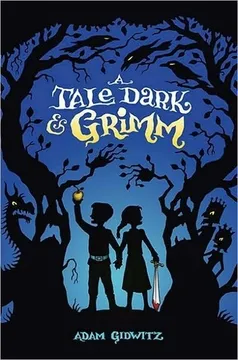


Plot Summary
Johannes Pays the King's Debt
On his deathbed, an old king warns his servant Johannes3 to keep his son4 from a portrait of a cursed golden princess.5 The young prince4 sees it anyway, falls in love, and persuades Johannes3 to help him bring her home. During the voyage, three ravens12 foretell disasters; Johannes3 secretly prevents each one, but the king4 mistakes his rescues for treachery.
Johannes3 explains the prophecies and turns to stone as punishment. Years later, the king4 sacrifices his twins, Hansel2 and Gretel,1 to restore the servant,3 then revives the children too. When the twins hear how readily their parents4 accepted the sacrifice, they fear it could happen again and run away. Their escape begins a search for a family that will not harm them.
The book makes parental love difficult to take for granted from its first family scene. The king’s willingness to sacrifice his children grows from gratitude to Johannes, but the twins experience it as proof that adults may value duty, debt, or their own judgment above a child’s safety. Johannes’s loyalty is also double-edged: he protects the royal couple, yet his silence and secrecy help create the crisis. By having the children hear the adults’ account, the story turns an ostensibly miraculous restoration into a rupture of trust. Hansel and Gretel do not flee because they are unloved; they flee because love has not made them safe.
The Chocolate House Trap
Lost in a swamp and hungry, Hansel2 and Gretel1 find a house made of cake. Its owner, a baker,6 welcomes them with rich meals and lets them eat and sleep as they please. The comfort hides a plan: she wants to fatten the children before eating them. When she cages Gretel1 and tells Hansel2 she will roast his sister,1 he is too sluggish and overfed to act at first.
Then the baker6 pushes him into her oven to test its heat. Hansel2 uses the smell of food hidden in his clothes to delay her, then tricks her into climbing inside and shuts the door. He frees Gretel,1 and the siblings leave the house. Their second refuge has proved as dangerous as their first.
The baker’s hospitality is frightening because it answers the children’s immediate needs while quietly weakening their ability to protect themselves. Hansel and Gretel mistake abundance and freedom from chores for safety; the baker exploits that confusion, turning care into consumption. Hansel’s rescue of Gretel is imperfect and unheroic at first. He hesitates, then succeeds through a small deception rather than strength. His reluctance to let the baker out after she begs for mercy introduces a difficult question the book will return to: whether recognizing another person’s suffering requires trusting them again. Leaving the cake house is survival, not yet a settled understanding of kindness.
The Crystal Mountain's Price
A father who has long wished for a daughter7 welcomes Hansel2 and Gretel,1 while his wife quietly grieves over seven empty beds. The children discover why: after the boys accidentally drop a bath into a well, their father7 angrily wishes them into swallows. Gretel1 blames herself for replacing the daughter he wanted and persuades Hansel2 to help find them.
The stars reveal that the birds are trapped in the Crystal Mountain and give Gretel1 a chicken bone to open its door. After months of travel, she discovers the bone is lost. Desperate to finish what she began, Gretel1 cuts off her own finger and uses it as the key. The brothers return to human form, but Hansel2 and Gretel1 decline their invitation home, choosing to rely on each other instead.
Gretel’s guilt again makes her take responsibility for an adult’s damaging choice. She believes the father’s wish concerns her, even though she did not cause his anger or the boys’ accident. The journey gives that guilt a concrete task, and her severed finger shows how far she will go to repair harm she feels responsible for. Yet rescuing the brothers does not restore her faith in parents. Their father wanted a daughter so intensely that his sons became expendable; for Hansel, that joins a growing pattern of adults whose needs make children unsafe. The siblings leave with greater strength, but also with a more guarded idea of family.
Hansel Becomes the Hunt
In a green forest, Hansel2 and Gretel1 build a hut after a talking tree invites them to stay, warning them to take only what they need. Hansel2 first kills a rabbit, then a fawn, and finally a dove, each hunt drawing him further from Gretel1 and from ordinary speech. He grows hairy and animal-like as the forest’s creatures disappear.
When a duke’s hunting party enters the wood, the dogs chase Hansel2 to a stream, where the duke shoots him. Gretel1 finds blood by the water and believes her brother2 is dead. With the forest emptied and no one left to protect her, she abandons their hut and returns to human settlements, still carrying grief and the suspicion that she has failed him.
The Lebenwald begins as a place where the children can imagine life without adults, but its promise of freedom does not mean freedom from limits. Hansel’s hunting starts as excitement and becomes compulsion; each act leaves him less able to recognize the boundary Gretel asks him to respect. The emptying forest makes his private appetite visible as damage to a shared world. Gretel’s position is painful in a different way: she tries to care for Hansel, but cannot control him or keep him safe. His apparent death breaks their self-made family apart and leaves her facing the limits of love without support.
Gretel's Smile of Red
A silver-haired widow8 shelters Gretel1 in a village, where the girl becomes fascinated by a handsome young man9 who charms children and mends their broken toys with twine. He invites Gretel1 to his house in the feared Schwarzwald. Though the widow8 warns her, Gretel1 goes, scattering lentils behind her in case rain erases the path.
In the cellar, the young man9 kills a girl and pulls her soul from her body in the shape of a dove. Gretel1 escapes with the dead girl’s severed, ringed finger, following lentils that have sprouted into a trail. Three ravens12 then explain that their earlier prophecies shaped much of her family’s misfortune, not Gretel's1 choices. At a harvest feast, she uses the finger to expose the warlock,9 and the villagers kill him.
Gretel’s infatuation makes danger harder to recognize, not because she is foolish, but because being noticed by someone admired feels like evidence of belonging. The widow’s warning cannot compete with Gretel’s fear that the young man will forget her. Once she sees his violence, she turns private suspicion into public proof by carrying the finger back to the village. The ravens’ account loosens her habit of blaming herself for every injury around her, but it does not erase the losses or excuse the people who harmed her. Gretel acts despite uncertainty, and this time the community listens before more girls disappear.
A Wager on Hansel
The duke’s hunters discover that the creature they shot is Hansel,2 still breathing beneath his animal hide. A childless lord13 and lady14 take him in, and he begins trying to live responsibly, haunted by the way he abandoned Gretel1 and ravaged the forest. His refuge collapses when the lord’s13 secret gambling habit leads him to wager the stool beside his library fire against a stranger.
The stranger is the Devil,11 and Hansel2 is sitting on the stool. The Devil11 claims the boy and orders him to Hell within three days. As Hansel2 despairs beneath an elm, an ugly, ancient man3 recognizes him but does not explain how. He offers to guide Hansel2 to Hell and tells him that three golden hairs from the Devil11 may offer a way out.
Hansel’s recovery begins not with punishment but with a decision to change after seeing the harm he caused. The lord’s wager then shows how one adult’s concealed weakness can place a child in danger without the child having any part in it. Hansel has already learned that being good does not guarantee protection, so the Devil’s claim threatens to make responsibility feel pointless. The old stranger offers practical help rather than reassurance, and Hansel accepts despite not knowing who he is. His next journey is therefore both literal and moral: he must face suffering without returning to the impulsiveness that once made him a danger to others.
Three Hairs from Hell
On the road to Hell, Hansel2 promises help to a city whose wine fountain has stopped, another whose golden-apple tree is barren, and a ferryman trapped at his post. Inside Hell, Hansel2 finds the baker woman6 suffering and asks the demons to stop tormenting her, but they refuse.
He endures the fire without giving them the scream they want, then reaches the Devil’s11 home. Disguised as the Devil’s grandmother,15 he plucks three golden hairs and learns that a frog blocks the fountain, a mouse gnaws the apple tree’s roots, and the ferryman can escape by handing over his paddle.
Hansel2 flees and tricks the Devil11 into taking the paddle, trapping him. The old guide3 reveals himself as Johannes,3 tells Hansel2 a dragon10 threatens Grimm, then dies after urging him to find Gretel.1
Hansel’s escape depends less on force than on attention and restraint. He notices that the Devil’s household has routines, disguises himself within them, and turns the villain’s pleasure in causing misery into useful information. His plea for the baker woman matters even though it fails: he can acknowledge her past harm without wanting endless torture for her. The three towns’ troubles also widen his concern beyond his own fate. Johannes’s revelation binds the children’s present danger to the old family history, but his death leaves Hansel with responsibility rather than a guide. The boy who once let appetite rule him now carries knowledge intended to help others.
The Twins Find Home
Hansel2 returns to the villages and tells them how to free the wine fountain and save the golden-apple tree. They reward him with carts of wine and gold, which he hauls toward Grimm while asking at every stop for news of Gretel.1
Meanwhile, Gretel1 learns in a tavern that a dragon10 has destroyed towns and that the king4 and queen’s5 twins vanished years earlier. She sets out toward the castle just as Hansel2 reaches the same road. The siblings recognize each other and embrace in a muddy puddle, alive after believing the other lost.
Together they enter a ruined kingdom, give a golden apple to a starving family, and let the villagers identify them as the missing prince2 and princess.1 Their parents4 welcome them, but the twins turn from reunion to the dragon’s10 threat.
The reunion is earned through separate acts of endurance: Hansel carries gifts earned by solving other people’s problems, while Gretel has survived grief and the warlock’s threat alone. Their muddy embrace refuses the grandeur expected of royal heirs; they are simply siblings relieved to touch one another again. The golden apple becomes more than treasure when Gretel gives it to a hungry family, making the twins’ return materially useful to people the dragon has impoverished. Yet coming home does not instantly repair the family. Hansel and Gretel can accept their parents’ welcome while remaining alert to the kingdom’s danger and to the damage adults have caused.
The Forest Ambush
Hansel2 and Gretel1 propose drawing the dragon10 to a cart of golden apples, then attacking from cover. They recruit about five hundred volunteers, despite ridicule from villagers who remember the dragon10 destroying an army.
In the forest, the beast approaches from behind and kills many before Hansel2 can draw it away from the survivors. Gretel1 follows the plan to the clearing, where the dragon10 drinks from the barrels of wine they added as bait. When it grows unsteady, she cuts off two toes with an axe.
The wounded creature chases her up a pine tree; the ravens12 attack it, and the moon bites its face. Gretel1 falls but lands on the ravens,12 while Hansel2 survives by helping the wounded. The siblings escape, but many volunteers are dead and the dragon10 remains alive.
The failed ambush changes the children’s understanding of leadership: courage can gather people, but it cannot make a plan safe or make followers invulnerable. The villagers’ skepticism was not merely cowardice; they had seen an army fail, and the dragon’s surprise attack confirms their fear. Gretel’s wound to the creature is a real achievement, yet it comes amid losses that no victory speech can soften. Hansel’s choice to help the injured instead of pursuing the dragon marks a different kind of bravery from the one the plan demanded. The siblings return with evidence that the monster can be hurt, and with the cost of asking others to fight.
Their Father, the Dragon
After the battle, Gretel1 connects the dragon’s10 missing toes and facial wound to the king’s4 bandaged head and injured foot. She also remembers that attacks began while her father4 was away and that he knew the first plan.
She enters his room with a dagger, but the king’s4 golden, pupil-less eyes confirm her suspicion: the dragon has possessed him without his awareness. Hansel2 takes a sword and beheads their father4 to stop the creature. A tiny dragon10 crawls from the king’s4 neck; Hansel2 chops it apart and burns it.
Gretel1 finds the warlock’s9 twine and ties the king’s4 head back on. Their tears and forgiveness bring him around. Their mother,5 unaware of the possession, agrees that the guilty person must be stopped, then joins the family as the twins reveal their father4 is alive.
The revelation forces the siblings to confront the same wound that began their flight: their father once cut off their heads, and now they must decide whether to kill him. This time the act is not obedience to an adult’s demand but a choice made to protect the kingdom and each other. Yet the book refuses to make that choice clean. The king is both their beloved father and the body through which the dragon acts; the children must stop one without surrendering the other. The twine and their tears repair what violence alone cannot. Forgiveness does not undo the beheading; it gives the family a way to live after it.
Children Take the Crown
As the dragon’s10 golden smoke spreads from the castle, the kingdom gathers outside to learn what happened. The royal servants relay Hansel2 and Gretel’s1 adventures through the halls and onto a balcony, turning their private history into a story the people can hear.
When the king4 admits that his possessed body nearly destroyed Grimm, he gives up the crown and asks the queen5 to do the same. The people first hesitate at the prospect of children ruling, but survivors from the battle call for Hansel2 and Gretel,1 and the crowd joins them.
Their parents4 promise to help while the twins learn to govern. The siblings accept the responsibility of caring for their subjects, while holding their parents’4 hands. The kingdom’s ending is not a return to innocence, but a family and a people beginning again with the truth in view.
The story’s ending turns private testimony into public responsibility. The servants’ improvised relay makes the twins’ history available to the kingdom, while the king’s confession prevents the dragon’s destruction from being blamed on an external monster alone. Abdication acknowledges that good intentions do not erase consequences, and the citizens’ support gives the children authority grounded in what they have done rather than their bloodline alone. The parents remain present, but they no longer claim unquestioned control. Hansel and Gretel inherit a kingdom as children who know adults can fail, and whose task is to care for others better than they were cared for.
Analysis
A Tale Dark & Grimm makes childhood a position of limited power, not a condition of innocence. Hansel2 and Gretel1 repeatedly enter homes where adults control food, shelter, knowledge, or physical safety. The baker6 feeds them into dependence; the father of the seven brothers7 turns anger into a wish that alters his sons; the king4 once treats his children’s bodies as payment. These dangers are fantastical, but their emotional logic is recognizable: a child often cannot know whether an adult’s care is trustworthy until its cost becomes visible.
The siblings respond differently. Gretel1 turns fear into action and guilt into rescue, sometimes punishing herself for choices that were never hers to carry. Hansel2 begins by following appetite and impulse, then uses remorse to change how he acts. Neither becomes invulnerable. Their courage includes hesitation, grief, and the willingness to help people who have hurt them. Their separate journeys make reunion meaningful because neither simply waits to be saved by the other.
The book also distinguishes forgiveness from erasure. When Hansel2 and Gretel1 face their parents,4 they do not pretend the past was harmless. They first redirect attention to the dragon,10 then make the difficult choice to act against their father’s possessed body while preserving the possibility of the father4 himself. The mending twine and their tears offer a repair, not a claim that nothing broke. The king’s4 public confession and abdication extend that principle from family to government: authority must answer for its consequences.
Finally, the tales refuse a single tidy explanation for suffering. Prophecy, appetite, chance, adult weakness, and deliberate cruelty all shape events, but none makes every choice meaningless. The children’s task is not to discover a world without danger. It is to learn how to act within one, carry responsibility without mistaking it for total blame, and build forms of care that do not demand a child’s silence or sacrifice.
Review Summary
Reviews for A Tale Dark & Grimm are largely positive, averaging 4.07/5. Readers praise Gidwitz's creative weaving of original Grimm fairy tales into a cohesive Hansel and Gretel narrative, highlighting the balance of dark violence with humor. The intrusive narrator draws frequent Lemony Snicket comparisons, receiving mixed reactions. Many appreciate the characters' meaningful growth throughout. Common criticisms include the narrator feeling repetitive or heavy-handed, and some finding the plot choppy. Several reviewers note the content feels too graphic for younger readers, suggesting ages 10-11 as a more appropriate minimum.
People Also Read

Characters
Gretel
The relentless sisterGretel is observant, forceful, and quick to assume responsibility when someone is hurt. Her courage is not fearlessness: she hesitates before entering the Schwarzwald, worries over her brother2, and feels guilt even when adults have made the choices that caused harm. That instinct makes her resourceful, but it can also turn care into self-punishment, as her journey to the Crystal Mountain shows. Gretel often sees what Hansel2 misses, from the sadness beneath a welcoming home to clues that a threat is closer than it appears. Her bond with Hansel2 gives her a reason to keep moving, while her experiences force her to distinguish genuine responsibility from blame she has taken on herself.
Hansel
The hard-won brotherHansel begins as a child driven by immediate appetites: food, excitement, and the thrill of the hunt. He loves Gretel1, but affection alone does not keep him from hurting her or the world around them. His later shame is painful because he understands the damage only after he has caused it. Rather than treating guilt as a sentence, Hansel tries to turn it into a change in conduct, becoming more attentive to people beyond himself. He is not naturally as decisive as Gretel1, and often needs time or a practical problem before he can act. His tenderness emerges most clearly when he protects, listens, and accepts responsibility.
Faithful Johannes
The burden-bearing servantJohannes is an old royal servant whose loyalty spans generations. He understands service as taking on the burdens of those he serves, not merely obeying their orders. That conviction makes him brave and perceptive, but also secretive: he repeatedly acts without explaining himself, leaving others to misread his motives. His appearance is grotesque, yet his attention to the king4 and later to the lost children is deeply humane. Johannes’s story places a difficult question at the center of the book: when does bearing another person’s burden become care, and when does it allow that person to avoid understanding the cost of their choices?
The King
A troubled fatherHansel2 and Gretel’s1 father is both a ruler responsible for a kingdom and a parent responsible for two children. He can be loving and playful, yet he makes grave choices while convinced that he is honoring a debt or doing what is necessary. His remorse does not immediately repair his children’s trust, and their distance exposes how little an apology can demand from those who were hurt. The king’s story is bound to the book’s interest in responsibility: good intentions are not enough when actions endanger other people. He must learn to listen to his children as people with knowledge and judgment of their own.
The Queen
A loving, grieving motherHansel2 and Gretel’s1 mother is warm and devoted, but she is not able to shield them from every danger within her family. She carries grief over Johannes3 and loves her children fiercely, yet her first responses are shaped by the king’s4 decisions and the limits of what she knows. Her willingness to face painful choices makes her more than a comforting presence, while her children’s guardedness reminds her that affection cannot substitute for trust. She represents the possibility of family repair, but not an easy or automatic one.
The Baker Woman
The devouring caregiverThe baker woman offers Hansel2 and Gretel1 food, shelter, and freedom from work, but her generosity conceals a hunger that makes the children prey. She understands what they want and uses it to keep them dependent and unalert. Her ordinary, domestic surroundings make her threat more disturbing than a stranger’s open hostility: the danger grows inside a home that looks welcoming. She is a grotesque version of care without regard for a child’s growth or autonomy.
The Seven Brothers' Father
The wishful parentA village father longs for a daughter and welcomes Hansel2 and Gretel1 with unguarded excitement. His temper turns a small accident involving a bath into a catastrophic wish, revealing how quickly a parent’s frustration can reshape a child’s life. He is not presented as purely cruel: he and his wife care for the twins, and his grief over the empty beds betrays the cost of what happened. His family gives Hansel2 and Gretel1 another example of adult love complicated by adult failure.
The Silver-Haired Widow
Gretel's village protectorThe widow takes Gretel1 in when the girl is alone and gives her ordinary shelter, clean clothes, and a place in village life. Her warning about the Schwarzwald comes from genuine concern, but she cannot make Gretel1 obey or keep danger from reaching her. The widow’s care is valuable precisely because it is imperfect: she offers safety without possessing control over Gretel’s1 choices or the wider world.
The Warlock
The charming soul-takerThe warlock appears sociable and playful, winning children’s affection by repairing broken toys and giving Gretel1 special attention. His power to heal those toys with a scrap of twine makes his charm seem almost magical, while the hidden violence of his home reveals its true purpose. He uses admiration and intimacy to draw victims toward him, making Gretel’s1 fascination part of the danger rather than a simple romance.
The Dragon
Grimm's devouring threatThe dragon is a terrifying, intelligent creature that attacks settlements and tears apart the kingdom’s defenses. Its black scales, golden eyes, translucent wings, and obsidian-like claws make it unlike the friendly beasts of children’s picture books. The dragon’s power is not merely physical: its attacks leave families displaced, adults afraid, and children carrying responsibilities beyond their years. It becomes the crisis that forces Grimm’s people to decide whether fear will keep them divided.
The Devil
The contract-keeping tempterThe Devil turns the lord’s13 private gambling weakness into a claim on Hansel2. In Hell, he rules through routine, threats, and the promise of endless punishment, but he is not immune to distraction or vanity. Hansel2 survives by studying the Devil’s household rather than trying to overpower it. This adversary makes cleverness and self-control more useful than force.
The Three Ravens
The fate-telling witnessesThe three ravens observe events and speak about what is destined to happen, sometimes with more certainty than tact. Their prophecies affect the royal family’s history, and they later help Gretel1 understand that she has blamed herself for events beyond her control. They can see what is coming, but they cannot simply make people choose differently. Their mixture of solemn knowledge and petty squabbling keeps them from becoming distant symbols of fate.
The Manor Lord
The secret gamblerHansel’s2 adoptive guardian is a kind man whose hidden gambling habit grows beyond his control. He cares for Hansel2, yet his secrecy exposes the boy to a danger he never intended. His weakness shows how private adult choices can impose costs on children.
The Manor Lady
Hansel's adoptive guardianThe Manor Lady helps give Hansel2 a stable home after his ordeal in the forest. She is imperfect and can be short-tempered, but her care offers a contrast to the homes where children are treated as food, sacrifices, or replacements.
The Devil's Grandmother
The household's eerie keeperThe Devil’s11 grandmother cooks for him and tends the grotesque domestic routines of his home. Her apparent familiarity with Hell’s horrors creates the opening Hansel2 needs to disguise himself and get close to the Devil11.
Plot Devices
The Interwoven Grimm Tales
One journey, many talesThe book joins several familiar fairy-tale situations into Hansel2 and Gretel’s1 continuous life. The edible house, transformed brothers, enchanted forest, warlock9, Devil11, and dragon10 are not separate adventures that reset the children to innocence. Each encounter changes what they trust, what they fear, and what they can do. This structure lets the story turn variations on childhood danger into a cumulative journey: each new home or helper must be judged against what came before, and every apparent ending opens onto another consequence.
Johannes's Prophecies
Protection mistaken for betrayalThree ravens12 foretell disasters surrounding the king4 and golden princess5. Johannes3 prevents the events from harming them, but the only way to explain his actions is to reveal the prophecies, which brings a terrible cost. The device makes his loyalty visible only after others have misread it. Later, the ravens’12 account helps Gretel1 understand that the twins’ suffering did not begin with a simple personal failing. Their prophecies connect episodes that initially seem unrelated, while leaving the characters responsible for their choices within a fate they did not create.
Twine That Mends
A fragile thread repairs harmThe warlock9 uses a thin piece of twine to mend children’s broken toys, making it a visible part of his appealing public image. Gretel1 later takes the twine from him. Its apparent smallness contrasts with the violence and separation that define the children’s lives, and it becomes tied to the possibility of repairing what seems beyond repair. The object does not erase responsibility or restore trust by itself; its use depends on the siblings’ choices and their willingness to face what has happened.
The Three Golden Hairs
A disguise turns danger into knowledgeHansel2 learns that three hairs from the Devil11 may help him escape Hell. He cannot take them by force, so he studies the Devil’s11 home, disguises himself as the grandmother15, and waits until the Devil11 is asleep. Each hair gives him an answer to a problem outside Hell: the blocked wine fountain, the dying golden-apple tree, and the trapped ferryman. The device rewards observation and nerve over strength, and turns Hansel’s2 escape into a chance to help people he has never met.
The Dragon's Hidden Host
The monster wears a father's faceThe dragon10 appears to be an external predator devastating Grimm, but clues link its attacks to the royal family: the timing of its appearances, knowledge of the twins’ plan, and injuries matching Gretel’s1 attack. The revelation changes the final conflict from a battle against an alien enemy into a crisis inside the family. The children must distinguish their father4 from the creature possessing him, and confront the harm done without treating the king4 as simply innocent or simply monstrous.
Download PDF
Download EPUB
.epub digital book format is ideal for reading ebooks on phones, tablets, and e-readers.








