

Key Takeaways
Give fleeting reactions a permanent place to become writing.
Make room to collect. Fletcher compares a writer’s notebook to a shallow trench he once dug after seeing small animals trapped in a work crew’s ditch. The point is not to trap creatures, but to create an open space where unexpected material can gather. A writer’s notebook is a flexible record of observations, questions, feelings, and ideas, not a diary or a school assignment to summarize a book.
Carry your attention with you. Fletcher records a striking, incomplete rainbow, then finds its image useful months later while writing a poem. The notebook does not produce finished work on demand. It preserves moments that might otherwise vanish, giving them somewhere to wait until their meaning becomes clearer.
The notebook is more than storage: it changes what the writer notices. Once a person expects a detail might be worth recording, everyday experience can feel less disposable. This resembles distributed cognition, the idea that thinking can extend into tools and external records rather than staying entirely in the head. The method also lowers pressure: an observation need not become a poem today. Its limitation is that collecting can become its own comfortable substitute for drafting. A notebook is most useful when it supports attention and later decisions, not when its growing pages become the goal.
Follow the story or question that keeps returning.
Notice what grips you. A scene does not matter to every observer in the same way. Fletcher recalls being moved by a hockey crowd’s tribute to Bobby Orr while a friend remained unmoved. For a writer, the useful clue is not whether an event is universally impressive, but whether it stirs a strong response. He also records a small ant hauling another ant, an image that prompts questions about death, care, and instinct.
Let questions stay open. A childhood story about a pond described as bottomless kept Fletcher wondering what could lie beneath it. Young writers in the book use their notebooks to consider identity, adoption, growing up, and the vastness of space. A question need not have a tidy answer to become fertile material.
Attention is selective, and that selectivity can become a source of originality. The same event produces different emotional meanings for different people, so writing from genuine fascination avoids borrowed importance. The questions also resemble inquiry in science: a puzzling observation gives the mind a reason to return, compare, and imagine explanations. Not every persistent thought, however, needs to become a public story. Some questions are private, and some are better explored through research or conversation than imaginative speculation. The notebook’s invitation is to investigate honestly, not to treat every unanswered question as a literary revelation.
Trade broad praise for details a reader can actually see.
Make the scene concrete. After a vacation, a student first writes only that Cape Cod was wonderful. Fletcher asks him to say what made it so. In a later entry, a cat’s tongue collects salt from the child’s feet after nights spent sleeping in a bathing suit. That small sensory moment gives the place a life that a general compliment cannot.
Replace labels with evidence. Instead of calling a grandfather nice, describe him bringing out his old military uniform for a grandchild to try on. Instead of saying someone is lonely, show a child reaching into a dark toy box for a plastic phone used to call imaginary friends. Specific objects, gestures, and sounds let emotion emerge without naming it first.
Concrete detail gives readers something to infer from, which makes writing feel participatory: the reader assembles the emotion rather than receiving a label. This connects to cognitive psychology’s finding that vivid, specific information is easier to imagine and remember than abstract generalities. Yet detail is not automatically meaningful. A page can be crowded with sensory facts that do not reveal character or change the reader’s understanding. Fletcher’s strongest examples select one telling detail, not every available one. The craft lies in asking which small fact carries the larger feeling.
Save ideas while they are still shapeless.
Protect the first spark. A seed idea is an early, incomplete possibility for a poem, story, play, or book. Fletcher writes down a fantasy premise about children discovering a place where words grow, including questions about its characters and conflict. The notes are rough by design. Their job is to keep the possibility available, not to prove that it is already a good story.
Give ideas time. Katherine Paterson’s early notes for a novel began with a worried girl and scattered possible situations, long before she started drafting the book. Paul Fleischman describes some notebook ideas sitting for years before he used them. Most entries never become finished work. Saving an idea simply keeps the writer from having to decide its entire future at the moment it appears.
This practice separates two kinds of thinking that often interfere with each other: generating possibilities and judging them. Cognitive research on incubation suggests that stepping away from a problem can sometimes help new associations form, though it does not guarantee a breakthrough. The notebook makes that pause practical by preserving the prompt. Its value is not that every scrap will mature, but that early judgment no longer has to erase an idea before it has had a chance to develop. Patience still needs discernment: an old note can be abandoned without being treated as a failure.
Train your senses to notice scenes your routine hides.
Capture a mind picture. Fletcher uses this term for a sensory image noticed and briefly recorded so it can be recalled later. After a babysitter points out an overturned, rusting car in a meadow, he begins seeing it on walks and eventually writes about it. A few words in the notebook can be enough to revive the image; a polished description is not required at the start.
Look beyond sight. The book gathers images in sound, touch, smell, and taste, as well as sight. A child compares wet hair to writhing snakes; another notices the delicate clatter of high heels. Dreams can be recorded, too, because their unexpected combinations may suggest scenes or language. The basic practice is simple: notice, jot down a reminder, and return to it if it still interests you.
The exercise counters habitual inattention. Familiar routes and rooms become perceptual shortcuts, so deliberate sensory noticing can restore distinctions that routine filters out. In this sense, writing resembles field observation: a quick note preserves data before interpretation takes over. Comparisons also help turn perception into language by revealing a quality shared by unlike things. Still, metaphor should sharpen the observed object rather than replace it. A surprising comparison is useful when it lets a reader see or hear more precisely, not merely when it sounds unusual.
Catch the exact language people use, not just their point.
Listen for character. Fletcher records the words and rhythms of family members, children, and strangers. A young child describing people’s jackets swelling in a ferry wind offers more than a report about weather: the wording shows how that child understands the scene. A grandmother’s mistaken name for her son, and his gentle response, reveal a painful relationship through what is said and withheld.
Keep useful fragments. The notebook need not contain a full transcript. A striking phrase, a repeated word, or a distinctive way of speaking can later help a writer build believable dialogue. Poet Naomi Shihab Nye suggests that a line heard in conversation can offer a starting point when a writer cannot find one alone. Listening closely means attending to the words people actually choose, not only the message they intend.
Dialogue carries social information efficiently: vocabulary, rhythm, interruptions, and evasions can imply age, intimacy, power, or discomfort without explanatory narration. This makes overheard language a valuable study of how people perform identity in ordinary conversation. But listening in public raises an ethical question that the craft advice does not resolve: vivid speech belongs to real people, not just to a writer’s collection. Changing identifying details, combining observations, or keeping a line private can preserve the lesson without turning someone’s vulnerable moment into raw material.
Use memory and private honesty to reach the feeling beneath events.
Recover the lived moment. Fletcher returns to childhood memories by recalling physical settings: a hot floor grate, a patterned kitchen floor, and a bedtime snack shared with siblings. He also remembers leaving for college and feeling the weight of saying goodbye to his mother. What happened matters, but so does what it felt like then and how it feels in recollection.
Write without performing. The notebook can hold anger, grief, secrets, or a letter that will never be sent. One student writes to a mother who has died, beginning with a direct greeting. Fletcher presents such writing as a way to put difficult feelings into words, not as a promise that pain will disappear. The notebook can be private working space, with the writer choosing what, if anything, to share.
Memory is not a recording played back unchanged. It is reconstructed from present concerns, sensory cues, and repeated retellings. That does not make remembered writing false; it means writers can distinguish what they recall from what they know about the past through other sources. Private writing can help people organize experience, but it is not a substitute for support when distress is severe. The book’s permission to write honestly is powerful precisely because it does not require publication. A piece can matter even if its first audience is only its writer.
Turn interests into lists that generate more material.
Make curiosity visible. Fletcher and the young writers in the book list favorite words, possible titles, future projects, irritating habits, and facts about subjects such as spiders. A list can be extended whenever a new item appears, making it a low-pressure form of brainstorming. A child’s collection of favorite words becomes a personal store of sounds and meanings; a list of remembered family stories helps Fletcher identify material for a novel.
Use lists to develop work. Listing facts or questions about weeds leads Fletcher toward a poem about flowers people label as unwanted. Lists can also track goals or break a large project into possible parts. Their strength is accumulation: one item can prompt another, and the writer can rearrange or discard items without having to shape them into finished prose.
Lists reduce the burden of composition because each entry is a small unit, not a demand for a coherent paragraph. They also make patterns easier to notice: repeated interests, recurring complaints, or clusters of facts can point toward a subject worth pursuing. This resembles early-stage data collection, where classification can expose relationships that were not obvious at first. A list, however, is not yet an argument or a story. It becomes generative when the writer asks what the items have in common, what contradicts them, or which one carries the strongest charge.
Study writing you admire, then experiment without copying its content.
Collect craft that moves you. Fletcher keeps memorable passages, poems, and even children’s writing in his notebook. He rereads them for the choices that make a line vivid, moving, or surprising. Writers can also try writing off the text, a technique in which they imitate a piece’s form or style as a practice exercise while developing different material of their own.
Learn by making. Fletcher describes studying a poem about a shell and then writing his own poem about a grandmother planting bulbs. A young student similarly experiments with the spare, line-broken form of a picture book. The point is not to pass another writer’s work off as original. It is to notice how a structure works, try it, and discover what it allows in one’s own subject.
Imitation is a longstanding apprenticeship method: musicians learn repertoire, artists copy masterworks, and writers test forms by working inside constraints. A model makes craft visible by giving the learner something concrete to vary. The ethical and artistic boundary is important: borrow a method, not another writer’s distinctive language or imagery. A useful exercise changes the subject and then asks what the borrowed structure reveals. Without that second step, imitation can remain mimicry; with it, the model becomes a tool for understanding choices.
Reread for promising fragments, not polished masterpieces.
Search for potential. Fletcher compares reviewing notebook entries to breaking rock to find crystals. Most notes will not become finished work, and many will seem ordinary when reread. The task is to notice the sentence, image, fact, or question that still feels alive. He finds a description of dawn that leads him to write more, while poet Lillian Morrison develops a poem after rediscovering a fact about earthworms.
Mark what calls you back. Circle or star a promising entry, then copy it onto a fresh page or freewrite around it. A student finds a phrase from a classmate’s writing compelling, saves it, and rediscovers it months later as the starting point for a poem. Rereading changes the notebook from a storehouse into a working source of material.
Rereading gives accumulated notes a second life because the writer who returns to them has changed. New experiences alter which details seem important, and an old fragment can connect with a current question in ways its original writer could not predict. This is a form of selection, not a hunt for hidden perfection. The risk is overvaluing whatever feels familiar or striking and overlooking material that needs research or substantial revision. A useful mark signals curiosity, not a verdict. The next draft still has to earn the reader’s attention.
Make the notebook fit your mind, not a writing rulebook.
Choose a workable form. Fletcher’s notebook is a sturdy ledger, while his wife prefers unlined pages for drawing and writing. Other writers use small portable books, computers, or sections organized by subject. The book also includes an eighth grader’s advice to choose a notebook by trying out how it feels to write in it. Comfort and access matter more than an impressive cover or elaborate system.
Treat the method as optional. Fletcher acknowledges that some writers, including children’s author Cynthia Rylant, do not keep notebooks. His case is practical rather than universal: a notebook has helped many writers he knows, but each person must discover whether it helps. Make space for the kinds of material that attract you, whether that means photographs, conversations, sketches, lists, or rough drafts.
A useful tool is partly defined by whether someone will actually use it. That principle aligns with human-centered design: reduce friction, adapt the system to the person, and avoid confusing a preferred format with a universal law. The book’s flexibility is especially valuable for young writers, who may not yet know whether they think best through words, images, or collected objects. Still, personalization should not become a demand to optimize the notebook. The simplest setup that supports noticing and returning to ideas may be more productive than a beautiful archive that feels too precious to touch.
Analysis
Fletcher’s central argument is modest and consequential: writing begins before the page that looks like writing. A writer becomes more capable by noticing what moves, puzzles, amuses, or disturbs them, then preserving enough of it to return. The notebook is both an attention practice and an external memory. Its entries range from a child’s unusual phrase to a family memory, a factual curiosity, or a half-formed premise. Their common feature is not polish but potential.
The book’s most effective teaching choice is to place professional writers’ habits beside those of children. This makes the practice feel available without pretending that every notebook entry is profound. The examples show a continuum from raw observation to rereading, development, and finished work. Fletcher also resists the common mistake of treating creative process as a single formula: notebooks can look different, and some writers do not use them at all.
The method has a distinctive strength in its attention to particulars. A small object can imply a relationship; an odd phrase can open a scene; a question can sustain curiosity without an immediate answer. This is a useful counterweight to the pressure to produce polished work quickly. At the same time, collecting is only one part of writing. Strong drafts also require shaping, revision, and decisions about what belongs in a piece. The notebook preserves options, but it cannot make those choices for the writer.
The book is also strongest when the notebook remains private enough for genuine exploration. That privacy is not automatic: a student may worry that a teacher, parent, or classmate will read vulnerable entries. Fletcher’s suggestion that secrets can be recorded recognizes this concern, though a modern classroom must pair permission to be honest with clear respect for boundaries. Overall, the notebook is less a machine for producing books than a durable practice of attention. Its promise is that daily life contains more writing material than memory alone can safely hold.
Review Summary
A Writer's Notebook receives mostly positive reviews, with readers praising its practical advice for young writers and teachers. Many find it inspirational and useful for classroom instruction. Some critics note its repetitive nature and simplistic approach, while others appreciate its straightforward guidance. The book is particularly valued for its examples and ideas for keeping a writer's notebook. Several reviewers mention wishing they had discovered it earlier in their writing journey, highlighting its potential impact on aspiring writers of all ages.
People Also Read


Glossary
writer’s notebook
Personal storehouse for writing materialA flexible notebook or equivalent record where a writer collects observations, feelings, questions, memories, dialogue, facts, lists, and early ideas. Unlike a diary or assigned reading journal, it does not need a fixed format or daily structure. Its purpose is to preserve material that may later prompt or support a finished piece of writing.
seed idea
Early, unfinished writing possibilityA seed idea is a brief, incomplete possibility for a poem, story, play, or other piece of writing. It may consist of a premise, an image, a character, a question, or several rough notes. Recording it protects the idea from being forgotten while leaving room for it to change, combine with other material, or remain unused.
mind picture
Recorded sensory imageA mind picture is an image or sensory impression a writer notices and records so it can be recalled later. It may involve sight, sound, smell, taste, or touch, and it need not be written as a complete description. A brief reminder can preserve enough of the original perception to support later writing.
writing small
Use precise, revealing detailsWriting small means replacing broad judgments or general statements with particular details that help a reader imagine a scene, person, or feeling. Instead of labeling someone kind or a vacation fun, the writer records an observable action or sensory fact that conveys why the judgment fits. A single well-chosen detail can suggest a larger emotional truth.
writing off the text
Practice by imitating formWriting off the text is an exercise in which a writer studies a piece they admire and tries out its form, structure, or stylistic approach using different subject matter. The aim is to learn from another writer’s craft choices and explore what a form makes possible, not to reproduce the original language or present another person’s work as one’s own.
FAQ
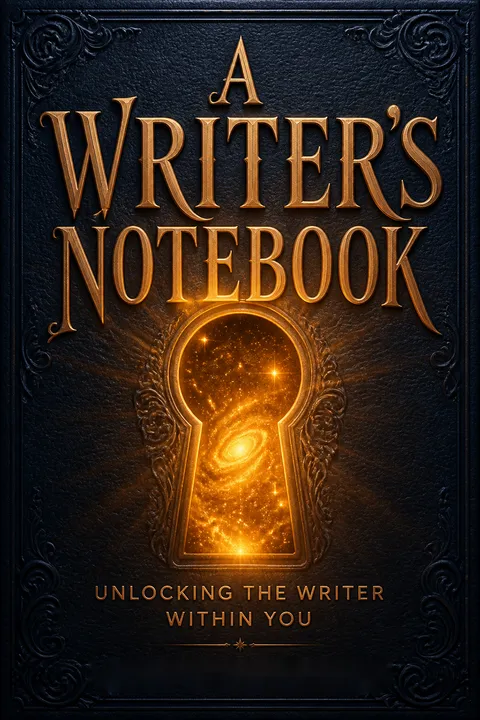
What is "A Writer's Notebook: Unlocking the Writer Within You" by Ralph Fletcher about?
- Purpose of the Book: The book is a practical guide for young and aspiring writers on how to keep and use a writer’s notebook as a tool for developing writing skills and living a “writing kind of life.”
- Content Overview: Fletcher shares personal anecdotes, examples from his own notebooks, and entries from both published authors and young writers to illustrate how a notebook can capture ideas, memories, observations, and inspiration.
- Focus on Process: The book emphasizes the process of collecting, reflecting, and experimenting with writing, rather than producing polished pieces right away.
- Encouragement to Experiment: Readers are encouraged to make their notebooks unique, experiment with different types of entries, and use the notebook as a safe space for honest self-expression.
Why should I read "A Writer's Notebook" by Ralph Fletcher?
- Unlock Your Creativity: The book provides concrete strategies to help writers of all ages tap into their creativity and notice the world around them.
- Practical Writing Advice: Fletcher offers actionable advice and exercises that can be immediately applied to improve writing skills.
- Inspiration from Real Writers: The inclusion of notebook entries from both professional authors and students makes the advice relatable and motivating.
- Personal Growth: The book encourages self-reflection, emotional honesty, and the development of a personal writing voice.
What are the key takeaways from "A Writer's Notebook" by Ralph Fletcher?
- Notebooks Are Essential Tools: Keeping a writer’s notebook is one of the best ways to nurture and develop as a writer.
- Capture Life’s Details: Notebooks are for collecting stories, observations, memories, and “seed ideas” that may later grow into finished pieces.
- Embrace Imperfection: Most notebook entries won’t become published work, but the process of writing and reflecting is invaluable.
- Personalization is Key: There is no single right way to keep a notebook—make it your own and let it reflect your personality and interests.
How does Ralph Fletcher define a writer’s notebook, and how is it different from a diary or journal?
- Not Just a Diary: A writer’s notebook is not a daily record of events or feelings like a diary; it’s a place to capture what moves, angers, amazes, or inspires you.
- Tool for Writers: It’s a working tool for writers to jot down observations, overheard conversations, memories, and ideas for future writing.
- Flexible and Personal: The notebook can include lists, sketches, clippings, and anything else that sparks creativity.
- Focus on Reactions: Unlike a reading journal or school assignment, a writer’s notebook is about recording your unique reactions to the world.
What are the main types of entries or content Fletcher recommends for a writer’s notebook?
- Unforgettable Stories: Record stories that move you, whether from your own life, the news, or overheard conversations.
- Fierce Wonderings: Write about questions and mysteries that haunt or fascinate you, even if they have no easy answers.
- Writing Small: Focus on capturing vivid, specific details and sensory images rather than generalities.
- Seed Ideas and Mind Pictures: Jot down ideas for future writing and mental snapshots of interesting scenes or moments.
- Lists, Memories, and Snatches of Talk: Keep lists of favorite words, memories, and snippets of dialogue or overheard speech.
How does "A Writer’s Notebook" by Ralph Fletcher help writers generate and develop ideas?
- Incubate Seed Ideas: The notebook acts as an incubator for new ideas, allowing them to grow and develop over time before becoming full stories or poems.
- Encourage Observation: Fletcher teaches writers to pay close attention to the world, using all their senses to notice details worth writing about.
- Rereading for Inspiration: Regularly rereading your notebook helps you rediscover forgotten ideas and find “crystals” worth developing.
- Experimentation and Play: The notebook is a safe space to try out new styles, voices, and forms without fear of judgment.
What specific advice does Ralph Fletcher give about writing with detail and “writing small”?
- Focus on Specifics: Instead of general words like “fun” or “nice,” use concrete details that paint a vivid picture for the reader.
- Use All Senses: Describe what you see, hear, smell, taste, and touch to make your writing come alive.
- Capture Small Moments: Even tiny, seemingly insignificant moments can reveal deep truths and make writing more authentic.
- Crack Open Generalities: When you find yourself using vague language, stop and ask what specific details are underneath those words.
How does "A Writer’s Notebook" by Ralph Fletcher address emotional honesty and writing about difficult topics?
- Safe Space for Truth: The notebook is presented as a private place where writers can be completely honest, even about painful or confusing feelings.
- Writing as Lifejacket: Fletcher describes writing as a way to process and survive strong emotions, such as grief, anger, or loneliness.
- Encourages Courage: The book acknowledges that writing honestly takes practice and bravery, but it’s essential for authentic writing.
- Examples from Young Writers: The book includes raw, heartfelt entries from students dealing with divorce, loss, and other challenges.
What role do lists, quotes, and other writers’ work play in a writer’s notebook according to Fletcher?
- Lists as Brainstorming Tools: Lists help writers brainstorm ideas, track goals, and collect interesting facts or words.
- Quotes for Inspiration: Copying favorite lines or passages from other writers provides motivation and models of excellent writing.
- Imitation and “Writing Off the Text”: Trying to write in the style of admired authors can help develop your own voice.
- Personal Anthology: The notebook becomes a personal collection of writing that inspires and challenges you.
How does "A Writer’s Notebook" by Ralph Fletcher suggest using memories and artifacts in writing?
- Mining Personal History: Memories are described as a writer’s most important possession, providing rich material for stories and poems.
- Describing Places and Objects: Writing about the places and objects connected to memories can help bring them to life.
- Including Artifacts: Taping in photos, clippings, ticket stubs, or even small objects can spark further writing and preserve important experiences.
- Mental Photographs: Even without physical artifacts, writers can use their imagination to revisit and describe important moments.
What is the process Fletcher recommends for rereading and revisiting your writer’s notebook?
- Sift for Gems: Reread your notebook regularly to find entries or phrases that still excite or interest you.
- Mark Promising Ideas: Circle, underline, or star entries that have potential for further development.
- Be Selective and Generous: Don’t expect every entry to be a masterpiece, but trust your instincts about what’s worth pursuing.
- Boil Down to the Best: Like making maple syrup, most of what you write will be “sap,” but a few ideas will become the “syrup” of your best writing.
What are the best quotes from "A Writer’s Notebook" by Ralph Fletcher and what do they mean?
- “A writer’s notebook is like that ditch—an empty space you dig in your busy life, a space that will fill up with all sorts of fascinating little creatures. If you dig it, they will come.”
- This metaphor highlights the importance of making space for creativity; if you create the opportunity, ideas will come.
- “Write small. It makes a difference.”
- Focusing on small, specific details brings writing to life and makes it more authentic.
- “Notebooks are…well, it’s like you have sparks from a campfire that could start a fire. They haven’t yet, but they could any time.”
- Notebooks are full of potential; even if ideas aren’t used immediately, they may ignite future writing.
- “The best chance you have of making your notebook work for you is to let it reflect your personal style.”
- There’s no single right way to keep a notebook; it should be as individual as the writer.
What is the overall message and impact of "A Writer’s Notebook: Unlocking the Writer Within You" by Ralph Fletcher?
- Empowerment Through Writing: The book empowers readers to see themselves as writers and to value their own experiences and observations.
- Writing as a Lifelong Practice: Keeping a writer’s notebook is presented as a lifelong habit that supports growth, creativity, and self-understanding.
- Inclusivity and Flexibility: Fletcher’s approach is inclusive, encouraging everyone to find their own way of using a notebook.
- Inspiration and Encouragement: The book is filled with encouragement, practical tips, and inspiration for writers at any stage, making it a valuable resource for anyone who wants to write.
Download PDF
Download EPUB
.epub digital book format is ideal for reading ebooks on phones, tablets, and e-readers.








