

Key Takeaways
Judge political greatness by the union of wisdom, power, and service
More than political skill. Fornieri defines statesmanship as the rare marriage of sound judgment and public authority, directed toward the common good. Lincoln’s ability to manage rivals mattered, but his greatness also rested on a moral vision of democracy and the capacity to act on it during national crisis. The book organizes that achievement around six qualities: wisdom, prudence, duty, magnanimity, rhetoric, and patriotism.
A standard, not a résumé. A statesman differs from a merely effective politician because results alone are insufficient. Political power can preserve liberty or crush it; the ends and character guiding its use matter. Lincoln saved the Union and helped end slavery, while arguing that the Union deserved saving because of the principles it embodied.
The framework’s strength is that it refuses to treat competence and goodness as interchangeable. Leadership research often measures outputs, such as votes won or policies enacted, while ethics asks whether those outputs serve defensible ends. Fornieri makes both questions necessary. The harder question is who gets to define the common good. A leader’s claim to serve it can become a shield for personal rule. The book’s emphasis on constitutional duty, public persuasion, and moral standards offers checks on that danger, though no checklist can replace judgment about competing interpretations of justice.
Treat equality as democracy’s premise, not a popularity contest
Equality grounds consent. Lincoln’s argument began with common humanity: if Black people are human beings, they cannot justly be ruled without their consent. A majority’s preference does not turn another person into property. In the 1854 Peoria speech, he exposed the contradiction in claiming self-government for white citizens while denying it to enslaved people. One person governing himself is self-rule; one person governing himself and another is domination.
Ideas have political consequences. Lincoln confronted proslavery writers who described slavery as beneficial or as the natural foundation of society. He argued that such claims rejected the Declaration’s principle of human equality and weakened the legitimacy of the republic. His own political position had limits by modern standards, especially around social equality and colonization, but his insistence on Black humanity gave the equality principle a wider reach.
This is a powerful example of how definitions can expose a political contradiction: a society cannot consistently praise consent while denying some people standing to give it. The argument resembles the logic of universal rights, which asks whether a rule can be defended for everyone it governs. Yet moral principles do not apply themselves. Lincoln’s own qualified views on racial equality show how a universal ideal can coexist with exclusions in its political application. That tension does not erase the argument’s force; it makes scrutiny of the gap between principle and policy essential.
Protect each person’s chance to rise through work, education, and consent
Freedom includes economic agency. Lincoln’s defense of free labor held that people should be able to direct their own work and benefit from its fruits. He rejected the claim that society requires a permanently dependent laboring class. A wage earner, in his account, might save, acquire tools or land, work independently, and eventually employ others. The point was not that everyone would achieve equal wealth, but that birth should not fix a person’s station.
Opportunity needs support. Lincoln connected this freedom to education, which equips people to improve their condition and understand their political institutions. He also argued that labor precedes capital: investment and wealth arise from human work, not the other way around. His conception of government was limited but active, protecting rights and helping create conditions in which people could act for themselves.
The distinction between equal opportunity and equal outcomes remains useful because it separates access to a fair contest from a guarantee of identical rewards. Lincoln’s account also sees education as more than job preparation: it helps citizens understand the rules and stakes of self-government. A limitation is that opportunity can remain merely formal when people begin with radically unequal resources. The book stresses ladders of advancement but says less about how to judge whether those ladders are accessible in practice. Its strongest implication is that economic liberty depends on both personal agency and institutions that prevent inherited status from becoming destiny.
Use principle as a compass, then choose means the crisis can bear
Prudence joins ideals to conditions. Fornieri uses prudence to mean practical wisdom: choosing suitable means for a just end under real legal, military, and political constraints. Lincoln’s Emancipation Proclamation illustrates the method. He considered whether emancipation could be legally defended as a wartime measure, enforced in rebel territory, and supported without losing the border states or breaking the Union coalition.
Timing changed the odds. Lincoln delayed issuing the preliminary proclamation until after the Union’s victory at Antietam in September 1862, which strengthened its credibility. He had also proposed gradual, compensated emancipation to loyal border states, but they refused. The final proclamation applied to areas in rebellion and authorized Black enlistment. It did not free every enslaved person immediately, but it turned the Union war effort toward emancipation while preserving a legal and political basis for action.
The case shows that timing is not necessarily a retreat from principle. In coalition politics, a policy that cannot survive contact with institutions may produce less justice than a narrower measure that can be enforced. But prudence is vulnerable to misuse: leaders can call delay realistic when it mainly protects the powerful. The distinction depends on whether incremental action genuinely advances the stated end and whether the constraints are real. Lincoln’s repeated attempts to persuade border-state leaders and his eventual wartime action make the argument more substantial than a general defense of compromise.
Let constitutional duty limit power, but not excuse surrender
Oaths constrain and authorize. Lincoln believed his presidential oath prevented him from abolishing slavery in states where the Constitution left it under state control. The same oath, he argued, required him to preserve the Union and enforce federal law. This understanding differed from both James Buchanan’s passivity during secession and abolitionists’ willingness to sacrifice the Union for immediate emancipation.
Emergency power remains accountable. During the rebellion, Lincoln suspended habeas corpus in some circumstances and took other extraordinary measures, including before Congress assembled. He defended those actions as necessary to preserve the government, while later seeking congressional approval. Crucially, he held a presidential election in 1864, arguing that a republic could not be preserved by abandoning elections. His actions remain controversial, and the book presents them as bounded by wartime necessity rather than a standing license for executive power.
Lincoln’s dilemma captures a lasting constitutional problem: law must remain effective during emergencies, but emergency powers can outlive the emergency or be used against dissent. The book’s strongest safeguard is the distinction between temporary crisis measures and ordinary government, alongside elections and public justification. Its defense of Lincoln still depends on contested readings of constitutional authority, particularly over who may suspend habeas corpus. The general lesson is not that necessity settles the legal question. It is that a claim of necessity demands narrow scope, a clear purpose, and continuing public scrutiny.
Aim ambition at public honor, then keep it humble before human limits
Greatness needs a moral boundary. The book uses magnanimity to mean greatness of soul: the willingness and ability to undertake consequential work. Drawing on Aquinas, it joins ambition to humility and service. Seeking honor is not inherently wrong, but it becomes vanity when reputation is the final goal rather than a consequence of serving others. Lincoln openly wanted the esteem of his fellow citizens, yet repeatedly placed the antislavery cause and the Union’s principles above holding office.
Humility can strengthen leadership. Lincoln tolerated insults from General McClellan and recruited talented political rivals into his cabinet, even when they competed for influence. In his Second Inaugural, he resisted declaring one side wholly righteous before God and called for reconciliation rather than revenge. His greatness, in this account, came from combining resolve with recognition that human beings, including leaders, have limited knowledge and mixed motives.
The connection between ambition and humility avoids two familiar errors: treating self-assertion as proof of leadership, and treating modesty as a virtue when it merely avoids responsibility. Lincoln’s use of rivals also suggests that confidence can make institutions more capable by allowing disagreement and talent into the room. Still, humility is difficult to verify from public behavior alone, and a leader’s language of service can mask ambition. A useful test is whether power increases the leader’s willingness to accept correction, share credit, and limit personal advantage.
Persuade by clarifying reality, not flattering the crowd’s worst instincts
Words shape public judgment. Lincoln understood that laws could not succeed without public support, but he also believed public opinion could be misled. He distinguished philosophical rhetoric, which clarifies moral questions, from sophistry, which twists arguments to serve self-interest, and demagoguery, which inflames fear or hatred. In debates over slavery, he argued that popular sovereignty pretended neutrality while allowing slavery’s expansion.
Make the contradiction visible. Lincoln’s speeches often used plain analogies and pointed questions rather than abstract lectures. He asked audiences to compare proslavery claims with slaveholders’ own conduct, including their condemnation of slave traders and the costly freeing of enslaved people. He also exposed Stephen Douglas’s racial appeals as a distraction from slavery’s injustice. Lincoln’s rhetoric aimed not only to win an argument, but to educate citizens about what their political choices meant.
Political communication is not a neutral delivery system. It directs attention, defines the problem, and makes some responses feel natural while hiding others. Lincoln’s method is strongest when he makes listeners test a claim against its own implications, rather than demanding assent to a slogan. Yet persuasive clarity can still serve selective framing. His skill at managing public opinion, including his careful timing and presentation of emancipation, shows that honest rhetoric and political strategy are not opposites. The safeguard is whether persuasion helps audiences see relevant facts or merely narrows what they are allowed to consider.
Love country enough to criticize it when it betrays its promise
Patriotism can be reflective. Lincoln’s patriotism joined affection for America to criticism of its failures. He opposed the Mexican War, challenged slavery’s expansion, and rejected the nativist Know-Nothing movement, which sought to exclude immigrants and Catholics. For him, loyalty to country did not require endorsing every policy. It meant holding the nation to its promise of liberty and equal rights.
A shared idea can unite difference. Lincoln appealed to the Declaration as a political bond that immigrants could claim as fully as descendants of the founders. He also invoked common memories of the Revolution and Washington to strengthen national attachment. His patriotism was neither ethnic purity nor imperial expansion. It asked Americans to serve a particular country while recognizing that its principles had significance for people beyond its borders.
This conception offers a way to distinguish civic attachment from national self-worship. Criticism can be an expression of loyalty when it seeks to close the gap between a country’s ideals and its conduct. Shared political principles may also support pluralism without requiring citizens to share ancestry or religion. The danger is that national ideals can become a flattering story that obscures those excluded from the promise. Reflective patriotism therefore requires both attachment and an honest account of whose freedom the nation has actually protected.
Preserve the founding by extending its principles, not freezing its failures
A moral ideal and legal structure. Lincoln treated the Declaration’s equality principle and the Constitution as complementary. The Declaration supplied the moral purpose; the Constitution supplied the framework of law that could protect and sustain it. In his view, the constitutional concessions to slavery were compromises of necessity, not proof that the founding principles endorsed slavery.
Change can fulfill continuity. Lincoln’s emancipation policy transformed American life, but Fornieri argues that it extended rather than replaced the founding’s promise. The Civil War’s new measures, including emancipation and Black military service, were presented as ways to preserve the Union and make its claim to liberty more coherent. This interpretation rejects both the view that Lincoln merely preserved the existing order and the claim that he created a wholly new political foundation.
The continuity argument gives political change a demanding standard: reform should be judged against principles that precede the immediate interests of those in power. It also helps explain how a leader can defend institutions while changing their operation. But continuity can be overstated. Emancipation was not only an interpretation of old commitments; it altered the nation’s legal and social reality on an enormous scale. Calling it fulfillment rather than rupture captures Lincoln’s stated purpose, but does not settle how radical the transformation was for those whose status changed.
Analysis
Fornieri’s central achievement is to make Lincoln’s leadership legible as a moral practice rather than a bundle of political techniques. The six qualities are not independent virtues to collect. They constrain and correct one another. Wisdom supplies ends, prudence selects feasible means, duty limits authority, magnanimity directs ambition toward service, rhetoric forms public judgment, and patriotism supplies attachment to a shared political project. The Emancipation Proclamation is the clearest test of this integrated account because it required moral conviction, constitutional argument, military calculation, public persuasion, and willingness to bear political costs.
The book’s argument is strongest when it uses Lincoln’s own speeches and decisions to show how abstract principles entered practical disputes. Its account of equality as the premise of consent gives the debate over slavery a sharp logical structure, while its attention to coalition-building explains why moral seriousness need not mean immediate maximalism. At the same time, the narrative often presents the author’s preferred reading of Lincoln as the resolution of disputes that remain contested. Its defense of executive power, interpretation of the founders, and account of Lincoln’s racial views deserve scrutiny rather than automatic acceptance. In particular, distinguishing Lincoln’s universal principle from his own limits helps preserve both the moral force of his arguments and the historical complexity of his record.
The book also offers a useful standard for present-day leadership, though it cannot remove disagreement about the common good. Its contribution is to insist that such disagreement should be argued openly, with attention to facts, law, consequences, and the people affected. Political success is not enough, and moral aspiration is not enough. The difficult work is to join principles to institutions and action without pretending that a leader’s judgment is infallible. Lincoln’s example matters not because every choice is beyond criticism, but because his public reasoning leaves choices available for judgment.
Review Summary
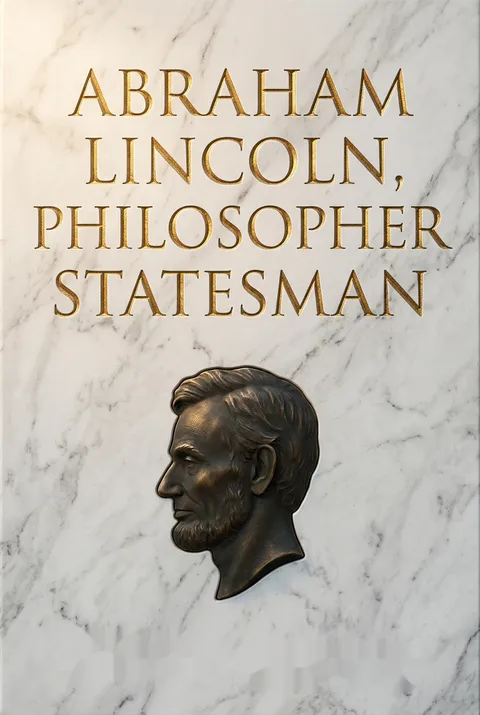
The book Abraham Lincoln, Philosopher Statesman receives high praise for its scholarly approach to Lincoln's greatness. Fornieri explores six dimensions of political leadership: wisdom, prudence, duty, magnanimity, rhetoric, and patriotism. The writing is described as philosophical and dense, with substantial examples provided for each dimension. While not suitable for a general audience, it is highly recommended for Lincoln scholars. The book's concise yet comprehensive nature is noted, packing significant content into its 170 pages of text.
Glossary
philosopher statesman
wisdom joined to public actionA political leader whose understanding of human nature, justice, and government informs the exercise of public authority. The term emphasizes that leadership requires both theoretical insight into political purposes and practical judgment about how to pursue them. In Fornieri’s account, Lincoln exemplifies this union by defending democratic principles while acting within constitutional and political constraints.
prudence
practical wisdom in actionThe capacity to apply moral principles to particular circumstances and choose means suited to a just end. In this book, prudence is neither rigid idealism nor opportunistic compromise. Lincoln’s timing and legal rationale for emancipation illustrate the effort to advance equality while weighing military realities, constitutional authority, public opinion, and the risk of losing the Union.
biblical magnanimity
greatness joined to humilityFornieri’s description of political greatness shaped by both classical virtue and Christian teaching. It combines ambition to undertake worthy public actions with humility before God, recognition of human limits, and service to others. Lincoln’s resolve, restraint, willingness to work with rivals, and refusal to claim complete moral certainty exemplify this form of greatness.
philosophical rhetoric
persuasion that clarifies truthPublic speech that uses clear reasoning, vivid language, and knowledge of an audience to explain political principles and elevate public judgment. Fornieri contrasts it with sophistry, which twists argument for selfish ends, and demagoguery, which inflames popular fear or hatred. Lincoln’s arguments against slavery and secession are presented as civic education as well as persuasion.
reflective patriotism
critical love of countryA form of national loyalty grounded in affection for a particular country and critical commitment to its principles. It draws on shared history and political ideals, while allowing dissent when national conduct violates those ideals. Lincoln’s opposition to slavery’s expansion, the Mexican War, and nativism illustrates patriotism that is not defined by ethnic identity or uncritical approval.
apple of gold and picture of silver
principle framed by lawLincoln’s image for the relationship between the Declaration of Independence and the Constitution. The Declaration’s principle of liberty for all supplies the moral purpose, while the Constitution provides the legal structure meant to preserve it. Fornieri uses the image to explain Lincoln’s belief that constitutional government should protect, not obscure or defeat, the founding principles.
free labor
work with agency and advancementLincoln’s political and economic ideal in which workers control their own labor and can benefit from its fruits. Unlike slavery or fixed social hierarchies, free labor allows a person to move from wage work toward independence and advancement. Lincoln connected this ideal to education, opportunity, and the right to consent, while arguing that labor is prior to capital.
Download PDF
Download EPUB
.epub digital book format is ideal for reading ebooks on phones, tablets, and e-readers.








