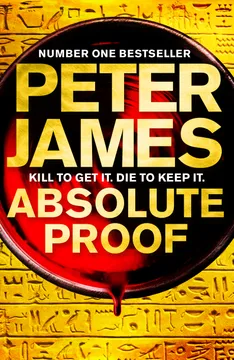


Plot Summary
Beer Turns Back to Beer
In a shabby Los Angeles bar, Mike Delaney nurses his fading career while a drunk mocks his old television magic show. When the bartender pours bourbon for the heckler, the liquor foams up as beer and spills over the glass. Delaney only smiles. The trick is brief, but it is the first glimpse of a force that seems to ignore the rules everyone else accepts.
Years later, the same magician will matter to Ross Hunter, a reporter chasing evidence that might reshape faith itself. For now, Delaney is simply an ageing performer who can still unsettle a room, even as his own life appears to be running out of applause.
The opening gives the supernatural a deliberately small stage. Delaney does not announce a revelation or gather believers. He lets an ordinary bar order become inexplicable, then keeps quiet while the people around him remain occupied with humiliation, drink, and routine. That restraint makes the moment more memorable than a grand display would be. It also plants the novel's central problem in miniature: an event can be witnessed without becoming proof, because observers may dismiss it as a trick or never notice it at all. Delaney's obscurity is not incidental. The story begins by placing extraordinary possibility inside a life the world has already written off.
Ricky's Last Reach
In Brighton, junior reporter Ross Hunter collapses on a gym machine after hearing his identical twin, Ricky, call his name. During the episode, Ross sees his life flash past and meets Ricky in a bright, dreamlike space. He tells his brother they are reconciled, though years of resentment have kept them apart. Back in the gym, Ross is shaken but alive.
Then Ricky's girlfriend calls: a tree has fallen on Ricky during his morning run in Manchester, killing him at almost the same moment Ross collapsed. Ross cannot explain what he experienced, yet the connection gives him a private reason to believe death may not be the end, and to carry guilt over the brother he pushed away.
Ross's first brush with the impossible is intimate rather than doctrinal. It does not persuade him that a particular religion is true; it leaves him with an experience that resists the clean explanations he prefers as a reporter. His final reassurance to Ricky also carries an emotional cost. The vision gives Ross the reconciliation he had denied his brother in life, but it arrives too late to repair their actual relationship. That mixture of comfort and remorse will make him unusually receptive to Harry Cook's later message, while also making him vulnerable to anyone who claims access to the dead. His skepticism is real, but it has never been complete.
Afghanistan Follows Him Home
As a war correspondent in Lashkar Gah, Ross witnesses the murder of civilians and the destruction of his photographer, Ben Haines, during a Taliban ambush. Ross is wounded in the head and foot, hides overnight in a bank safe, and is eventually rescued by British troops. His survival leaves him burdened by the memory of abandoning Haines under fire.
He returns to Brighton expecting comfort from his wife, Imogen, only to find her in bed with another man. She asks him to forgive her, and Ross does, but later learns the affair had lasted much longer than she admitted. The marriage continues, though the betrayal becomes a permanent injury beneath their efforts to rebuild normal life.
The war and the marriage wound Ross in different ways, but both leave him questioning whether trust can be restored by intention alone. In Afghanistan, he runs toward Haines and still cannot save him, creating a guilt that no later explanation can erase. At home, Imogen's infidelity turns the place meant to shelter him into another scene of shock. Ross chooses forgiveness partly because he needs ordinary life after combat, not because the betrayal has become harmless. That distinction matters throughout the investigation: he is drawn to truth as a profession, yet his closest relationship depends on truths he has never fully accepted or resolved.
Coordinates in the Dark
Years later, retired academic Harry Cook climbs a Somerset hillside at night with a spade and metal detector, guided by coordinates he believes God has given him. Police catch him digging at Chalice Well, where he insists he is trying to save the world.
At St Hugh's Charterhouse, Brother Angus studies religious and scientific texts while fearing that his years of prayer may lead to nothing after death. Angus believes he is receiving signs of a coming upheaval, but the monastery's Prior discourages his reliance on technology and private revelations.
Cook and Angus do not yet know each other. Their parallel searches introduce two men whose uncertainty takes opposite forms: one acts urgently on a message, while the other reads and prays for confirmation.
The novel places Cook's certainty beside Angus's doubt so that faith is neither presented as simple confidence nor reduced to delusion. Cook's trespass is the outward consequence of a belief he cannot afford to postpone. Angus's isolation, by contrast, gives doubt room to grow because his disciplined life has stripped away distraction without supplying an answer. Their separate stories also establish that religious authority is contested inside religious communities, not only between believers and skeptics. The crucial psychological difference is how each man manages uncertainty. Cook moves toward the ground with a spade; Angus returns to books, prayer, and the possibility that his own interpretations are mistaken.
Cook's Message from Ricky
Cook reaches Ross by telephone while the journalist is working on an investigation into footballers' tax arrangements. He claims to have received a message from God through a medium and says Ricky has a message for his twin: he knew Ross disliked him, never understood why, and forgives him.
Cook also names the childhood gerbils Bubble and Squeak, including the one that bit Ross, a detail Ross has never published. At their meeting, Cook leaves him a handwritten manuscript of more than twelve hundred pages, claiming it contains God's words, and gives him the Chalice Well coordinates followed by a string of unexplained numbers. He withholds two further locations until Ross proves willing to help.
Cook's most effective evidence is not the scale of his claim but its precision. The gerbil memory reaches past Ross's public identity and touches an unshared childhood, making dismissal emotionally difficult even while the manuscript looks unreadable. Ricky's forgiveness speaks directly to the guilt Ross has carried since the gym episode, so Cook's appeal recruits both the journalist and the grieving brother. This is an ethically unstable invitation: private comfort is being used to secure public action. Ross does not accept Cook's theology, but he can no longer treat the story as merely another stranger's eccentric pitch. His professional curiosity and unresolved grief now point in the same direction.
Chalice Well Is Already Dug
Ross studies Cook's manuscript and visits Chalice Well, where he follows the coordinates to a patch of hillside recently dug and carefully replanted. The disturbed soil suggests someone has searched the exact area Cook identified, though Cook says he barely managed one spadeful before police stopped him.
Ross consults Bishop Benedict Carmichael, an old friend who explains why public proof of God could provoke religious and political upheaval rather than unity. After Ross returns to Cook's claim, broadcaster Sally Hughes reports that her uncle, trustee Julius Helmsley, regards Cook as disturbed and says the professor has harassed the trustees. Ross confronts Cook, who insists he is telling the truth and asks for another meeting.
The fresh earth changes the investigation from a debate about belief into a question of access and motive. Someone has acted on the same location, yet the person Ross trusts most in the matter denies doing the work he sees. Carmichael's warning further complicates Cook's promised cure for a troubled world: proof might destabilize institutions whose authority depends on competing interpretations. Sally's report supplies a mundane counterweight, inviting Ross to regard Cook as a nuisance rather than a prophet. The scene therefore forces Ross to hold incompatible possibilities without resolving them. His next decision is not based on faith in Cook, but on the journalist's conviction that the discrepancy itself deserves investigation.
Harry Cook's Cellar
Ross drives to Cook's home for their promised meeting and finds the bungalow ransacked, with furniture slashed, drawers emptied, and breakfast abandoned on the kitchen table. Searching the house in case Cook is injured, Ross follows a staircase into the cellar and finds him taped to a chair, his hands nailed to the wall and his throat cut.
Ross calls the police, then conceals Cook's manuscript rather than surrendering it as evidence. In the office, he finds the sequence of numbers Cook gave him and a discarded sheet bearing a crude hockey-stick shape. The apparent burglary has left cash and valuables behind, suggesting the intruders wanted information. Ross realizes Cook's warning may have been literal.
Cook's death destroys the comfortable distinction between an eccentric story and a dangerous one. The violence is not merely a consequence of belief; the untouched money makes it look like someone has pursued a specific secret. Ross's choice to keep the manuscript is both investigative instinct and a serious breach of judgment. He wants to preserve the possibility that Cook's information matters, but by withholding it he also makes himself the next custodian of the risk. The cellar literalizes the buried dimension of the mystery: what Ross discovers is not an answer but the human price already paid for searching. His curiosity has now acquired an obligation.
Nine Metres South
Ross sends Cook's numbers to hacker Zack Boxx, who decodes them as a direction to move nine metres south and turn left. At Chalice Well, that line points to the wellhead, not the hillside where Cook and the unknown digger searched. Ross returns at night in driving rain, removes the grille, and lowers a camera into the shaft.
A dive reveals only rubbish, but while trapped beneath the resecured cover he loosens a stone and crawls into a passage leading toward Glastonbury Tor. In a carved recess he finds a sealed wooden container. He escapes through an old opening on the hillside, opens the container at home, and finds a small wooden cup wrapped in ancient cloth.
The code turns Cook's apparent failure into a lesson about the difference between coordinates and interpretation. The first location was not false so much as incomplete, and the missing instruction hid in a second layer of meaning. Ross's physical ordeal makes discovery inseparable from cost: he dives alone, is struck by an attacker, and nearly remains imprisoned inside the well. Yet the hidden passage rewards a practical imagination rather than religious certainty. He reconstructs what an ancient person might have done to protect a vessel, then tests that idea with his body. The chalice enters the story not as a sacred object on display, but as a fragile thing recovered through trespass and risk.
Anholt-Sperry's Second Key
After an antiques dealer judges the container exceptionally old but cannot authenticate it, Ross visits Cook's solicitor, Robert Anholt-Sperry. The lawyer confirms that Cook entrusted him with the remaining coordinates and gives Ross the second set, pointing to Queen Hatshepsut's temple in Egypt, followed by the name Hatem. He also provides money for expenses.
Ross then visits Hussam Udin, a blind Muslim scholar he once profiled, and asks for a trustworthy contact in Luxor. Udin connects him to his cousin Medhat El-Hadidy, who agrees to guide him. Before travelling, Ross places the manuscript and the recovered cup with his solicitor in Brighton, then quietly gives a backup of the relics to his uncle, Brother Angus.
The second coordinate widens the mystery from a British legend into a chain of custody spanning cultures and centuries. Anholt-Sperry's trust gives Ross practical permission to continue, while Udin's help insists that religious difference need not prevent solidarity. The journey depends less on grand institutions than on personal relationships: a solicitor who trusts Cook, and a blind scholar who trusts Ross. At the same time, Ross's decision to secure the cup with Angus acknowledges that he is no longer merely reporting on an object. He is responsible for its preservation. The careful handoffs contrast with the secrecy of the people who want the relic, establishing trust as a fragile but necessary form of protection.
Tooth from the Cave
At Hatshepsut's temple, Ross meets Hatem Rasul, who leads him and El-Hadidy into the mountains to Hatem's sister, Sitra. She gives Ross a tiny object preserved by her family for generations: a tooth said to have been knocked from Jesus during his journey to the crucifixion. As they descend, a helicopter sweeps low and a gunman fires at them.
El-Hadidy jumps from the Land Cruiser, leaving Ross to seize the wheel. Ross drives down a steep ravine, avoids rocks, and rams the vehicle into the helicopter as it tries to lift off. He survives, keeps the tooth, and reaches Luxor Airport badly shaken. To avoid whoever is tracking him, he flies to Paris instead of returning directly to England.
The Egyptian episode converts the mystery into an immediate survival problem, while making the relic's provenance depend on testimony rather than documentation. Sitra's family has guarded the object across generations, but the attack suggests another party believes its value is real enough to kill for. Ross's competence as a reporter no longer protects him; he survives by making a rapid physical decision under the same kind of fire that once trapped him in Afghanistan. The abandoned driver complicates Ross's sense of trust, yet does not erase the help that brought him there. By taking an indirect flight, Ross recognizes that possession has made him a moving target.
DNA's Impossible Match
Back in England, Ross takes the cup and tooth to ATGC Forensics, accepting that the lab must grind the tooth to recover its DNA. Scientist Jolene Thomas reports matching standard, mitochondrial, and Y-chromosome profiles, including rare mutations shared by both objects.
The cup's residue is confirmed as degraded blood. Ross now has evidence that the two relics came from the same person, though it cannot prove who that person was. On Hussam Udin's advice, he identifies the likely pursuer as Kerr Kluge, the pharmaceutical company led by Ainsley Bloor and Julius Helmsley.
Bloor's private monkey experiment, intended to test whether random typing can produce meaningful language, continues beside the company's effort to secure the relics for commercial use.
The laboratory gives Ross a powerful result while carefully stopping short of the conclusion he most wants. A DNA match can establish a biological connection between the cup and tooth, but it cannot establish that either belonged to Jesus. That gap between measurable evidence and historical meaning is the novel's central epistemic tension. Kerr Kluge exploits the gap differently from Ross: the company sees a potentially valuable product even without religious conviction. Bloor's monkey experiment sharpens the irony. He pursues random language to discredit design while pursuing sacred DNA for profit, treating incompatible beliefs as equally disposable when business demands it.
Faith's Powerful Gatekeepers
As threats arrive and intruders deface Ross's home with apocalyptic graffiti, Imogen begs him to abandon the investigation. Ross meets Archbishop Tristram Tenby, who warns that proof could intensify conflict and says the Church is wary of claims delivered through a medium.
An MI5 representative, Stuart Ivens, asks Ross to consider the consequences before publishing. The Vatican sends Monsignor Giuseppe Silvestri, who offers to buy the relics, while Imogen argues that the money could secure their future.
Ross also visits Brother Angus, gives him the cup and a vial containing the DNA sample, and asks him to hide them. Angus accepts, though his failing health makes the task uncertain. Ross keeps the investigation moving despite the widening strain at home.
The competing appeals reveal that no institution approaches proof without a stake in what follows. Tenby worries about religious fragmentation, MI5 about civil disorder, Silvestri about custody, and Imogen about the safety of her family. None of these concerns is wholly irrational, which prevents Ross's persistence from becoming uncomplicated heroism. His choice to entrust the relics to Angus is a meaningful concession: he recognizes that his own investigative momentum could endanger the evidence and the people around him. Yet he does not stop. The marriage conflict becomes a test of whether public responsibility can justify private harm, and the novel refuses to make that trade seem clean.
Los Angeles Has a Name
After Anholt-Sperry dies before handing over the last coordinates, Ross finds the erased writing in Cook's manuscript and has its impressions recovered by ATGC. The location points to West Hollywood. Zack Boxx hacks into Los Angeles DNA records and finds two people whose maternal and paternal profiles match the relics: Arlene Katzenberg and Myron Mizrahi.
The couple married, had a son, and were murdered in a ritualized crucifixion when the boy was ten. Their adopted son became Mike Delaney, the ageing magician from the opening. Ross's LAPD contact locates Delaney at a drug rehabilitation charity, where he volunteers helping addicts. The third coordinate has led Ross not to a holy site, but to a man living quietly in Los Angeles.
The revelation makes biology, genealogy, and personal identity converge without making any one of them sufficient on its own. The matching maternal and paternal lines in one descendant are statistically startling, yet the records also show how easily identity can be broken by violence, adoption, and silence. Delaney's childhood was shaped by the murder of the very people who could have explained his ancestry. The choice to locate him through police archives rather than prophecy preserves Ross's investigative method even as the result approaches the miraculous. The mystery is no longer only where the relics came from. It is whether the person carrying their genetic signature understands what history has placed upon him.
Contracts Turn Inward
Kerr Kluge's board acknowledges that its contractors failed to seize the relics and that Cook died under pressure from the company's search. Meanwhile, prosperity preacher Wesley Wenceslas and his chief operator, Lancelot Pope, fear the discovery could threaten their religious empire.
They hire Big Tony, an American contract killer living in Monaco, to eliminate Ross. Tony accepts the job but later arranges for an associate to kill Wenceslas and Pope instead, then continues toward Los Angeles.
The deaths become public just as Ross prepares to leave for Delaney. Ross's wife has already left their home after its vandalism, and the growing danger has made the marriage more brittle. Ross goes anyway, convinced the final meeting matters more than safety.
The antagonists expose different forms of instrumental belief. Bloor treats religious history as a market opportunity; Wenceslas uses religious fear to preserve a lucrative ministry; Pope treats both as assets to manage. Their motives diverge, but each turns other people into instruments. Big Tony's reversal of the contract shows that violence follows its own commercial logic, indifferent to the theology used to justify it. Ross is not outside this system: his willingness to risk his family in pursuit of a story also makes a principle serve his own sense of vocation. The chapter's pressure comes from the uncomfortable likeness between moral certainty and self-interest.
Delaney Names His Mission
Ross finds Delaney at the Fairfax Lounge, performing small tricks for bar patrons. In a private conversation, Delaney says he shares the DNA found in the tooth and cup, but denies being Jesus himself. He describes himself as a forerunner sent to judge whether humanity is ready for a Second Coming, and tells Ross that a worldwide sign will follow his recall.
Ross secretly records the conversation and takes the glass Delaney has used. As Ross steps into the street, an SUV speeds toward him. Delaney races after him, and an unseen force hurls Ross against a wall while Delaney is struck and killed. A witness says Delaney had previously angered a customer, leaving the motive uncertain.
Delaney's explanation refuses the simplest possible resolution. He does not claim the authority of Christ, but assigns himself a role that makes him both witness and test of the world's readiness. The restraint is psychologically shrewd: it leaves room for Ross to doubt while giving the prediction a concrete future consequence. The rescue then converts speech into an event Ross cannot comfortably dismiss, though the cause remains unverified. Delaney's death also creates a terrible asymmetry. Ross survives with a recording and a promise, while the one person who could explain the message is gone. The mystery gains urgency precisely as its most direct source disappears.
Vial in the Fountain
In Los Angeles, Ross discovers that Imogen has come without telling him and has brought Bloor and Helmsley to negotiate for the relics. She has disclosed what she knows because she wants money and protection for their family. Bloor admits that Kerr Kluge wants Jesus's DNA for the marketing power it could bring its treatments.
Ross refuses to hand over the remaining sample, opens the vial, and throws its contents into the hotel's fountain. He leaves the cup and a backup of the DNA in Brother Angus's care. The couple's argument deepens, and Ross returns to England without Imogen. During a worsening storm, Bloor and Helmsley's private jet crashes after takeoff, killing them before the promised sign appears.
Ross's destruction of the sample is his most consequential act of refusal, but it is not a simple victory. By denying Kerr Kluge the evidence, he protects it from commercial ownership while sacrificing the possibility of testing it further. Imogen's cooperation with the company is a betrayal of Ross's trust, yet it grows from fear, financial pressure, and her desire to protect their child. His response gives priority to the world's possible need over the marriage's immediate need. The storm that kills Bloor and Helmsley makes their pursuit appear answered by forces beyond them, but the timing alone cannot establish divine judgment. The choice remains morally costly even when the antagonists vanish.
Angus Entrusts the Relics
Before travelling to Los Angeles, Ross asks his dying uncle, Brother Angus, to protect the cup and remaining DNA. Angus, who has returned to the monastery after a life as a rock musician, entrusts the items to his cousin Brother Pete, a monk visiting from Mount Athos. Angus dies before Pete can arrive.
After attending the funeral, Pete takes the bag toward London, uncertain whether he wants to return to his secluded life. On a train, four youths accuse him of being a terrorist and throw the bag from an open window. Pete searches for it, eventually recovers it, and finds it empty. He returns to Mount Athos without the relics, carrying the failure as a test of faith rather than proof that his journey was pointless.
The relics' movement through Angus and Pete shifts the story's concern from possession to stewardship. Both monks understand that keeping an object safe may be a form of service, but neither controls the world outside the monastery. Pete's assault is not a theological trial designed for him; it is ordinary prejudice and aggression, the very human disorder the relics are supposed to address. His loss also prevents Ross from relying on a secure backup after destroying the vial in Los Angeles. Angus's death leaves no final explanation, only a chain of trust that breaks under pressure. The scene tests whether faith can survive without being rewarded by successful outcomes.
The Sky Runs Backward
At Harry Cook's funeral on March 24, the daylight suddenly fails across the world. A brilliant rainbow appears against the darkened sky, but its colours run in reverse. People everywhere witness the same event, while photographs and recordings fail to preserve it.
Ross recognizes the sign Delaney predicted, and Brother Pete sees it from a ferry near Mount Athos. At Kerr Kluge's estate, Cilla Bloor finds that Boris, the experimental monkey, has typed the word rainbow.
Yet Ross's Sunday Times article, which could have connected the event to Delaney, is reduced to a brief column beneath coverage of the phenomenon. Ross loses Imogen and their unborn child, then returns to the unresolved question of what he knows and what the world will accept.
The rainbow supplies overwhelming shared experience without supplying durable evidence. Its global visibility should unite witnesses, yet the vanished images and Ross's curtailed article leave interpretation vulnerable to institutions, media priorities, and disbelief. Boris's unexpected word is a comic counterpoint to Bloor's experiment: chance appears to produce the very term that his research was not designed to seek. The sign confirms Delaney's prediction within the story, but it does not settle the meaning of God, the relics, or the Second Coming. Ross receives the event he pursued and still cannot control its public account. His personal losses ensure that the apparent cosmic answer does not repair the intimate damage his choices have caused.
Epilogue
After the global eclipse, Ross watches the television debate while his story remains reduced to a small newspaper item. A powerful media agent, Jim Owen, calls with news that papers around the world are bidding for the fuller account, with one offer already reaching several million pounds.
Ross has lost the chance to control the first telling, but not the story itself. The offer opens a new contest over who will frame what happened, and whether the truth can survive becoming a commodity.
The epilogue gives Ross a professional opening after the newspaper has denied him the public platform he expected. The bidding war is not a clean reward: it repeats the novel's central danger by turning revelation into something that can be bought, packaged, and controlled. Ross's new leverage may let him reclaim the account, but money was also the pressure that divided him from Imogen and attracted Kerr Kluge. The ending therefore offers opportunity without moral closure. His story can reach the world, yet its meaning will depend on who publishes it, what they omit, and whether audiences accept testimony that leaves no reproducible image.
Analysis
Absolute Proof builds its thriller around the difference between an event and the meaning assigned to it. A genetic match can connect the cup and tooth, yet cannot establish their sacred provenance. A global eclipse and reversed rainbow can be witnessed by millions, yet the failure of images to preserve them leaves the world without the repeatable record modern proof depends on. The novel's supernatural claims therefore do not replace uncertainty; they intensify it.
Ross's work as a reporter makes him an ideal but imperfect investigator. He wants corroboration, tests the coordinates, consults a forensic laboratory, and pursues a living descendant through police records. At the same time, his unresolved experience with Ricky predisposes him to take Cook's message seriously. His professional discipline and private grief reinforce each other until he can no longer tell whether he is following evidence or fulfilling a need to repair the past. That ambiguity extends to his treatment of Imogen. He recognizes her fear but repeatedly ranks the story above the marriage, making his moral purpose costly rather than automatically noble.
The institutions around Ross are not simply faith against science. Carmichael and Tenby worry about social consequences; Udin embodies religious tolerance; Bloor is an atheist who pursues sacred DNA for commercial gain; Wenceslas turns religious longing into an empire. Each person filters evidence through a different interest. The book's sharpest critique falls on the conversion of belief into leverage, whether the commodity is salvation, a pharmaceutical brand, public authority, or an exclusive news story.
The reversed rainbow appears to answer Delaney, but the suppressed article prevents Ross from controlling its interpretation. Even Boris's typed word offers no laboratory-grade conclusion. The ending leaves readers with a confirmed anomaly, damaged relationships, missing relics, and a contest over publication. Its unsettling proposition is that public proof may not dissolve competing beliefs. It may instead make every institution fight harder to own the explanation.
Review Summary
Absolute Proof receives mixed reviews, with ratings ranging from 1 to 5 stars. Many readers compare it to Dan Brown's The Da Vinci Code, praising its thought-provoking premise and suspenseful plot. However, some find it slow-paced and overly long. The story follows journalist Ross Hunter as he investigates alleged proof of God's existence, facing danger and conspiracy along the way. Readers appreciate the exploration of religious and scientific themes but criticize certain plot elements and character decisions. Overall, it's considered an ambitious and intriguing thriller, despite its flaws.
Characters
Ross Hunter
Relentless investigative reporterRoss is a British investigative journalist whose ambition is matched by a reflex to test claims rather than accept them. He survived a Taliban ambush in Afghanistan, carries guilt over his twin Ricky's death, and has never fully recovered trust in his wife after finding her with another man. Those wounds make Harry Cook's story personally compelling, but they also complicate Ross's judgment: the work that gives his life purpose can become an excuse to neglect the people closest to him. He is resourceful under pressure, willing to follow evidence across continents, and uneasy with the authority of institutions. His deepest drive is not fame alone. He wants to know whether his private experience of the inexplicable connects to something larger.
Imogen Hunter
Wary, estranged wifeImogen is Ross's wife, a media professional, and a Christian whose beliefs coexist with practical anxieties about money, safety, and parenthood. Her past affair damaged the marriage, and Ross's inability to trust her has made repair difficult even when she tries to care for him. When the investigation threatens their home and finances, she urges him to stop, not because she is indifferent to faith but because she fears what his pursuit could cost their family. Imogen is capable of tenderness and decisive self-protection, and she resents being asked to support a mission whose risks Ross largely controls. Her conflict is between devotion to her husband and the need to protect herself from his consuming vocation.
Harry Cook
Retired scholar on a missionHarry Cook is a former RAF officer and art-history professor, a widower who approaches religious questions with an academic's appetite for evidence and a believer's urgency. The death of his son in Afghanistan gives him a personal understanding of grief and military sacrifice, while his wife's final request draws him toward a medium despite his Christian reservations. He believes he has been entrusted with information that could restore faith and redirect humanity. Cook is not a polished visionary: he is cautious with secrets, sometimes impulsive, and capable of alienating the people whose help he needs. His earnestness makes him hard for Ross to dismiss, even when his manuscript appears opaque.
Mike Delaney
Ageing stage magicianMike Delaney is a former television magician whose public success has faded into bar work and drink. His skill depends on misdirection, timing, and an instinct for what an audience expects to see. He carries himself with a mixture of theatrical charm and private weariness, and his life has been shaped by an early family loss he does not discuss openly. Delaney is difficult to read because the performer remains visible even when he is speaking plainly. Ross is drawn to him as both a possible source and a person whose history may hold the missing link between the relics and their present-day mystery.
Ricky Hunter
Estranged twin brotherRicky is Ross's identical twin, more sociable and openly affectionate than his guarded brother. He repeatedly tries to maintain contact despite Ross's resentment, which grew from childhood feelings that their parents favoured Ricky. Ricky does not understand the depth of that hostility, but continues reaching out through ordinary gestures, including planning their father's birthday. His relationship with Ross makes brotherhood a source of both shame and longing. In memory, Ricky represents the affection Ross could not accept while it was still available.
Brother Angus
Monk wrestling with doubtAngus is Ross's uncle and a Carthusian monk at St Hugh's Charterhouse. He once played in a heavy-metal band and lived a life of drugs and excess before finding a demanding spiritual home in Greek Orthodoxy. He later returned to Sussex to care for his mother and remained in the monastery. As illness and age approach, Angus begins questioning whether there is life beyond death, studying scientific as well as religious texts. His disciplined solitude is not certainty without struggle. He represents the possibility that faith can remain meaningful while doubt is honestly acknowledged.
Brother Pete Stellos
Monk testing his vocationPete is Angus's cousin, an American who left solitary jobs and a difficult relationship with ordinary life to become a monk on Mount Athos. He values routine, silence, and the safety of a life organized around prayer, yet wonders whether he has avoided living rather than chosen a calling. His bluntness and capacity for anger complicate his ascetic identity. Angus's request forces Pete to leave the protected world he knows and confront how his beliefs function amid strangers, hostility, and uncertainty.
Ainsley Bloor
Atheist pharma magnateBloor is the silver-haired chief executive of Kerr Kluge, a pharmaceutical company with immense resources and a ruthless focus on profit. He is an outspoken atheist who runs a private experiment in which monkeys type at computer terminals, hoping to demonstrate how random processes can produce meaningful language. His scientific curiosity is real, but it shares space with a willingness to exploit the possibility of sacred DNA for commercial advantage. Bloor treats moral limits as obstacles to be managed and dislikes being contradicted. The tension between his public skepticism and private business ambitions makes him less a simple unbeliever than a man who applies belief selectively.
Julius Helmsley
Corporate fixer and trusteeHelmsley is Kerr Kluge's chief operating officer and a director of the Chalice Well Trust. A skilled financial operator, he knows how to conceal expenditures and manage sensitive corporate business. To Ross, he is connected to the unexplained excavation at Glastonbury; to Sally, he is a cold and unsettling uncle who once delighted in disproving Santa Claus to a child. Helmsley is not as openly forceful as Bloor, but his efficiency makes him dangerous. He regards loyalty, family, and evidence through the lens of utility, while believing that a successful deal can justify almost any compromise.
Wesley Wenceslas
Prosperity preacherWenceslas leads a wealthy, expanding evangelical ministry built on spectacle, certainty, and the promise that faith can bring material success. Abandoned by his father and raised by a devout mother, he once wanted the cars and comforts he saw beyond their poor home. After crime and prison, he turns his biblical knowledge and charisma into a religious enterprise. His public conviction masks a fear of returning to poverty and a private awareness that his lifestyle may contradict his preaching. Wenceslas is both a manipulator and a man afraid of losing the structure he has built.
Lancelot Pope
Ruthless ministry operatorPope, whom Wenceslas calls Smilealot, manages the ministry's business with exacting attention to money, publicity, and risk. A former accountant, he recognized Wenceslas's preaching as an opportunity and helped turn a small congregation into a major organization. He is one of the few people willing to challenge his employer, partly because he knows the secrets that could damage the ministry. Pope's practical intelligence is joined to cynicism, but he is not immune to self-interest. His professional partnership with Wenceslas depends on mutual leverage more than mutual respect.
Big Tony
Exiled professional fixerBig Tony is a former contract killer who spent years in a high-security American prison and now lives in Monaco. Small, nervous, and observant, he compensates for his unremarkable appearance with careful preparation and an intimate knowledge of people who hire him. He claims to choose assignments selectively and treats violence as a business with strict terms. Tony's polished routines conceal the appetite for danger that still draws him toward the work. His presence shows how wealth and secrecy can make criminal services feel almost like ordinary commerce.
Sally Hughes
Curious radio broadcasterSally is a warm, intelligent BBC radio presenter whose ease with conversation makes people reveal more than they intend. She is drawn to questions about faith, death, and the limits of scientific explanation, and she recognizes that Ross's twin experience has shaped his openness to Cook's claims. Her uncle Julius Helmsley's corporate position gives her an unexpected connection to the investigation. Sally's attraction to Ross grows alongside her professional curiosity, creating a relationship that is supportive but not free of ambiguity. She values honesty and intellectual independence, and she is willing to follow a story beyond the studio.
Benedict Carmichael
Questioning Anglican bishopCarmichael is an old friend of Ross's and a senior Anglican bishop with a strong faith and a serious distrust of simplistic biblical literalism. He previously helped Ross expose a criminal cult, so he knows the reporter's appetite for risk. Carmichael offers a clear-eyed account of how proof might threaten religious institutions and provoke political conflict rather than create unity. He does not claim to know what the mystery means, and his willingness to admit uncertainty makes his warnings more persuasive.
Hussam Udin
Blind advocate for toleranceUdin is a blind Muslim scholar whom Ross once interviewed after he was wrongly imprisoned and attacked. He studies the Qur'an and writes against violent interpretations of Islam, arguing for tolerance even toward people who do not share his faith. Udin lives under threat but refuses to let fear define his intellectual life. His network of friends helps Ross reach Egypt, and his advice is practical rather than mystical. He serves as a moral counterweight to characters who use religion to justify control.
Zack Boxx
Brilliant, abrasive hackerBoxx is a technically gifted computer specialist with little patience for social convention. He has previously shown Ross how easily secure systems can be penetrated and now works as a freelance cybersecurity consultant. His insomnia, hostility, and fascination with space give him an eccentric presence, but his technical skill proves invaluable when Ross needs the numeric code decoded and protected DNA records searched. Boxx treats hacking as paid work rather than a moral crusade, although his curiosity about chance and quantum physics makes him more open to metaphysical questions than his manner suggests.
Robert Anholt-Sperry
Cook's aging solicitorAnholt-Sperry is Harry Cook's longtime friend and solicitor, a courteous, old-fashioned man who has known Cook for decades. He holds the remaining coordinates and expenses Cook set aside for Ross, trusting the journalist to decide whether to continue. His belief in Cook's mission is more openly devotional than Ross's, and he treats the information as a responsibility rather than a curiosity. His modest office and careful manner contrast with the immense consequences he believes the coordinates may carry.
Medhat El-Hadidy
Loyal Egyptian guideEl-Hadidy is Udin's cousin, a cheerful and resourceful guide who takes Ross through Luxor and into the surrounding mountains. He insists on hospitality rather than payment and tries to keep Ross safe, even when the journey becomes dangerous. His warmth gives Ross a human connection in unfamiliar terrain, while his fear during the helicopter attack reveals that loyalty does not make a person invulnerable.
Hatem Rasul
Desert guide to the relicRasul is an elderly local guide who has been waiting to lead Ross to his sister and the family's hidden cave. He moves through the desert with surprising energy and speaks through El-Hadidy. His role joins a present-day investigation to an oral tradition maintained by a remote family.
Sitra
Keeper of the caveSitra is Rasul's elderly sister and the custodian of the family's cave. She communicates little but presents Ross with the object her family has guarded across generations. Her quiet authority rests not on institutional power but on a duty handed down within the community.
Stuart Ivens
Security service emissaryIvens is an MI5 representative who approaches Ross at a motorway service station. Courteous and controlled, he warns that public claims about proof of God could create national and international instability. He does not order Ross to stop, but asks him to consider the consequences of publication.
Tristram Tenby
Archbishop and cautious guideTenby is the Archbishop of Canterbury, a thoughtful public figure who asks Ross to explain the investigation and its possible implications. He respects inquiry but worries about claims routed through a medium and the reactions they may provoke. His manner is welcoming without becoming credulous.
Cilla Bloor
Atheist's observant wifeCilla is Ainsley Bloor's wife, a sharp observer who sees the contradictions between his private experiments and the company's commercial ambitions. She is unimpressed by his excitement over the monkeys' early typing results and has little patience for his self-importance. Her dry skepticism makes her a useful countervoice inside the Bloor household.
Jeff Carter
Los Angeles police contactCarter is an LAPD detective who helps Ross locate Mike Delaney. He is direct, guarded about police matters, and willing to meet Ross outside working hours. His role is practical: he turns a name found in DNA records into a living person Ross can seek.
Plot Devices
Cook's Three Coordinates
A trail across sacred groundCook receives three coordinate sets, each associated with a different claim: the Holy Grail, an object connected to Jesus, and the Second Coming. The first leads Ross to Chalice Well, but a numerical cipher redirects him from the hillside to the well itself. A second coordinate leads to Hatshepsut's temple and a hidden family cave. The final coordinate, recovered from impressions in Cook's manuscript after his solicitor dies, points to West Hollywood. The coordinates turn religious claims into a sequence of physical searches, while the coded instructions make the seeker participate in interpreting the message rather than simply receiving it.
The Manuscript and Cipher
A secret inside a secretCook's huge handwritten manuscript looks at first like a dense collection of biblical passages and annotations. It contains the first coordinate, additional coordinates deliberately obscured with ink, and a coded number string that Ross initially cannot interpret. One code resolves into a direction that takes him to the well's hidden chamber. Later, erased writing leaves physical impressions on the next page, which forensic equipment can recover. The manuscript makes knowledge materially vulnerable: it can be stolen, damaged, misread, or kept from the people who need it. It also turns Ross's reading and investigative persistence into part of the plot's mechanism.
The Paired Relics
Evidence that invites interpretationRoss recovers a small wooden cup from a concealed chamber beneath Chalice Well and a tooth from a cave in Egypt. The objects are said to be connected to Jesus, but their origin cannot be authenticated by appearance alone. A forensic laboratory identifies degraded blood in the cup and finds matching standard, mitochondrial, and Y-chromosome profiles in both objects. That result establishes a genetic connection between them, not by itself a religious identity. The distinction drives the novel's conflict: Ross sees a possible route to historical proof, while Kerr Kluge sees market value and religious institutions see a threat to their authority.
Surveillance and Tracking
A reporter becomes the trailSeveral groups follow Ross through phone monitoring, tracking devices, covert cars, and surveillance teams. Kerr Kluge watches his movements, while Wenceslas's organization also monitors him. A concealed tracker in Ross's car and compromised home systems help explain how his pursuers locate him, although Ross repeatedly uses detours, a bicycle, and disposable phones to frustrate them. The surveillance makes ordinary movement dangerous and exposes the limits of Ross's professional habits: the same digital tools that help him investigate can also betray his location. It also keeps the opposing organizations in indirect competition until their motives become explicit.
Boris's Typing Experiment
Chance becomes an uneasy witnessAinsley Bloor keeps six monkeys typing in a private experiment intended to test whether random keystrokes can produce meaningful text. Boris progresses from isolated letters to short words, frustrating Bloor's confidence that the experiment will support atheism. After the worldwide rainbow, Bloor's wife finds Boris has typed the word rainbow. The experiment is both satire and thematic counterpoint: Bloor wants random output to stand in for the origin of life, while the story gives randomness an oddly timely response to a supernatural event. It never proves design, but it refuses to let Bloor control what the results appear to mean.
About the Author

Download PDF
Download EPUB
.epub digital book format is ideal for reading ebooks on phones, tablets, and e-readers.








