

Plot Summary
Gold Burdens the Biologists
Twenty years before Area X, a government expedition arrives on the Forgotten Coast, where locals suspect its scientists have been sent to take control of the marsh. The biologists establish a camp in the ruins of Dead Town and release four tagged alligators to study how they navigate unfamiliar territory.
The largest, a female called the Tyrant, slips into the water; another escapes its harness, one is later found dead, and a fourth sheds its equipment.
Their journals describe the reptiles as experimental subjects, but the alligator project also conceals a test of subliminal conditioning. Central has hidden the purpose even from the researchers. To the locals, the expedition’s instruments and routines already make the newcomers seem less like scientists than an occupying force.
The expedition begins with a contradiction: researchers arrive to observe an ecosystem while secretly trying to alter human behavior within it. Their official language of measurement makes the intrusion sound neutral, but the animals’ harnesses and the locals’ unease reveal an operation built on control. The alligators also establish a pattern that will recur: living beings resist the categories and devices imposed on them. The scientists’ uncertainty is not simply ignorance of nature. It is the consequence of treating a place as an object of study while concealing what they intend to do there.
The Rogue Enters the Bar
As the biologists settle into Dead Town, an unnervingly pale stranger begins visiting the Village Bar. The locals call him the Rogue because he offers no name or history, favors a walking stick, and seems to arrive carrying an electrical chill. Around the same time, a biologist working in the mud encounters a white rabbit eating fiddler crabs.
She injures her ankle while fleeing, and her colleagues dismiss the animal as an escaped pet, despite her insistence that it watched her with an unnatural, camera-like eye. That evening the camp’s piano music returns from across the marsh in a distorted echo. Local prankster Man Boy Slim has secretly staged the playback, but the scientists cannot identify its source and begin to feel watched.
The Rogue and the rabbit are introduced through observation without explanation, forcing both locals and scientists to decide what counts as evidence. The locals respond with stories and nicknames, while the biologists reach for familiar classifications such as escaped pet or acoustic effect. Neither response settles the threat. Man Boy Slim’s prank further blurs the boundary between deliberate human mischief and the coast’s uncanny phenomena. The episode shows how uncertainty becomes socially contagious: a sound made by a local can feel supernatural when the listeners are already primed to distrust their surroundings.
The Generator Goes Silent
When the field generator breaks, the biologists lose its steady mechanical hum and discover that the surrounding quiet feels like a missing thought. Their journals contain scraps of unease they cannot explain, and three researchers resist the Medic’s effort to restart the machine.
After it comes back to life, wetlands ecologist Armando Diaz walks into the marsh in a contamination suit and disappears. The team finds his helmet, but no body, and records his presumed death without investigating.
Soon, birds, bats, deer, and predators flee north in a mass migration that leaves Dead Town unnaturally still. The next morning, white rabbits cover the meadow and streets. The scientists debate whether another research team released them, then decide to continue their work.
The generator functions as more than a power source: its failure makes a hidden influence briefly perceptible, while its repair restores the expedition’s routines at the cost of renewed unease. Diaz’s disappearance is a pivotal ethical failure. The team converts a missing colleague into a bureaucratic record and continues working, preserving the mission by refusing to face what its conditions have become. The animals’ flight and the rabbits’ arrival then reverse the scientists’ presumed authority. The landscape is no longer merely a specimen field. It behaves as if it can withdraw, intrude, and reorganize the terms of observation.
Rabbits Burn, Then Return
The rabbits strip the meadow of flowers, eat crabs, evade capture, and wear tiny cameras that the biologists treat as secondary curiosities. Attempts to cage them produce frantic injuries; an experimental sedative instead makes the animals chatter in a way that disturbs the researchers.
With communications failing and a hurricane approaching, the team leaders order the rabbits herded into the meadow and burned with propane weeders. The animals offer little resistance. By morning, new rabbits are calmly feeding on the charred remains.
The biologists prepare another attack, but the scene has already exposed the weakness of their methods: they can kill what they cannot understand, yet the slaughter does not end the infestation or restore their control.
The extermination turns scientific procedure into a ritual of escalation. Each failure to capture or explain the rabbits produces a more violent intervention, while the language of humane treatment gradually gives way to expediency. The cameras are especially important because the researchers notice them but cannot make their presence matter within the mission’s priorities. Burning the rabbits appears to restore agency, yet their return eating the dead makes that victory morally and practically empty. The episode questions whether knowledge can remain objective when institutions reward action over comprehension, especially when the subjects resist being reduced to manageable specimens.
The Rogue Stops the Fire
During the second advance across the burned meadow, the Rogue emerges through the rain and orders the biologists to stop. Instead, frightened and rigid with purpose, they charge him carrying flamethrowers and improvised weapons. His voice seems to ignite the air and strike them with waves of force; the researchers collapse, weep, and lose their sense of time.
The Tyrant appears to move through the storm alongside him. When the survivors gather at City Hall, two colleagues are dead and the leaders, the Medic, and the Mudder are missing. The hurricane floods Dead Town, traps the remaining scientists, and destroys their communications. Central later conceals the catastrophe with a claim that the expedition was lost at sea.
The Rogue’s command exposes how thoroughly the expedition has mistaken obedience for purpose. The biologists hear a warning but experience it as a challenge to their authority, so they advance into disaster rather than reconsider their orders. His attack remains difficult to classify as weapon, language, or something stranger, which prevents the survivors from converting trauma into reliable knowledge. Central completes the institutional violence by replacing the event with a convenient disappearance at sea. The official lie does not merely hide deaths. It denies the survivors’ experience and protects the program that produced the conditions for it.
Old Jim Loses Eleanor
Years later, intelligence operative Old Jim finds a note from his daughter, Eleanor Kavanaugh, asking him not to search for her. He has spent much of her childhood away on missions, and now his uncertainty about what he failed to give her becomes an obsession. He searches her former apartment, posts notices, drinks heavily, and loses his sense of purpose.
Central’s leader, Jack Severance, sends Jackie, his own daughter, to pull Jim out of his collapse. After detox and a period of recovery, Jack assigns him to the Forgotten Coast, where the old Dead Town records have occupied his attention. Jim accepts the work partly because the Rogue still troubles him and partly because he cannot bear another stretch of isolation inside Central.
Jim’s professional habits turn grief into an investigation: he treats his daughter’s absence as a case because that is the form of care he knows how to perform. The strategy gives him tasks but cannot answer the emotional question underneath them, whether his secrecy and absences made him unknowable to Eleanor. Central exploits this vulnerability by offering purpose and structure rather than confronting the cost of his work. His return to the coast therefore begins as both a mission and an attempted escape from private failure, making it difficult to tell whether he is choosing the assignment or being drawn into another system that knows how to use him.
A Daughter Made of Cover
At his new home, Jim finds a refurbished piano and an operative assigned to pose as his estranged daughter. He calls her Cass, though she is not Eleanor, and resents Central for turning his loss into a field tactic. Cass tries to begin their work, but Jim rebuffs her, tests her knowledge of his habits, and finally shuts the door on her.
She later returns with a pomelo, a report, and enough professional composure to challenge his behavior. Jim’s anger keeps breaking through the role they must maintain, yet he begins to recognize her independence and competence. Their uneasy partnership takes shape through small provocations, guarded trust, and the painful difference between a living colleague and the daughter he cannot reach.
The cover relationship makes intimacy an operational demand. Jim is asked to perform fatherhood while grieving a real daughter, so every familiar gesture carries both tactical and personal force. His resistance protects him from the imitation but also repeats the emotional withdrawal he fears caused Eleanor to leave. Cass, meanwhile, refuses to be only a prop in his grief. By meeting his hostility with directness, she makes the assignment more honest than its premise: their cooperation can develop only when both acknowledge that the role is false and the relationship forming beneath it is real.
Centipedes Enter the Signal
Cass gives Jim a report about a Brigade psychic who hears a disembodied voice, later wakes with a house centipede underfoot, and mutilates herself in terror. Two nearby psychics suffer related episodes, disrupting the island operation.
Jim learns that the Séance and Science Brigade combines amateur investigators with Central-linked psychics, submersible research, and sensory experiments. Henry Kage, a violent civilian occultist, and his half sister Suzanne have gained influence over part of the group.
Cass also reveals that her predecessor died in a submersible accident and that the operation has become harder to manage. Jim recognizes echoes of the Rogue’s strange assaults, but cannot tell whether the incidents come from an outside force, the Brigade’s experiments, or both.
The centipede incident converts an abstract debate about psychic perception into bodily injury, making the cost of the Brigade’s methods impossible to keep theoretical. Yet the episode does not offer a clean distinction between supernatural attack and institutional suggestion. The people studying the uncanny are themselves shaping vulnerable minds through drugs, isolation, and repeated exposure. Henry and Suzanne’s growing influence adds a political dimension: the operation is not a unified authority but a hierarchy already vulnerable to charisma and fear. Jim’s uncertainty is productive here, because easy attribution would repeat Central’s habit of forcing ambiguity into a convenient label.
The Cameras Change Their Story
At the Village Bar, Jim presses local watcher Man Boy Slim about the rabbit cameras. Man Boy admits he found one near Dead Town and watched its footage with the Mudder and his friend Drunk Boat. The images changed with each viewing: the Mudder saw a coast emptied of people, while Drunk Boat witnessed his own violent death.
Man Boy tried to destroy the camera with chemicals, causing an explosion that killed Drunk Boat and injured him. He hid the damaged device rather than leave it in the swamp. His guilt has hardened into secrecy, and Jim threatens him to make him cooperate. The confession suggests the cameras do not simply record events. They may expose viewers to futures that alter how they live.
Man Boy’s confession complicates the familiar division between local prankster and institutional observer. His curiosity begins as a private encounter with the biologists, but the camera turns witnessing into a burden he cannot safely share. His attempt to destroy it is an act of care for Drunk Boat as much as self-preservation, yet it produces the death he hoped to prevent. Jim’s coercion then mirrors the same instrumental logic he distrusts in Central: information is extracted by force, even from someone already carrying guilt. The camera’s shifting images make knowledge dangerous not because it is false, but because its consequences cannot be controlled.
Old Decomp Yields a Bobber
Jim and Cass search a foul storage silo filled with abandoned specimens from the old expedition. They leave with a red alligator tracker bobber, the only useful object among the decaying collections.
At the lighthouse, the Medic, now a Brigade official, admits Central used the generator to implant subliminal instructions. He says he killed Diaz after the biologist discovered the conditioning and might expose it. He also reveals that one person died during the original alligator release, a casualty omitted from the official count.
Jim pushes the Medic into the shallows but gets no remorse in return. Later, the Mudder tells Jim that the Rogue dismantled rabbit cameras and fed their remains to the Tyrant, linking the old experiment to the animal’s changed behavior.
The Medic’s plain account is more disturbing than a confession framed by guilt would be. He treats murder as a reasonable response because Central approved it, showing how institutional permission can replace personal moral judgment. The missing casualty and the hidden conditioning reveal that the expedition’s records were designed not simply to conceal an accident but to preserve a false account of the project itself. The Mudder’s observation links the Tyrant to the cameras without resolving how the transformation works. Each recovered fact increases responsibility while reducing certainty about the machinery behind it.
The Rogue Strikes the Bridge
During a crowded Village Bar performance, Jim steps outside and encounters the Rogue on the footbridge. The stranger attacks him with the same overwhelming, language-like force that once broke the biologists. Jim falls, screaming and unable to defend himself.
Cass hears him, reaches the bridge, and fires twice at the retreating figure. She finds alligator blood rather than human blood, then takes Jim to her apartment and watches over him through three unconscious days.
Once he can travel, they inspect Beacham’s Point, where psychics have located the Tyrant’s harness. Cass’s knowledge of animal tracks and her steady care make Jim see the limits of his own failing judgment. The attacker is wounded, but the evidence suggests the Rogue may not be simply human.
The bridge attack repeats the Dead Town assault in miniature, but the outcome changes because Jim is no longer alone. Cass interrupts the pattern with a practical act, shooting the attacker and then caring for the injured man rather than interpreting him from a distance. Her competence does not explain the Rogue, yet it gives Jim a human point of reference when his perceptions become unreliable. The alligator blood unsettles the distinction between person and animal that the novel has steadily weakened. Jim’s survival therefore depends less on mastering the phenomenon than on allowing another person to notice when he is in danger.
Jack’s Words Make Barrels
After returning to the coast, Jim finds that the biohazard facility near his house contains barrels of bodies, stolen funds, and documents from Jack’s hidden operation. A costumed operative called Commander Thistle tries to control Jim with phrases tied to his piano practice.
Jim fights back, kills him, and learns the dead man was Gus Waldron, a Central operative. Jackie then announces that Cass has been recalled to Central. Searching Cass’s hidden apartment, Jim finds evidence that Jack used the Dead Town archive and the Winter Journey piano pieces to reinforce Jim’s conditioning.
Cass has also documented the Brigade, the Rogue, and Old Decomp. Her files show that Jim’s return to the coast was not only an investigation. Central has been manipulating the very memories he thought he was freely studying.
Jim’s discovery collapses the distance between investigator and evidence. The archive that seemed to give him mastery over the past was part of the mechanism used to direct his present. Music, memory, and family resemblance become tools of behavioral control, not because they are inherently coercive but because Central exploits their emotional authority. Killing Thistle breaks one immediate command structure, yet it does not restore Jim to an unconditioned self. Cass’s private records offer a counterweight: another person has watched the operation closely enough to recognize the pattern and leave him information rather than simply another order.
The Potholes Consume His Captors
Henry attacks Jim at home and takes him with the Medic to Old Decomp, where they demand the money hidden at the silo. Jim lies that the cash is buried in the parking lot’s potholes. When Henry digs, the ground liquefies around him and pulls him apart. Jim shoves the Medic into the same spreading substance, killing both men as they struggle.
The event confirms that the potholes are not ordinary depressions but part of the coast’s strange material history. Jim escapes with injuries and returns to Dead Town, now convinced the Rogue’s traces and Central’s experiments meet beneath the ruined City Hall. The pursuit has stripped away the last distinction between his official mission and his private search for what was done to him.
The potholes turn a practical deception into a lethal encounter with an environment that cannot be negotiated through ordinary leverage. Jim survives by exploiting his captors’ greed, but the victory is morally compromised: he actively sends the Medic into a death that resembles the disappearance of Henry. This is not a clean revenge fantasy. It leaves Jim more isolated and physically damaged, while confirming that the coast contains forces neither Central nor its enemies can safely use. His return to Dead Town follows from this failure of control. He must seek the source rather than continue treating each local manifestation as a separate problem.
The Tyrant Finds the Hidden Room
In City Hall, Jim finds a concealed chamber behind the tourist-center wall, marked with diagrams, rabbit-camera fragments, names, and the same pattern seen at Old Decomp. The Tyrant rises from an impossible pool and carries him to a remote lagoon, where the wounded Rogue lies in the water. Jim understands that the stranger came from a future shaped by Area X and has been trying to alter events in the past.
The Tyrant releases a golden, pollen-like signal that shows Jim an army approaching a green light across a transformed seabed. Jim cannot change the catastrophe or fully interpret the warning. He returns to the Village Bar and plays the piano as his body and identity begin to dissolve into the signal.
The chamber gives the scattered clues a shared geometry, but not a simple solution. Its diagrams suggest an attempted intervention whose costs exceed its author’s control. The Rogue’s future origin reframes his violence as desperate prevention, while the Tyrant becomes neither pet nor instrument but a participant with her own protective bond. Jim receives knowledge as an embodied signal rather than a report he can file. His transformation blurs witness and messenger: he has learned enough to recognize what is coming, but not enough to stand outside it or stop it.
Lowry Crosses the Border
One year after the Border falls, a twenty-four-person expedition prepares to enter Area X. James Lowry, a combative soldier who hides anxiety behind bravado and drugs, serves as a covert agent for Jack. He is also emotionally entangled with expedition leader Sky Overbeck, to whom he has given flowers and a ring.
The Border passage disorients the team, and biologist Marianne Rodgers vanishes before reaching the far side. Physicist Jon Erlickson’s protective suit fuses to his body and kills him. Lowry orders everyone to remove their suits, believing they are the danger, and the team obeys. Their equipment and confidence are already compromised, while Lowry’s unusual outburst makes him both useful and harder for Sky to trust.
Lowry’s bravado is not simple confidence; it is a defense against dependence, uncertainty, and the possibility that his expedition role will not make him important. The deaths at the crossing puncture the institutional promise that training and equipment can contain Area X. His instinct to discard the suits may save the survivors, but his coercive delivery also establishes a pattern: he can act decisively while misreading the emotional cost of his actions. The ring and flowers reveal a softer attachment he cannot comfortably discuss, making his relationship with Sky both a source of vulnerability and a private measure of what he might lose.
The Camp Eats Itself
The team builds a base camp beneath a lighthouse that each member sees differently. Their discarded suits disappear overnight, wildlife remains off-limits, and equipment begins to fail.
A mass of flesh surrounds the camp; Lowry charges into it and bites it, then insists he has protected everyone, though the recording later appears to show something else. More members die or vanish, including psychics and soldiers, while the remaining group receives impossible transmissions through its walkie-talkies.
After figures resembling dead teammates attack, Lowry fires into them, but the doubles rise again and the survivors’ weapons begin changing into living fish. Lowry, Sky, Jamal Winters, and a psychic escape toward the coast, leaving the expedition’s chain of command in ruins.
Area X attacks the expedition’s assumptions about stable bodies, reliable records, and shared reality. The recording of Lowry’s encounter contradicts his memory, so even evidence cannot settle what he did or what happened to him. His appetite and violence briefly feel like agency, but the living wall’s return reveals that resistance may also be incorporation. Meanwhile, the team’s authority structure erodes through repeated losses and equipment failures. The four survivors do not escape because they understand the landscape; they escape because continued movement becomes more credible than the camp’s false promise of safety.
Sky Rows Toward the Destroyer
At the coast, the survivors find a beach covered in bones and a half-submerged destroyer that might hold people or answers. Sky and Jamal row toward it despite Lowry’s pleas; the boat later returns empty. Lowry continues alone to Dead Town, where he finds a humanlike molt that smells like a holiday meal.
He eats it and recognizes Whitby Allen’s face only after consuming most of the remains. The encounter floods him with another consciousness and a vision of a future in which Area X has overtaken the world. Lowry learns that it seeks not merely to expand, but to reach backward into the past. The knowledge begins to fade as he walks toward the lighthouse.
The empty boat makes Lowry confront a loss he cannot convert into a mission objective. His anger and appetite then become the means by which another presence enters him, repeating the novel’s recurring fusion of nourishment, memory, and contamination. The molt gives him a glimpse of Area X’s future, but that knowledge is unstable and costly. Unlike Jim, who receives a signal through the Tyrant, Lowry encounters the future through involuntary consumption. In both cases, understanding is not possession of facts. It is a bodily change that may leave the witness less certain of who is doing the knowing.
Hargraves Takes Aim
Lowry reaches the Village and finds Karen Hargraves, a surviving expedition officer who claims a deeper connection to Old Jim and says Jim’s papers instructed her to kill Lowry. She shoots him before he can explain what he learned. Wounded, he encounters Scott Landry near a green craft that proves to be a living creature; when Landry attacks under the influence of drugs and transformation, Lowry shoots him and escapes.
He reaches the Border, where a damaged suit seems to speak and offers help crossing. Lowry is too exhausted to put it on. He sits beside it to watch the landscape darken, leaving his return uncertain and his knowledge of Area X only partly intact.
The final encounter refuses the conventional reward of rescued survivors and completed intelligence work. Hargraves treats Jim’s instruction as decisive, while Lowry’s account of what he has learned cannot overcome the evidence of a written order. His confrontation with Landry repeats the collapse of personal bonds under pressure, ending in another necessary but devastating act of violence. At the Border, Lowry’s pause is neither a clear refusal nor a successful escape. The suit may be a tool, a threat, or an altered being. The book closes with survival still possible, but no longer separable from surrendering control over the self.
Analysis
Absolution treats knowledge as an intervention rather than a view from outside. The biologists sample and name the coast while Central secretly conditions them; the later investigators inherit the same habits, convinced that better files or instruments will make the place legible. Yet every instrument becomes compromised. The generator shapes thought, the cameras change according to their viewers, and the tracker points toward a creature whose relation to the Rogue exceeds its design. The result is not simply a warning against science, but a critique of institutions that confuse measurement with understanding and authorization with ethical permission.
The book’s paired protagonists expose different costs of this confusion. Old Jim’s memory makes him valuable to Central, but his skill at retaining facts also lets the organization turn his personal attachments into controls. His search for Eleanor begins as grief and becomes inseparable from the work that has damaged his ability to distinguish care from obedience. Lowry, by contrast, treats strength and appetite as proof of freedom. Area X unsettles that confidence by changing his body, his records, and his companions, until even survival offers no stable identity. Both men become witnesses whose knowledge is partial, embodied, and difficult to communicate.
The animal life is not decorative atmosphere. The Tyrant, rabbits, crabs, birds, and the strange molts repeatedly expose how human categories fail when behavior, agency, and material form shift. The locals’ stories are fallible, but so are Central’s files; neither system owns the truth. The novel’s deepest ethical pressure comes from the gap between acting under uncertainty and acting as if uncertainty has already been solved. Its characters repeatedly choose control, concealment, or force, then discover that those choices have consequences they cannot contain. What remains valuable is not mastery, but attention, companionship, and the willingness to admit that another being may exceed the explanation prepared for it.
Review Summary
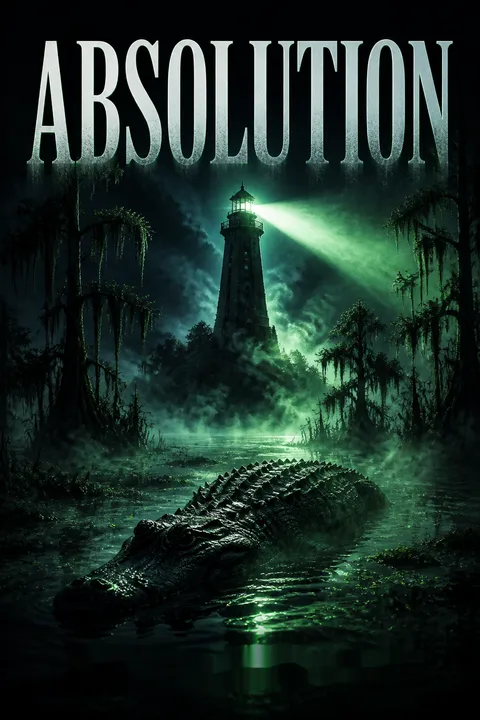
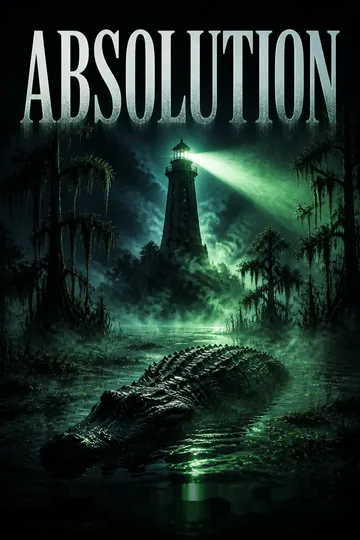
Absolution, the fourth book in Jeff VanderMeer's Southern Reach series, receives mixed reviews averaging 3.59/5 stars. Readers appreciate the return to Area X's cosmic horror and mysterious atmosphere, particularly praising the first two sections featuring "Old Jim." The experimental writing style divides opinion—some find it brilliantly unsettling while others consider it nearly unreadable. The third section, narrated by drug-addled Lowry with excessive profanity, proves especially polarizing. Fans value the atmospheric weird fiction and connections to the original trilogy, though many note it answers few questions while raising new ones. Several reviewers recommend reading the original trilogy first.
Characters
Old Jim
A haunted field operativeAn experienced Central operative with an exceptional memory and a life shaped by secrecy, violence, and long absences from home. Jim tends to translate emotional pain into investigation because analysis gives grief a structure he can endure. His estrangement from Eleanor leaves him vulnerable to anyone who can turn family into leverage. He is also observant and capable of tenderness, though those qualities have been buried under professional habits. His connection to the piano and the coast’s records makes him unusually receptive to patterns others dismiss, while also leaving him susceptible to the systems that manipulate memory.
Eleanor Kavanaugh
The daughter beyond reachOld Jim’s daughter, known in adulthood as Cass or Kavanaugh, is an animal-science graduate who also writes poetry. She has moved between jobs and directions without finding a life that feels settled. Her father’s years of secrecy and absence complicate their affection, and she eventually establishes a boundary he cannot interpret or repair for her. Eleanor matters to Jim not as an idealized child but as a person whose independent choices remain beyond his control.
Cass
A guarded field partnerA Central operative assigned to work beside Jim under a cover that presents her as his daughter. Cass is disciplined, physically capable, and alert to risks that Jim’s grief can obscure. She does not simply indulge his authority: she challenges his conduct, notices details in animal tracks, and builds her own picture of the Brigade and the Rogue. Her humor and practical care gradually give their strained partnership a human quality. She carries the burdens of a previous failed operation and approaches trust as something proven through action rather than promised.
James Lowry
The volatile expeditionaryA soldier selected for the expedition’s strength, aggression, and ability to act under pressure. Lowry masks fear with jokes, profanity, sexual bravado, and a strong appetite for drugs. His self-image depends on being indispensable, so he resents the authority of Sky and Jamal even while needing their company. He is capable of loyalty and attachment, especially toward Sky and Landry, but has difficulty expressing vulnerability without turning it into a performance. His perceptions become increasingly unreliable as Area X alters his body and sense of time.
The Rogue
A stranger out of timeA pale, nameless figure who appears around the Forgotten Coast and becomes a focus of local rumor and Central investigation. His movements cross the worlds of the biologists, the Tyrant, and the people who later study the coast. The Rogue communicates through a forceful voice that seems capable of overwhelming listeners, yet his motives resist the labels imposed on him. He is frightening partly because he appears to understand systems his observers cannot, and partly because no account of him remains complete.
The Tyrant
The tagged marsh matriarchA large female alligator brought to the Forgotten Coast and fitted with a tracking harness. The scientists treat her as an experimental subject, but she proves difficult to contain or interpret. Her movement through the wetlands links the biologists’ project to the Rogue and to the strange materials found in the cameras. She embodies the novel’s refusal to separate animal behavior from agency, memory, and environmental change. The Tyrant is at once a powerful predator and a presence capable of protection.
Jack Severance
Central's old-guard spymasterOld Jim’s longtime friend, handler, and superior at Central. Jack values loyalty and family, but his affection does not prevent him from manipulating the people he considers close. He is drawn to the uncanny and willing to disguise dangerous projects as necessary experiments. His charm, strategic instinct, and appetite for control make him both a trusted companion and a source of profound uncertainty for Jim.
Jackie Severance
The hard-edged operations chiefJack’s daughter and a senior operator who manages the Forgotten Coast mission from the ground. Jackie is direct, demanding, and less enamored of Jack’s theatrics than he is. She recalls Jim from his earlier career and measures him against the disciplined operative she remembers. Her position requires her to keep the mission functioning while navigating her father’s influence and Central’s competing factions.
The Mudder
The sure-footed field biologistA slight biologist who moves easily across the mud flats and studies fiddler crabs. She trusts close observation more than the group’s reassuring explanations, especially when she encounters the predatory white rabbit. Her careful records preserve details others overlook, but her experience also teaches her that description cannot make a threatening event manageable. She is resourceful, private, and increasingly unwilling to accept the expedition’s version of what is happening.
David Sheers
The compliant field surgeonKnown by the biologists as the Medic, Sheers records their health and tends their injuries while maintaining an air of practical neutrality. He regards institutional authorization as a sufficient defense for actions others would call murder. His loyalty to Central and his belief in its experiments make him a chilling figure precisely because he does not understand himself as cruel. He later works within the Brigade, carrying the same professional detachment into new surroundings.
Man Boy Slim
The local watcherA sharp, well-read local who watches the biologists and entertains the Village Bar with theories, pranks, and commentary. His apparent idleness conceals sustained curiosity about the expedition. He is capable of humor and close observation, but guilt over what he and his friends saw on a rabbit camera makes him defensive. His knowledge gives Jim access to local history that Central’s records cannot supply.
Drunk Boat
The bar's doomed poetA local alcoholic and self-styled poet who spends time at the Village Bar and shares Man Boy Slim’s curiosity about the biologists. His imagination makes him receptive to the camera’s disturbing images, while his drinking leaves him exposed to them. He represents the locals’ mixture of wit, fatalism, and vulnerability in the face of events they cannot explain.
Henry Kage
The occult-obsessed civilianA volatile civilian investigator recruited into the Séance and Science Brigade. Henry is drawn to occult phenomena and grand theories, and he resents oversight from people he considers less qualified. His history of violence makes his interest in the uncanny dangerous to those around him. He uses specialized language and displays confidence, but beneath both lies an unstable relationship with authority and control.
Suzanne Kage
The silent fixerHenry’s younger half sister and close companion. Suzanne organizes and edits much of his work, helping his erratic theories pass through the Brigade’s formal channels. She remains difficult to read and appears to have spent much of her life outside ordinary institutions. Her presence gives Henry’s private obsessions a practical support system.
Karen Hargraves
The capable expedition officerA highly competent military officer whose skill and composure distinguish her among the expedition members. Lowry finds her confidence irritating even as he recognizes her ability. She is perceptive, self-contained, and difficult to place within the expedition’s shifting loyalties. Her presence becomes especially significant when Lowry encounters her again in the transformed landscape.
Sky Overbeck
The first expedition leaderThe disciplined leader of the expedition that crosses into Area X. Sky tries to preserve order through procedures, supplies, and clear instructions even as the landscape undermines each. She is capable of intimacy with Lowry but does not let their relationship erase her judgment or obligations. Her leadership is tested by the widening gap between the team’s preparation and what they actually encounter.
Jamal Winters
The steady deputy leaderThe expedition’s second-in-command, with a measured manner and strong interpersonal skills. Lowry envies his position and resents how naturally others trust him. Jamal tends to favor patience and coordination over Lowry’s impulsive force, making him a counterweight to the expedition’s most volatile member.
Whitby Allen
The excluded naturalistA naturalist and alternate who remains behind at the Southern Reach rather than joining the expedition. Whitby is curious, earnest, and more attuned to ecological and historical details than Lowry initially appreciates. He shares information about the Border’s test crossing that haunts Lowry later. His outsider status does not prevent him from becoming an important presence in Lowry’s understanding of Area X.
Scott Landry
The expedition's drug sourceA medic and Lowry’s friend, Landry supplies the drugs Lowry uses to manage fear and maintain energy. Their companionship is built around shared jokes, chemical escape, and a degree of trust Lowry rarely grants others. Landry’s own dependence and changing behavior become increasingly difficult for Lowry to interpret.
Gloria Jenkins
The fearless local childA bold child from the Village who explores the coast and treats danger as part of an ordinary day. After a fishing hook pierces her foot, Jim removes it and tends the wound. Gloria’s curiosity and blunt questions briefly draw him out of his secretive, grief-bound habits.
Trudi Jenkins
The practical local motherGloria’s mother, who arrives to collect her after Jim treats the fishing-hook injury. Trudi is protective without being overbearing and shows Jim ordinary local kindness through a thank-you note and an offer of future company.
Alex Aguilar
A biologist under pressureOne of the two team leaders on the Dead Town expedition, later identified as Alex Aguilar. She tries to maintain the project’s structure even as the researchers’ confidence erodes. Her connection with fellow leader Kim Numi offers a rare source of mutual support within the isolated camp.
Kim Numi
A biologist under pressureThe second leader of the Dead Town expedition and Aguilar’s close partner. Numi records the emotional and sensory effects of the camp’s increasingly disturbing events. Her observational care contrasts with the project’s demand for objective reports, and her loyalty to Aguilar shapes how she faces institutional scrutiny.
Plot Devices
The Dead Town generator
A machine for hidden commandsThe generator supplies the biologists’ camp while also carrying Central’s subliminal conditioning program. When it fails, the researchers briefly experience a disturbing absence of mental pressure; once it is repaired, the old influence returns. Its breakdown contributes to Diaz’s discovery and disappearance, while its later destruction becomes one of the Rogue’s apparent objectives. The device turns ordinary infrastructure into a means of covert control, making even the camp’s background hum politically and psychologically charged.
The rabbit cameras
A lens that alters its witnessSmall cameras worn by some of the white rabbits record images that change depending on who views them. Man Boy Slim, the Mudder, and Drunk Boat encounter different and disturbing visions, including possible futures. The biologists mistake the cameras for technical curiosities and try to destroy them during the rabbit extermination. Their unusual materials later attract Central’s research division, while the Rogue’s treatment of them appears connected to the Tyrant’s transformation. The cameras make observation an active hazard rather than a neutral act.
The alligator tracker
A signal through the marshA harness and bobber system is fitted to the Tyrant so the biologists can track her movement through the waterways. The tracker becomes unreliable, disappears from Jim’s display, and eventually registers a moving signal approaching him. A recovered bobber helps Jim connect the old expedition to the present investigation. Its readings cannot be trusted as simple geography: the signal may indicate a living animal, a distortion, or a relationship between the Tyrant and the Rogue that the equipment was never designed to measure.
Winter Journey
Music as memory controlThe piano suite gives Jim a practice that appears to soothe his grief and steady his hands. Central has also used the music and its lyrics as part of his conditioning, binding certain commands to the emotional force of repeated play. The melodies echo across the story, from the biologists’ piano to Jim’s bar and the later operation in Area X. Music therefore moves between personal comfort, surveillance, and coercion. Its meaning changes depending on who controls the performance and what the listener has been taught to hear.
The Border
A threshold that changes bodiesThe Border separates the Southern Reach from Area X and is crossed through a strange corridor. The expedition’s members emerge disoriented, and their protective suits prove unable to shield them from the region’s alterations. The Border also disrupts time, evidence, and identity, complicating any simple account of entry or return. Lowry’s final hesitation before putting on a damaged suit leaves his fate unresolved. The threshold is not merely a line on a map. It is an encounter that changes what a person can know about their own body.
Southern Reach Series
About the Author

Download PDF
Download EPUB
.epub digital book format is ideal for reading ebooks on phones, tablets, and e-readers.








