Plot Summary
When the Piano Falls
Lucy Bergmann's life is upended in Amsterdam when her beloved husband, Thom, is killed by a falling piano. Thom, an astrophysicist, had just confided in her a world-shaking secret: evidence of extraterrestrial life. Lucy is left with his memory stick, a talisman of love and knowledge, and a heart full of grief. The randomness and violence of Thom's death, juxtaposed with the beauty of their last morning together, sets Lucy on a journey through trauma, memory, and the search for meaning. The event is both literal and symbolic—a collision of the ordinary and the cosmic, the personal and the universal.
The Gathering of the Dust
In a parallel narrative, a man named Adam awakens naked and alone on a riverbank in Mesopotamia, unsure of his origins. His senses come alive as he discovers his body, the world, and the first stirrings of desire and loneliness. Adam's experience is primal and childlike, yet he is an adult, both innocent and marked by trauma. The narrative blurs the line between myth and reality, as Adam's first day echoes the Genesis story, but with a modern, psychological twist. His longing for connection and meaning is palpable, setting the stage for his eventual meeting with Lucy.
Genesis of Grief
After Thom's death, Lucy is adrift, moving from Iowa to New York, seeking solace in her work as an art therapist. She clings to Thom's memory stick, unable to let go of the past or the secret it contains. The world around her is fractured by war and religious conflict, mirroring her internal chaos. Lucy's grief is compounded by existential questions about faith, science, and the nature of beginnings and endings. Her pilgrimage to the Anne Frank House and memories of childhood trauma deepen her sense of loss and the need for renewal.
Passage to Egypt
Lucy is invited to Egypt for a symposium honoring Thom's work. There, she reconnects with old friends and is drawn into a web of intrigue involving a newly discovered ancient codex that could upend the foundations of the Abrahamic religions. Pierre Saad, an anthropologist, and his daughter Arielle enlist Lucy's help to smuggle the codex out of Egypt, believing it holds the key to religious reconciliation. The mission is fraught with danger, as fundamentalist groups seek to destroy the manuscript and suppress its revelations.
The Secret Codex
Lucy's journey becomes a test of trust and courage as she agrees to transport the codex, disguised in a French horn case, across war-torn lands. The codex, older than the Gnostic gospels, offers a radical reinterpretation of Genesis, suggesting a more universal, less divisive origin for humanity. Lucy's sense of purpose is rekindled, but she is haunted by the possibility that Thom's death was not an accident but a murder orchestrated by those threatened by new knowledge. The memory stick and the codex become twin symbols of hope and peril.
Flight and Fire
Piloting a small plane, Lucy crashes in a surreal, Edenic landscape after her engine fails. She is badly burned but survives, clutching Thom's memory stick. The crash is both a literal and metaphorical descent—into the unknown, into suffering, and ultimately into a new beginning. The landscape she enters is a patchwork of memory, myth, and reality, populated by animals and haunted by the possibility of other survivors. Her ordeal strips her to her essence, preparing her for the encounter with Adam.
In the Garden
Lucy, naked and injured, finds Adam in the garden. Their meeting is charged with mythic resonance and psychological depth. Both are damaged—physically and emotionally—but find in each other the possibility of healing and companionship. The garden is a place of abundance and innocence, but also of memory and loss. Their interactions are tender, awkward, and filled with the longing for connection. The boundaries between patient and healer, myth and reality, begin to blur as they care for each other.
Adam's Awakening
Adam's past is gradually revealed: a soldier, a survivor of war and abuse, he has been reborn in this strange Eden. His relationship with Lucy is both redemptive and fraught with the shadows of his past. He is gentle, creative, and eager to please, but also haunted by guilt and violence. The garden becomes a space for recovery, where Adam's artistic impulses and Lucy's nurturing help them both reclaim their humanity. Their growing intimacy is a fragile triumph over the darkness they have known.
Eve's Arrival
As Lucy heals, she sheds her old self and embraces the role of Eve—partner, friend, and co-creator. The narrative explores themes of naming, identity, and the power of language. Lucy and Adam establish routines, share stories, and confront their differences in belief and experience. Their Eden is idyllic but not without tension, as questions of reality, sanity, and the outside world intrude. The possibility of escape and the search for the lost codex linger in the background, complicating their paradise.
Healing in Eden
The arrival of an injured American pilot, Riley, disrupts the fragile peace of Eden. Together, Lucy and Adam care for him, forming a makeshift family. Their acts of kindness and cooperation are primal and profound, echoing the earliest human communities. Yet, the presence of a feral boy and the sacrificial killing of a lamb introduce the specter of violence and the persistence of old sins. The garden is no longer a sanctuary; the outside world and its dangers are encroaching.
The Parachute Descent
Riley's dramatic arrival by parachute brings new challenges and opportunities for growth. His injuries force Lucy and Adam to confront their own limitations and strengths. The trio's dynamic is marked by humor, resilience, and the rediscovery of joy in simple acts—cooking, storytelling, and play. Yet, the threat of the feral boy and the memory of past traumas loom, reminding them that innocence is always precarious. The bonds they form are tested by jealousy, fear, and the inevitability of change.
The American Patient
As Riley recovers, the group experiences a brief period of harmony and hope. They share food, laughter, and dreams of the future. But the peace is shattered by the feral boy's attack and the brutal murder of Riley. The event is a devastating reminder of the persistence of violence and the fragility of paradise. Lucy and Adam are forced to flee, carrying the codex and the weight of their losses. Their journey becomes a search for safety, meaning, and redemption in a world that cannot escape its own history.
The Incubus and the Lamb
The encounter with the feral boy and the sacrificial lamb forces Lucy and Adam to reckon with the origins of violence and the limits of forgiveness. The narrative draws parallels between ancient myths, biblical stories, and contemporary trauma. The garden is revealed as a place of both creation and destruction, where the boundaries between human and animal, sacred and profane, are blurred. The decision to leave Eden is both a flight from danger and an acceptance of the complexity of the human condition.
Violence Returns
Lucy and Adam's escape from Eden is marked by encounters with the aftermath of war, religious fanaticism, and the ruins of civilization. They witness the consequences of hatred and literalism, embodied in the mutilated bodies and desecrated landscapes they traverse. Their love is tested by suffering, but also deepened by shared vulnerability and the hope of renewal. The codex remains a symbol of possibility—a new story for a fractured world.
Escape from Paradise
Lucy and Adam reach France, where they are welcomed by Pierre and Arielle. The French sanctuary offers safety, comfort, and the promise of intellectual and spiritual community. The codex is entrusted to Pierre, who begins the work of translation and interpretation. The group forms a new kind of family, united by loss, love, and the pursuit of understanding. The past is not forgotten, but integrated into a larger narrative of healing and hope.
The French Sanctuary
In the south of France, the characters find respite and the opportunity to reflect on their journeys. Adam and Arielle form a bond, while Lucy grapples with questions of faith, fidelity, and the meaning of her experiences. The group explores the ancient caves, marveling at the prehistoric art that testifies to the enduring human impulse to create and connect. The codex is revealed to offer a vision of beginnings that is inclusive, imaginative, and open-ended.
Cave of Origins
Pierre leads the group into the caves, where they encounter the oldest human art and the echoes of ancient stories. The experience is transformative, linking the personal and the collective, the past and the present. The codex's message—a creation story rooted in connection, imagination, and the acceptance of mystery—offers an alternative to dogma and division. The journey through darkness and danger becomes a metaphor for the search for meaning and the possibility of renewal.
New Beginnings, Olduvai
In the epilogue, the survivors travel to Olduvai Gorge and the Serengeti Plain, scattering Adam's ashes among the running herds. The journey is both an ending and a beginning—a tribute to the cycles of life, death, and creation. Lucy, now pregnant, contemplates the future with hope and humility. The lessons of the codex, the cave paintings, and their own experiences converge in a vision of humanity that is humble, creative, and ever-seeking. The story closes with an affirmation of freedom, authenticity, and the enduring power of love and art.
Characters
Lucy Bergmann
Lucy is the emotional and narrative center of the novel, a woman marked by loss, curiosity, and resilience. Her journey from trauma to healing is both literal and symbolic, as she moves from the devastation of Thom's death to the challenges of Eden and beyond. Lucy's relationships—with Thom, Adam, Riley, and the Saads—reveal her capacity for empathy, courage, and transformation. As an art therapist, she is attuned to the power of creativity and the necessity of confronting pain. Her psychoanalytic depth is matched by her willingness to question, adapt, and ultimately embrace new beginnings.
Adam Black
Adam is a complex figure—part myth, part man—whose journey mirrors and complements Lucy's. A former soldier traumatized by war and abuse, Adam is reborn in Eden, where his innocence, creativity, and longing for connection come to the fore. His relationship with Lucy is redemptive but fraught with the shadows of his past. Adam's artistic impulses, vulnerability, and capacity for tenderness make him both a healer and a patient. His development is marked by the struggle to reconcile violence and love, faith and doubt, and to find a place in a world that is both beautiful and broken.
Thom Bergmann
Thom is present throughout the novel as an absence—a memory, a secret, a source of both grief and inspiration. His discovery of extraterrestrial life and his tragic death set the plot in motion, leaving Lucy with a burden of knowledge and longing. Thom's character is defined by his intellect, kindness, and the mystery of his inner life. The ambiguity surrounding his fidelity and the true nature of his work adds psychological complexity, forcing Lucy to confront the limits of knowledge and the necessity of trust.
Pierre Saad
Pierre is a Franco-Egyptian scholar whose passion for understanding and reconciliation drives the quest for the codex. He is both a father and a mentor, embodying the virtues of curiosity, empathy, and resilience. Pierre's relationship with his daughter Arielle, his Sufi stepfather, and the other characters reveals his capacity for love, adaptability, and leadership. His psychoanalytic depth is evident in his willingness to confront his own losses and to seek meaning in both the past and the present.
Arielle Saad
Arielle is a sculptor and pilot, the daughter of Pierre, and a bridge between cultures and generations. Her confidence, creativity, and practicality make her an essential ally in the quest for the codex and the journey through danger. Arielle's relationship with Adam is marked by mutual attraction, respect, and the possibility of new beginnings. Her development reflects the novel's themes of inheritance, transformation, and the power of art to heal and connect.
Riley (F. Riley)
Riley is an American pilot whose dramatic arrival in Eden tests the group's capacity for compassion and cooperation. His humor, resilience, and vulnerability endear him to Lucy and Adam, but his presence also introduces new tensions and challenges. Riley's tragic death at the hands of the feral boy is a turning point, shattering the illusion of safety and forcing the survivors to confront the persistence of violence and loss.
Gabriel Plum
Gabriel is a British scientist and old friend of Thom and Lucy. His dry wit, intelligence, and ambivalence about the search for extraterrestrial life make him both an ally and a threat. Gabriel's eventual betrayal—motivated by jealousy, fear, and the desire for control—serves as a cautionary tale about the dangers of dogmatism and the limits of friendship. His character is a study in the complexities of loyalty, ambition, and the human need for certainty.
The Feral Boy
The feral boy is a haunting presence in Eden, a figure who blurs the boundaries between human and animal, victim and perpetrator. His actions—feeding Adam, killing the lamb, murdering Riley—force the other characters to confront the origins of violence and the limits of empathy. The boy's inability to communicate, his isolation, and his rage are both terrifying and pitiable, serving as a mirror for the darkness within and the failures of civilization.
Sam Houston
Sam is a Texan businessman and fundamentalist Christian recruited by the secretive group Perpetuity to suppress the codex and maintain the literal truth of Genesis. His character represents the dangers of fanaticism, the allure of certainty, and the willingness to use violence in the name of faith. Sam's psychological rigidity and capacity for self-justification make him both a villain and a tragic figure, caught in the web of history and belief.
The Sufi Grandfather
Pierre's Sufi stepfather is a figure of wisdom, humor, and resilience. His presence in France, his stories, and his guidance offer a counterpoint to the violence and dogmatism of the other characters. The Sufi's emphasis on kindness, imagination, and the acceptance of mystery embodies the novel's deepest values. His relationship with Pierre, Arielle, and the others is marked by love, humility, and the recognition of the sacred in the everyday.
Plot Devices
Dual Narrative Structure
The novel employs a dual narrative, alternating between Lucy's story of loss, quest, and healing, and Adam's mythic awakening and recovery. This structure allows for the exploration of universal themes—trauma, faith, creativity—through both personal and archetypal lenses. The convergence of the two narratives in Eden and their subsequent journey together creates a rich tapestry of meaning, blending realism and allegory.
The Codex and the Memory Stick
The ancient codex and Thom's memory stick are central plot devices, representing the quest for truth, the burden of knowledge, and the possibility of reconciliation. Both are sought by various factions—scientists, fundamentalists, secret societies—each with their own motives and fears. The codex's radical reinterpretation of Genesis and the memory stick's evidence of extraterrestrial life challenge the foundations of religious and scientific certainty, driving the plot and deepening the psychological stakes.
Eden as Liminal Space
The garden where Lucy and Adam meet is a liminal space—part paradise, part prison—where the boundaries between past and present, myth and reality, are blurred. Eden serves as a crucible for the characters' recovery, intimacy, and confrontation with violence. The arrival of Riley, the feral boy, and the sacrificial lamb introduce elements of danger and loss, forcing the characters to reckon with the persistence of old sins and the necessity of leaving paradise.
Foreshadowing and Recurrence
The novel is rich in foreshadowing and the recurrence of motifs—falling, burning, sacrifice, naming, and the search for origins. These devices create a sense of inevitability and resonance, linking the personal stories of the characters to larger patterns of history and myth. The repetition of violence and the longing for connection underscore the difficulty of breaking free from the past, while the possibility of new beginnings remains ever-present.
The Cave Paintings and the Codex
The exploration of prehistoric cave art in France serves as both a literal and metaphorical descent into the origins of humanity. The paintings, like the codex, are texts to be read, interpreted, and reimagined. They offer a vision of beginnings that is inclusive, imaginative, and open to multiple meanings. The journey through the caves is a rite of passage, linking the characters to their ancestors and to each other.
Pursuit and Escape
The threat posed by Perpetuity, Gabriel, and other antagonists creates a sense of urgency and suspense. The characters are repeatedly forced to flee, hide, and confront their pursuers, both in the physical world and in the underworld of the caves. These episodes test their courage, loyalty, and capacity for forgiveness, while also highlighting the persistence of violence and the difficulty of achieving true safety.
Analysis
Sena Jeter Naslund's Adam & Eve is a richly layered novel that reimagines the Genesis story for a modern, fractured world. Through the intertwined journeys of Lucy and Adam, the book explores the enduring human questions of loss, faith, creativity, and the search for meaning. The narrative challenges the literalism and dogmatism that fuel violence and division, offering instead a vision of beginnings rooted in connection, imagination, and the acceptance of mystery. The codex and the cave paintings serve as symbols of humanity's capacity for both destruction and creation, reminding us that our stories are always in flux, open to reinterpretation and renewal. The novel's ultimate message is one of humility, hope, and the redemptive power of love and art—a call to embrace our shared origins and to forge new paths toward understanding and peace.
Last updated:
Review Summary
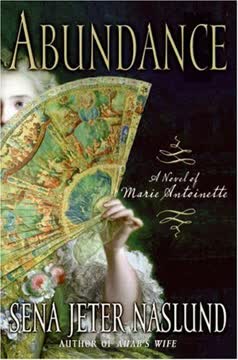
Abundance: A Novel of Marie Antoinette receives mixed reviews averaging 3.75 stars. Readers praise Naslund's poetic, lyrical prose and thorough historical research, appreciating the sympathetic portrayal of the misunderstood queen from age fourteen to her execution. Many found the first-person narrative beautifully written and enlightening about French history. However, critics cite slow pacing, excessive length at 600 pages, overly flowery language, and an unsympathetic protagonist. Several reviewers noted the book drags in places, though most acknowledged learning much about Marie Antoinette's life and gaining new perspective on her tragic story.