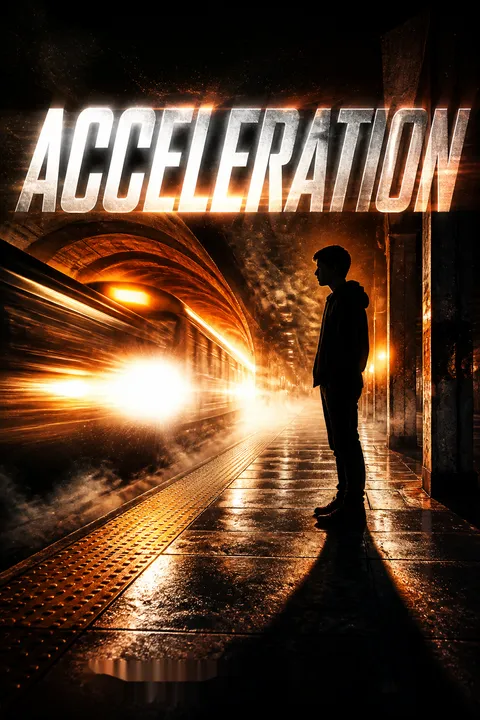


Plot Summary
Bay Station's Brown Ledger
Seventeen-year-old Duncan is spending the summer in Toronto Transit’s underground lost and found, a job his father arranged and Duncan resents. While searching the dusty stacks, he finds a thick, untitled leather journal. Its pages contain a chart measuring how long mice take to drown in different liquids, followed by newspaper clippings about mutilated cats.
The writer’s notes turn the clippings into a private record of cruelty, not a collection of morbid curiosities. Duncan recoils, drops the book, and kicks it away as if he can dispose of what he has seen. The shift ends, but the journal remains in the stacks, and its details have already lodged in his mind.
The lost and found gives Duncan a fitting first encounter with the book: it is a place where abandoned things wait to be claimed, while the journal’s writer has abandoned ordinary moral limits. Duncan’s first response is disgust and avoidance, an understandable attempt to keep violence at a distance. Yet his act of kicking the journal away does not make its contents disappear. The scene establishes a central pressure in the story: knowledge creates responsibility, even when the person who finds it would rather return to the safety of not knowing.
The Drowned Girl Returns
Duncan’s recurring nightmare returns him to Kayuga Beach, where he sees a girl struggling in Lake Ontario and swims toward her. He reaches the place where she vanished but cannot find her before his breath runs out. The girl was Maya, a stranger Duncan was the last person to see alive; he still believes he should have saved her.
The guilt has damaged his sleep and helped end his relationship with Kim, who began volunteering with vulnerable teens while Duncan tried to shield her from danger. His father once tried to ease the blame by reminding him that rescuers cannot control every outcome. Later, at a crowded pool with Wayne, Duncan dives for a dropped key and panics when a hand grips his foot and a scream fills the water.
Duncan’s guilt is not simply grief. He has converted a moment of helplessness into a test he believes he failed, then measures his worth against an impossible standard of rescue. That belief narrows his relationships: Kim’s independence feels to him like a threat he must manage, while her care work makes his fear look increasingly like control. The pool panic shows that his body still treats water as the scene of an unfinished emergency. The journal will offer him a new danger to confront, but it also gives his old guilt a tempting story: perhaps this time he can arrive in time.
Roach's Next Experiment
Unable to forget the journal, Duncan returns to it and reads entries about arson, including a hotel and a used bookstore, with clippings documenting each blaze. The writer treats the fires and animal killings as practice, then records a new ambition: selecting women he watches on the subway.
He tracks their stations, schedules, appearances, and perceived vulnerabilities, labeling them Cherry, Bones, and Clown. Duncan calls the unseen author Roach and considers the police, but fears they will dismiss an unsigned journal as fantasy and suspect him because his fingerprints are on it.
He decides the notebook may have landed in his hands for a reason. If he finds the women first, he tells himself, he might prevent the next crime and make amends for Maya.
The journal’s progression turns Duncan’s private discovery into an urgent moral choice. Its author seeks control by reducing strangers to profiles, while Duncan risks adopting the same logic by treating the women as clues and possible bait. His rescue fantasy is psychologically understandable, but the belief that Maya’s death has assigned him a mission blurs compassion with self-punishment. Calling the writer Roach gives Duncan a manageable label for an anonymous threat, yet a name is not knowledge of a person. The gap between what Duncan knows and what he assumes will shape every decision that follows.
Cherry's Ten Forty Train
Duncan uses the journal’s schedule to find Cherry on a late subway train. Her red hair, pale face, and black clothes match the writer’s notes, making the diary suddenly feel less like a deranged scrapbook and more like a map to a living person.
He follows her from Wilson Station, keeping back as she walks through the neighborhood. The closer he gets, the more his presence resembles the threat he is trying to stop. Cherry notices him, hurries into her apartment building, and disappears behind the locked entrance.
Duncan recognizes that he has frightened the very woman he meant to protect. At home, he gives his mother a misleading account of the evening, then lies awake wondering whether watching Roach’s targets can lead him to Roach at all.
This failed surveillance is an ethical correction before it is a tactical one. Duncan’s intentions do not make his behavior harmless; Cherry experiences only an unfamiliar boy tracking her through the dark. The scene exposes how easily a rescuer can reproduce the structure of a threat when he assumes that his private certainty entitles him to act. It also tests Duncan’s confidence in the journal. The timetable proves accurate, but accuracy does not provide a safe method, a clear identity, or permission to intervene. He needs help, and he needs to stop mistaking urgency for competence.
The Cops Leave It
Duncan confides in Vinny, his sharp-minded friend, and shows him copies from the journal. Vinny advises turning it over to police. Duncan first searches for guidance at the library, where a book on serial offenders describes cruelty to animals, fire-setting, and other childhood warning signs that resemble Roach’s record.
The research strengthens his fear, but not his evidence. At the station, a desk officer and a detective leaf through the diary without taking its threat seriously.
They treat it as an anonymous collection of disturbed thoughts and tell Duncan to leave it. As their attention shifts elsewhere, he takes the journal back and walks out. The failed report makes the danger feel more immediate, but it also leaves Duncan with fewer safeguards and a stolen book.
The police encounter does not prove that the authorities are incapable of helping; it shows how little the evidence communicates when detached from the context Duncan has painstakingly assembled. The officers see isolated pages, while Duncan sees a sequence moving toward a victim. His decision to reclaim the journal is driven by distrust, but also by a need to remain the person in control of the rescue. Vinny’s presence provides a counterweight: he knows the plan is dangerous and keeps insisting that Duncan distinguish evidence from conviction. Their partnership begins in disagreement rather than shared bravado.
Six Blocks of Clues
Vinny searches old newspaper records and plots the animal mutilations and fires on a Toronto map. The incidents cluster around Wilson Heights, narrowing Roach’s likely home territory.
A second clue comes from the journal: Duncan carefully removes a receipt attached to a page and discovers that its ten-percent employee discount points to Yorkdale Mall staff, not the hardware store where it was issued. The two friends reason that a security guard might have access to the mall and a sense of authority without needing much social skill.
They also notice that Roach’s chosen subway times fit workers leaving the mall at closing. Cherry may work there, which could explain why he has studied her route. Their map and deductions create a workable lead, though each inference still rests on guesswork.
The investigation becomes collaborative, and that change matters as much as the new clues. Vinny supplies patience and research skills that Duncan lacks, turning a private obsession into a process that can be checked and challenged. The map makes Roach’s violence spatially legible, while the receipt connects his hidden life to ordinary employment. Yet the apparent precision can mislead: clusters, discounts, and schedules narrow possibilities without proving identity. The friends’ method is resourceful, but it remains amateur profiling. Their growing confidence will soon be tested by people who fit the pattern on paper but have lives that do not.
Wrong Men, One Assault
At Yorkdale, Duncan and Vinny watch the security staff and narrow their attention to a thin red-haired guard and a large guard they call Jumbo. They split up after closing. Duncan follows Jumbo, then sees him meet a woman who greets him affectionately, making him an unlikely loner.
Vinny tails the red-haired guard and finds that he lives with a wife, child, and Chihuahua. The next morning, news reports that a woman was pushed onto subway tracks by a man whose description does not match Roach.
Vinny argues that their theories are too shaky to justify continuing, but Duncan insists the assault is unrelated. Before they can settle the dispute, Roach appears at the lost and found asking for his missing leather journal. Duncan recognizes the description and follows him from the station.
The false leads expose the danger of turning behavioral generalizations into identification. A suspect’s appearance or job can make him seem plausible, but ordinary relationships complicate the profile, and the subway assault offers no reliable link to Roach. Duncan’s refusal to stop is partly commitment to the victims and partly inability to tolerate another situation he cannot control. Then the investigation changes scale: Roach is no longer an abstract figure inferred from clippings. He has come looking for the object that can expose him, and Duncan must act before he loses the only direct lead.
Number Eighteen Cedar
Roach’s face is scarred by acne, his glasses magnify his eyes, and his security uniform matches the mall lead. Duncan follows him by subway and bus to a house on Cedar Road, then calls Wayne for help opening the front door.
Wayne has recently been fired from the Dairy Barn after money disappeared, and he has been trying to return to legal work; still, he comes with his lock picks. They find Roach’s elderly grandmother watching muted television, too deaf to notice them.
Behind a locked basement door, Duncan discovers jars holding animal remains, photographs of women taken without consent, a police scanner, and pages in Roach’s handwriting. A barred inner room is empty. As Duncan prepares to leave, Roach returns and descends the stairs with a knife.
Finding the basement converts Duncan’s suspicions into material evidence, but it also removes the distance that had made the investigation feel like a puzzle. The specimens and surveillance photographs reveal a practiced system of control, while the empty barred room suggests a danger that may not yet have reached its final form. Wayne’s choice to help complicates his comic reputation: he is still willing to break a law, but now for a friend rather than for a scheme. The deaf grandmother’s presence makes the house feel occupied and morally tangled, not merely a hidden lair. Duncan’s discovery has put him in immediate danger.
Wilson's Last Train
Duncan hides in the barred room as Roach searches the basement. When Roach approaches, Duncan bursts out with a metal bar, strikes him, and races upstairs, but Roach cuts his arm and pursues him into the rain. Duncan runs toward Wilson Station with an injured arm and a badly twisted ankle. On the platform, Roach knocks him onto the tracks as a train approaches.
Duncan pulls himself toward the platform, catches Roach’s foot, and drags him off balance. Roach falls into the train’s path; Duncan squeezes beneath the platform edge as the train hits. He survives with severe injuries. Witnesses see the struggle, and the knife Roach used remains evidence, though the exact history of the fight is hidden from the public.
The climax strips Duncan’s rescue fantasy of its heroic polish. He does not control the encounter, and survival depends on improvisation, endurance, and a narrow physical opening beneath the platform. The train, introduced throughout the story as both workplace noise and ordinary transport, becomes the force that ends the pursuit. Duncan’s act of pulling Roach down is self-defense in a situation Roach created, not a clean triumph over evil. The secret he keeps afterward preserves his friends from scrutiny, but it also means that the public account cannot fully name what happened.
A Bedside Promise
In the hospital, Duncan wakes with stitches, a broken arm, a concussion, and a badly injured eye. Police describe the encounter as a possible mugging, and he claims not to remember its sequence.
Roach is identified through his health card as Scott Weber, whose earlier assault charge had been dropped when the victim would not testify. Duncan’s parents keep watch beside his bed, while Wayne admits he lost sight of Duncan in the rain and feared he had died. Vinny and Wayne are the only friends who know the full story.
Wayne and Duncan make a tentative promise to stop committing crimes, though Wayne seals it with stolen pudding. Kim visits, angry that Duncan has again risked himself, but her presence renews the possibility of friendship rather than restoring their old relationship.
Survival does not erase consequence. Duncan’s injuries make his body a record of the choices he made, while the false public account protects him and conceals the truth from the police. His family’s care contrasts with his earlier conviction that he must save others to deserve peace. Wayne’s guilt and the shared promise expose how friendship can both enable recklessness and create accountability. Kim does not reward Duncan with instant reconciliation; her concern comes with anger at his pattern of self-endangerment. The scene allows affection without pretending that one crisis repairs every damaged relationship.
Water Without Maya
Two weeks later, Duncan returns to the lost and found with a cast and a limp. He and Vinny and Wayne burn the journal at a backyard barbecue, destroying the record that had drawn them into Roach’s world.
Duncan also exchanges a rare, small moment of understanding with Jacob, whose withdrawal has long made the underground office feel like a place where people disappear into routine. Kim has called, and Duncan plans to watch one of her games.
Later, he brings Vinny to the pool after midnight and dives into the deep end, still injured and unable to see clearly underwater. He waits for the screams that have haunted him, but hears only silence. When he surfaces, he understands that Maya is not there, and allows himself to leave her memory at rest.
The final dive answers the book’s opening wound without rewriting the past. Duncan cannot retrieve Maya or prove that he could have saved her; what changes is his willingness to stop treating remembrance as a punishment. Burning the journal is also more than destroying evidence. It refuses to preserve Roach’s violence as an object of fascination, though the friends’ secrecy leaves unresolved questions about justice. Duncan’s return to ordinary relationships, including Jacob and Kim, is deliberately modest. The closing silence underwater marks not mastery over fear but a temporary release from the demand that every loss be converted into another rescue.
Analysis
Acceleration builds its thriller around the unstable boundary between responsibility and control. Duncan’s guilt over Maya makes the journal’s threat feel personal, but his belief that he must compensate for a failed rescue also makes him vulnerable to dangerous certainty. Each investigative step therefore carries two questions: can he identify the author, and can he act without turning other people into instruments of his own redemption? The Cherry episode answers the second question sharply when Duncan frightens the woman he means to protect.
The diary and the city form competing kinds of evidence. The journal arranges cruelty into a private narrative of escalation, while Vinny’s map and receipt translate scattered crimes into a practical search. Yet their evidence is incomplete. The wrong guards resemble the profile, the subway assault cannot safely be attributed to Roach, and the police initially see no actionable threat. The book does not treat amateur investigation as effortless genius; Duncan and Vinny make mistakes, disagree, and revise their beliefs. Their friendship is what makes correction possible.
The story’s ordinary settings intensify its horror. A mall uniform, a suburban bus route, a transit office, and a family home all sit beside violence without announcing it. The transit system is especially apt: people share confined spaces while remaining strangers, observed but rarely known. Roach exploits that anonymity, and Duncan initially mistakes watching for understanding. When he finally reaches the basement, the threat is no longer an idea, but neither does seeing its machinery make him invulnerable.
The ending resists a simple heroic reward. Duncan survives, but he cannot restore Maya, fully disclose what happened, or instantly mend his relationship with Kim. His final return to the water changes the meaning of memory rather than its facts. He stops demanding that grief produce another rescue. In that small release, the novel locates growth not in defeating fear once and for all, but in accepting the limits of responsibility and returning to relationships that require trust rather than vigilance.
Review Summary
Acceleration receives mostly positive reviews, with an average rating of 3.74/5. Readers praise its suspenseful plot, fast-paced narrative, and engaging characters. The story of a teenager finding a serial killer's journal in a lost and found captivates many. Some criticize the rushed ending and underdeveloped characters. The book is particularly popular among young adult readers for its thriller elements and relatable protagonist. Many reviewers note it as a quick, entertaining read that keeps them hooked until the end.
People Also Read

Characters
Duncan
Reluctant amateur detectiveDuncan is a funny, restless Toronto teenager who uses sarcasm to make tedious work and uncertain feelings easier to bear. His summer job in the transit lost and found places him among forgotten objects, a setting that sharpens his attention to what others overlook. Beneath his irreverence, he carries guilt about a girl he could not save and a deep need to believe that action can prevent another loss. This need gives him courage, but also makes him mistake personal responsibility for control. He is loyal to Vinny and Wayne, attached to his parents, and still tender toward Kim. His challenge is not to become fearless, but to act without confusing self-punishment with heroism.
Vinny
Brilliant skeptical friendVinny is Duncan’s closest intellectual counterweight: observant, argumentative, and capable of sustained research when a problem catches his interest. Born with a twisted left arm and only part of a hand, he protects himself with jokes and elaborate invented stories about how it happened. He resists swimming because he does not want strangers staring at him, and his sensitivity to humiliation often emerges as anger. His distrust of authority and complaints about class inequality reflect both conviction and the frustration of growing up with few easy routes out. Vinny cares for Duncan enough to challenge his assumptions, even when he eventually agrees to help.
Wayne
Big-hearted rule breakerWayne has been Duncan’s friend since childhood, a restless prankster whose instinct for small-time theft and lock picking has repeatedly brought trouble. He jokes about work, authority, and his own failures, but his criminality has limits: he prefers schemes without a personal victim. His loyalty is practical and immediate. He shows up when Duncan needs help, even when doing so risks reviving habits he has been trying to leave behind. Wayne often appears less mature than his friends, yet his humor masks a desire to be useful and valued. His bond with Duncan combines shared history, teasing, and the uncomfortable knowledge that they can encourage each other toward bad decisions.
Kim
Independent former girlfriendKim is Duncan’s former girlfriend, a tall, energetic basketball player who directs her concern outward by volunteering with vulnerable young people. She believes care requires listening and practical help, not merely fear of what might go wrong. Duncan’s attempts to guard her frustrate her because they turn affection into supervision. Her independence unsettles him, but it also exposes the difference between protecting someone and respecting their judgment. Kim remains capable of warmth after their breakup, though she does not pretend that concern erases the problems between them.
Roach
Anonymous journal keeperRoach is the name Duncan gives the unknown author of the leather journal. The pages reveal a person who records cruelty and destruction with the detached precision of a collector, then studies women as if their routines make them available for inspection. He seeks secrecy and control, hiding behind ordinary urban movement and an unremarkable job. The diary offers glimpses of childhood confinement and family resentment, but it cannot explain or excuse his choices. For Duncan, Roach is frightening partly because he is initially only handwriting and habits, an unseen person whose private account gradually acquires a face.
Maya
Remembered strangerMaya is the girl Duncan remembers from Kayuga Beach, where he saw her in distress in the water. They did not know one another, yet the brief encounter becomes central to how Duncan judges his own courage and responsibility. In his recurring dreams, her frightened eyes and the dark lake make an unfinished memory feel immediate. Maya has little presence outside Duncan’s recollection, but that limited viewpoint is itself important: the story shows how grief can make a stranger occupy the center of a survivor’s inner life.
Jacob
Withdrawn lost-and-found supervisorJacob supervises Duncan in the transit lost and found, where he has worked for years after leaving his former job as a subway conductor. He is economical with words, settled into routine, and more comfortable with newspapers and radio than conversation. His emotional distance is not simple indifference; he carries private grief and has chosen a life underground where change seems less likely to reach him. Duncan initially sees him as a warning about becoming stuck. Their occasional moments of recognition complicate that judgment and reveal a man who has not entirely stopped listening.
Duncan's mother
Attentive, curious parentDuncan’s mother works part-time, studies at community college, and brings an alert, affectionate attention to family life. She notices when Duncan’s sleep and mood change, offers food and company, and leaves room for him to speak without forcing a confession. Her own appetite for learning contrasts with Duncan’s impatience, but she does not use that difference to belittle him. She is one of the people most affected by his withdrawal, and her steadiness helps anchor the ordinary domestic world he keeps trying to leave behind.
Duncan's father
Practical night-shift workerDuncan’s father works nights as a machinist and sleeps through the noisy daytime life of the Jungle. He is tired, teasing, and not especially polished in how he talks about emotion, yet he notices when his son has become withdrawn. Rather than offering a simple lesson, he uses an example of a failed rescue to challenge Duncan’s belief that guilt can change what happened. His advice is imperfect and direct, but it comes from a parent trying to reach a son who has retreated behind exhaustion and self-blame.
Roach's grandmother
Deaf household elderRoach’s elderly grandmother lives in the Cedar Road house and is hard of hearing. Duncan encounters her watching television with the sound muted, unaware of the intruders moving through the house. The journal describes a tense, painful history between them, but the story offers that history through Roach’s hostile perspective rather than a complete account of her character.
Father Darcy
Drop-in center priestFather Darcy runs Gatherup, a drop-in center where Kim volunteers with street-involved teenagers. He is a priest, but the story presents him chiefly through the practical work of the center rather than religious authority. His presence helps locate Kim’s commitment to providing young people with information, food, and a place to seek help.
Plot Devices
The leather journal
Turns lost property into evidenceThe untitled journal joins observations, newspaper clippings, crude experiments, and private plans. Its entries make the unknown writer’s behavior visible as a progression, while its missing name keeps the danger difficult to report. Duncan’s decision to read and preserve it drives the investigation, and its physical presence also puts his fingerprints and judgment under scrutiny. The book functions both as a record of harm and as an imperfect map: it gives the friends leads, but never supplies certainty or a safe investigative method.
The transit lost and found
Hides the first clue in plain sightDuncan’s underground workplace is a repository for abandoned belongings, a steady stream of objects with stories he cannot know. Its dusty shelves conceal the journal, while the subway above supplies the rhythms of the city where the writer watches potential victims. The setting also brings Duncan into contact with Jacob, whose retreat into routine offers a quiet contrast to Duncan’s urgent need to act. The lost and found makes the crime plot begin not with police work, but with a teenager noticing something that everyone else might have boxed for sale.
The drowning memory
Turns grief into urgencyDuncan’s memory of Maya returns through nightmares and his fear of swimming. Because he believes he failed her, new danger can feel like a chance to repair the past. That emotional pressure motivates him to pursue Roach, but it also distorts his judgment, making risky action feel morally necessary. Water recurs as both a source of childhood comfort and a setting for panic. The device links the thriller’s immediate stakes to Duncan’s internal conflict without suggesting that one act of rescue can undo an earlier loss.
The crime map and receipt
Narrows a citywide searchVinny’s map turns newspaper accounts of old animal attacks and fires into a geographic pattern around Wilson Heights. A receipt attached to a journal page supplies a separate connection to Yorkdale Mall through its employee discount. Together, the clues create a route from Roach’s earlier crimes to a possible workplace and neighborhood. Neither clue proves who the writer is, which keeps the investigation suspenseful and exposes the limits of the friends’ amateur profiling. Their function is to reduce an impossible search to a handful of testable leads.
Download PDF
Download EPUB
.epub digital book format is ideal for reading ebooks on phones, tablets, and e-readers.








