

Plot Summary
The Ace Appears
At Niveus Academy, where wealth dictates who is noticed, scholarship student Devon Richards is stunned when the new headmaster, Ward, names him a senior prefect beside the popular Chiamaka Adebayo. The appointment gives Devon hope for college and makes him visible in a school where he has long felt overlooked.
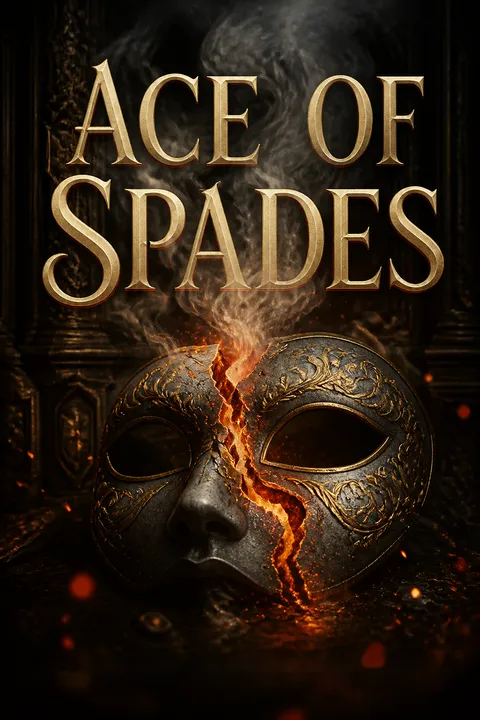
During the same assembly, an ace of spades briefly replaces the school values on the screen. The next day, an anonymous sender called Aces circulates a photograph of Devon kissing his former boyfriend, Scotty.
The image exposes a relationship Devon has kept from his mother and threatens to follow him from the privileged school into the poorer neighborhood where he lives. Chiamaka also receives Aces messages, making both students targets from the start.
The prefect badges initially look like recognition, but they make the protagonists easier to identify and monitor. Devon reads his appointment as proof that effort might open a door to Juilliard; Chiamaka sees hers as confirmation that she has mastered Niveus's hierarchy. The ace of spades quietly changes the meaning of both honors: status is not protection when the institution controls who gets seen and how. Devon's fear is intimate, rooted in the possibility that exposure will alter his mother's love. Chiamaka's fear is social, a threat to the image she has built. Their different vulnerabilities become the attack's leverage.
The Best Friend Chooses
Chiamaka expects her longtime best friend, Jamie Fitzjohn, to finally make their secret intimacy official. Instead, at lunch, Jamie tells her he is dating Belle Robinson and insists he has never seen Chiamaka romantically. His rejection exposes how much she has built her future around being chosen by him.
As the shock opens an old wound, she recalls a winter night when Jamie's car struck a young woman on a rain-dark road. Chiamaka wanted to call for help, but Jamie took her phone, locked the doors, and drove away. He later denied the accident when she tried to discuss it. Chiamaka has spent months searching hospitals and news reports for the injured woman, finding nothing and blaming herself for leaving her behind.
Chiamaka's ambition and her attachment to Jamie share a common logic: she treats affection and status as outcomes that careful performance can secure. His rejection breaks that logic in public, while the memory of the collision reveals the private cost of staying aligned with him. Jamie's denial does more than suppress evidence; it teaches Chiamaka to distrust her own perception. Her guilt grows in the gap between what she knows happened and what the two of them have agreed to forget. The accident therefore functions as the novel's buried counter-story, an event that keeps resisting the polished identities both teenagers present at school.
Rumors Become Evidence
Aces sends students a stream of claims designed to sound verifiable. Devon learns that an explicit video of him and Scotty has reached the school; Scotty denies sending it, while refusing to show much concern for Devon's humiliation. Chiamaka is falsely linked to Jamie's rejection, then accused of stealing candy after a shopkeeper finds licorice planted in her coat.
At Niveus, teachers blame her for missing science supplies and remove her storeroom key, although she insists she secured the room. Meanwhile, the messages tie Devon to drugs and suggest his college prospects are at risk. Each accusation draws on a real vulnerability, so the students cannot dismiss the attacks as simple gossip. The school community treats repetition as proof.
Aces does not need to invent every detail. The campaign gains force by attaching fabricated claims to facts the targets would rather keep private. That blend makes denial sound self-serving and makes shame do the work of evidence. The candy and science-room incidents are especially revealing: a rumor becomes materially credible when an authority figure or ordinary shopkeeper appears to confirm it. Chiamaka's record of competence offers little defense once trust has been redirected. Devon's sexuality is treated as spectacle, not as a relationship he should control. In both cases, the surrounding institution converts exposure into judgment before either student can establish what happened.
Friends Turn Away
Devon's longtime friend Jack McConnel withdraws after the photograph circulates, saying he must protect his younger brothers from neighborhood retaliation. Devon seeks comfort from Andre, the older boy he loves and secretly visits, but Aces has already sent Andre the image.
Andre fears that his gang connections and standing will be endangered, so he ends the relationship. When Devon returns, Andre's associates beat him and throw him from the apartment building.
Terrell Rosario, a boy Devon barely remembers from middle school, takes him home, tends his injuries, and walks him back to his family. Terrell recalls that they once kissed, though Devon cannot remember it. As Aces continues exposing Devon, the people he counted on disappear, and Terrell becomes an unexpected source of care.
Devon's abandonment is not one betrayal but a sequence of retreats shaped by different forms of danger. Jack calculates risk through family survival, while Andre protects his fragile position in a violent economy. Their choices hurt Devon, even when each is connected to genuine pressure. Terrell's care offers a contrast: he helps before Devon can explain or earn the help. Yet the missing memory complicates that comfort. Devon's mind has buried an earlier intimacy, suggesting that survival sometimes requires forgetting not only pain but also the tenderness that preceded it. His need for connection remains strong, but trust now carries the risk of another exposure.
Badges Revoked
Chiamaka's attempt to protect her reputation collapses when she hits a freshman who mocks the rumors. Headmaster Ward treats the student's account as decisive, gives Chiamaka a disciplinary strike, and revokes her Head Prefect badge.
He then summons Chiamaka and Devon, accuses them of collecting damaging information about each other, removes Devon's badge for three weeks, and assigns both daily detention. Ward's judgment makes Aces's campaign look like a feud between students rather than an organized attack.
In detention, Chiamaka shows Devon a USB drive she found and asks him to inspect his own. Both drives contain files that vanish after opening. Their shared punishment does not make them trust one another, but it gives them a reason to compare what Aces has done.
Ward's intervention converts institutional authority into a mechanism of isolation. Instead of investigating the anonymous campaign, he frames its targets as mutual aggressors and uses their records to make that interpretation official. The punishment attacks more than pride: Chiamaka fears losing Yale and a medical career, while Devon worries that a disciplinary mark could close the path to Juilliard. Their first cooperation is therefore reluctant and practical. The corrupted USBs deepen suspicion rather than provide evidence, demonstrating how an adversary can weaponize the promise of knowledge. The pair begin to understand that their conflict may itself have been manufactured.
Computer Seventeen
Chiamaka recruits Peter, a technically gifted classmate, to examine their phones and the school's systems. He finds that Aces schedules messages from computer 17 in Morgan Library, using a hidden account and the student directory.
A power failure has also disabled the relevant security cameras, leaving the sender's identity concealed. Before the investigation can give them certainty, Aces escalates: posters show an unconscious Chiamaka surrounded by dolls, while Devon's yearbook eyes are scratched out.
A masked figure scatters more copies through the hall and escapes when Devon pursues them. Chiamaka and Devon realize the sender is monitoring them beyond the texts. They begin planning a Sunday stakeout in Morgan Library, hoping to catch whoever uses the computer.
The move from anonymous messages to physical surveillance changes the genre's pressure. Aces is no longer merely shaping how classmates see the protagonists; someone is watching their bodies and controlling the school's infrastructure. Peter's technical findings suggest a traceable source, but the disabled cameras expose the limits of relying on systems that the attacker can manipulate. The posters are also gendered and racialized forms of humiliation: Chiamaka is displayed as an object, while Devon is marked as a target. Their stakeout is an attempt to reclaim agency through observation, but it places them inside the same monitored space Aces has already mastered.
A Friendship Takes Root
After breaking up with Jamie, Belle approaches Chiamaka and admits she judged her before hearing her account. Chiamaka acknowledges that she wanted Jamie, but Belle recognizes that he chose to pursue their intimacy and then minimize it.
The two girls begin spending time together, and their closeness becomes romantic when Belle kisses Chiamaka during detention. For Chiamaka, the affection feels unlike her carefully managed pursuit of popularity. The reprieve is brief.
Aces sends Chiamaka photographs taken through her bedroom window, then leaves them at her front door while a masked figure waits outside. The message threatens to reveal more at the Snowflake Ball. Aces also sends Devon a private photograph with Terrell, confirming that the surveillance extends into their lives beyond Niveus.
Belle's apology interrupts the familiar competition in which a girl is blamed for a boy's choices. Their connection gives Chiamaka a relationship not organized around rank, yet its newness makes it vulnerable to the same surveillance that has governed her school life. The photographs cross a boundary that gossip never could: home, usually a refuge, becomes another stage where the targeted person is watched. The timing is psychologically exact. Just as Chiamaka risks being known by someone without performing perfection, Aces threatens to make private knowledge public on its own terms. Intimacy and exposure become competing forms of visibility.
The Masked Operator
On Sunday night, Chiamaka and Devon hide in Morgan Library and watch computer 17. When a masked student arrives, Chiamaka tackles the figure and removes the mask. She recognizes the girl as the young woman she and Jamie thought they had left dying after the collision.
The girl escapes, and Chiamaka runs from the library. Devon stays behind long enough to inspect the open account. Its files identify students, assign tasks, and include old records of Black students targeted at Niveus.
One list shows Jack distributing Devon's messages; other names belong to classmates Devon recognizes. The archive reaches back decades, with folders for former students and images that resemble the posters. Aces is no lone prankster but an organized operation with a long memory.
The stakeout produces two different kinds of revelation. Chiamaka encounters the impossible return of a person tied to her worst secret, while Devon discovers that the apparent social chaos is organized through lists, assignments, and historical files. Their split reactions matter: Chiamaka's flight leaves Devon alone with evidence, and Devon's discovery makes the scale of the threat impossible to reduce to personal revenge. The archive's structure resembles administration, not improvisation. By turning student names into tasks, the system recruits ordinary peers into harm while allowing each participant to see only a small part of the design.
Niveus Names Its Game
Chiamaka notices that Black students appear in old Niveus photographs, then disappear before graduation. A 1965 yearbook identifies a legacy gathering as Camp Aces, and one photograph contains a face resembling Ward. She also discovers that the girl from the library is Martha Robinson, Belle's sister.
When Chiamaka confronts Belle, Belle admits that her family has participated in a decades-old plan called social eugenics: legacy families select promising Black students, then use harassment and sabotage to drive them out. Belle says similar schemes operate at other schools.
Devon, meanwhile, discovers that Terrell knew details he had not shared and learns from his mother that he had forgotten a childhood assault after kissing Terrell. His mother accepts his sexuality, giving him support as the larger conspiracy comes into focus.
The revelation shifts the source of danger from individual malice to inherited design. The school does not simply fail to protect Black students; its traditions and records suggest that exclusion is an intended outcome. Belle's confession is compromised by her participation, but it also exposes how family loyalty can make cruelty feel routine to those raised inside it. Devon's recovered memory offers a different history: a painful event had been sealed away, not erased. His mother's acceptance allows him to name his identity without losing home. Both students begin recovering truths that the institutions around them have tried to manage.
The Cost at Home
With the conspiracy widening, Devon visits Andre in jail after police find drugs in Andre's apartment. Andre is being held until trial and has been beaten in custody; Devon cannot offer a quick way out.
During the visit, Devon asks about his absent father and learns from prison staff that Malcolm Richards died seven years earlier, on the same date as Devon's last visit. The revelation destroys the hope Devon had carried that his father might someday return. These losses sharpen his fear that Niveus can take his future as well as his relationships.
Chiamaka and Devon decide they need help outside the school. Before meeting a reporter, Devon posts evidence from the hidden files and the defaced yearbook image online. The post draws thousands of responses and public support.
The personal losses keep the conspiracy from becoming an abstract puzzle. Devon's father was already absent in practice, but learning that he is dead forces Devon to grieve both the person and the imagined reunion that sustained him. Andre's confinement shows how poverty and criminalization can make escape from one danger mean entry into another. Devon's public post marks a change in strategy: instead of waiting for Niveus to define him, he puts evidence into circulation himself. The response does not guarantee safety, but it gives the protagonists a constituency beyond the school, a small counterweight to the closed world that has judged them.
A Camera for Hire
Chiamaka persuades Devon and Terrell to contact Central News 1, arguing that the school is too powerful for two students to expose alone. Reporter Alice Donovan examines their materials and agrees that Niveus has a story, but proposes a live confrontation at the Snowflake Charity Ball rather than a written report.
The event will bring students, donors, and college representatives together, giving the allegations a public stage. Chiamaka embraces the plan as their chance to reclaim their futures; Devon remains wary but agrees not to leave her to face it alone.
They gather the yearbook, posters, text records, and screenshots as evidence. Their plan depends on the reporter and her crew broadcasting what they see, and on the pair returning to a school they have come to fear.
The proposal offers a reversal of the school's own spectacle. Niveus uses assemblies and ceremonies to display hierarchy; Chiamaka intends to use its grandest event to expose the machinery behind that hierarchy. Yet the plan depends on another institution, journalism, behaving ethically. Devon's hesitation is not mere pessimism: the preceding betrayals have taught him that access and authority do not equal solidarity. Chiamaka's confidence reflects her persistent belief that preparation can control outcomes. Their partnership is now strong enough to carry disagreement, but neither can fully control the people or systems they are about to trust.
Betrayal Before the Ball
On the day of the ball, Terrell finds Devon at the school and admits that an older man paid him to watch Devon and report back. He says he refused to continue, but withheld the arrangement because he feared making the danger worse. Devon is shaken and leaves him behind. Inside Morgan Library, Jamie confronts Chiamaka, threatens her, and uses a lighter to singe her hair while insisting she should leave Niveus.
Chiamaka fights back when he grabs her throat, kicking him down and escaping. The separate betrayals converge as the pair prepare to enter the ballroom: Devon has learned that even his new confidant was compromised, while Chiamaka has stopped allowing Jamie to define her as weak or disposable.
Both protagonists confront the cost of intimacy immediately before the public climax. Terrell's confession does not erase his care, but it reveals that affection can coexist with a serious breach of trust. Devon must decide whether his connection to Terrell can survive facts he would rather not know. Jamie's attack makes Chiamaka's old relationship to him physically legible: he treats access to her as entitlement and her refusal as defiance. Her resistance is not a clean triumph; she leaves with a burned strand and a bruised neck. Still, she enters the final confrontation with a recovered sense of bodily and moral authority.
The Snowflake Trap
Chiamaka and Devon enter the Snowflake Ball and begin their planned address, naming Niveus's targeted admissions and displaying the old yearbook and Aces evidence. Chiamaka even places the Snowflake crown on her head, turning the symbol of status into a prop for accusation.
Before their case can reach the audience, guests exchange their elegant masks for identical Aces masks. Ward appears, and the pair realize reporter Alice Donovan has joined the conspiracy rather than exposing it.
A crowd of protesters bursts into the ballroom, apparently mobilized by Devon's viral post, throwing the room into disorder. Ward drags Chiamaka away and presses a gun to her head. Devon charges him; Chiamaka uses a stun device to knock Ward down and takes the weapon. Explosions and smoke then engulf the school.
The masquerade makes the institution's central method visible: individual faces disappear into a coordinated collective. The crown, once Chiamaka's desired proof of belonging, becomes an ironic stage object she can repurpose. Donovan's betrayal demonstrates that public platforms can be absorbed by the same power they claim to challenge. Yet the protesters complicate the scene: their presence comes from Devon's own act of publication, not Niveus's permission. The physical crisis does not resolve the argument through evidence alone. Chiamaka and Devon survive by acting under immediate threat, while the building itself becomes unstable around them.
Niveus in Flames
Chiamaka and Devon flee through smoke and falling debris as the ballroom and corridors fill with students trying to escape. Outside, they watch Niveus burn while firefighters and emergency crews arrive. Devon believes Terrell may still be inside and runs toward the building, but Chiamaka holds him back.
Terrell emerges alive, and Devon clings to him before the three leave ahead of the police. At Terrell's home, they learn that the fire is being reported as an electrical fault, leaving the cause and the wider conspiracy unresolved.
News reports confirm three student deaths, including Cecelia Wright, a music classmate, and Jamie. Chiamaka feels grief for the boy she once trusted even as she recognizes the harm he caused. Devon and Chiamaka share a quiet bond on a nearby beach.
The school's destruction offers release without clean justice. Niveus is physically gone, but the public explanation reduces catastrophe to faulty wiring, and the compromised broadcast has not delivered the exposure the protagonists planned. The three deaths make celebration impossible; Chiamaka's grief for Jamie reflects the painful split between the friend she believed in and the person he became. Devon's panic when he thinks Terrell is inside reveals that betrayal has not made attachment meaningless. On the beach, the protagonists can acknowledge pain without converting it into proof that they deserve more pain. Survival becomes a beginning, not a verdict.
The Work Continues
After the fire, Devon finds that his post continues to circulate, and a Black journalist from a more credible outlet contacts him. He plans to show Chiamaka the offer rather than trust another institution blindly. The story then jumps sixteen years.
Chiamaka and Devon have become a doctor and a professor, and together they founded the Underground Society to identify schools practicing social eugenics and offer targeted students a safer alternative. A warning letter to a mother considering Pollards Academy shows the group's work has expanded beyond Niveus.
The final scenes reveal that Chiamaka is now Headmaster Ward's doctor. She enters his hospital room and recognizes him as he lies gravely ill. The encounter ends without explaining what she will do, leaving their long struggle poised at a final reckoning.
The ending refuses to equate survival with the simple restoration of the protagonists' original ambitions. Devon's public post and Chiamaka's professional life become resources for building protection that neither had as teenagers. The Underground Society is a response to the pattern, not merely a memorial to one burned school: it tries to interrupt recruitment into the same harm elsewhere. Their work also shifts power from private endurance to collective vigilance. The bedside meeting with Ward preserves moral ambiguity. Chiamaka has gained authority, but the book does not dictate whether justice means care, accountability, or something more personal.
Epilogue
Sixteen years later, Chiamaka Adebayo and Devon Richards lead the Underground Society, an organization that warns families about schools targeting Black students and offers those children a safer place to study. Their letter about Pollards Academy shows that Niveus was one instance of a larger system.
Devon, now a professor, shares a home with Terrell and remains close to his mother. Chiamaka, now a doctor, visits a gravely ill patient and recognizes him as former Headmaster Ward. The story ends at the bedside, with her greeting him and the consequences of their history left unresolved.
The epilogue widens the scale of the ending without pretending that a single school's destruction can dismantle an entrenched system. The Underground Society converts what happened to Chiamaka and Devon into practical protection for another family, making memory an instrument rather than a private wound. Their adult professions also answer the futures Niveus tried to foreclose: Devon teaches, Chiamaka practices medicine, and both help others retain choices. Ward's presence in her care complicates any easy account of closure. The person who once wielded institutional power is now physically vulnerable, while Chiamaka holds professional authority. The final encounter withholds a simple moral resolution and leaves justice unsettled.
Analysis
Ace of Spades makes the school thriller's central question larger than the identity of an anonymous bully. At first, Aces seems to be a person with access to gossip and compromising images. The accumulating evidence instead reveals a network that converts racial hierarchy into routine: legacy families set the rules, school officials control discipline and access, students perform assigned tasks, and even outside media can be drawn into the machinery. The conspiracy is frightening partly because no single participant needs to understand the whole design. Ordinary acts of gossip, suspicion, and institutional caution become components of a coordinated attack.
Chiamaka and Devon begin with different survival strategies. Chiamaka tries to secure safety through achievement, polish, and social command. Devon seeks refuge in music and tends to contain distress rather than expose it. Neither strategy can protect them from a system that interprets Black success as a threat to manage. Their alliance matters not because they become identical, but because each challenges the other's assumptions: Chiamaka must accept uncertainty and connection, while Devon learns that speaking publicly can create leverage.
The novel also distinguishes guilt from imposed shame. Chiamaka bears real guilt over abandoning the injured girl, but Aces weaponizes that guilt to make her doubt every part of herself. Devon's sexuality is treated by classmates and institutions as exploitable information, even though it is not a wrongdoing. These different pressures show how a campaign can use both actual moral injury and prejudice, collapsing them into one public verdict.
Niveus's burning is a dramatic rupture, not a complete solution. The compromised broadcast and official account of the fire leave the larger network intact or at least unaccounted for. The epilogue therefore shifts the ending from individual escape to collective prevention. Chiamaka and Devon build an organization that can recognize patterns earlier and offer alternatives to targeted students. The book's hope is practical: it rests on testimony, shared resources, and sustained vigilance, not on the belief that exposure automatically produces justice.
Review Summary
Ace of Spades is a gripping thriller that explores institutional racism and white supremacy through the experiences of two Black students at a predominantly white private school. Readers praise the book's intense plot, well-developed characters, and skillful handling of important social issues. Many found it unputdownable and were impressed by the twists and reveals. While some felt the pacing was uneven or the ending rushed, most lauded the author's ability to craft tension and suspense. The novel is frequently described as a must-read that will leave a lasting impact.
People Also Read


Characters
Chiamaka Adebayo
Ambitious school strategistChiamaka is a high-achieving senior at Niveus who has spent years making herself visible through grades, leadership roles, polished presentation, and carefully chosen relationships. Her Nigerian mother and Italian father place her between family histories and social worlds, while her Blackness makes her conspicuous in a school built around white wealth. Chiamaka is sharp, disciplined, and skilled at reading status, but her confidence also protects a fear of being dismissed or unwanted. She wants Yale and a future in medicine, yet her need to control how others see her can turn friendship into strategy. Beneath the poised public persona is a young woman struggling to trust her own desires and judgments.
Devon Richards
Scholarship music studentDevon is a talented composer from a poor neighborhood, attending Niveus on scholarship and aiming for Juilliard. Music gives him a private refuge where he can imagine a life beyond financial pressure, family responsibilities, and the racial isolation of his school. He is observant and emotionally perceptive, though he often survives by burying painful thoughts rather than confronting them. His affection for other boys is complicated by fear of rejection at home and danger in his neighborhood. Devon wants to help his mother and younger brothers without sacrificing his own future. His reserve is not indifference; it is a practiced way of carrying more than he can safely explain.
Terrell Rosario
Gentle neighborhood confidantTerrell is a warm, perceptive young man from Devon's neighborhood, with a quick wit and an instinct for noticing what others overlook. He offers Devon patient companionship, practical care, and an ease around queer affection that contrasts with the pressures Devon faces elsewhere. Terrell is thoughtful about race and power, and he speaks plainly when Devon is tempted to excuse harmful behavior. His own family carries financial strain, including his sister's illness, so his compassion does not come from an untouched life. He is playful without being shallow and direct without being cruel, qualities that make him both a source of comfort and a challenge to Devon's guardedness.
Belle Robinson
Kind-hearted social outsiderBelle is a popular, blond lacrosse player whose beauty makes Niveus assume it knows her. She is Jamie's girlfriend and a student applying to Yale, but her straightforwardness sets her apart from the school's more calculated social performances. Belle is capable of recognizing when she has judged someone unfairly and is willing to listen rather than compete for a boy's approval. Her openness about her bisexuality gives her a clarity Chiamaka is still developing. Belle's warmth does not make her naïve; she can be firm and perceptive, though the pressures of family and school traditions complicate what she knows and what she is prepared to challenge.
Jamie Fitzjohn
Charming legacy heirJamie is a wealthy Niveus legacy student, football player, and Chiamaka's longtime best friend. His humor, confidence, and ease with attention make him socially magnetic, while his family's immense influence has taught him to expect doors to open. He is affectionate when it suits him and skilled at making difficult events seem smaller through charm or denial. Chiamaka trusts him because their history includes real friendship, not only status. Yet Jamie's desire to be admired and to preserve his family's approval shapes his choices. He represents the seductive comfort of privilege: the belief that consequences can be managed if one controls the story.
Jack McConnel
Devon's oldest friendJack grew up alongside Devon and shares the hardship of their neighborhood, including the responsibility of helping care for his younger brothers. Their friendship once offered both boys safety and loyalty. Jack is protective, academically capable, and wary of choices that might endanger his family. His ideas about masculinity and sexuality are less settled than his devotion to survival, and he often avoids conversations that ask him to examine that tension.
Andre Johnson
Devon's dangerous first loveAndre, whom Devon calls Dre, is an older boy from the neighborhood who deals drugs and holds a precarious place in a local gang. He and Devon share a long friendship grounded in music before their relationship becomes romantic. Andre can be tender and attentive in private, yet he is constrained by the violence and reputation on which his survival depends. His life makes Devon confront the painful difference between love and the ability to protect someone.
Scotty
Devon's volatile exScotty is a wealthy student, actor, and football player who dated Devon while keeping their relationship hidden. He values attention and status, and he can be charming when circumstances favor him. His history with Devon and Chiamaka places him near several social circles, but his self-interest makes him an unreliable source of comfort or truth.
Headmaster Ward
Niveus's severe new headWard arrives at Niveus shortly before the senior year, replacing the previous headmaster and insisting on formal authority. Tall, cold, and difficult to read, he presents himself as a guardian of school standards. His manner makes students cautious, especially those who depend on the institution's approval for their futures. Ward understands how disciplinary procedures and student records can shape reputations, and he embodies the distance between a school's stated values and the experience of its pupils.
Mr. Taylor
Devon's music mentorMr. Taylor teaches music and encourages Devon's talent, helping him find practice time and prepare a composition for college auditions. He is one of the few adults at Niveus with whom Devon feels comfortable. His warm attention gives Devon a rare sense that an adult sees his ability rather than his scholarship status, making the teacher an important presence in Devon's hopes for the future.
Devon's mother
Overworked protective parentDevon's mother works several jobs to support her children and make his Niveus education possible. She is loving, devout, and proud of Devon's accomplishments, though exhaustion and financial strain leave little room for long conversations. Her care is expressed through food, practical help, and faith. She wants Devon to have choices she never had, while carrying fears about the dangers waiting outside their home.
Chiamaka's mother
Nigerian family anchorChiamaka's mother is a Nigerian doctor who works demanding hours and remains deeply attached to her daughter. She teaches Chiamaka about the meaning of her name and the cultural history behind it, offering a source of identity beyond Niveus's standards. Her affection is steady, though the pressures of work and family life mean Chiamaka does not always tell her what she is carrying.
Chiamaka's father
Affectionate Italian fatherChiamaka's Italian father is a doctor whose family has treated his Nigerian wife and daughter with racial prejudice. He is affectionate at home and shares ordinary rituals with Chiamaka, but his earlier silence around his family's racism has left a complicated mark on their relationship.
Peter
Student systems investigatorPeter is a technically gifted student who helps Chiamaka and Devon examine the messages, USB drives, and school systems. He is capable and eager to impress, especially when his skills attract attention. His work gives the pair their first concrete information about where Aces operates, even though encryption and gaps in the school's security limit what he can prove.
Alice Donovan
Television news reporterAlice Donovan is a journalist at Central News 1 who hears Chiamaka and Devon's account and asks for physical evidence. She understands the power of a public broadcast and proposes using the Snowflake Ball as a stage. Her professional confidence initially offers the teenagers a route beyond Niveus, while her position reminds them that media institutions carry their own power.
Ruby Ainsworth
Chiamaka's status rivalRuby is the wealthy daughter of a senator and part of Chiamaka's polished social circle. She is observant, competitive, and skilled at delivering hostility under the cover of a smile. Ruby understands the rules of Niveus and wants influence within them, making her relationship with Chiamaka a mixture of alliance, rivalry, and calculation.
Ava
Chiamaka's candid companionAva is a British transfer student who is attractive, sociable, and often more straightforward than Ruby. She spends time with Chiamaka and Ruby, though the group's closeness is shaped by status as much as friendship. Ava can read the atmosphere around her and sometimes tries to defuse the tension between the other girls.
Cecelia Wright
Ambitious senior prefectCecelia is one of Niveus's senior prefects, a polished and competitive student accustomed to the school's hierarchy. She and Chiamaka share ambition and a willingness to protect their standing, though the two are not close.
Daniel Johnson
Inquisitive football starDaniel is Niveus's confident quarterback, whose curiosity about Devon initially takes the form of awkward jokes and intrusive questions. He is socially secure enough to speak without considering how his words land, and his attention reflects the way the school turns private lives into public entertainment.
Martha Robinson
Belle's guarded sisterMartha is Belle Robinson's sister, a young woman whose past is not openly discussed at Niveus. Her connection to the school and its students is difficult to read from the outside. The uncertainty surrounding her makes her a disturbing presence in Chiamaka and Devon's story.
Plot Devices
Aces messages
Turns secrets into weaponsAces sends anonymous messages to Niveus students, presenting rumors, private images, and accusations as breaking news. The messages target Devon and Chiamaka but also pull classmates into the spectacle, encouraging them to repeat, believe, or help verify each claim. Aces often mixes true personal details with fabricated evidence, so neither protagonist can dismiss the attacks cleanly. The device begins as a schoolwide gossip channel and gradually reveals the campaign's reach into the protagonists' homes, relationships, and academic records. It is the principal mechanism for controlling what others think they know about the two students.
Ace of spades
Marks a hidden institutionThe playing card appears briefly on the assembly screen, later accompanies a USB drive, and frames the digital site Devon finds in Morgan Library. It ties the present-day harassment to Niveus traditions and historical records. Its repeated appearance lets the protagonists recognize that the attacks are connected even before they understand the scale of the operation. The card's meaning grows from a cryptic signature into an emblem of organized exclusion, while its familiar design makes an institutional conspiracy look like a private game.
Computer 17
Hides the campaign's archiveComputer 17 in Morgan Library is the point from which Aces schedules messages and accesses student contact information. Peter traces the blasts to it, while a disabled camera leaves the operator unidentified. A USB drive planted in Devon's locker appears to offer files on Chiamaka, but its contents are corrupted after viewing. The computer later exposes folders of assignments and records reaching back to earlier Black students. It moves the investigation from suspicion toward evidence, while showing how school technology can be used both to administer education and to surveil students.
The lost memories
Conceals childhood traumaBoth protagonists struggle with incomplete or distorted memories. Chiamaka has recurring dreams of a bloodied girl and doubts her recollection of the hit-and-run; Devon cannot remember an early kiss and assault involving Terrell. These gaps make them vulnerable to people who deny, distort, or exploit the past. As fragments return, each character must distinguish remembered experience from the stories others have imposed. Memory is not treated as a perfect record, but as something shaped by fear, shame, and survival.
The Snowflake Ball
Turns ceremony into confrontationNiveus's senior charity ball is a compulsory, high-status masquerade attended by students, donors, and influential alumni. Chiamaka has long regarded its crown as a credential that might help secure Yale, while Devon sees the event as another display of the school's wealth. The pair plan to use its audience to expose the Aces campaign, and the masks make the ball a literal image of hidden identities. Its grand setting heightens the contrast between Niveus's public ideals and the violence concealed behind its traditions.
FAQ
Synopsis & Basic Details
What is Ace of Spades about?
- Elite school targeted: Ace of Spades follows Devon Richards and Chiamaka Adebayo, the only two Black students at the prestigious Niveus Academy, as they are targeted by an anonymous entity known as Aces.
- Secrets and sabotage: Aces exposes their deepest secrets and manipulates their lives, creating chaos and distrust within the school.
- Unlikely alliance: Devon and Chiamaka, despite their differences, must form an alliance to uncover the identity of Aces and fight back against the forces trying to destroy them.
Why should I read Ace of Spades?
- Intense thriller: The novel is a fast-paced, suspenseful thriller that keeps readers on the edge of their seats with its twists and turns.
- Social commentary: It offers a powerful commentary on systemic racism, classism, and homophobia within elite institutions.
- Complex characters: The characters are well-developed and relatable, each grappling with their own internal struggles and external pressures.
What is the background of Ace of Spades?
- Elite private school setting: The story is set in a fictional, highly exclusive private school, Niveus Academy, which serves as a microcosm of societal power structures and inequalities.
- Contemporary issues: The novel tackles contemporary issues such as social media bullying, identity, and the pressure to conform within elite environments.
- Systemic racism: The background is rooted in the historical and ongoing reality of systemic racism, highlighting how it manifests in institutions and individual lives.
What are the most memorable quotes in Ace of Spades?
- "They say life is full of surprises. That our dreams really can come true. Then again, so can our nightmares…": This quote, from Gossip Girl, foreshadows the dark turn the story takes, highlighting the duality of hope and despair.
- "All I know is sometimes, if there's too many white folks … I get nervous.": This quote from Get Out, reflects the unease and anxiety that Devon experiences as a Black student in a predominantly white environment.
- "In this kingdom, the queen doesn't inherit the crown. To get to the top, she destroys whoever she needs to.": This quote, spoken by Chiamaka, reveals her ruthless ambition and the cutthroat nature of the social hierarchy at Niveus.
What writing style, narrative choices, and literary techniques does Faridah Àbíké-Íyímídé use?
- Dual perspective: The story is told from the alternating perspectives of Devon and Chiamaka, providing insight into their contrasting experiences and motivations.
- Fast-paced narrative: The writing style is fast-paced and suspenseful, using short chapters and cliffhangers to keep the reader engaged.
- Social media integration: The use of text messages, social media posts, and online articles adds a contemporary feel and highlights the role of technology in the characters' lives.
Hidden Details & Subtle Connections
What are some minor details that add significant meaning?
- The playing card: The image of the ace of spades, which appears at the beginning of the story, foreshadows the chaos and destruction that Aces will bring.
- The school values: The school values, which are displayed at the assembly, are ironic given the actions of the students and staff, highlighting the hypocrisy of the institution.
- The color symbolism: The use of colors, such as black and white, throughout the novel, emphasizes the themes of race and power dynamics.
What are some subtle foreshadowing and callbacks?
- Headmaster Collins's resignation: The sudden resignation of Headmaster Collins foreshadows the corruption and instability within the school administration.
- Jamie's lighter: Jamie's constant playing with his lighter foreshadows his pyromaniac tendencies and his role in the fire at the end of the book.
- The recurring phrase "Just in": The phrase "Just in," used by Aces in their messages, becomes a chilling reminder of their omnipresence and ability to manipulate information.
What are some unexpected character connections?
- Terrell's past with Devon: The revelation that Terrell and Devon had a past connection in middle school adds a layer of complexity to their relationship and raises questions about Terrell's true motives.
- Belle's connection to Aces: The reveal that Belle's sister is connected to Aces adds a layer of betrayal and highlights the extent of the conspiracy.
- Headmaster Ward's past: The discovery that Headmaster Ward was a student at Niveus in 1965 and part of the original Aces group reveals the deep-rooted nature of the school's racism.
Who are the most significant supporting characters?
- Peter: Peter's tech skills are crucial to Devon and Chiamaka's investigation, highlighting the importance of allies in their fight against Aces.
- Mr. Taylor: Mr. Taylor's betrayal of Devon reveals the insidious nature of racism and how it can manifest in unexpected places.
- Andre: Andre's influence on Devon and his connection to the drug trade highlight the challenges faced by young Black men in their community.
Psychological, Emotional, & Relational Analysis
What are some unspoken motivations of the characters?
- Devon's desire for acceptance: Devon's unspoken motivation is his desire to be accepted and valued for his talent, not just his scholarship status.
- Chiamaka's fear of vulnerability: Chiamaka's unspoken motivation is her fear of vulnerability and her need to maintain control over her image and life.
- Jamie's need for power: Jamie's unspoken motivation is his need for power and control, which stems from his own insecurities and desire for validation.
What psychological complexities do the characters exhibit?
- Devon's internal conflict: Devon struggles with his identity as a Black, gay scholarship student in a predominantly white, wealthy environment, leading to internal conflict and self-doubt.
- Chiamaka's perfectionism: Chiamaka's perfectionism and need for control stem from her fear of failure and her desire to be seen as the best.
- Jamie's narcissism: Jamie's narcissism and manipulative behavior reveal a deep-seated need for validation and a lack of empathy for others.
What are the major emotional turning points?
- Devon's coming out: Devon's forced outing and the subsequent reactions from his peers and friends mark a major emotional turning point, forcing him to confront his identity.
- Chiamaka's rejection: Chiamaka's rejection by Jamie and the subsequent exposure of her secrets lead to a major emotional breakdown, forcing her to reevaluate her relationships and priorities.
- The discovery of Aces's identity: The discovery of Aces's identity and their connection to the school's history marks a major emotional turning point, leading to feelings of betrayal and anger.
How do relationship dynamics evolve?
- Devon and Chiamaka's alliance: The relationship between Devon and Chiamaka evolves from a reluctant alliance to a genuine friendship based on mutual respect and understanding.
- Chiamaka and Jamie's betrayal: The relationship between Chiamaka and Jamie devolves from a secret romance to a bitter rivalry, highlighting the destructive nature of power and manipulation.
- Devon and Terrell's connection: The relationship between Devon and Terrell evolves from a casual friendship to a deeper connection, highlighting the importance of support and understanding in the face of adversity.
Interpretation & Debate
Which parts of the story remain ambiguous or open-ended?
- The true extent of Aces's network: The novel leaves the true extent of Aces's network and their influence on other institutions open-ended, suggesting that the problem is much larger than just Niveus.
- The fate of the characters: The ending leaves the fate of the characters somewhat ambiguous, suggesting that their journey is ongoing and that they will continue to face challenges in the future.
- The nature of justice: The novel raises questions about the nature of justice and whether it is possible to truly overcome systemic oppression.
What are some debatable, controversial scenes or moments in Ace of Spades?
- Chiamaka's actions: Chiamaka's ruthless ambition and willingness to manipulate others for her own gain raise questions about her morality and whether she is a truly sympathetic character.
- Devon's choices: Devon's decision to engage in drug dealing and his relationship with Andre raise questions about his judgment and whether he is a reliable narrator.
- The ending: The ending, with the destruction of Niveus and the ambiguous fate of the characters, is open to interpretation and may be seen as either a victory or a tragedy.
Ace of Spades Ending Explained: How It Ends & What It Means
- Niveus burns: The destruction of Niveus Academy symbolizes the collapse of the oppressive system that has targeted Devon and Chiamaka, but also leaves the future uncertain.
- Aces exposed: The reveal that Aces is a network of people, including students, teachers, and even the journalist, highlights the pervasiveness of systemic racism and the difficulty of fighting it.
- Uncertain future: The ending leaves the future of Devon and Chiamaka open-ended, suggesting that their fight for justice and equality is ongoing and that they will continue to face challenges in the future.
Ace of Spades Series
About the Author
Other books by Faridah Àbíké-Íyímídé

Download PDF
Download EPUB
.epub digital book format is ideal for reading ebooks on phones, tablets, and e-readers.








