

Key Takeaways
The title's boast is a joke: this is a war of bungled beginnings.
A comic call-up. Milligan opens on the day Britain declares war in 1939, with a family that treats the news as one more absurdity. His father submits homemade battle plans to the authorities, including troop-carrying submarines and rocket-propelled skates. Meanwhile, official letters summon Milligan to service. He delays reporting after injuring his back while weightlifting. Doctors mistake the injury for a hernia and then renal colic; it was a slipped disc. In June 1940, he finally reports for duty and reaches Bexhill by getting off a train that does not actually stop there.
A boast undercut. The title promises a personal role in Hitler's downfall, but this first memoir volume mostly records a young soldier being processed by a military machine that often seems barely operational. Milligan says the events are true, though shaped by his comic style.
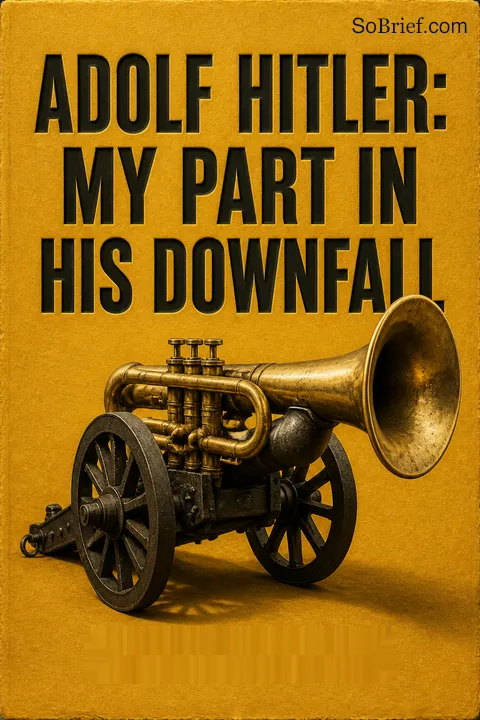
The title works as a miniature theory of the memoir: an ordinary soldier claims grand historical importance, then the story reveals how little control he has. That self-mockery makes room for both pride and embarrassment, rather than presenting service as a clean heroic ascent. Its comic distortion also asks readers to distinguish factual sequence from theatrical detail. The narrator's authority comes less from pretending to be neutral than from showing how the absurdity felt to the people caught inside it.
Dunkirk's evacuation turned military defeat into a fleeting act of solidarity.
Watching from shore. Milligan had been in the Army for only a day when he was sent to an observation post overlooking the Channel. The post had a rifle and five rounds shared among its occupants, a painfully small response to the fighting across the water. He and another gunner swam in a calm sea while aircraft headed toward France. Their helplessness made the distant evacuation feel both intimate and unreachable.
A changed meaning. The retreat was plainly a defeat, yet the evacuation gave people at home a shared sense of effort and survival. A soldier who had escaped Dunkirk later described it as a disaster that had somehow succeeded. Milligan's account preserves both truths: the rescue mattered, but it did not undo the military failure.
The episode shows how people can create meaning without rewriting events. A rescue can be a genuine achievement inside a defeat, and collective memory often holds both at once. That distinction matters because morale is not the same thing as victory. Milligan's view of solidarity is powerful precisely because it arises from shared helplessness, though a single dramatic week cannot stand in for the varied experiences of everyone affected by the retreat.
Make music and friendship where military routine leaves people empty.
A band takes shape. In Bexhill, Milligan finds a fellow jazz enthusiast in Harry Edgington, a pianist who cannot read music but has a strong ear. They recruit a guitarist and a drummer, then borrow a drum kit from a church hall under the pretext of keeping it out of enemy hands. Their first dance runs through the small group of songs they know repeatedly, but the audience is delighted. The band gives them a role that is not defined by orders, drills, or rations.
A wider horizon. Milligan later auditions for the BBC with Edgington and other musicians, recording alongside the young George Shearing. He remembers the recognition as a turning point: he had been accepted as a jazz player. The music also offers continuity and shared pleasure in an institution that rarely provides either.
The band is more than an entertaining sideline. It creates a small, self-organized world with its own skills, standards, and audience. That resembles the way people build identity through voluntary groups when formal institutions reduce them to ranks and tasks. The memoir does not suggest music cancels the war; its value is more modest and believable. It gives the men something they choose together, and that choice can matter even when their larger circumstances remain beyond their control.
Laugh at the regiment's chaos without pretending the danger is imaginary.
Farce with consequences. The regiment's old coastal guns are held together with improvised parts, and ammunition is nearly as scarce as competence. When the men finally fire a rare shell, a broken telephone line delays the operation for hours. The shell eventually crosses the Channel and lands as a dud. The scene is funny because everyone treats a badly coordinated exercise as a major national defense, but the inadequacy behind the joke is real.
Humor as company. Milligan gives the unit's eccentrics and pranks the same comic attention, from soldiers staging mock club rituals in the woods to the confusion caused by a runaway painted pig. The humor makes barracks life bearable and punctures inflated authority. It does not make military mistakes, enemy attacks, or death harmless.
Comedy here is a way of seeing power clearly. A joke can expose the gap between official language and lived conditions, especially when a unit is expected to perform confidence despite broken equipment. The risk is that comic framing can make dysfunction seem charming rather than costly. Milligan's account resists that simplification by placing the silliness beside the Channel threat and the regiment's genuine fear. The laughter is not proof that everything is fine; it is one way people stay together when it is not.
Hard training improves readiness, but cannot rescue confused command and communication.
A new physical standard. When Montgomery takes charge of Southern Command, the regiment's easy routine changes. Soldiers who have barely exercised are ordered on a five-mile run. To prevent them from hiding along the route, officers truck them into the countryside and make them run back. A new commander then drives them across Sussex and the southern coast in strenuous exercises. The men become fitter, though not without sore feet and comic remedies such as urinating in their boots.
Practice still breaks. New 7.2-inch guns, field telephones, and wireless equipment signal a more serious effort. But during the Tiger exercise, a truck gets lost, falls into two ditches, and misses its assigned post. In another communications exercise, a practice report of an invasion fleet reaches higher command without its practice label. Better kit and harder drills help, but coordination remains fragile.
The episode distinguishes individual readiness from organizational competence. Physical conditioning and better equipment can improve a unit's capacity, yet they cannot by themselves fix unclear procedures, weak navigation, or messages that lose their context. This is a useful lesson for any organization that treats training as a universal cure. Rehearsal matters most when it tests how people coordinate under realistic pressure, not simply whether they can endure an exhausting exercise.
War reaches home before the soldier has seen a battlefield.
The raid at a distance. During the London fire raids, Milligan and other soldiers in Bexhill watch the northern sky glow. They suspect the fires are in London, where many of them have families, but cannot get through to their relatives. Reassurances about shelters and underground stations fill the darkness, yet they cannot make the men certain. Milligan's father eventually confirms that the family is safe.
Home under attack. On embarkation leave, Milligan returns to his family's shelter during an air raid. His mother describes a bomb blast that threw her and his brother across a room while his father stood in the kitchen holding a steaming kettle. The comic image does not hide the near miss. The war has already altered family life and exposed civilians to danger, even before Milligan's regiment enters combat.
Distance from the front does not mean distance from war. The scene makes visible a form of strain that military narratives can overlook: waiting for news about loved ones while having no practical way to help. The contrast between the kettle and the blast is funny, but it also keeps the danger domestic and concrete. The memoir suggests that war is not a single location called the front. It is also the uncertainty imposed on families and those who fear for them.
The war exacts real costs before this regiment reaches combat.
An early injury. At Larkhill, a smoke shell explodes while Sergeant Rowlands is handling it. He survives, but loses his hand and leaves the war. The men respond with shock and the kind of blunt humor that has become their common language. The scene is a sharp reminder that training itself can injure people, even when no enemy is present.
A fatal march. After landing in Algiers, the regiment must march about twenty-six miles to its camp with full equipment. Driver Reed, exhausted and trying to catch a ride, falls between a lorry and its trailer and is crushed. Another gunner learns that his wife and children have been killed in a Liverpool raid and is left unable to speak. The unit has not yet seen action, but the costs are already irreversible.
These events challenge the comforting idea that danger begins only when a soldier meets the enemy. Training, movement, and home-front attacks all belong to the war's machinery, though they carry different kinds of responsibility. Milligan's comic voice remains present, but the losses interrupt its momentum. That interruption matters: humor can help people absorb painful events, yet a reader should not mistake the joke for evidence that the injury or death has become small.
At Algiers, British arrival exposes colonial cruelty and the war ahead.
A new setting. After a rough Atlantic crossing, the convoy reaches Algiers in January 1943. Milligan's regiment has spent the voyage guessing its destination, enduring seasickness, and improvising music on board. On shore, soldiers unload equipment and march toward a camp originally built for prisoners of war. The regiment is being used to fill it, a strange welcome to a campaign that is supposed to begin soon.
The view changes. Milligan notices how Arab residents are impoverished and treated as second-class people under French colonial rule. He describes soldiers and officials using violence against them, and says the inequality is painful to witness. The comic account of marching and camp life now shares space with a harsher political reality. The volume ends as the unit settles in, poised to enter the fighting.
The arrival complicates the memoir's familiar contrast between British soldiers and a German enemy. Milligan's attention turns toward the colonial hierarchy surrounding the campaign, making clear that military liberation and local justice are not automatically the same project. His brief observation is not a full account of Algerian life, but it interrupts the soldiers' self-contained story and asks readers to notice who holds power in the places they enter. The next stage of war begins within that unequal setting.
Analysis
This memoir turns the early years of military service into a sequence of comic reversals: a soldier delays enlistment through a mistaken diagnosis, reaches a regiment that can barely manage its equipment, and builds a band while the authorities try to prepare for invasion. The comedy is not ornamental. It is the book's method for describing how people make sense of institutions that are both absurd and consequential. A dud shell, a mislabeled practice message, or a runaway pig can be funny without making the underlying conditions trivial.
The narrative's deeper tension is between individual agency and institutional power. Milligan cannot determine where the war goes, whether his unit is ready, or whether his family is safe. He can, however, make music, form friendships, tease authority, and tell the story in a voice that refuses solemnity as the only acceptable response to danger. Those small acts do not defeat the war, but they preserve a measure of personhood within it.
The memoir also resists a simple patriotic arc. Dunkirk can produce solidarity while remaining a defeat. Soldiers can laugh while facing real risks. The British arrival in Algeria can be part of a campaign against the Axis and still expose colonial injustice. These tensions make the account more valuable than a straightforward catalogue of military mishaps. They show how the same event can carry emotional, political, and comic meanings at once.
Milligan says the basic facts are true and that he has garnished them in his own manner. That admission is important: this is a crafted memory, not a neutral transcript. Its exaggerations are part of how the experience is interpreted, while its moments of grief and moral unease keep the performance grounded. The volume ends before the regiment's combat experience, so its central subject is not battlefield victory. It is the strange, social, and often painful preparation for war.
Review Summary
Readers find Adolf Hitler: My Part in His Downfall hilarious and poignant. Milligan's irreverent humor and witty observations about army life during WWII make for an entertaining read. Many praise his ability to find comedy in difficult situations, though some note the dated references. The book balances laugh-out-loud moments with touching reflections on war's impact. Reviewers appreciate Milligan's unique perspective and creative storytelling, recommending it as a funny yet insightful war memoir that showcases his comedic genius.
People Also Read

Glossary
O.P.
Observation postAn observation post is a position from which soldiers watch enemy movements and report information to their unit. In Milligan's account, the posts overlook the English Channel and connect to gun positions by telephone. They are exposed, practical places where the soldiers observe the war while often having little power to affect events directly.
Jankers
Barracks punishmentJankers is military punishment involving confinement to barracks and assigned duties. Milligan describes tasks such as cleaning plumbing and peeling potatoes, imposed for infractions including causing a fire. The term refers not to one particular task, but to a disciplinary sentence that restricts a soldier's freedom and puts him to work.
Posting
Transfer between unitsA posting is an official transfer of a soldier from one unit or location to another. Milligan jokes that the Army sometimes passed ineffective soldiers from unit to unit rather than discharging them, leaving them in near-constant transit. The term is ordinary military vocabulary in the memoir, but this description emphasizes its use as an absurd administrative solution.
Tiger
Southern Command exerciseTiger is the code name for a Southern Command military exercise described in the memoir. The regiment is expected to move into position and establish an observation post, but poor navigation and a truck stuck in ditches disrupt the plan. The episode uses the exercise to show both the Army's effort to train for war and the communication failures that undermine it.
FAQ
What's "Adolf Hitler: My Part in His Downfall" about?
- Memoir of Spike Milligan: The book is a humorous memoir by Spike Milligan, detailing his experiences during World War II as a soldier in the British Army.
- First Volume of a Trilogy: It covers the period from when Milligan joined the Artillery until the landing at Algiers, with subsequent volumes covering later periods of his military service.
- Humor and Tragedy: While the book is filled with Milligan's trademark humor, it also touches on the tragic aspects of war, including the loss of friends.
- Life-Changing Experience: Milligan reflects on how his time in the army changed his life, providing a mix of comedic and poignant insights.
Why should I read "Adolf Hitler: My Part in His Downfall"?
- Unique Perspective: The book offers a unique, comedic perspective on World War II, contrasting with the often serious tone of war memoirs.
- Cultural Insight: It provides insight into British military life and culture during the war, enriched by Milligan's personal anecdotes.
- Humor in Adversity: Milligan's humor serves as a coping mechanism for the harsh realities of war, making it an engaging read.
- Literary Style: The book is a blend of narrative, dialogue, and humor, showcasing Milligan's distinctive writing style.
What are the key takeaways of "Adolf Hitler: My Part in His Downfall"?
- Humor as Resilience: Milligan demonstrates how humor can be a powerful tool for resilience in the face of adversity.
- Absurdity of War: The memoir highlights the absurdities and bureaucratic inefficiencies of military life during wartime.
- Personal Growth: Milligan's experiences in the army contribute to his personal growth and understanding of human nature.
- Friendship and Loss: The book underscores the importance of camaraderie and the impact of losing friends in war.
What are the best quotes from "Adolf Hitler: My Part in His Downfall" and what do they mean?
- "It wasn’t all fun, but as you will see, a lot of it was." This quote encapsulates Milligan's approach to recounting his war experiences, balancing humor with the harsh realities.
- "The experience of being in the Army changed my whole life." Reflects the profound impact military service had on Milligan, shaping his worldview and career.
- "We were going to war. Would I survive?" Highlights the uncertainty and fear faced by soldiers, despite the comedic tone of the memoir.
- "I’ll fight nights as well!" A humorous response to being late for military service, showcasing Milligan's wit in dealing with authority.
How does Spike Milligan use humor in "Adolf Hitler: My Part in His Downfall"?
- Satirical Tone: Milligan uses satire to critique military bureaucracy and the absurdities of war.
- Anecdotal Humor: The book is filled with humorous anecdotes from Milligan's time in the army, often highlighting the ridiculousness of certain situations.
- Characterization: Milligan's portrayal of fellow soldiers and officers often includes exaggerated, comedic elements.
- Dark Humor: Despite the serious backdrop of war, Milligan employs dark humor to address themes of death and loss.
What is the structure of "Adolf Hitler: My Part in His Downfall"?
- Chronological Narrative: The book follows a chronological structure, detailing Milligan's experiences from joining the army to landing in Algiers.
- Divided into Parts: It is divided into parts, each focusing on different aspects of Milligan's military life and experiences.
- Interspersed with Anecdotes: The narrative is interspersed with humorous anecdotes and dialogues, providing a light-hearted take on serious events.
- Personal Reflections: Milligan includes personal reflections and insights, adding depth to the comedic narrative.
What themes are explored in "Adolf Hitler: My Part in His Downfall"?
- Absurdity of War: The book explores the absurdity and chaos of war, often highlighting the disconnect between military bureaucracy and frontline realities.
- Camaraderie: The importance of friendship and camaraderie among soldiers is a recurring theme, providing emotional support amidst the chaos.
- Resilience through Humor: Milligan emphasizes the role of humor as a means of coping with the stress and trauma of war.
- Personal Growth: The memoir reflects on personal growth and the transformative impact of military service on Milligan's life.
How does "Adolf Hitler: My Part in His Downfall" compare to other war memoirs?
- Comedic Approach: Unlike many war memoirs that focus on the grim realities, Milligan's book uses humor to provide a different perspective.
- Focus on Daily Life: The memoir focuses on the daily life and experiences of a soldier, rather than just the battles and strategies.
- Personal and Intimate: Milligan's narrative is personal and intimate, offering insights into his thoughts and feelings during the war.
- Cultural Context: It provides a cultural context of British military life during World War II, enriched by Milligan's unique voice.
What role does Spike Milligan's background play in "Adolf Hitler: My Part in His Downfall"?
- Irish Heritage: Milligan's Irish heritage influences his perspective and humor, often reflected in his anecdotes and observations.
- Pre-War Career: His pre-war career as a musician and comedian shapes his narrative style, blending humor with storytelling.
- Family Influence: Milligan's family background, including his father's military service, provides context for his own experiences.
- Post-War Career: The memoir foreshadows Milligan's post-war career in comedy and entertainment, highlighting his comedic talent.
What is the significance of the title "Adolf Hitler: My Part in His Downfall"?
- Ironic Tone: The title is ironic, suggesting Milligan's small, humorous role in the grand scheme of World War II.
- Personal Perspective: It emphasizes the personal nature of the memoir, focusing on Milligan's individual experiences and contributions.
- Comedic Element: The title sets the tone for the book, indicating a comedic take on serious historical events.
- Historical Context: It reflects the broader historical context of the war, while maintaining a focus on Milligan's unique viewpoint.
How does Spike Milligan portray military life in "Adolf Hitler: My Part in His Downfall"?
- Bureaucratic Inefficiencies: Milligan highlights the bureaucratic inefficiencies and absurdities of military life, often with humor.
- Daily Routine: The book provides a detailed account of the daily routine and challenges faced by soldiers during the war.
- Comradeship: Milligan emphasizes the importance of comradeship and the bonds formed between soldiers in the face of adversity.
- Training and Action: The memoir covers both the training and action aspects of military life, offering a comprehensive view of a soldier's experience.
What impact did "Adolf Hitler: My Part in His Downfall" have on Spike Milligan's career?
- Literary Success: The book was a literary success, establishing Milligan as a talented writer and humorist.
- Trilogy Continuation: It led to the continuation of his memoirs in a trilogy, further exploring his wartime experiences.
- Cultural Influence: The memoir contributed to Milligan's cultural influence, showcasing his unique comedic style and perspective.
- Legacy: It solidified Milligan's legacy as a comedian and writer, influencing future generations of humorists and memoirists.
Download PDF
Download EPUB
.epub digital book format is ideal for reading ebooks on phones, tablets, and e-readers.








