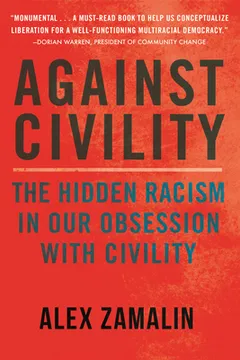


Key Takeaways
Treat political civility as a power question, not just a manners question.
Manners are not neutral. In private life, civility often means consideration. In politics, Zamalin argues, it can set rules for who may speak, which demands seem reasonable, and who can be punished. In 1837, Senator John C. Calhoun recast slavery as a dispute over sectional hostility and social harmony, diverting attention from millions of people forced to labor. Today, similar appeals to calm can be aimed at white nationalists and anti-racist protesters alike, despite the radically unequal consequences of their actions.
Follow the conversation. When debate turns to whether protesters behaved politely, officials can avoid answering what their protest exposes. The book does not claim courtesy is inherently racist. It shows how appeals to civility have repeatedly helped preserve racial hierarchy.
The distinction between interpersonal courtesy and political civility is essential. A norm that helps neighbors cooperate can become a gatekeeping device when applied to people challenging unequal institutions. The useful test is not whether a speaker sounds pleasant, but whether the demand for pleasantness is applied consistently and whether it deflects scrutiny from power. This framing also leaves room for movements to value care and accountability internally. Rejecting civility as a political condition need not mean treating cruelty as a virtue.
Notice who defines incivility, and who gets to enforce that definition.
Labels have consequences. Civility divides public conduct into acceptable and unacceptable behavior, but the boundary shifts with political interests. Black people have long been described as dangerous or disorderly even in ordinary public spaces. That assumption can turn a complaint, a protest, or simply being present into a reason to summon police or deploy force. The label does more than insult: it can help authorize punishment.
The burden shifts. Once protesters are called uncivil, they must defend their tone and prove their grievances deserve attention. Meanwhile, those defending the status quo can avoid explaining their own choices. Zamalin links this pattern to histories of racial criminalization, from restrictions on enslaved people’s gatherings to modern law-and-order politics.
This is a lesson in how categories become institutions. Social psychology describes stigma as more than a negative opinion: it can shape expectations, decisions, and access to resources. The book’s historical examples show that a label such as disorderly can travel from conversation into policing and law. Still, not every criticism of protest conduct is a disguised attempt at suppression. The crucial questions are who is judged, whose conduct is excused, and whether the same standard protects people from harm or mainly shields existing authority.
Pursue liberation without making agreement from the powerful a prerequisite.
A broader political stance. Zamalin calls this approach civic radicalism: a way of thinking, speaking, organizing, and acting that puts liberation ahead of consensus. It asks who is included in the community and whether its rules are just, rather than assuming the existing order deserves deference. Frederick Douglass, Ida B. Wells, and Martin Luther King Jr. represent different versions of this commitment: each challenged racial injustice directly, even when powerful audiences objected.
Not one tactic. Civic radicalism is broader than civil disobedience, a specific tactic of openly refusing an unjust law. It can include marches, writing, organizing, boycotts, or other direct action. The point is not disruption for its own sake. Activists assess the conditions, alliances, and institutions that need pressure.
The concept is useful because it separates a movement’s purpose from its chosen tactics. Political theory often distinguishes legitimacy from mere legality: a rule can be enforced and still lack moral authority. Civic radicalism puts that question at the center. It also resists the comforting idea that consensus automatically signals justice. One complication is that liberation can mean different things to different groups. A movement needs internal processes for disagreement and accountability, or the pursuit of freedom can reproduce the hierarchies it opposes.
Choose resistance to change conditions, not to glorify violence.
Action can transform people. As a young enslaved man, Douglass physically resisted an overseer who was beating him. He described the struggle as a turning point that restored his sense of possibility. Harriet Tubman made repeated journeys back into slave states to guide people to freedom, taking risks that politeness could never have resolved. These stories show that resistance is not only a response to political awareness; acting can help create it.
Purpose matters. The book does not treat every act of violence as liberation. John Brown’s attack on proslavery settlers in Kansas was motivated by opposition to slavery, but Zamalin condemns the killing of settlers who did not own enslaved people. Resistance needs judgment about targets and consequences. The final measure is whether an action advances freedom, not whether it looks bold.
The tension here is productive: passivity can protect oppressive systems, while righteous certainty can excuse harm. Research on collective action suggests that participation can build identity and efficacy, helping people see themselves as political actors rather than spectators. But the effects of tactics depend on context, power, and risk. Movements facing state violence do not have equal freedom to experiment. The distinction between resistance and vengeance is therefore not a tidy moral formula; it requires accountability to the people affected by an action.
Build power with the tools, relationships, and institutions already available.
Make a way forward. Ida B. Wells used journalism, public speaking, litigation, and community organizing to fight lynching and discrimination. After a white mob destroyed the Memphis newspaper office where she worked, she built a wider platform elsewhere rather than abandoning her work. In Chicago, she helped create a community center that offered reading space, job services, lectures, and support for Black newcomers excluded from other institutions.
Organize beyond the podium. The book also points to labor alliances. In the 1892 New Orleans general strike, Black and white workers acted together, shutting down the city and winning a shorter workday and overtime pay. Such cases show why alliances matter, but also why they must not require marginalized groups to silence their demands for the sake of unity.
Wells’s example resembles what organizational research calls resource mobilization: movements make use of skills, relationships, meeting places, and communication channels already within reach. That perspective counters the myth that change begins only when a famous leader or wealthy sponsor appears. The New Orleans strike also illustrates how shared material interests can create solidarity across racial lines. Yet common interests do not erase unequal treatment. Durable coalitions need explicit commitments to address those differences, or unity becomes another polite demand for the least powerful to wait.
Reject reconciliation that asks the injured to absorb injustice quietly.
Unity can erase history. After the Civil War, national reconciliation helped political leaders turn away from Reconstruction and the unfinished struggle for Black freedom. Southern states imposed Black Codes, while public talk of reunion displaced questions of land, voting rights, and protection from racial violence. The language of healing could make restored relations among elites appear more important than justice for those who had been enslaved.
Apologies are not repairs. James Baldwin warned that white declarations of guilt can become a bid for forgiveness without changing institutions. Zamalin makes a similar point about public commemorations and apologies: they may acknowledge past wrongdoing while leaving present inequalities intact. Remembering the past matters, but symbolic recognition cannot substitute for changing the policies and distribution of power that carry its effects forward.
Reconciliation has real value when it includes truth, accountability, and repair. Without those elements, it risks becoming a pressure to move on before the underlying injury has been addressed. Transitional justice processes offer a useful comparison: public testimony can clarify what happened, while material or legal remedies determine whether acknowledgment changes people’s lives. The book’s critique is strongest when aimed at reconciliation without redistribution or protection. It is less persuasive if taken to mean that healing, apology, or renewed relationships have no role in justice.
Explain racial inequality through structures, not stereotypes about character.
Policies shape outcomes. Zamalin traces how racial disparities are often redescribed as personal failures: laziness, criminality, irresponsible families, or insufficient civic engagement. He points instead to systems that shape opportunity and punishment. The crack cocaine law of the 1980s imposed the same five-year minimum sentence for five grams of crack as for five hundred grams of powdered cocaine, a disparity that fell heavily on Black communities. In Ferguson, Missouri, the city issued 32,975 arrest warrants in 2013 despite having just over 21,000 residents, with fines helping generate municipal revenue.
Look upstream. These examples shift analysis from individual behavior alone to sentencing rules, housing, employment, and local budgets. Structural explanation does not mean individuals have no agency. It asks how institutions distribute choices, risks, and consequences unequally.
Structural analysis is valuable because it asks how ordinary rules produce patterned outcomes without requiring every decision-maker to hold openly racist beliefs. That resembles the distinction between individual prejudice and institutional processes in sociology. It also improves policy diagnosis: if revenue incentives help drive excessive ticketing, addressing personal bias alone leaves the incentive intact. A structural account should not flatten all differences within a community or excuse specific harms. Its strength lies in explaining recurring patterns and identifying levers for change, not replacing one simplistic story with another.
Join racial justice to economic, gender, and sexual freedom.
Oppressions interact. The Combahee River Collective, a group of Black lesbian feminists, argued that antiracism must account for class, gender, and sexuality as well. Their work included publicizing the murders of twelve Black women in Boston and challenging accounts that treated the violence as only a matter of race. Audre Lorde likewise insisted that Black women’s experiences could not be folded neatly into the concerns of either white women or Black men.
Make solidarity practical. The book connects these insights to economic campaigns, from interracial labor organizing to Martin Luther King Jr.’s Poor People’s Campaign. It also describes the Black Panther Party’s survival programs, including free breakfasts, health services, and employment assistance. A broad movement needs shared goals, but it must address who bears each form of harm.
Intersectional analysis helps explain why a single-axis account can miss people who face overlapping forms of exclusion. It is not simply an invitation to add more identities to a list. It asks how institutions combine their effects, and whether a proposed remedy reaches those most exposed to harm. Broad economic programs can benefit many people, while targeted measures may still be needed to repair specific racial and gendered disadvantages. The challenge is to build a shared agenda without treating universal language as proof that everyone’s conditions are already equal.
Read demands for calm as political signals when democratic movements gain ground.
Pressure draws a response. Zamalin argues that civility appeals often become prominent when movements threaten established power. During the civil rights era, officials and moderates urged activists to slow down even as sit-ins, boycotts, and marches exposed the violence of segregation. In 2020, protests following George Floyd’s murder spread across the United States and beyond. News coverage often emphasized clashes and property damage, echoing older patterns that focused on disorder rather than the grievances driving protest.
Look for leverage. The book’s point is not that every call for calm is coordinated or insincere. It is that demands for decorum can rise as disruptive movements make their claims harder to ignore. Ask what the demand would require protesters to stop doing, and whose interests would benefit from that restraint.
The timing of a civility appeal can reveal more than its wording. Social movement research describes disruption as a way to raise the cost of ignoring a grievance and draw attention to demands excluded from ordinary channels. That does not mean disruption guarantees success, or that every tactic deserves endorsement. Nor does a movement’s visibility prove that public opinion has shifted permanently. The useful insight is diagnostic: evaluate a call for calm by its practical effects, its distribution of burdens, and whether it opens space for negotiation or closes it.
Redirect public resources from punishment toward the conditions that make freedom possible.
Build alternatives, not just critiques. Prison abolitionists argue that prisons are not the only response to harm. Angela Davis and the Critical Resistance network support alternatives such as restorative justice, accessible mental health care, housing, and stronger community resources. The Black Panther Party’s breakfast and health programs offer an earlier example of meeting needs directly rather than waiting for institutions that had failed their communities.
Freedom needs material support. The book links democratic participation to basics such as healthcare, education, affordable housing, living wages, and the power of organized workers. Without those foundations, legal rights can coexist with severe limits on people’s ability to shape their lives. The aim is not merely to manage punishment more humanely, but to reduce the conditions that make punitive systems seem inevitable.
This proposal shifts the question from how efficiently a punitive institution can operate to what social needs it is being asked to manage. Public health and conflict-resolution approaches offer practical ways to respond to some crises without defaulting to arrest. The challenge is that alternatives require durable funding, skilled local institutions, and safeguards for people at risk of harm. Critiquing incarceration alone does not specify every response to violence. The book’s emphasis on building care systems is most useful when paired with careful design, public accountability, and attention to victims’ safety.
Analysis
The book’s most powerful move is to treat civility not as a personality trait but as a political practice. It links everyday language about manners to institutions that decide whose presence is suspicious, whose anger is credible, and what kinds of force count as legitimate. That connection gives the historical narrative coherence: Calhoun’s defense of slavery, Jim Crow’s language of order, and modern law-and-order politics appear not as identical episodes, but as recurring efforts to make hierarchy seem like social peace.
The alternative, civic radicalism, is strongest as a standard for evaluating politics rather than a single tactical program. It asks whether an action expands participation and freedom, and whether it pressures institutions that have reason to resist change. The examples also complicate any easy celebration of confrontation. Douglass and Tubman demonstrate the necessity of defiance; John Brown’s killings show that moral conviction cannot by itself justify a tactic. That tension keeps the book from equating disruption with virtue.
The argument’s historical range is an asset, but it also invites caution. A repeated pattern does not make every appeal to civility a deliberate instrument of racial control. Nor can the effectiveness of protest be separated from organization, timing, resources, and political opportunity. The book sometimes treats direct action as more generative than electoral or legal work, even though its own history shows victories involving legislation, litigation, and negotiation. The strongest reading is therefore not that movements should reject every norm or institution. It is that politeness, compromise, and procedure must not become tests that marginalized people must pass before their claims receive attention. The practical question is always what a rule protects, whom it burdens, and whether it moves power toward democratic equality.
Glossary
civic radicalism
Liberation-centered political engagementA broad political orientation that puts liberation and equality ahead of consensus with powerful groups. It can include speech, organizing, direct action, and civil disobedience, but it is not a single tactic. Civic radicals question who is included in public life, whether existing rules are just, and which alliances and institutions can advance freedom.
prison industrial complex
Systems sustaining mass incarcerationA network of political, economic, and social arrangements that expands and sustains imprisonment. In the book, prisons are connected to responses to deindustrialization, local employment, weakened political participation, and punitive approaches to social problems. The term directs attention beyond individual convictions to the institutions and incentives that make incarceration seem like a normal solution.
broken-windows policing
Policing minor disorder to deter crimeA policing approach based on the claim that strict enforcement against visible minor offenses, such as loitering or vandalism, will prevent more serious crime. The book argues that this theory can turn ordinary urban behavior into a justification for aggressive police presence, while leaving poverty, housing policy, and other structural causes of harm insufficiently addressed.
intersectionality
Overlapping systems of oppressionAn approach to understanding how forms of inequality, including racism, sexism, class oppression, and homophobia, interact rather than operate separately. The book uses the work of Black feminists to show why movements focused on only one axis of power can overlook people who experience several forms of marginalization at once.
Combahee River Collective Statement
Black feminist political analysisA 1977 statement by a group of Black lesbian feminists that argued for a politics attentive to race, class, gender, and sexuality together. In Zamalin’s account, the collective’s work demonstrates how antiracist organizing can miss violence against Black women when it treats racism as separate from patriarchy and class.
general strike
Collective withdrawal of laborW. E. B. Du Bois used the term to describe the many forms of resistance through which enslaved people weakened slavery, including refusing work, escaping, and joining the Union Army. The concept shifts attention away from emancipation as a gift bestowed from above and toward the collective actions of enslaved people themselves.
The doll study
Research on racism’s effects on childrenResearch by Black psychologists Kenneth Clark and Mamie Clark examined how Black children responded to dolls with different skin colors. As described in the book, the findings showed that many children preferred white dolls and associated Black dolls with negative traits. The work helped make the psychological harm of segregation visible in the legal and public debate over school desegregation.
Download PDF
Download EPUB
.epub digital book format is ideal for reading ebooks on phones, tablets, and e-readers.








