

Key Takeaways
Read ancient parallels as possible arguments, not automatic proof of copying.
A different reading. Polemical theology is Currid’s term for biblical writers using familiar ancient Near Eastern expressions and stories to challenge the beliefs attached to them. The resemblance is real, but the purpose may be confrontation rather than imitation. Egyptian royal texts describe Pharaoh as powerful-armed; Exodus applies that kind of power language to Yahweh as Pharaoh is defeated. Ugaritic poetry calls Baal the rider of clouds; Isaiah assigns the image to Yahweh.
Borrowing is not the whole story. Currid argues that biblical authors could take recognizable cultural material and redirect its meaning toward Israel’s one God. The point is not that every parallel proves a deliberate taunt. It is that similarity alone cannot settle whether one text depends on another, or what a writer intended.
What's valuable here is the distinction between shared vocabulary and shared belief. A phrase can travel between cultures while its meaning changes, much as political movements reuse an opponent's symbols to challenge its authority. That makes comparison more interesting than a simple search for the earliest version. The caution is equally important: a parallel can support a polemical reading, but it cannot by itself prove intent. The argument is strongest when context makes the reversal visible, as in a story where Egypt's power language accompanies Egypt's defeat.
Use archaeology to recover context, not to dictate what Scripture must mean.
A newly visible world. Before nineteenth-century discoveries, knowledge of the ancient Near East came largely from the Bible and Greek writers such as Herodotus. The Rosetta Stone helped scholars decipher Egyptian hieroglyphs, while excavations in Mesopotamia uncovered royal records and literary texts. These finds supplied historical, linguistic, and cultural context that biblical readers had lacked.
Evidence has limits. The discoveries sometimes illuminated biblical settings, as when Sargon II’s inscriptions described the conquest of Samaria. Other finds, such as the Ebla tablets, produced far fewer biblical connections than some scholars expected. Currid’s history of the field warns against treating archaeology as either a threat to Scripture or a machine that confirms every biblical claim. Its evidence can clarify context without resolving every interpretive dispute.
The chapter's most useful lesson is methodological: new evidence changes the questions readers can ask, not necessarily the answers they must reach. Archaeological finds are uneven, and their significance depends on dating, translation, and comparison. That is a familiar challenge in historical research, where an inscription may confirm a political event without verifying a narrative's theology. The book's own account of Ebla is a good restraint on triumphalism. A responsible interpretation lets discoveries complicate a view as readily as support it.
In Genesis, creation is God's command, not a victory in a war among gods.
Shared images, different theology. Genesis and ancient creation accounts feature darkness, waters, dry land, lights in the sky, animals, and humanity. In the Babylonian Enuma Elish, however, the god Marduk defeats the goddess Tiamat and forms the world from her remains. In Genesis, one God creates by command, with no rival deity to overpower. The Hebrew term for the deep, tehom, is not presented as a goddess or enemy.
Creation is not divine genealogy. Mesopotamian and Egyptian accounts describe gods emerging and competing; Genesis presents its Creator as already sovereign. Sun and moon are described as lights rather than named deities, and people are made in God's image, not merely to relieve the gods of labor. Currid reads these differences as an argument against pagan cosmologies, not simply a cleaned-up version of them.
The contrast is not just a different cast of characters. It changes the account's explanation of power: the cosmos is neither the by-product of divine violence nor a family drama among competing gods. That distinction also gives humanity a markedly different place in the world. Comparative reading is especially useful here because it shows how a familiar sequence of creation events can carry sharply different claims. Still, the presence of shared imagery does not, on its own, establish whether Genesis is responding to a particular text or to a broader cultural repertoire.
In the flood story, make moral failure and covenant central, not divine panic.
A familiar disaster. Flood stories circulated widely in the ancient Near East. The Epic of Gilgamesh and the Atrahasis epic include a warning, a boat, rescued people and animals, a storm, birds sent to search for land, and an offering after the flood. Genesis shares much of that narrative pattern, making the resemblance impossible to ignore.
A changed center of gravity. In the Mesopotamian stories, gods can be frightened by the flood, disturbed by human noise, or hungry for offerings. Genesis instead makes human wrongdoing the reason for judgment and depicts Yahweh directing the event. Noah is spared through divine favor, and the rainbow marks a covenant, a binding commitment between God and living creatures. For Currid, the biblical telling is not just a variant plot: it gives the disaster a different moral and theological meaning.
The comparison shows why narrative structure matters less than the work a narrative performs. Similar events can frame different accounts of responsibility, power, and human worth. In Genesis, the flood is tied to moral judgment and a promise; it is not a management problem caused by noisy people. The covenant also turns the ending into more than a hero's reward. Yet textual parallels leave open questions about shared traditions, borrowing, and chronology. Currid's polemical reading is a strong interpretive possibility, not a conclusion that resemblance alone can prove.
Turn an empire's sacred symbols into evidence against its power.
The rod changes sides. In Egyptian culture, staffs could represent royal authority and divine power. The ordinary shepherd's staff carried by Moses and Aaron therefore becomes an pointed contrast to Pharaoh's prestige. In Exodus, Aaron's rod swallows the magicians' rods, presenting Yahweh as the true source of power. The contest is not merely between rival performers; Currid reads it as a challenge to Egypt's claims about Pharaoh and its gods.
The rest of nature joins in. The same reversal appears when drought strikes a land devoted to Baal, the Canaanite storm and rain god. Elijah's announcement makes rain depend on Yahweh's word, not Baal's. Exodus also uses Egyptian power language, such as the strong hand, for Yahweh's defeat of Pharaoh. The borrowed image becomes a taunt: Egypt's symbols cannot save Egypt.
This is polemic through objects and events, not only through explicit argument. A staff, a drought, or a storm can carry political meaning when a culture has invested it with authority. The method resembles a courtroom reversal: the sign offered as evidence of one power becomes evidence for its rival. The interpretation is persuasive where the cultural symbol is well established and the story clearly inverts it. It should be applied carefully, though, since a meaningful object in a story is not automatically a coded reference to every surrounding religious practice.
Let Joseph's restraint overturn the familiar seductress-and-false-accusation plot.
A known story pattern. The Egyptian Tale of the Two Brothers tells of a diligent younger man who refuses his brother's wife's sexual advances. She falsely accuses him, and her husband turns against him. Genesis 39 follows a recognizable pattern: Joseph is trusted by his master, refuses Potiphar's wife's demand, and is falsely accused after she retains his garment.
The moral contrast matters. Currid argues that the shared plot does not make the Joseph story a copy or a folk tale. In Genesis, Joseph's refusal is tied to loyalty and sin before God, while the repeated claim that Yahweh is with him frames the episode. Genesis 38, where Judah sleeps with a woman he believes to be a prostitute, sits just before Joseph's story as a foil: Judah fails where Joseph resists. The familiar motif is used to sharpen an ethical contrast.
The comparison separates a plot's portability from its moral force. A story pattern can be reused while its characters and theological stakes are changed; in this case, Joseph's integrity is not simply a trick for surviving danger. The placement beside Judah's failure makes the contrast sharper, because the narrative asks readers to compare choices rather than just enjoy a clever escape. The parallel also invites restraint: resemblance in plot is evidence of a shared literary world, but genre and historicity require other kinds of evidence.
Read Moses's endangered infancy as a challenge to Pharaoh's divine status.
A threatened child survives. Stories of future leaders rescued from danger as infants appear across the ancient Near East. The Legend of Sargon describes a baby placed in a sealed reed basket and set on a river, then rescued and raised by a gardener. Egyptian stories of Horus likewise describe a vulnerable child protected from a persecutor. Exodus tells of Moses hidden in a basket among river reeds while Pharaoh orders Hebrew boys killed.
The reversal is political. Currid sees the Egyptian setting, including Egyptian loanwords for papyrus and basket, as especially relevant to the Horus story. In Egyptian belief, Pharaoh was associated with Horus; in Exodus, the ruler becomes the persecutor, while the threatened Hebrew child survives and becomes Israel's deliverer. The familiar motif is recast to undermine Pharaoh's claim to divine protection.
The striking move is the shift in roles: a story that could affirm a ruler's sacred legitimacy becomes a narrative about the vulnerability of that ruler's regime. That is more than a small literary echo. It changes who receives protection and who poses the danger. At the same time, the dates of surviving copies matter. The book notes uncertainty around when the Sargon legend took its written form, a reminder that resemblance cannot establish which version came first. The Egyptian setting strengthens Currid's case for a deliberate local reference, but does not remove every chronological uncertainty.
Make Moses's departure from Egypt the opposite of Sinuhe's homesickness.
Two exiles, opposite desires. The Egyptian Story of Sinuhe follows a royal attendant who flees after political upheaval, prospers abroad, but longs to return to Egypt. Pharaoh eventually welcomes him home. Exodus 2 also sends Moses into exile after he kills an Egyptian, and he builds a life in Midian.
Home means something different. Sinuhe's story celebrates loyalty to Egypt and its king. Moses, by contrast, resists God's call to return and deliver Israel. Currid reads that contrast as a pointed reversal of Egyptian patriotism: Moses is not defined by allegiance to Pharaoh or longing for Egypt. His identity is bound to Israel and Yahweh. The shared exile-and-return pattern makes the difference more visible, not less.
This contrast shows how a familiar narrative structure can carry rival definitions of belonging. Sinuhe's return restores him to the social order he misses; Moses' return begins a confrontation with that order. The comparison gives the reader a practical question for any parallel text: what does the story praise, and whose authority does its ending restore? That question is more diagnostic than counting matching scenes. It also keeps the interpretation grounded in the contrast Currid identifies, rather than assuming that every similar episode has the same source or purpose.
Give Baal's storm imagery to Yahweh, then deny Baal control of the rain.
The cloud rider is contested. Ugaritic poems describe Baal as a storm god who rides clouds and thunders. Biblical passages use similar storm imagery for Yahweh. Psalm 29 repeatedly attributes the thunderous voice and force of a storm to Yahweh, while Isaiah pictures Yahweh arriving over Egypt on a cloud. Currid argues that these images can be read as claims that Yahweh, not Baal, rules the weather.
The drought makes the point concrete. In the story of Elijah and Ahab, Israel has embraced Baal worship, yet the land receives no rain at Elijah's word. The rain returns only under Yahweh's authority. The imagery is not necessarily proof that Israel's God developed from Baal or absorbed Baal worship. In Currid's reading, it can be a deliberate challenge to Baal's supposed powers.
This is a useful example of how religious language can be contested without changing the basic image. Storms remain storms, but the story assigns their agency to a different god and makes that assignment matter in public events. The drought gives an abstract claim about sovereignty a consequence that communities can feel. The interpretation is strongest when imagery and plot reinforce each other, as they do in Elijah's confrontation. A storm metaphor in isolation is less conclusive, since cultures can describe the same natural force in similar ways without direct polemical intent.
Treat divine names as contested claims, not fingerprints of religious borrowing.
A striking shared phrase. In Exodus 3, God reveals the name Yahweh to Moses through a phrase meaning 'I am who I am.' Currid notes a similar expression in the Egyptian Book of the Heavenly Cow, where the sun god Re asserts his identity. The Egyptian text may be older in composition, but the dating and relationship of the materials are not simple enough to make the parallel an automatic verdict about borrowing.
Competing explanations remain. Currid proposes that the phrase may have functioned as polemic: the God of Israel claims the sovereignty associated with Egypt's chief god and Pharaoh. He also considers the possibility of Egyptian appropriation, Hebrew appropriation, or independent use. The larger lesson is reciprocal contact. Biblical and Egyptian cultures exchanged language and practices, so influence cannot be presumed to run in only one direction.
This is the book's boldest and most uncertain case. A shared divine title can reveal competition over authority, but determining who borrowed from whom requires secure dates and evidence of transmission. The proposal gains force from the broader setting of conflict between Yahweh and Egypt, yet the phrase alone cannot establish that history. That distinction is important: polemical theology is a lens for interpreting evidence, not a substitute for evidence about chronology. The case remains valuable because it refuses the easy assumption that cultural influence always flows from the surrounding world into biblical texts.
Analysis
Currid's central contribution is interpretive rather than archaeological: he argues that the Old Testament's similarities to ancient Near Eastern literature may be deliberate acts of theological opposition. This replaces a blunt choice between total independence and simple borrowing with a richer possibility. Biblical writers could work inside a shared cultural vocabulary while contesting the religious claims that vocabulary carried. The examples range from creation and flood stories to Egyptian royal symbols, familiar plot patterns, and storm imagery.
The strongest cases combine a clear cultural association with a narrative reversal. The rod in Exodus becomes especially pointed when an Egyptian symbol of authority accompanies Pharaoh's defeat. The flood comparison is also compelling because its shared plot gives way to a sharply different account of divine agency, human wrongdoing, and covenant. Other claims, particularly the direction of influence behind the phrase in Exodus 3, depend on uncertain chronology and are more speculative.
That difference in evidentiary strength matters. Similarities may reflect direct borrowing, a common tradition, conventional imagery, or coincidence. A polemical reading should therefore be tested against genre, dating, immediate context, and the specific reversal alleged. Otherwise, the idea risks becoming unfalsifiable: any parallel could be labeled a taunt after the fact. Currid acknowledges that polemical theology is one lens among several, and that qualification is essential to using his approach well.
The book is most persuasive when it shows not merely that Israel shared the region's language, but that the biblical narrative reallocates power. Baal may be called a cloud rider, Pharaoh may wield a royal staff, and flood stories may share a familiar sequence. The decisive question becomes who actually commands the rain, the symbols, or the waters. That question gives comparative study real value without requiring every resemblance to prove either dependence or independence.
Review Summary
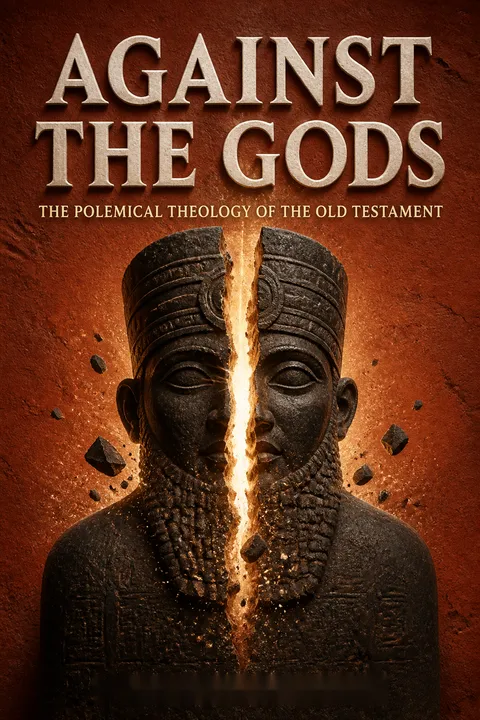
Against the Gods explores parallels between Old Testament stories and Ancient Near Eastern myths, arguing that biblical authors used similar motifs polemically to assert Yahweh's supremacy over pagan deities. Currid contends this approach demonstrates the Bible's uniqueness rather than plagiarism. Reviewers generally found the book insightful and accessible, praising its apologetic value. Some criticized its brevity and repetitiveness, wishing for more detailed arguments. Overall, readers appreciated the book as a thought-provoking introduction to polemical theology in Old Testament studies, despite occasional overreaching in proposed parallels.
People Also Read
Glossary
Polemical theology
Theological argument through cultural reversalCurrid's term for the use of familiar ancient Near Eastern expressions, stories, or symbols to distinguish Israel's God from other gods and challenge surrounding beliefs. Biblical writers may reuse an image, such as a storm god's cloud-riding title, while assigning its real power to Yahweh.
Theogony
The origin of the godsA narrative or account describing how gods came into being, how they are related, and how they occupy positions in a divine hierarchy. Currid contrasts theogony in ancient Near Eastern creation stories with Genesis, which portrays one eternal God creating the cosmos without a genealogy of deities.
Ex nihilo
Creation out of nothingA Latin theological phrase meaning that God creates without using preexisting matter. Currid contrasts this interpretation of Genesis with ancient creation accounts in which primordial waters or other cosmic materials already exist before the gods shape the world.
Mythic narrative
Story about primordial divine eventsCurrid's description of ancient Near Eastern creation stories and related accounts. These narratives explain the order of the world through events involving gods, often in a primordial setting. He contrasts them with biblical passages he reads as historical narrative, even when they share motifs or imagery with myths.
Exile-return motif
A hero's departure and homecomingA recurring ancient Near Eastern story pattern in which a person faces a threat, goes into exile, finds support or success abroad, and returns to the former community. Currid compares this pattern in the Story of Sinuhe and the account of Moses, emphasizing their opposite attitudes toward Egypt.
Spurned seductress motif
Rejected advances lead to false accusationA recurring plot in which a woman makes sexual advances to a man, is rejected, and retaliates by accusing him. Currid compares the Egyptian Tale of the Two Brothers with Genesis 39, arguing that the shared plot enables readers to see the biblical story's distinct ethical and theological emphasis.
Vav-consecutive-plus-imperfect
A Hebrew narrative sequence markerA grammatical construction in biblical Hebrew commonly used to advance a sequence of events in narrative. Currid points to its repeated appearance in the flood account as evidence for reading that passage as historical prose rather than as poetry or mythic narrative.
FAQ
What's "Against the Gods: The Polemical Theology of the Old Testament" about?
- Exploration of Polemical Theology: The book examines how the Old Testament uses polemical theology to differentiate Hebrew beliefs from those of surrounding ancient Near Eastern cultures.
- Cultural Context: It delves into the historical, geographical, and cultural contexts of the Bible, emphasizing its roots in the ancient Near East.
- Comparative Analysis: The author, John D. Currid, compares biblical narratives with ancient Near Eastern myths to highlight the uniqueness of the Hebrew worldview.
- Purpose and Audience: The book is intended for readers interested in the relationship between the Old Testament and ancient Near Eastern literature, aiming to stimulate further study and discussion.
Why should I read "Against the Gods: The Polemical Theology of the Old Testament"?
- Understanding Biblical Context: It provides insights into the cultural and historical background of the Old Testament, enhancing comprehension of its texts.
- Unique Perspective: The book offers a unique perspective on how the Old Testament writers engaged with and critiqued surrounding pagan cultures.
- Scholarly yet Accessible: While not written exclusively for scholars, it is a well-researched work that is accessible to those with a general interest in biblical studies.
- Stimulates Further Study: It encourages readers to explore the Old Testament's relationship with ancient Near Eastern culture and thought more deeply.
What are the key takeaways of "Against the Gods: The Polemical Theology of the Old Testament"?
- Polemical Theology Defined: The book defines polemical theology as the use of common ancient Near Eastern motifs to assert the uniqueness of Yahweh and Hebrew monotheism.
- Cultural Interactions: It highlights the complex interactions between Hebrew and surrounding cultures, showing how biblical writers used these interactions to reinforce their distinct beliefs.
- Historical Context: Understanding the historical and cultural context of the Bible is crucial for interpreting its texts accurately.
- Monotheism vs. Polytheism: The book emphasizes the Old Testament's radical monotheism in contrast to the polytheistic beliefs of neighboring cultures.
How does John D. Currid define polemical theology in the book?
- Use of Common Motifs: Polemical theology involves using familiar motifs and stories from surrounding cultures to highlight the distinctiveness of Hebrew beliefs.
- Rejection of Polytheism: It serves to reject the encroachment of false gods into Hebrew belief, emphasizing monotheism.
- Demonstrating Distinctions: The primary purpose is to demonstrate the essential distinctions between Hebrew thought and ancient Near Eastern beliefs.
- Not Reductionistic: Currid stresses that polemical theology is not a reductionist approach but one lens among many to understand the Old Testament.
What are some examples of polemical theology in the Old Testament according to the book?
- Creation Accounts: Genesis 1 is compared with Mesopotamian and Egyptian creation myths to show the uniqueness of the Hebrew creation narrative.
- Flood Narratives: The Noahic flood story is analyzed alongside other ancient Near Eastern flood accounts to highlight its distinct theological messages.
- Exodus Events: The use of the rod by Moses and Aaron is seen as a polemic against Egyptian religious practices and symbols of power.
- Red Sea Crossing: The parting of the Red Sea is compared to Egyptian myths to emphasize the historical reality and theological significance of the biblical event.
How does the book compare the Genesis creation account with other ancient Near Eastern creation myths?
- Parallels and Differences: While there are parallels in structure and themes, the Genesis account is distinct in its monotheism and portrayal of God.
- Creation ex nihilo: Unlike other myths, Genesis presents creation as ex nihilo, emphasizing God's sovereignty and omnipotence.
- Demythologization: The book argues against the idea that Genesis merely demythologizes ancient myths, instead presenting a unique worldview.
- Polemical Purpose: The Genesis account serves as a polemic against the polytheistic and mythological elements of surrounding cultures.
What is the significance of the flood narratives in the book?
- Comparative Analysis: The book compares the biblical flood narrative with Mesopotamian and other ancient Near Eastern flood stories.
- Moral and Theological Differences: It highlights the moral and theological differences, such as the biblical emphasis on human sinfulness and divine grace.
- Covenantal Aspect: The Noahic covenant is presented as a radical difference, emphasizing God's personal relationship with humanity.
- Historical vs. Mythical: The book argues for the historical nature of the biblical account in contrast to the mythological nature of other flood stories.
How does the book address the story of Joseph and the motif of the spurned seductress?
- Ancient Parallels: The book compares the story of Joseph and Potiphar's wife with similar motifs in ancient Near Eastern literature, such as the Tale of the Two Brothers.
- Moral Integrity: Joseph's moral integrity is contrasted with the actions of other characters in similar stories, highlighting his righteousness.
- Polemical Use: The story serves as a polemic against the moral failings depicted in surrounding cultures' literature.
- Cultural Context: Understanding the cultural context of these motifs enriches the interpretation of the Joseph narrative.
What role does the birth of Moses play in the book's analysis?
- Motif of the Persecuted Child: The book examines the motif of the persecuted child in ancient Near Eastern literature, comparing it to the birth of Moses.
- Egyptian Parallels: It highlights parallels with Egyptian myths, such as the story of Horus, to show the cultural context of Moses's birth.
- Polemical Angle: The birth story of Moses is seen as a polemic against Egyptian beliefs, emphasizing his role as a deliverer.
- Historical Narrative: Unlike mythic accounts, the biblical narrative is presented as historical, underscoring its theological significance.
How does the book interpret the parting of the Red Sea?
- Historical Event: The book presents the parting of the Red Sea as a historical event with profound theological implications.
- Egyptian Parallels: It compares the biblical account with Egyptian myths, such as the Westcar Papyrus, to highlight its uniqueness.
- Polemical Elements: The narrative is seen as a polemic against Egyptian deities, particularly Amon-Re, emphasizing Yahweh's sovereignty.
- Symbolic Significance: The event symbolizes God's deliverance and judgment, serving as a paradigm for future acts of salvation.
What are the best quotes from "Against the Gods: The Polemical Theology of the Old Testament" and what do they mean?
- "The primary purpose of polemical theology is to demonstrate emphatically and graphically the distinctions between the worldview of the Hebrews and the beliefs and practices of the rest of the ancient Near East." This quote encapsulates the book's central thesis, highlighting the use of polemical theology to assert the uniqueness of Hebrew beliefs.
- "The biblical writers often use polemical theology to counter ancient pagan myths that are noxious to the Hebrew faith centered on monotheism." This quote emphasizes the role of polemical theology in defending and promoting monotheism against polytheistic beliefs.
- "The uniqueness of the biblical account is a good argument for its independence from rather than its dependence on the pagan mythic texts." This quote argues for the originality and distinctiveness of the biblical narratives, countering claims of dependence on pagan myths.
- "The reality is that the early accounts of Genesis are 'culturally descriptive rather than revealed truth.'" This quote challenges the notion that Genesis merely reflects ancient cosmology, asserting its theological depth and significance.
Download PDF
Download EPUB
.epub digital book format is ideal for reading ebooks on phones, tablets, and e-readers.








