

Key Takeaways
Treat AI as an economic shock, not a robot uprising
A board became a warning. In 2017, AlphaGo defeated Chinese Go champion Ke Jie. The game was ancient, the contest emotional, and the machine’s advantage unmistakable. Its earlier victory over Lee Sedol had drawn 280 million Chinese viewers and helped spark a national AI push. The real breakthrough was deep learning: algorithms trained on large collections of examples to detect patterns and make predictions within a defined task. Unlike chess program Deep Blue, which mostly searched possible moves, this approach could also recognize speech, images, and financial risk.
Narrow, powerful, practical. These systems are not general minds. They need relevant data, computing power, and a clear objective. But those ingredients already let them perform valuable tasks across industries, putting jobs and social stability at risk before science-fiction superintelligence is anywhere near reality.
What's striking is the gap between spectacle and consequence. A Go match makes machine intelligence visible, but the more consequential systems work quietly in lending, hiring, and content ranking. Their power comes not from human-like understanding but from optimizing a measurable goal. That makes the choice of goal a political and ethical decision, not merely an engineering detail. The distinction between narrow AI and general intelligence also improves public debate: it lowers the temperature around imagined robot rebellion while sharpening attention to automation already reshaping livelihoods.
China's copycat crucible trained implementers, not merely imitators
Copying built competence. Early Chinese startups reproduced American websites because local models, mentors, and technical experience were scarce. Wang Xing copied social networks and Twitter before founding Meituan, a group-buying company. Its success came not from copying Groupon alone, but from surviving thousands of competitors through careful spending, product changes, reliable payments to restaurants, and expansion into new services. Taobao likewise adapted online auctions for Chinese users, adding escrow payments and seller-buyer messaging while making listings free to attract a marketplace.
The arena was rough. The copycat era could involve smear campaigns, forced software installations, and punishing work hours. Lee's argument is that relentless imitation forced companies to improve and taught founders to execute. Meituan's evolution from clone to broad service platform shows how copying can be a starting point, not a ceiling.
The story complicates the usual opposition between imitation and invention. In organizational learning, copying can transfer tacit knowledge: the practical skill of building, testing, and operating a product. Dense competition then forces adaptation to local users. But survival does not prove every tactic is socially beneficial. Predatory conduct can suppress rivals, weaken trust, and reward founders for aggression rather than durable value. The useful lesson is not to romanticize the coliseum; it is to notice that entrepreneurial capability is developed through practice, feedback, and access to markets, not through originality alone.
In AI, data-rich execution can outrun rare genius
The advantage shifted. Lee distinguishes an age of discovery, when a few researchers produce fundamental breakthroughs, from an age of implementation, when engineers and entrepreneurs apply those breakthroughs across industries. Deep learning's rise depended on more computing power, abundant digital data, and better ways to train many-layered neural networks. Once a strong technical threshold is reached, more examples can improve a system more than another increment of elite expertise.
Four ingredients matter. Lee compares AI's economic infrastructure to electrification. Successful deployment requires abundant data, capable entrepreneurs, trained AI scientists, and supportive policy. China, in his account, has advantages in data, practical business execution, and public investment, while the United States retains an edge in top research talent. This is why the contest is not settled simply by counting celebrated scientists.
The implementation lens is valuable because it shifts attention from laboratory milestones to the institutions that turn research into widespread products. It also resembles the spread of earlier technologies: invention matters, but adoption depends on skilled operators, financing, and infrastructure. Data, however, is not a neutral fuel. Data quality, consent, and the costs of collecting it shape what systems can learn and whom they serve. More examples can strengthen prediction without establishing that the prediction is fair, causally meaningful, or worth optimizing.
Build AI around lived behavior, because platforms capture richer signals
China connected screens to streets. Many Chinese users reached the internet first by smartphone, and WeChat grew from messaging into a hub for payments, appointments, shopping, and services. QR-code payments made even small vendors part of the digital economy. Online-to-offline services, or O2O, used apps to arrange physical services such as meals and rides. Chinese firms often went beyond providing a platform: they recruited vendors, handled payments, and managed delivery fleets.
The work produced data. By 2016, China had about 20 million online food orders daily, roughly ten times the US total described in the book. Mobile payments and location-aware services revealed where people went, what they bought, and how they traveled. This detailed record of offline activity could help companies build AI services that online clicks alone could not support.
The comparison reveals that a digital economy is partly built through logistics, not just software. Integrating delivery, payment, and merchants creates useful feedback between a recommendation and its real-world result. It also creates concentrated visibility into private behavior. Consumers may experience this as convenience, while companies gain an informational advantage that can shape markets and habits. A fuller evaluation of these systems therefore asks two questions at once: what services become possible, and who controls the records that make them possible?
Track AI's four waves to see where disruption arrives first
Different data, different tasks. Lee groups AI applications into four broad waves. Internet AI recommends content or products from clicks, views, and purchases. Business AI searches structured records, such as loan histories, for useful patterns. Perception AI interprets images, sounds, and other signals from the physical world. Autonomous AI uses perception and prediction to let machines act, as in warehouses, farms, drones, and vehicles.
The sequence matters. Recommendation systems and business analysis were already spreading when the book was written. Sensor-driven services were beginning to merge physical and digital life, while autonomy remained more technically demanding. Lee saw the United States as strongest in business applications and early autonomous driving, and China as well placed in online services and perception systems because of its users, hardware ecosystem, and deployment environment. These are comparative forecasts, not permanent rankings.
This framework is useful because it sorts applications by the kind of information they need and the difficulty of acting in the world. A recommendation system can scale through software; a robot must also handle unpredictable physical conditions. That distinction helps explain why automation does not advance evenly across sectors. The book's country-by-country predictions should be read as a snapshot of capabilities and policy in 2018. Hardware costs, regulation, and changing consumer expectations can alter the pace more quickly than a neat sequence suggests.
Plan for 40-50% technical automation, not 40-50% unemployment
Capability is not displacement. Lee estimates that AI could technically perform tasks in 40 to 50 percent of US jobs within 10 to 20 years. He does not claim that the same share of workers will become unemployed. Studies cited in the book ranged from 9 percent of jobs at high risk to 47 percent, partly because some measured whole occupations while others examined individual tasks. Lee adds a further risk: AI-first firms can redesign an industry and employ fewer people than established competitors.
Software may arrive first. AI can take over data-heavy cognitive tasks faster than robots can master dexterous work in messy settings. That means accountants or analysts may face pressure before many manual jobs. At the same time, data-driven firms can gain a self-reinforcing edge: more users create more data, which can improve products and attract still more users.
The most important distinction is between technical feasibility, adoption, and net employment. Treating them as one forecast makes both panic and complacency easier. The author's estimate is intentionally cautionary, but uncertainty remains substantial: regulation, wages, consumer trust, and new demand all affect actual displacement. The concentration argument is stronger as a warning about market structure than as an inevitability. Competition policy, access to data, and worker bargaining power can influence whether productivity gains spread or pool around a few firms.
Let AI handle prediction, then make human care economically visible
A diagnosis changed the calculus. Lee recounts a career spent treating time and relationships like resources to optimize. A stage IV lymphoma diagnosis made those calculations feel hollow, and the care of his wife, daughters, sisters, and mother became central to his recovery. His point is not that technology is useless: medical expertise and data helped treat his cancer, while human connection helped him endure it.
Care needs institutions. An elderly user's most-used feature on a simplified touchscreen was its customer-service line, because the caller wanted company, not technical help. Lee argues for combining AI's analytical strengths with human interaction, and proposes a social investment stipend for care, community service, and education. Unlike unconditional basic income, the stipend would pay people for defined contributions. He also calls for better-paid service work and investment in human-centered businesses.
The elderly callers expose a distinction between completing a task and meeting a human need. Automation can deliver food or schedule care, yet loneliness is not simply a service failure to be optimized away. The proposal to pay for care makes socially valuable work visible, a challenge to economies that count market transactions more readily than caregiving. Still, eligibility rules could create intrusive monitoring or undervalue informal care. A humane design would need to protect recipients' autonomy while ensuring that care workers receive real pay, choice, and status.
Govern AI as shared infrastructure, not a zero-sum contest between superpowers
The race hides the fracture. Lee argues that competition between the United States and China matters less than the divisions AI may create within and between societies. Data advantages can concentrate profits in a small number of companies, while automation can weaken the low-wage manufacturing path that helped some developing economies grow. The book cites a forecast that the United States and China could capture 70 percent of AI's projected economic gains by 2030.
Choices shape the outcome. Lee urges countries to learn from one another rather than treat every advance as a military victory. Different societies make different trade-offs over privacy, public investment, and individual rights. Shared problems, including job displacement and unequal gains, call for policies that reflect those values while preserving human agency. AI's direction is not predetermined by the technology alone.
The call to look beyond a national scoreboard is persuasive because deployment crosses borders while its costs often land locally. A system trained in one market may fail elsewhere without local data, labor knowledge, and institutional trust. Cooperation need not mean identical rules: privacy protections and public-sector adoption can reasonably vary. It does require honest comparison of outcomes. The key question is not which political model wins in the abstract, but which arrangements distribute benefits, limit abuses, and let affected communities participate in decisions.
Analysis
The book's most durable contribution is its change of emphasis. Public debate often treats AI as a forecast about machine consciousness or a contest between national research labs. Lee redirects attention to implementation: data, business models, infrastructure, and public policy determine how existing machine-learning methods affect ordinary life. His account of China's mobile ecosystem makes this concrete. A QR payment, delivery order, or shared bicycle is not merely a convenience; each connects software to physical activity and generates feedback that can improve later services.
That argument is strongest when it treats technological advantage as an ecosystem rather than a single invention. It is weaker when national strengths appear too neatly divided. Data volume does not automatically produce better or more trustworthy systems, and the book's 2018 forecasts cannot account for every shift in regulation, hardware, or competition. Its employment warning is more nuanced than a simple prediction of mass unemployment, but the estimates still combine uncertain assumptions about technical capability, adoption, and the creation of new work. Keeping those stages separate is essential.
The personal narrative gives the economic argument a moral center. Lee's cancer experience challenges the idea that human worth should be measured by productivity, while the elderly callers show that efficient service can leave relational needs untouched. Yet love alone cannot solve the distribution problem. Care work needs adequate pay, labor protections, and a say in how technology is introduced. A stipend tied to contribution could recognize neglected work, but it could also burden recipients with surveillance or narrow definitions of worthy activity.
The book therefore works best as a strategic warning and a moral invitation, not as a precise prediction. Its central question is institutional: who owns the data, captures the gains, bears transition costs, and decides which human needs remain worth supporting? Answering that question requires more than technical excellence. It requires governance that treats productivity as a means to shared flourishing, rather than as proof that markets have already delivered it.
Review Summary
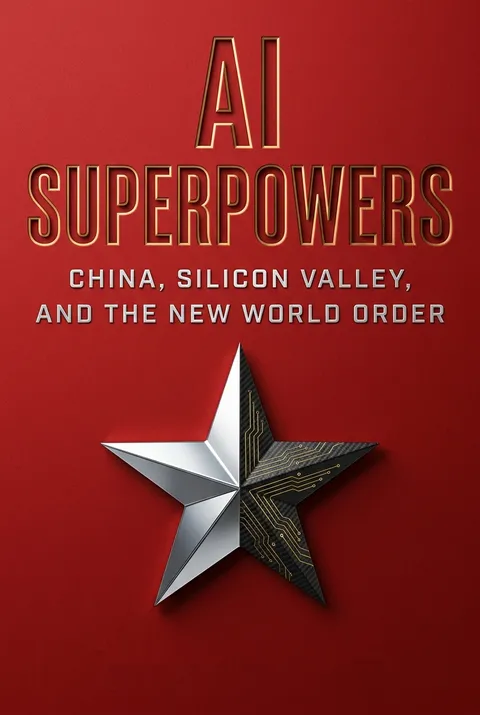
AI Superpowers offers a comprehensive look at the AI race between China and the US, exploring its impact on jobs, economy, and society. Readers praise Lee's balanced perspective and insider knowledge of both countries' tech scenes. While some find the personal anecdotes distracting, many appreciate the author's insights on AI's potential benefits and risks. The book is lauded for its accessibility to non-experts and its thought-provoking ideas on adapting to an AI-driven future.
People Also Read







Glossary
Deep learning
Pattern learning from examplesA form of machine learning that uses layered artificial neural networks to find patterns in large data sets. Rather than receiving a complete set of hand-written rules, a system is trained on examples linked to outcomes, such as images labeled with objects. It performs best when it has abundant relevant data, computing power, and a clearly defined task.
age of implementation
Applying AI breakthroughsLee's term for a period in which the major task is applying existing AI advances, especially deep learning, to practical problems and industries. Progress comes through engineering, product design, and business execution more than through rare foundational discoveries. The concept shifts attention from who invents an algorithm to who can deploy it effectively.
age of data
Data drives AI advantageLee's description of an AI economy in which abundant, relevant data becomes a decisive advantage once computing resources and engineering skill reach a sufficient level. Large data sets can help systems improve their predictions, while companies with better products may attract more users and collect more data. The term highlights data access as an economic resource, not just a technical input.
Four Waves of AI
Four stages of applicationLee's framework for grouping AI applications by the information they process and how they affect the world. Internet AI recommends content and products; business AI analyzes organizational records; perception AI interprets sensory information; autonomous AI enables machines to act. The categories help explain why some applications spread through software while others depend on sensors, hardware, and safe physical operation.
online-to-offline (O2O)
Apps arrange physical servicesA business model that uses digital platforms to initiate or coordinate services delivered in the physical world. Examples include ordering restaurant meals, booking rides, and arranging household services through an app. In Lee's account, O2O companies often manage payments and real-world operations, producing both convenience for customers and detailed data about offline behavior.
online-merge-offline (OMO)
Digital and physical integrationLee's term for environments where online services and physical settings become deeply integrated rather than merely connected by a separate app. Sensors, cameras, voice systems, and connected devices can recognize people and objects, personalize interactions, and coordinate actions across a store, home, or city. OMO describes a world in which digital assistance is embedded in everyday physical activity.
Moravec's Paradox
Robots struggle with dexterityThe observation, associated with robotics researcher Hans Moravec, that computers can perform certain high-level intellectual tasks more easily than robots can reproduce basic human perception and movement. AI can excel at pattern recognition or prediction while robots still struggle with flexible hand movements and cluttered environments. Lee uses this contrast to explain why software may automate some office tasks before robots replace many forms of manual work.
social investment stipend
Income for social contributionLee's proposed public payment for people who invest time in care work, community service, or education. It is intended to recognize socially beneficial activity as economically valuable, rather than provide money without conditions as in universal basic income. The proposal is presented as a complement to a safety net, with the aim of supporting both material security and stronger human relationships.
FAQ
What's AI Superpowers about?
- AI Competition: AI Superpowers by Kai-Fu Lee examines the intense competition between the United States and China in the realm of artificial intelligence, highlighting each country's unique strengths.
- Societal Impact: The book explores the profound implications of AI on jobs, the economy, and global power dynamics, discussing both potential benefits and challenges.
- Personal Insights: Lee shares his experiences as an AI researcher and venture capitalist, offering a personal perspective on the evolution of AI technologies and their societal impacts.
Why should I read AI Superpowers?
- Global Dynamics: The book is crucial for understanding the future of technology and its geopolitical implications, particularly how AI will influence global power structures.
- Informed Predictions: Lee provides insights into how AI will transform various industries and job markets, helping readers prepare for upcoming changes.
- Cultural Perspectives: It contrasts the entrepreneurial cultures of Silicon Valley and China, offering a deeper understanding of how these environments foster innovation.
What are the key takeaways of AI Superpowers?
- Transformative Force: AI is not just a technological advancement but a transformative force that will redefine economies and societies.
- China's Progress: China has rapidly caught up to the U.S. in AI, driven by government support, vast data resources, and a competitive entrepreneurial environment.
- Human-AI Collaboration: Lee advocates for a future where humans and AI coexist, focusing on enhancing human capabilities rather than replacing them.
What are the best quotes from AI Superpowers and what do they mean?
- "We’re all full of questions without answers.": This quote reflects the uncertainty surrounding AI's future and the need for societal discussions about its implications.
- "AlphaGo’s victories were both a challenge and an inspiration.": It highlights how technological advancements can spur nations to innovate and compete, especially in AI.
- "Our AI future will be created by us.": Lee emphasizes human agency in shaping AI's future, suggesting that our choices will determine its societal impact.
How does Kai-Fu Lee define AI superpowers in AI Superpowers?
- Superpowers Definition: AI superpowers are nations that effectively harness AI technologies to drive economic growth and influence global affairs.
- China vs. U.S.: While the U.S. has historically led in AI research, China is emerging as a formidable competitor due to its unique advantages.
- Data Importance: Data is a critical resource for AI development, and countries with vast data access will have a significant edge.
What are the four waves of AI discussed in AI Superpowers?
- Internet AI: Enhances online experiences with applications like recommendation algorithms used by companies such as Alibaba and Google.
- Business AI: Optimizes traditional business processes, improving efficiency in sectors like finance and healthcare.
- Perception AI: Interprets sensory data, enabling applications like facial recognition and autonomous vehicles.
- Autonomous AI: Encompasses fully autonomous systems, such as self-driving cars and drones, with profound industry implications.
How does AI Superpowers address the potential job displacement caused by AI?
- Job Loss Predictions: Lee predicts AI could replace 40-50% of jobs in the U.S. within the next 15 years, affecting both low-skill and high-skill positions.
- Historical Context: The book draws parallels to past technological revolutions, suggesting society has historically adapted to such changes.
- Need for Adaptation: Emphasizes the importance of education and policy adjustments to ensure workers can transition into new roles.
What is the significance of the "Sputnik Moment" in the context of AI in AI Superpowers?
- Cultural Awakening: The term describes how AlphaGo's victory ignited a national obsession with AI in China, similar to the U.S. response to the Soviet satellite launch.
- Government Mobilization: Led to significant government investment and policy initiatives aimed at making China a global AI leader.
- Inspiration for Innovation: Served as a wake-up call for Chinese entrepreneurs and researchers, motivating aggressive AI advancements.
How does AI Superpowers compare the U.S. and China in terms of AI development?
- Different Approaches: The U.S. focuses on innovation and individualism, while China emphasizes rapid implementation and government support for AI initiatives.
- Cultural Factors: Cultural attitudes towards technology, data privacy, and government intervention influence AI progress in each country.
- Future Predictions: Lee predicts China may surpass the U.S. in AI implementation due to its advantages in hardware manufacturing and data availability.
What role does data play in AI development according to AI Superpowers?
- Data as a Resource: Data is the most critical resource for AI development, surpassing even computing power and talent.
- China's Advantage: China's vast population and digital ecosystem generate enormous data amounts, giving Chinese companies a significant edge in training AI algorithms.
- Quality of Data: Not only quantity but also the quality of data—how it reflects real-world behaviors and preferences—is crucial for effective AI applications.
What is the proposed social investment stipend in AI Superpowers?
- Definition and Purpose: A proposed government salary for individuals engaging in socially beneficial activities, such as care work and community service.
- Contrast with UBI: Unlike universal basic income, the stipend requires participation in meaningful activities, fostering community and purpose.
- Cultural Shift: Encourages valuing human connections and compassion over solely economic productivity, aiming for a more humane society in the AI age.
How does AI Superpowers envision the future of work?
- Human-Machine Collaboration: Envisions a future where humans and AI work together, with machines handling routine tasks while humans provide emotional and creative input.
- Emergence of New Professions: Predicts new roles prioritizing human interaction and empathy, essential in an AI-dominated world.
- Cultural Shift in Values: Requires valuing care, service, and education as essential societal components, redefining success and fulfillment beyond traditional economic metrics.
Download PDF
Download EPUB
.epub digital book format is ideal for reading ebooks on phones, tablets, and e-readers.








