

Plot Summary
The Night the Prince Returns
During a summer storm, Vhalla Yarl, an East-born library apprentice in the Solaris palace, sees soldiers bring home a wounded prince. Believing it may be Baldair, the royal she once met, she joins the overnight search for antidotes when Master Mohned orders the apprentices to find books on Shaldan poisons.
Vhalla's memory of the shelves lets her gather more sources than anyone else, and she writes notes that help stabilize the injured man. The work drains her, but warmth swells through her as she writes.
At dawn, Minister Victor Anzbel finds traces of magic in her notes, takes her to the Sorcerers' Tower, and explains that her powers have begun to emerge. Vhalla rejects the claim and returns to the library, but ordinary life has already split open.
The inciting event grows from Vhalla's defining habit, not from ambition: she reads urgently because someone is dying, and the effort itself reveals a power she never sought. Her usefulness first appears as scholarship, a form of labor the palace already values, before anyone recognizes it as magic. That distinction matters. Vhalla's first rupture with her old life comes through an act of care, while Victor's coercive intervention makes the discovery frightening rather than triumphant. The story begins by entwining knowledge with responsibility, then asks whether Vhalla can claim an identity that other people have named for her.
Letters from a Phantom
Back at work, Vhalla hides her fear from her friends and tries to ignore the black-robed figures appearing at the edge of her sight. Larel, a Tower sorcerer, finds her among the shelves and gives her an introductory book on magic.
Vhalla begins reading, then receives an unsigned note demanding that she stop pretending she is ordinary. She answers with research of her own, and their prickly exchange gradually turns into lessons on magical Affinities, the history of sorcery, and the persecution of the East.
Her dreams grow clearer alongside the correspondence. One night, Vhalla follows a shadow into the library and finds Aldrik, the crown prince, waiting in her favorite seat. He has been the unseen correspondent all along, and he identifies her as the first Windwalker in generations.
Vhalla does not accept a new identity because an authority announces it; she approaches it by testing claims against books. The anonymous correspondence gives her a way to be curious before she can bear to be openly vulnerable, while its insults turn learning into a contest she refuses to lose. Aldrik's hidden role makes that intellectual intimacy uneven: he knows who she is and steers her toward a conclusion she has not chosen. Their meeting therefore carries both recognition and danger. The library is not merely her refuge; it becomes the place where reading stops protecting her from experience and starts leading her directly into it.
The Spire's Cruel Lesson
Aldrik leads Vhalla through a hidden passage to the top of a palace spire and tries to make her accept that her magic is real. He tells her she must learn through action, not books, then pushes her into open air without warning.
Vhalla strikes roofs and stonework on the way down, sustaining devastating injuries, before the Awakening of her powers somehow keeps her alive. Victor and Larel spend days treating her with nonmagical remedies because her Channels cannot withstand more magic.
When Vhalla wakes, she confronts Aldrik over the fall and his assumption that she would survive. Her uncontrolled rage shatters a window and unleashes a gale, confirming the danger of her untrained power. Aldrik leaves her furious and wounded, and trust between them is broken.
Aldrik's lesson turns a question of knowledge into a literal life-or-death experiment. He treats Vhalla's survival as evidence that his judgment was sound, but her broken body exposes the ethical cost of that certainty. The scene also gives magic an intimate psychological trigger: Vhalla's first uncontrolled force arrives through anger at the person who claims to be guiding her. Her refusal to forgive him is not simple fear of sorcery; it is a demand that care and authority answer for their consequences. The resulting breach gives Vhalla a reason to seek knowledge on her own terms.
History Beneath the Tower
While recovering in the Tower, Vhalla accepts help from Larel, who explains that she may train as a sorcerer or ask to be Eradicated. In the Tower library, its cheerful caretaker Fritz shows her a history of the Windwalkers.
Vhalla learns that Western armies enslaved and killed them during the Burning Times, while the East later buried knowledge of magic to avoid renewed persecution. The history frightens her, but it also makes her want to understand what she is.
Fritz helps her try a simple exercise, and Vhalla summons enough air to extinguish a flame bulb and break its glass. She asks Victor for more time before choosing her future. Granted until the Festival of the Sun, she returns to the Imperial Library, where her friends welcome her back.
Fritz gives Vhalla something the palace's official account cannot: a history that explains why fear of magic was taught and whose interests that fear served. Her discovery is not a clean conversion from prejudice to pride; the past makes her more cautious even as curiosity grows. The first experiment matters because it gives her a physical experience that no book can substitute for. By asking for time, she claims a small but consequential choice within institutions that would prefer to classify her immediately. Returning to her old library keeps that choice emotionally complicated: she is not simply leaving one home for another.
A Bond Neither Chose
On her birthday, Vhalla slips into the palace garden and finds Aldrik there. He apologizes for the fall and explains that her notes, written with unconscious magic, helped him survive a magically altered poison. Saving him formed a Bond between them, a connection that prevents either from bringing mortal harm to the other.
Vhalla is angry that he kept this from her, but she accepts his invitation to sit and read beside him. The next day he returns her forgotten winter clothes and begins teaching her to move objects without physical gestures. At a pond, Vhalla sees a dark mark in Aldrik's magical presence, evidence that his injury still troubles him, then sends a stone flying into a wall with far more force than she intended.
The Bond reframes the relationship without erasing what Aldrik did. It explains why he believed the fall could not kill Vhalla, but it does not make the broken bones or the breach of trust less real. Vhalla's decision to resume contact is therefore provisional, not absolution. The lesson beside the pond also exposes a difference between intellectual mastery and bodily control: she can understand the task and still overshoot it. Meanwhile, her perception of Aldrik's hidden wound suggests that observation can become a form of care, though she has not yet learned how much of his life remains inaccessible to her.
A Friend's Frightened Flight
Aldrik keeps finding reasons to teach Vhalla, and she begins to enjoy practicing magic as much as she once enjoyed reading about it. Sareem gives her fine gloves for her birthday and tries to arrange time alone with her, while Vhalla struggles to understand what he wants. In the archives, she finally tells him she has been studying with sorcerers and lifts a thimble with her magic.
Sareem panics, searching for an ordinary explanation before backing away. Later, he returns to her room, admits that fear made him react badly, and kisses her. Vhalla agrees to spend the Festival of the Sun with him, though her feelings remain uncertain. Alone the next morning, she discovers that she can feel and direct the wind itself.
Sareem's response hurts because he has been part of Vhalla's familiar world, yet his fear reveals the limits of their closeness. His return and kiss do not settle the conflict; they offer affection while leaving his discomfort with magic unresolved. Vhalla's acceptance of a date reflects her uncertainty about what she wants as much as any romantic interest. The wind's sudden obedience provides a contrasting kind of recognition: her power responds without asking her to disguise herself. This section places two possible forms of belonging beside each other, one shaped by longstanding affection and social expectation, the other by a capacity she is only beginning to inhabit.
The Mind Leaves Its Body
At the Festival's opening ceremony, Vhalla focuses her magical sight on Aldrik and sends him a thought without meaning to. The effort triggers a blinding headache, and she collapses. In the Tower, her consciousness has separated from her motionless body.
Aldrik arrives before Victor can intervene and uses fire to pull her back into herself. He explains that Vhalla has begun projecting her awareness beyond her body, a rare Windwalker ability, and that their Bond let him sense when something was wrong.
Although he initially proposes keeping his distance until she chooses whether to join the Tower, Vhalla insists he remain both teacher and friend. Soon afterward, Sareem finds her, explains how he sought help when she collapsed, and asks her to go to the festival with him.
Projection makes Vhalla's curiosity newly dangerous: the same reaching attention that lets her perceive Aldrik also disconnects her from the body that must sustain her. Her temporary separation dramatizes the risk of treating consciousness as disembodied knowledge. Aldrik's decision to rescue her complicates their relationship further, but Vhalla is the one who names what she needs from him. The scene also shows how care can be expressed as restraint: Aldrik considers withdrawing because her abilities are advancing beyond his lessons. His concern does not undo their unequal history, yet Vhalla's insistence gives the relationship a measure of mutual choice.
A Festival Date Goes Cold
Vhalla accepts Sareem's invitation and spends the festival watching Northern performers juggle blades, then joins him among the crowds near the Senate Hall. Their easy jokes briefly restore the closeness of childhood.
When Aldrik passes with Senator Egmun, however, he sees Vhalla with Sareem and publicly dismisses any connection to her. The words cut through the afternoon's warmth, though Vhalla cannot challenge him without exposing their private meetings. The following day, Aldrik invites her to lunch in the garden and Vhalla hastily clarifies that Sareem is only a friend.
She asks what would happen to Aldrik if she were Eradicated, but he refuses to let her choose for his sake. Baldair and Egmun interrupt with urgent news from the front, and Baldair later invites Vhalla to the gala.
Aldrik's public rejection exposes the gap between private tenderness and public power. His position lets him deny the relationship without risk, while Vhalla must absorb the humiliation in silence. The next day's lunch restores some intimacy, but her explanation about Sareem and her concern for the Bond reveal how closely she now measures her choices against Aldrik's safety. Baldair's arrival shifts the story from private uncertainty toward war and spectacle. The festival's cheerful pageantry cannot contain the conflict beneath it: the same imperial world that offers Vhalla a rare invitation is preparing to send its princes back into battle.
Baldair's Gala Invitation
Baldair escorts Vhalla through the royal quarters and offers the gala as a reward for the research that helped save Aldrik. He arranges dancing lessons and a custom gown, letting Vhalla choose black despite its breach of court fashion.
When she later encounters Aldrik with Baldair, the elder prince retreats into a cold public manner, leaving Vhalla unsure what he wants from her. Gossip then reaches Roan, who confronts Vhalla for spending time with Baldair and reveals that she herself loves Sareem.
Vhalla tells Roan to meet Sareem instead, then goes to Master Mohned. He reveals that he is Western, that he wrote a history of the Windwalkers, and that he once learned from the last captive Windwalker. Vhalla tells him she has decided to join the Tower.
Baldair's invitation gives Vhalla access to a world she has only observed from the margins, but it comes wrapped in a false identity and the assumptions others make about her. Her choice of black is a small refusal to let the court define how she should appear. Roan's disclosure forces Vhalla to see that her secrets have tangled other people's hopes, not only her own. Mohned's history then deepens the meaning of her choice: the Tower is not simply a new profession but a decision to enter a tradition shaped by captivity and erased knowledge. Vhalla chooses it knowing its dangers, not because they have vanished.
Black Silk at the Gala
Servants prepare Vhalla in a black Chater gown and present her at the Mirror Ballroom under the invented name Lady Rose. Her entrance draws the court's attention, and Aldrik's startled admiration steadies her. Baldair claims the first dance, then the other guests follow. During a group dance, Egmun recognizes Vhalla and taunts her about her private meetings with Aldrik.
She leaves the ballroom for the gardens, where Aldrik has also withdrawn. They share a slow dance and, for a moment, acknowledge their closeness and his coming return to the front. Before either can act on that tenderness, explosions tear through the capital. Aldrik shields Vhalla as the gala's music gives way to cries from the burning city below.
The gala turns clothing and dance into a temporary experiment in identity. As Lady Rose, Vhalla is visible on terms she has helped choose, yet Egmun's recognition shows how easily an elite observer can strip away that performance and convert intimacy into political leverage. Her garden dance with Aldrik is significant because neither is performing for the court; the space allows them to approach each other without resolving the obstacles between them. The explosions end that fragile privacy at once. Public violence enters the story not as distant news from the front, but as a catastrophe breaking into the palace's most polished celebration.
Fire and Wind
Vhalla recognizes the burning square as the place where Roan and Sareem may be waiting and runs toward it despite Aldrik's attempts to stop her. She and Aldrik cross the devastated streets, where he uses fire to clear their path. They find Roan alive beneath debris and Sareem dead near the ruined bakery. Before Vhalla can mourn, a group of Northern attackers ambushes them.
Aldrik kills the first attacker, but another shoots Vhalla with an arrow and the rest overpower him. As one raises a sword over Aldrik, Vhalla screams and unleashes a vast windstorm. The force tears apart the attackers and damages the square. Vhalla loses consciousness, then wakes in a prison cell, accused of causing the destruction and trying to kill the crown prince.
Vhalla's decision to enter the burning city is driven by guilt as much as courage: she believes she may still reach the friends she shut out. Finding Roan alive and Sareem dead makes the cost of delay irreversible. The attackers then force Vhalla's magic into its first immense, uncontrolled form, converting an attempt to protect Aldrik into an event the state can prosecute. Her windstorm is both rescue and catastrophe; it saves the heir from immediate execution while making Vhalla appear dangerous to everyone who sees its aftermath. The title's two elements are no longer abstract powers. They become a public crisis attached to her name.
Magic Under Oath
Senator Egmun builds a treason case around Vhalla's uncontrolled storm, while guards beat her in her cell and leave her badly injured. Baldair secretly treats her wounds and tells her that the storm killed the Northern attackers without harming the people caught nearby.
At the hearing, witnesses describe the destruction, but Victor establishes Vhalla's place in the Tower, and Mohned reports that Roan survived. When Egmun corners Mohned with the paperwork authorizing Vhalla's apprenticeship, the old scholar stumbles; Vhalla uses her magic to slow his fall.
The display turns the room against her. Later, Aldrik meets her in the chapel and admits that he engineered her Awakening and had planned to direct her powers for his own purposes. He also confesses that she became his friend, and promises to protect her.
The trial makes public judgment another form of force: Egmun can take ambiguous evidence and shape it into a story of treason, while Vhalla has little control over how her actions are described. Her rescue of Mohned briefly reverses that power imbalance, but the senators read visible magic as proof of threat rather than evidence of restraint. Aldrik's confession gives Vhalla a different kind of testimony, one that does not excuse his manipulation but names it plainly. His admission arrives after she has already faced the consequences alone. Trust becomes possible only as a choice Vhalla may make, not as a reward owed to him.
Sentenced to the Northern War
The Senate finds Vhalla guilty of recklessness, endangerment, impersonating nobility, and public destruction, but not guilty of heresy, murder, or treason. The Emperor ratifies a sentence that conscripts her into the army as property of the Empire, to be sent north within a week.
Aldrik is named as the officer who may execute her if she disobeys. Larel escorts Vhalla to the Tower, where her new room has a balcony and her belongings have been gathered.
After learning that she has never fought and that the march will take months, Vhalla washes away the blood and grime. Unable to untangle her hair, she cuts it short herself. Larel gives her the Tower's black jacket, and Vhalla puts it on as she prepares to face the war that has claimed her future.
The verdict exposes the difference between legal survival and freedom. The court rejects the most inflammatory accusations, yet converts Vhalla's body and magical ability into imperial property. Her sentence makes the Empire's priorities unmistakable: it fears the power it has just assigned to its war effort. The haircut is not a victory over that system, but it is an action Vhalla can still choose for herself. Removing her tangled hair and wearing the black jacket mark a shift from enforced helplessness toward deliberate preparation. The ending offers no safety or resolution to the war; it leaves Vhalla at the threshold of a role she has not been allowed to refuse.
Analysis
Air Awakens makes literacy both Vhalla's shelter and the instrument that carries her into danger. She begins as someone who believes that a sufficiently complete understanding can keep the world at a safe distance. Yet her research notes save Aldrik, and her books cannot prepare her for the consequences of a fall, a magical Bond, or a city under attack. The novel's recurring conflict is not knowledge against ignorance, but the difference between knowing a system and having power within it.
That distinction governs Vhalla's relationships as well. Aldrik understands more than he admits and initially treats Vhalla's future as something he can arrange. His later honesty matters, but it does not retroactively make his manipulation harmless. Sareem offers tenderness shaped by familiar expectations, while his fear of sorcery shows how affection can fail when a person changes beyond the limits another can accept. Vhalla's movement toward the Tower is therefore not simply a choice of magical identity over ordinary life. It is an effort to choose for herself after others have repeatedly tried to choose on her behalf.
The history of the Windwalkers connects private identity to political memory. The East's loss of its magic is not presented as a natural disappearance: it follows conquest, captivity, and the suppression of knowledge. The Senate's final sentence repeats that pattern in a new form. Vhalla survives the trial, but the Empire claims the very power it has treated as a threat and sends her toward the front. The ending refuses an easy triumph. Vhalla has begun to act, to learn through practice, and to name what she wants, yet her autonomy remains constrained by institutions larger than herself. Her short black jacket marks a beginning, not a victory.
Review Summary
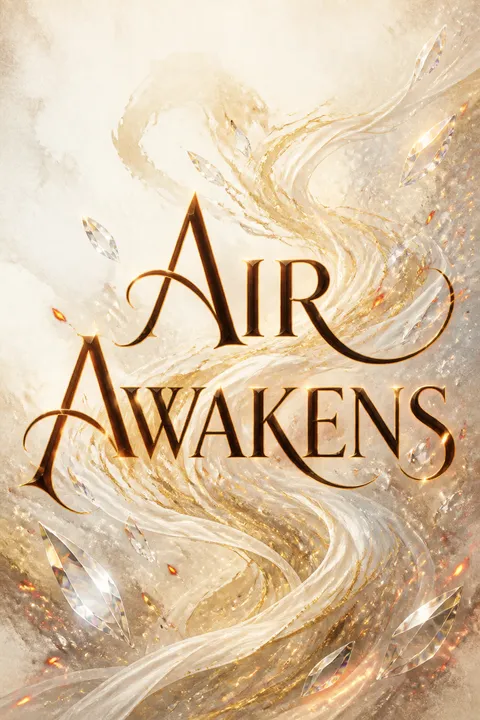
Air Awakens receives polarized reviews, averaging 3.98/5 stars. Fans praise the elemental magic system, slow-burn romance with Prince Aldrik, and Vhalla's character development from timid library apprentice to powerful Windwalker. Many compare it favorably to Avatar: The Last Airbender and enjoy the "enemies-to-lovers" dynamic. Critics cite problematic elements including the abusive love interest who pushes Vhalla off a tower, weak protagonist prone to fainting, underdeveloped worldbuilding, grammatical errors, and overreliance on YA tropes. The pacing divides readers—some find it engaging while others consider it slow until the action-packed ending.
People Also Read






Characters
Vhalla Yarl
The restless archivistAn East-born library apprentice raised within the Solaris palace, Vhalla has built her security from books, routine, and careful observation. She is intelligent without being socially assured, and her habit of reading lets her notice details that more powerful people overlook. Her caution comes partly from a lifetime of being treated as ordinary and partly from the South's suspicion of magic. Vhalla wants to understand the world before acting in it, but relationships and events repeatedly make that distance impossible. Her central tension is between the safety of being useful in familiar ways and the risk of choosing a life that others already imagine for her.
Aldrik Solaris
The guarded heirThe crown prince of the Solaris Empire is a powerful Firebearer whose severe manner and dark appearance have made him a target of rumor. Aldrik is observant, intellectually sharp, and accustomed to treating people as pieces in problems he believes he can solve. Beneath that control is a lonely man who rarely knows how to approach others without command or strategy. He is also an heir burdened by war, court expectations, and a reputation that precedes him. His relationship with Vhalla unsettles his practiced distance, though his capacity for care must be judged alongside his willingness to manipulate.
Baldair Solaris
The beloved second princeAldrik's younger brother is a celebrated soldier whose warmth and easy humor make him popular with the people. Baldair is socially confident and comfortable offering attention, affection, and practical help. His lighter manner does not mean he is shallow; he understands military duty and knows how to care for the wounded. His relationship with Aldrik mixes brotherly affection with rivalry and frustration, while his charm gives Vhalla access to parts of palace life she would never enter alone.
Victor Anzbel
The Tower's political keeperThe Minister of Sorcery oversees the Tower and recognizes Vhalla's emerging powers before she can accept them herself. Victor is pragmatic, resourceful, and more comfortable with institutional authority than with waiting for someone to make a difficult choice. His initial decision to take Vhalla by force reveals a paternalistic belief that good outcomes justify coercive methods. Yet he also takes responsibility for her medical care and argues for her value when others see only danger. He represents the Tower's ability to shelter sorcerers and its readiness to manage them.
Larel
The blunt mentorA Western sorcerer and Tower mentor, Larel is direct, self-possessed, and attentive to the difference between guidance and control. She gives Vhalla a book when Vhalla is not ready to trust the Tower, then tends to her injuries without demanding gratitude. Larel's dry humor and practical kindness make her a steadier presence than either Victor or Aldrik. She is loyal to Aldrik but does not simply echo him, and she works to give Vhalla information and room to decide for herself.
Sareem
The childhood companionVhalla's friend from the palace library, Sareem is attentive, generous, and increasingly conscious of his affection for her. His care appears in small acts, such as noticing her illness and choosing a useful birthday gift. He values familiar bonds and a stable future, which makes the possibility of magic unsettling to him. Sareem is not simply a romantic alternative to Aldrik; his friendship represents the ordinary life Vhalla has known and the limits that fear can place on intimacy.
Roan
The watchful confidanteVhalla's closest female friend in the library, Roan is lively, perceptive, and invested in the relationships around her. She notices Vhalla's secrecy and changes in routine before Vhalla is ready to explain them. Roan's attachment to Sareem complicates her concern, while her strong distrust of sorcery reflects the culture she shares with Vhalla. She can be loyal and judgmental at once, a friend whose affection does not guarantee that she will understand every choice Vhalla makes.
Master Mohned
The aged master-scholarThe elderly Master of Tome has guided Vhalla's work in the palace library for years. His scholarly discipline and paternal concern make him one of the few authorities she initially trusts. Mohned is restrained about his past, but his interest in history and the care he shows his apprentices suggest a wider understanding than he openly shares. He values Vhalla's intellect and sees her as more than a useful pair of hands among the shelves.
Fritz
The Tower's eager librarianA cheerful Waterrunner who cares for the Tower library, Fritz is enthusiastic about books and quick to welcome Vhalla. His good humor contrasts with the Tower's more formal authorities, and he offers help even when he admits he is not a trained teacher. Fritz makes room for Vhalla to explore magic through curiosity rather than fear, and his friendliness helps the Tower feel like a community instead of an institution.
Senator Egmun
The calculating senatorThe Head Elect of the Senate is polished, strategic, and skilled at turning suspicion into public argument. Egmun treats Vhalla's uncertain status as an opportunity to advance the Senate's interests, and he is attentive to the political value of the princes' private lives. His power comes less from physical force than from his command of procedure, reputation, and persuasive framing. He embodies a court where language can be used to make exploitation sound like justice.
Emperor Solaris
The conquering sovereignThe Emperor rules an expanding empire and commands the loyalty of the palace, military, and Senate. He is accustomed to ceremony, decisive orders, and the public display of imperial unity. His authority shapes the lives of both sons and determines the legal setting in which Vhalla is judged. He is not omnipresent, but his decisions make clear how closely the Empire's religious identity, military ambitions, and political power are joined.
The Empress
The court's proper hostessThe Empress appears at public ceremonies and the royal gala, where her concern for decorum reflects the court's strict ideas about status and appearance. She is poised and socially exacting, maintaining the polished image expected of the imperial household.
Cadance
The youngest apprenticeA young library apprentice, Cadance is part of the small community that has become Vhalla's home. Her questions and uncomplicated affection help show the gentler, everyday life Vhalla risks leaving behind.
Lidia
The library's caretakerA motherly member of the library staff, Lidia helps sustain the apprentices' close working community. Her concern for Vhalla is practical and warm, offering a quiet contrast to the palace's rigid hierarchy.
Craig
The candid palace guardOne of the guards assigned to Vhalla during her trial, Craig is blunt and more humane than the men who previously watched her. He treats her as a person despite the accusations surrounding her.
Daniel
The curious palace guardAn East-born guard assigned alongside Craig, Daniel is curious about magic and willing to learn more than his duties require. His interest in Vhalla's abilities contrasts with the fear and hostility she encounters elsewhere.
Major Reale
The Black Legion officerA senior officer in the Black Legion, Major Reale is identified as one of the people who will oversee the march north. Her role signals that Vhalla's new life will place her under military authority.
Head Major Jax
The absent legion commanderThe head major of the Black Legion is stationed at the northern front during the events of the novel. Though he does not appear directly, his position helps establish the military hierarchy Vhalla is being sent into.
Plot Devices
Magical Affinities
Power shaped by elementSorcerers possess elemental Affinities associated with regions: fire in the West, water in the South, earth in the North, and air in the East. Their powers begin to Manifest and eventually require training to control. Vhalla's air Affinity makes her a Windwalker, a kind of sorcerer believed to have vanished for generations. The system gives magic both a physical form and a political history, since regional powers have been feared, exploited, or erased according to who held authority.
Magical Vessels
Knowledge carries hidden forceA sorcerer's magic can leave traces in objects they make, creating a vessel that conducts or stores power. Before she understands her abilities, Vhalla leaves magical traces in the research notes she writes to help a wounded prince. Those notes carry knowledge and magic together, guiding his treatment and tying her work to his survival. The device turns an ordinary scholarly act into an unconscious magical intervention and gives the story a concrete reason for Vhalla and Aldrik's connection.
The Bond
A life-saving connectionWhen one sorcerer saves another, a magical Bond can form, leaving part of the rescuer's magic within the person saved. The Bond prevents either person from inflicting mortal harm on the other, though it does not prevent pain or poor judgment. Aldrik relies on this protection when he pushes Vhalla from the spire, misunderstanding how much harm she can suffer. Later, the Bond lets him sense when Vhalla is in danger. It links their lives while leaving trust, consent, and affection unresolved.
Windwalker Projection
Awareness beyond the bodyWindwalkers may separate their consciousness from their physical body and perceive the world from outside it. Vhalla first experiences this ability in dreams, then begins projecting while awake without knowing what she is doing. The power allows her to sense distant people and communicate a thought, but it also leaves her body vulnerable and can make returning difficult. Projection extends the story's idea of knowledge beyond books: Vhalla can reach farther than her body, but she must learn that perception without control carries a cost.
The Senate's Sentence
Power turned into conscriptionThe Senate trial gives political authorities a way to claim Vhalla's power while appearing to punish her. Egmun frames the city's destruction as evidence of treason, but the court ultimately rejects the charges of murder and treason. It still convicts Vhalla of lesser offenses and sentences her to military service as imperial property. The verdict transforms her identity from a potential Tower apprentice into a resource for a war she never chose, ensuring the novel ends with legal survival but no freedom.
Air Awakens Series
About the Author


Download PDF
Download EPUB
.epub digital book format is ideal for reading ebooks on phones, tablets, and e-readers.








