

Key Takeaways
Travel widely, then translate each cuisine through your own flavor vocabulary.
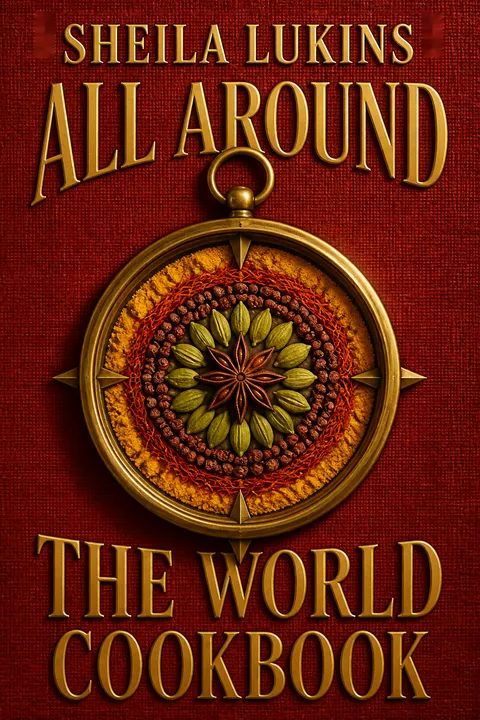
Travel became a method. Lukins traces her interest in food to her Russian-born grandparents, whose cooking and stories made distant places feel vivid. For this book, she spent two years visiting 33 countries, tasting local food, learning from cooks, and visiting markets. Back home, she built a flavor palette for each place, a shorthand for its characteristic aromas, colors, and tastes, then used those impressions to create recipes.
Inspiration, not imitation. Lukins is clear that these recipes are her interpretations, not traditional versions. Cilantro, which she encountered in places as far apart as Lisbon, Russia, Bangkok, Oaxaca, Bombay, and Marrakech, became one recurring thread. The point is to carry home a cuisine’s sensory logic and make something personal from it, rather than claim to reproduce a dish exactly.
What's striking is that the book treats cooking as translation: observation comes first, technique follows, and the final dish belongs to the cook who makes it. That approach resembles cultural exchange at its best, where influence is acknowledged rather than disguised as authenticity. It also gives readers permission to learn from cuisines beyond their own without pretending one recipe can represent an entire country. The caution is that a traveler's palette is necessarily selective. Lukins offers a compelling personal map, not a definitive atlas of national food.
Shop seasonally, and let ingredients shape the menu before recipes do.
Markets set the agenda. Lukins treats markets as more than places to buy groceries. The abundance of a Saturday market in Oaxaca, the vivid spice stalls of Istanbul, and the careful displays in India all spark recipe ideas. A basket of ripe tomatoes or a particular pepper can suggest what belongs on the table before a formal plan exists. Her ratatouille, for instance, begins with the summer vegetables she selected in St. Tropez.
Use what you have. She argues that ingredients in season deliver the strongest flavor, and that a good cook wastes little. Herb stems and roots can enrich stocks and sauces; leftover roast meats can become sandwiches or salads. This is a practical cycle: shop attentively, cook what is abundant, and save useful trimmings for another purpose.
The market-centered approach links taste to place, timing, and resourcefulness. It also offers a useful counterweight to recipe browsing that begins with an idealized shopping list. Ingredient-led cooking can reduce waste and make a meal feel more connected to its moment, although seasonal availability is not equally accessible to every household. The underlying skill is adaptable attention: noticing what is fresh, understanding how it behaves, and being willing to change the plan. The market is an inspiration, not a requirement.
Build dishes around deliberate contrasts, not a pile of exotic ingredients.
Balance makes the flavors legible. Across the recipes, Lukins pairs sweet with sour, rich with fresh, and heat with coolness. Her Mexican lentils bring pineapple and banana into a savory bean dish; Jamaican jerk sauce combines chilies with sweetness and acidity; and a spoonful of yogurt-based raita cools a spicy curry. These combinations are not novelty for novelty’s sake. Each ingredient changes how the others register.
Texture matters too. A dish can be creamy and crisp, soft and crunchy, or warm with a cool garnish. In her description of Indonesian rijsttafel, a rice-centered meal served with an array of small dishes, she emphasizes contrasting textures, colors, temperatures, and flavors. The practical lesson is to decide what kind of contrast a dish needs, then add only what helps create it.
This is a sensory model of composition. Contrast helps diners detect individual flavors, while repetition can make a plate feel monotonous even when its ingredients are expensive. The same principle appears in music and visual design: variation creates emphasis. Lukins’s examples are especially useful because they show that sweetness can belong in savory cooking without turning a dish into dessert. Still, contrast is a choice, not a universal rule. A simple plate of ripe tomatoes, olive oil, and salt can be compelling precisely because it asks very little of the palate.
Put small plates at the center of hospitality, not at its margins.
A welcome you can eat. Lukins describes several traditions of predinner small plates: meze in Greece and Turkey, tapas in Spain, and zakuski in Russia. Zakuski are an assortment of hot and cold Russian appetizers, often including smoked fish, breads, pickles, salads, and spreads. These foods accompany a drink and invite guests to linger rather than hurry toward a main course.
Make the spread manageable. Many dishes can be prepared ahead, arranged on platters, and served for guests to help themselves. Lukins recalls an outing to Aegina, where she and her companions shared beans, zucchini, tomatoes, olives, grilled octopus, and bread in the morning. The lesson is not that every gathering needs an elaborate buffet. A few contrasting, shareable dishes can make the first moments of a meal feel generous and relaxed.
Small plates change the social structure of eating. Instead of waiting for a single centerpiece, guests choose, share, and pace themselves. That gives a host more flexibility and gives diners more agency. It also explains why the food can become the event rather than a prelude to it. The practical risk is abundance without pacing: a lavish spread can leave little appetite for anything else, a result Lukins cheerfully admits. A thoughtful host can treat that as a feature, while still ensuring the selection suits the occasion.
Develop stocks, aromatics, and spice bases before asking the main ingredient to shine.
Flavor starts before the star. Lukins builds soups and sauces from homemade stocks, often making a large batch to freeze in useful portions. Her broth recipes keep vegetable skins for color and flavor, and she recommends roasting beef or lamb bones before simmering them. For a clear chicken broth, she advises against stirring once it begins to simmer.
Give spices and herbs different jobs. Spices often go into warm oil early so their flavors can mellow; fresh herbs may be added near the end to preserve their brightness. Her curries begin by cooking the spice mixture with onions, garlic, or ginger before adding liquid. These steps establish a foundation, so the meat, fish, or vegetables do not have to carry the entire dish alone.
The method is an accessible lesson in flavor extraction. Roasting deepens savory notes, while gently warming spices in fat helps disperse their aromas through a dish. Adding fresh herbs near serving protects their more delicate character. These are small operations with large consequences, which is why a recipe’s sequence matters as much as its ingredient list. The approach also asks for time and planning. When that time is unavailable, a simpler preparation can still be excellent, but it should be understood as a different route to flavor.
Plan meals as sequences of color, texture, temperature, and flavor.
A menu is a composition. Lukins learned to plan meals by considering taste, texture, color, and compatibility, then arranging dishes in a sensible serving order. Her suggested menus turn recipes into complete occasions, from a Highland winter lunch to a Moroccan couscous dinner. Most are designed to serve six to eight people, giving readers a practical starting point for entertaining.
Pairings belong to the plan. The book includes wine and beer guidance alongside dishes, such as a dry Greek white with seafood or an amber beer with a spicy, robust meal. Its rijsttafel menu demonstrates how a central bowl of rice can anchor many smaller dishes without making them interchangeable. Planning this way helps prevent a table where every dish is rich, soft, or fiery. Each course contributes something distinct to the whole.
Menu planning turns a collection of good recipes into an experience with rhythm. A bright salad can reset the palate after a rich stew; a crisp drink can offset heat; a modest dessert can finish a generous meal without adding another heavy course. This compositional thinking also reduces last-minute kitchen congestion because the host can see which dishes require attention at the same time. The menus are guides, not laws. Their value lies in showing how compatibility can be reasoned through, then adjusted for guests, budget, and appetite.
Read breakfast and tea as cultural stories, not merely lighter meals.
Morning tables reveal a place. Lukins’s travel diaries make breakfast a way to notice local habits. In Marrakech, she encounters a spread that includes harira soup, honeyed pancakes, eggs, and mint tea. In Istanbul, cheese, olives, tomatoes, bread, and wild thyme honey make a simple but distinctive meal. In Tokyo, she remembers a hot bowl of noodles after a predawn visit to the fish market.
Tea has its own architecture. Lukins describes afternoon tea as a sequence of sandwiches, scones with jam and cream, and cakes. She distinguishes this from cream tea, which centers on scones, and high tea, a more substantial meal. These rituals show how ingredients, timing, service, and setting work together. A meal can be memorable not because it is complicated, but because every detail fits its moment.
Food writing becomes especially vivid when it treats meals as cultural evidence. Breakfast and tea reveal what a place considers ordinary, celebratory, sustaining, or polite. The format also widens the reader’s idea of what a meal can be: soup may appear at breakfast, and tea may function as both refreshment and social occasion. A traveler's hotel breakfast is not a complete account of a nation’s daily diet, however. These scenes are best read as attentive snapshots, rich in detail but not substitutes for the many routines they cannot capture.
Adapt ingredients honestly, preserving a dish's logic rather than claiming identical authenticity.
Practicality is part of cooking. Lukins often modifies a dish when an ingredient is unavailable or difficult to source. She uses brown sugar in place of palm sugar for Thai shrimp, spring roll wrappers where Tunisian pastry is inaccessible, and fresh cod in a Martinican-inspired avocado dish instead of salt cod. For Spanish hot chocolate, she chooses milk for extra body while explaining that water is more traditional.
Keep the distinction clear. These choices are presented as adaptations, not as exact replicas. The cook can preserve a recipe’s structure, such as sweet against salty, crisp pastry around a filling, or fish balanced with heat, while using ingredients that are obtainable. That honesty helps readers cook rather than abandon a recipe, and keeps convenience from being confused with cultural authority.
This is a strong model of accessible adaptation: preserve the function of an ingredient, explain the substitution, and avoid pretending nothing changed. It resembles translation, where meaning can survive even when wording does not. The approach also recognizes that availability shapes what people cook. Yet substitutions can alter more than flavor; they may change texture, technique, or cultural significance. Naming that difference, as Lukins does, respects both the reader’s kitchen and the source tradition. Adaptation works best when it is curious, specific, and transparent.
Analysis
Sheila Lukins’s cookbook is at once a travel memoir, a large recipe collection, and a guide to planning meals. Its organizing idea is not that cooks should reproduce the world’s cuisines exactly. Instead, travel supplies sensory material: colors in a market, the perfume of a spice, the balance of a local dish, and the rituals around eating. Back home, Lukins turns those observations into personal recipes. That premise gives the book a coherent narrative despite its breadth, from Russian breakfasts and Thai sauces to Scottish tea and Caribbean barbecue.
The most transferable value lies in how the book teaches attention. Readers are asked to notice seasonal ingredients, use stems and bones for stocks, soften spices in fat, add fresh herbs late, and balance a dish across flavor and texture. Menus extend this attention beyond individual recipes, showing how color, richness, heat, and temperature can be arranged across a meal. The many practical notes, including how to poach eggs, prepare broth, handle phyllo, and make substitutions, turn travel impressions into usable cooking knowledge.
Its central tension is also its most productive limitation. A home cook’s interpretation can invite cross-cultural curiosity, but one traveler’s tasting cannot stand for a whole national cuisine. Lukins generally addresses this by calling her recipes her own and identifying many as adaptations. Readers can retain that distinction: a dish inspired by a place can be delicious without being definitive. The book’s marketplace and wine advice also reflects its 1994 publication and the sourcing conditions of the early 1990s, so those details are historical as well as culinary.
The result is less a map of authentic recipes than a record of how culinary encounters become creative practice. Its enduring lesson is that good global cooking requires both imagination and humility: taste carefully, learn the technique, respect the source, and be clear about what has been changed.
Review Summary
All Around the World Cookbook receives mixed reviews, with an average rating of 3.63 out of 5. Readers praise its comprehensive collection of international recipes, useful information, and cultural insights. Many find it a valuable resource for exploring diverse cuisines. However, some criticize the book for typos, errors in early editions, and impractical recipes with hard-to-find ingredients. Readers appreciate the anecdotes and cultural context provided, but some note that not all countries are well-represented. Overall, it's considered a good resource for adventurous cooks and cookbook collectors.
Glossary
palettes
Cuisine-specific flavor guidesLukins uses palettes to describe the characteristic aromas, colors, and tastes she associates with a country or cuisine. After traveling, she reviewed these impressions as a starting point for developing recipes. The palettes are personal creative guides, not formal classifications or claims that every cook in a region uses the same flavors.
slather
A boldly flavored spreadLukins uses slather for a rich, assertive spread or purée served generously on bread, vegetables, or other foods. Her examples include white bean and garlic, chickpea, crab, and yogurt spreads. The name emphasizes both the dish’s substantial texture and the idea of applying enough to experience its full flavor.
cool down
A palate-cooling accompanimentA cool down is a condiment or salad served alongside hot, highly seasoned food to refresh the palate. Lukins applies the term to preparations such as cucumber salsa and yogurt-based raita. These accompaniments may still contain chilies or aromatics, but their cool, tangy, or juicy ingredients soften the impact of heat.
rijsttafel
Indonesian rice-table feastRijsttafel means rice table and refers to a meal built around rice, accompanied by numerous smaller dishes of meat, fish, eggs, vegetables, pickles, and sauces. Lukins describes it as a carefully varied spread, with contrasts in flavor, color, texture, temperature, and spice. The name is Dutch, reflecting the history of Dutch rule in Indonesia.
zakuski
Russian appetizer assortmentZakuski are an assortment of hot and cold appetizers served before or alongside a main course in Russian dining. The selection can include smoked fish, meats, caviar, breads, pickled vegetables, salads, and spreads. In Lukins’s account, a zakuski table is arranged for guests to admire and share, making hospitality visible before the main meal begins.
meze
Mediterranean small platesMeze are small dishes served with drinks or as the opening of a meal, especially in Greek and Turkish dining. They range from olives, vegetables, and cheese to fried seafood and rich spreads. Lukins emphasizes their variety and their role in encouraging guests to sit, sample, and share rather than moving quickly to a single main course.
tapas
Spanish small platesTapas are Spanish small dishes enjoyed with drinks or as part of a meal. They may be elaborate preparations or simple servings such as cheese, olives, or potatoes. In Lukins’s description, tapas share the welcoming, leisurely spirit of Greek and Turkish meze and Russian zakuski, while drawing on Spain’s own ingredients and serving customs.
spoon sweet
Fruit preserved in syrupA spoon sweet is fruit gently cooked in sugar syrup until tender and often served in small portions, sometimes over yogurt. Lukins uses the term for preparations such as quince cooked with lemon and warm spices. The fruit is served as a dessert or condiment, making the boundary between sweet course and accompaniment flexible.
masala
A blended spice mixtureMasala means a mixture of spices used to season particular dishes. Lukins stresses that different blends suit different foods, and that using one generic curry powder for everything erases distinctions. Her recipes include blends for mildly spiced sauces, meat, and sweeter aromatic preparations. Cooking spices briefly in oil can mellow and distribute their flavors.
Download PDF
Download EPUB
.epub digital book format is ideal for reading ebooks on phones, tablets, and e-readers.








