

Plot Summary
Two Dresses, One Promise
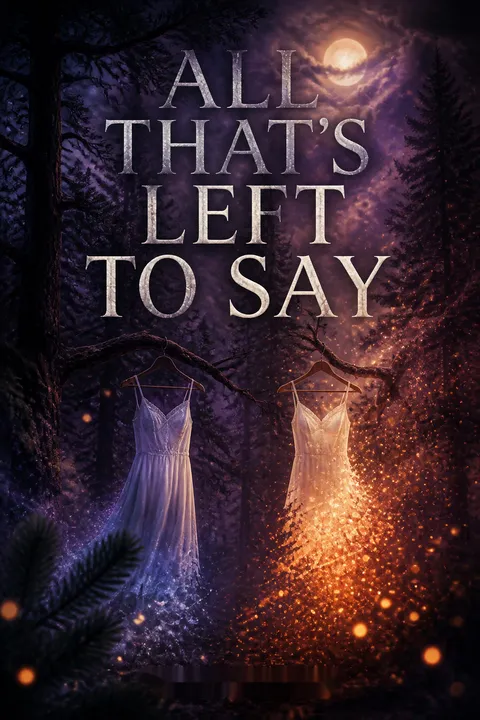
Before Sophie dies, her cousin Hannah MacLaren is the person she tells everything to: they trade small victories, share food, and remake a white gown Sophie’s mother chose for a formal ball.
Hannah dislikes the country club where Sophie is fundraising, but goes anyway, bringing her neighbor and closest friend, Lincoln. There she meets Gabi Reyes, Sophie’s perceptive school friend, and spars with Christian Dailey, a gifted debate rival who once hurt Hannah by seeming to reject her.
Sophie’s fundraiser speech quietly challenges her father’s cautious climate position, while Hannah watches her shine. These ordinary loyalties become the story’s measure of what is lost, and the gown becomes a reminder that loving Sophie means seeing the person she chose to be.
The opening establishes intimacy through practical acts rather than declarations: Hannah alters a dress, attends an event she dislikes, and helps Sophie shape a speech. Her loyalty is both a source of closeness and a habit of self-erasure. Sophie’s ability to move among family, school, activism, and ambition makes Hannah’s later grief more than the loss of a cousin; it is the loss of her everyday witness. Christian’s early appearance also seeds the novel’s second relational puzzle, linking rivalry, misrecognition, and attraction.
The Ambulance at Warner’s
At the end of summer, Sophie prepares for a party at her friend Warner Evans’s house, while Hannah spends the evening watching a movie with Lincoln. A classmate texts that the police have broken up the party and an ambulance is there for Sophie. Hannah calls repeatedly, expecting her cousin to answer with an explanation, but reaches voicemail instead.
Lincoln drives toward the party with her; before they arrive, Hannah’s mother calls and sends them straight to the hospital. Sophie has died from an opioid overdose. Hannah’s grief immediately turns into disbelief and self-accusation: she knew Sophie’s family history, yet never imagined Sophie might hide drug use from her.
The missed call is devastating because it turns ordinary communication into an impossible last chance. Hannah’s mind treats the death as a problem with a recoverable cause, so her first response is not only sorrow but investigation. Her father’s recovery gives her a vocabulary for substance use, but not access to Sophie’s private experience. The gap between loving someone and knowing everything about them becomes the wound that drives the plot.
The Phone Full of Clues
At the funeral, Hannah and Gabi Reyes, Sophie’s other closest friend, find brief refuge together from mourners who turn Sophie into a lesson or a rumor. Gabi later shows Hannah files she copied from Sophie’s phone before surrendering it to police. A burner app contains a late-night exchange directing Sophie to Warner’s basement, apparently from the person who brought her drugs.
Gabi’s party lists and saved photos show who Sophie had seen earlier, which helps exclude those people as the message’s sender. Hannah agrees to search Sophie’s room for a journal, while Gabi shares her digital evidence. Their private grief begins to take the shape of a joint inquiry.
The evidence does not provide an answer so much as a boundary: the sender was likely someone Sophie had not encountered earlier that night. That distinction gives Hannah’s grief a task and gives Gabi a partner who understands the cost of each clue. Their alliance also transforms the funeral’s social isolation into a small, deliberate community. Yet their reliance on circumstantial evidence foreshadows how easily a search for certainty can become suspicion.
The Journal’s Letter B
Months later, Hannah returns to Sophie’s bedroom and finds no journal, but Gabi’s saved photographs reveal a Blockhead band shirt and an unidentified birthmark on its wearer’s arm. At a holiday gathering, Hannah spots a slim journal hidden inside Sophie’s astrology book.
Its entries describe ankle pain, pressure about college soccer, and help from someone Sophie calls B, who provides temporary relief. The clues leave Brooks Van Doren and Ben Ashby as leading possibilities, with Barrett Evans and the shirt-wearer still under scrutiny.
Before Hannah can build a case, Gabi admits she suspected Sophie was using pills after a strange afternoon at the pool and accepted Sophie’s partial confession. Hannah feels their friendship has rested on guilt as well as grief.
The journal complicates Hannah’s comforting image of Sophie as entirely transparent. Its anxious, clipped entries reveal someone trying to maintain control while her body and future feel unreliable. Gabi’s earlier suspicion adds another kind of complication: care did not guarantee intervention, and intervention might not have changed the outcome. Hannah experiences Gabi’s silence as betrayal, but the novel resists treating either girl’s imperfect knowledge as proof of culpability.
Three Green Ties
Hannah and Gabi devise an anonymous message asking Brooks, Ben, and Barrett to wear a green tie to Sophie’s fundraising gala if they want a private conversation. The event is also the launch of a recovery-focused house supported by Sophie’s mother, Ginny.
All three boys arrive in green, so the signal reveals nothing. Hannah and Gabi abandon the idea of an instant confession and plan to investigate separately. Then Gabi tells Hannah the full truth: she searched Sophie’s bag at the party because she feared pills were hidden there, and she had disclosed her earlier suspicion to Ginny.
Their argument breaks the friendship open. They nevertheless agree to keep investigating from different angles, with Gabi seeking information at Yardley and Hannah preparing to transfer to Ingleside.
The tie scheme reveals the weakness of turning ambiguous evidence into a simple moral test: a color can signal guilt, confusion, or coincidence. The gala’s recovery project offers a contrasting response to the overdose, but Hannah is not ready to trust meaning built from grief. Gabi’s confession forces the girls to confront a painful truth: loyalty can include concealment, and shared love for Sophie does not make their motives identical.
A Threat From Home
After the fight, Hannah leaves Maryland for the summer, staying with her father in Vancouver and helping on a film set. The distance gives her room to imagine a life beyond Sophie’s death, but it does not extinguish the investigation. A threatening message arrives on the burner phone, warning her to stop targeting someone’s son.
Hannah concludes that one suspect’s parent knows more than they admit. She and Gabi reconcile enough to plan a covert split investigation: Hannah will transfer to Ingleside and examine Brooks and Ben, while Gabi takes a Yardley class that may bring her near Barrett. Hannah returns with changed hair and a deliberate cover story, seeking both a fresh start and a way to keep Sophie’s questions alive.
The threat changes the investigation from private grieving into a conflict with adult power. Its wording implies that the family protecting a suspect may understand the accusation, yet offers no proof. Hannah’s trip to Vancouver is not a cure; it is a pause that lets her choose how to return. The plan with Gabi shows their friendship surviving hurt through negotiated trust, though secrecy remains the tool they know best.
The New Girl’s Cover
At Ingleside, Hannah introduces herself as a transfer from Vancouver and keeps quiet about being Sophie’s cousin. She joins the school paper, befriends class president Zoe Walsh, and grows close to Warner and Brooks at lunch, gathering impressions without revealing her purpose.
Christian Dailey recognizes the pattern: Hannah has changed her appearance, dropped debate, and is watching people connected to Sophie’s last night. He promises not to expose her and offers to help. Hannah accepts cautiously.
Christian remembers that Ben arrived at Warner’s party late and alone, matching the burner message’s timing, and proposes following a possible supplier called JJ. Their shared investigation begins, while Hannah’s invented anonymity becomes harder to maintain.
Hannah’s cover grants her access, but it also turns every new friendship into a possible instrument. The school sees a capable transfer student; she sees a field of partial clues. Christian’s recognition is important because he reads not just her disguise but her habits of argument and restraint. His offer makes collaboration possible, while Hannah’s reluctance shows that trust still feels to her like handing someone else control.
Blockhead’s Smiley Shirt
Hannah and Christian follow JJ from a Yardley pizza shop and identify him as John Russo, but they find no evidence that he sells pills. A box of Blockhead band shirts in his car links the merchandise seller to the mysterious shirt in Gabi’s party photograph. Hannah pitches an article on the band, whose drummer confirms that JJ handles merchandise.
Their searches still leave several Ingleside students in play, including Brooks and Ben, while Gabi uses a grief group to learn that Jenny Lisk had met Sophie before. Hannah’s reporting brings her closer to the students she is investigating, but comments from Zoe and other classmates show how easily Sophie’s overdose has been reduced to blame and school gossip.
The shirt is a useful clue precisely because it does not solve the mystery. It opens a credible path to JJ, then forces Hannah to distinguish a connection from proof. Her reporting skills make observation feel methodical, yet social proximity introduces ethical costs: she is learning to like people whose private lives she is quietly mapping. The school’s casual judgments expose how privilege can turn a complex illness into a tidy story about bad choices.
A Tail on the Road
As Hannah investigates, someone plants school essays and cash in her unused locker, then reports her for selling papers. The administration finds the accusation suspicious but reviews it.
Later, Hannah notices a silver sedan following her and calls Christian, who uses his truck to get the car’s plate and photograph its driver after a deliberate low-speed bump. He believes a private investigator is trying to catch Hannah breaking school rules.
They identify possible firms and eventually trick the investigator into admitting that a client hired him to watch a teenage girl. The danger makes Hannah accept Christian as a real partner. During their uneasy stakeouts, he also explains that his mother’s sudden death shaped the rejection Hannah once took personally.
The frame-up mirrors Hannah’s own investigative shortcuts: both rely on making a person appear guilty before the evidence is complete. The surveillance turns her abstract fear of retaliation into a physical threat and exposes how vulnerable she is as a student. Christian’s disclosure about his mother revises their shared past, showing that what Hannah experienced as contempt was partly grief and panic. Their partnership deepens when both accept that memory can be accurate about pain yet wrong about motive.
The Concert Changes Everything
At a Valentine’s Day Blockhead show, Hannah and Christian ask JJ whether anyone has sought pills from him. He denies selling them and says the rumor about him concerns marijuana. He identifies an Ingleside connection through former student Callum O’Donnell and mentions that Warner’s sister Audrey once dated the band’s singer, but neither detail identifies the birthmark-wearer.
As the band plays, Hannah and Christian hold hands and kiss, finally acknowledging an attraction that began years earlier. Their connection is tender but not simple: they agree to keep it private while the investigation continues, and Hannah worries that romance may distract her from finding out what happened to Sophie.
The failed interview is a small ethical correction: JJ is not guilty merely because a rumor and a shirt point toward him. The concert then lets the novel place pleasure beside grief without pretending one cancels the other. Hannah’s attraction to Christian grows through shared attention and old history, not through a rescue fantasy. Still, secrecy gives their relationship the same fragile structure as the investigation.
Pills in the Purse
By prom, Hannah has decided to reveal selected clues during Zoe’s slideshow, hoping classmates will help identify the person who met Sophie late that night. She keeps her relationship with Christian hidden and watches Brooks and Ben among the guests. Then she finds several pills tucked into her purse beside her naloxone spray.
In the bathroom, Jenny Lisk’s exposed arm reveals the birthmark from Gabi’s photograph; Jenny also fits the earlier party image in a Blockhead shirt. Hannah realizes someone may be framing her or preparing to implicate others, but she cannot tell who planted the pills. Fearing the pills may be placed on friends next, she pulls the hotel fire alarm, emptying the ballroom and halting the slideshow.
The planted pills collapse Hannah’s controlled investigation into immediate bodily danger. Her choice to sound the alarm is both reckless and protective: she cannot prove a threat, but waiting for proof could expose someone else. Identifying Jenny resolves one clue while leaving the central question untouched. The scene makes the limits of investigation visceral: evidence can narrow a field, but it cannot guarantee safety or certainty.
The Truth Between Adults
At school, Hannah admits to the Head of School that her search for Sophie’s supplier drove the alarm stunt, and she accepts that suspension may follow. Her mother and Ginny confront her at home. Ginny reveals that Sophie sold a designer purse and jewelry before she died, likely to obtain cash for pills, and that Ginny once heard from the mother of a teenager in recovery who may have been connected.
She chose not to pursue the family. Hannah feels shut out by the adults’ shared grief and refuses to give up the search. Christian, meanwhile, realizes Hannah has hidden Gabi’s continued involvement and the full plan from him. He leaves after telling her to decide whether she can be honest with him.
Ginny’s revelation changes the moral shape of the mystery: Sophie was not merely handed drugs at a party; she had been seeking them, possibly from more than one source. The information deepens Hannah’s love without making Sophie less complicated. Her anger at the adults reflects a teenager’s need for shared knowledge, but Ginny’s restraint is also an ethical choice not to endanger a recovering young person. Christian’s departure makes secrecy’s cost relational, not just procedural.
Zoe Names the Missing Piece
The next day, Hannah visits Gabi at the recovery house and admits the night has left them both exposed. Later, Zoe comes to Hannah’s home, furious that Hannah befriended her while hiding her identity and once searched her photographs without permission.
In the argument, Zoe reveals that Ben arrived at Warner’s party to see her, and they were outside together when the ambulance came; she had been secretly involved with him despite his relationship with Violet. Ben could not have supplied Sophie that night.
With Jenny identified and Barrett’s role reduced to essay cheating, Brooks becomes the strongest remaining lead. Christian returns after Hannah tells him the truth about Gabi, the investigation, and the prom. He agrees to hear her out, and she finally lets him share the burden.
Zoe’s anger is not a plot obstacle but a moral consequence of Hannah’s methods. Her disclosure comes because she insists on being treated as a person, not a suspect, and it simultaneously clears Ben. Hannah gains crucial information only after acknowledging the harm she caused. Reconciliation with Christian follows the same principle: intimacy becomes possible when she stops deciding unilaterally what others are allowed to know.
A House Built Forward
After the dedication of Ginny’s recovery house, JJ tells Hannah and Christian that an Ingleside student recently asked him for oxycodone. They find Brooks at the house, where he admits he obtained pills for Sophie a few times from out-of-town friends, used with her, and kept using after her death. He overdosed that winter and received naloxone; his father urged him to hide the truth, while his mother arranged treatment.
Brooks now accepts help, and his father resigns from the school board. Hannah apologizes publicly for her deception at the house dedication and speaks for recovery support rather than punishment. At graduation, she chooses Wythe, reconnects with Lincoln and Gabi, and faces the future without expecting it to erase Sophie.
Brooks’s confession supplies the closest answer the novel permits, but not a complete chain of supply or certainty about who provided the fatal dose. His recovery depends on disclosure and a network of care, precisely what Sophie lacked or could not access. Hannah’s speech redirects her investigative energy toward practical support, not because accountability is irrelevant, but because punishment alone cannot repair the conditions around addiction. Her chosen college and renewed relationships make forward motion collective rather than solitary.
Analysis
The novel builds its mystery from the gap between intimacy and knowledge. Hannah believes that being Sophie’s closest person should have made the danger visible; when it was not, she treats the missing information as a failure she can repair through investigation. The clues offer structure to grief, but they also tempt her to confuse plausible inference with proof. Her secretive methods reproduce the concealment she resents in others, damaging relationships with Lincoln, Gabi, Zoe, and Christian before she recognizes that truth-seeking without trust can become another form of isolation.
The book’s treatment of addiction resists a single villain or a clean causal chain. Sophie had access to care and loving adults, yet she hid her use and pursued pills; Brooks supplied some pills earlier, but the story does not establish who provided the fatal dose. His own substance use, overdose, and family’s attempt to contain scandal make culpability inseparable from vulnerability and privilege. The adults’ choices matter too: protection can mean treatment and community, or it can mean suppressing information to preserve status.
The recovery house offers a counterpoint to Hannah’s fantasy of closure. It cannot explain every event or bring Sophie back, but it turns mourning into material support for people still at risk. Hannah’s final movement is not from grief to recovery as if the former could be discarded. She learns instead to carry grief alongside relationships, public advocacy, and a future chosen with others. The story’s ethical claim is modest but demanding: accountability matters, yet shame and punishment alone cannot create safety; people need honest connection, care, and systems willing to make room for complicated lives.
Review Summary
All That's Left to Say receives mixed reviews, with an average rating of 3.68/5. Many praise Lord's writing style and emotional depth in exploring grief, addiction, and family dynamics. The dual timeline structure divides readers, some finding it compelling while others find it confusing. Readers appreciate the realistic portrayal of characters and the mystery element. Some criticize the pacing and character likability. Overall, the book is recognized for its poignant exploration of loss and healing, though opinions vary on its execution.
People Also Read


Characters
Hannah MacLaren
The grieving investigatorHannah is a sharp, competitive debater who trusts preparation because it makes an unpredictable world seem arguable. She is Sophie’s cousin and closest confidante, and her grief turns into a search for the person who supplied the pills. Her drive to uncover facts is sincere, but it also shields her from helplessness and makes secrecy feel like protection. Hannah is observant, funny, and deeply loyal, yet she can treat relationships as evidence-gathering opportunities and push away people who might help. Art, sewing, and running offer different ways to revise or endure what she cannot control. Her central struggle is learning that loving someone does not mean knowing every hidden part of them, and that asking for help is not surrender.
Sophie Abbott
The beloved bright forceSophie is Hannah’s cousin, lifelong confidante, and a lively presence in both family and school life. She cares about environmental work, soccer, food, and the people around her, and she can turn a small kindness into a whole event. She is ambitious but not always confident, especially when injury threatens her place on the soccer field and her imagined future. Her warmth should not be mistaken for transparency: Sophie keeps parts of her pain private, even from those who love her most. The people around her remember different facets, from Gabi’s teammate to Hannah’s childhood partner in every ordinary ritual. Her complexity resists being reduced to either an idealized victim or a cautionary tale.
Gabi Reyes
Sophie’s other best friendGabi is Sophie’s close school friend, an incisive observer with strong instincts for organization, risk, and public life. She is ambitious about policy and community work, but her confidence can conceal an exacting private conscience. Gabi and Hannah begin from mutual jealousy over Sophie’s affection, then find common ground in grief and the search for answers. Gabi’s carefulness makes her an effective investigator, while fear of blame can make her withhold what she knows. She shares Sophie’s belief in large civic goals and understands that grief can coexist with future plans. Her friendship with Hannah is built through acts of support, conflict, and the difficult work of telling the truth.
Christian Dailey
The rival turned allyChristian is an incisive debater whose quick logic often arrives wrapped in swagger. He and Hannah first connect as children at debate camp, then become rivals after an awkward high-school encounter neither understands correctly. He is principled and argumentative, alert to the ways privilege shapes who gets blamed, and more emotionally perceptive than he lets on. The sudden death of his mother gives him an intimate understanding of grief, though he does not readily disclose it. Christian’s loyalty is active: he follows leads, protects Hannah when she is threatened, and asks for honesty rather than accepting the role of rescuer. Their attraction grows from intellectual friction and a long history of misread intentions.
Lincoln
Hannah’s oldest friendLincoln has been Hannah’s neighbor and closest friend since childhood. He runs with her, shares movie rituals, and offers companionship without demanding constant conversation. His approaching college departure exposes how much Hannah relies on their familiar routines. Lincoln is steady but not passive; he challenges Hannah when she shuts him out and asks for the emotional honesty she expects from him. His care is practical, affectionate, and sometimes frustrated by her habit of treating independence as a reason to disappear.
Ginny Abbott
Sophie’s determined motherGinny is Sophie and Maddie’s mother, a former journalist whose polished public manner conceals formidable resolve. She wants to protect her family and often expresses love through planning, advocacy, and the creation of opportunity. After tragedy enters her life, she channels her energy into a foundation and a recovery-focused college house. Her instinct to manage appearances can leave Hannah feeling shut out, but Ginny’s care is not merely cosmetic: she is willing to build lasting support for young people and families.
Hannah’s mother
The candid, imperfect anchorHannah’s mother is a warm, resourceful parent who gives her daughter unusual freedom and makes a home through small rituals, food, and humor. Her openness contrasts with Ginny’s more controlled style, though she too struggles to know when to intervene. She tries to protect Hannah while encouraging her to speak honestly, and her own grief is often less visible than her care for her sister and daughter. Her relationship with Hannah shows that love can be dependable without being expert.
Brooks Van Doren
The popular soccer playerBrooks is a well-connected Ingleside senior and Warner’s longtime best friend. He appears socially fluent and comfortable among classmates, while Warner sees the insecurity and pressure beneath that ease. Brooks’s family status offers protection, but it also binds him to expectations about achievement and reputation. He is a passionate athlete and loyal friend, though his choices carry consequences that others cannot see from the outside. His presence in Hannah’s investigation tests the difference between a public persona and a private crisis.
Warner Evans
The generous party hostWarner is a friendly, red-haired student whose easy humor makes him a natural social connector. His house is the setting of a night that changes the lives around him, and he carries the burden of being its host. He is loyal to Brooks and tries to protect the people he loves, sometimes at the cost of understanding what they are hiding. Warner’s gentleness is not weakness; it makes him someone others trust when they finally need to speak.
Zoe Walsh
The outspoken class presidentZoe is an ambitious student leader and painter who says what she thinks, sometimes with a bluntness that exposes the limits of her understanding. She works hard to make school events function and has a keen eye for social dynamics. Her taste in art and romance favors intensity, while her confidence can turn complex problems into simple judgments. Hannah is drawn to Zoe’s openness even as she hides essential information from her. Their friendship tests whether honesty can survive when trust has been violated.
Catherine
The careful student editorCatherine is the Insider’s editor and a skilled photojournalist, committed to both strong reporting and ethical care. She knew Sophie and is close to Gabi, but does not force either girl to disclose what they are not ready to say. Catherine’s calm attention makes her a useful collaborator when Hannah’s investigation becomes dangerous. She represents a form of loyalty that does not require control: she listens, evaluates risk, and chooses for herself what she is willing to support.
Ben Ashby
The focused distance runnerBen is a reserved runner whose intensity becomes visible on the cross-country course more than in class. He is thoughtful and disciplined, and his relationship with Violet appears stable from the outside. Because he arrives late at Warner’s party, he becomes one of Hannah’s suspects. His quiet manner makes him difficult for her to read, demonstrating how little a carefully observed public life can reveal about someone’s private choices.
Barrett Evans
Warner’s high-achieving brotherBarrett is Warner’s older brother, a strong student with an early college place and a reputation for confidence in his own intelligence. He tutors Sophie in mathematics, placing him close to her life without making him an obvious part of Hannah’s. His academic ambition and family connections shape how others interpret him. Barrett’s story sits at the edge of the central mystery, showing how one person can be implicated in one kind of wrongdoing without being responsible for another.
Maddie Abbott
Sophie’s younger sisterMaddie is Sophie’s younger sister and Ginny and Andrew’s daughter. She is quieter than Sophie, observant, and increasingly willing to name what she needs from her family and school. Her grief is shaped by watching adults and classmates respond to her sister’s death, while her own friendships and choices offer a path forward. Maddie’s decision-making reminds Hannah that the family’s loss belongs to several people, each of whom needs a different kind of support.
Jenny Lisk
The party guest in the photoJenny is a student from St. Anne’s who appears in a saved party photograph and is later recognized by a distinctive birthmark. She knows Sophie through a brief earlier meeting. Her presence helps Hannah test a visual clue, though it does not by itself identify the person who supplied the pills.
John Russo
The band’s merchandise sellerKnown as JJ, John Russo works at a pizza shop and handles merchandise for the Yardley band Blockhead. A rumor makes him a possible drug connection, but his role in the story is to show Hannah how weak evidence can mislead. He answers her questions directly and points her toward the distinction between marijuana rumors and pills.
Mr. Van Doren
Brooks’s influential fatherBrooks’s father is a wealthy, well-connected adult whose expectations shape his son’s sense of success and failure. He has influence within the school community and values family reputation. His response to Brooks’s crisis reveals the danger of treating concealment as protection, particularly when a young person needs treatment and accountability.
Mary Kinsley
Christian’s longtime confidanteMary, who goes by her surname Kinsley, is Christian’s oldest friend and a lively, candid presence in his social circle. She knows his history with Hannah and is less inhibited about naming the feelings he tries to hide. Kinsley’s humor loosens the guarded dynamic between the two rivals, while her own interests in art and teaching give her a life beyond matchmaking.
Plot Devices
The alternating school years
Reframe the presentThe narrative moves between Hannah’s senior year and the junior year in which Sophie dies. This structure lets early scenes acquire new meaning as the reader learns what Hannah has concealed, what she misunderstood, and why she enters Ingleside as a stranger. The two timelines also contrast Hannah’s expanding present-day relationships with the narrowing evidence from the past. It is a formal device rather than a separate mystery solution, and it keeps grief’s aftermath in conversation with the events that initiated it.
Sophie’s journal
Expose private distressA slim notebook hidden inside Sophie’s astrology book records ankle pain, fears about soccer and college, and help from someone identified only as B. Hannah and Gabi use it alongside their party evidence to narrow their questions toward Brooks and Ben. The journal does not provide a complete account of Sophie’s drug use or name the source of every pill. Its greater function is to show Hannah that her cousin had an interior life she could not fully see.
The burner-phone exchange
Set a time boundaryA saved exchange on Sophie’s phone directs her to Warner’s basement late on the night of the party. Gabi uses the timestamp and her own memory of the evening to help determine that the sender likely had not seen Sophie earlier. This makes timing an investigative filter, separating people who were already with Sophie from those who could have met her later. The message remains fragmentary, so it constrains the possibilities without independently establishing who supplied the fatal dose.
The Blockhead shirt
Link photos to a leadA blurry party image captures a person wearing a black shirt with Blockhead’s rectangular smiley logo and a visible birthmark. Hannah recognizes the logo on merchandise stored in JJ’s car, which leads her and Christian to question the band’s seller. The connection produces a real lead but not a solution: the band shirt could circulate among many people, and the birthmark is needed to identify the photographed wearer. The clue underscores the difference between a trail worth following and proof.
The So Far house
Turn grief into supportGinny’s foundation develops a college house for students in recovery, with treatment-informed staff and an emphasis on community. Hannah initially views the project as a monument that cannot restore Sophie, but its practical purpose gradually challenges her focus on punishment and certainty. The house becomes a place where Brooks can seek help and where Hannah publicly argues for support rather than shame. Its role ties the family’s grief to a concrete response without suggesting that one institution can solve addiction alone.
Download PDF
Download EPUB
.epub digital book format is ideal for reading ebooks on phones, tablets, and e-readers.








