

Plot Summary
The Foreman in the Storm
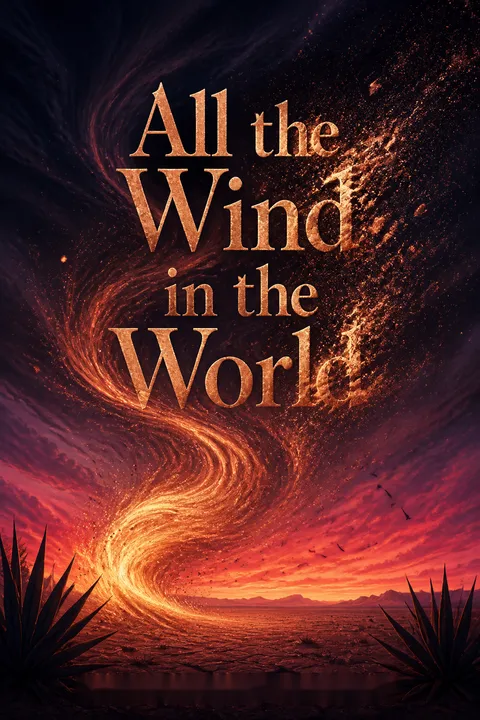
Sarah Jac and James Holt cut maguey in the drought-stricken Southwest, saving money for a life near the eastern ocean. When a dust storm sends their foreman Angus’s horse charging toward a worker and his child, Sarah grabs the reins. Angus kicks her; the wind knocks the horse down, killing him. James pulls Sarah away before the ranch can punish them.
They race for a passing train, leaving their savings behind, and climb aboard with little more than food and Sarah’s hidden jewelry. A fellow worker, Leo, trades them water and reveals that the train is bound for the Real Marvelous, a Texas ranch rumored to be cursed. Sarah decides they will work there and leave after six months.
The disaster begins with Sarah’s compassion, but the story refuses to make good intentions a shield against consequence. Her intervention is brave, impulsive, and impossible to control once the storm takes over. The resulting flight also exposes how little security the couple has built: their savings are sewn into a mattress they cannot retrieve. Sarah’s plan to work at the next ranch restores purpose, while James’s unease hints that endurance and escape no longer mean the same thing to them. Their romance survives as a shared project, but the first fracture appears in their different ideas of what survival should cost.
The Ranch on the Hill
At the Real Marvelous, Sarah and James pass the owner’s inspection and join hundreds of workers paid by the plant. Rancher Gonzales rules from a hilltop house while the overseer enforces the workday with dogs and armed foremen. Sarah spots Gonzales’s daughters, Farrah and young Bell, beside the stables.
When a rattlesnake threatens Farrah’s horse, Sarah kills it with her coa, revealing the horse skills she learned from her grandmother. Gonzales then commands her to train Bell, despite Sarah’s refusal. His display of stolen, emptied eggs shows how he treats rare life as property to collect. Farrah, visibly ill, separately asks Sarah about James’s skills, opening a path for him to work nearer the house.
The ranch makes class visible through distance: workers harvest in the dust while Gonzales’s family occupies a clean house with ornamental water. Sarah’s horse knowledge briefly gives her leverage, but Gonzales converts that competence into an order. His egg collection sharpens the book’s concern with possession: he praises preservation while destroying the life inside each shell. Sarah recognizes the contradiction but remains dependent on his wages and housing. Farrah’s quiet inquiry about James complicates Sarah’s position further. The household is not simply an enemy to avoid; it is also a possible route out of field labor, and that possibility will test the couple’s trust.
A Cousin's Dangerous Mask
Sarah and James call themselves cousins because openly loving each other once made them targets. Sarah remembers their first years on the road: after Lane, her younger sister, died of fever, James helped her leave Chicago and promised they would earn enough to give Lane a proper grave marker. In Tulsa, a jealous worker assaulted Sarah, then framed James for a foreman’s murder.
James escaped custody, and the pair fled, cementing their habit of trusting almost no one. At the Real Marvelous, they repeat that survival strategy with Odette, a lonely worker who is attracted to James. Sarah urges him to encourage Odette’s interest, though James resists. He eventually takes a groundskeeping job at the house, bringing him closer to Farrah.
The flashbacks show how the couple’s disguise began as protection and hardened into a way of life. Sarah’s grief over Lane is bound to a practical promise, a grave marker she believes work can buy; James carries guilt for the same loss. Their Tulsa escape taught them that affection can be used as leverage, so they hide their relationship and turn another person’s longing into cover. Yet the scheme is not emotionally neutral. James objects to manipulating Odette, while Sarah treats the con as insurance. Their disagreements reveal a deeper conflict: she wants safety through control, while he increasingly wants a life that does not require constant performance.
Eva Names a Witch
As food dwindles and heat drives workers to collapse, a shaven-headed stranger named Eva arrives from the mountains and claims to see disasters before they happen. She predicts a plague of small pests, declares a witch is poisoning the ranch, and urges the workers to purify themselves. Some women cut off their hair.
Odette loses a toe while harvesting, and Eva presents the injury as proof that pain can cleanse her. Then the overseer’s mastiff mauls Rosa. Her boyfriend Ben raises a coa, but Leo stops him from striking the dog while Rosa is underneath it. Bruno kills the mastiff with a cast-iron pan, but Rosa dies from her wounds. The overseer blames her, and Ben disappears into the desert.
Eva’s authority grows from conditions the ranch itself has created. Hunger, exhaustion, dangerous tools, and arbitrary punishment make catastrophe feel patterned, so her explanations offer a form of order even when they intensify fear. Her prophecy also changes how workers interpret suffering: Odette’s severed toe becomes evidence of spiritual progress rather than an industrial injury. Rosa’s death exposes the cost of that thinking. The overseer protects his own power by claiming the dog acts only with permission, while workers are left to make meaning from violence. Sarah’s hesitation during the attack is crucial: fear of repeating her earlier mistake now competes with the need to act.
The Violin for Bell
A traveling troupe brings music and a play about a dying girl, stirring memories Sarah has kept buried. Their violinist offers her a place in the caravan, but Sarah refuses to leave without James.
She trades Lane’s necklace for a violin and a small ship charm, then gives the instrument to Bell, who has never been allowed much freedom. Bell begins to open up during riding lessons, and Sarah eventually lets her see her gallop on Britain. Meanwhile, James’s closeness with Farrah grows.
He performs his knife trick with Farrah holding a stick between her teeth, and Sarah watches Farrah remain perfectly steady. Odette sees the intimacy too. The traveling woman also warns Sarah that a reward is being offered for the fugitive who killed a foreman.
The violin makes the past tangible, but Sarah chooses to exchange Lane’s keepsake for an object that can create something new. Giving it to Bell turns that choice into an unexpected relationship rather than a simple transaction. The riding lessons follow the same pattern: Sarah first treats Bell as a spoiled burden, then discovers a child whose fear and curiosity resemble her own guardedness. At the same time, James’s public closeness with Farrah makes Sarah’s strategy emotionally dangerous. The caravan’s offer presents a real exit, yet Sarah declines because her imagined future still depends on James. The warning about the reward makes that dependence more precarious.
Bees Over the Fields
James leaves with Gonzales’s family for El Paso, where Farrah is to seek treatment. Two days later, a vast swarm of bees descends on the fields. Workers stampede for too few trucks, attacking one another in the scramble. Sarah tries to help Raoul, but he turns on her, and Bruno shoves another worker aside to protect his own escape.
Sarah reaches a truck and finds Eva there, claiming the survivors have been spared for a reason. At the ranch, Britain is covered in stings and has broken a leg while loose; Sarah shoots the horse to end her suffering. Several workers, including Bruno, are executed for violence during the swarm. Sarah lies feverish while Farrah visits with medicine and a protective button Bell made. Leo is missing.
The swarm turns the camp’s ordinary competition into open violence. Sarah’s old belief that she can rescue others meets a world in which even former allies must choose themselves, and the encounter with Raoul makes that change painfully concrete. Britain’s death brings the disaster into Sarah’s private life: she has to use a weapon not against an enemy but to end the suffering of an animal she loves. Bruno’s execution shows how the ranch restores authority after chaos by punishing the workers who fought to survive. Farrah’s visit and Bell’s charm offer care without undoing any loss, leaving Sarah both protected and abandoned.
A Ring at Breakfast
After the swarm, Sarah learns that the camp is emptying and that the surviving workers are being stripped of even their hair during a lice outbreak. James returns from El Paso in clean clothes, riding a new horse, but offers Sarah no private reunion. When she next sees him at breakfast in Gonzales’s house, Farrah announces that they married in El Paso.
Sarah understands that James has chosen a life inside the family, though she cannot tell whether his decision is love, strategy, or both. He tells her to leave the ranch. Furious and convinced Bell has bewitched him, Sarah drags the girl onto a horse and rides her into the desert, intending to make the Gonzales family feel her loss.
The ring makes an inward suspicion public. Sarah had believed James’s absence was temporary and that their old plans still governed his choices; the marriage reveals that she has been treating a shared past as a binding contract. Her uncertainty about James’s motives is psychologically important because it lets her postpone accepting the loss. Instead, she converts hurt into accusation and directs it toward Bell, a child who has become a symbol for everything Sarah believes was taken from her. The abduction is not a calculated con but a collapse of her usual self-control. The moment she tries to make another family suffer, her survival logic becomes cruelty.
Bell Left in the Desert
Sarah leaves Bell alone in the plain with a crude marker so her sister might find her, then rides away. The sight of circling birds makes Sarah turn back before Bell dies of exposure. James catches up, brings Bell water, and condemns Sarah for endangering her. He returns her to the ranch as a prisoner, where Gonzales locks her in a storage room.
Two days later, James visits with an envelope of money and insists she leave. Sarah rejects the offer and accuses him of abandoning their plans, but he says he is done repairing the consequences of her choices. His ring is gone, though he will not explain what that means. Sarah gathers the money after he leaves, but remains locked inside.
Sarah’s turn back does not erase the harm she caused, but it marks the first break in her attempt to make pain symmetrical. She cannot accept Bell’s death as a fair answer to her own loss. James’s rescue of the child and his decision to imprison Sarah reveal that his priorities have shifted, even if he still tries to protect her with money. The envelope is an imperfect form of care: it provides a route out while avoiding the intimacy of an explanation. Sarah refuses it as a substitute for the future they planned. The missing ring signals change, but she cannot yet trust herself to interpret it.
The Choice to Stay
Bell visits Sarah in the locked room and admits she made a charm from a fallen tooth to make James sick. She did it because she fears her sister will leave her. Bell also says her father has blamed her for her mother’s death, ruined crops, and Farrah’s illness, teaching her to believe she is a witch.
Sarah recognizes that the child’s strange influence may be real, but refuses to call her evil. James then reveals that Leo escaped before the bee swarm, bought land in Mexico, and has invited Sarah to join him. James plans to witness Sarah’s execution the next day, but tells her an eastbound train leaves soon. Sarah can flee alone. She stays.
Bell’s confession turns the novel’s supernatural question into a story about blame. Her father has taught her to read every misfortune as evidence of her harmful nature, while Sarah has repeated that accusation when grief made her desperate. The charm may have power, but its emotional purpose is unmistakable: Bell wants to keep her sister near. James’s news about Leo offers Sarah a workable future independent of the ranch, yet she refuses it because leaving without James still feels like another abandonment. Her decision is not simply romantic loyalty. It shows how deeply her identity has been built around their shared survival, even when that bond has become painful.
Fire and the Second Swarm
Before her execution, Sarah gives Ortiz her money and keepsakes to send to Leo. As Gonzales prepares to shoot her, another cloud of bees overwhelms the camp. James cuts Sarah free and knocks Gonzales down with the rifle, then tries to escape with her, Bell, and Farrah. Eva urges the workers to burn the ranch, and the crowd sets buildings alight while fighting the foremen.
Sarah runs back for the envelope. Farrah reaches the stables with Bell, but Odette attacks her with a coa and kills her. Sarah breaks away from Odette and sprints after James’s truck, catching the open door at the last moment. James drives them away with Bell injured and Farrah dead, while the ranch burns behind them.
The climax refuses a clean rescue. James saves Sarah, but the escape requires leaving the camp’s victims and cannot save Farrah from Odette’s violence. The second swarm recalls the earlier catastrophe, yet now its arrival coincides with collective revolt; the workers use fire against the structures that have controlled them, even as the blaze endangers everyone. Sarah’s return for the money shows that survival still depends on material resources, while her sprint after the truck becomes an act of choosing life with the consequences she helped create. Odette’s killing of Farrah is not a victory over an imagined witch. It is the culmination of manipulation and grief turned against an actual person.
A Home Made After Ruin
Sarah, James, and Bell settle on a small maguey ranch in Chihuahua, land bought from Leo. They tell others they are married and that Bell is their adopted daughter, building a life from carefully chosen truths and lies. Sarah and James share a bed again, but their intimacy carries guilt and an unhealed distance.
They do not return to Chicago for Lane’s grave marker; instead, Sarah names a canyon after her sister and visits it beneath the stars. She teaches Bell to ride, read shadows, and find food in the desert. Their household becomes a family by accident, not certainty. Sarah still wonders whether her horse could carry her east to the ocean, but she has stopped mistaking a plan for a promise.
The ending replaces the couple’s clean fantasy of an eastern refuge with a compromised home they have made through work, loss, and responsibility. Sarah releases the promise of a grave marker in Chicago by giving Lane a landscape and a continuing place in her thoughts. This is not forgetting; it is a change in how remembrance is carried. Bell’s practical lessons reverse Sarah’s earlier impulse to abandon her, making care a daily skill rather than a sentimental vow. James and Sarah remain together without being restored to innocence. Their family is hopeful precisely because the book leaves its fractures visible.
Analysis
All the Wind in the World places a love story inside a labor system where affection can become a liability. Sarah and James survive by moving, working, hiding their relationship, and treating every new camp as temporary. Their plans promise more than a destination: they promise that effort can eventually purchase safety. Yet each ranch reveals the limits of that bargain. Workers are paid too little to leave easily, illness and injury are absorbed into the production schedule, and the people with authority decide which lives count as disposable.
The novel’s magical realism grows from this material pressure. The workers’ rumors about curses are not simply evidence of ignorance; they are attempts to make repeated catastrophe intelligible when the official explanations protect the powerful. Bell’s possible influence over weather complicates Sarah’s rational defenses, but the story is equally interested in how blame is manufactured. Gonzales teaches Bell to interpret misfortune as her fault, while Sarah briefly repeats that logic when she is hurt by James’s choices. The supernatural question matters less than the human consequences of deciding who is dangerous.
Sarah’s emotional arc moves from control toward responsibility. She begins by believing that vigilance, work, and escape plans can keep loss at a manageable distance. When James chooses another life and she takes Bell into the desert, Sarah discovers that pain does not grant her the right to distribute pain in return. Her return for Bell cannot undo the abduction, and the final escape cannot undo Farrah’s death. The ending therefore refuses easy absolution. Sarah and James build a home with Bell, but memory and guilt remain part of its structure. The novel’s modest hope lies in the difference between a perfect plan and a practiced form of care: teaching someone to ride, sharing a bed, naming a canyon, and staying when departure would be easier.
Review Summary
All the Wind in the World receives mixed reviews, with readers praising its atmospheric writing, unique genre-blending, and captivating world-building. Many appreciate the magical realism elements and the complex relationship between protagonists Sarah Jac and James. However, some criticize the slow pacing, underdeveloped characters, and confusing plot points. The book's ending is divisive, with some finding it unsatisfying. Despite its flaws, many readers found the novel intriguing and enjoyed its exploration of love, survival, and human nature in a harsh, dystopian setting.
Characters
Sarah Jac
Desert-hardened horsewomanSarah is a resourceful young worker who measures safety in money, exits, and the ability to run. Raised partly by a practical grandmother, she can handle horses, tools, and hunger, but has difficulty accepting help without suspecting a price. Her fierce bond with James gives her a reason to endure the fields, while grief for her sister Lane sharpens her distrust of anyone who might replace or separate them. Sarah’s competence can become impulsiveness when she feels abandoned. She is drawn to action, especially when another person is in danger, yet fears that acting will make things worse. Her struggle is to distinguish responsibility from control and care from possession.
James Holt
Loyal partner and schemerJames is Sarah’s lover and closest companion, though the two pose as cousins to avoid attracting danger. He is skilled at cards, mechanical work, and making plans that keep them moving. His warmth and humor soften the harshness of their life, but he carries guilt over losses neither of them can undo. James often protects Sarah by taking burdens onto himself, a habit that can become secrecy and exclusion. He wants more than endless work and flight, even as his loyalty to Sarah remains central to his choices. His tenderness is real, but so is his capacity to perform a role when survival demands it.
Bell Gonzales
Guarded rancher's daughterBell is the younger daughter of ranch owner Gonzales, a child who has grown up protected by wealth but not by emotional security. Her sister Farrah’s illness and her father’s blame leave her anxious, angry, and unsure how much of her life she can control. At first, Bell is withdrawn around Sarah and fearful of riding, but music and the horses give her ways to express curiosity. She is observant and remembers small gestures, including kindnesses that Sarah herself may not recognize. Bell’s need for connection complicates Sarah’s assumptions about privilege, innocence, and who deserves protection.
Farrah Gonzales
Ill elder daughterFarrah is Gonzales’s elder daughter, a composed young woman whose illness makes her physical weakness difficult to hide. She observes people closely and speaks with a formality that reflects the protected world of the ranch house. Her concern for Bell coexists with her own need for care, and she carries herself as if dignity can hold illness at bay. Farrah’s interactions with Sarah reveal both the distance between household and field and the possibility of respect across it. She is neither merely a fragile heiress nor simply an obstacle to Sarah’s plans; she has her own loyalties, fears, and understanding of what a family requires.
Leo
Restless fellow workerLeo is a tall, talkative worker Sarah and James meet on the train. He moves easily between jokes, unsettling stories, and practical knowledge of the camps. His ambition is to own land rather than remain a hired hand, and he pays close attention to the hidden bargains people make to survive. Leo is also more emotionally perceptive than his loose manner suggests. He recognizes the couple’s schemes because he understands the same methods from the inside, and his friendship offers Sarah a possible connection beyond James.
Eva
Camp's self-made prophetEva arrives from the mountains at a moment when the workers are hungry, frightened, and eager for explanations. She claims to foresee calamity and gathers followers by interpreting injury and misfortune as signs. Her certainty gives people a story to hold when ranch authority offers only punishment and scarcity. Eva is charismatic and theatrical, but her prophecies also give her influence over people who have little power of their own. She represents the dangerous appeal of a voice that turns suffering into a simple moral pattern.
Odette
Hopeful worker turned followerOdette is a young, lonely worker whose openness makes her vulnerable to both romance and prophecy. She is drawn to James and seeks Sarah’s advice about him, while her belief in omens leaves her receptive to Eva’s teachings. Beneath her delicate appearance is a stubbornness and strength that Sarah initially underestimates. Odette’s longing to be chosen shapes how she reads the people around her. She wants affection, but she also wants a role that makes her suffering mean something.
Bruno
Broad-shouldered protectorBruno is a powerful, quiet worker whose imposing build is balanced by a gentle attentiveness. He is willing to step into danger for others, and his actions reveal a moral steadiness that the camp’s violence keeps testing. Sarah is drawn to his warmth and kindness, especially when her relationship with James feels uncertain. Bruno does not demand that Sarah explain herself, but his questions make her confront the costs of acting on instinct. His presence offers a different model of strength from the ranch’s armed authority.
Lane Crow
Sarah's younger sisterLane is Sarah’s younger sister, remembered for her imagination, affection, and refusal to give up when a game or plan fails. She and Sarah shared a childhood shaped by their grandmother’s farm and later by precarious life in Chicago. Lane remains central to Sarah’s private memories and to the future she once imagined with James. Her presence in the story shows how grief can continue to organize a person’s choices long after the person is gone.
Gonzales
Ranch owner and patriarchGonzales owns the Real Marvelous and expects obedience from workers and family alike. His careful manner and comfortable house contrast with the physical danger endured in the fields. He treats rare objects as treasures, reflecting his desire to preserve what he values on his own terms. His concern for his daughters is real, but it exists alongside his authority over workers whose lives he controls. Gonzales embodies a system in which personal affection and coercive power can occupy the same household.
Rosa
Worker who loves animalsRosa is a worker who openly loves Ben and shows gentleness toward a small mouse she keeps. Her affection stands out in a camp where closeness can make people vulnerable. She represents the ordinary tenderness workers try to preserve amid hunger, exhaustion, and danger.
Ben
Rosa's devoted partnerBen is Rosa’s partner, a young worker who wears a protective charm and remains closely attentive to her. His presence shows how love can offer comfort in the camps while also exposing a couple to fear and uncertainty.
Raoul
Leo's secret companionRaoul is a worker with a protective charm who shares a private bond with Leo. He is wary of outsiders and reads camp life as a series of risks that require strategy. His relationship with Leo reveals the tenderness people conceal in a world that punishes visible vulnerability.
Ortiz
Stable hand and keeperOrtiz is an older stable worker who knows horses and performs his duties without ceremony. His quiet manner makes him difficult to read, but he is attentive to the practical details others overlook. Sarah encounters him as part of the ranch’s household machinery, where even ordinary tasks can carry consequences.
Angus
Rough field foremanAngus is a foreman who handles both workers and horses with aggression. His authority depends on intimidation, and his treatment of Sarah’s concern for an animal shows how casually he uses power. He sets the story’s opening danger in motion.
Plot Devices
The Cousin Disguise
Conceals a dangerous romanceSarah and James present themselves as cousins to hide their romantic attachment from workers and foremen who might exploit it. The cover story grows from earlier danger, when a worker used Sarah’s closeness with James as leverage. It protects them by making their intimacy less visible, but it also forces them to perform distance in public and manipulate other people’s feelings. As their circumstances change, the disguise becomes more than a practical trick: it expresses Sarah’s belief that love must be hidden to survive, while James increasingly questions whether a life built on false identities is worth preserving.
Maguey and the Desert Economy
Makes survival a daily wageThe workers harvest maguey, whose hearts are processed into drinkable alcohol in a world where clean water and food are scarce. Their pay depends on how many plants they cut, while room, water, and transport costs reduce the wages further. This economy explains why Sarah and James remain at dangerous ranches despite their desire to leave. It also makes the body part of the production system: injury threatens income, and exhaustion is treated as a worker’s failure rather than a cost of the work. Maguey is livelihood, constraint, and a measure of how little control the workers have over the land they labor on.
Prophecy and Magical Thinking
Makes disaster feel legibleEva’s predictions and the workers’ beliefs about curses give shape to disasters that may have natural, human, or supernatural causes. Dust storms, illness, damaged crops, and the bee swarms are interpreted through rumors and personal fears. The book does not make every event easy to classify, which keeps Sarah’s practical skepticism in tension with the camp’s explanations. Bell’s own account complicates that skepticism by suggesting that strong emotions may affect the world around her. Prophecy functions both as comfort and as a tool of control: it offers meaning, but it can also turn vulnerable people into scapegoats.
Charms and Keepsakes
Give grief a tangible formSarah carries jewelry connected to her past, including Lane’s necklace, while other workers wear bundles of sticks, herbs, or teeth for protection. Bell makes a button charm, and Gonzales keeps emptied rare eggs as prized objects. These items do not all have the same meaning: some preserve memory, some promise safety, and some reveal a desire to possess. Their physical smallness makes them easy to carry through a life of movement, but their emotional weight can shape a major choice, as when Sarah trades Lane’s necklace for a violin. The objects show how people make private meaning in a world that offers little security.
Wind, Dust, and Bees
Turns landscape into threatThe wind is a constant force in the story, capable of confusing direction, interrupting labor, and turning an ordinary rescue attempt into catastrophe. Dust storms make the past and future feel physically present, while the bees bring a more specific and deadly threat to the fields. These events can be read as environmental danger, supernatural signs, or both. Their recurrence links the ranch’s unstable ecology to the workers’ fear and unrest. The landscape is not merely scenery: it changes what characters can see, whether they can escape, and what they believe has caused their suffering.
Download PDF
Download EPUB
.epub digital book format is ideal for reading ebooks on phones, tablets, and e-readers.








